
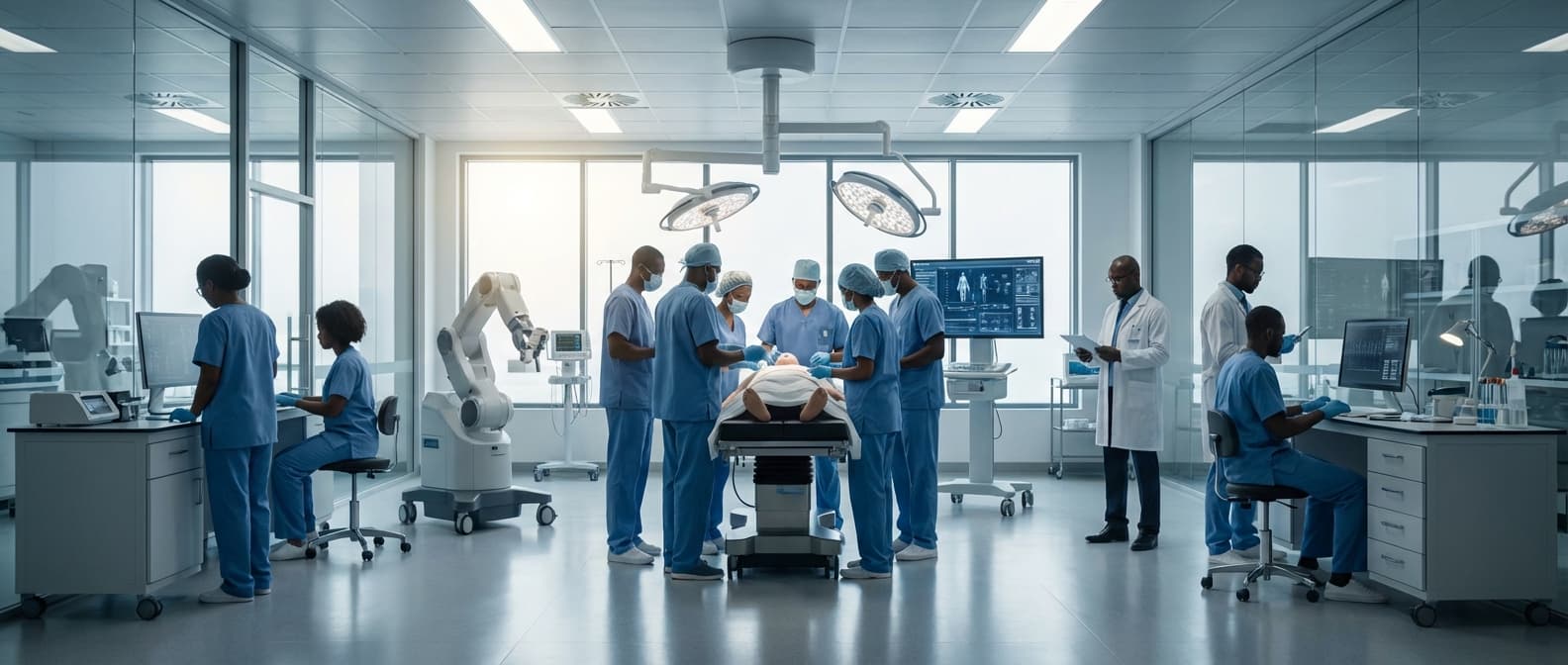
Biomedical Engineering Consulting in Sao Tome and Principe
Engineering Excellence & Technical Support
Equipment selection, procurement and implementation consulting High-standard technical execution following OEM protocols and local regulatory frameworks.
Advanced Medical Device Integration & Validation
Leveraging our deep understanding of global regulatory standards and local healthcare infrastructure, we provide expert consulting for the seamless integration and rigorous validation of advanced medical devices. Our services ensure optimal performance, patient safety, and compliance for healthcare facilities in São Tomé and Príncipe, from diagnostic imaging to therapeutic equipment.
Wearable Health Technology Deployment & Data Analytics
We specialize in the strategic deployment and effective utilization of wearable health technologies for remote patient monitoring and public health initiatives. Our expertise encompasses data security, interoperability with existing systems, and sophisticated data analytics to derive actionable insights for improved health outcomes and resource allocation within São Tomé and Príncipe's healthcare ecosystem.
Healthcare Facility Design & Biomedical Equipment Planning
Our team offers comprehensive consulting services for the architectural design and biomedical equipment planning of new or renovated healthcare facilities. We ensure that the layout, workflow, and technology infrastructure are optimized for efficiency, cost-effectiveness, and future scalability, creating state-of-the-art healthcare environments tailored to the specific needs of São Tomé and Príncipe.
What Is Biomedical Engineering Consulting In Sao Tome And Principe?
Biomedical Engineering Consulting in Sao Tome and Principe refers to the provision of specialized technical expertise and advisory services related to medical devices, healthcare technology, and biomedical systems within the context of the island nation's healthcare infrastructure. This field bridges engineering principles with medical science and clinical practice to enhance healthcare delivery, improve patient outcomes, and optimize the utilization of medical technologies. Consultants in this domain offer objective, evidence-based guidance on a range of issues, from technology acquisition and implementation to regulatory compliance and operational efficiency. The service is particularly critical in developing healthcare systems where resources may be constrained and access to advanced technical knowledge is limited.
| Who Needs Biomedical Engineering Consulting? | Typical Use Cases in Sao Tome and Principe |
|---|---|
| Public Healthcare Institutions: (e.g., National Hospitals, Regional Clinics, Ministry of Health) | Assessing the need for and procuring essential diagnostic equipment (e.g., X-ray machines, ultrasound devices) for underserved regions. Developing maintenance strategies for existing, aging equipment to ensure continued functionality. Advising on the implementation of new telemedicine solutions to extend healthcare reach. |
| Private Healthcare Providers: (e.g., Private Hospitals, Diagnostic Laboratories, Specialist Clinics) | Selecting and installing advanced medical imaging systems or surgical equipment to enhance service offerings. Establishing robust cybersecurity protocols for networked medical devices to protect patient data. Optimizing the use of sophisticated laboratory diagnostic equipment. |
| Medical Device Manufacturers & Distributors: | Navigating local regulatory approval processes for introducing new medical products. Establishing effective after-sales service and maintenance networks. Providing technical training to local partners and end-users. Conducting market assessments for specific medical technology segments. |
| International Development Organizations & NGOs: | Supporting the procurement and deployment of medical equipment for humanitarian projects. Evaluating the sustainability and long-term impact of donated medical technologies. Developing training programs for local healthcare workers in conjunction with technology provision. |
| Educational & Research Institutions: | Advising on the selection and integration of laboratory equipment for biomedical research and teaching. Ensuring compliance with safety standards for experimental equipment. Facilitating access to and maintenance of advanced research instrumentation. |
Key Aspects of Biomedical Engineering Consulting in Sao Tome and Principe
- Needs Assessment & Technology Planning: Evaluating existing healthcare infrastructure and identifying requirements for new medical equipment, diagnostic tools, and therapeutic devices based on epidemiological data, clinical needs, and budgetary constraints.
- Procurement & Acquisition Support: Assisting healthcare institutions in selecting, sourcing, and procuring appropriate medical technologies, ensuring adherence to international standards and local regulations. This includes developing technical specifications and evaluating vendor proposals.
- Installation, Commissioning & Validation: Overseeing the correct installation, setup, and performance verification of medical equipment to ensure it operates safely and effectively according to manufacturer specifications and regulatory requirements.
- Maintenance & Service Management: Developing and implementing robust preventive and corrective maintenance programs for medical devices to maximize their lifespan, minimize downtime, and ensure patient safety. This may involve training local technicians or managing third-party service contracts.
- Clinical Engineering & Asset Management: Establishing programs for the effective management of the entire lifecycle of medical equipment, from acquisition to decommissioning, including inventory management, risk assessment, and end-of-life planning.
- Regulatory Compliance & Quality Assurance: Advising on compliance with national and international regulations pertaining to medical devices, including registration, import/export requirements, and safety standards. This also encompasses implementing quality management systems.
- Training & Capacity Building: Providing training to healthcare professionals, biomedical technicians, and administrative staff on the operation, maintenance, and safe use of medical equipment, thereby enhancing local technical capacity.
- Health Technology Assessment (HTA): Evaluating the clinical effectiveness, cost-effectiveness, and ethical implications of new and existing health technologies to inform decision-making processes for adoption and resource allocation.
- Infrastructure Development & Planning: Contributing to the planning and design of healthcare facilities, ensuring appropriate space, power, and environmental controls for the installation and operation of medical equipment.
- Troubleshooting & Problem Resolution: Providing expert assistance in diagnosing and resolving complex technical issues with medical devices and systems.
Who Needs Biomedical Engineering Consulting In Sao Tome And Principe?
Biomedical Engineering consulting services are essential for advancing healthcare infrastructure and capabilities in any nation, including the unique context of Sao Tome and Principe. These services bridge the gap between complex medical technology and its effective, safe, and efficient utilization within healthcare facilities. They are crucial for ensuring that medical equipment is properly selected, installed, maintained, and regulated, ultimately leading to improved patient care and operational efficiency. In a developing nation like Sao Tome and Principe, where resources may be limited and access to specialized expertise can be challenging, dedicated biomedical engineering consulting becomes even more vital for establishing and sustaining a robust healthcare system.
| Target Customer Group | Key Departments/Stakeholders Involved | Specific Needs/Services Required |
|---|---|---|
| Public Hospitals and Health Centers | Hospital Administration, Clinical Departments (e.g., Surgery, Pediatrics, Radiology, Cardiology), Biomedical Engineering Department (if existing), Procurement Department | Equipment needs assessment and selection, Installation and commissioning of medical devices, Preventive maintenance programs, Repair and troubleshooting, Training for clinical staff on device operation, Regulatory compliance support, Asset management, Development of maintenance policies and procedures. |
| Private Clinics and Diagnostic Laboratories | Clinic/Lab Management, Technical Staff, Procurement Officer | Similar to public facilities but often with a focus on specialized diagnostic equipment, cost-effective solutions, and rapid deployment. |
| Ministry of Health | Planning and Policy Department, Procurement and Logistics Unit, Quality Assurance Department, Medical Equipment Directorate | National healthcare technology planning, Development of national medical device regulations and standards, Centralized procurement strategies, National inventory management of medical equipment, Training and capacity building for national biomedical engineering workforce, Risk management for medical devices, Health technology assessment. |
| Medical Device Manufacturers and Distributors | Sales and Technical Support Teams, Local Agents/Representatives | Technical training for local support staff, Installation and commissioning support for their products, After-sales service strategy development, Regulatory submission support, Market access consulting. |
| Non-Governmental Organizations (NGOs) involved in healthcare | Program Managers, Logistics and Procurement Officers, Field Operations Teams | Needs assessment for equipment in specific project areas, Sourcing and procurement of appropriate medical technology, Installation and training for local healthcare providers in project sites, Equipment maintenance strategies for remote areas, Impact assessment of medical technology interventions. |
| Research Institutions and Universities | Research Departments, Technical Support Staff, Procurement Offices | Selection and integration of specialized research equipment, Maintenance and calibration of sensitive instruments, Training for researchers and technicians, Compliance with safety standards. |
| International Aid Organizations | Project Managers, Technical Advisors, Procurement Specialists | Support for health sector development projects, Needs assessment for donated or funded equipment, Oversight of equipment procurement and deployment, Capacity building initiatives for local healthcare systems. |
Target Customers for Biomedical Engineering Consulting in Sao Tome and Principe
- Public Hospitals and Health Centers
- Private Clinics and Diagnostic Laboratories
- Ministry of Health
- Medical Device Manufacturers and Distributors
- Non-Governmental Organizations (NGOs) involved in healthcare
- Research Institutions and Universities (if applicable)
- International Aid Organizations
Biomedical Engineering Consulting Process In Sao Tome And Principe
The biomedical engineering consulting process in Sao Tome and Principe, like in many other regions, typically follows a structured workflow to ensure efficient and effective project delivery. This workflow is designed to move from initial client contact through to the successful completion and handover of the project. Understanding these stages is crucial for both clients seeking specialized biomedical engineering expertise and for consultants aiming to provide comprehensive services.
| Stage | Description | Key Activities | Deliverables/Outcomes |
|---|---|---|---|
| Inquiry and Initial Consultation | The client (e.g., hospital, clinic, research institution, government agency) expresses interest in biomedical engineering services. | Initial contact, understanding the client's general needs, preliminary problem identification, setting up introductory meetings. | Clarified interest in services, initial understanding of client's context, established communication channel. |
| Needs Assessment and Scope Definition | A thorough understanding of the client's specific challenges, requirements, and objectives is established. | Detailed site visits, interviews with stakeholders, review of existing infrastructure and equipment, documentation review, defining project goals and objectives. | Comprehensive needs assessment report, clearly defined project scope, identification of key performance indicators (KPIs). |
| Proposal Development and Contract Negotiation | A formal proposal outlining the consultant's approach, methodology, timeline, and costs is prepared and presented. | Developing a tailored technical and financial proposal, outlining project phases, resource requirements, risk assessment, and fee structure. Negotiation of terms and conditions. | Approved project proposal, signed service contract or Memorandum of Understanding (MOU). |
| Project Planning and Resource Allocation | Detailed planning for project execution, including team formation, timeline, budget management, and risk mitigation strategies. | Developing a detailed project plan, assigning roles and responsibilities, procuring necessary resources (personnel, equipment, software), establishing communication protocols, developing a risk management plan. | Detailed project plan, resource allocation matrix, communication plan, risk management plan. |
| Execution and Implementation | The core consulting activities are carried out according to the project plan. | Designing solutions, recommending equipment, developing specifications, overseeing installation and calibration, providing training, implementing new processes, conducting technical assessments. | Implemented solutions, installed and calibrated equipment, trained personnel, established operational procedures. |
| Monitoring, Evaluation, and Reporting | Continuous tracking of project progress against defined objectives and regular reporting to the client. | Regular progress meetings, data collection and analysis, performance monitoring against KPIs, identifying deviations and implementing corrective actions, preparing interim and final reports. | Progress reports, performance evaluation reports, identification of issues and resolutions. |
| Project Closure and Handover | Formal completion of the project and transfer of ownership of deliverables to the client. | Final project review, validation of deliverables, handover of all documentation and training materials, final report submission, formal sign-off. | Completed project, final project report, signed acceptance certificate, fully functional and integrated solutions. |
| Post-Project Support (Optional) | Providing ongoing assistance or maintenance services after the project has been formally closed. | Troubleshooting, maintenance support, further training, ongoing advisory services. | Continued operational efficiency, client satisfaction, potential for future engagements. |
Biomedical Engineering Consulting Workflow in Sao Tome and Principe
- Inquiry and Initial Consultation
- Needs Assessment and Scope Definition
- Proposal Development and Contract Negotiation
- Project Planning and Resource Allocation
- Execution and Implementation
- Monitoring, Evaluation, and Reporting
- Project Closure and Handover
- Post-Project Support (Optional)
Biomedical Engineering Consulting Cost In Sao Tome And Principe
The cost of biomedical engineering consulting in Sao Tome and Principe is influenced by several factors, leading to a range of pricing. These factors include the complexity and scope of the project, the experience and specialization of the consultant, the duration of the engagement, and the specific services required. For instance, a basic assessment of medical equipment needs will differ significantly in cost from a comprehensive overhaul of a hospital's biomedical infrastructure or the development of a new medical device.
Given the developing nature of the healthcare sector in Sao Tome and Principe, and the potential scarcity of highly specialized local talent, consultants with international experience or those who need to travel to the country may command higher rates. The cost of living and operating expenses in Sao Tome and Principe can also play a role. Generally, consulting services are billed on an hourly, daily, or project basis. For smaller, less complex tasks, hourly rates might be applied. For larger, more involved projects, a fixed project fee or a daily rate for the duration of the engagement is more common. Estimating precise figures is challenging without specific project details, but a general understanding of the pricing structure can be provided.
| Service Type/Project Scope | Estimated Cost Range (Dobra - STD) | Notes |
|---|---|---|
| Basic Equipment Needs Assessment | 50,000 - 150,000 STD | For small clinics or specific departments. |
| Medical Equipment Procurement Consultation | 75,000 - 200,000 STD | Includes market research, vendor selection, and negotiation support. |
| Biomedical Equipment Maintenance Strategy Development | 100,000 - 250,000 STD | For medium-sized hospitals or health facilities. |
| Hospital Infrastructure/Biomedical Workflow Optimization | 150,000 - 400,000+ STD | Complex projects requiring in-depth analysis and planning. |
| Medical Device Design & Development Feasibility Study | 200,000 - 500,000+ STD | Highly specialized, often involves R&D and prototyping. |
| Regulatory Compliance Consulting (e.g., ISO 13485) | 120,000 - 300,000 STD | Depends on the extent of compliance required. |
| Hourly Rate (General Consultant) | 5,000 - 15,000 STD per hour | Can vary significantly based on experience. |
| Daily Rate (Senior Consultant/Specialist) | 40,000 - 100,000+ STD per day | For intensive, on-site work. |
Key Pricing Factors for Biomedical Engineering Consulting in Sao Tome and Principe:
- Project Scope and Complexity: The more intricate and demanding the project, the higher the cost.
- Consultant's Expertise and Specialization: Consultants with niche skills or extensive experience will generally charge more.
- Duration of Engagement: Longer-term projects may offer a slightly reduced daily or hourly rate, but the overall cost will be higher.
- Travel and Accommodation: If consultants are based internationally, travel expenses will be factored in.
- Research and Development: Projects involving R&D for new medical devices will be more expensive due to the inherent uncertainties and resource requirements.
- Regulatory Compliance and Training: Services related to meeting local or international standards, and providing staff training, add to the cost.
- Local Market Conditions: The availability of local expertise and general economic factors can influence pricing.
Affordable Biomedical Engineering Consulting Options
Biomedical engineering (BME) consulting can be a significant investment, but various options exist to make it more affordable and valuable. Understanding value bundles and implementing cost-saving strategies are key to accessing expert BME knowledge without breaking the bank. Value bundles package multiple services or expertise into a single offering, often at a reduced combined price compared to individual service procurement. This can include a combination of R&D support, regulatory guidance, prototyping, and market analysis. Cost-saving strategies involve leveraging available resources, optimizing project scope, and exploring different consultant engagement models.
| Consulting Engagement Model | Description | Potential Cost-Benefit |
|---|---|---|
| Value Bundle: 'Concept to Prototype' | Includes initial market research, feasibility studies, preliminary design, and basic prototyping support. | Offers end-to-end support for early-stage development, potentially at a fixed price, reducing surprise costs. |
| Value Bundle: 'Regulatory Compliance Package' | Focuses on identifying applicable regulations (FDA, CE, etc.), developing submission strategies, and preparing documentation. | Streamlines the complex regulatory process, saving time and reducing the risk of costly delays or rejections. |
| Freelance Consultant (Per Project) | Engaging an experienced individual consultant for a specific, well-defined task or phase. | Typically lower overhead than large firms, offering competitive rates. Requires careful vetting and contract management. |
| Boutique Firm (Specialized Expertise) | Hiring a small firm with deep knowledge in a niche area (e.g., biomaterials, AI in diagnostics). | Highly focused expertise can lead to more efficient problem-solving and innovative solutions, often at a better price point than generalist firms. |
| Retainer with Academic Lab | Securing ongoing access to a university lab's facilities and a professor's guidance for a set monthly fee. | Provides access to cutting-edge equipment and academic insights for research and development, often at a significantly reduced cost compared to commercial labs. |
| Crowdsourced Design/Testing | Utilizing online platforms for specific design challenges or early user feedback. | Leverages a wide pool of talent and perspectives for ideation or validation, reducing reliance on a single, expensive consultancy. |
Affordable Biomedical Engineering Consulting Options
- {"title":"Value Bundles Explained","description":"These are predefined packages of services designed to offer comprehensive support for specific project phases or needs. They often provide a more predictable and potentially lower overall cost."}
- {"title":"Types of Value Bundles","description":"Common bundles include 'Early-Stage Feasibility & Design,' 'Regulatory Pathway Planning,' 'Prototype Development & Testing,' and 'Full Product Lifecycle Support.'"}
- {"title":"Cost-Saving Strategies","description":"Techniques to reduce consulting expenses while maximizing value received."}
- {"title":"Leveraging Academic Partnerships","description":"Collaborating with university BME departments can provide access to student talent (supervised), specialized equipment, and faculty expertise at a lower cost."}
- {"title":"Freelance & Boutique Firms","description":"Engaging independent consultants or smaller specialized firms can be more cost-effective than large, established consulting houses."}
- {"title":"Phased Engagement","description":"Breaking down large projects into smaller, manageable phases with defined deliverables allows for more controlled spending and the ability to reassess needs as the project progresses."}
- {"title":"Clear Scope Definition","description":"Precisely defining project objectives, deliverables, and timelines upfront minimizes scope creep, a common driver of cost overruns."}
- {"title":"Retainer Agreements","description":"For ongoing needs, a retainer can secure a consultant's availability at a potentially discounted hourly rate compared to ad-hoc engagements."}
- {"title":"Outsourced Niche Expertise","description":"Instead of hiring full-time specialists, engage consultants for specific, high-demand expertise on a project basis."}
- {"title":"Shared Resources & Platforms","description":"Exploring industry-specific shared resources, incubators, or accelerator programs that offer consulting services or facilitate connections."}
Verified Providers In Sao Tome And Principe
Navigating the healthcare landscape in any country can be challenging, but for expatriates and locals in Sao Tome and Principe, ensuring access to reliable and high-quality medical services is paramount. The emergence of verified providers, particularly those with established credentials like Franance Health, offers a crucial layer of trust and assurance. Franance Health's commitment to international standards, skilled medical professionals, and patient-centered care makes them a leading choice for healthcare needs within the region.
| Provider Type | Key Credentials | Benefits for Patients |
|---|---|---|
| Franance Health | International Accreditation, Board-Certified Physicians, Advanced Medical Equipment, Multilingual Staff | Reliable diagnostics, effective treatment plans, comfortable patient experience, access to specialized care, peace of mind for expatriates and locals. |
| Other Verified Clinics | Local Regulatory Compliance, Experienced Local Practitioners, Essential Medical Services | Basic healthcare needs met, understanding of local health challenges, accessible to residents. |
| Unverified Facilities | Limited Transparency, Variable Quality Standards, Potential for Inconsistent Care | Risk of suboptimal treatment, difficulty in verifying qualifications, potential for communication barriers. |
Why Franance Health is the Best Choice:
- International Accreditation and Standards: Franance Health adheres to globally recognized healthcare benchmarks, ensuring a high level of quality and safety in all its services.
- Experienced and Qualified Medical Staff: The clinic boasts a team of highly trained and experienced doctors, nurses, and specialists, many with international experience, capable of addressing a wide range of medical conditions.
- Comprehensive Service Offering: From general consultations and diagnostics to specialized treatments and preventive care, Franance Health provides a holistic approach to healthcare.
- Patient-Centric Approach: The organization prioritizes patient comfort, privacy, and clear communication, fostering a supportive and trusting environment.
- Modern Facilities and Technology: Franance Health is equipped with up-to-date medical equipment and technologies, enabling accurate diagnoses and effective treatments.
- Accessibility and Responsiveness: Located strategically, the clinic is accessible to patients, and its operational framework is designed for timely and efficient service delivery.
- Commitment to Continuous Improvement: Franance Health actively engages in ongoing professional development and quality improvement initiatives to stay at the forefront of medical advancements.
Scope Of Work For Biomedical Engineering Consulting
This Scope of Work (SOW) outlines the services to be provided by [Consulting Firm Name] (hereinafter referred to as "Consultant") to [Client Company Name] (hereinafter referred to as "Client") for biomedical engineering consulting. The project aims to [briefly describe project objective, e.g., develop a new medical device, optimize a manufacturing process, conduct a regulatory compliance assessment]. This SOW details the technical deliverables, standard specifications, and key activities involved.
| Deliverable | Description | Standard Specifications / Format | Timeline (Weeks) |
|---|---|---|---|
| Project Kick-off Meeting Minutes | Formal documentation of initial meeting, including stakeholder introductions, project goals, and preliminary timelines. | Microsoft Word document, electronically distributed. | 1 |
| Detailed Requirements Specification Document | Comprehensive document outlining functional, performance, safety, and user requirements for the biomedical product/system. | Microsoft Word document adhering to IEEE 830 or equivalent standard. Includes use cases, system architecture diagrams. | 3 |
| Conceptual Design Report | Presents initial design concepts, including trade-off analyses, risk assessments, and preliminary component selection. | Microsoft PowerPoint presentation with accompanying executive summary (Word document). | 4 |
| Technical Design Specification | Detailed engineering drawings, schematics, material specifications, and assembly instructions for the device/system. | CAD files (e.g., SOLIDWORKS, AutoCAD), PDF documents for review, Bills of Materials (BOM) in Excel format. Adheres to relevant ISO or IEC standards. | 8 |
| Prototype(s) | Functional prototypes of the medical device/system for testing and demonstration. | Working prototypes as per the Technical Design Specification. Includes any necessary software or firmware. | 12 |
| Test Plan | Outlines the methodology, test cases, acceptance criteria, and expected results for verification and validation testing. | Microsoft Word document, adhering to GLP/GMP guidelines where applicable. Includes traceability matrix to requirements. | 14 |
| Test Reports (Verification & Validation) | Detailed documentation of all conducted tests, including raw data, analysis, and conclusions. Addresses performance, safety, and usability. | Microsoft Word or PDF documents. Includes statistical analysis, error reporting, and sign-offs. Complies with ISO 13485 requirements. | 18 |
| Risk Management File (RMF) | Comprehensive documentation of identified risks, their evaluation, control measures, and residual risk assessment throughout the product lifecycle. | Microsoft Word and Excel documents. Adheres to ISO 14971 standard. | Ongoing, final submission by Week 20 |
| Regulatory Strategy Document | Outlines the proposed regulatory pathway, relevant standards, and submission requirements for target markets (e.g., FDA, CE Mark). | Microsoft Word document. | 10 |
| Technical File/Design Dossier (Draft) | Compilation of technical documentation required for regulatory submissions. | Microsoft Word, PDF, and other relevant file formats, organized according to regulatory agency guidelines (e.g., FDA 21 CFR Part 820, EU MDR Annex II). | 22 |
| Final Project Report and Presentation | Summary of project activities, outcomes, lessons learned, and recommendations for future steps. Includes a presentation for stakeholders. | Microsoft Word document and Microsoft PowerPoint presentation. | 24 |
| Knowledge Transfer Documentation | Documentation and training materials to facilitate the client's understanding and maintenance of the developed system/device. | User manuals, maintenance guides, training presentations (Word, PowerPoint, PDF). | 24 |
Project Phases and Activities
- Phase 1: Requirements Gathering and Analysis
- Phase 2: Design and Prototyping
- Phase 3: Testing and Validation
- Phase 4: Regulatory Support and Documentation
- Phase 5: Project Closeout and Knowledge Transfer
Service Level Agreement For Biomedical Engineering Consulting
This Service Level Agreement (SLA) outlines the response times and uptime guarantees provided by [Your Company Name] (hereinafter referred to as "Consultant") for its biomedical engineering consulting services to [Client Company Name] (hereinafter referred to as "Client"). This SLA is an addendum to the Master Service Agreement (MSA) dated [Date of MSA].
| Service Component | Severity Level | Response Time Commitment | Resolution Time Target | Uptime Guarantee | Notes |
|---|---|---|---|---|---|
| Technical Support (e.g., troubleshooting, urgent queries) | Critical (System failure, immediate impact on patient safety or critical operations) | 1 Business Hour | 4 Business Hours (initial resolution or workaround) | N/A (Focus on response/resolution) | Business Hours: Monday-Friday, 8:00 AM - 5:00 PM [Client's Time Zone], excluding public holidays. |
| Technical Support (e.g., troubleshooting, urgent queries) | High (Significant disruption, but workarounds exist) | 4 Business Hours | 8 Business Hours (initial resolution or workaround) | N/A | |
| Technical Support (e.g., troubleshooting, urgent queries) | Medium (Minor disruption, potential for future issues) | 8 Business Hours | 2 Business Days (initial resolution or workaround) | N/A | |
| Technical Support (e.g., troubleshooting, urgent queries) | Low (Informational request, minor inconvenience) | 1 Business Day | 3 Business Days (initial resolution or workaround) | N/A | |
| Consulting Project Support (e.g., access to consultant, status updates, deliverable progress) | All Levels | 1 Business Day (for non-urgent inquiries) | N/A (Project-specific timelines apply) | 99.5% | Applies to the availability of the agreed-upon consulting expertise and project management. |
| Access to Project Management Platform/Tools | All Levels | 1 Business Day | N/A | 99.9% | Applies to the availability of the agreed-upon platform for collaboration and tracking. |
Key Service Commitments
- Response Times: Defined as the maximum time allowed for the Consultant to acknowledge and begin working on a reported issue or request from the Client.
- Uptime Guarantees: Defined as the percentage of time the core consulting services (e.g., access to expertise, project management, documented deliverables) are expected to be available and functional.
- Severity Levels: Issues are categorized to prioritize response and resolution efforts.
- Exclusions: Specific situations or services not covered by this SLA.
Frequently Asked Questions

Ready when you are
Let's scope your Biomedical Engineering Consulting in Sao Tome and Principe project in Sao Tome and Principe.

Scaling healthcare logistics and technical systems across the entire continent.