
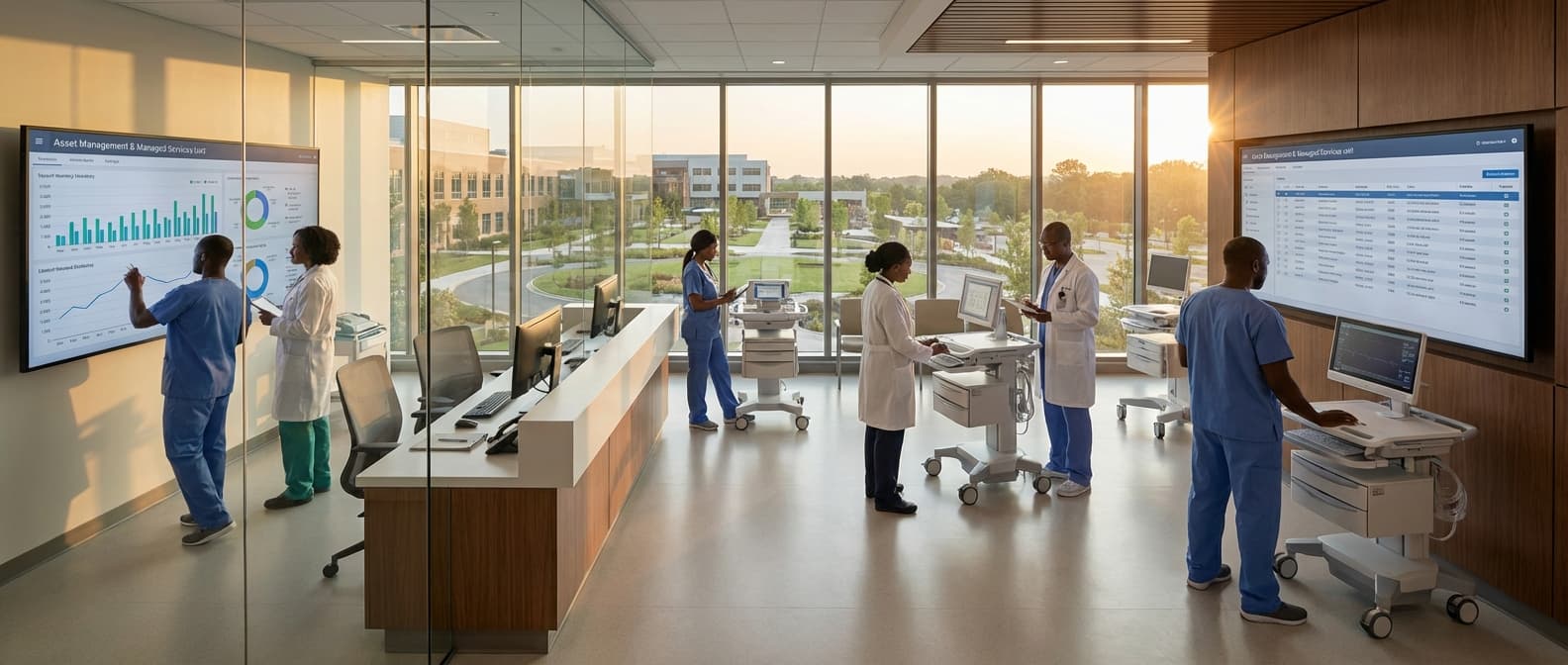
Maintenance KPI Reporting Service (Uptime/MTBF/MTTR) in Sao Tome and Principe
Engineering Excellence & Technical Support
Maintenance KPI Reporting Service (Uptime/MTBF/MTTR) High-standard technical execution following OEM protocols and local regulatory frameworks.
Real-time Uptime Monitoring
Gain immediate visibility into asset availability across your operations in Sao Tome and Principe. Our service tracks critical equipment uptime, enabling proactive identification of potential disruptions before they impact production.
Optimized MTBF for Reduced Downtime
Leverage advanced analytics to understand Mean Time Between Failures (MTBF) for your assets in Sao Tome and Principe. Our reporting helps pinpoint recurring issues, informing strategic maintenance planning to extend equipment life and minimize costly unplanned outages.
Accelerated MTTR for Faster Recovery
Enhance your response and resolution capabilities with detailed Mean Time To Repair (MTTR) reporting. We provide the data needed to streamline repair processes and reduce downtime duration, ensuring your operations in Sao Tome and Principe get back online swiftly.
What Is Maintenance Kpi Reporting Service (Uptime/mtbf/mttr) In Sao Tome And Principe?
Maintenance KPI Reporting Service (Uptime/MTBF/MTTR) in Sao Tome and Principe refers to the provision of specialized services focused on the collection, analysis, and reporting of Key Performance Indicators (KPIs) related to asset maintenance within the geographic jurisdiction of Sao Tome and Principe. These KPIs, primarily Uptime, Mean Time Between Failures (MTBF), and Mean Time To Repair (MTTR), are critical metrics for assessing the reliability, availability, and efficiency of operational assets. The service involves leveraging data from various sources (e.g., CMMS, SCADA, sensor logs) to generate actionable insights for maintenance strategies and operational improvements. The objective is to provide stakeholders with a quantifiable understanding of asset health and maintenance performance, enabling informed decision-making to minimize downtime and optimize resource allocation.
This service is essential for organizations operating critical infrastructure, production facilities, or any operational environment where asset reliability directly impacts productivity, revenue, or safety. It is particularly relevant in Sao Tome and Principe due to the potential challenges associated with remote locations, specialized technical expertise scarcity, and the need for robust operational continuity in sectors like energy, manufacturing, logistics, and telecommunications.
Typical use cases include:
- Asset Performance Monitoring: Continuously tracking the operational status and health of critical machinery and systems.
- Downtime Reduction Initiatives: Identifying root causes of failures and implementing preventive or predictive maintenance strategies to increase MTBF and Uptime.
- Maintenance Cost Optimization: Analyzing repair times and frequency to streamline maintenance processes and reduce associated costs.
- Service Level Agreement (SLA) Compliance: Demonstrating adherence to contractual uptime commitments for clients or partners.
- Capital Expenditure Justification: Providing data-driven evidence for investments in new equipment or maintenance technologies based on current performance metrics.
- Risk Management: Quantifying operational risks associated with asset failure and developing mitigation plans.
- Remote Operations Management: Enabling effective oversight of maintenance activities in geographically dispersed or less accessible operational sites.
| Stakeholder/Industry | Specific Need Addressed | Benefit of Service |
|---|---|---|
| Energy Sector (e.g., Power Generation, Oil & Gas) | Ensuring continuous energy supply, minimizing unscheduled outages of turbines, generators, pumps, and pipelines. | Maximizes revenue, reduces penalties, enhances grid stability, and improves safety. |
| Manufacturing Sector (e.g., Food & Beverage, Textiles) | Maintaining production line efficiency, reducing bottlenecks caused by equipment failure, and meeting production quotas. | Increases throughput, lowers per-unit production costs, and improves product quality. |
| Telecommunications Sector (e.g., Mobile Networks, Internet Service Providers) | Guaranteeing network availability and data transmission, minimizing service disruptions for end-users. | Enhances customer satisfaction, reduces churn, and maintains competitive advantage. |
| Logistics and Transportation Sector (e.g., Port Operations, Fleet Management) | Ensuring timely movement of goods, maximizing asset utilization (ships, vehicles, cranes), and minimizing operational delays. | Improves delivery times, reduces demurrage charges, and optimizes fleet performance. |
| Public Infrastructure (e.g., Water Treatment, Waste Management) | Ensuring consistent delivery of essential services, preventing public health risks associated with service interruptions. | Protects public health, ensures regulatory compliance, and maintains community well-being. |
| Mining and Agriculture Sectors | Maximizing operational uptime of heavy machinery, processing equipment, and irrigation systems to ensure efficient resource extraction and crop yields. | Increases yield, reduces operational losses, and improves overall productivity. |
Key Performance Indicators (KPIs) within the service:
- Uptime: The percentage of time an asset is operational and available for use. Mathematically represented as (Total Operating Time - Downtime) / Total Operating Time * 100%.
- Mean Time Between Failures (MTBF): The average time elapsed between inherent failures of a repairable system or component during normal operation. Calculated as Total Uptime / Number of Failures.
- Mean Time To Repair (MTTR): The average time required to repair a failed component or system, including diagnosis, repair, and testing. Calculated as Total Downtime / Number of Repairs.
Who Needs Maintenance Kpi Reporting Service (Uptime/mtbf/mttr) In Sao Tome And Principe?
This document outlines the critical need for Maintenance KPI Reporting Services, specifically focusing on Uptime, Mean Time Between Failures (MTBF), and Mean Time To Repair (MTTR), for businesses operating in Sao Tome and Principe. These metrics are essential for optimizing operational efficiency, minimizing downtime, and controlling maintenance costs, which are particularly crucial in developing economies and island nations where resource management and reliability are paramount.
| Industry/Sector | Specific Business Examples | Key Departments Benefiting from Reporting |
|---|---|---|
| Energy & Utilities (Power Generation, Water Supply) | State-owned power companies, private energy providers, water treatment facilities | Operations, Maintenance, Engineering, Asset Management, Finance |
| Telecommunications | Mobile network operators, internet service providers, satellite communication providers | Network Operations Center (NOC), Field Operations, Engineering, IT Infrastructure |
| Transportation & Logistics (Port operations, Aviation) | Port authorities, cargo handling companies, airlines operating to/from Sao Tome | Operations, Maintenance, Ground Support, Logistics Planning |
| Manufacturing & Agro-industry (Cocoa processing, Food production) | Cocoa processing plants, fisheries, beverage manufacturers | Production, Maintenance, Quality Control, Supply Chain Management |
| Hospitality & Tourism (Large resorts, hotels) | Large hotel chains, eco-resorts, cruise ship operators docking in Sao Tome | Facilities Management, Engineering, Operations, Guest Services |
| Government & Public Infrastructure | Ministries of Infrastructure, Public Works, Transportation | Asset Management, Project Management, Maintenance Planning, Public Services |
Target Customers in Sao Tome and Principe
- Businesses with critical operational assets that cannot afford significant downtime.
- Companies aiming to improve the reliability and longevity of their equipment.
- Organizations seeking to reduce operational expenditures related to maintenance and unplanned repairs.
- Entities looking to benchmark their maintenance performance against industry standards.
- Government and public sector organizations managing essential infrastructure.
Maintenance Kpi Reporting Service (Uptime/mtbf/mttr) Process In Sao Tome And Principe
This document outlines the workflow for the Maintenance KPI Reporting Service (Uptime/MTBF/MTTR) in Sao Tome and Principe, from initial inquiry to final execution. This service is crucial for organizations to monitor and improve their asset maintenance performance, ensuring operational efficiency and minimizing downtime. The process emphasizes clear communication, data collection, analysis, and timely reporting tailored to the specific context of Sao Tome and Principe's operational environment. The key performance indicators (KPIs) covered are Uptime, Mean Time Between Failures (MTBF), and Mean Time To Repair (MTTR).
| Step | Description | Key Activities | Responsible Party | Output/Deliverable | Notes/Considerations (Sao Tome and Principe) |
|---|---|---|---|---|---|
| The client (organization in Sao Tome and Principe) expresses interest in the Maintenance KPI Reporting Service. | Initial consultation to understand client's assets, maintenance history, reporting needs, and specific goals. Define the scope of services, including which assets to monitor and which KPIs are prioritized. | Client, Service Provider Representative | Service Request Document, Initial Scope Document | Understand local industry context, common asset types, and existing maintenance practices. Language considerations (Portuguese/French may be relevant). |
| Develop a strategy for collecting accurate and consistent maintenance data. | Identify data sources (CMMS, manual logs, sensor data). Define data fields required for Uptime, MTBF, and MTTR calculations. Establish data collection frequency and methods. | Service Provider (Data Analyst Team), Client (Maintenance Team) | Data Collection Plan, Data Template/Guidelines | Assess availability and quality of existing data systems in Sao Tome and Principe. Consider potential for manual data collection and training needs. |
| Collect maintenance data as per the established plan and ensure its accuracy. | Retrieve data from client's systems (CMMS, ERP, etc.) or facilitate manual data input. Perform data cleaning, validation, and consistency checks. | Client (Maintenance Team), Service Provider (Data Collection Team) | Raw Maintenance Data Set, Data Validation Report | Address potential connectivity issues for remote data transfer. Ensure data privacy and security protocols are understood and followed locally. |
| Calculate the defined KPIs based on the validated data. | Apply formulas for Uptime, MTBF, and MTTR. Analyze trends, identify root causes of failures and prolonged repair times. Benchmark against industry standards if applicable. | Service Provider (Data Analyst Team) | Calculated KPI Values, Trend Analysis Report, Root Cause Analysis Findings | Interpret results in the context of local operational challenges (e.g., spare parts availability, technical expertise). Identify areas for improvement. |
| Compile the analyzed data and insights into a comprehensive report. | Create clear, concise, and visually appealing reports (dashboards, summary documents). Include key findings, recommendations, and actionable insights. | Service Provider (Reporting Specialist) | Maintenance KPI Report (Uptime, MTBF, MTTR), Executive Summary | Tailor report language and format for local management. Consider incorporating visual aids relevant to the local context. |
| Present the generated report to the client for review and discussion. | Schedule a meeting to walk through the report, explain the findings, and answer any questions. Discuss implications and potential next steps. | Service Provider (Account Manager, Analyst), Client (Management, Maintenance Team) | Meeting Minutes, Feedback on Report | Facilitate a collaborative discussion. Ensure clarity on recommendations and secure buy-in for proposed actions. |
| Collaborate with the client to develop and implement strategies for improving maintenance performance. | Based on recommendations, assist in creating action plans for preventive maintenance, spare parts management, or technician training. Offer ongoing support for implementation. | Service Provider (Consultant, Analyst), Client (Maintenance Team, Management) | Action Plan, Implementation Progress Reports | Focus on practical and achievable solutions within the local resource constraints. Leverage local partnerships where feasible. |
| Establish a cycle of regular reporting and performance monitoring. | Schedule recurring reporting cycles (weekly, monthly, quarterly) based on client needs. Conduct periodic reviews to assess the impact of implemented actions and adjust strategies. | Service Provider, Client | Regular KPI Reports, Performance Improvement Updates | Build long-term relationships focused on sustainable improvement of maintenance operations in Sao Tome and Principe. |
Key Performance Indicators (KPIs) Explained
- Uptime: The percentage of time an asset or system is operational and available for use. It directly reflects the reliability of the equipment and the effectiveness of maintenance practices.
- Mean Time Between Failures (MTBF): The average time elapsed between a repairable system's successive failures. A higher MTBF indicates greater reliability.
- Mean Time To Repair (MTTR): The average time required to repair a failed system and return it to operational status. A lower MTTR signifies efficient repair processes.
Maintenance Kpi Reporting Service (Uptime/mtbf/mttr) Cost In Sao Tome And Principe
This report outlines the typical cost of Maintenance KPI Reporting Services (Uptime, Mean Time Between Failures - MTBF, Mean Time To Repair - MTTR) in Sao Tome and Principe. These services are crucial for businesses aiming to optimize their operational efficiency, minimize downtime, and enhance asset reliability. The pricing is influenced by several key factors, and while precise figures can vary, this analysis provides a general understanding of cost ranges in the local currency, the Dobra (STD).
| Service Type | Typical Monthly Cost Range (STD) | Notes |
|---|---|---|
| Basic Uptime Reporting (e.g., asset status, basic availability) | 50,000 - 150,000 STD | Assumes manual data entry or simple integration for a limited number of assets. Focus on raw availability figures. |
| Standard MTBF/MTTR Reporting (e.g., calculating average failure intervals and repair times) | 100,000 - 300,000 STD | Involves more detailed data collection on failures and repairs, potentially requiring integration with basic maintenance logs. Includes trend analysis. |
| Advanced Maintenance KPI Reporting (e.g., predictive analytics, root cause analysis, full CMMS integration) | 250,000 - 700,000+ STD | Requires sophisticated software, potential sensor deployment, deep system integration, and expert analysis for actionable insights and optimization recommendations. |
| On-site Data Collection/Consulting (per day) | 75,000 - 200,000 STD | Cost for a consultant or technician to visit a site for data gathering, audits, or on-site analysis. Excludes travel and accommodation. |
Factors Influencing Maintenance KPI Reporting Service Costs in Sao Tome and Principe:
- Scope of Services: The breadth of reporting required, including the number of assets monitored, the complexity of the KPIs tracked (e.g., basic uptime vs. detailed root cause analysis for MTTR), and the frequency of reporting.
- Data Collection Methods: Whether the service provider will implement manual data collection, integrate with existing SCADA/CMMS systems, or deploy IoT sensors for automated data gathering. Automated and integrated solutions typically incur higher initial setup costs but offer greater accuracy and efficiency.
- Reporting Frequency and Granularity: Daily, weekly, monthly, or quarterly reports. The level of detail and customization in the reports also impacts cost.
- Software and Technology: The sophistication of the reporting software used by the provider. Advanced analytics, predictive maintenance capabilities, and cloud-based platforms will command higher prices.
- Provider Expertise and Reputation: Established providers with a proven track record and specialized expertise in asset management and reliability engineering often charge more.
- Geographic Coverage within Sao Tome and Principe: While Sao Tome and Principe is a relatively small nation, the logistical challenges of reaching remote sites for data collection or site visits can influence costs.
- Customization and Integration: The need for bespoke reporting dashboards, integration with other business systems (e.g., ERP), or tailored analytical models will increase the project cost.
- Support and Training: The level of ongoing support, training for client personnel, and advisory services included in the package.
- Contract Duration: Longer-term contracts may offer discounted rates compared to short-term or project-based engagements.
Affordable Maintenance Kpi Reporting Service (Uptime/mtbf/mttr) Options
Our Affordable Maintenance KPI Reporting Service provides essential visibility into your operational efficiency through key metrics like Uptime, Mean Time Between Failures (MTBF), and Mean Time To Repair (MTTR). Understanding these metrics is crucial for proactive maintenance, minimizing downtime, and optimizing resource allocation, ultimately leading to significant cost savings and improved profitability. We offer flexible value bundles tailored to various business needs, alongside strategic cost-saving approaches to ensure you get the most out of your investment.
| Cost-Saving Strategy | Description | Impact on KPIs | Typical Cost Benefit |
|---|---|---|---|
| Automated Data Collection | Reduces manual data entry errors and frees up valuable technician time. | Increases accuracy of Uptime, MTBF, and MTTR. Enables faster reporting. | 5-15% reduction in labor costs related to data management. |
| Proactive Maintenance Scheduling (Based on MTBF) | Leverages MTBF data to predict potential failures and schedule maintenance before they occur. | Significantly improves Uptime. Increases MTBF by identifying and addressing root causes of failures. | Up to 30% reduction in unplanned downtime costs. |
| Optimized Repair Processes (Based on MTTR) | Analyzes MTTR to identify bottlenecks and streamline repair workflows. | Decreases MTTR by improving repair efficiency and reducing lead times. | Up to 20% reduction in repair labor and parts costs per incident. |
| Root Cause Analysis (RCA) Integration | Facilitates deeper dives into failure patterns to address underlying issues permanently. | Drives long-term improvements in Uptime and MTBF by eliminating recurring problems. | Potential for significant reduction in overall maintenance expenditure over time. |
| Scalable Service Tiers | Allows businesses to choose a service level that matches their current needs and budget, with options to upgrade as they grow. | Ensures cost-effectiveness and prevents overspending on unnecessary features. | Aligns IT/maintenance budget with actual operational requirements. |
| Cloud-Based Solution | Eliminates the need for on-premise hardware and IT infrastructure, reducing capital and operational expenses. | Provides flexibility and accessibility without significant upfront investment. | Lower TCO compared to traditional on-premise solutions. |
Value Bundles & Key Features
- {"title":"Essentials Bundle","description":"Ideal for businesses new to KPI tracking or with simpler operations. Focuses on core metrics for fundamental insights."}
- {"title":"Growth Bundle","description":"For growing businesses needing deeper analysis. Includes advanced reporting and trend analysis for informed decision-making."}
- {"title":"Enterprise Bundle","description":"Comprehensive solution for large-scale operations. Offers full customization, predictive analytics integration, and dedicated support."}
- {"title":"Key Features (Across Bundles)","description":"Automated data collection, customizable dashboards, trend analysis, historical data storage, secure cloud access, basic alert system."}
Verified Providers In Sao Tome And Principe
Navigating healthcare in a foreign country can be daunting. For those seeking reliable and high-quality medical services in Sao Tome and Principe, identifying 'Verified Providers' is paramount. This verification signifies that a healthcare professional or facility has met rigorous standards for competence, ethics, and patient care. When considering the best choice for your health needs, looking for such credentials is a crucial first step.
| Credential Type | Significance | How to Verify |
|---|---|---|
| National Medical License | Legal authorization to practice. | Check with the Ministry of Health (Ministério da Saúde) or the relevant professional medical council. |
| Specialization Certifications | Expertise in a specific medical area. | Request to see certificates from recognized training institutions. Inquire about their specific qualifications. |
| Hospital/Clinic Accreditation | Adherence to quality and safety standards. | Ask the facility directly about their accreditation status. Look for logos of accrediting bodies on their premises or website. |
| Continuing Medical Education Records | Commitment to ongoing learning and up-to-date knowledge. | May be difficult to verify directly as a patient, but can be discussed during consultation. Reputable providers will readily discuss their commitment. |
| Professional Memberships | Adherence to ethical codes and peer recognition. | Inquire about memberships in local or international medical societies. This information may be available on provider websites or through direct inquiry. |
Key Credentials for Verified Providers in Sao Tome and Principe
- National Medical License: Essential proof of authorization to practice medicine within Sao Tome and Principe, issued by the relevant Ministry of Health or professional regulatory body.
- Specialization Certifications: Evidence of advanced training and expertise in specific medical fields (e.g., cardiology, pediatrics, surgery).
- Affiliation with Accredited Hospitals/Clinics: Membership or working relationships with facilities that adhere to international or national healthcare standards.
- Continuing Medical Education (CME): Demonstrates a commitment to staying updated with the latest medical advancements and practices.
- Professional Memberships: Involvement in reputable medical associations can indicate adherence to ethical guidelines and peer recognition.
- Patient Reviews and Testimonials: While not a formal credential, consistently positive feedback from patients offers valuable insight into provider quality and patient satisfaction.
Scope Of Work For Maintenance Kpi Reporting Service (Uptime/mtbf/mttr)
This Scope of Work (SOW) outlines the services to be provided for the development, implementation, and ongoing delivery of a Maintenance Key Performance Indicator (KPI) Reporting Service focused on Uptime, Mean Time Between Failures (MTBF), and Mean Time To Repair (MTTR). The service aims to provide actionable insights for optimizing maintenance strategies, improving asset reliability, and reducing operational downtime.
| Deliverable | Description | Standard Specification/Notes |
|---|---|---|
| Data Ingestion & Validation Framework | Design and implement a robust framework for ingesting maintenance data from various sources (e.g., CMMS, SCADA, IoT sensors). Includes data cleansing, transformation, and validation processes to ensure data integrity. | Supported data sources: CSV, Excel, API integrations (REST/SOAP), direct database connections. Data validation rules defined by client, automated error logging and notification. |
| KPI Calculation Engine | Develop and implement algorithms to accurately calculate Uptime, MTBF, and MTTR based on ingested and validated data. | Calculations adhere to industry standard formulas. Configurability for different asset types and criticality levels. |
| Reporting Dashboard | Design and develop an interactive dashboard for visualizing the calculated KPIs. This will include trend analysis, historical data, and comparison against benchmarks. | Web-based, user-friendly interface. Customizable dashboards per user role. Real-time or near real-time data updates. Technologies: Power BI, Tableau, or custom web application. |
| Alerting and Notification System | Implement an automated system to trigger alerts based on pre-defined KPI thresholds (e.g., decreasing Uptime, increasing MTTR). | Configurable alert thresholds and notification channels (email, SMS, in-app notifications). Escalation procedures defined by client. |
| Historical Data Repository | Establish a secure and accessible repository for storing historical KPI data to support trend analysis and long-term performance evaluation. | Scalable database solution (e.g., SQL Server, PostgreSQL, cloud-based data warehouse). Data retention policies defined by client. |
| API for Data Access (Optional) | Provide an API to allow other systems to access calculated KPI data programmatically. | RESTful API with secure authentication and authorization. Documentation provided. |
| User Training & Documentation | Deliver comprehensive training to end-users on how to access, interpret, and utilize the reporting dashboard and associated features. Provide user manuals and technical documentation. | On-site or remote training sessions. Comprehensive user guides, administrator guides, and API documentation (if applicable). |
| Ongoing Maintenance & Support | Provide ongoing technical support, bug fixes, and minor enhancements to the reporting service. | Service Level Agreement (SLA) defining response and resolution times. Regular software updates and patches. |
Key Performance Indicators (KPIs)
- Uptime: Percentage of time a critical asset or system is operational and available for use.
- Mean Time Between Failures (MTBF): The average time that an asset or system operates between breakdowns or failures.
- Mean Time To Repair (MTTR): The average time it takes to repair a failed asset or system and restore it to operational status.
Service Level Agreement For Maintenance Kpi Reporting Service (Uptime/mtbf/mttr)
This Service Level Agreement (SLA) outlines the terms and conditions for the Maintenance KPI Reporting Service, specifically focusing on Uptime, Mean Time Between Failures (MTBF), and Mean Time To Repair (MTTR) metrics. It defines the guaranteed response times and uptime for the reporting service itself.
| Service Component | Uptime Guarantee | Response Time (Critical Issue) | Response Time (Non-Critical Issue) | Resolution Time Target (Critical Issue) | Resolution Time Target (Non-Critical Issue) |
|---|---|---|---|---|---|
| Reporting Platform Availability | 99.9% | 1 hour | 4 business hours | 4 business hours | 2 business days |
| KPI Data Processing & Report Generation | 99.5% | 2 hours (for scheduled reports) | 8 business hours (for on-demand reports) | 6 business hours | 3 business days |
Service Description and Scope
- The Maintenance KPI Reporting Service provides scheduled and on-demand reports detailing the Uptime, MTBF, and MTTR of specified customer assets or systems.
- The service encompasses data collection, processing, analysis, and presentation of these key performance indicators.
- This SLA applies to the availability and performance of the reporting platform and the accuracy of the reported KPIs, assuming accurate upstream data is provided by the customer.
- Excluded from this SLA are: issues caused by customer-provided data inaccuracies, network outages outside of the provider's control, scheduled maintenance windows (communicated in advance), and force majeure events.
Frequently Asked Questions

Ready when you are
Let's scope your Maintenance KPI Reporting Service (Uptime/MTBF/MTTR) in Sao Tome and Principe project in Sao Tome and Principe.

Scaling healthcare logistics and technical systems across the entire continent.