
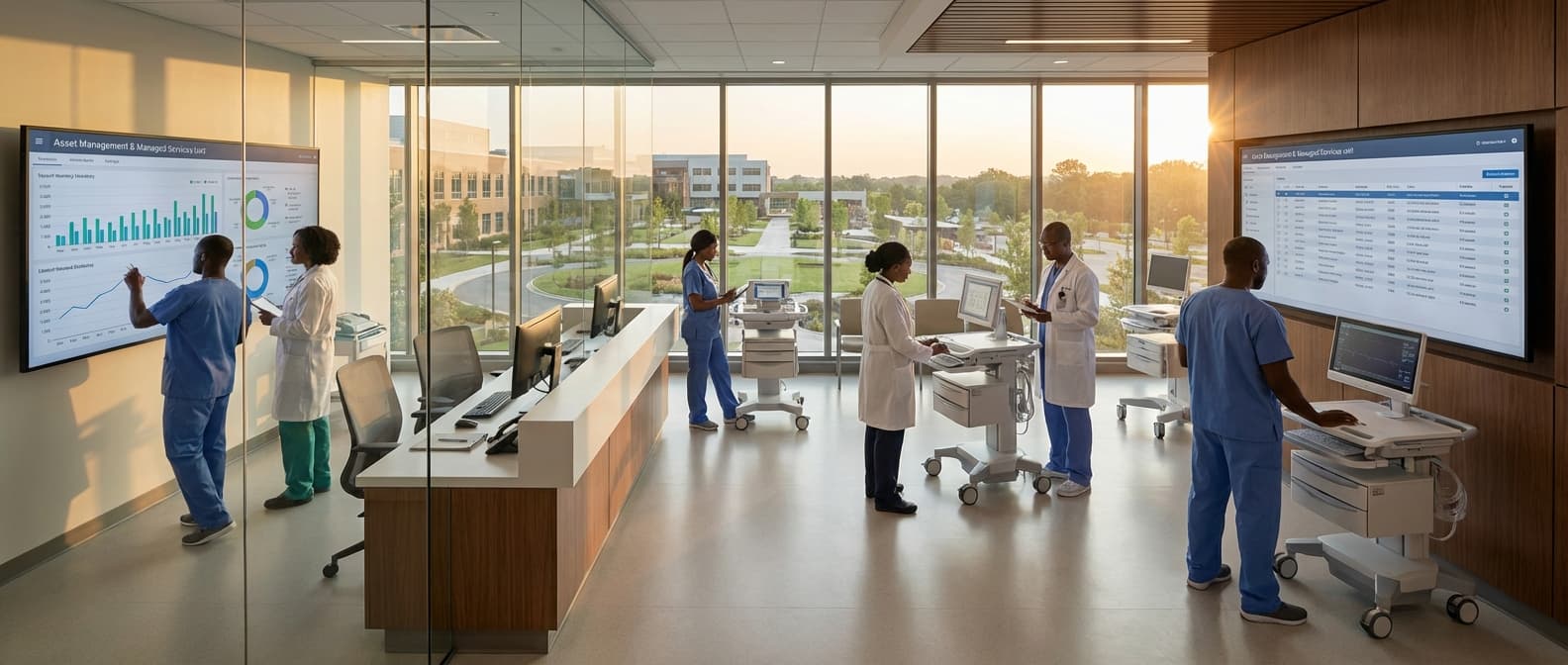
Equipment Fleet Standardization Consulting Service in Sao Tome and Principe
Engineering Excellence & Technical Support
Equipment Fleet Standardization Consulting Service High-standard technical execution following OEM protocols and local regulatory frameworks.
Optimized Fleet Utilization & Cost Reduction
Leverage our data-driven analysis to identify underutilized assets, rationalize inventory, and implement predictive maintenance schedules. This reduces operational costs, minimizes downtime, and maximizes ROI for your equipment fleet in Sao Tome and Principe's unique logistical landscape.
Streamlined Procurement & Lifecycle Management
Our expertise in global equipment markets and local regulatory frameworks enables us to establish standardized procurement processes. We guide you in selecting durable, versatile equipment suitable for Sao Tome and Principe's environment, ensuring seamless integration, simplified maintenance, and extended asset lifecycles.
Enhanced Operational Efficiency & Safety
By standardizing your equipment fleet, we create a predictable and manageable operational environment. This simplifies training, improves interoperability between units, and allows for the implementation of robust safety protocols tailored to the specific conditions and demands of operations in Sao Tome and Principe.
What Is Equipment Fleet Standardization Consulting Service In Sao Tome And Principe?
Equipment Fleet Standardization Consulting Service in Sao Tome and Principe refers to the specialized advisory and implementation support provided to organizations operating in Sao Tome and Principe to optimize their equipment fleets through the adoption of uniform specifications, makes, models, and operational protocols. This service focuses on rationalizing the diversity of equipment within an organization's holdings to achieve enhanced operational efficiency, reduced maintenance costs, improved procurement strategies, and streamlined training and support processes. It involves a systematic analysis of existing equipment assets, identification of redundancies and inefficiencies, and the development of a standardized fleet strategy aligned with the organization's operational objectives and the unique logistical and economic landscape of Sao Tome and Principe.
| Who Needs This Service? | Typical Use Cases in Sao Tome and Principe | ||||||
|---|---|---|---|---|---|---|---|
| Businesses with Diverse Equipment Holdings: Companies operating in sectors such as agriculture, construction, logistics, mining, and tourism that utilize a wide array of dissimilar equipment. | Agricultural Enterprises: Standardizing tractors, harvesters, and irrigation equipment to simplify maintenance, reduce spare parts inventory, and improve operator training for enhanced crop yields. | Construction Firms: Streamlining the procurement and maintenance of earthmoving equipment, cranes, and scaffolding to improve project timelines and reduce operational downtime. | Logistics and Transportation Companies: Standardizing delivery vehicles, forklifts, and warehouse handling equipment to optimize route planning, fuel efficiency, and driver training. | Mining Operations: Consolidating heavy-duty vehicles, drilling machinery, and processing equipment to enhance safety, reduce specialized technician requirements, and improve parts availability. | Tourism and Hospitality Sector: Standardizing guest transport vehicles (buses, vans), and resort maintenance equipment to ensure brand consistency and simplify upkeep. | Government Agencies and Public Sector Entities: Optimizing fleets of vehicles for public works, disaster response, and administrative functions for cost savings and operational efficiency. | International Organizations and NGOs: Managing fleets of specialized equipment used for development projects, humanitarian aid, and infrastructure initiatives, often in challenging environments. |
Key Components of Equipment Fleet Standardization Consulting:
- Fleet Audit and Analysis: Comprehensive assessment of current equipment inventory, including age, condition, performance metrics, maintenance history, and operational deployment.
- Needs Assessment and Requirement Definition: Identification of critical operational requirements and the development of standardized specifications for each equipment category.
- Standardization Strategy Development: Formulation of a roadmap for transitioning to a standardized fleet, including recommended makes, models, and configurations.
- Procurement and Sourcing Optimization: Development of strategies to leverage standardization for cost-effective procurement, bulk purchasing, and negotiation with suppliers.
- Maintenance and Support Optimization: Establishment of standardized maintenance procedures, spare parts inventory management, and training protocols for maintenance personnel.
- Operational Protocol Development: Creation of uniform operating procedures, safety guidelines, and performance monitoring mechanisms for standardized equipment.
- Technology Integration and Management: Guidance on integrating relevant technologies for fleet management, such as GPS tracking, telematics, and diagnostic tools.
- Risk Assessment and Mitigation: Identification of potential risks associated with standardization and the development of mitigation strategies.
- Change Management and Training: Development and implementation of training programs for operators and maintenance staff to ensure successful adoption of standardized equipment and procedures.
- Performance Monitoring and Continuous Improvement: Establishment of key performance indicators (KPIs) and mechanisms for ongoing fleet performance evaluation and iterative improvement.
Who Needs Equipment Fleet Standardization Consulting Service In Sao Tome And Principe?
Equipment fleet standardization consulting services in Sao Tome and Principe are crucial for organizations looking to optimize their operations, reduce costs, and improve efficiency. This service addresses the challenges of managing diverse fleets of equipment, which can lead to increased maintenance expenses, training complexities, and logistical hurdles. By standardizing equipment types, brands, and maintenance protocols, businesses can achieve significant operational benefits.
| Customer Segment | Key Benefits of Standardization | Common Equipment Types |
|---|---|---|
| Government & Public Utilities | Reduced TCO, improved service delivery, streamlined procurement, enhanced interoperability. | Trucks (dump trucks, utility trucks), excavators, bulldozers, graders, water tankers, specialized vehicles for utilities. |
| Large Agricultural Enterprises | Minimized downtime, lower maintenance costs, simplified training, optimized spare parts management, improved crop yields through reliable machinery. | Tractors, harvesters, plows, planters, sprayers, utility vehicles. |
| Construction & Infrastructure | Increased operational efficiency, reduced repair expenses, enhanced safety, better asset utilization, simplified spare parts inventory. | Excavators, loaders, dozers, cranes, concrete mixers, dump trucks, compactors, utility vehicles. |
| Oil, Gas & Mining | Ensured operational continuity, reduced technical support burden, improved parts availability in remote locations, streamlined operator training. | Heavy-duty trucks, specialized exploration vehicles, drilling equipment, loaders, excavators, maintenance vehicles. |
| Logistics & Transportation | Lower fleet operating costs, improved fuel efficiency, reduced maintenance complexity, enhanced driver familiarity and safety. | Delivery trucks (various sizes), long-haul trucks, vans, forklifts, utility vehicles. |
| Hospitality & Tourism | Cost-effective maintenance, improved guest experience through reliable transport and groundskeeping, simplified staff training. | Golf carts, utility vehicles, shuttle buses, groundskeeping equipment, maintenance vehicles. |
| NGOs & Aid Agencies | Reliable operations in challenging environments, cost-efficiency, simplified logistics for maintenance and repair, faster response times. | Utility vehicles, trucks, specialized off-road vehicles, generators, basic construction equipment. |
Target Customers & Departments for Equipment Fleet Standardization Consulting in Sao Tome and Principe
- {"rationale":"These entities often manage large and varied fleets for public service delivery. Standardization can lead to cost savings, better resource allocation, improved service reliability, and easier procurement processes.","departments":["Public Works Department (Roads, Infrastructure)","Water & Sanitation Authorities","Energy Ministry (Power Generation & Distribution)","Agricultural Ministry (Farming Equipment)","Forestry & Environment Agency","National Disaster Management Agencies"],"customerType":"Government Agencies & Public Utilities"}
- {"rationale":"Companies involved in large-scale farming, especially in crops like cocoa, coffee, or palm oil, utilize a wide range of agricultural machinery. Standardization can reduce downtime, simplify maintenance training, and optimize spare parts inventory.","departments":["Farm Operations","Machinery & Maintenance","Logistics & Supply Chain","Procurement"],"customerType":"Large Agricultural Enterprises"}
- {"rationale":"The construction sector relies heavily on diverse heavy machinery and vehicles. Standardization improves operational efficiency, reduces repair costs, enhances safety, and facilitates inter-project equipment sharing.","departments":["Operations Management","Fleet Management","Maintenance & Repair","Project Management","Procurement"],"customerType":"Construction & Infrastructure Companies"}
- {"rationale":"These industries often have remote operational sites and require robust, reliable equipment. Standardization minimizes technical support complexities, ensures parts availability, and streamlines training for specialized machinery.","departments":["Fleet Operations","Asset Management","Maintenance & Engineering","Logistics","Procurement"],"customerType":"Oil, Gas & Mining Operations (Exploration & Support)"}
- {"rationale":"Companies managing fleets of trucks, vans, and other vehicles for goods transport benefit from reduced maintenance costs, improved fuel efficiency, and simplified driver training through standardization.","departments":["Fleet Management","Operations","Maintenance","Procurement"],"customerType":"Logistics & Transportation Companies"}
- {"rationale":"Resorts and large hotel chains often manage fleets of utility vehicles, golf carts, maintenance equipment, and guest transport. Standardization can lead to cost savings on parts and maintenance, and a more consistent guest experience.","departments":["Facilities Management","Groundskeeping & Maintenance","Transportation Services","Procurement"],"customerType":"Large Hospitality & Tourism Operators (Resorts, Hotels)"}
- {"rationale":"NGOs working in areas with limited infrastructure can significantly benefit from a standardized fleet for aid delivery and operational activities, ensuring reliability and ease of maintenance in challenging environments.","departments":["Logistics & Operations","Fleet Management","Procurement"],"customerType":"Non-Governmental Organizations (NGOs) & Aid Agencies"}
Equipment Fleet Standardization Consulting Service Process In Sao Tome And Principe
This document outlines the standard workflow for engaging our Equipment Fleet Standardization Consulting Service in Sao Tome and Principe. The process is designed to be transparent, efficient, and tailored to the unique operational needs of each client.
| Phase | Stage | Key Activities | Deliverables | Timeline (Indicative) |
|---|---|---|---|---|
| 1 | Inquiry and Initial Consultation | Client expresses interest, initial discussions to understand general needs and objectives. Preliminary information gathering. | Understanding of client's initial requirements, confirmation of service scope suitability. | 1-3 Business Days |
| 2 | Needs Assessment and Proposal Development | Detailed discussion to define specific challenges, fleet size, types of equipment, operational environment, and desired outcomes. Site visits (if applicable and feasible). Development of a tailored service proposal. | Detailed Needs Assessment Report, Comprehensive Service Proposal (including scope, methodology, deliverables, timeline, and investment). | 5-10 Business Days |
| 3 | Agreement and Project Kick-off | Client reviews and accepts the proposal. Contract negotiation and signing. Formal project kick-off meeting to introduce the consulting team, confirm project plan, and establish communication protocols. | Signed Service Agreement, Project Kick-off Meeting Minutes, Confirmed Project Plan. | 3-7 Business Days |
| 4 | Data Collection and Analysis | Gathering comprehensive data on the existing equipment fleet: asset register, usage logs, maintenance records, operational costs, downtime, supplier information, and operator feedback. Data verification and validation. | Raw Fleet Data Compilation, Initial Data Analysis Report (identifying trends, inefficiencies, and key areas for improvement). | 10-20 Business Days (dependent on fleet size and data availability) |
| 5 | Standardization Strategy Development | Developing a strategic roadmap for fleet standardization based on data analysis, best practices, and client objectives. Identifying optimal equipment types, brands, and specifications. Developing procurement and maintenance strategies. | Fleet Standardization Strategy Document (including recommended models, specifications, procurement guidelines, and maintenance plans). | 7-15 Business Days |
| 6 | Implementation Planning and Support | Developing a detailed implementation plan with actionable steps, timelines, and responsibilities. Providing guidance and support during the procurement of new equipment, disposal of old assets, and integration of new operational procedures. | Detailed Implementation Plan, Procurement and Disposal Recommendations, Training Material Outlines (if required). | 15-30 Business Days (ongoing support as needed) |
| 7 | Monitoring, Evaluation, and Finalization | Tracking the progress of standardization implementation. Measuring the impact of the changes against predefined KPIs. Providing final recommendations and documentation. Project close-out meeting. | Performance Monitoring Report, Final Project Report, Post-Implementation Review, Project Closure Documentation. | 5-10 Business Days (post-implementation phase) |
Equipment Fleet Standardization Consulting Service Process
- Phase 1: Inquiry and Initial Consultation
- Phase 2: Needs Assessment and Proposal Development
- Phase 3: Agreement and Project Kick-off
- Phase 4: Data Collection and Analysis
- Phase 5: Standardization Strategy Development
- Phase 6: Implementation Planning and Support
- Phase 7: Monitoring, Evaluation, and Finalization
Equipment Fleet Standardization Consulting Service Cost In Sao Tome And Principe
Consulting services for equipment fleet standardization in Sao Tome and Principe can vary significantly in cost due to a multitude of factors. These include the complexity of the existing fleet, the desired level of standardization, the scope of work (e.g., analysis, recommendation, implementation support), the experience and reputation of the consulting firm, and the duration of the engagement. For businesses operating in Sao Tome and Principe, it's crucial to understand these drivers to budget effectively. The local market dynamics, availability of specialized consultants, and potential travel/accommodation expenses for consultants (if not local) also play a role. While specific pricing can only be determined through a detailed proposal, general ranges can be provided to offer an initial understanding. These ranges are estimates and can fluctuate based on individual project needs and market conditions.
| Service Level / Scope | Estimated Price Range (STD - Sao Tomean Dobra) | Notes |
|---|---|---|
| Initial Fleet Assessment & Gap Analysis | 15,000 - 40,000 STD | Focuses on understanding current fleet, identifying inefficiencies, and preliminary standardization options. |
| Comprehensive Standardization Strategy Development | 35,000 - 90,000 STD | Includes detailed analysis, defining standardization criteria, vendor landscape, and a phased implementation roadmap. |
| Full Implementation Support (e.g., Vendor Selection, Negotiation) | 60,000 - 150,000+ STD | Covers strategic development plus active participation in procurement, contract negotiation, and project management. |
| Specialized Technical Consulting (e.g., Telematics Integration) | 20,000 - 70,000 STD (per module/phase) | Hourly or project-based for specific technology integrations or advanced analytics. |
| Ongoing Fleet Management Optimization (Post-Standardization) | 10,000 - 30,000 STD (monthly retainer) | For continuous improvement, performance monitoring, and adjustments to the standardized fleet. |
Key Pricing Factors for Equipment Fleet Standardization Consulting in Sao Tome and Principe
- Fleet Size and Diversity: Larger and more diverse fleets require more extensive analysis and planning.
- Scope of Work: Basic assessment vs. in-depth strategic planning, vendor negotiation, and implementation oversight.
- Consultant's Expertise and Reputation: Highly experienced and specialized consultants command higher fees.
- Duration of Engagement: The longer the project, the higher the overall cost.
- Complexity of Standardization Goals: Simple replacement vs. integration with advanced telematics and predictive maintenance.
- Data Availability and Quality: Poor data requires more effort for analysis and validation.
- Location and Logistics: Travel and accommodation costs for non-local consultants.
- Market Demand for Consulting Services: Scarcity of specialized expertise can drive up prices.
- Client's Internal Resources: The extent to which the client can contribute to data gathering and analysis.
Affordable Equipment Fleet Standardization Consulting Service Options
Our Affordable Equipment Fleet Standardization Consulting Service helps businesses optimize their equipment acquisition, utilization, and maintenance processes through strategic standardization. By focusing on a consistent fleet, you can unlock significant cost savings, improve operational efficiency, and reduce downtime. We offer flexible value bundles tailored to your specific needs and implement proven cost-saving strategies throughout the engagement.
| Cost-Saving Strategy | Description | Impact on Standardization |
|---|---|---|
| Bulk Purchasing Power | Consolidating purchases of standardized equipment leads to higher volumes and stronger negotiation leverage with fewer suppliers. | Reduces per-unit acquisition costs and simplifies procurement. |
| Reduced Maintenance & Repair Costs | Fewer equipment types mean fewer unique parts, specialized tools, and technician training requirements. Streamlines diagnostics and repairs. | Lowers spare parts inventory, reduces training overhead, and minimizes downtime due to specialized repairs. |
| Optimized Inventory Management | Standardization allows for a more focused and manageable spare parts inventory, reducing obsolescence and carrying costs. | Minimizes capital tied up in inventory and reduces waste from outdated parts. |
| Enhanced Operator Proficiency & Productivity | Operators trained on a consistent set of equipment are more efficient, require less supervision, and can switch between tasks more readily. | Improves operational efficiency and reduces training time for new hires. |
| Simplified Fleet Management & Administration | Fewer models and makes simplify tracking, depreciation, resale value analysis, and overall fleet administration. | Reduces administrative burden and provides clearer insights into fleet performance. |
| Improved Resale Value | Standardized equipment often has higher demand and predictable resale values, making fleet retirement more predictable and profitable. | Maximizes return on investment at the end of the equipment lifecycle. |
Value Bundles
- {"title":"Essential Fleet Analysis & Recommendation","description":"A foundational package focusing on analyzing your current fleet, identifying standardization opportunities, and providing actionable recommendations for improvement. Ideal for businesses new to fleet standardization."}
- {"title":"Strategic Standardization Implementation Support","description":"Builds upon the analysis with hands-on support for implementing recommended standardization strategies, including vendor negotiation assistance and policy development. Suited for companies ready to execute changes."}
- {"title":"Comprehensive Fleet Optimization & Ongoing Management","description":"Our most robust offering, encompassing initial analysis, full implementation support, and ongoing monitoring and optimization strategies to ensure sustained cost savings and efficiency. Perfect for organizations seeking a long-term partnership."}
- {"title":"Customizable Solutions","description":"We understand that every fleet is unique. We can tailor a consulting package to address your specific pain points and objectives, ensuring you get the most value from our services."}
Verified Providers In Sao Tome And Principe
Navigating healthcare in a new country can be challenging. For those seeking trusted medical services in Sao Tome and Principe, identifying verified providers is paramount. Franance Health stands out as a premier choice, offering a rigorous credentialing process that ensures patients receive care from highly qualified and reputable professionals. Their commitment to verifying the qualifications, experience, and ethical standing of their network of providers guarantees peace of mind and access to exceptional healthcare.
| Provider Type | Key Credentials Verified | Franance Health Assurance |
|---|---|---|
| General Practitioners | Medical Degree, Medical License, Continuing Medical Education (CME) | Verified competency in primary care, patient advocacy, and adherence to best practices. |
| Specialists (e.g., Cardiologists, Dermatologists, Pediatricians) | Specialty Board Certification, Fellowship Training (where applicable), Extensive Clinical Experience | Confirmed expertise in their specific field, advanced diagnostic and treatment capabilities. |
| Surgeons | Surgical Residency Completion, Board Certification in Surgical Specialty, Hospital Privileges | Assurance of skilled surgical techniques, patient safety protocols, and post-operative care competence. |
| Dentists | Dental Degree, Dental License, Specialization Certifications (e.g., Orthodontics, Endodontics) | Verified proficiency in oral health, restorative, and cosmetic dentistry. |
| Diagnostic Services (e.g., Imaging Centers, Laboratories) | Accreditation, Qualified Technicians and Radiologists, Quality Control Measures | Ensured accuracy and reliability of diagnostic results through certified facilities and personnel. |
Why Franance Health Credentials Matter:
- Rigorous Verification Process: Franance Health employs a comprehensive vetting system, examining medical licenses, certifications, and professional histories.
- Ensuring Competency and Expertise: They prioritize providers with proven track records and specialized skills relevant to a wide range of medical needs.
- Upholding Ethical Standards: Background checks and reference verifications ensure that all listed providers adhere to the highest ethical and professional conduct.
- Patient Safety and Trust: By presenting only credentialed professionals, Franance Health significantly reduces risk and builds confidence for patients.
- Access to Quality Care: Their network connects you with the best medical talent available, facilitating access to appropriate and timely treatment.
- Streamlined Healthcare Experience: Franance Health simplifies the process of finding reliable healthcare, saving you time and potential stress.
Scope Of Work For Equipment Fleet Standardization Consulting Service
This Scope of Work (SOW) outlines the consulting services for the standardization of the client's equipment fleet. The primary objective is to achieve operational efficiencies, reduce maintenance costs, and improve fleet management through the selection and implementation of standardized equipment models and specifications across relevant categories. This SOW details the technical deliverables and the standard specifications that will be developed and implemented as part of this project.
| Phase | Key Activities | Deliverables | Timeline (Weeks) |
|---|---|---|---|
| Review current fleet inventory, usage patterns, maintenance records, and operational requirements. Identify key equipment categories for standardization. Conduct stakeholder interviews. | Current Fleet Assessment Report, Identified Standardization Categories, Stakeholder Analysis Summary | 4 |
| Define functional and technical requirements for each equipment category. Research industry best practices and available technologies. Draft detailed standard specifications. | Draft Standard Equipment Specifications (per category), Technical Requirement Matrix | 6 |
| Evaluate potential equipment models against developed specifications. Conduct vendor outreach and gather pricing information. Perform cost-benefit analysis. Recommend standardized models. | Recommended Standardized Equipment Models (with justification), Vendor Comparison Report, Cost-Benefit Analysis Report | 5 |
| Develop a phased implementation strategy, including procurement, disposal, and integration. Define change management protocols. Outline training needs. | Fleet Standardization Implementation Plan, Change Management Strategy Outline, Training Needs Assessment | 3 |
| Finalize all standard specifications and documentation. Develop training materials. Conduct training sessions for maintenance, operations, and procurement teams. | Finalized Standard Equipment Specifications, Training Manuals & Materials, Training Session Records | 4 |
| Provide final project report summarizing achievements, lessons learned, and recommendations for future fleet management. Handover all project documentation. | Final Project Report, Lessons Learned Document, Project Documentation Archive | 2 |
Project Objectives
- Define and document standardized equipment categories.
- Develop comprehensive technical specifications for each standardized equipment model.
- Identify and recommend specific equipment models that meet the defined specifications.
- Establish a phased implementation plan for fleet standardization.
- Develop training materials and conduct knowledge transfer sessions for relevant personnel.
- Provide a framework for ongoing fleet management and future standardization efforts.
Service Level Agreement For Equipment Fleet Standardization Consulting Service
This Service Level Agreement (SLA) outlines the performance standards for the Equipment Fleet Standardization Consulting Service. It defines the response times for service requests and the expected uptime for any platform or tool provided as part of the consulting engagement. This SLA is an integral part of the Master Services Agreement (MSA) between [Your Company Name] and [Client Company Name].
| Service Category/Request Type | Severity Level | Response Time Target | Escalation Path |
|---|---|---|---|
| General Inquiries/Consulting Support | Medium | 4 Business Hours | Service Manager, Project Lead |
| Data Analysis/Reporting Requests | Medium | 8 Business Hours | Service Manager, Data Specialist |
| Tool/Platform Access Issues | High | 2 Business Hours | Service Manager, Technical Support Lead |
| Critical Error in Provided Tools/Platform | Emergency | 1 Business Hour | Service Manager, Senior Technical Lead, Account Executive |
| Feature Requests/Suggestions | Low | 48 Business Hours (for acknowledgement and initial feedback) | Project Lead |
Definitions
- Service Request: Any formal communication from the Client to [Your Company Name] requesting support, information, or action related to the Equipment Fleet Standardization Consulting Service.
- Response Time: The maximum time allowed for [Your Company Name] to acknowledge and begin working on a Service Request.
- Uptime: The percentage of time that any supporting platform or tool provided by [Your Company Name] is operational and accessible to the Client.
- Downtime: The percentage of time that any supporting platform or tool provided by [Your Company Name] is not operational or accessible to the Client.
- Business Hours: [Specify your standard business hours, e.g., 9:00 AM to 5:00 PM, Monday to Friday, excluding public holidays in [Client's Region]].
- Severity Levels: A classification of Service Requests based on their impact on the Client's operations.
- Emergency: Critical issue that renders a core function of the consulting service unusable, preventing the Client from making progress on fleet standardization. Requires immediate resolution.
- High: Significant issue that impairs a major function of the consulting service, impacting progress but not completely halting it. Requires prompt resolution.
- Medium: Minor issue that affects a non-critical function or causes inconvenience, but the core consulting objectives can still be pursued. Requires resolution within a reasonable timeframe.
- Low: Informational request, minor bug report, or suggestion for improvement that does not impact service functionality. Resolved on a best-effort basis.
Frequently Asked Questions

Ready when you are
Let's scope your Equipment Fleet Standardization Consulting Service in Sao Tome and Principe project in Sao Tome and Principe.

Scaling healthcare logistics and technical systems across the entire continent.