
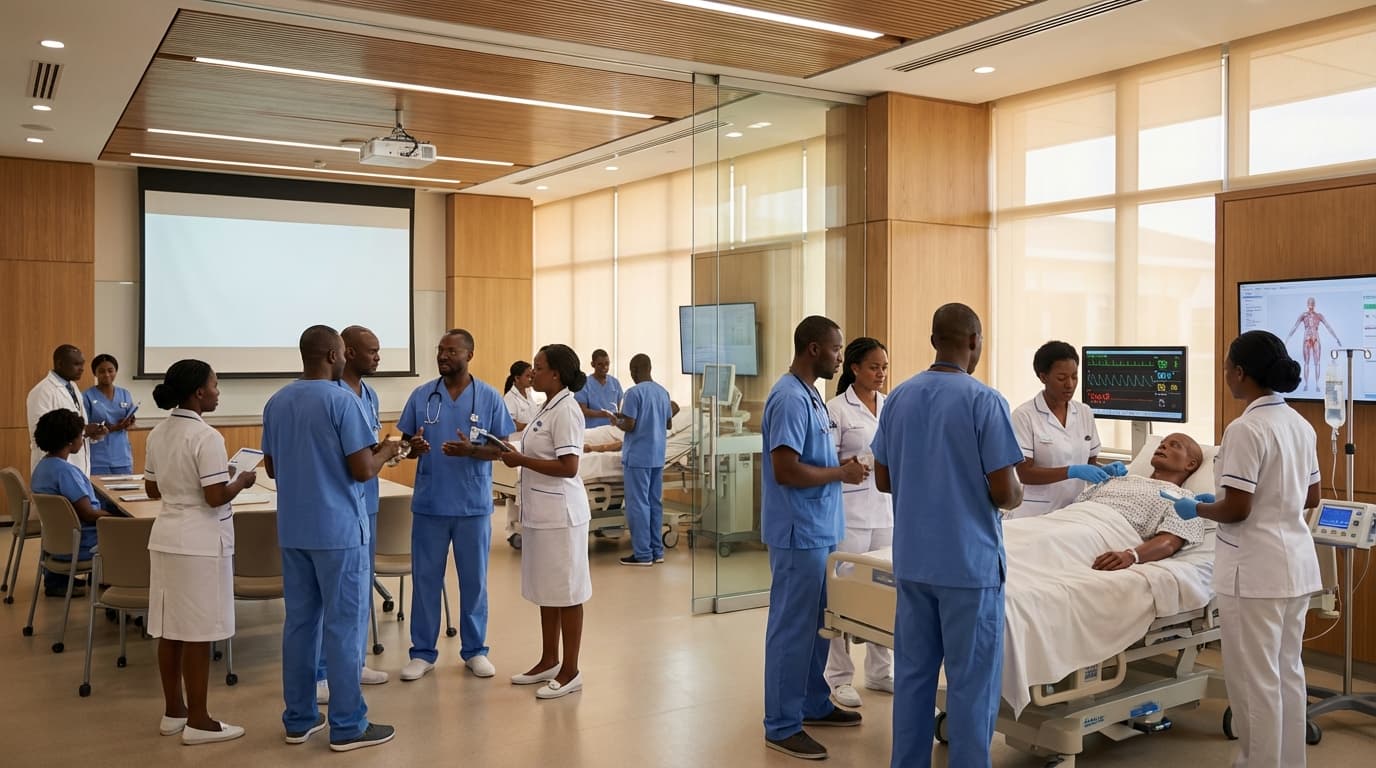
Equipment Training & Education in Rwanda
Engineering Excellence & Technical Support
Comprehensive equipment training and certification programs High-standard technical execution following OEM protocols and local regulatory frameworks.
Advanced Agricultural Equipment Operation
Empowering Rwandan farmers with hands-on training in operating and maintaining modern agricultural machinery, leading to increased crop yields and improved efficiency.
Skilled Technical Workforce Development
Cultivating a pool of highly skilled technicians through specialized vocational training programs in essential equipment repair and maintenance, supporting Rwanda's industrial growth.
Drone Technology for Infrastructure Monitoring
Providing comprehensive training on the use of drones for surveying, infrastructure inspection, and agricultural applications, enhancing data collection accuracy and operational safety.
What Is Equipment Training & Education In Rwanda?
Equipment Training & Education in Rwanda refers to the structured process of imparting knowledge and practical skills necessary for the safe, efficient, and effective operation, maintenance, and troubleshooting of various types of equipment. This service is crucial for ensuring optimal asset utilization, minimizing downtime, preventing accidents, and maximizing the lifespan of machinery and technological systems within the Rwandan context. It encompasses theoretical instruction, hands-on practical sessions, simulations, and ongoing professional development tailored to specific equipment categories and industry standards prevalent in Rwanda.
| Stakeholder/Sector | Equipment Types | Rationale for Training |
|---|---|---|
| Agriculture Sector | Tractors, harvesters, irrigation systems, processing machinery (e.g., coffee hullers, tea sorters) | Enhance crop yields, reduce post-harvest losses, improve processing efficiency, ensure safe operation in rural environments, maintain machinery longevity. |
| Construction Sector | Excavators, bulldozers, cranes, concrete mixers, power tools, welding equipment | Ensure site safety, optimize project timelines, reduce material waste, prevent accidents, comply with occupational health and safety regulations. |
| Healthcare Sector | Diagnostic imaging equipment (X-ray, MRI), laboratory analyzers, surgical instruments, patient monitoring systems, sterilization equipment | Ensure accurate diagnoses, patient safety, proper instrument sterilization, efficient laboratory operations, maintenance of critical medical devices. |
| Manufacturing & Industrial Sector | Assembly line machinery, CNC machines, packaging equipment, material handling systems, power generation units | Improve production output, maintain product quality, reduce operational costs, minimize equipment failure, enhance workplace safety. |
| Telecommunications Sector | Antenna installation equipment, network testing devices, fiber optic splicing tools, power supply units | Ensure network reliability, efficient installation and maintenance of infrastructure, troubleshooting connectivity issues, safe handling of specialized tools. |
| Mining & Extractives Sector | Drilling rigs, haul trucks, crushers, conveyor systems, safety equipment | Maximize resource extraction efficiency, ensure operator safety in hazardous environments, prevent equipment damage, comply with stringent safety and environmental standards. |
| Small & Medium Enterprises (SMEs) & Entrepreneurs | Various specialized equipment depending on the business (e.g., baking ovens, printing machines, small-scale agricultural processors) | Enable self-sufficiency in equipment operation and basic maintenance, reduce reliance on external technicians, improve business efficiency and competitiveness. |
| Government Agencies & Public Utilities | Water treatment plants, power grid maintenance equipment, road construction machinery, public transport vehicle maintenance tools | Ensure reliable service delivery, efficient management of public assets, adherence to public safety standards, cost-effective maintenance of infrastructure. |
Key Components of Equipment Training & Education in Rwanda
- Theoretical Instruction: Covers principles of operation, technical specifications, safety protocols, regulatory compliance (e.g., national safety standards, environmental regulations), and theoretical understanding of equipment functionality.
- Practical Skill Development: Focuses on hands-on proficiency in operating the equipment, performing routine checks, basic maintenance procedures, emergency response, and diagnostic techniques.
- Safety & Hazard Identification: Emphasizes risk assessment, the use of Personal Protective Equipment (PPE), lockout/tagout procedures, and emergency protocols specific to the equipment and its operational environment.
- Troubleshooting & Diagnostics: Equips trainees with the ability to identify common malfunctions, interpret error codes, and perform basic repairs or escalate issues to specialized technical support.
- Maintenance & Servicing: Includes training on preventative maintenance schedules, lubrication, cleaning, and the replacement of worn-out parts, aligning with manufacturer recommendations and local service availability.
- Documentation & Record Keeping: Training on proper logging of operational data, maintenance activities, and incident reports for traceability and performance analysis.
- Certification & Assessment: Formal evaluation of acquired knowledge and skills through written exams, practical demonstrations, and competency-based assessments, often leading to recognized certifications.
Who Needs Equipment Training & Education In Rwanda?
In Rwanda, a diverse range of individuals and organizations require equipment training and education to enhance productivity, ensure safety, and foster economic growth. This training is crucial across various sectors, from agriculture and manufacturing to healthcare and infrastructure development. Investing in skilled personnel leads to more efficient operations, reduced equipment downtime, and the adoption of best practices, ultimately contributing to Rwanda's development goals.
| Customer Segment | Key Departments/Roles | Types of Equipment/Skills |
|---|---|---|
| Manufacturing & Industry | Production Lines, Quality Control, Maintenance, Operations Management | Industrial machinery, CNC machines, welding equipment, material handling equipment, safety protocols, lean manufacturing principles |
| Agriculture | Farm Management, Agronomy, Equipment Operators, Cooperative Leadership | Tractors, harvesters, irrigation systems, processing machinery, pesticide application equipment, post-harvest handling techniques |
| Healthcare | Medical Technicians, Nurses, Biomedical Engineers, Laboratory Staff | Diagnostic imaging equipment (X-ray, MRI), laboratory analyzers, surgical instruments, sterilization equipment, patient monitoring systems |
| Construction & Infrastructure | Site Supervisors, Equipment Operators, Engineers, Foremen | Heavy machinery (excavators, bulldozers, cranes), concrete mixers, power tools, scaffolding safety, project management software |
| Hospitality & Tourism | Kitchen Staff, Maintenance Teams, Housekeeping, Event Technicians | Commercial kitchen appliances, laundry equipment, cleaning machinery, audio-visual equipment, property management systems |
| Government & Public Services | Public Works Departments, Environmental Agencies, Disaster Management Units, IT Support | Road maintenance equipment, water treatment systems, emergency response vehicles, data management hardware, cybersecurity tools |
| Education & Training | Instructors, Technical Trainers, Curriculum Developers | Teaching aids, laboratory equipment, vocational training machinery, digital learning platforms |
| Energy & Mining | Geologists, Mining Operators, Equipment Maintenance Teams, Safety Officers | Drilling rigs, extraction machinery, geological survey equipment, safety gear, processing plants |
Target Customers & Departments for Equipment Training & Education in Rwanda
- SMEs in manufacturing and assembly
- Agricultural cooperatives and individual farmers
- Healthcare providers and technicians
- Construction companies and site managers
- Hospitality and tourism establishments
- Government ministries and agencies
- Vocational training institutions and educators
- Entrepreneurs and startup founders
- Youth seeking to enter skilled trades
- Workers in the energy and mining sectors
Equipment Training & Education Process In Rwanda
The equipment training and education process in Rwanda, particularly for specialized or newly introduced equipment, follows a structured workflow designed to ensure effective knowledge transfer, safe operation, and optimal utilization. This process typically begins with an inquiry from an organization or individual seeking training, progresses through needs assessment and curriculum development, culminates in the execution of training sessions, and concludes with evaluation and ongoing support. The aim is to empower users with the necessary skills and understanding to operate and maintain equipment efficiently and safely.
| Phase | Key Activities | Responsible Parties | Deliverables/Outcomes | Typical Duration |
|---|---|---|---|---|
| Organization/individual expresses interest in training for specific equipment. Initial discussion to understand broad training needs. | Client/Learner, Training Provider/Supplier | Understanding of client's interest, preliminary information exchange. | 1-3 days |
| Detailed analysis of the client's current skill level, existing knowledge, specific equipment models, operational environment, and desired learning outcomes. Identification of specific training gaps. | Training Provider/Supplier, Client/Learner Representatives (e.g., management, users) | Detailed Training Needs Analysis (TNA) report, defined learning objectives. | 3-7 days |
| Designing training modules based on TNA. Developing training materials (manuals, presentations, exercises, case studies, safety guidelines). Ensuring materials are relevant to Rwandan context and regulations. | Training Provider/Curriculum Developers, Subject Matter Experts (SMEs) | Approved training curriculum, training manuals, presentation slides, practical exercises. | 1-2 weeks |
| Selecting qualified and experienced trainers with expertise in the specific equipment. Briefing trainers on the curriculum, objectives, and expected participant profiles. Ensuring trainers are aware of any local safety standards or best practices. | Training Provider/Management, SMEs | Assigned and prepared trainers. | 2-4 days |
| Finalizing training dates, times, and duration. Arranging training venue (on-site or off-site). Securing necessary equipment for practical sessions. Coordinating participant attendance and travel arrangements (if applicable). | Training Provider/Logistics Coordinator, Client/Learner | Confirmed training schedule, logistics plan, confirmed participant list. | 3-5 days |
| Delivering theoretical sessions covering principles, operation, maintenance, and safety. Conducting hands-on practical sessions for skill development and proficiency. Demonstrations and supervised practice. | Trainers, Participants | Trained participants with theoretical knowledge and practical skills. | Varies based on complexity (e.g., 1 day to 2 weeks) |
| Administering theoretical tests (quizzes, exams) and practical assessments to gauge understanding and skill acquisition. Gathering feedback from participants on the training delivery, content, and trainer effectiveness. | Trainers, Participants, Training Provider | Assessment results, participant feedback reports. | 1-2 days (concurrent with or immediately after execution) |
| Issuing certificates of completion to participants who meet the required competency standards. Providing comprehensive training records and reports to the client. | Training Provider | Certificates of Competency, Training Completion Reports. | 2-4 days |
| Providing ongoing technical support or troubleshooting assistance. Offering refresher courses or advanced training modules. Periodic follow-up to assess long-term impact and identify further training needs. | Training Provider, Client/Learner | Sustained operational efficiency, improved equipment utilization, ongoing learning. | Ongoing |
Equipment Training & Education Process Workflow in Rwanda
- Inquiry & Initial Contact
- Needs Assessment & Requirement Gathering
- Curriculum Development & Material Preparation
- Trainer Identification & Preparation
- Scheduling & Logistics
- Training Execution (Theory & Practical)
- Assessment & Evaluation
- Certification & Documentation
- Post-Training Support & Follow-up
Equipment Training & Education Cost In Rwanda
The cost of equipment training and education in Rwanda can vary significantly depending on several factors. These include the type and complexity of the equipment, the duration of the training, the provider's reputation and experience, the location (urban vs. rural), and the specific curriculum covered. Generally, more specialized or advanced equipment training will command higher prices. Smaller, less complex equipment training might be offered in workshops or short courses, while comprehensive education on sophisticated machinery often involves longer programs and potentially hands-on apprenticeships. Local currency, the Rwandan Franc (RWF), is used for pricing. Providers range from vocational training centers and technical colleges to specialized companies offering on-site training for businesses. The demand for skilled technicians in sectors like construction, manufacturing, agriculture, and IT also influences pricing. For basic equipment operation, costs might be relatively low, focusing on safety and fundamental use. However, for intricate machinery requiring diagnostic skills, maintenance, or programming, the investment will be considerably higher.
| Training Category | Typical Price Range (RWF) | Notes |
|---|---|---|
| Basic Equipment Operation (e.g., agricultural tools, small machinery) | 50,000 - 150,000 | Short courses, workshops, often focusing on safety and basic function. |
| Intermediate Equipment Training (e.g., construction equipment, welding, basic IT hardware) | 150,000 - 500,000 | Multi-day courses, potentially with practical sessions. Vocational centers and private institutes. |
| Advanced Technical Training (e.g., industrial machinery, complex IT systems, specialized medical equipment) | 500,000 - 2,000,000+ | Longer programs, specialized certifications, often requiring experienced trainers and advanced facilities. May include on-site employer-sponsored training. |
| Specialized Certifications & Manufacturer-Specific Training | Negotiable (can be significantly higher) | Often provided by equipment manufacturers or authorized partners, focusing on specific models and proprietary technology. May include travel and accommodation if off-site. |
Key Pricing Factors for Equipment Training & Education in Rwanda:
- Type and complexity of equipment
- Duration and depth of training program
- Provider's reputation and accreditation
- Location of training (urban/rural, on-site/off-site)
- Curriculum scope (basic operation vs. advanced maintenance/repair)
- Materials and resources provided (manuals, simulators)
- Trainer's qualifications and experience
- Market demand and sector specificity
Affordable Equipment Training & Education Options
Investing in proper equipment training and education is crucial for safety, efficiency, and longevity of your assets. Fortunately, there are several affordable options available. This guide explores value bundles and cost-saving strategies to help you make informed decisions without breaking the bank.
| Strategy Type | Description | Potential Savings | Best For |
|---|---|---|---|
| Value Bundles | Combined courses/services at a reduced price | Moderate to High | Comprehensive skill development, career pathing |
| Group Discounts | Discounted rates for multiple attendees | Moderate | Teams of all sizes, mandatory training |
| Online/E-Learning | Virtual, self-paced courses | High | Flexibility, remote teams, budget-conscious |
| Train-the-Trainer | Empowering internal trainers | Very High (long-term) | Large organizations, continuous learning culture |
| On-Site Training | Training delivered at your facility | Moderate to High (depending on group size & travel) | Larger teams, specialized equipment, minimizing downtime |
| Partnerships/Alliances | Leveraging industry resources | Variable | Specific industry professionals, niche equipment |
| Government Grants | Financial assistance for training | Variable to High | Companies meeting specific criteria, workforce development initiatives |
| Modular Training | Purchasing specific skill modules | Moderate | Targeted skill gaps, specialized needs |
Understanding Value Bundles and Cost-Saving Strategies
- Value Bundles: These are pre-packaged training programs that combine multiple courses or services at a discounted price compared to purchasing them individually. Bundles often cater to specific roles, skill levels, or equipment types, offering comprehensive learning pathways.
- Cost-Saving Strategies: These are practical approaches to reduce the overall expense of training. They focus on smart planning, leveraging available resources, and exploring alternative learning methods.
- Early Bird Discounts: Registering for training well in advance can often secure significant price reductions.
- Group Discounts: Training multiple employees simultaneously can unlock substantial savings per individual. The larger the group, the greater the potential discount.
- Online & E-Learning: Virtual courses and self-paced modules are generally more affordable than in-person sessions due to reduced overhead for the provider. They also offer flexibility for employees.
- Train-the-Trainer Programs: Investing in training a few key personnel who can then train others within your organization can be a highly cost-effective long-term strategy.
- On-Site Training: While seemingly more expensive upfront, on-site training can eliminate travel and accommodation costs for multiple employees, making it more economical for larger teams.
- Partnerships & Alliances: Collaborating with industry associations or equipment manufacturers can provide access to discounted training programs or educational resources.
- Government Grants & Subsidies: Explore local or national government programs that offer financial assistance for workforce development and specialized training.
- Used Equipment Training: If training is specific to older or used equipment, look for providers who specialize in this niche, as their programs might be more tailored and affordable.
- Modular Training: Opting for modular training allows you to purchase only the specific modules or skill sets your team requires, avoiding unnecessary costs for advanced or irrelevant topics.
Verified Providers In Rwanda
In the evolving landscape of healthcare in Rwanda, the identification of truly verified and high-quality providers is paramount for individuals seeking reliable medical services. Franance Health stands out as a leading name, distinguished by its stringent credentialing process and unwavering commitment to patient well-being. This commitment ensures that all providers associated with Franance Health meet the highest standards of professionalism, expertise, and ethical practice. By choosing Franance Health, patients gain access to a network of healthcare professionals who have undergone rigorous vetting, providing peace of mind and confidence in the quality of care received.
| Provider Type | Franance Health Verification Status | Key Benefits for Patients |
|---|---|---|
| General Practitioners | Verified | Accurate diagnoses, accessible primary care, preventative health guidance. |
| Specialist Physicians (e.g., Cardiologists, Dermatologists) | Verified | Expert diagnosis and treatment for complex conditions, specialized knowledge. |
| Surgeons | Verified | Skilled surgical procedures, focus on patient safety and recovery. |
| Dentists | Verified | Comprehensive oral health care, preventative and restorative treatments. |
| Nurses and Midwives | Verified | Compassionate care, essential support services, skilled in various medical settings. |
| Pharmacists | Verified | Accurate dispensing of medications, expert advice on drug interactions and usage. |
| Therapists (e.g., Physiotherapists) | Verified | Rehabilitation services, pain management, improved physical function. |
Why Franance Health Represents the Best Choice:
- Rigorous Vetting Process: Franance Health employs a multi-faceted credentialing procedure that scrutinizes the educational background, professional licenses, certifications, and work experience of all its affiliated healthcare providers.
- Commitment to Quality: Beyond basic verification, Franance Health actively assesses providers for their dedication to continuous professional development, adherence to best practices, and positive patient feedback.
- Patient-Centric Approach: The network prioritizes providers who demonstrate empathy, effective communication, and a genuine focus on patient needs and outcomes.
- Comprehensive Network: Franance Health offers access to a diverse range of medical specialties, ensuring patients can find the right expert for their specific health concerns.
- Trust and Transparency: By clearly identifying verified providers, Franance Health fosters trust and transparency in the Rwandan healthcare system, empowering patients to make informed decisions.
- Affordability and Accessibility: While maintaining high standards, Franance Health strives to make quality healthcare accessible and affordable through partnerships and efficient service delivery.
Scope Of Work For Equipment Training & Education
This Scope of Work (SOW) outlines the requirements for providing comprehensive training and educational services for the specified equipment. The objective is to ensure that personnel are proficient in the safe, efficient, and effective operation, maintenance, and troubleshooting of the equipment, thereby maximizing its lifespan and operational output. This SOW details the technical deliverables and standard specifications required for the successful execution of the training program.
| Deliverable Type | Description | Format/Medium | Standard Specification |
|---|---|---|---|
| Training Plan | Detailed outline of training modules, learning objectives, schedule, and assessment methods. | Digital Document (PDF/Word) | Must align with the equipment's complexity and user roles. Include prerequisite knowledge requirements. |
| Training Materials (Participant) | Comprehensive guides, manuals, presentations, and exercises for trainees. | Digital (PDF, PPT, Interactive Modules) and/or Printed | Content must be accurate, up-to-date, and use clear, concise language. Include visual aids (diagrams, schematics, photos). |
| Training Materials (Instructor) | Facilitator guides, lesson plans, answer keys for exercises, and presentation slides. | Digital (PDF, PPT) | Provides instructors with the necessary resources to deliver training effectively. |
| Hands-on Training Sessions | Practical, supervised sessions for trainees to apply learned concepts on the actual equipment. | On-site/Remote Simulation | Must provide sufficient time for practice. Safety protocols must be rigorously followed. Equipment used must be representative of the operational environment. |
| Competency Assessments | Methods to evaluate trainee understanding and practical skills post-training. | Written Exams, Practical Demonstrations, Quizzes | Assessments should be aligned with learning objectives and demonstrate mastery of critical skills. |
| Post-Training Support Documentation | Quick reference guides, FAQs, troubleshooting flowcharts, and contact information for further assistance. | Digital (PDF, Web-based) | Accessible and user-friendly for ongoing reference. |
| Training Completion Certificates | Official documentation recognizing successful completion of the training program. | Digital/Printed | Include trainee name, course title, date of completion, and issuer's insignia. |
| Trainer Qualifications | Documentation confirming the expertise and experience of the trainers. | Resumes, Certifications, Letters of Recommendation | Trainers must possess in-depth knowledge of the specific equipment and proven training delivery skills. |
| Training Environment Setup | Requirements for the training location, including equipment availability, safety measures, and technical infrastructure. | Checklist/Specification Document | Ensures a conducive and safe learning environment. Adequate lighting, ventilation, and power supply are essential. |
Key Areas of Training
- Equipment Fundamentals and Principles of Operation
- Safe Operating Procedures and Emergency Protocols
- Routine Operation and Monitoring
- Preventative Maintenance and Basic Troubleshooting
- Advanced Troubleshooting and Repair Techniques
- System Integration and Interfacing (if applicable)
- Software/Firmware Operation and Updates (if applicable)
- Record Keeping and Reporting
Service Level Agreement For Equipment Training & Education
This Service Level Agreement (SLA) outlines the response times and uptime guarantees for the Equipment Training & Education services provided by [Your Company Name] (hereinafter referred to as 'Provider') to [Client Company Name] (hereinafter referred to as 'Client').
| Service Component | Response Time Guarantee (Business Hours) | Uptime Guarantee (Platform Availability) |
|---|---|---|
| Instructor-Led Training (Virtual/Onsite Scheduling) | Within 24 hours for initial scheduling request confirmation | N/A (relies on instructor availability) |
| E-Learning Platform Access & Performance | Within 4 business hours for critical platform issues | 99.5% monthly uptime |
| Technical Support (Troubleshooting Training Platform) | Within 2 business hours for urgent inquiries | N/A (support is provided) |
| New Equipment Training Content Availability (post-release) | Within 5 business days of official equipment release | N/A (content delivery) |
Key Service Components
- Training Delivery & Accessibility
- Technical Support for Training Platforms
- Content Updates & Maintenance
Frequently Asked Questions

Ready when you are
Let's scope your Equipment Training & Education in Rwanda project in Rwanda.

Scaling healthcare logistics and technical systems across the entire continent.