
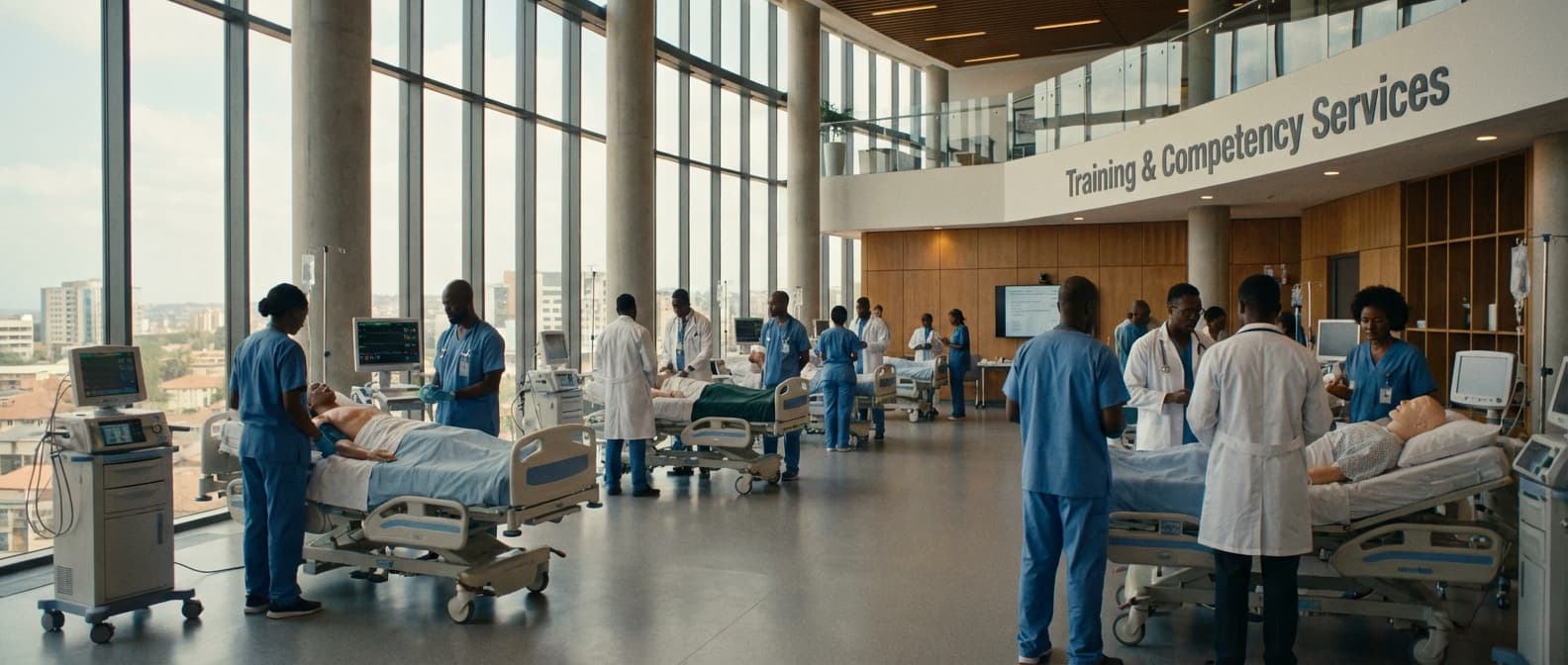
Ventilator User Training Service (Nurses) in Rwanda
Engineering Excellence & Technical Support
Ventilator User Training Service (Nurses) High-standard technical execution following OEM protocols and local regulatory frameworks.
Mastering Ventilation Modes
Gain hands-on proficiency in essential ventilator modes (e.g., Volume Control, Pressure Control, SIMV, PSV) through interactive simulations and case studies relevant to Rwandan healthcare settings. Understand their physiological principles and appropriate clinical applications for diverse patient needs.
Advanced Monitoring and Troubleshooting
Develop expert skills in interpreting ventilator waveforms, alarms, and patient parameters. Learn systematic approaches to identify and resolve common ventilator-related complications, ensuring optimal patient outcomes and minimizing risks in resource-limited environments.
Safe Weaning and Discontinuation Protocols
Acquire comprehensive knowledge of evidence-based protocols for initiating and managing ventilator weaning. Practice patient assessment criteria and synchronization techniques to facilitate safe and timely extubation, reducing ventilator dependency and hospital stay.
What Is Ventilator User Training Service (Nurses) In Rwanda?
Ventilator User Training Service (Nurses) in Rwanda is a specialized educational program designed to equip registered nurses with the knowledge, skills, and confidence to safely and effectively operate, monitor, and manage mechanical ventilators in various clinical settings. This service addresses the critical need for skilled healthcare professionals to provide respiratory support to patients experiencing acute respiratory failure or other conditions requiring mechanical ventilation. The training emphasizes both theoretical understanding of ventilatory mechanics and physiological principles, as well as practical application through hands-on simulation and real-time patient management.
| Target Audience | Need for Training | Typical Use Cases | ||||
|---|---|---|---|---|---|---|
| Registered Nurses (RNs) in Rwanda. | To ensure safe and proficient management of patients requiring mechanical ventilation, thereby improving patient outcomes and reducing morbidity and mortality. | Management of patients in Intensive Care Units (ICUs) with Acute Respiratory Distress Syndrome (ARDS), severe pneumonia, sepsis-induced respiratory failure, or post-operative respiratory complications. | Support for patients in High Dependency Units (HDUs) requiring less intensive but still critical respiratory support. | Emergency departments managing patients with acute respiratory emergencies. | Operating rooms during surgical procedures requiring intra-operative mechanical ventilation. | Transfer of critically ill patients requiring continuous mechanical ventilation. |
Components of Ventilator User Training Service (Nurses) in Rwanda:
- Theoretical foundations of respiratory physiology and pathophysiology.
- Principles of mechanical ventilation (modes, settings, alarms).
- Ventilator hardware and software operation.
- Patient assessment and monitoring for ventilation efficacy and complications.
- Troubleshooting common ventilator alarms and malfunctions.
- Weaning protocols and strategies.
- Infection control protocols related to mechanical ventilation.
- Ethical considerations and communication with patients and families.
- Hands-on simulation exercises with various ventilator models.
- Case study analysis and clinical decision-making.
Who Needs Ventilator User Training Service (Nurses) In Rwanda?
This document outlines the essential need for Ventilator User Training Services specifically tailored for nurses in Rwanda. Effective training is crucial for ensuring patient safety, optimizing ventilator functionality, and improving patient outcomes in critical care settings. Nurses play a pivotal role in the daily management and monitoring of patients requiring mechanical ventilation, making their proficiency with these complex devices paramount.
| Target Customer Group | Primary Department/Setting | Key Responsibilities & Training Needs | Impact of Training |
|---|---|---|---|
| Registered Nurses (RNs) | Intensive Care Units (ICUs) | Direct patient care, ventilator setup, parameter adjustment, weaning protocols, troubleshooting, patient monitoring, alarm management. | Reduced adverse events, improved patient recovery rates, efficient resource utilization, enhanced staff confidence. |
| Enrolled Nurses (ENs)/Licensed Practical Nurses (LPNs) | Emergency Departments (EDs), ICUs | Basic ventilator operation, alarm response, patient observation, assisting RNs with ventilator management. | Timely initial intervention, support for senior nursing staff, improved patient stability in critical situations. |
| Neonatal Nurses | Neonatal Intensive Care Units (NICUs) | Specialized knowledge of neonatal ventilation modes, lung protective strategies, and patient-specific adjustments for infants. | Improved survival rates and long-term health outcomes for neonates requiring ventilation. |
| Anesthesia & Post-Anesthesia Nurses | Operating Rooms (ORs), Post-Anesthesia Care Units (PACUs) | Understanding of peri-operative ventilation, safe transport of ventilated patients, initial recovery monitoring. | Smoother patient transitions from surgery, prevention of post-operative respiratory complications. |
| Nursing Educators/Supervisors | Hospital Training Departments, Departmental Leadership | Capacity building, development of training materials, on-the-job mentorship, quality assurance of ventilator use. | Sustainable in-house expertise, standardized best practices, continuous improvement of nursing skills. |
Target Customers & Departments for Ventilator User Training Service (Nurses) in Rwanda
- Nurses working in Intensive Care Units (ICUs)
- Nurses in Emergency Departments (EDs) or Resuscitation Units
- Nurses in Neonatal Intensive Care Units (NICUs)
- Nurses in Post-Anesthesia Care Units (PACUs)
- Nurses in general medical and surgical wards where ventilators may be used for short-term support
- Nursing educators and trainers responsible for in-house staff development
- Nurses in rural or remote healthcare facilities that may have limited access to specialized training
Ventilator User Training Service (Nurses) Process In Rwanda
This document outlines the workflow for the Ventilator User Training Service specifically for nurses in Rwanda. The process begins with an inquiry from a healthcare facility and concludes with the successful completion of the training program. The service aims to equip nurses with the necessary knowledge and practical skills to safely and effectively operate and manage ventilators in various clinical settings across Rwanda.
| Stage | Key Activities | Responsible Parties | Key Deliverables/Outcomes | Timeline (Indicative) |
|---|---|---|---|---|
| Healthcare facility (e.g., hospital, clinic) expresses interest in ventilator training for their nursing staff. Training provider receives the inquiry. Initial discussions to understand the number of nurses to be trained, existing knowledge levels, specific ventilator models used, and desired training outcomes. Site visit may be conducted. | Healthcare Facility (requester), Training Provider | Formal inquiry received, Initial understanding of training needs. | 1-2 weeks |
| Training provider develops a comprehensive training proposal based on the needs assessment. Proposal includes training objectives, curriculum outline, methodologies, duration, faculty profiles, required resources, and cost breakdown. Proposal is submitted to the healthcare facility. | Training Provider | Detailed training proposal. | 1-2 weeks |
| Healthcare facility reviews the proposal. Negotiations may occur. Upon agreement, a formal contract or Memorandum of Understanding (MOU) is signed, outlining terms, conditions, responsibilities, and payment schedules. | Healthcare Facility, Training Provider | Signed contract/MOU. | 2-4 weeks |
| Joint planning between the training provider and the facility to finalize the training dates, times, and venue. Arrangements for training equipment (ventilators, manikins, simulation tools), materials, and any necessary travel/accommodation for trainers are made. | Training Provider, Healthcare Facility | Agreed training schedule, confirmed venue, secured training resources. | 1-2 weeks |
| Training provider prepares training modules, presentations, handouts, and assessment tools. Nurses nominated for training are informed and may be asked to complete pre-training questionnaires to gauge baseline knowledge. Facility ensures nurses are allocated time for training. | Training Provider, Healthcare Facility | Ready training materials, pre-training assessments (optional). | 1 week |
| The training is conducted by qualified instructors. It typically involves theoretical sessions (principles of ventilation, ventilator modes, patient assessment, troubleshooting) and practical, hands-on sessions using actual ventilators and simulation equipment. Case studies and group discussions are incorporated. | Training Provider (Instructors), Nurses (Trainees) | Completion of theoretical and practical training modules. | Duration varies (e.g., 2-5 days, depending on scope) |
| Assessment of nurses' learning through written tests, practical demonstrations, and observation. Feedback forms are collected from participants to evaluate the training. Post-training support mechanisms (e.g., Q&A sessions, access to resources) may be offered. | Training Provider, Nurses (Trainees) | Assessment results, participant feedback, identification of knowledge gaps. | 1 week (during and immediately after training) |
| Upon successful completion of the training and passing assessments, certificates are issued to the nurses. The training provider may conduct follow-up assessments or provide refresher training as needed or agreed upon in the contract. | Training Provider, Nurses (Certified) | Training certificates, report on training outcomes, ongoing support (if applicable). | 2-4 weeks (post-training) |
Ventilator User Training Service (Nurses) Process in Rwanda: Workflow
- Inquiry & Needs Assessment
- Proposal Development & Submission
- Contracting & Agreement
- Training Schedule & Logistics Planning
- Pre-Training Preparation
- Training Delivery
- Post-Training Evaluation & Support
- Certification & Follow-up
Ventilator User Training Service (Nurses) Cost In Rwanda
The cost of Ventilator User Training Services for nurses in Rwanda can vary significantly based on several factors. These include the provider of the training (e.g., government health institutions, private medical training centers, or specialized equipment suppliers), the duration and depth of the training program, the number of participants, and whether the training is conducted on-site at a healthcare facility or at a dedicated training center. The expertise and qualifications of the trainers also play a role in pricing. Furthermore, the specific type and complexity of the ventilators being covered in the training can influence the cost, as more advanced machines might require more specialized and thus costly training.
Training often includes theoretical sessions covering ventilator principles, modes, and patient monitoring, as well as practical, hands-on sessions with actual ventilator equipment. The inclusion of simulation exercises and post-training assessments can also add to the overall cost. For bulk training for a larger cohort of nurses from a single institution, volume discounts may be available. The cost may also be influenced by the demand for such specialized training within Rwanda's healthcare sector and the availability of qualified trainers.
| Training Scope/Provider Type | Estimated Price Range (RWF) |
|---|---|
| Basic Theoretical & Hands-on (Government/NGO-led, standard ventilators, small group) | 80,000 - 150,000 per nurse |
| Comprehensive (Private training center, advanced ventilators, larger group) | 150,000 - 300,000 per nurse |
| Specialized/Manufacturer-led (specific ventilator model, on-site at facility) | 250,000 - 500,000+ per nurse (potentially negotiable based on contract size) |
| Refresher/Update Training (shorter duration, specific modules) | 50,000 - 100,000 per nurse |
Key Factors Influencing Ventilator User Training Cost for Nurses in Rwanda:
- Training Provider (Government vs. Private, Equipment Supplier)
- Training Duration and Depth (Basic vs. Advanced)
- Number of Participants (Individual vs. Group)
- Training Location (On-site vs. Training Center)
- Trainer Expertise and Qualifications
- Ventilator Type and Complexity
- Inclusion of Simulation and Assessment
- Volume Discounts for Bulk Training
- Market Demand and Availability of Trainers
Affordable Ventilator User Training Service (Nurses) Options
This document outlines affordable ventilator user training services specifically designed for nurses. We understand the critical need for skilled nurses in managing ventilated patients and the importance of cost-effective training solutions. This guide explores various value bundles and cost-saving strategies to make essential ventilator training accessible and sustainable.
| Training Option | Description | Value Bundle Components | Cost-Saving Strategies | Estimated Price Range (per nurse, indicative) |
|---|---|---|---|---|
| Basic Online Module & Simulation | Foundation-level training covering ventilator basics, modes, alarms, and troubleshooting through interactive online modules and virtual simulation exercises. | Online modules, virtual ventilator simulator access, knowledge assessment quizzes. | Self-paced learning, reduced travel costs, scalable to large groups, pre-recorded Q&A sessions. | $100 - $250 |
| Blended Learning: Online + Virtual Lab | Combines online theory with hands-on practice using remote-controlled virtual ventilators or simulated patient scenarios. | Online modules, virtual ventilator simulator access, guided virtual lab sessions with instructor oversight, case study analysis. | Reduced instructor-to-student ratio for virtual labs, bulk discounts for group registrations, flexible scheduling of virtual sessions. | $250 - $500 |
| On-site Workshop (Small Group) | Intensive, in-person training for smaller cohorts, focusing on practical skills, equipment handling, and team-based scenarios. | Expert-led instruction, hands-on practice with actual ventilators, scenario-based simulations, equipment familiarization, group problem-solving. | Bundled pricing for small groups, customized curriculum to specific equipment, reduced travel for trainers (if local), longer training sessions to maximize efficiency. | $500 - $1000 |
| Train-the-Trainer Program | Equips experienced nurses to train their colleagues within the institution, fostering internal expertise and ongoing learning. | Comprehensive curriculum, train-the-trainer manual, mentoring support, certification for trainers. | Long-term cost reduction through internal training capacity, reduced need for external training, standardized institutional knowledge. | Varies based on program length and intensity (e.g., $1500 - $3000 per trainer) |
| Subscription-Based Access | Ongoing access to a library of online modules, simulation tools, and updated content for continuous learning and skill maintenance. | Unlimited access to online learning platform, new module releases, simulated patient library, periodic live Q&A webinars. | Predictable annual cost, economies of scale for institutions, reduced per-user cost for frequent users, easy onboarding of new staff. | $50 - $150 per nurse per year (institutional plans) |
Key Benefits of Affordable Ventilator Training for Nurses
- Enhanced patient safety and outcomes through skilled staff.
- Reduced risk of ventilation-related complications.
- Improved staff confidence and job satisfaction.
- Compliance with accreditation and regulatory standards.
- Cost-effectiveness in training investment.
- Flexibility to adapt to evolving medical technologies.
Verified Providers In Rwanda
In Rwanda's evolving healthcare landscape, access to verified and reputable healthcare providers is paramount for ensuring quality care and patient well-being. Franance Health stands out as a premier organization, consistently demonstrating a commitment to excellence through rigorous credentialing and a patient-centric approach. This document outlines the significance of verified providers in Rwanda and highlights why Franance Health's credentials make them the best choice for your healthcare needs.
| Franance Health Credential | Significance and Benefit to Patients | Demonstrated Commitment |
|---|---|---|
| Accreditation by National Health Regulatory Bodies (e.g., Rwanda Biomedical Centre, Ministry of Health) | Official recognition of meeting or exceeding national quality and safety standards. Patients can be assured of regulatory compliance and oversight. | Regular audits and adherence to all mandated reporting and operational guidelines. |
| International Certifications (e.g., ISO standards, specific medical specialty accreditations) | Indicates a commitment to global best practices in healthcare management, quality assurance, and patient care. Elevates the standard of service beyond national requirements. | Investment in training, infrastructure, and processes aligned with international benchmarks. |
| Rigorous Practitioner Vetting and Verification Process | Confirms that all medical staff have valid licenses, appropriate education, and a clean professional record. Guarantees competence and ethical practice. | Ongoing checks of medical licenses, continuous professional development records, and background verifications. |
| Patient Satisfaction and Outcome Tracking | Demonstrates a focus on patient experience and the effectiveness of care provided. High satisfaction rates and positive outcomes are direct indicators of quality. | Regular patient feedback surveys, analysis of treatment results, and implementation of improvement strategies based on findings. |
| Commitment to Continuous Professional Development (CPD) | Ensures that healthcare professionals are up-to-date with the latest medical advancements, technologies, and treatment protocols. Translates to the most current and effective care for patients. | Mandatory participation in workshops, conferences, and advanced training programs for all staff. |
| Transparency in Pricing and Service Offerings | Empowers patients to make informed decisions about their healthcare. Builds trust through open communication about costs and available services. | Clear and accessible price lists, detailed service descriptions, and proactive communication regarding any potential additional costs. |
Why Verified Providers Matter in Rwanda
- Ensures adherence to established medical standards and best practices.
- Guarantees that practitioners possess the necessary qualifications and experience.
- Promotes patient safety and reduces the risk of medical errors.
- Builds trust and confidence in the healthcare system.
- Facilitates accountability and ethical conduct among healthcare professionals.
Scope Of Work For Ventilator User Training Service (Nurses)
This Scope of Work (SOW) outlines the requirements for providing comprehensive ventilator user training services specifically tailored for registered nurses. The objective is to equip nurses with the necessary knowledge and practical skills to safely and effectively operate and manage various types of ventilators in a clinical setting. This training will cover fundamental principles of mechanical ventilation, common ventilator modes, patient monitoring, troubleshooting, and emergency procedures.
| Phase | Activity | Deliverables | Specifications / Standards | Duration (Estimated) |
|---|---|---|---|---|
| Needs Assessment & Curriculum Development | Tailored Training Curriculum, Pre-training Assessment Tools | Curriculum aligned with current clinical guidelines (e.g., ACCP, SCCM), adaptable to specific hospital protocols. Pre-training assessment to gauge baseline knowledge. | 1-2 Weeks |
| Didactic Sessions & Case Studies | Lecture Slides, Handouts, Case Study Scenarios, Knowledge-Based Quizzes | Content covers ventilator principles, modes, waveforms, patient-ventilator interaction. Quizzes to assess theoretical understanding. Adherence to ACPE/CEU accreditation standards if applicable. | 2-3 Days |
| Hands-on Simulation & Skill Stations | Simulated Patient Scenarios, Competency Checklists, Equipment Familiarization Guides | Training on actual or high-fidelity simulators, covering setup, parameter adjustments, alarm management, and emergency response. Competency checklists aligned with learning objectives. Use of hospital-approved ventilator models. | 3-5 Days |
| Post-training Competency Evaluation & Feedback | Competency Assessment Results, Post-training Evaluation Forms, Certificate of Completion | Objective assessment of practical skills and theoretical knowledge. Standardized evaluation forms to gather feedback on trainer effectiveness, content relevance, and training environment. Issuance of certificates upon successful completion. | 1 Day |
| Follow-up Resources & Q&A Sessions | Access to Online Resources, Scheduled Q&A Sessions (Optional) | Provision of readily accessible resources for ongoing learning. Optional scheduled virtual or in-person Q&A sessions to address emerging questions and reinforce learning. | Ongoing (as per agreement) |
Training Objectives
- Understand the principles of mechanical ventilation and gas exchange.
- Identify and describe the components and functions of different ventilator models.
- Initiate and manage common mechanical ventilation modes (e.g., Volume Control, Pressure Control, SIMV, PSV).
- Perform proper patient-ventilator synchrony assessment and optimization.
- Recognize and interpret ventilator alarms and take appropriate actions.
- Understand the principles of weaning from mechanical ventilation.
- Perform basic troubleshooting of common ventilator issues.
- Adhere to infection control protocols related to ventilator use.
- Document ventilator settings and patient response accurately.
- Understand the role of nurses in the multidisciplinary approach to ventilator management.
Service Level Agreement For Ventilator User Training Service (Nurses)
This Service Level Agreement (SLA) outlines the guaranteed response times and uptime for the Ventilator User Training Service specifically designed for nurses. This SLA ensures that our nursing staff receives timely support and that the training platform is consistently available for effective learning and skill development.
| Service Component | Response Time Target (Business Hours) | Uptime Guarantee |
|---|---|---|
| Technical Support (e.g., login issues, platform errors) | 2 Business Hours | 99.5% |
| Content Inquiry Support (e.g., clarification on training material) | 4 Business Hours | N/A (Content is pre-defined) |
| Scheduled Training Session Access | N/A (Sessions are pre-scheduled and availability is confirmed at booking) | 99.8% |
| On-Demand Training Module Access | N/A (Modules are available 24/7) | 99.8% |
Service Level Objectives (SLOs)
- Response Time: Refers to the maximum time it takes for a support representative to acknowledge and begin addressing a reported issue or query.
- Uptime: Refers to the percentage of time the Ventilator User Training Service is operational and accessible for users.
Frequently Asked Questions

Ready when you are
Let's scope your Ventilator User Training Service (Nurses) in Rwanda project in Rwanda.

Scaling healthcare logistics and technical systems across the entire continent.