
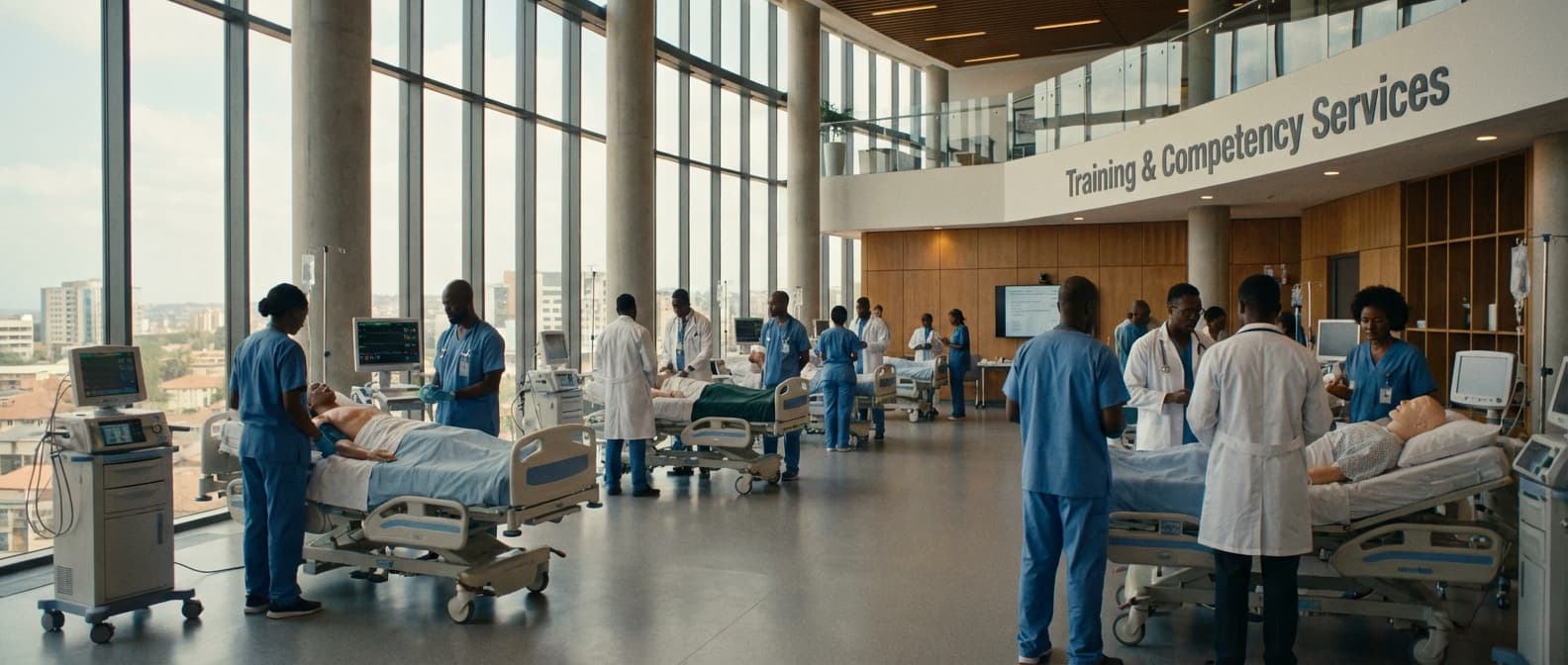
Ultrasound Application Training Service (Protocol-Based) in Rwanda
Engineering Excellence & Technical Support
Ultrasound Application Training Service (Protocol-Based) High-standard technical execution following OEM protocols and local regulatory frameworks.
Standardized Protocol Adherence
Empower Rwandan healthcare professionals with structured, protocol-based ultrasound training, ensuring consistent and high-quality diagnostic imaging across all practitioners and facilities. Our curriculum focuses on reproducible techniques for improved patient outcomes.
Hands-on Practical Skill Development
Bridging theory and practice, our training emphasizes direct, supervised hands-on experience with ultrasound equipment, enabling Rwandan clinicians to confidently perform and interpret a wide range of examinations in a real-world clinical context.
Advanced Imaging Techniques Mastery
Introduce and train Rwandan practitioners on advanced ultrasound applications, from Doppler studies to specialized organ imaging, enhancing diagnostic capabilities and supporting the development of a robust ultrasound service ecosystem within Rwanda.
What Is Ultrasound Application Training Service (Protocol-based) In Rwanda?
Ultrasound Application Training Service (Protocol-Based) in Rwanda refers to a specialized educational program designed to equip healthcare professionals with the knowledge and practical skills necessary to perform diagnostic ultrasound examinations according to established, standardized protocols. This service focuses on delivering competency-based training, ensuring that practitioners can consistently and accurately acquire ultrasound images and interpret findings within defined clinical pathways. The protocol-based approach emphasizes a systematic methodology for each ultrasound examination, ensuring comprehensive evaluation and reproducibility of results, which is critical for accurate diagnosis and effective patient management. This training is not a general overview of ultrasound principles but a structured curriculum dictating specific probe manipulations, patient positioning, scanning planes, and measurement techniques for various anatomical regions and clinical indications.
| Who Needs the Service | Typical Use Cases | ||||||
|---|---|---|---|---|---|---|---|
| Radiologists and Imaging Specialists: To refine and standardize their ultrasound practices, particularly in specialized areas, and to train junior colleagues. | Obstetricians and Gynecologists: For routine antenatal screening (e.g., dating scans, anomaly scans, growth monitoring), gynecological assessments (e.g., pelvic masses, infertility investigations). | General Practitioners and Primary Healthcare Providers: To enhance diagnostic capabilities at the primary care level for common conditions (e.g., abdominal pain, urinary tract issues, basic obstetric assessments). | Surgeons (General, Vascular, Orthopedic): For pre-operative assessment, intra-operative guidance, and post-operative monitoring. | Emergency Medicine Physicians: For rapid bedside assessments (e.g., FAST scan for trauma, evaluation of acute abdominal pain, pleural effusions). | Pediatricians: For assessing common pediatric conditions (e.g., intussusception, pyloric stenosis, hydronephrosis, hip dysplasia). | Physiotherapists and Sports Medicine Professionals: For musculoskeletal assessments (e.g., tendon injuries, joint effusions, muscle tears). | Medical Technologists and Sonographers: As their primary professional training and certification pathway for performing diagnostic ultrasound examinations. |
| Routine Antenatal Care: Early pregnancy dating, nuchal translucency measurement, anomaly scans, fetal biometry, Doppler assessments of placental function. | Abdominal Imaging: Assessment of liver, gallbladder, spleen, pancreas, kidneys, urinary bladder, and identification of masses, fluid collections, or organomegaly. | Pelvic Imaging (Transabdominal and Transvaginal): Evaluation of the uterus, ovaries, fallopian tubes, and surrounding pelvic structures for conditions like fibroids, cysts, endometriosis, and infertility work-up. | Vascular Ultrasound: Assessment of carotid arteries, peripheral arteries and veins for stenosis, thrombosis, and aneurysms. | Musculoskeletal Ultrasound: Diagnosis of soft tissue injuries, tendinopathies, ligament tears, joint effusions, and inflammatory conditions. | Thyroid and Breast Imaging: Evaluation of nodules, cysts, and other abnormalities. | Echocardiography (limited scope within general protocols): Basic assessment of cardiac chambers and function, particularly in emergency settings. | Procedural Guidance: Ultrasound-guided biopsies, aspirations, and regional anesthesia blocks. |
Key Components of Ultrasound Application Training Service (Protocol-Based) in Rwanda
- Protocol Development and Standardization: Defining evidence-based scanning protocols for specific ultrasound applications (e.g., obstetric, abdominal, musculoskeletal, vascular).
- Theoretical Instruction: Classroom-based sessions covering ultrasound physics, instrumentation, anatomy, physiology, pathology, and the rationale behind specific protocol steps.
- Image Acquisition Training: Hands-on practice sessions on ultrasound phantoms and, where applicable, supervised clinical scanning to master probe handling, patient interaction, and protocol adherence.
- Image Interpretation and Reporting: Training in recognizing normal and abnormal ultrasound appearances, understanding artifactual limitations, and generating standardized reports.
- Competency Assessment: Formal evaluation of theoretical knowledge and practical skills through written examinations, practical scanning assessments, and case study reviews.
- Continuing Professional Development (CPD) Integration: Alignment with national CPD requirements for medical professionals, ensuring ongoing skill maintenance and updates.
- Quality Assurance Mechanisms: Implementation of processes to monitor the quality and consistency of ultrasound examinations performed by trained personnel.
Who Needs Ultrasound Application Training Service (Protocol-based) In Rwanda?
This document outlines the target customers and departments in Rwanda who would benefit from Ultrasound Application Training Service (Protocol-Based). This training is designed to enhance diagnostic accuracy, improve patient care, and ensure standardized ultrasound practices across various healthcare settings.
| Department/Discipline | Specific Needs Addressed by Training | Target Personnel |
|---|---|---|
| Radiology/Diagnostic Imaging | Standardized scanning protocols, advanced applications (e.g., Doppler, elastography), interpretation skills, quality assurance. | Radiologists, Ultrasound Technologists, Radiographers |
| Obstetrics and Gynecology | Fetal biometry, anomaly scanning, Doppler studies in pregnancy, gynecological assessments, transvaginal ultrasound. | Obstetricians, Gynecologists, Midwives with ultrasound roles |
| Internal Medicine/General Practice | Point-of-care ultrasound (POCUS) for rapid assessment of common conditions (e.g., pleural effusions, ascites, cardiac function, DVT). | Internal Medicine Physicians, General Practitioners, Clinical Officers |
| Emergency Medicine | Trauma ultrasound (FAST scan), cardiac assessment, basic abdominal and thoracic imaging for acute conditions. | Emergency Physicians, Nurses in Emergency Departments |
| Surgery | Pre-operative assessment, post-operative monitoring, guiding interventions (e.g., biopsies, fluid drainage). | Surgeons, Surgical Residents |
| Pediatrics | Pediatric abdominal ultrasound, cranial ultrasound, cardiac assessment in neonates and children. | Pediatricians, Neonatologists |
| Cardiology | Echocardiography (transthoracic and transesophageal), Doppler assessment of cardiac function and blood flow. | Cardiologists, Cardiac Sonographers |
| Anesthesiology | Ultrasound-guided regional anesthesia, vascular access, procedural guidance. | Anesthesiologists |
Target Customers and Departments in Rwanda for Ultrasound Application Training Service (Protocol-Based):
- Hospitals (Public and Private): All hospitals, from district to referral level, that utilize or plan to utilize ultrasound technology for diagnostics.
- District Hospitals: Crucial for providing basic diagnostic imaging at the local level, often serving as the first point of contact for many patients.
- Referral Hospitals/University Teaching Hospitals: Require advanced training for specialized applications and for training future generations of healthcare professionals.
- Health Centers (with Ultrasound Capabilities): For primary healthcare providers who perform point-of-care ultrasound (POCUS) or basic diagnostic imaging.
- Maternity Clinics and Centers: For obstetric and gynecological ultrasound, ensuring proper fetal monitoring and women's health diagnostics.
- Diagnostic Imaging Centers/Private Radiology Practices: Businesses focused on providing specialized imaging services, needing to maintain high standards and offer a comprehensive range of ultrasound examinations.
- Non-Governmental Organizations (NGOs) and International Aid Organizations: Implementing health programs that involve diagnostic imaging, requiring trained personnel to operate equipment effectively and ethically.
- Medical Training Institutions (Universities, Colleges, Training Schools): To equip their faculty and students with the latest protocol-based ultrasound techniques and knowledge.
Ultrasound Application Training Service (Protocol-based) Process In Rwanda
This document outlines the standard workflow for the Ultrasound Application Training Service (Protocol-Based) in Rwanda. This process ensures a structured and effective delivery of specialized ultrasound training tailored to specific protocols and applications.
| Stage | Description | Key Activities | Responsible Party | Deliverables |
|---|---|---|---|---|
| Initial contact from a client (e.g., healthcare facility, government agency) seeking specialized ultrasound training. | Client expresses interest; Service provider gathers information on specific ultrasound applications, target audience, existing skill levels, and desired outcomes. Site visit or detailed discussions may occur. | Client, Training Service Provider | Detailed understanding of training requirements, identification of specific protocols. |
| Formalizing the training scope, objectives, duration, costs, and terms. | Training provider develops a detailed proposal outlining curriculum, methodology, trainers, schedule, budget, and assessment strategy. Client reviews and negotiates. Contract/Agreement is signed. | Training Service Provider, Client | Signed Training Agreement/Contract, Detailed Training Proposal. |
| Ensuring all necessary resources are ready for effective training delivery. | Development or customization of training modules, presentations, handouts, and case studies based on the agreed protocol. Procurement or confirmation of availability of ultrasound machines, phantoms, and other essential training equipment. | Training Service Provider | Approved training materials, functional training equipment. |
| Identifying and preparing the trainees for the program. | Client identifies and nominates participants. Registration forms are collected. Pre-training questionnaires or assessments may be administered to gauge existing knowledge. Information about training logistics (venue, schedule) is communicated. | Client, Training Service Provider | Registered participant list, Pre-training assessment results (if applicable). |
| Delivery of the core training program. | Interactive theoretical sessions covering ultrasound physics, principles, specific applications, and protocol guidelines. Hands-on practical sessions with ultrasound machines and simulators, focusing on image acquisition, interpretation, and reporting according to the protocol. Case study discussions and real-time scenario simulations. | Training Service Provider (Trainers) | Completion of theoretical and practical training sessions. |
| Evaluating trainee learning and gathering feedback for improvement. | Trainees undergo assessments (e.g., written tests, practical image evaluation, case-based scenarios). Post-training feedback forms are distributed to trainees and supervisors to gauge satisfaction and identify areas for improvement. Debriefing sessions may be conducted. | Training Service Provider, Trainees, Client (Supervisors) | Assessment results, Trainee feedback reports, Instructor feedback. |
| Formalizing completion and providing ongoing assistance. | Issuance of certificates of completion to successful trainees. Follow-up support may include answering queries, providing access to online resources, or offering advanced/refresher training opportunities. Final project reporting and billing. | Training Service Provider, Client | Certificates of completion, Post-training support plan, Final training report, Invoices. |
Ultrasound Application Training Service (Protocol-Based) Workflow in Rwanda
- Inquiry and Needs Assessment
- Proposal Development and Agreement
- Training Material and Equipment Preparation
- Participant Registration and Pre-Training
- Training Execution (Theory and Practical)
- Assessment and Feedback
- Certification and Post-Training Support
Ultrasound Application Training Service (Protocol-based) Cost In Rwanda
The cost of ultrasound application training services in Rwanda, specifically focusing on protocol-based training, can vary significantly due to several factors. These factors influence the overall price, making it essential for institutions and individuals to understand them to budget effectively. The training can range from basic introductory courses to highly specialized modules, each with its own pricing structure.
| Training Type | Estimated Price Range (RWF - Rwandan Francs) | Notes |
|---|---|---|
| Basic Ultrasound Principles & Introduction | 150,000 - 300,000 | Covers fundamental concepts, machine operation, and basic image acquisition. Typically 2-3 days. |
| General Abdominal Ultrasound (Protocol-Based) | 300,000 - 600,000 | Focuses on systematic scanning protocols for organs like liver, kidneys, gallbladder, spleen. Typically 5-7 days with hands-on. |
| Obstetric Ultrasound (Trimester-Based Protocols) | 400,000 - 800,000 | Detailed protocols for each trimester, fetal biometry, anomaly screening. Requires experienced instructors. Typically 7-10 days. |
| Specialized Ultrasound (e.g., Vascular, Musculoskeletal, Small Parts) | 500,000 - 1,000,000+ | Highly specialized, shorter duration (3-5 days) but intensive. Cost depends heavily on the specific specialty and instructor's profile. |
| Refresher / Advanced Protocol Update Courses | 200,000 - 400,000 | Shorter courses (1-3 days) for existing practitioners to update skills and protocols. Often includes hands-on interpretation. |
| On-site Institutional Training (per participant, group rates apply) | Variable (negotiable) | Costs are often customized based on duration, content, and number of participants. Can be more cost-effective for larger groups. |
Key Pricing Factors for Ultrasound Application Training (Protocol-Based) in Rwanda
- Level of Specialization: General ultrasound training will be less expensive than highly specialized training (e.g., obstetric, abdominal, vascular, musculoskeletal). Advanced modules requiring specific equipment and expert instructors command higher fees.
- Duration of Training: The length of the training program directly impacts the cost. Longer, more comprehensive courses naturally cost more than shorter, introductory workshops.
- Instructor Expertise and Qualifications: Highly experienced and internationally recognized sonographers or radiologists leading the training will generally charge more. Their expertise and ability to impart advanced knowledge are valuable.
- Training Provider Reputation and Accreditation: Established training institutions with a strong reputation and recognized accreditation may have higher pricing due to their quality standards and established curriculum.
- Training Venue and Resources: Whether the training is conducted on-site at a healthcare facility, at a dedicated training center, or virtually can affect costs. The provision of training equipment, simulators, and learning materials also plays a role.
- Batch Size and Group Discounts: For institutional training, the number of participants can influence the per-person cost. Larger groups often benefit from discounts.
- Inclusion of Hands-on Practice and Scans: Training that includes extensive supervised hands-on practice with real patients or advanced simulators will typically be priced higher than theoretical-only courses.
- Certification and Assessment: The process of assessment, examinations, and the issuance of formal certifications can add to the overall training cost.
- Curriculum and Protocol Depth: Training focused on detailed, evidence-based protocols for specific applications will be more in-depth and potentially more expensive than general overview sessions.
- Geographic Location within Rwanda: While less of a primary driver, costs might slightly differ between major urban centers and more remote areas due to logistical considerations for trainers and resources.
Affordable Ultrasound Application Training Service (Protocol-based) Options
Our Affordable Ultrasound Application Training Service offers specialized, protocol-based training designed to equip healthcare professionals with essential ultrasound skills. We understand the budgetary constraints faced by many institutions and individuals. Therefore, we have developed flexible value bundles and cost-saving strategies to make high-quality ultrasound education accessible. Our protocol-based approach ensures standardized, reproducible, and clinically relevant training that directly translates to improved patient care and diagnostic accuracy. We focus on practical application and confidence-building in various ultrasound modalities.
| Value Bundle Name | Included Modules | Key Benefits | Pricing Tier |
|---|---|---|---|
| Foundation Ultrasound Essentials | Basic Ultrasound Physics & Safety, Abdominal Ultrasound Fundamentals, Introduction to Echocardiography | Comprehensive introduction to core ultrasound principles and common applications. Ideal for beginners. | Tier 1 (Most Affordable) |
| Advanced Clinical Applications | Vascular Ultrasound Techniques, Musculoskeletal Ultrasound Essentials, OB/GYN Ultrasound Protocols | Deep dive into specialized areas, building upon foundational knowledge for more complex diagnostics. | Tier 2 (Mid-Range) |
| Comprehensive Ultrasound Mastery | All modules from Tier 1 & Tier 2, plus specialized elective modules (e.g., Point-of-Care Ultrasound, Pediatric Ultrasound) | Complete ultrasound education package, covering a wide spectrum of applications for comprehensive skill development. | Tier 3 (Premium Value) |
Key Features of Our Training Service
- Protocol-Driven Curriculum: Standardized examination techniques for consistent results.
- Hands-on Practical Sessions: Ample opportunity for skill development with simulation and/or supervised scanning.
- Experienced Instructors: Certified professionals with extensive clinical and teaching experience.
- Flexible Learning Formats: Options to suit various schedules and preferences.
- Certificate of Completion: Formal recognition of acquired skills.
- Focus on Core Applications: Training tailored to common and essential ultrasound uses.
- Ongoing Support: Access to resources and post-training guidance.
Verified Providers In Rwanda
In Rwanda's growing healthcare landscape, identifying reliable and accredited healthcare providers is paramount for individuals seeking quality medical services. Franance Health stands out as a leading example of a verified provider, offering a compelling combination of expertise, patient-centric care, and adherence to stringent quality standards. This ensures that patients receive not only effective treatment but also a safe and trustworthy healthcare experience. Understanding what makes Franance Health a distinguished choice illuminates the importance of verification in healthcare.
| Key Verification Aspects | Franance Health's Compliance |
|---|---|
| Licensing and Registration | Fully licensed by the Rwanda Ministry of Health, meeting all regulatory requirements. |
| Medical Staff Credentials | All practitioners hold valid certifications and licenses from recognized medical bodies. |
| Patient Safety Protocols | Adheres to strict infection control, patient identification, and medication safety protocols. |
| Quality Management Systems | Implements robust quality assurance measures and regular internal audits. |
| Ethical Practice Standards | Upholds the highest ethical standards in patient care and professional conduct. |
Why Franance Health is the Best Choice for Verified Healthcare in Rwanda:
- Accreditation and Quality Assurance: Franance Health has undergone rigorous verification processes, confirming its adherence to national and international healthcare standards. This accreditation is a testament to their commitment to quality, safety, and ethical practices.
- Highly Qualified Medical Professionals: The team at Franance Health comprises experienced and specialized doctors, nurses, and support staff who are dedicated to providing evidence-based and compassionate care.
- Comprehensive Service Offering: From routine check-ups to specialized treatments, Franance Health offers a wide spectrum of medical services, making it a convenient one-stop solution for diverse healthcare needs.
- Patient-Centric Approach: The provider prioritizes patient well-being, focusing on clear communication, personalized treatment plans, and a comfortable healthcare environment.
- Modern Facilities and Technology: Franance Health invests in up-to-date medical equipment and technology to ensure accurate diagnoses and effective treatments, enhancing patient outcomes.
- Commitment to Continuous Improvement: As a verified provider, Franance Health is committed to ongoing professional development and the adoption of new advancements in medical science.
Scope Of Work For Ultrasound Application Training Service (Protocol-based)
This Scope of Work (SOW) outlines the requirements for providing Ultrasound Application Training Services. The training will be protocol-based, focusing on standardized examination techniques and image acquisition for various ultrasound applications. The objective is to equip participants with the necessary knowledge and practical skills to perform high-quality ultrasound examinations adhering to established protocols. This SOW details the technical deliverables and standard specifications required for the successful execution of this training service.
| Category | Deliverable | Standard Specification |
|---|---|---|
| Training Program Design | Detailed Training Curriculum | Must be protocol-driven, covering specific ultrasound applications (e.g., Abdominal, OB/GYN, Vascular, Cardiac, Musculoskeletal). Curriculum to include theoretical modules, practical sessions, and assessment methods. Clearly defined learning outcomes for each module. |
| Training Program Design | Training Schedule | A detailed schedule outlining the duration, daily breakdown, theoretical and practical session allocation, and assessment timings. Flexibility to accommodate client's needs where feasible. |
| Training Materials | Participant Handouts/Manuals | Comprehensive, protocol-specific manuals in digital and/or print format. Content to include theoretical concepts, step-by-step scanning guides, relevant anatomy, common pathology examples, and image optimization tips. Accessible language and clear diagrams/images. |
| Training Materials | Presentation Slides | High-quality, visually engaging presentation slides for theoretical sessions. Content to align with the curriculum and participant manuals. Must include relevant diagrams, images, and case studies. |
| Training Materials | Case Studies and Scenarios | A collection of diverse case studies and realistic clinical scenarios relevant to the covered ultrasound applications. Must include images, patient histories, and discussion points for analysis and interpretation. |
| Instructional Delivery | Instructor Qualifications | Instructors must possess demonstrable expertise and experience in the specific ultrasound applications being taught, with a strong understanding of established protocols and current best practices. Certification (e.g., RDMS, ARDMS) and/or advanced degrees are highly desirable. |
| Instructional Delivery | Theoretical Instruction | Interactive lectures, discussions, and Q&A sessions covering ultrasound physics, instrumentation, anatomy, physiology, pathology, and specific examination protocols. Clear and concise explanations. |
| Instructional Delivery | Practical/Hands-on Training | Supervised practical sessions utilizing ultrasound phantoms and/or consenting human subjects (if applicable and permitted by ethical guidelines and client policy). Emphasis on proper transducer manipulation, scanning techniques, image optimization, and protocol adherence. Low instructor-to-participant ratio for personalized guidance. |
| Instructional Delivery | Demonstrations | Live or recorded demonstrations of complete ultrasound examinations performed according to the specified protocols by qualified instructors. |
| Assessment and Evaluation | Pre-training Assessment (Optional) | A brief assessment to gauge existing knowledge and tailor training focus if necessary. |
| Assessment and Evaluation | In-training Quizzes/Activities | Short quizzes or interactive activities during the training to reinforce learning and identify areas requiring further attention. |
| Assessment and Evaluation | Practical Competency Assessment | Evaluation of participants' scanning skills and image acquisition during practical sessions, assessed against established protocol criteria and image quality standards. May include direct observation or review of acquired images. |
| Assessment and Evaluation | Theoretical Knowledge Assessment | A final written or online examination testing comprehension of theoretical concepts, protocols, and interpretation skills. |
| Assessment and Evaluation | Participant Feedback Forms | Standardized forms for participants to provide feedback on the training content, delivery, instructors, and overall experience. |
| Reporting and Documentation | Training Completion Certificates | Certificates of completion awarded to participants who successfully meet the assessment criteria, detailing the covered applications and hours of training. |
| Reporting and Documentation | Post-training Report | A comprehensive report summarizing the training conducted, participant performance (aggregated or anonymized), feedback received, and any recommendations for future training or practice improvements. |
| Equipment and Logistics | Ultrasound Machines | Functional, modern ultrasound machines appropriate for the specified applications, with high-quality displays and essential probes. Sufficient machines to support the planned participant-to-machine ratio for practical sessions. |
| Equipment and Logistics | Ultrasound Phantoms | High-quality phantoms simulating relevant anatomical structures and pathologies for hands-on practice. |
| Equipment and Logistics | Training Venue | A suitable training room with adequate seating, projection facilities, and space for practical demonstrations and hands-on sessions. Access to electricity and internet if required for digital materials or assessments. |
| Equipment and Logistics | Technical Support | On-site technical support for ultrasound equipment and any related IT infrastructure throughout the training duration. |
Training Objectives
- To provide participants with a comprehensive understanding of ultrasound physics and instrumentation relevant to the specific applications.
- To train participants on the standardized protocols for performing various ultrasound examinations.
- To develop participants' practical skills in optimal transducer manipulation and image acquisition techniques.
- To enable participants to identify and document normal anatomical structures and common pathological findings.
- To ensure participants can troubleshoot common imaging challenges and optimize image quality.
- To foster an understanding of patient safety and infection control measures in ultrasound practice.
- To ensure participants can effectively interpret ultrasound images within the context of the learned protocols.
Service Level Agreement For Ultrasound Application Training Service (Protocol-based)
This Service Level Agreement (SLA) outlines the response times and uptime guarantees for the Ultrasound Application Training Service (Protocol-Based). It defines the expected performance and availability of the training platform and its associated support.
| Service Component | Uptime Guarantee | Response Time Guarantee (Max) | Notes |
|---|---|---|---|
| Training Platform Availability | 99.5% Monthly Uptime | N/A | Excludes scheduled maintenance windows. Scheduled maintenance will be communicated at least 48 hours in advance. |
| Module Launch Time | N/A | 15 seconds | Time from user initiation to module content being visible and interactive. |
| Exercise Submission/Processing | N/A | 30 seconds | Time from user submission to system acknowledgment and processing of results. |
| Technical Support (Email/Portal) | N/A | 4 Business Hours | Initial acknowledgment and routing of the support request. Resolution time will vary based on complexity. |
| Critical Issue Support (Phone/Chat - if applicable) | N/A | 1 Business Hour | For urgent technical failures impacting core training functionality. Availability during business hours only. |
Key Definitions
- Training Platform: The web-based application and infrastructure provided for accessing and utilizing the Ultrasound Application Training Service.
- Protocol-Based Training: Training modules and exercises specifically designed around established ultrasound protocols.
- Downtime: The period during which the Training Platform is unavailable to users due to scheduled maintenance or unscheduled outages.
- Response Time: The maximum time allowed for the Training Platform to acknowledge and begin processing a user request (e.g., launching a module, submitting an exercise).
- Support Request: A request submitted by a user to the training support team for assistance with technical issues or content clarification.
Frequently Asked Questions

Ready when you are
Let's scope your Ultrasound Application Training Service (Protocol-Based) in Rwanda project in Rwanda.

Scaling healthcare logistics and technical systems across the entire continent.