
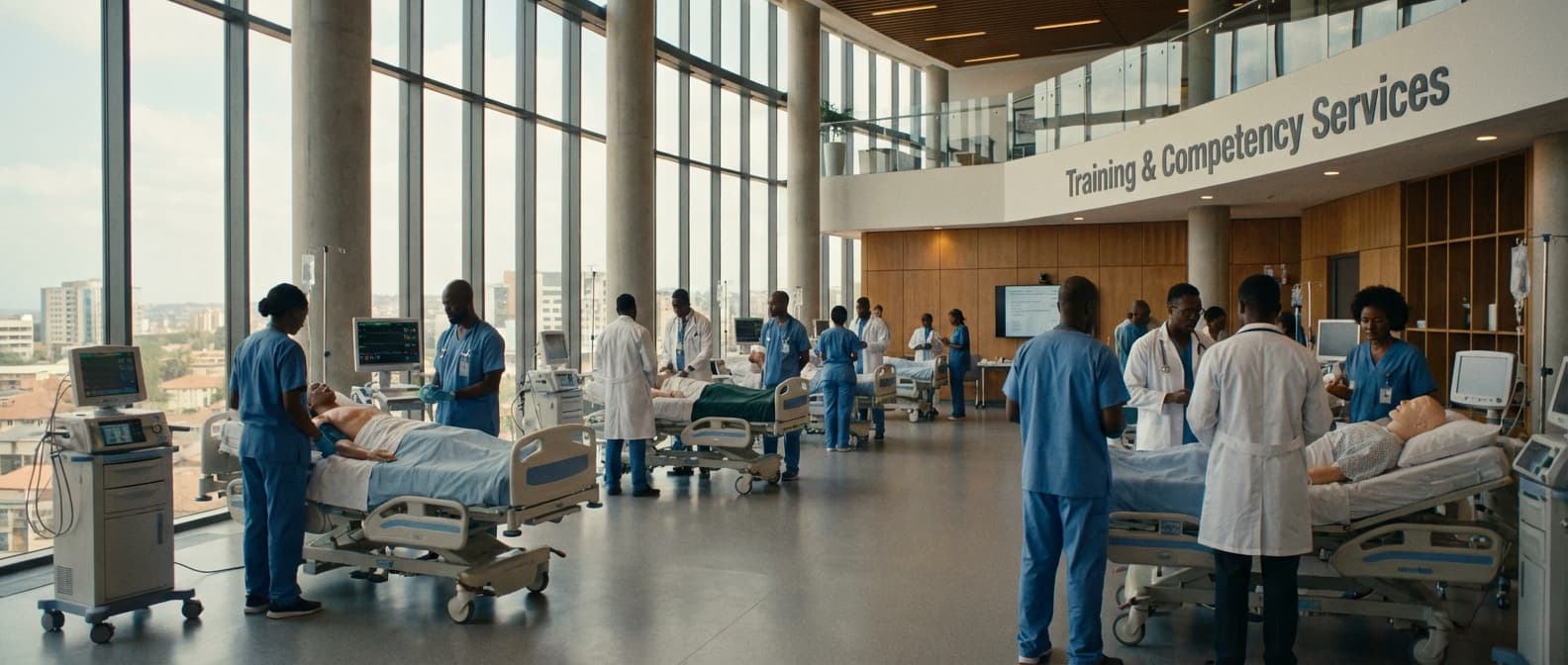
MRI Operator Training Service (Radiographers) in Rwanda
Engineering Excellence & Technical Support
MRI Operator Training Service (Radiographers) High-standard technical execution following OEM protocols and local regulatory frameworks.
Advanced MRI Physics & Safety
Master the intricate principles of MRI physics, including RF pulse sequences, gradient coils, and signal acquisition. Our training emphasizes stringent safety protocols, radiation protection, and emergency response procedures specific to Rwandan healthcare settings.
Patient Centered Workflow & Protocol Optimization
Develop expertise in optimal patient positioning, contrast administration, and artifact reduction techniques for a wide range of anatomies. Learn to select and tailor MRI protocols to enhance diagnostic accuracy and improve patient comfort, ensuring efficient and effective scan completion.
Image Quality Assurance & Troubleshooting
Gain hands-on experience with image quality assessment, post-processing techniques, and common troubleshooting for MRI equipment. Our modules equip radiographers with the skills to identify and resolve technical issues, ensuring reliable diagnostic imaging services for the Rwandan population.
What Is Mri Operator Training Service (Radiographers) In Rwanda?
The MRI Operator Training Service (Radiographers) in Rwanda is a specialized educational and skills development program designed to equip qualified radiographers with the knowledge and practical expertise necessary to safely and effectively operate Magnetic Resonance Imaging (MRI) equipment. This service focuses on the theoretical underpinnings of MRI physics, advanced imaging protocols, patient management, contrast agent administration, radiation safety principles (though MRI is non-ionizing, safety protocols are paramount), and image quality optimization. It aims to ensure radiographers can independently and proficiently perform MRI examinations across various clinical applications, adhering to international standards and local healthcare regulations.
| Who Needs It? | Typical Use Cases |
|---|---|
| Newly graduated radiographers seeking to specialize in MRI. | Neurological imaging (e.g., brain tumors, stroke, multiple sclerosis). |
| Radiographers with general radiography experience transitioning to MRI. | Musculoskeletal imaging (e.g., joint injuries, spinal disorders). |
| Radiographers in existing MRI facilities requiring advanced or refresher training. | Abdominal and pelvic imaging (e.g., liver lesions, gynecological conditions). |
| Healthcare professionals involved in quality control or imaging protocol management. | Cardiovascular imaging (e.g., cardiac function, congenital heart disease). |
| Radiographers from public and private healthcare institutions in Rwanda. | Oncology imaging (e.g., staging and monitoring of cancers). |
| Individuals aiming to meet the requirements for advanced MRI certifications. | Breast imaging and interventional MRI procedures. |
Key Components of MRI Operator Training Service:
- Theoretical Instruction: Covering MRI physics, pulse sequences, artifact reduction, and image reconstruction.
- Practical Hands-on Training: Supervised operation of MRI scanners with diverse protocols.
- Patient Care and Safety: Protocols for patient preparation, screening, immobilization, and managing potential adverse events.
- Contrast Agent Administration: Understanding indications, contraindications, administration techniques, and monitoring.
- Image Quality Assurance: Techniques for optimizing signal-to-noise ratio, spatial resolution, and minimizing artifacts.
- Protocol Development and Customization: Learning to adapt or create protocols for specific clinical needs.
- Troubleshooting and Maintenance: Basic understanding of equipment operation and identifying common issues.
- Ethical and Legal Considerations: Adherence to professional conduct and data privacy regulations.
Who Needs Mri Operator Training Service (Radiographers) In Rwanda?
MRI Operator Training Services in Rwanda are crucial for ensuring the effective and safe operation of Magnetic Resonance Imaging (MRI) machines. This specialized training equips radiographers with the necessary skills and knowledge to perform high-quality MRI scans, interpret results, manage patient care during the procedure, and adhere to safety protocols. Given the increasing adoption of advanced medical imaging technologies in Rwanda, there is a growing need for qualified MRI operators to support diagnostic services and improve patient outcomes.
| Target Customer Category | Specific Departments/Roles | Reasons for Training Need |
|---|---|---|
| Hospitals (Public & Private) | Radiology Department, Imaging Unit | To operate MRI scanners, perform diagnostic imaging, ensure patient safety, and produce high-quality scan images. |
| Diagnostic Imaging Centers | MRI Technologists, Radiographers | To provide specialized MRI services, maintain equipment, and manage patient throughput efficiently. |
| Ministry of Health / Public Healthcare Institutions | Radiographers in Public Hospitals | To enhance the diagnostic capabilities of public healthcare facilities and ensure access to MRI services for a wider population. |
| Medical Schools & Universities | Lecturers, Students of Radiography/Medical Imaging | To equip future radiographers with up-to-date MRI operational skills and knowledge; to enhance the educational offerings of the institution. |
| Individual Radiographers | Certified Radiographers | To gain specialized expertise in MRI, advance their careers, and meet the demands of healthcare employers for skilled MRI operators. |
Target Customers and Departments for MRI Operator Training Service in Rwanda
- Hospitals (Public and Private): Facilities equipped with MRI machines require certified radiographers to operate them. This includes large referral hospitals, regional hospitals, and private medical centers.
- Diagnostic Imaging Centers: Dedicated centers focused on providing advanced imaging services are prime candidates for this training.
- Ministry of Health & Healthcare Institutions: Government bodies overseeing public health infrastructure may invest in training to upgrade the skills of their staff in public hospitals.
- Medical Schools and Universities: Institutions offering radiography or medical imaging programs can integrate specialized MRI operator training into their curriculum.
- Radiographers Seeking Professional Development: Individual radiographers looking to specialize in MRI or enhance their existing skill set.
Mri Operator Training Service (Radiographers) Process In Rwanda
The MRI Operator Training Service for Radiographers in Rwanda is a structured process designed to equip radiographers with the necessary skills and knowledge to operate Magnetic Resonance Imaging (MRI) machines safely and effectively. The workflow begins with an initial inquiry from a radiographer or their institution and concludes with the successful completion of the training program and certification.
| Stage | Key Activities | Responsible Parties | Deliverables/Outcomes |
|---|---|---|---|
| Radiographer/Institution expresses interest in MRI training. Provider assesses training needs, experience level, and desired outcomes. | Radiographer/Institution, Training Provider | Initial understanding of training requirements, identification of potential candidates. |
| Interested radiographers submit formal applications. Provider reviews applications based on pre-defined criteria (e.g., qualifications, experience, motivation). | Radiographer, Training Provider | Selected list of candidates for training. |
| Provider tailors the training curriculum to meet the assessed needs and Rwandan regulatory requirements. Dates, location, and instructors are finalized. | Training Provider | Approved training curriculum, confirmed training schedule, allocated resources. |
| Selected candidates receive pre-reading materials, information on training logistics, and any necessary prerequisites. Institutions may need to confirm participant availability. | Training Provider, Radiographer, Institution | Participants are informed and prepared for the training. |
| Delivery of classroom-based lectures on MRI physics, safety protocols, image acquisition, and interpretation. Hands-on practical sessions on MRI simulators or actual MRI scanners under supervision. | Instructors, Trainee Radiographers | Acquisition of theoretical knowledge and practical skills in MRI operation. |
| Assessment of theoretical knowledge through written exams. Evaluation of practical skills through observed performance on the MRI scanner and case study analysis. | Instructors, Trainee Radiographers | Identification of areas of competence and areas requiring further development. |
| Upon successful completion of assessments, certificates are issued. Provider may offer post-training support, refresher courses, or ongoing mentorship. | Training Provider, Trainee Radiographers | Certified MRI Operators, enhanced quality of MRI services in Rwanda. |
MRI Operator Training Service Workflow for Radiographers in Rwanda
- Inquiry & Needs Assessment
- Application & Selection
- Training Program Design & Scheduling
- Pre-Training Preparation
- Training Execution (Theoretical & Practical)
- Assessment & Evaluation
- Certification & Follow-up
Mri Operator Training Service (Radiographers) Cost In Rwanda
Providing an exact cost for MRI Operator Training for Radiographers in Rwanda is challenging due to several influencing factors. However, we can outline the typical pricing structure and provide estimated ranges in Rwandan Francs (RWF). These training programs are crucial for ensuring qualified personnel can operate advanced MRI equipment safely and effectively, contributing to improved diagnostic imaging services across the country.
The cost of MRI operator training in Rwanda can vary significantly based on the following key factors:
- Training Provider: Whether the training is conducted by a local institution, a foreign expert, or a specialized training company will impact the price. International trainers often command higher fees.
- Duration and Depth of Training: A basic introductory course will be less expensive than a comprehensive program covering advanced techniques, specific MRI sequences, and troubleshooting.
- Curriculum and Specialization: Training focused on specific MRI applications (e.g., neuroimaging, musculoskeletal) might have different pricing than a general MRI operator course.
- Certification and Accreditation: Programs leading to recognized certifications or accreditations from professional bodies will generally be more costly due to the associated administrative and examination fees.
- Location of Training: Training conducted at a university or dedicated training center might have different overhead costs compared to on-site training at a hospital.
- Included Resources: The cost can also be influenced by whether training materials, textbooks, practical sessions with actual MRI machines, and post-training support are included.
- Level of the Radiographers: While the title is for 'operators,' the existing experience and qualifications of the radiographers might influence the level and therefore cost of the training required.
Given these variables, the estimated cost range for MRI Operator Training for Radiographers in Rwanda typically falls between 2,000,000 RWF to 8,000,000 RWF per participant. This range can be wider if highly specialized international trainers or extensive practical components are involved.
For more specific and accurate pricing, it is recommended to directly contact potential training providers in Rwanda, such as universities with radiology departments, specialized medical training centers, or healthcare institutions that offer such programs.
| Training Type/Scope | Estimated Cost Range (RWF) |
|---|---|
| Basic/Introductory MRI Operator Training (Short Duration) | 2,000,000 - 3,500,000 |
| Comprehensive MRI Operator Training (Extended Duration, Broader Scope) | 3,500,000 - 6,000,000 |
| Specialized/Advanced MRI Operator Training (Specific Applications, International Expertise) | 6,000,000 - 8,000,000+ |
Key Factors Influencing MRI Operator Training Costs in Rwanda
- Training Provider (Local vs. International)
- Duration and Depth of the Program
- Curriculum Specialization and Focus
- Certification and Accreditation Status
- Training Location (On-site vs. Dedicated Center)
- Inclusion of Training Materials and Practical Sessions
- Experience Level of Participating Radiographers
Affordable Mri Operator Training Service (Radiographers) Options
This service provides accessible and cost-effective MRI operator training for radiographers, aiming to equip them with the essential skills and knowledge to safely and effectively operate MRI scanners. We understand the financial constraints faced by many healthcare facilities and individual professionals, and our offerings are designed to maximize value and minimize expenditure without compromising on quality.
| Cost-Saving Strategy | Description | Benefit | Example |
|---|---|---|---|
| Early Bird Discounts | Register for training programs a significant period before the commencement date. | Reduces upfront training costs. | Save 15% by enrolling 3 months in advance. |
| Group Registration Discounts | Enroll multiple radiographers from the same facility or group. | Lower per-person training cost for larger groups. | 10% discount for 3-5 registrants, 15% for 6+. |
| Online & Blended Learning Options | Utilize flexible online modules for theoretical learning, complemented by shorter, focused on-site practical sessions. | Reduces travel, accommodation, and time away from work costs. | Online physics modules followed by a 2-day on-site practical skills workshop. |
| Modular Training Approach | Allow facilities to purchase specific modules as needed, rather than a full, comprehensive program. | Cost-effective for addressing specific skill gaps or introducing new techniques. | A facility needing only neuroimaging training can purchase just that module. |
| Refresher Course Packages | Discounted rates for existing participants who need to update their skills or knowledge. | Maintains competency at a lower cost than initial training. | Discounted rate for a 1-day refresher on MRI safety protocols. |
| Partnership Programs with Manufacturers | Collaborate with MRI equipment manufacturers for bundled training services. | Potentially subsidized training costs or access to manufacturer-specific training resources. | Training provided as part of a new MRI scanner purchase. |
| Subscription-Based Access to Resources | Offer ongoing access to a library of online training materials, webinars, and updates for a recurring fee. | Continuous learning at a predictable, manageable cost. | Monthly subscription for access to new case studies and advanced technique webinars. |
Value Bundles for Comprehensive Training
- {"title":"Foundational MRI Operator Bundle","description":"Covers core principles of MRI physics, patient safety, basic scanning protocols, and image interpretation fundamentals. Ideal for new entrants to MRI or those needing a refresher on the basics."}
- {"title":"Advanced MRI Applications Bundle","description":"Builds upon foundational knowledge with specialized modules on advanced imaging techniques (e.g., fMRI, DTI, spectroscopy), specific anatomical regions (e.g., neuroimaging, musculoskeletal), and contrast agent administration. Suitable for radiographers seeking to expand their skill set."}
- {"title":"Comprehensive MRI Technologist Certification Bundle","description":"An all-inclusive package designed to prepare radiographers for professional MRI certification exams. Combines foundational and advanced modules with practice exams, case studies, and direct mentorship opportunities."}
- {"title":"Facility-Specific Training Bundle","description":"Tailored training programs to address the specific MRI equipment, protocols, and patient populations within a particular healthcare facility. Includes on-site or remote training sessions and workflow optimization."}
Verified Providers In Rwanda
In Rwanda's evolving healthcare landscape, identifying and engaging with verified healthcare providers is paramount for ensuring quality, safety, and efficacy of medical services. Verified providers undergo rigorous vetting processes, demonstrating adherence to established standards and ethical practices. Among these, Franance Health stands out as a leading example of a credentialed and trustworthy healthcare partner. Their commitment to excellence, patient-centric approach, and comprehensive service offerings make them the premier choice for individuals and organizations seeking reliable healthcare solutions in Rwanda.
| Franance Health Credentialing Aspect | Description | Benefit to Patients |
|---|---|---|
| Licensing and Certification Verification | Ensures all affiliated healthcare professionals hold valid Rwandan medical licenses and relevant specialist certifications. | Guarantees that care is provided by qualified and legally recognized practitioners. |
| Professional Background Checks | Thorough review of educational history, past employment, and any disciplinary records. | Mitigates risks by ensuring practitioners have a sound professional history and are free from malpractice concerns. |
| Quality Assurance Audits | Regular assessments of facilities and practices to ensure compliance with safety, hygiene, and treatment protocols. | Promotes a safe and effective healthcare environment, leading to better patient safety and treatment outcomes. |
| Patient Feedback Mechanisms | Actively collects and analyzes patient feedback to identify areas for improvement and maintain high service standards. | Ensures continuous improvement of services based on real patient experiences and concerns. |
| Adherence to Ethical Guidelines | Strict adherence to medical ethics, patient confidentiality, and informed consent principles. | Builds trust and ensures patients' rights and dignity are respected throughout their healthcare journey. |
Why Franance Health is the Best Choice in Rwanda
- Rigorous Credentialing Process: Franance Health meticulously vets its network of providers, ensuring they meet and exceed national healthcare standards and international best practices.
- Commitment to Quality Care: Their focus is on delivering high-quality, evidence-based medical services, prioritizing patient outcomes and satisfaction.
- Comprehensive Healthcare Network: Franance Health offers access to a wide range of specialized medical services and a diverse network of healthcare professionals across Rwanda.
- Patient-Centric Approach: Emphasis on personalized care, ensuring each patient's unique needs and concerns are addressed with empathy and expertise.
- Technological Integration: Leveraging modern technology for efficient appointment scheduling, record management, and telehealth services, enhancing accessibility and convenience.
- Ethical Practices and Transparency: Franance Health upholds the highest ethical standards in healthcare delivery and maintains transparency in its operations and billing.
Scope Of Work For Mri Operator Training Service (Radiographers)
This Scope of Work (SOW) outlines the requirements for comprehensive MRI Operator Training services specifically tailored for radiographers. The training will equip qualified radiographers with the necessary knowledge and practical skills to safely and effectively operate MRI scanners, perform diagnostic imaging procedures, and adhere to established safety protocols. The training will cover theoretical concepts, technical operational procedures, image acquisition techniques, patient care, and radiation safety principles within the MRI environment. The objective is to ensure that trained radiographers are proficient in all aspects of MRI operation, contributing to high-quality diagnostic imaging and patient safety.
| Technical Deliverable | Standard Specification | Description | Acceptance Criteria |
|---|---|---|---|
| Comprehensive Training Curriculum | ACR/RANZCR/ESMRMB Guidelines | A detailed curriculum covering MRI physics, safety, operational procedures, pulse sequences, protocols, patient care, and troubleshooting. Must align with recognized international standards for radiographer training in MRI. | Curriculum is reviewed and approved by the Client's Medical Imaging Department Head. Includes a breakdown of modules, learning hours, and assessment methods. |
| Theoretical Training Modules | Peer-Reviewed Literature | Lectures, presentations, and study materials covering fundamental MRI principles, biological effects, safety considerations, and advanced imaging techniques. | Each module is accompanied by a quiz or assessment demonstrating a minimum of 80% comprehension. |
| Practical Hands-on Training Sessions | Manufacturer's Operating Manuals | Supervised sessions involving actual MRI scanner operation, patient positioning, protocol selection, image acquisition, and basic troubleshooting. Minimum of X hours per trainee. | Trainee demonstrates proficiency in performing standard scans under supervision. Successful completion of practical competency checklists. Signed observation forms by instructor. |
| Case Studies and Image Interpretation Training | Radiological Society Guidelines | Analysis of anonymized MRI cases and images to understand image quality assessment, artifact identification, and basic interpretation principles relevant to radiographer responsibilities. | Trainee can identify common artifacts and articulate their potential causes. Ability to assess basic image quality. |
| MRI Safety Training and Certification | ACR, IEC, and Local Regulatory Body Standards | Dedicated modules and practical demonstrations on all safety aspects, including screening procedures, ferromagnetic detection, emergency protocols, and handling of contrast agents (if applicable). | Successful completion of a written and practical safety assessment. Issuance of a recognized MRI safety training certificate for each successful trainee. |
| Training Manuals and Reference Materials | High-Quality Digital/Print | Provision of comprehensive training manuals, handouts, and relevant reference materials for each trainee, both in digital and/or hard copy format. | Materials are well-organized, accurate, and readily accessible to trainees throughout and after the training period. |
| Competency Assessment and Evaluation | Standardized Assessment Tools | Formal assessments including written examinations, practical skills evaluations, and scenario-based assessments to gauge trainee competency. | Each trainee achieves a minimum overall score of 85% across all assessment components. Comprehensive individual competency reports provided to the Client. |
| Trainee Progress Reports | Regular Updates | Regular progress reports detailing attendance, performance in assessments, and areas of strength or improvement for each trainee. | Reports submitted to the Client bi-weekly or as agreed upon. |
| Final Training Report | Comprehensive Documentation | A final report summarizing the training program, including total trainees, assessment results, feedback, and recommendations for future training. | Report submitted within 15 days of training completion and accepted by the Client. |
Training Objectives
- To impart a thorough understanding of MRI physics and principles of image formation.
- To train radiographers on the safe and efficient operation of MRI scanners, including pre-scan procedures, patient positioning, and scan parameter selection.
- To develop proficiency in a range of standard MRI pulse sequences and imaging protocols for various anatomical regions.
- To educate on patient care considerations within the MRI environment, including screening, contraindications, and managing patient anxiety.
- To emphasize and ensure adherence to all relevant MRI safety guidelines, including magnetic field safety, RF and gradient coil safety, and cryogen safety.
- To provide hands-on experience with MRI equipment through practical sessions and supervised scanning.
- To train on basic troubleshooting of common MRI system issues.
- To ensure understanding of post-processing and image archival procedures.
- To familiarize trainees with quality assurance and quality control measures in MRI.
- To develop competency in documenting MRI procedures and findings.
Service Level Agreement For Mri Operator Training Service (Radiographers)
This Service Level Agreement (SLA) outlines the performance standards for the MRI Operator Training Service (Radiographers) provided by [Training Provider Name] to [Client Name]. It defines the expected response times for support requests and the uptime guarantees for the training platform and associated resources.
| Service Component | Availability/Uptime Guarantee | Response Time for Support Requests | Resolution Target |
|---|---|---|---|
| MRI Operator Training Platform Access | 99.5% Uptime (excluding scheduled maintenance) | Acknowledged within 2 business hours | Resolved within 8 business hours for critical issues; 24 business hours for non-critical issues |
| Technical Support for the Training Platform | N/A (support availability is tied to response times) | Acknowledged within 1 business hour (during business hours) | Resolved within 4 business hours for critical issues; 16 business hours for non-critical issues |
| Subject Matter Expert (SME) Consultation | N/A (dependent on scheduling) | Availability confirmed within 24 business hours of request | Consultation conducted within 5 business days of confirmation |
| Scheduled Training Sessions | N/A (scheduled events) | Login/Access support acknowledged within 30 minutes of session start | Technical issues preventing participation resolved within 1 hour of session start (if feasible) |
Key Service Components
- MRI Operator Training Platform Access
- Technical Support for the Training Platform
- Subject Matter Expert (SME) Consultation (as defined in the Statement of Work)
- Scheduled Training Sessions
Frequently Asked Questions

Ready when you are
Let's scope your MRI Operator Training Service (Radiographers) in Rwanda project in Rwanda.

Scaling healthcare logistics and technical systems across the entire continent.