
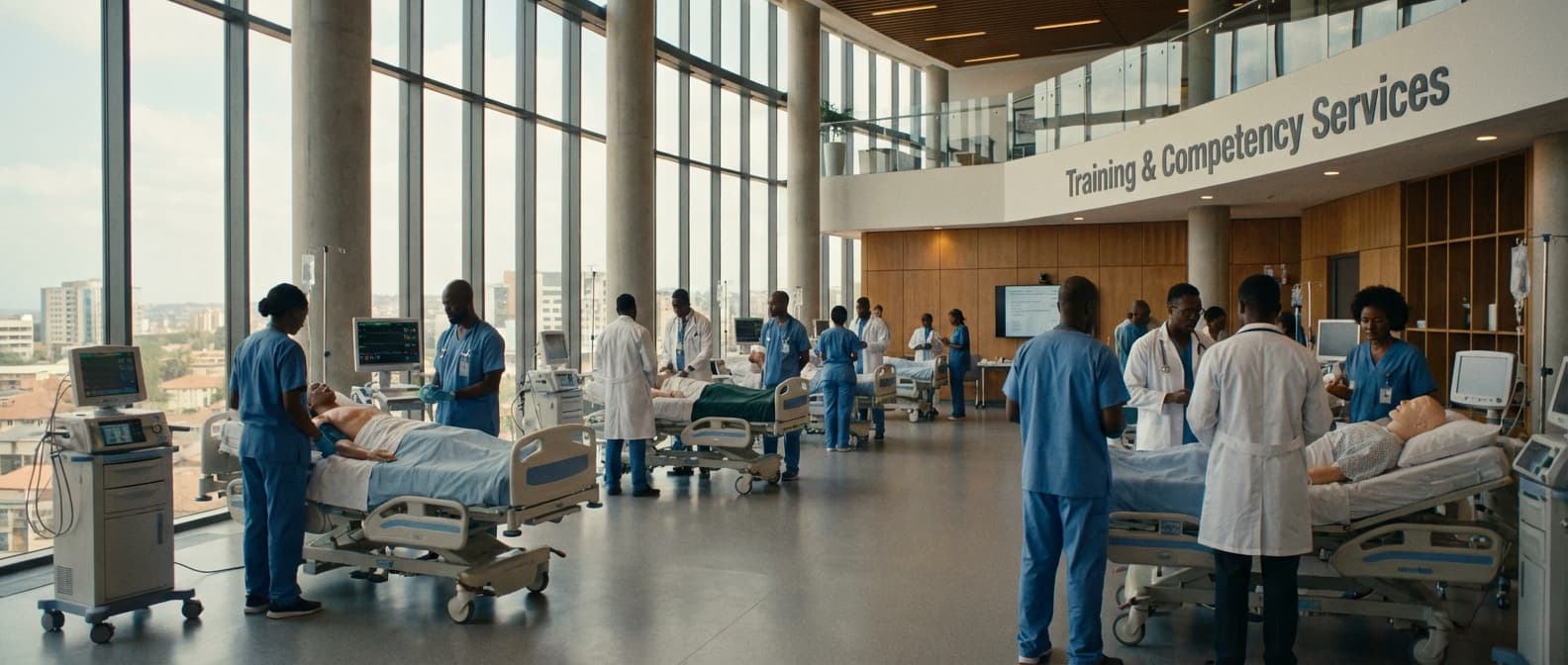
CT Operator Training Service (Radiographers) in Rwanda
Engineering Excellence & Technical Support
CT Operator Training Service (Radiographers) High-standard technical execution following OEM protocols and local regulatory frameworks.
Advanced Imaging Techniques Mastery
Empower radiographers in Rwanda with in-depth training on cutting-edge CT scanning modalities, including multi-detector CT (MDCT) and dual-energy CT. This program focuses on optimizing image acquisition parameters, reducing radiation dose, and enhancing diagnostic accuracy for complex pathologies, ensuring Rwandan healthcare professionals are at the forefront of diagnostic imaging.
Radiation Safety & Dose Optimization
Prioritize patient and staff safety through comprehensive training modules on radiation protection principles and dose management strategies. Our service equips radiographers with the knowledge and practical skills to implement ALARA (As Low As Reasonably Achievable) principles, utilizing advanced dose reduction techniques and protocols specifically tailored to the Rwandan healthcare context.
Clinical Application & Protocol Development
Bridge the gap between theoretical knowledge and practical application by focusing on disease-specific CT protocols and clinical workflow optimization. Radiographers will gain proficiency in interpreting diverse pathologies across various specialties, and learn to develop and implement standardized imaging protocols relevant to common and emergent health concerns in Rwanda.
What Is Ct Operator Training Service (Radiographers) In Rwanda?
CT Operator Training Service (Radiographers) in Rwanda refers to a specialized educational program designed to equip qualified radiographers with the requisite knowledge and practical skills to competently operate Computed Tomography (CT) imaging equipment. This training encompasses theoretical understanding of CT physics, image acquisition protocols, patient positioning, radiation safety principles, and post-processing techniques. It also includes hands-on experience with various CT scanner models, troubleshooting common equipment issues, and adhering to diagnostic imaging standards and regulatory requirements within the Rwandan healthcare landscape. The primary objective is to ensure the safe, efficient, and accurate generation of diagnostic CT images for patient care.
| Who Needs CT Operator Training? | Typical Use Cases | ||||||||
|---|---|---|---|---|---|---|---|---|---|
| Newly qualified radiographers seeking specialization in CT imaging. | Acquisition of new CT scanner technology in healthcare facilities. | Existing radiographers needing to upgrade their skills or become proficient on different CT platforms. | Radiographers working in diagnostic imaging centers, hospitals (public and private), and specialized clinics. | Healthcare institutions aiming to enhance their diagnostic imaging capabilities and comply with national standards. | Radiographers involved in research requiring CT data acquisition. | Personnel designated to operate CT equipment in remote or underserved areas. | Emergency response teams requiring advanced imaging capabilities. | Radiologists requiring specialized CT protocols or advanced techniques. | Medical physics departments overseeing radiation safety and equipment calibration. |
| Diagnosis and staging of oncological conditions (e.g., lung nodules, abdominal masses). | Evaluation of traumatic injuries (e.g., head trauma, fractures, internal bleeding). | Assessment of cardiovascular diseases (e.g., coronary artery disease, aortic aneurysms). | Diagnosis of neurological disorders (e.g., stroke, tumors, demyelinating diseases). | Evaluation of abdominal and pelvic pathologies (e.g., appendicitis, diverticulitis, kidney stones). | Pre-operative planning for surgical interventions. | Monitoring treatment response in various medical conditions. | Guidance for interventional radiology procedures (e.g., biopsies, drainages). | Detection and management of pulmonary embolisms. | Assessment of musculoskeletal conditions and injuries. |
Key Components of CT Operator Training Service:
- CT Physics and Principles of Image Generation
- CT Scanner Operation and Instrumentation
- Patient Care and Safety in CT Scans
- Radiation Protection and Dosimetry for CT Procedures
- CT Imaging Protocols and Artifact Reduction
- Image Reconstruction and Post-Processing Techniques
- Quality Assurance and Control in CT Imaging
- Understanding of Anatomical Structures and Pathology
- Emergency Procedures and Equipment Malfunction Management
- Rwandan Healthcare Regulations and Ethical Considerations in Radiology
Who Needs Ct Operator Training Service (Radiographers) In Rwanda?
CT Operator Training Service (Radiographers) in Rwanda is crucial for ensuring the safe, effective, and high-quality utilization of Computed Tomography (CT) imaging technology. As CT scanners become more prevalent in healthcare facilities across the nation, there's a growing demand for skilled radiographers who can operate these complex machines, interpret images, and adhere to safety protocols. This training aims to bridge the knowledge and skill gap, empowering radiographers to maximize the diagnostic potential of CT scans while minimizing patient and staff radiation exposure. The service is designed to cater to both existing healthcare professionals seeking to upskill and new entrants into the radiography field.
| Target Customer Group | Relevant Departments | Specific Needs Addressed |
|---|---|---|
| Hospitals (Public & Private) | Radiology Department, Diagnostic Imaging | Proficiency in CT scanner operation, protocol optimization, image acquisition, and patient positioning. |
| Radiology Centers & Imaging Clinics | CT Scan Unit, Diagnostic Imaging Services | Efficient workflow management, quality assurance, radiation safety compliance, advanced imaging techniques. |
| District & Referral Hospitals | Radiology Department, Medical Imaging Unit | Basic and intermediate CT operation, common diagnostic protocols, emergency CT imaging protocols. |
| Ministry of Health | Health Policy & Planning, Human Resources for Health, Quality Assurance | Standardization of CT practices, training needs assessment, development of training modules, certification frameworks. |
| Educational Institutions | Radiography/Medical Imaging Programs | Practical CT simulation and hands-on training, curriculum enhancement, faculty development in CT. |
| NGOs & International Health Organizations | Healthcare Project Management, Technical Support | Capacity building for local healthcare professionals, support for procurement of CT equipment through training. |
| Individual Radiographers (New Graduates) | N/A (Focus on skill acquisition) | Foundational CT principles, hands-on operation of various CT scanners, basic image interpretation. |
| Individual Radiographers (Experienced) | N/A (Focus on specialization) | Advanced CT applications (e.g., cardiac CT, interventional CT), multi-detector CT (MDCT) technology, dose reduction techniques. |
Target Customers and Departments for CT Operator Training Service (Radiographers) in Rwanda:
- Hospitals (Public and Private): Facilities equipped with CT scanners requiring trained personnel to operate them. This includes general hospitals, specialized medical centers, and university teaching hospitals.
- Radiology Centers and Imaging Clinics: Standalone or affiliated centers dedicated to diagnostic imaging services, where CT is a core offering.
- District and Referral Hospitals: As the government continues to expand access to advanced medical imaging in public healthcare facilities, these hospitals will increasingly need trained radiographers for CT operations.
- Ministry of Health and Related Government Agencies: For oversight, standardization, and workforce development initiatives within the national healthcare system.
- Educational Institutions (Universities and Colleges offering Radiography Programs): To enhance their curriculum and provide practical, hands-on training to future radiographers.
- NGOs and International Health Organizations: Involved in healthcare infrastructure development and capacity building in Rwanda, who may sponsor or facilitate such training.
- Newly Graduated Radiographers: Individuals entering the workforce who need specialized CT training beyond their foundational radiography education.
- Experienced Radiographers Seeking Specialization: Professionals looking to transition from other imaging modalities or to deepen their expertise in CT technology and procedures.
Ct Operator Training Service (Radiographers) Process In Rwanda
This document outlines the workflow for CT Operator Training Services (Radiographers) in Rwanda, detailing the process from initial inquiry to successful execution. The service aims to equip radiographers with the necessary skills and knowledge to operate CT scanners effectively and safely, adhering to Rwandan healthcare standards and best practices.
| Phase | Key Activities | Responsible Party | Output/Deliverable |
|---|---|---|---|
| Inquiry & Needs Assessment | Client expresses interest; provider assesses training needs. | Client, Training Provider | Needs assessment report, identified training gaps. |
| Proposal Development & Quotation | Provider designs training program and provides cost estimate. | Training Provider | Training proposal, detailed quotation. |
| Agreement & Contract Finalization | Formal agreement on training scope, terms, and conditions. | Client, Training Provider | Signed training agreement/contract. |
| Training Planning & Scheduling | Arranging training dates, venue, and materials. | Training Provider, Client | Confirmed training schedule, prepared materials. |
| Pre-Training Communication | Informing participants about the training. | Training Provider | Participant information packs, agenda. |
| Training Execution | Delivering theoretical and practical training sessions. | Training Provider, Participants | Active participation, acquired skills. |
| Assessment & Evaluation | Testing participant knowledge and skills. | Training Provider, Participants | Assessment results, participant feedback. |
| Post-Training Support & Certification | Providing support and awarding certificates. | Training Provider | Certificates of completion, post-training report. |
| Reporting & Review | Summarizing training outcomes and client feedback. | Training Provider, Client | Final training report, client satisfaction. |
CT Operator Training Service (Radiographers) Workflow in Rwanda
- 1. Inquiry & Needs Assessment:
- Potential clients (hospitals, clinics, healthcare facilities) inquire about CT operator training.
- The training provider conducts a needs assessment to understand the facility's current CT equipment, radiographer skill levels, specific training requirements (e.g., new scanner operation, advanced protocols, safety), and desired learning outcomes.
- This phase may involve discussions, site visits (if feasible), and review of existing documentation.
- 2. Proposal Development & Quotation:
- Based on the needs assessment, a tailored training proposal is developed.
- The proposal outlines the training modules, duration, learning objectives, methodology (theoretical sessions, practical demonstrations, hands-on practice), assessment methods, trainer qualifications, and expected deliverables.
- A detailed quotation is provided, including costs for training materials, trainer fees, venue (if applicable), and any necessary travel or accommodation expenses.
- 3. Agreement & Contract Finalization:
- Once the proposal and quotation are accepted, a formal training agreement or contract is drafted and signed by both parties.
- This document specifies the terms and conditions, payment schedule, cancellation policy, and confidentiality clauses.
- 4. Training Planning & Scheduling:
- The training provider works with the client to finalize the training schedule, considering the facility's operational needs and the availability of participants and trainers.
- Training materials are prepared or customized.
- Logistics are confirmed (e.g., training venue, access to CT scanner, simulation equipment if needed).
- 5. Pre-Training Communication:
- Participants receive pre-training information, including the training agenda, learning objectives, any pre-reading materials, and what to expect during the training.
- A list of participants and their roles may be requested from the client.
- 6. Training Execution (Theoretical & Practical):
- Theoretical Sessions: Delivered through lectures, presentations, case studies, and group discussions, covering CT physics, image acquisition principles, patient positioning, radiation safety, cross-sectional anatomy, common pathologies, and quality assurance.
- Practical Demonstrations: Experienced radiographers or CT specialists demonstrate the operation of the specific CT scanner(s) used by the facility, including system startup, patient protocol selection, image acquisition techniques, and basic troubleshooting.
- Hands-on Practice: Participants get supervised hands-on experience operating the CT scanner, practicing patient positioning, acquiring images on phantoms or consenting simulated patients, and navigating the scanner's interface.
- Protocol Optimization: Training focuses on understanding and adapting protocols for various examinations.
- Radiation Safety Protocols: Emphasis on ALARA (As Low As Reasonably Achievable) principles and compliance with national radiation safety regulations.
- 7. Assessment & Evaluation:
- Formative Assessments: Quizzes, practical exercises, and instructor observations throughout the training to gauge understanding and provide feedback.
- Summative Assessments: A final evaluation, which may include a written examination, a practical skills assessment (e.g., performing a simulated scan), and a review of acquired images.
- Participant Feedback: Trainees provide feedback on the training content, delivery, and trainers to help improve future offerings.
- 8. Post-Training Support & Certification:
- Debriefing: A session to discuss the training outcomes, address any remaining questions, and provide recommendations for ongoing practice.
- Certification: Upon successful completion of all training modules and assessments, participants receive a certificate of completion, validating their CT operator skills.
- Follow-up Support: Optional post-training support may be offered, such as remote assistance, follow-up consultation, or refresher courses, to ensure continued competence and address evolving needs.
- 9. Reporting & Review:
- The training provider submits a post-training report to the client, summarizing the training activities, participant performance, assessment results, and any recommendations.
- The client reviews the report and provides feedback on the training effectiveness.
Ct Operator Training Service (Radiographers) Cost In Rwanda
The cost of CT Operator Training for Radiographers in Rwanda can vary significantly based on several factors. These include the duration and depth of the training program, the reputation and accreditation of the training institution, the location of the training (e.g., Kigali vs. other provinces), whether it's a public or private institution, and the inclusion of practical, hands-on experience with CT equipment. Additionally, the specific curriculum, the qualifications of the instructors, and any associated materials or examination fees will influence the overall price. Training might be offered as a standalone course or as part of a larger diploma or degree program, impacting the cost structure.
| Training Type/Level | Estimated Cost Range (RWF) | Notes |
|---|---|---|
| Basic CT Principles & Operation (Short Course/Workshop) | 150,000 - 400,000 | Focus on fundamental concepts, safety, and basic scanner operation. May not include extensive practical training. |
| Comprehensive CT Operator Training (Certificate/Diploma Level) | 400,000 - 1,200,000 | Covers a broader range of CT physics, protocols, image acquisition, reconstruction, and basic interpretation. Often includes supervised practical sessions. |
| Advanced/Specialized CT Training (e.g., CT Angiography, Cardiac CT) | 600,000 - 1,500,000+ | Module-specific training focusing on advanced techniques and applications. Typically requires a foundational CT operator certification. |
| On-site Training (Institution-provided) | Variable (Negotiable) | Costs depend on the number of trainees, duration, and specific needs of the healthcare facility. May involve instructor travel and accommodation. |
| CT Training as part of a Degree/Higher Diploma Program | 2,000,000 - 5,000,000+ | Spread over several years, this is the most comprehensive option, including extensive theoretical and practical components. |
Key Pricing Factors for CT Operator Training in Rwanda:
- Training Program Duration and Intensity
- Institution's Reputation and Accreditation
- Geographic Location of Training
- Public vs. Private Training Provider
- Inclusion of Practical/Hands-on Sessions
- Curriculum Specificity and Advanced Modules
- Instructor Qualifications and Experience
- Included Training Materials and Resources
- Examination and Certification Fees
- Integration with Larger Academic Programs
Affordable Ct Operator Training Service (Radiographers) Options
Our affordable CT operator training service is designed to equip radiographers with the essential skills and knowledge for safe and efficient Computed Tomography operation. We understand the budgetary constraints faced by many healthcare facilities and offer flexible training solutions, including value bundles and cost-saving strategies, to ensure accessibility for all.
| Bundle Name | Key Inclusions | Target Audience | Estimated Cost Range (per trainee) | Value Proposition |
|---|---|---|---|---|
| Basic CT Fundamentals | Core CT physics, anatomy, basic protocols, image interpretation basics. | New CT operators, radiographers transitioning to CT. | $500 - $900 | Provides foundational knowledge at a highly accessible price point. |
| Advanced CT Protocols & Optimization | Advanced scan techniques, contrast administration, dose reduction strategies, specialized protocols (e.g., CT Angiography, Cardiac CT). | Experienced CT operators seeking to expand their skillset. | $800 - $1500 | Enhances proficiency for complex procedures and improves image quality while managing radiation dose. |
| Comprehensive CT Operator Certification Prep | All topics from Basic & Advanced bundles, plus dedicated exam preparation, practice tests, and case review sessions. | Radiographers preparing for CT certification exams (e.g., ARRT CT). | $1200 - $2000 | Maximizes the likelihood of successful certification with thorough preparation. |
| Facility-Wide CT Training Package | Customizable training for your entire CT team, on-site delivery, dedicated curriculum development to match your equipment and protocols. | Hospitals, imaging centers with multiple CT operators. | Quote-based (significant discounts for group bookings) | Cost-effective solution for upskilling an entire department, ensuring consistency and adherence to facility standards. |
Key Features of Our Affordable CT Operator Training:
- Comprehensive curriculum covering CT physics, cross-sectional anatomy, patient positioning, scan protocols, image acquisition, and quality control.
- Experienced instructors with extensive practical CT experience.
- Flexible delivery methods: online modules, on-site training, and hybrid approaches.
- Focus on hands-on simulation and real-world case studies.
- Certification preparation and support.
- Ongoing professional development opportunities.
Verified Providers In Rwanda
In Rwanda's burgeoning healthcare landscape, identifying trusted and qualified medical professionals is paramount for ensuring quality care. 'Verified Providers' signifies a commitment to excellence, with Franance Health standing out as a premier choice. This designation highlights their rigorous credentialing process, ensuring patients receive care from highly skilled and ethical practitioners. Choosing a verified provider like Franance Health means prioritizing your well-being with confidence.
| Franance Health Credentialing Aspect | Why it Matters to Patients |
|---|---|
| Medical Licensing and Registration | Confirms practitioners meet national standards for practice and are legally authorized to provide medical services. |
| Specialty Board Certification | Indicates advanced training and demonstrated expertise in a specific medical field, ensuring specialized knowledge. |
| Continuous Professional Development (CPD) | Guarantees providers stay updated with the latest medical advancements, techniques, and research. |
| Background Checks and Ethical Screening | Ensures a commitment to patient welfare, honesty, and professional integrity. |
| Peer Review and Performance Evaluation | Demonstrates ongoing assessment of clinical outcomes and adherence to best practices. |
Key Benefits of Choosing Verified Providers like Franance Health:
- Ensured Professional Competence and Expertise
- Adherence to Ethical Medical Practices
- Access to Modern and Effective Treatments
- Patient Safety and Trust
- Reduced Risk of Medical Errors
- Contribution to a Reliable Healthcare System
Scope Of Work For Ct Operator Training Service (Radiographers)
This Scope of Work (SOW) outlines the requirements for providing comprehensive CT Operator Training services specifically designed for Radiographers. The training will cover theoretical knowledge, practical application, safety protocols, and quality assurance aspects essential for proficient CT scanning operations. The objective is to ensure certified radiographers possess the skills and understanding to operate CT scanners safely, efficiently, and produce high-quality diagnostic images while adhering to all relevant regulations and standards.
| Technical Deliverable | Description | Standard Specification / Requirement |
|---|---|---|
| Training Curriculum Document | A detailed outline of all training modules, learning objectives, and assessment methods. | Must be comprehensive, covering all listed modules. Learning objectives should be SMART (Specific, Measurable, Achievable, Relevant, Time-bound). Assessment methods should include theoretical and practical components. |
| Training Materials (Digital/Print) | Slide presentations, lecture notes, case studies, practical exercises, and handbooks for each module. | Materials must be up-to-date, visually engaging, and aligned with current clinical practices and technological advancements. Must be provided in both digital (PDF) and printable formats. |
| Hands-on Practical Training Sessions | Supervised operation of a CT scanner using a variety of protocols and phantoms. | Minimum of X hours (to be specified) of supervised practical training per participant. Training should utilize a functional CT scanner representative of modern equipment. Participants must demonstrate proficiency in patient positioning, protocol selection, and image acquisition. |
| Assessment Tools | Quizzes, practical skill evaluations, and a final comprehensive examination. | Quizzes should assess theoretical understanding for each module. Practical evaluations should assess the ability to perform key CT scanning procedures. The final examination (written and/or practical) should confirm overall competency and readiness for certification. |
| Training Report and Certificates | A report detailing participant performance and individual certificates of completion. | The report should include assessment scores for each participant. Certificates must clearly state the course title, participant's name, duration of training, and issuing organization, and meet industry recognized standards for radiographer training. |
| Radiation Safety Protocols Manual | A dedicated manual outlining radiation safety principles, ALARA implementation, and emergency procedures specific to CT. | Must comply with national and international radiation safety guidelines (e.g., ICRP, local regulatory bodies). Must include dose reduction strategies and incident reporting procedures. |
| QA/QC Procedures Checklist | A standardized checklist for performing routine QA/QC tests on CT scanners. | Checklist must cover all essential QA/QC parameters as per manufacturer recommendations and regulatory requirements. Should be easily adaptable for different scanner models. |
Key Training Modules
- Introduction to CT Technology: Principles of X-ray attenuation, CT data acquisition, image reconstruction, and hardware components.
- CT Scanner Operation: Patient positioning, protocol selection, parameter optimization, image acquisition techniques (e.g., helical, axial, dynamic scanning).
- Image Quality and Artifacts: Factors affecting image quality, identification and troubleshooting of common CT artifacts, image processing techniques.
- Radiation Safety and Protection: Principles of radiation physics, dose optimization techniques (e.g., AEC, iterative reconstruction), patient and operator dose monitoring, regulatory requirements.
- Contrast Media Administration: Types of contrast agents, indications and contraindications, administration routes, management of adverse reactions.
- CT Anatomy and Pathology: Cross-sectional anatomy of various body regions, common pathologies visualized on CT, interpretation principles.
- Quality Assurance and Control (QA/QC): Daily, weekly, and monthly QA/QC procedures for CT scanners, phantom scanning, calibration, and performance testing.
- Advanced CT Applications: Introduction to specific advanced techniques such as dual-energy CT, low-dose CT, spectral imaging, and their clinical applications.
- Data Management and PACS Integration: Image archiving, retrieval, DICOM standards, and integration with Picture Archiving and Communication Systems (PACS).
Service Level Agreement For Ct Operator Training Service (Radiographers)
This Service Level Agreement (SLA) outlines the guaranteed response times and uptime for the CT Operator Training Service provided to radiographers. The objective is to ensure timely support and consistent availability of the training platform and associated resources.
| Service Component | Response Time Guarantee | Uptime Guarantee | Escalation Contact |
|---|---|---|---|
| CT Operator Training Platform Access | 30 minutes for critical issues (e.g., login failure, inability to access core functions); 4 business hours for non-critical issues (e.g., minor UI glitches). | 99.5% uptime, measured monthly, excluding scheduled maintenance. | IT Support Helpdesk (email: support@cttraining.com, phone: +1-XXX-XXX-XXXX) |
| On-demand Training Modules | 4 business hours for issues preventing module playback or completion. | 99.5% uptime, measured monthly, excluding scheduled maintenance. | IT Support Helpdesk (email: support@cttraining.com, phone: +1-XXX-XXX-XXXX) |
| Live Training Sessions (if applicable) | Immediate response during scheduled session times for critical technical failures. For pre-session setup issues, 2 business hours notice. | Availability during scheduled session times. Any disruption will be communicated and rescheduled. | Training Coordinator (email: training.coordinator@cttraining.com) |
| Technical Support for Platform Issues | As defined per platform access response times above. | N/A (covered by platform uptime) | IT Support Helpdesk (email: support@cttraining.com, phone: +1-XXX-XXX-XXXX) |
| Access to Training Resources | 4 business hours for issues preventing download or access to standard resources. | 99.5% uptime, measured monthly, excluding scheduled maintenance. | IT Support Helpdesk (email: support@cttraining.com, phone: +1-XXX-XXX-XXXX) |
Key Service Components
- CT Operator Training Platform Access
- On-demand Training Modules
- Live Training Sessions (where applicable)
- Technical Support for Platform Issues
- Access to Training Resources (manuals, guides)
Frequently Asked Questions

Ready when you are
Let's scope your CT Operator Training Service (Radiographers) in Rwanda project in Rwanda.

Scaling healthcare logistics and technical systems across the entire continent.