
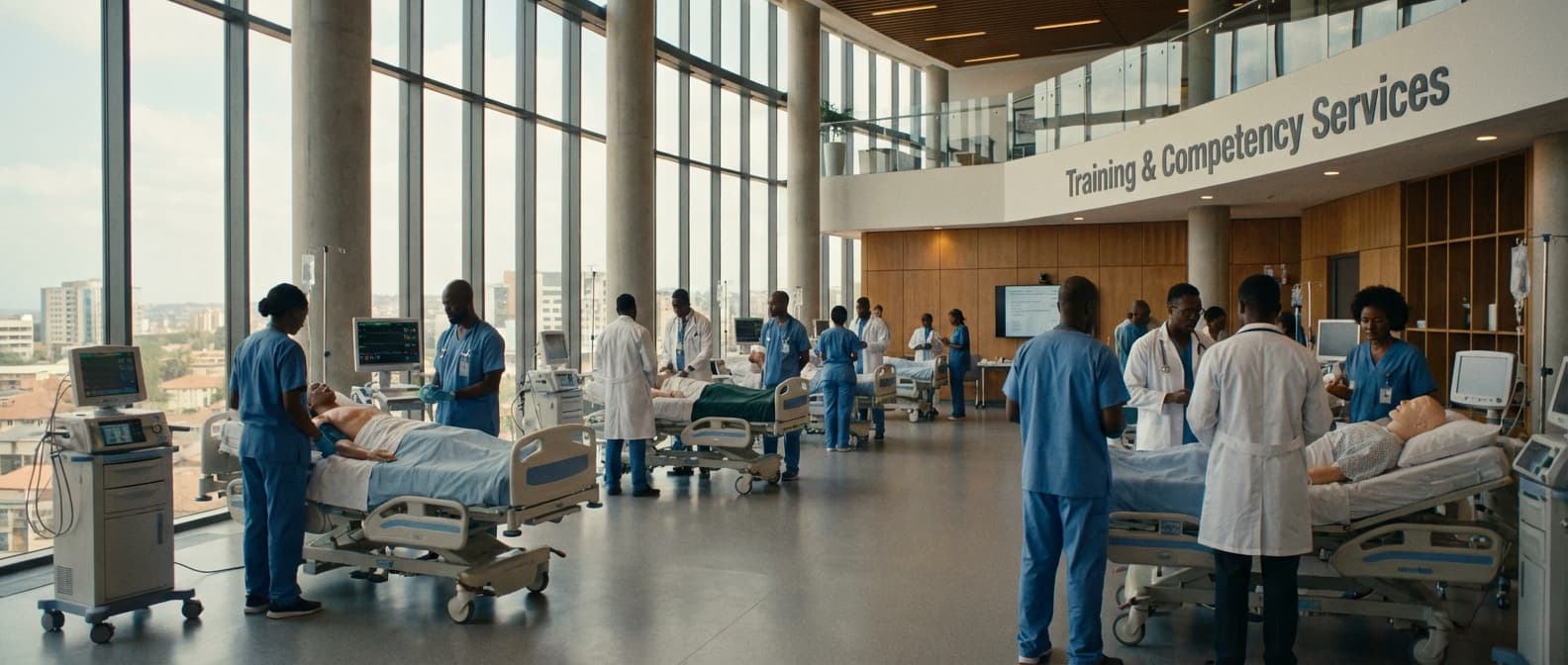
Biomedical Engineering First-Line Support Training Service in Rwanda
Engineering Excellence & Technical Support
Biomedical Engineering First-Line Support Training Service High-standard technical execution following OEM protocols and local regulatory frameworks.
Diagnostic Equipment Calibration & Troubleshooting
Master the calibration procedures and common troubleshooting techniques for critical diagnostic devices like blood analyzers, ECG machines, and X-ray units. Gain hands-on experience to ensure accurate patient data and operational efficiency.
Medical Imaging System First Response
Develop proficiency in the initial assessment and basic maintenance of medical imaging systems (e.g., ultrasound, CT scanners). Learn to identify common issues and perform initial troubleshooting steps before escalating to specialized technicians.
Patient Monitoring Device Setup & Verification
Acquire essential skills in the setup, configuration, and verification of patient monitoring systems (e.g., vital signs monitors, ventilators). Understand alarm management and basic preventive maintenance to ensure patient safety and device reliability.
What Is Biomedical Engineering First-line Support Training Service In Rwanda?
Biomedical Engineering First-Line Support Training Service in Rwanda refers to the provision of specialized educational programs designed to equip individuals with the foundational knowledge and practical skills necessary to perform initial troubleshooting, maintenance, and minor repair tasks on biomedical equipment within healthcare facilities. This service is crucial for ensuring the operational readiness and longevity of medical devices, thereby contributing to the quality of healthcare delivery.
| Who Needs It? | Typical Use Cases | ||||
|---|---|---|---|---|---|
| Biomedical Technicians/Engineers (Entry-Level): Individuals newly entering the field requiring a solid foundation in practical skills. | Responding to immediate equipment alarms or malfunctions (e.g., a vital signs monitor displaying incorrect readings). | Performing daily or weekly scheduled preventive maintenance checks on critical care equipment. | Replacing consumable parts such as ECG electrodes, sensor covers, or printer paper. | Troubleshooting and resolving common issues like power connection problems or software error messages. | Initiating basic cleaning and disinfection procedures for medical devices. |
| Clinical Staff (Nurses, Doctors): Healthcare professionals who directly interact with medical equipment and can perform preliminary diagnostics or basic maintenance. | Identifying and reporting equipment faults to the biomedical department. | Performing basic user maintenance like cleaning and ensuring proper connections. | Understanding the operational status of equipment and reporting anomalies. | Utilizing built-in diagnostic features or self-test functions. | |
| Hospital Administrators/Facility Managers: Personnel responsible for the overall functioning and resource allocation within healthcare institutions. | Ensuring the availability of trained personnel for immediate equipment support. | Optimizing equipment uptime and reducing the need for costly external repair services. | Contributing to the development of effective biomedical maintenance strategies. | ||
| Technical Support Personnel in NGOs/Government Health Programs: Individuals supporting health initiatives in remote or underserved areas. | Providing on-site support for distributed health facilities. | Ensuring the functionality of essential medical equipment in resource-limited settings. | Conducting basic troubleshooting and maintenance to extend equipment lifespan. |
Key Components of Biomedical Engineering First-Line Support Training Service
- Equipment Fundamentals: Training on the basic principles of operation for common medical devices (e.g., vital signs monitors, ECG machines, infusion pumps, basic laboratory equipment).
- Preventive Maintenance: Instruction on routine inspection, cleaning, lubrication, and calibration procedures to prevent failures.
- Troubleshooting Methodology: Development of systematic approaches to identify and diagnose common faults and malfunctions.
- Basic Repair Techniques: Hands-on training in replacing user-serviceable parts, performing minor adjustments, and executing basic repair procedures.
- Safety Protocols: Emphasis on electrical safety, radiation safety (where applicable), and infection control measures related to medical equipment.
- Documentation and Reporting: Training on proper record-keeping for maintenance activities, repairs, and incidents.
- Resource Management: Guidance on inventory management of spare parts, consumables, and tools.
- Regulatory Compliance: Awareness of relevant local and international standards and regulations pertaining to medical device maintenance.
Who Needs Biomedical Engineering First-line Support Training Service In Rwanda?
Biomedical Engineering First-Line Support Training Service in Rwanda is crucial for enhancing the operational efficiency and lifespan of medical equipment within the country's healthcare system. This training aims to equip personnel with the fundamental skills to identify, troubleshoot, and resolve common issues with medical devices, thereby minimizing downtime and ensuring patient safety. The service is designed to empower local technicians and healthcare professionals to handle immediate maintenance needs, reducing reliance on external specialists for minor repairs and preventative care. This leads to significant cost savings and improved accessibility to functioning medical technology across Rwanda's diverse healthcare facilities.
| Target Customer/Department | Specific Role/Personnel | Reasons for Training | Key Responsibilities |
|---|---|---|---|
| Public Hospitals (Central, Referral, District) | Biomedical Technicians, Clinical Engineers, Maintenance Staff, Biomedical Assistants | Enhance equipment uptime, reduce repair costs, improve patient safety, develop local expertise, ensure compliance with maintenance standards. | Initial diagnosis of equipment malfunctions, basic troubleshooting, routine preventive maintenance, minor repairs, calibration checks, proper documentation of maintenance activities. |
| Private Hospitals & Clinics | Biomedical Technicians, Maintenance Supervisors, Nursing Staff (with basic technical roles) | Maximize return on investment in medical equipment, minimize service disruption to patients, ensure service quality, build internal capacity for immediate support. | On-site troubleshooting, performing scheduled maintenance, reporting complex issues, ensuring equipment readiness for clinical use. |
| Health Centers & Outreach Clinics | Clinical Officers, Nurses, Health Facility Administrators (with technical oversight roles) | Empower staff to manage basic equipment needs in remote areas, prolong equipment life, ensure essential medical services are available. | Identify and report equipment failures, perform basic cleaning and checks, manage consumables, ensure safe operation of essential medical devices. |
| Ministry of Health (MoH) - Biomedical Engineering Department | MoH Biomedical Engineers, National Biomedical Technicians, Policy Makers | Standardize maintenance protocols, improve national healthcare infrastructure, develop a skilled workforce, monitor equipment performance across the country. | Develop training curriculum, oversee national training programs, set maintenance standards, ensure quality assurance of support services. |
| Medical Device Manufacturers & Distributors (Local Representatives) | Field Service Engineers, Technical Support Staff, Sales Representatives (with technical knowledge) | Provide 'train-the-trainer' programs, upskill local technicians to support their specific product lines, enhance customer satisfaction, facilitate efficient warranty and post-warranty support. | Delivering specialized product training, providing advanced troubleshooting guidance, supporting first-line technicians with complex issues, ensuring proper installation and commissioning. |
| Tertiary Education Institutions (Universities, Technical Colleges) | Biomedical Engineering Students, Lecturers, Technical Instructors | Integrate practical first-line support skills into academic curricula, prepare graduates for immediate employment in the healthcare sector, foster research in medical equipment maintenance. | Teaching practical maintenance skills, providing hands-on training opportunities, developing curriculum for future technicians. |
Target Customers and Departments for Biomedical Engineering First-Line Support Training Service in Rwanda
- Healthcare Facilities
- Ministry of Health
- Medical Device Manufacturers & Distributors
- Training & Educational Institutions
Biomedical Engineering First-line Support Training Service Process In Rwanda
This document outlines the workflow for the Biomedical Engineering First-Line Support Training Service Process in Rwanda, detailing the steps from initial inquiry to the successful execution of the training. The process is designed to be efficient, clear, and to ensure that training needs are met effectively, contributing to improved healthcare technology maintenance and functionality within Rwandan health facilities. The service aims to empower local biomedical engineering technicians with essential first-line support skills, thereby reducing downtime of medical equipment and enhancing patient care.
| Stage | Key Activities | Deliverables | Responsible Parties |
|---|---|---|---|
| Inquiry & Planning | Receive inquiry, conduct needs assessment, develop proposal, negotiate contract, confirm logistics. | Needs assessment report, training proposal, quotation, signed contract/MoU, finalized schedule. | Client, Training Provider (Biomedical Engineering Department/Service Provider). |
| Preparation | Customize curriculum, prepare training materials, brief trainers. | Finalized curriculum, training manuals, presentations, equipment checklists. | Training Provider. |
| Execution | Deliver training sessions (theory & practice), conduct assessments. | Trained personnel, assessment results. | Trainers, Participants. |
| Closure & Follow-up | Evaluate training, issue certificates, generate reports, process payments, provide post-training support. | Training report, certificates of completion, client satisfaction feedback, final invoice. | Training Provider, Client. |
Biomedical Engineering First-Line Support Training Service Process Workflow in Rwanda
- {"name":"Inquiry and Needs Assessment","step":1,"description":"Potential clients (e.g., Ministry of Health departments, hospital administrators, NGOs) initiate contact to request first-line support training for their biomedical engineering staff. This involves understanding the specific training needs, the types of equipment requiring support, the target audience's current skill level, and the desired outcomes of the training. This stage may involve preliminary meetings or a detailed questionnaire."}
- {"name":"Proposal Development and Quotation","step":2,"description":"Based on the needs assessment, a detailed training proposal is developed. This proposal outlines the training curriculum, duration, methodology, trainers, required resources, and expected learning outcomes. A comprehensive quotation detailing the costs associated with the training delivery is then provided to the client."}
- {"name":"Client Approval and Contract Negotiation","step":3,"description":"The client reviews the proposal and quotation. Upon agreement, negotiations regarding terms, conditions, and any specific customizations may occur. A formal contract or Memorandum of Understanding (MoU) is signed, solidifying the training engagement."}
- {"name":"Training Schedule and Logistics Planning","step":4,"description":"Once the contract is signed, a detailed training schedule is created in collaboration with the client. This includes dates, times, venue selection (on-site at the facility or a dedicated training center), and participant registration. Logistics such as trainer travel, accommodation (if applicable), and necessary training materials are finalized."}
- {"name":"Curriculum Customization (if applicable)","step":5,"description":"If specific equipment or scenarios were highlighted during the needs assessment, minor adjustments to the standard curriculum may be made to ensure relevance and maximum benefit for the participants."}
- {"name":"Trainer Preparation","step":6,"description":"The assigned trainers prepare for the training sessions, ensuring they have the latest information, relevant equipment manuals, and appropriate teaching aids. They familiarize themselves with the client's context and specific needs."}
- {"name":"Training Delivery","step":7,"description":"The training is conducted according to the agreed schedule. This typically involves a combination of theoretical sessions, practical demonstrations, hands-on exercises, case studies, and group discussions. Emphasis is placed on troubleshooting common issues, basic maintenance, safety protocols, and documentation."}
- {"name":"Assessment and Evaluation","step":8,"description":"Participants are assessed throughout the training to gauge their understanding and skill acquisition. This may include practical skill tests, quizzes, or scenario-based assessments. A post-training evaluation form is distributed to participants to gather feedback on the training content, delivery, and overall experience."}
- {"name":"Reporting and Certification","step":9,"description":"A comprehensive training report is prepared, summarizing the training activities, participant attendance, assessment results, and feedback received. Certificates of completion are issued to participants who successfully meet the training objectives."}
- {"name":"Post-Training Follow-up and Support","step":10,"description":"Optional follow-up support may be offered, such as a brief period of remote assistance or a site visit to address any emergent challenges or reinforce learning. Feedback from the client on the impact of the training on their operations is also sought."}
- {"name":"Service Closure and Payment","step":11,"description":"Once all contractual obligations are met and the client is satisfied with the training outcome, the service is formally closed. Final invoices are issued and payment is processed according to the agreed terms."}
Biomedical Engineering First-line Support Training Service Cost In Rwanda
The cost of first-line support training for Biomedical Engineering in Rwanda can vary significantly due to several key pricing factors. These factors influence the overall investment required to equip individuals with essential skills in maintaining and troubleshooting biomedical equipment. Understanding these elements is crucial for organizations and individuals seeking such training.
| Training Type/Scope | Estimated Cost Range (RWF) | Key Characteristics |
|---|---|---|
| Basic First-Line Support (General Overview) | 150,000 - 350,000 | Covers fundamental principles, basic troubleshooting, safety protocols. Shorter duration (e.g., 3-5 days). Often for new entrants. |
| Intermediate First-Line Support (Specific Equipment Categories) | 300,000 - 700,000 | Focuses on specific types of equipment (e.g., vital signs monitors, basic laboratory equipment). Includes more hands-on sessions. Duration: 1-2 weeks. |
| Advanced First-Line Support (Complex Systems/Specialized) | 600,000 - 1,500,000+ | In-depth training on complex medical devices (e.g., basic imaging, anesthesia machines, ventilators). May include manufacturer-specific training. Longer duration (2+ weeks) or modular. |
| On-site Customized Training (per participant, for organizations) | Negotiable (typically a minimum fee + per-participant cost) | Tailored curriculum to an organization's specific equipment and needs. Cost dependent on customization level, trainer travel, and duration. |
Key Pricing Factors for Biomedical Engineering First-Line Support Training in Rwanda:
- {"title":"Training Provider Reputation and Accreditation:","description":"Established training institutions with a proven track record and official accreditation often command higher fees. This is due to their recognized quality of instruction, experienced trainers, and well-developed curriculum."}
- {"title":"Curriculum Depth and Specialization:","description":"The breadth and depth of the training program play a significant role. Programs focusing on a wider range of equipment types or offering specialized modules (e.g., imaging equipment, laboratory devices, critical care equipment) will generally be more expensive than general introductory courses."}
- {"title":"Duration and Intensity of Training:","description":"Longer training programs, often involving more hands-on practice and theoretical learning, will naturally incur higher costs. Intensive, short-term workshops might be less expensive but may cover less ground."}
- {"title":"Trainer Qualifications and Experience:","description":"Highly qualified and experienced trainers, particularly those with practical industry experience in Rwanda or the wider East African region, can increase the training cost. Their expertise ensures practical relevance and effective knowledge transfer."}
- {"title":"Training Methodology and Resources:","description":"The use of advanced training methodologies, including simulation equipment, real biomedical devices for hands-on practice, access to digital learning platforms, and comprehensive training manuals, will influence pricing. Higher investment in these resources leads to a higher cost."}
- {"title":"Location and Facility Costs:","description":"The cost of renting or maintaining training facilities, especially in prime urban areas like Kigali, contributes to the overall price. Accessibility and the quality of the learning environment are also factors."}
- {"title":"Certification and Assessment:","description":"If the training leads to a recognized certification after rigorous assessment, this can add to the cost. The value of the certification in the job market often justifies this additional expense."}
- {"title":"Group Size and Customization:","description":"While per-person costs might decrease for larger groups, customized training programs tailored to a specific organization's needs or equipment fleet can be more expensive due to the bespoke development involved."}
- {"title":"Ancillary Costs:","description":"This can include costs for materials, refreshments, transportation allowances for trainers or participants in remote areas, and any necessary fieldwork or site visits."}
Affordable Biomedical Engineering First-line Support Training Service Options
Acquiring effective first-line biomedical engineering support training is crucial for healthcare institutions to ensure equipment reliability, patient safety, and operational efficiency. However, budget constraints can be a significant hurdle. This document outlines affordable training service options, focusing on value bundles and cost-saving strategies to maximize your investment.
| Cost-Saving Strategy | Description | Potential Benefit |
|---|---|---|
| Group Training Discounts | Enrolling multiple technicians or departments in the same training session often unlocks volume-based discounts from training providers. | Reduced per-person training cost. |
| Online & Blended Learning | Utilizing virtual classrooms, e-learning modules, and self-paced content can significantly reduce travel, accommodation, and facility rental costs compared to in-person sessions. | Lower overall training expenditure, increased flexibility for participants. |
| Train-the-Trainer Programs | Investing in a program that equips experienced internal staff to train their colleagues creates a sustainable and cost-effective internal training resource. | Long-term cost reduction, knowledge retention within the organization. |
| Partnerships with Manufacturers | Explore if equipment manufacturers offer subsidized or discounted training for their products, especially when purchasing new equipment. | Access to specialized training at a reduced or no upfront cost. |
| Focus on Foundational Skills First | Prioritize training on core competencies that apply across multiple device types before investing in highly specialized, expensive training. | Maximizes the impact of initial training investment, reduces the need for redundant training. |
| Negotiate Contract Terms | For ongoing training needs or larger packages, negotiate flexible contract terms, payment schedules, and potential for future discounts. | Improved budget predictability and potential for future savings. |
| Leverage Open-Source Training Materials | While not a substitute for formal training, supplementing with reputable open-source resources can reinforce learning and provide additional reference points. | Cost-free supplementary learning resources. |
Value Bundles for Affordable Training
- Core Skills Package: Covers essential troubleshooting, preventive maintenance fundamentals, and basic equipment identification for common device categories (e.g., patient monitors, infusion pumps).
- Specialized Device Focus: Bundles training on specific high-volume or critical equipment types prevalent in your facility, offering deeper expertise without overpaying for irrelevant modules.
- Preventive Maintenance & Safety Certification: A focused bundle designed to equip technicians with the knowledge and skills for routine PM checks and compliance with safety standards.
- Onboarding & Refresher Course Combo: Integrates foundational training for new hires with periodic refresher courses for existing staff, ensuring a consistently skilled team.
- Remote Support & Tier 1 Escalation Training: Combines training on initial remote diagnostic capabilities with clear protocols for when and how to escalate issues to higher-tier support.
Verified Providers In Rwanda
In Rwanda's evolving healthcare landscape, identifying trustworthy and skilled medical professionals is paramount. Franance Health has emerged as a leading force, diligently vetting and credentialing healthcare providers to ensure the highest standards of care. Their rigorous selection process, encompassing qualifications, experience, and ethical practice, guarantees that patients receive effective, safe, and compassionate treatment. Choosing a Franance Health-verified provider means opting for excellence in healthcare.
| Provider Category | Franance Health Verification Criteria | Benefits for Patients |
|---|---|---|
| General Practitioners | Valid Rwandan Medical License, Degree from accredited institution, Minimum 2 years clinical experience. | Accurate diagnoses, effective primary care, referrals to specialists when needed. |
| Specialist Physicians (e.g., Cardiologists, Pediatricians) | All GP criteria plus recognized specialist certification, proven experience in their field, membership in relevant professional bodies. | Expert diagnosis and treatment for complex conditions, access to specialized knowledge. |
| Surgeons | All Specialist Physician criteria plus advanced surgical training and certification, demonstrated surgical proficiency, excellent patient outcomes. | Safe and effective surgical procedures, successful recovery and rehabilitation. |
| Dentists | Valid Rwandan Dental License, Degree from accredited dental school, specialization certifications (if applicable). | Comprehensive oral health care, preventative treatments, restorative procedures. |
| Nurses (RNs, ENs) | Registered Nurse/Enrolled Nurse license, relevant diplomas/degrees, continuous training in patient care. | High-quality bedside care, medication administration, patient education and support. |
Why Franance Health Credentials Represent the Best Choice in Rwanda:
- Rigorous Qualification Verification: Franance Health meticulously checks medical licenses, degrees, and specialized certifications to ensure providers meet national and international standards.
- Experience Assessment: Beyond academic achievements, Franance Health evaluates the practical experience and track record of healthcare professionals.
- Ethical Practice Standards: Providers are vetted for their commitment to patient well-being, professional ethics, and adherence to best medical practices.
- Continuous Professional Development: Franance Health encourages and monitors ongoing training, ensuring providers stay updated with the latest medical advancements.
- Patient-Centrust Focus: The credentialing process prioritizes providers who demonstrate a strong commitment to patient satisfaction and open communication.
- Enhanced Patient Safety: By partnering with verified providers, patients gain confidence in the quality and safety of the medical services they receive.
Scope Of Work For Biomedical Engineering First-line Support Training Service
This Scope of Work (SOW) outlines the requirements for a comprehensive First-Line Support Training Service for Biomedical Engineering. The objective is to equip newly onboarded or existing technical support personnel with the essential knowledge, skills, and procedures to effectively handle initial biomedical device support inquiries, troubleshooting, and escalations.
| Deliverable ID | Deliverable Name | Description | Standard Specification/Acceptance Criteria | Format | Frequency |
|---|---|---|---|---|---|
| DL01 | Training Curriculum Document | Detailed outline of all training modules, learning objectives, and content covered. | Curriculum must cover device categories, common faults, troubleshooting steps, safety procedures, and escalation protocols. Must be reviewed and approved by the Biomedical Engineering Manager. | Digital Document (PDF) | One-time, upon project commencement |
| DL02 | Training Modules (Presentations/Slides) | Material used for instructor-led training sessions. | Each module must be clear, concise, and visually engaging. Must align with the approved Training Curriculum Document. | Digital Presentation Files (e.g., PowerPoint, Google Slides) | Per module, as defined in curriculum |
| DL03 | Hands-on Practical Exercises/Simulations | Scenario-based exercises designed to allow trainees to practice troubleshooting and diagnostic skills in a simulated environment. | Exercises must be realistic and cover a range of common issues. Successful completion of exercises will be assessed based on adherence to procedures and problem resolution. | Simulated scenarios, lab exercises | Integrated within training modules |
| DL04 | Knowledge Assessment Quizzes/Exams | Tools to evaluate trainee comprehension of the training material. | Quizzes must have a defined passing score (e.g., 80%). Exams should cover all key learning objectives. | Digital (Online) or Printed | At the end of each major module/course |
| DL05 | Service Desk Software & Ticketing Procedure Guide | Documentation detailing how to use the organization's service desk software for logging, tracking, and resolving tickets. | Guide must be accurate, up-to-date, and reflect current organizational workflows. Trainees must demonstrate proficiency in using the software. | Digital Document (PDF) & Live System Demonstration | One-time, during training |
| DL06 | Communication & Customer Service Best Practices Guide | Guidelines on professional communication, empathy, and effective problem-solving when interacting with clinical staff. | Guide should include sample scripts and scenarios. Trainees will be evaluated on their communication skills during role-playing exercises. | Digital Document (PDF) | One-time, during training |
| DL07 | Safety & Regulatory Compliance Briefing Materials | Information on relevant safety standards (e.g., electrical safety, infection control) and regulatory requirements applicable to biomedical device support. | Materials must be accurate and reflect current regulations. Trainees must pass a safety and compliance quiz. | Digital Document (PDF) & Presentation | One-time, during training |
| DL08 | Escalation Protocol Flowcharts & Documentation | Visual representation and written procedures for escalating issues that cannot be resolved by first-line support. | Flowcharts must be clear and easy to follow. Documentation must specify contact points and required information for escalation. | Digital Document (PDF) & Visual Flowcharts | One-time, during training |
| DL09 | Post-Training Competency Assessment Report | A summary report evaluating the overall competency of the trained cohort. | Report should include aggregate quiz/exam scores, practical exercise performance, and any identified areas for further development. Requires sign-off from the Biomedical Engineering Manager. | Digital Document (PDF) | Upon completion of training |
| DL10 | Training Feedback Forms | Forms for trainees to provide feedback on the training program, instructors, and materials. | Feedback should be anonymized and used for continuous improvement of the training. | Digital (Online) or Printed | Upon completion of training |
Key Objectives of the Training Program
- To provide a foundational understanding of common biomedical devices and their typical failure modes.
- To train personnel on standardized troubleshooting methodologies and diagnostic tools.
- To impart knowledge of the organization's service desk software and ticketing procedures.
- To develop effective communication and customer service skills for interacting with clinical staff.
- To ensure adherence to all relevant safety, regulatory, and organizational protocols.
- To establish clear escalation pathways for complex issues.
- To enable first-line support to resolve a significant percentage of common issues without requiring escalation.
Service Level Agreement For Biomedical Engineering First-line Support Training Service
This Service Level Agreement (SLA) outlines the response times and uptime guarantees for the Biomedical Engineering First-Line Support Training Service. This service aims to provide timely and effective support to ensure the smooth operation and continuous learning environment for biomedical engineering personnel.
| Service Component | Response Time Target | Uptime Guarantee |
|---|---|---|
| New Staff Onboarding & Initial Training Session Scheduling | Within 2 business days of request submission. | N/A (Scheduled Event) |
| Access to Online Training Modules & Documentation | 99.9% availability during standard business hours (9 AM - 5 PM, Monday-Friday, excluding holidays). | 99.9% |
| Troubleshooting Guidance for Training-Related Queries | Tier 1: Within 4 business hours for non-critical issues. | N/A (Support Response) |
| Troubleshooting Guidance for Training-Related Queries | Tier 2: Within 1 business day for critical issues impacting training completion. | N/A (Support Response) |
| Learning Management System (LMS) Availability | 99.9% availability, 24x7. | 99.9% |
| Support for Technical Issues with Training Materials (e.g., broken links, video playback) | Within 1 business day. | N/A (Issue Resolution) |
Scope of Service
- Onboarding and initial training for new biomedical engineering first-line support staff.
- Refresher training modules on common equipment and troubleshooting procedures.
- Access to online training resources and documentation.
- Basic troubleshooting guidance and escalation protocols.
- Support for the learning management system (LMS) used for training.
Frequently Asked Questions

Ready when you are
Let's scope your Biomedical Engineering First-Line Support Training Service in Rwanda project in Rwanda.

Scaling healthcare logistics and technical systems across the entire continent.