
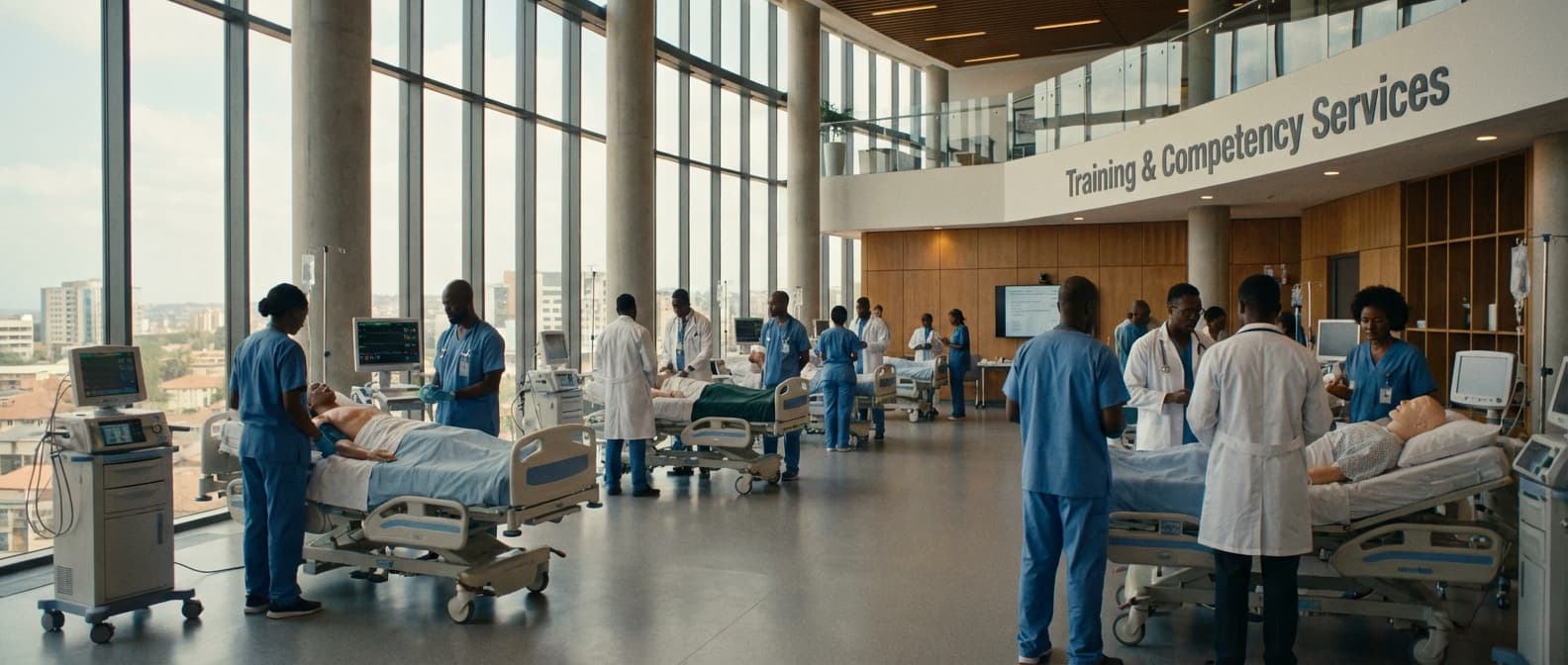
Anesthesia Workstation User Training Service in Rwanda
Engineering Excellence & Technical Support
Anesthesia Workstation User Training Service High-standard technical execution following OEM protocols and local regulatory frameworks.
Mastering Ventilation Modes
Gain in-depth knowledge of various ventilation modes (e.g., Volume Control, Pressure Control, SIMV, PSV) on the latest anesthesia workstations. Learn to select optimal settings, monitor patient response, and troubleshoot common challenges for safe and effective mechanical ventilation in diverse clinical scenarios.
Advanced Gas Delivery & Monitoring
Become proficient in the precise delivery and monitoring of anesthetic gases and medical air. This module covers calibration, gas scavenging systems, vaporizers, and the interpretation of real-time gas analysis data to ensure patient safety and optimize anesthetic agent usage.
Integrated Patient Monitoring & Alarms
Enhance your ability to utilize the workstation's integrated patient monitoring capabilities. This includes a deep dive into ECG, SpO2, NIBP, EtCO2, and temperature monitoring. Learn to effectively configure alarms, respond to critical events, and interpret waveform data for comprehensive patient assessment.
What Is Anesthesia Workstation User Training Service In Rwanda?
Anesthesia Workstation User Training Service in Rwanda refers to a specialized educational program designed to equip healthcare professionals with the knowledge and practical skills necessary to safely and effectively operate anesthesia workstations. These workstations are complex medical devices that deliver anesthetic gases, monitor patient vital signs, and manage respiratory support during surgical and other medical procedures. The training aims to enhance user competence, minimize the risk of medical errors, and optimize patient outcomes within the Rwandan healthcare context.
| Target Audience | Needs Addressed | Typical Use Cases |
|---|---|---|
| Anesthesiologists | Advanced operational proficiency, complex case management, troubleshooting rare events. | Routine elective surgeries, complex cardiac/thoracic procedures, critical care unit support, obstetric anesthesia. |
| Anesthetic Nurses/Technicians | Fundamental operational understanding, routine procedure support, equipment preparation and maintenance. | Assisting anesthesiologists in the operating room, managing equipment in procedural suites, pre-anesthesia setup. |
| Residents and Trainees (Anesthesiology) | Foundational knowledge and practical experience to achieve competency under supervision. | Learning the basics of anesthesia delivery and monitoring in simulated and supervised clinical environments. |
| Healthcare Facility Biomedical Engineers/Technicians | Understanding of maintenance requirements, basic troubleshooting, and safe handling for repair. | Preventive maintenance scheduling, responding to equipment failure reports, ensuring device safety and functionality. |
Key Components of Anesthesia Workstation User Training Service:
- Device Familiarization and Anatomy: Comprehensive understanding of the anesthesia workstation's components, their functions, and the underlying physiological principles of anesthesia delivery and monitoring.
- Pre-use Checks and Calibration: Detailed instruction on performing mandatory pre-operative checks, leak tests, and routine calibrations to ensure device integrity and accuracy.
- Anesthetic Gas Administration: Training on the precise delivery of various anesthetic gases, including setting appropriate flow rates, concentrations, and understanding agent-specific pharmacokinetics and pharmacodynamics.
- Ventilation Management: In-depth knowledge of mechanical ventilation modes, parameters (tidal volume, respiratory rate, PEEP, etc.), and their application in different clinical scenarios. This includes understanding ventilator alarms and their troubleshooting.
- Patient Monitoring Integration: Training on how to interpret data from integrated patient monitoring systems (e.g., ECG, SpO2, EtCO2, NIBP, invasive blood pressure) and their correlation with anesthetic delivery.
- Troubleshooting and Emergency Procedures: Education on identifying and responding to common device malfunctions, system alarms, and critical emergency situations requiring immediate intervention.
- Infection Control and Maintenance: Best practices for cleaning, disinfection, and routine maintenance of the anesthesia workstation to prevent cross-contamination and prolong device lifespan.
- Regulatory Compliance and Documentation: Understanding relevant national guidelines, regulatory requirements, and accurate record-keeping related to anesthesia workstation usage and patient care.
Who Needs Anesthesia Workstation User Training Service In Rwanda?
Anesthesia workstation user training services are crucial for ensuring the safe, effective, and efficient operation of anesthesia machines in healthcare facilities. These services are designed to equip healthcare professionals with the knowledge and practical skills needed to operate, maintain, and troubleshoot anesthesia workstations. This is particularly important in regions like Rwanda, where healthcare infrastructure is developing and the adoption of advanced medical technology is increasing. Proper training minimizes the risk of user error, optimizes patient care, and extends the lifespan of expensive equipment.
| Target Customer Segment | Specific Departments/Roles | Key Needs/Benefits |
|---|---|---|
| Public Hospitals | Anesthesiologists, Nurse Anesthetists, Biomedical Engineers, OR Nurses | Ensuring skilled personnel for national healthcare delivery, standardization of care, efficient use of government-funded equipment, troubleshooting to reduce downtime. |
| Private Hospitals & Clinics | Anesthesiologists, Certified Registered Nurse Anesthetists (CRNAs), Biomedical Technicians, Operating Room Staff | Maintaining high standards of patient care, optimizing equipment performance, reducing operational costs through proper maintenance, attracting skilled professionals. |
| Surgical Centers | Anesthesiologists, OR Technicians, Recovery Room Nurses | Safe and efficient anesthetic delivery for outpatient and short-stay procedures, rapid patient turnover, preventing equipment malfunctions. |
| Intensive Care Units (ICUs) | Intensivists, ICU Nurses, Respiratory Therapists, Biomedical Technicians | Managing ventilated patients, understanding advanced ventilation modes, ensuring continuous monitoring and life support, emergency preparedness. |
| Medical Training Institutions | Medical Students, Residents (Anesthesiology), Nurse Anesthesia Program Students, Faculty | Providing foundational and advanced training for future healthcare professionals, developing competent anesthetists, equipping graduates with practical skills for the Rwandan job market. |
| Biomedical Engineering Departments | Biomedical Engineers, Clinical Engineers, Technicians | In-depth understanding of the technical aspects, maintenance, calibration, and repair of anesthesia workstations, proactive equipment management, ensuring patient safety. |
Target Customers and Departments for Anesthesia Workstation User Training Services in Rwanda
- Hospitals (Public and Private)
- Surgical Centers
- Emergency Departments
- Intensive Care Units (ICUs)
- Operating Rooms (ORs)
- Anesthesiology Departments
- Training Institutions and Universities (Medical Schools)
Anesthesia Workstation User Training Service Process In Rwanda
The Anesthesia Workstation User Training Service process in Rwanda is designed to ensure that healthcare professionals are proficient in operating anesthesia workstations safely and effectively. This workflow outlines the steps from an initial inquiry to the successful completion of the training program, encompassing registration, needs assessment, curriculum development, training delivery, and post-training support. The process is structured to be comprehensive, client-centric, and to meet the specific needs of Rwandan healthcare facilities.
| Phase | Step | Description | Key Activities | Responsible Party(ies) |
|---|---|---|---|---|
| Initiation |
| Healthcare facility expresses interest in anesthesia workstation user training. | Contacting the service provider (phone, email, website form). Initial query about services offered. | Healthcare Facility Representative, Service Provider Sales/Inquiry Team |
| Assessment |
| Understanding the specific needs, existing knowledge, and equipment of the facility. | Site visit (if feasible), detailed questionnaires, discussions with clinical staff and administration, identifying target audience and learning objectives. | Service Provider Training Coordinator, Healthcare Facility Clinical Lead/Manager |
| Planning |
| Formalizing the scope, cost, and terms of the training service. | Developing a detailed proposal outlining training modules, duration, cost, trainer qualifications, and expected outcomes. Contract negotiation and signing. | Service Provider Business Development/Sales, Healthcare Facility Administration/Procurement |
| Planning |
| Tailoring the training content to the specific anesthesia workstation models and facility protocols. | Adapting standard training modules, incorporating facility-specific procedures, safety protocols, and relevant clinical scenarios. Developing a detailed training schedule. | Service Provider Training Department, Subject Matter Experts (SMEs) |
| Preparation |
| Selecting qualified trainers and preparing them for the specific training engagement. | Assigning trainers with relevant expertise in the anesthesia workstation model(s). Briefing trainers on facility needs, curriculum, and logistical arrangements. | Service Provider Training Manager |
| Logistics |
| Arranging all necessary resources and scheduling the training sessions. | Confirming training dates and times with the facility. Arranging for training equipment (if required), venue, and participant lists. Communicating logistical details to participants. | Service Provider Training Coordinator, Healthcare Facility Administration |
| Execution |
| Delivering the training program covering both theoretical knowledge and hands-on practice. | Conducting lectures, presentations, and discussions on anesthesia workstation principles, functions, safety features, and troubleshooting. Providing hands-on practical sessions with the actual equipment in a simulated or real clinical environment. | Service Provider Trainer(s) |
| Evaluation |
| Assessing the participants' understanding and practical skills. | Administering written tests, practical skill assessments, case study analysis, and observation of performance during simulated scenarios. | Service Provider Trainer(s) |
| Closure |
| Issuing certificates and gathering feedback for continuous improvement. | Providing certificates of completion to participants who meet competency standards. Collecting feedback from participants and facility management on the training program and trainers. | Service Provider Training Department, Service Provider Trainer(s), Healthcare Facility Representatives |
| Follow-up |
| Providing ongoing support and ensuring continued proficiency. | Offering post-training Q&A sessions, remote support, refresher training options, and performance monitoring (if agreed upon). Sharing training reports and recommendations with the facility. | Service Provider Training Coordinator, Service Provider Technical Support |
Anesthesia Workstation User Training Service Process Workflow in Rwanda
- Inquiry and Initial Contact
- Needs Assessment and Requirement Gathering
- Proposal and Agreement
- Curriculum Customization and Planning
- Trainer Assignment and Preparation
- Logistics and Scheduling
- Training Execution (Theoretical and Practical)
- Assessment and Competency Evaluation
- Certification and Feedback
- Post-Training Support and Follow-up
Anesthesia Workstation User Training Service Cost In Rwanda
Providing comprehensive user training for anesthesia workstations in Rwanda involves several key cost drivers. The pricing of such services is not standardized and can vary significantly based on the training provider, the complexity of the workstation, the duration and depth of the training, and the location within Rwanda where the training is conducted. Factors influencing the cost include the expertise and qualifications of the trainers, the development and customization of training materials, the logistical arrangements (travel, accommodation, venue rental if not on-site), and the level of hands-on practice provided. Demand for specialized training and the competitive landscape of training providers also play a role in price setting. Local currency, the Rwandan Franc (RWF), is the primary medium of exchange, and all costs are typically denominated in this currency. It's crucial for healthcare facilities to obtain detailed quotes from potential training providers to understand the specific inclusions and exclusions of each service.
| Service Component | Estimated Cost Range (RWF) | Notes |
|---|---|---|
| Basic User Training (1-2 Days) | 300,000 - 800,000 | Covers fundamental operation, safety features, and routine maintenance for a single workstation model. May include on-site delivery. |
| Advanced User Training (3-5 Days) | 700,000 - 1,500,000 | In-depth training on advanced functionalities, troubleshooting, specific clinical applications, and potentially simulation exercises. |
| Customized Training Module Development | 200,000 - 600,000 | Cost for tailoring training content to specific hospital protocols or unique clinical scenarios. This is often an add-on cost. |
| Trainer Travel & Accommodation (per trip) | 150,000 - 500,000 | Highly variable based on origin of trainer (local vs. international) and duration of stay. Includes flights, hotel, and meals. |
| Post-Training Support (e.g., 1 month) | 100,000 - 300,000 | Access to technical support, Q&A sessions, or remote troubleshooting after the initial training. |
| Comprehensive Package (Training + Materials + Basic Support) | 1,000,000 - 3,000,000+ | A bundled offering that includes core training, standardized materials, and a defined period of follow-up support for a specific workstation. |
Key Factors Influencing Anesthesia Workstation User Training Service Costs in Rwanda:
- Trainer Expertise and Qualifications: Certified trainers with extensive experience in anesthesia and specific workstation models command higher fees.
- Workstation Complexity and Model: Training on advanced, multi-functional workstations will generally be more expensive than for simpler models.
- Training Duration and Depth: The number of days or hours dedicated to training directly impacts the overall cost.
- Training Location: On-site training at a healthcare facility might be more cost-effective for the client than off-site training requiring travel and venue rental.
- Customization of Training Materials: Tailoring content to specific clinical needs or hospital protocols can add to the cost.
- Logistical Arrangements: Costs associated with trainer travel (flights, ground transport), accommodation, and per diem expenses.
- Hands-on Practice and Simulation: The extent to which practical sessions and simulations are incorporated.
- Number of Participants: While not always a direct per-person cost increase, larger groups might require more resources or additional trainers.
- Post-Training Support: Inclusion of follow-up sessions, remote support, or refresher courses.
- Provider Reputation and Demand: Established training providers with a strong reputation may charge a premium.
Affordable Anesthesia Workstation User Training Service Options
This document outlines user training service options for affordable anesthesia workstations, emphasizing value bundles and cost-saving strategies to ensure comprehensive and economical user education.
| Service Bundle Name | Included Components | Ideal For | Estimated Cost Savings | Value Proposition |
|---|---|---|---|---|
| Basic Essentials Package | Remote virtual training, E-learning modules, User manuals | New users, smaller departments, budget-conscious institutions | 20-30% | Cost-effective foundational knowledge for everyday operation. |
| Standard Competency Package | On-site practical training (1-2 days), Remote virtual sessions, E-learning modules, Basic troubleshooting support | New hires, facilities requiring hands-on proficiency, medium-sized departments | 15-25% | Ensures core competencies and practical application of workstation features. |
| Comprehensive Mastery Package | Extended on-site training (3-5 days), Customized training modules, Train-the-trainer program, Priority technical support, Access to advanced feature webinars | Large hospitals, teaching institutions, teams needing deep expertise, proactive skills development | 10-20% | Develops expert users, reduces reliance on external support, and promotes knowledge sharing. |
| On-Demand Support & Learning | Access to full e-learning library, Monthly Q&A webinars, Per-incident remote support, Updates on new features | Existing users needing continuous learning, staff seeking to specialize, organizations with fluctuating training needs | Variable (pay-as-you-go with subscription discount) | Flexible, continuous learning and support to maintain optimal workstation utilization. |
Key Training Service Components
- On-site practical training
- Remote virtual training sessions
- E-learning modules and webinars
- Customized training programs
- Refresher courses and advanced modules
- Train-the-trainer programs
- Technical documentation and user manuals
- Ongoing support and troubleshooting guidance
Verified Providers In Rwanda
In Rwanda, ensuring you receive quality healthcare from trusted professionals is paramount. The landscape of healthcare providers is becoming increasingly diverse, making it crucial to identify those who are not only skilled but also officially recognized and credentialed. Franance Health stands out as a beacon of reliability in this regard, offering a robust system for verifying healthcare providers. Their rigorous credentialing process and commitment to excellence make them the optimal choice for individuals seeking dependable medical services.
| Franance Health Credentialing Aspect | Description | Why it Matters for Patients |
|---|---|---|
| Licensing and Registration Verification | Franance Health meticulously checks that all practitioners hold valid and current licenses from the Rwanda Health Professions Council (RHPC) and relevant regulatory bodies. | Ensures providers are legally authorized to practice, meeting minimum educational and ethical requirements. |
| Education and Training Validation | We confirm the authenticity of academic degrees, specialized training, and certifications obtained by healthcare professionals. | Guarantees that providers possess the necessary knowledge, skills, and up-to-date expertise in their respective fields. |
| Professional Experience Assessment | Franance Health evaluates the professional history, previous work experience, and any disciplinary records of providers. | Identifies experienced and reputable individuals with a proven track record of delivering quality care and ethical conduct. |
| Continuing Professional Development (CPD) | We monitor and verify that providers are actively engaged in ongoing learning and professional development activities as mandated by Rwandan regulations. | Ensures providers remain current with the latest medical advancements, technologies, and best practices. |
| Background Checks and Due Diligence | Comprehensive background checks are conducted to ensure the integrity and trustworthiness of each provider. | Protects patients from potential risks by associating with professionals of good character and standing. |
Key Benefits of Choosing Verified Providers:
- Ensured Quality of Care: Verified providers have met stringent professional standards.
- Patient Safety: Reduced risk of medical errors and substandard practices.
- Trust and Confidence: Peace of mind knowing you are in competent hands.
- Access to Specialized Expertise: Verified networks often highlight specialists.
- Improved Healthcare Outcomes: Leading to better personal health and well-being.
Scope Of Work For Anesthesia Workstation User Training Service
This document outlines the Scope of Work (SOW) for providing comprehensive user training services for Anesthesia Workstations. The training aims to equip healthcare professionals with the necessary knowledge and skills to operate, maintain, and troubleshoot anesthesia workstations effectively and safely. This SOW details the technical deliverables and standard specifications to ensure high-quality and standardized training.
| Deliverable | Description | Standard Specifications |
|---|---|---|
| Training Curriculum Development | Creation of a comprehensive and modular training program tailored to different user groups (e.g., anesthesiologists, nurse anesthetists, anesthesia technicians). | Includes theoretical modules, practical exercises, case studies, and assessment tools. Aligned with current anesthesia guidelines and manufacturer specifications. Modules covering: basic operation, ventilation modes, drug delivery, monitoring, safety features, alarms, troubleshooting, cleaning, and disinfection. |
| Training Materials | Development of high-quality, user-friendly training materials. | Includes instructor guides, participant workbooks, presentation slides, quick reference guides, and multimedia content (videos, simulations). Materials available in digital and/or print formats. Content accuracy verified against workstation manuals. |
| Instructor-Led Training Sessions | Delivery of interactive training sessions by certified and experienced instructors. | Sessions conducted on-site or remotely. Sessions include lectures, demonstrations, hands-on practice on actual or simulated workstations. Recommended instructor-to-participant ratio: 1:8 for hands-on sessions. Session duration tailored to module complexity and user group. |
| Hands-On Practical Sessions | Dedicated time for participants to practice using the Anesthesia Workstation under instructor supervision. | Utilizes actual workstations or high-fidelity simulators. Covers routine procedures, emergency scenarios, and advanced functionalities. Focus on muscle memory development and critical thinking. |
| Competency Assessment | Evaluation of participant learning and skill acquisition. | Includes written tests, practical skills demonstrations, and scenario-based assessments. Pass/fail criteria clearly defined. Post-training competency validation report provided. |
| Certification/Completion Certificates | Issuance of certificates upon successful completion of the training program. | Certificates include participant name, training course title, date of completion, and issuing organization/instructor credentials. Digital and/or physical certificates provided. |
| Post-Training Support | Provision of ongoing support to trainees after the completion of the formal training. | Includes access to a knowledge base, FAQ section, dedicated email/phone support for up to 30 days post-training. Refresher training options available upon request. |
| Training Environment Setup | Ensuring the availability and readiness of the training environment. | Includes ensuring workstations are fully functional, calibrated, and equipped with necessary consumables. Training room with appropriate AV equipment. Access to necessary network resources if applicable. |
| Training Report and Feedback | Documenting the training delivery and gathering participant feedback. | Includes a summary of training attendance, assessment results, and instructor observations. Participant feedback forms collected and analyzed. A final training report submitted within 7 days of training completion. |
| Customization of Training Modules | Ability to tailor specific modules or incorporate site-specific protocols. | On-demand customization of theoretical content and practical scenarios to meet specific institutional needs. Requires prior agreement on scope and timelines for customization. |
Key Objectives
- Ensure safe and effective operation of the Anesthesia Workstation.
- Enhance user competency in all core functionalities and advanced features.
- Minimize user errors and optimize patient care outcomes.
- Promote adherence to best practices in anesthesia delivery.
- Empower users to perform basic troubleshooting and maintenance.
- Facilitate a smooth transition to new or upgraded anesthesia workstation models.
Service Level Agreement For Anesthesia Workstation User Training Service
This Service Level Agreement (SLA) outlines the performance expectations for the Anesthesia Workstation User Training Service provided by [Your Company Name] (hereinafter referred to as "Provider") to [Client Name] (hereinafter referred to as "Client"). This SLA focuses on response times for support requests and guarantees for the availability of training resources and personnel.
| Service Element | Uptime Guarantee | Response Time Target | Resolution Time Target |
|---|---|---|---|
| Training Platform Availability (Webinar/Online Modules) | 99.5% during scheduled training hours | N/A (Self-service or scheduled) | N/A (Self-service or scheduled) |
| Instructor Availability for Scheduled Live Training Sessions | 100% of scheduled session time | 1 hour prior to session start | Immediate during session |
| Technical Support for Training Platform (e.g., login issues, platform errors) | N/A (Covered by response/resolution times) | 2 business hours | 8 business hours for standard issues, 24 business hours for critical issues impacting multiple users or scheduled sessions |
| Support for Anesthesia Workstation Functionality (as it relates to training) | N/A (Client is responsible for workstation maintenance) | 4 business hours (for training-related queries only) | N/A (Client should contact hardware vendor for workstation issues) |
| Rescheduling of Training Sessions (due to Provider issue) | N/A | 4 business hours notification | Reschedule within 5 business days |
Key Service Components
- Anesthesia Workstation User Training Delivery
- Technical Support for Training Platform
- Scheduled Training Session Availability
Frequently Asked Questions

Ready when you are
Let's scope your Anesthesia Workstation User Training Service in Rwanda project in Rwanda.

Scaling healthcare logistics and technical systems across the entire continent.