
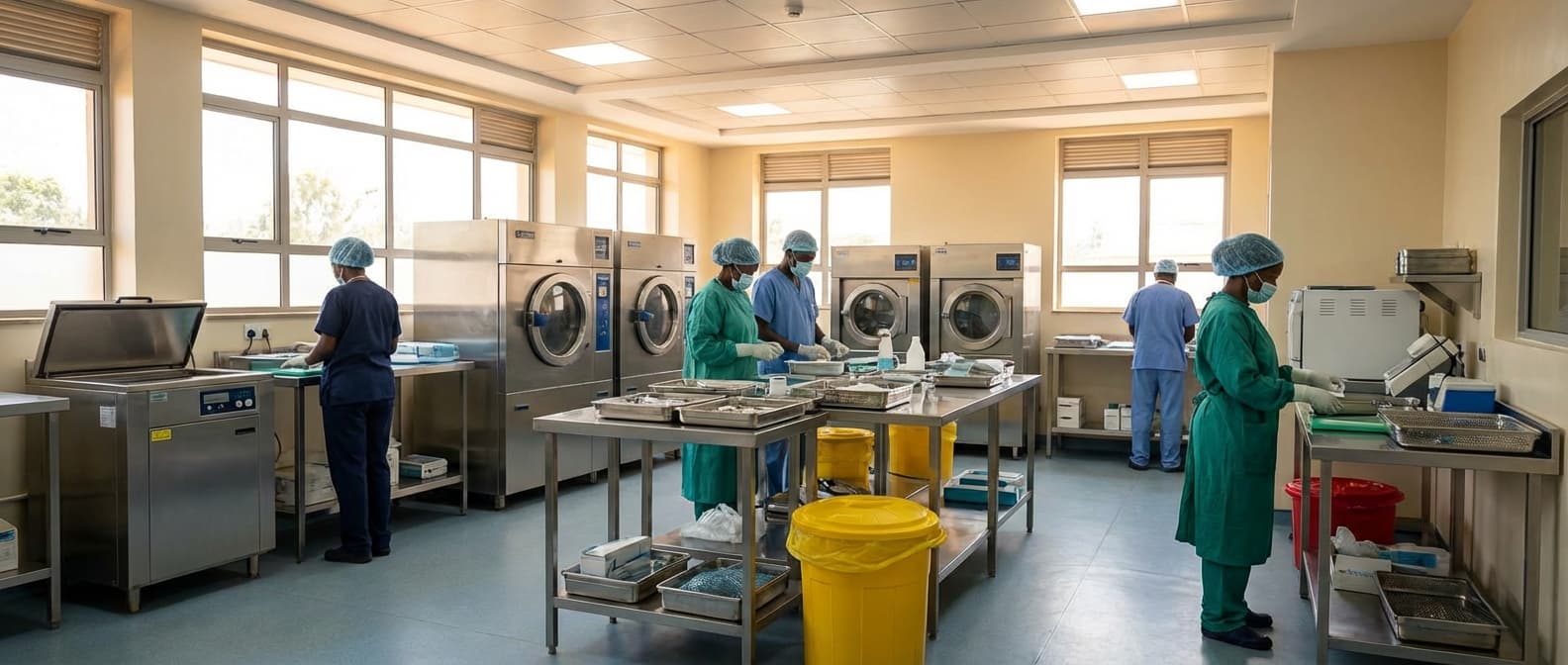
Medical Equipment Decontamination Service (Pre-Repair/Pre-Relocation) in Rwanda
Engineering Excellence & Technical Support
Medical Equipment Decontamination Service (Pre-Repair/Pre-Relocation) High-standard technical execution following OEM protocols and local regulatory frameworks.
Certified Decontamination Protocols
Adherence to WHO and Rwandan Ministry of Health-approved decontamination procedures, utilizing EPA-registered disinfectants to eliminate pathogens and ensure equipment safety before repair or relocation.
Advanced Bioburden Testing
Post-decontamination bioburden testing and validation using industry-standard microbiological techniques to confirm effective removal of bio-contaminants and bioburden reduction below critical thresholds.
Secure Chain of Custody Transport
Secure, temperature-controlled, and documented transportation of medical equipment to and from decontamination facilities, maintaining integrity and preventing re-contamination during transit within Rwanda.
What Is Medical Equipment Decontamination Service (Pre-repair/pre-relocation) In Rwanda?
Medical Equipment Decontamination Service (Pre-Repair/Pre-Relocation) in Rwanda refers to the specialized process of cleaning, disinfecting, and in some cases, sterilizing medical devices prior to their transport for repair or relocation. This service is critical for mitigating the risk of cross-contamination and biological hazards, ensuring the safety of personnel involved in handling, transporting, and repairing the equipment, as well as preventing the spread of infectious agents within healthcare facilities and beyond. The process adheres to established protocols to render the equipment biologically inert or significantly reduced in bioburden.
| Who Needs the Service | Typical Use Cases | ||||
|---|---|---|---|---|---|
| Hospitals and Clinics (Public and Private) | Decontamination of surgical instruments before return to manufacturer for recalibration or repair. | Disinfection of imaging equipment (e.g., ultrasound probes, endoscopes) prior to shipping for servicing. | Cleaning of patient monitoring devices (e.g., ECG machines, ventilators) before relocation to a different ward or facility. | Preparation of laboratory diagnostic equipment for off-site repair. | Decontamination of specialized medical devices with complex internal components. |
| Medical Device Manufacturers and Service Providers | Receiving decontaminated equipment at repair centers to minimize occupational exposure. | Ensuring a safe working environment for their technical staff. | |||
| Logistics and Transportation Companies | Handling decontaminated equipment to prevent transmission of biohazards during transit. | ||||
| Government Health Agencies | Oversight and regulation of decontamination practices for medical equipment. |
Key Aspects of Medical Equipment Decontamination Service (Pre-Repair/Pre-Relocation)
- Biological Hazard Mitigation: A primary objective is to neutralize or significantly reduce the presence of pathogens (bacteria, viruses, fungi, prions) that may be adhered to or present within the medical equipment.
- Personnel Safety: Protects repair technicians, logistics personnel, and healthcare workers from exposure to potentially infectious materials.
- Environmental Protection: Prevents the inadvertent introduction or spread of pathogens into new environments during relocation or repair facilities.
- Regulatory Compliance: Aligns with national and international guidelines for biohazard handling and medical waste management.
- Equipment Integrity: The decontamination process is designed to be compatible with the materials and components of the medical equipment, avoiding damage.
- Documentation: Comprehensive records are maintained, detailing the decontamination process, agents used, and verification of efficacy.
Who Needs Medical Equipment Decontamination Service (Pre-repair/pre-relocation) In Rwanda?
In Rwanda, several entities and departments regularly require specialized medical equipment decontamination services, especially before repairs or relocation. This service is crucial for ensuring the safety of technicians, preventing cross-contamination, and maintaining the integrity of sensitive medical devices. The primary need arises from the inherent biohazardous nature of medical equipment, which can harbor pathogens even after routine cleaning. Proper decontamination before any physical intervention minimizes risks and ensures a sterile working environment for repair personnel and a safe handover for relocation.
| Healthcare Facility Type | Key Departments/Units | Reasons for Decontamination (Pre-Repair/Pre-Relocation) |
|---|---|---|
| Hospitals (Public & Private) | Operating Rooms, Intensive Care Units (ICU), Emergency Departments (ER), Laboratories (Pathology, Microbiology, Biochemistry), Radiology (X-ray, CT, MRI), Dialysis Units, Sterilization Units, Central Medical Stores | Equipment used in critical patient care, infectious disease diagnosis/treatment, or sterile procedures poses significant biohazard risk. Technicians require a safe environment for repairs. Relocating equipment between departments or facilities necessitates decontamination to prevent spread of pathogens. |
| Health Centers & District Hospitals | Maternity Wards, Outpatient Departments (OPD), Minor Procedure Rooms, Laboratory Units | Routine use of equipment in patient care. Repairs to essential diagnostic or treatment devices. Relocation within the facility or to a new site. |
| Specialty Clinics (e.g., Dental, Ophthalmology, Physiotherapy) | Treatment Rooms, Sterilization Areas | Specialized instruments and equipment used in close proximity to patients. Decontamination ensures technician safety during repairs and prevents cross-contamination during equipment movement. |
| Medical Equipment Manufacturers/Distributors (Service Centers) | Repair Bays, Warehousing, Logistics | Receiving equipment for repair from various healthcare facilities. Incoming equipment may be contaminated. Technicians need to work in a safe environment. Preparedness for shipping or returning equipment. |
| Third-Party Biomedical Engineering Firms | Workshop/Service Area, On-site Repair Locations | Similar to manufacturer service centers, they handle a wide range of potentially contaminated equipment from multiple clients. Ensuring technician safety and preventing the spread of infections. |
| Research Laboratories | Benches, Incubator Rooms, Analytical Labs | Equipment used with biological samples or hazardous materials. Decontamination is essential before maintenance or moving sensitive analytical or diagnostic equipment. |
| Ministry of Health & Rwanda Biomedical Centre (RBC) | Central Warehouses, Equipment Management Units | Overseeing the maintenance and relocation of government-owned medical equipment. Ensuring compliance with safety standards. Decontamination of equipment before long-term storage or redistribution. |
Target Customers and Departments Requiring Medical Equipment Decontamination Service (Pre-Repair/Pre-Relocation) in Rwanda
- {"title":"Healthcare Facilities","description":"Hospitals, clinics, and health centers are the primary users of medical equipment and therefore the main beneficiaries of decontamination services."}
- {"title":"Medical Equipment Manufacturers and Distributors","description":"Companies that supply, sell, and service medical equipment in Rwanda."}
- {"title":"Third-Party Medical Equipment Service Providers","description":"Independent companies that offer repair and maintenance services for medical devices."}
- {"title":"Research and Development Institutions","description":"Laboratories and facilities involved in medical research that utilize specialized equipment."}
- {"title":"Government Health Agencies and Ministries","description":"Entities responsible for public health infrastructure and oversight."}
Medical Equipment Decontamination Service (Pre-repair/pre-relocation) Process In Rwanda
This document outlines the standard operating procedure for the Medical Equipment Decontamination Service (Pre-Repair/Pre-Relocation) in Rwanda. The process is designed to ensure that medical equipment is safely and effectively decontaminated before undergoing repair or relocation, minimizing the risk of cross-contamination and protecting personnel.
| Stage | Key Activities | Responsible Party | Deliverables/Outputs | Notes |
|---|---|---|---|---|
| Inquiry and Initial Assessment | Receive inquiry from healthcare facility regarding decontamination needs for repair/relocation. Gather preliminary information on equipment type, quantity, intended use, and expected timeline. Initial risk assessment for potential biohazards. | Healthcare Facility, Decontamination Service Provider | Inquiry details documented, preliminary risk assessment completed. | Early engagement is crucial for accurate planning. Clarity on urgency is important. |
| Quotation and Agreement | Develop a detailed quotation based on the equipment list, decontamination method, consumables, and labor. Present quotation to the healthcare facility. Negotiate terms and finalize the service agreement. Obtain necessary approvals. | Decontamination Service Provider, Healthcare Facility | Formal quotation, signed service agreement. | Quotation should clearly outline scope, pricing, and payment terms. |
| Scheduling and Logistics | Schedule the decontamination service based on the agreement and the facility's availability. Plan for transportation of equipment (if applicable), personnel, and necessary decontamination supplies to the site or designated decontamination facility. | Decontamination Service Provider, Healthcare Facility | Confirmed schedule, logistical plan (transportation, personnel deployment). | Consider equipment transport requirements and potential downtime for the facility. |
| Pre-Decontamination Preparation | On-site or at the designated facility: Identify and segregate equipment to be decontaminated. Ensure adequate ventilation and safety measures are in place. Prepare decontamination agents and equipment according to manufacturer instructions and safety protocols. Brief decontamination team. | Decontamination Service Provider | Equipment segregated, decontamination site prepared, team briefed. | Strict adherence to safety protocols is paramount. Personal Protective Equipment (PPE) is mandatory. |
| Decontamination Process Execution | Apply approved decontamination methods (e.g., chemical disinfection, steam sterilization, UV irradiation) tailored to the equipment type and identified biohazards. Follow specific protocols for each equipment component. Ensure all surfaces and accessible areas are treated. | Decontamination Service Provider | Decontaminated equipment. | Use validated decontamination agents and processes. Maintain clear records of decontamination steps. |
| Post-Decontamination Verification | Visually inspect equipment for cleanliness. Perform any necessary indicator testing as per protocol to confirm efficacy of decontamination. Document the verification results. | Decontamination Service Provider | Verification report, successful indicator tests (if applicable). | Verification methods should be appropriate for the decontamination process used. |
| Documentation and Handover | Complete a decontamination certificate for each item or batch of equipment, detailing the process, date, responsible personnel, and verification results. Handover the decontaminated equipment and documentation to the healthcare facility representative. Obtain a signed receipt. | Decontamination Service Provider, Healthcare Facility | Decontamination certificates, signed handover receipt. | Certificates serve as proof of service and are essential for regulatory compliance. |
| Invoice and Payment | Submit a detailed invoice to the healthcare facility based on the agreed terms. Process payment according to the service agreement. | Decontamination Service Provider, Healthcare Facility | Final invoice, payment confirmation. | Prompt invoicing and payment facilitates smooth business operations. |
Workflow Stages
- Inquiry and Initial Assessment
- Quotation and Agreement
- Scheduling and Logistics
- Pre-Decontamination Preparation
- Decontamination Process Execution
- Post-Decontamination Verification
- Documentation and Handover
- Invoice and Payment
Medical Equipment Decontamination Service (Pre-repair/pre-relocation) Cost In Rwanda
The cost of medical equipment decontamination services in Rwanda prior to repair or relocation is a crucial but often variable expense. This service ensures that potentially infectious materials are eliminated, safeguarding technicians, the environment, and subsequent users. The pricing is influenced by several factors, leading to a range of costs in Rwandan Francs (RWF).
| Equipment Category | Estimated Cost Range (RWF) | Notes |
|---|---|---|
| Small Instruments (e.g., Forceps, Scalpels, Endoscopes - per item) | 5,000 - 25,000 RWF | Depends on complexity and material. Includes cleaning and chemical disinfection. |
| Medium-Sized Equipment (e.g., Infusion Pumps, ECG Machines, Ventilators - basic) | 20,000 - 100,000 RWF | More extensive surface area and internal components. May involve more specialized disinfectants. |
| Large Equipment (e.g., Diagnostic Imaging - X-ray machines, Ultrasounds, Anesthesia Machines) | 75,000 - 300,000+ RWF | Significant surface area, potential for internal contamination, and often complex cleaning protocols. Sterilization may be required for specific parts. |
| Very Large/Specialized (e.g., CT Scanners, MRI Machines, Operating Room Suites - per unit/area) | 200,000 - 1,000,000+ RWF | Highly complex, extensive decontamination, specialized techniques, and potential for multi-day processes. Often requires certified professionals and advanced equipment. |
| Emergency/Rush Service Surcharge |
| Added for urgent requests outside of standard operating hours or with very short notice. |
Key Pricing Factors for Medical Equipment Decontamination in Rwanda:
- {"title":"Type and Size of Equipment:","description":"Larger and more complex equipment, such as MRI machines or surgical suites, will naturally require more extensive decontamination than smaller devices like stethoscopes or blood pressure monitors. The surface area to be treated and the potential for internal contamination are significant factors."}
- {"title":"Level of Contamination:","description":"The perceived or known level of bioburden on the equipment is a primary driver. Equipment used in high-risk areas (e.g., infectious disease wards, operating rooms) or suspected of carrying highly contagious pathogens will necessitate more rigorous and specialized decontamination protocols, often involving more potent agents and longer contact times."}
- {"title":"Decontamination Method Used:","description":"Different methods have varying costs. Chemical disinfection using specific EPA-approved agents is common. Sterilization methods like autoclaving (steam sterilization) or ethylene oxide (EtO) sterilization, while more thorough, are typically more expensive due to equipment and specialized processes. UV-C light decontamination is also gaining traction and its cost can vary."}
- {"title":"Complexity of the Equipment's Design:","description":"Equipment with intricate internal components, numerous crevices, or sealed parts can be more challenging and time-consuming to decontaminate effectively, increasing labor and material costs."}
- {"title":"Turnaround Time (Urgency):","description":"Emergency decontamination services often command a premium. If the equipment needs to be decontaminated on a tight schedule to minimize downtime, expect higher costs due to prioritized resource allocation and potentially overtime labor."}
- {"title":"Service Provider's Expertise and Reputation:","description":"Established decontamination service providers with a proven track record, specialized certifications, and experienced technicians may charge more than newer or less specialized companies. The investment in training, quality control, and specialized equipment by these providers is reflected in their pricing."}
- {"title":"Location and Accessibility:","description":"If the equipment is located in a remote area or requires specialized transportation for decontamination, these logistical challenges can add to the overall cost. The ease of access to the equipment for the decontamination team is also a consideration."}
- {"title":"Regulatory Compliance and Documentation:","description":"Thorough documentation of the decontamination process, including certificates of decontamination and adherence to national health and safety regulations, is essential. Services that provide comprehensive documentation might have higher fees."}
Affordable Medical Equipment Decontamination Service (Pre-repair/pre-relocation) Options
This document outlines affordable options for medical equipment decontamination services, focusing on pre-repair and pre-relocation needs. We understand the critical importance of hygiene and safety while managing costs effectively. Our services are designed to be a proactive step, ensuring equipment is clean and safe for technicians, handlers, and its next intended use, thereby preventing further contamination, reducing risks, and potentially extending equipment lifespan. We offer flexible value bundles and cost-saving strategies to meet diverse budget requirements.
| Value Bundle Option | Service Description | Ideal For | Cost-Saving Strategy |
|---|---|---|---|
| Basic Clean & Sanitize | Surface-level cleaning and sanitization of external surfaces. Focuses on common touchpoints and visible contaminants. | Low-risk equipment, minor repairs, routine relocations, budget-conscious clients. | Bulk scheduling discounts, standardized cleaning protocols, minimal consumables. |
| Deep Clean & Disinfection | More intensive cleaning including hard-to-reach areas, disinfection of surfaces using EPA-approved disinfectants, and basic equipment function check. | Equipment with moderate risk, pre-repair diagnostics, standard relocations, preventative maintenance. | Package pricing for multiple units, off-peak service scheduling, bundled with minor repairs/checks. |
| Biohazard Decontamination | Comprehensive decontamination protocol for equipment exposed to known or suspected biohazards. Includes specialized cleaning agents, fogging (if applicable), and environmental sampling (optional). | High-risk equipment, post-incident cleanup, critical repairs, sensitive relocations, regulatory compliance needs. | Long-term service agreements, tiered pricing based on biohazard level, specialized technician training. |
| Relocation Ready Package | Combines deep cleaning, disinfection, and basic functional testing with secure packaging recommendations and documentation for transportation. | Equipment being moved to a new facility, inter-departmental transfers, sale/disposal preparation. | Bundle discounts on cleaning and basic testing, simplified invoicing, reduced risk of damage during transit. |
Why Decontaminate Pre-Repair/Relocation?
- Ensures technician safety and reduces potential biohazard exposure.
- Prevents cross-contamination of other equipment or facilities.
- Facilitates smoother and more efficient repair processes.
- Meets regulatory and compliance requirements for handling medical devices.
- Protects against potential equipment damage due to residual contaminants.
- Enhances the professionalism and preparedness for relocation.
Verified Providers In Rwanda
In Rwanda's evolving healthcare landscape, identifying reliable and skilled medical professionals is paramount for ensuring quality patient care. Verified providers stand out as the bedrock of a trustworthy healthcare system. This document focuses on Franance Health, a key player in this domain, and elucidates why their credentials and approach make them the superior choice for your health needs.
| Category | Franance Health Standard | Benefit to Patient |
|---|---|---|
| Educational Background | Verified degrees from accredited institutions, including specialized postgraduate training. | Ensures foundational knowledge and expertise in the relevant medical field. |
| Professional Experience | Minimum years of practical experience required, with a focus on demonstrable patient outcomes. | Access to seasoned practitioners with proven track records in managing various health conditions. |
| Licensure and Certifications | Up-to-date and valid licenses from Rwandan regulatory bodies and relevant professional certifications. | Guarantees legal compliance and adherence to industry best practices. |
| Continuing Medical Education (CME) | Mandatory participation in regular CME programs and workshops. | Ensures providers are informed about the latest diagnostic tools, treatments, and research. |
| Ethical Conduct and Professionalism | Strict adherence to a code of ethics, with a robust complaint resolution mechanism. | Provides assurance of respectful, honest, and professional care, with recourse for any concerns. |
| Specialized Skills | Verification of advanced training and expertise in specific medical sub-specialties. | Access to highly specialized care, reducing the need for extensive referrals for complex conditions. |
Why Franance Health Credentials Matter
- Rigorous Verification Process: Franance Health employs a comprehensive vetting system that goes beyond basic licensing. This includes scrutinizing educational backgrounds, professional experience, ongoing training, and adherence to ethical standards.
- Specialized Expertise: We partner with healthcare professionals who possess specialized skills and certifications in various medical fields, ensuring you receive care from experts in their respective disciplines.
- Commitment to Continuing Education: Franance Health mandates and supports continuous professional development for all its providers, keeping them abreast of the latest medical advancements and treatment protocols.
- Patient-Centric Approach: Our verified providers are not only clinically excellent but also dedicated to a patient-centered philosophy, emphasizing empathy, clear communication, and personalized treatment plans.
- Adherence to National Standards: All Franance Health providers meet and often exceed the standards set by Rwandan health authorities, guaranteeing compliance and safety.
Scope Of Work For Medical Equipment Decontamination Service (Pre-repair/pre-relocation)
This Scope of Work (SOW) outlines the requirements for providing medical equipment decontamination services prior to repair or relocation. The objective is to ensure the equipment is free from biological and chemical contaminants, safeguarding personnel, the environment, and the integrity of repair/relocation processes. This SOW details the technical deliverables, standard specifications, and responsibilities of the service provider.
| Task | Description | Technical Deliverables | Standard Specifications | Responsibilities (Service Provider) |
|---|---|---|---|---|
| Site Assessment and Planning | Evaluate the equipment, location, and potential contaminants. Develop a decontamination plan. | Decontamination Plan Document (including risk assessment, proposed methods, timeline, PPE requirements, waste disposal plan). | Aligned with manufacturer recommendations, regulatory guidelines (e.g., OSHA, EPA, CDC), and client-specific protocols. | Conduct thorough site assessment; develop and submit a comprehensive decontamination plan for client approval. |
| Pre-Decontamination Preparation | Prepare the work area and equipment for the decontamination process. | Secured work area (if applicable); identified and segregated contaminated waste streams. | Use of appropriate containment barriers, signage, and ventilation control (if necessary). | Set up necessary equipment, containment, and safety measures according to the approved plan. |
| Equipment Decontamination | Perform cleaning and disinfection/sterilization of the medical equipment. | Cleaned and decontaminated equipment; logged decontamination process details. | Use of EPA-registered or FDA-cleared disinfectants/sterilants suitable for the equipment materials and identified contaminants. Contact time, concentration, and application methods strictly followed. | Execute decontamination procedures using approved chemicals and methods; adhere to contact times and concentrations. Document all steps. |
| Waste Handling and Disposal | Properly manage and dispose of all contaminated waste generated during the process. | Segregated, contained, and labeled biohazardous/chemical waste; waste manifests/certificates of destruction. | Compliance with all local, state, and federal regulations for biohazardous and chemical waste disposal. Use of approved waste containers and licensed disposal services. | Collect, segregate, containerize, label, and arrange for the licensed disposal of all hazardous waste. |
| Post-Decontamination Verification | Verify the effectiveness of the decontamination process. | Verification report (e.g., visual inspection confirmation, ATP testing results, microbial swab results if required). | Visual inspection for absence of visible residue. ATP testing to ensure surface cleanliness. Microbial testing may be performed based on risk assessment and client requirements. | Perform visual inspections. Conduct ATP testing. If specified, perform microbial testing and provide documented results. |
| Documentation and Reporting | Provide comprehensive documentation of the decontamination service. | Final Decontamination Report including: date, time, equipment ID, personnel involved, decontamination methods used, chemicals used (lot numbers), waste disposal manifests, verification results, and any observations or issues encountered. | Clear, concise, and accurate documentation of all aspects of the service. Reports must be signed and dated. | Compile and submit a comprehensive final report to the client within a specified timeframe (e.g., 2 business days). |
| Safety and Compliance | Ensure all activities are conducted safely and in compliance with regulations. | Proof of personnel training (e.g., HAZWOPER, Bloodborne Pathogens); adherence to safety protocols. | All personnel must be trained in handling hazardous materials and biohazards. Appropriate Personal Protective Equipment (PPE) must be used at all times. Adherence to all applicable health, safety, and environmental regulations. | Ensure all personnel are properly trained and equipped with appropriate PPE. Monitor and enforce safety compliance throughout the service. |
Key Objectives
- To eliminate or significantly reduce biohazardous materials, chemical residues, and other potential contaminants from medical equipment.
- To ensure the safety of all personnel involved in subsequent repair, maintenance, or relocation activities.
- To prevent cross-contamination between different pieces of equipment and facilities.
- To comply with all relevant health, safety, and environmental regulations.
Service Level Agreement For Medical Equipment Decontamination Service (Pre-repair/pre-relocation)
This Service Level Agreement (SLA) outlines the agreed-upon response times and uptime guarantees for the Medical Equipment Decontamination Service provided by [Your Company Name] (hereinafter referred to as 'Provider') to [Client Name] (hereinafter referred to as 'Client') for pre-repair and pre-relocation decontamination of medical equipment. This SLA is an integral part of the Master Service Agreement (MSA) dated [MSA Date].
| Service Component | Description | Target Response Time | Uptime Guarantee |
|---|---|---|---|
| Service Request Acknowledgement | Confirmation that a decontamination service request has been received and logged by the Provider. | 1 Business Hour | N/A |
| Technician Dispatch (Emergency) | Deployment of a trained decontamination technician to the Client's site for urgent decontamination needs (e.g., high-risk equipment, imminent relocation). Emergency status to be mutually agreed upon at the time of request. | 4 Business Hours | N/A |
| Technician Dispatch (Standard) | Deployment of a trained decontamination technician to the Client's site for scheduled decontamination needs. | 1 Business Day (24 Business Hours) | N/A |
| Decontamination Completion | Time from technician arrival on-site to completion of the agreed-upon decontamination process for a single piece of equipment. This excludes travel time to/from the Client's site. | Variable (based on equipment complexity, see Appendix B) | N/A |
| Service Availability | The Provider's ability to accept and initiate decontamination service requests during the agreed-upon operational hours. | 99.0% during operational hours | 99.0% |
Scope of Service
- The Provider shall perform decontamination services on designated medical equipment prior to it being sent for repair or relocation.
- Decontamination services will adhere to industry best practices and relevant regulatory guidelines (e.g., OSHA, CDC).
- The service applies to the equipment types specified in Appendix A (Equipment List).
- The Client is responsible for properly identifying equipment requiring decontamination and initiating service requests in a timely manner.
Frequently Asked Questions

Ready when you are
Let's scope your Medical Equipment Decontamination Service (Pre-Repair/Pre-Relocation) in Rwanda project in Rwanda.

Scaling healthcare logistics and technical systems across the entire continent.