
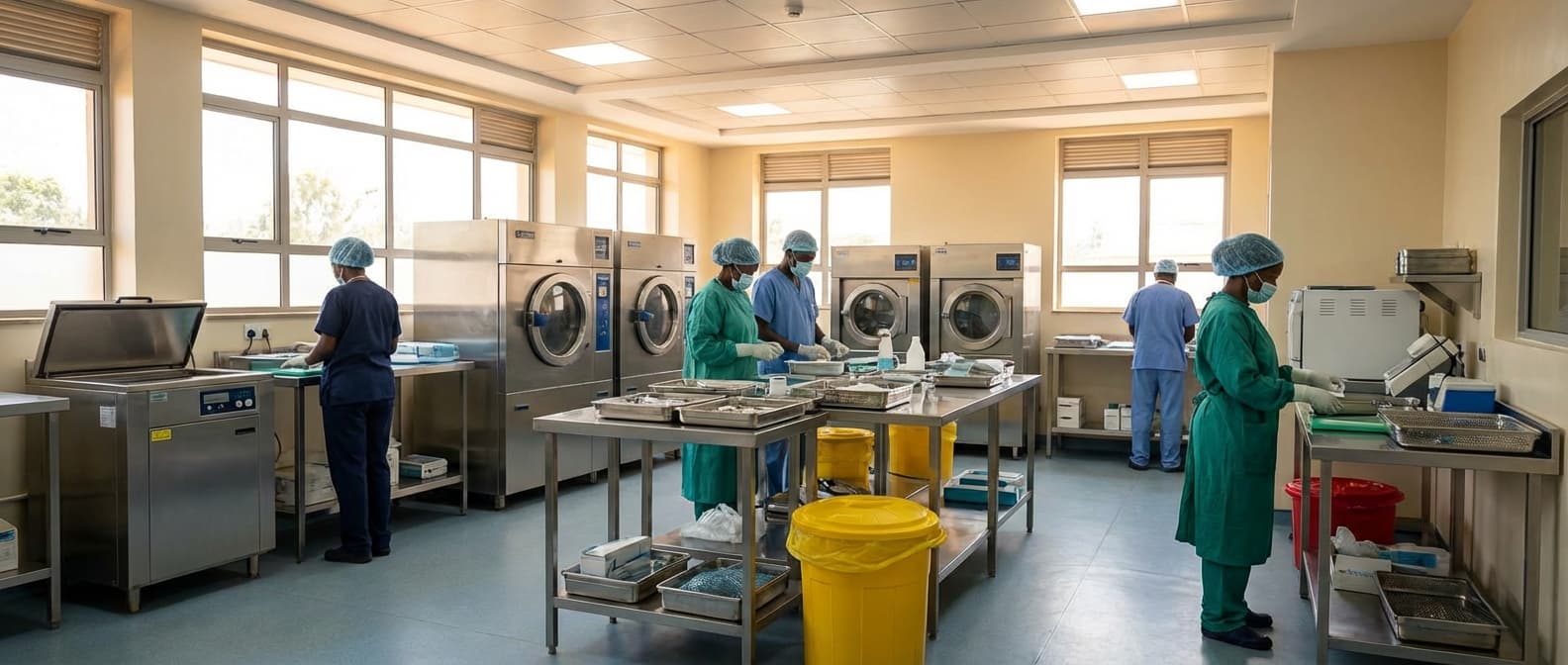
Infection-Control Readiness Support Service for Reusable Equipment in Rwanda
Engineering Excellence & Technical Support
Infection-Control Readiness Support Service for Reusable Equipment High-standard technical execution following OEM protocols and local regulatory frameworks.
Automated Sterilization Monitoring
Our service integrates real-time, automated monitoring of sterilization cycles for reusable medical equipment. This ensures every cycle meets critical parameters (temperature, pressure, time) and generates auditable digital records, enhancing compliance and traceability within Rwandan healthcare facilities.
End-to-End Equipment Traceability
Leveraging advanced barcode and RFID technology, we provide comprehensive, end-to-end traceability for all reusable medical equipment. From initial disinfection and sterilization to patient use and reprocessing, our system offers a clear chain of custody, minimizing risks of cross-contamination and improving inventory management for Rwandan health providers.
Certified Staff Training & Competency
We deliver standardized, competency-based training programs for healthcare personnel on the proper disinfection, sterilization, and handling of reusable equipment. Our digital modules and practical assessments ensure staff are equipped with the latest infection control best practices, tailored to the specific needs and resources of Rwanda.
What Is Infection-control Readiness Support Service For Reusable Equipment In Rwanda?
Infection-Control Readiness Support Service for Reusable Equipment in Rwanda refers to a specialized programmatic offering designed to ensure healthcare facilities have the necessary infrastructure, protocols, training, and resources to safely and effectively clean, disinfect, and sterilize reusable medical devices, thereby preventing healthcare-associated infections (HAIs). This service is critical in environments where consistent and validated reprocessing of reusable equipment is paramount to patient safety and effective healthcare delivery.
| Typical Use Cases | Description | Impact on Infection Control |
|---|---|---|
| New Facility Setup or Renovation | Establishing or upgrading reprocessing areas to meet international standards for instrument cleaning, disinfection, and sterilization, ensuring proper workflow, ventilation, and equipment placement. | Prevents contamination from the outset and establishes best practices from inception, minimizing future HAI risks. |
| Introduction of New Reusable Medical Devices | Assessing the reprocessing requirements for newly introduced instruments (e.g., laparoscopic instruments, complex surgical tools) and developing or adapting SOPs for their safe and effective reprocessing. | Ensures that novel equipment does not become a vector for infection due to inadequate or incorrect reprocessing procedures. |
| Addressing Deficiencies in Current Practices | Conducting audits of existing reprocessing workflows and identifying gaps in adherence to guidelines, equipment functionality, or staff competency, followed by targeted interventions. | Rectifies sub-optimal reprocessing practices that contribute to HAI transmission, improving overall patient safety. |
| Training and Capacity Building Initiatives | Providing specialized training modules on principles of microbiology, different reprocessing modalities (e.g., autoclaving, chemical sterilization, high-level disinfection), biological and chemical monitoring, and documentation for sterilization cycles. | Enhances the knowledge and skills of healthcare professionals, leading to more consistent and effective reprocessing, thereby reducing HAIs. |
| Equipment Malfunction or Obsolescence | Advising on the maintenance, repair, or replacement of malfunctioning or outdated sterilization and disinfection equipment, ensuring continued operational capacity and efficacy. | Guarantees that reprocessing equipment functions within validated parameters, essential for achieving effective microbial inactivation and preventing infections. |
| Compliance with National/International Guidelines | Ensuring facility practices align with the latest national IPC guidelines and relevant international standards (e.g., WHO, CDC recommendations) for reprocessing reusable medical devices. | Promotes adherence to evidence-based protocols, reducing the risk of HAIs and meeting regulatory requirements. |
Service Components and Target Audience
- Core Components: This service typically encompasses a multi-faceted approach including needs assessments, development of Standard Operating Procedures (SOPs) for cleaning, disinfection, and sterilization, procurement and maintenance of reprocessing equipment, provision of consumables (detergents, disinfectants, sterilants), hands-on training for healthcare personnel, quality assurance monitoring, waste management integration, and regulatory compliance guidance.
- Target Audience: The primary beneficiaries are public and private healthcare facilities across Rwanda, including hospitals (tertiary, secondary, and district), health centers, clinics, and specialized medical practices that utilize reusable medical equipment. This includes institutions that may have limited in-house expertise or resources for robust infection prevention and control (IPC) programs concerning instrument reprocessing.
Who Needs Infection-control Readiness Support Service For Reusable Equipment In Rwanda?
Healthcare facilities in Rwanda that utilize reusable medical equipment require robust infection-control readiness support to ensure patient safety and prevent healthcare-associated infections (HAIs). This support is crucial for facilities that may have limited in-house expertise, resources, or face challenges in maintaining consistent adherence to infection-prevention and control (IPC) guidelines for reusable items.
| Customer Type | Key Departments Requiring Support | Specific Needs |
|---|---|---|
| Public Healthcare Facilities | CSSD, Surgical Wards, Maternity, OPDs, EDs, ICUs, Labs | Standardization of sterilization protocols, staff training on handling and reprocessing, equipment maintenance, supply chain for cleaning agents and disinfectants. |
| Private Healthcare Facilities | CSSD, Surgical Units, Dental Clinics, Specialist Clinics | Ensuring compliance with national and international standards, advanced reprocessing techniques, staff competency assessment, risk management related to HAIs. |
| NGO Health Centers | Clinical areas, CSSD (if available), OPDs, Maternity | Capacity building for existing staff, provision of basic cleaning and sterilization equipment and consumables, development of simple, effective protocols. |
| Referral Hospitals | All clinical departments, CSSD, Infection Prevention and Control Committee | Management of complex reusable devices, validation of reprocessing cycles, outbreak investigation support, training of trainers programs. |
| District Hospitals | CSSD, Surgical, OPDs, Maternity, Labs | Resource optimization, ensuring availability of essential cleaning and disinfection supplies, training on appropriate sterilization methods for common equipment. |
| Health Centers (Remote/Underserved) | Clinical areas, OPDs, Maternity | Basic infection control practices for reusable items (e.g., syringes, sharps containers), simple disinfection methods, proper waste management of contaminated items. |
| Surgical Departments/Theaters | Surgical Staff, Scrub Nurses, CSSD Personnel | Strict adherence to sterile processing of surgical instruments, pre-cleaning, cleaning, disinfection, sterilization, and storage procedures. |
| Sterilization Units/CSSDs | CSSD Technicians, Supervisors | Validation of sterilization processes (autoclaving, chemical sterilization), monitoring of equipment performance, quality control checks, inventory management of reusable items. |
| Outpatient Departments (OPDs) | Nurses, Clinical Officers | Safe reprocessing of non-critical and semi-critical reusable items (e.g., stethoscopes, blood pressure cuffs, speculums), appropriate disinfection procedures. |
| Maternity Wards/Obstetrics & Gynecology | Midwives, Nurses | Safe reprocessing of delivery instruments, examination equipment, and reusable personal protective equipment (PPE). |
| Emergency Departments (EDs)/A&E | ED Nurses, Doctors | Rapid and effective reprocessing of high-turnover reusable equipment (e.g., nebulizers, suction devices), ensuring immediate availability for patient care. |
| Intensive Care Units (ICUs) | ICU Nurses, Respiratory Therapists | Reprocessing of critical reusable medical devices such as ventilators, humidifiers, and monitoring equipment, ensuring sterile integrity. |
| Laboratory Departments | Lab Technicians, Technologists | Sterilization and disinfection of laboratory glassware, instruments, and reusable diagnostic tools. |
| Administrative and Management Staff | Hospital Administrators, IPC Focal Points | Policy development and implementation, budget allocation for infection control, staff training coordination, procurement of infection control supplies and equipment. |
Target Customers and Departments:
- Public Healthcare Facilities:
- Private Healthcare Facilities:
- Non-Governmental Organization (NGO) Health Centers:
- Referral Hospitals:
- District Hospitals:
- Health Centers (including those in remote or underserved areas):
- Specialized Clinics (e.g., dental, ophthalmology):
- Surgical Departments/Theaters:
- Sterilization Units/Central Sterile Supply Departments (CSSDs):
- Outpatient Departments (OPDs):
- Maternity Wards/Obstetrics and Gynecology Departments:
- Emergency Departments (EDs)/Accident & Emergency (A&E):
- Intensive Care Units (ICUs):
- Laboratory Departments:
- Pharmacy Departments (for reusable dispensing equipment):
- Administrative and Management Staff:
Infection-control Readiness Support Service For Reusable Equipment Process In Rwanda
This document outlines the workflow for the Infection-Control Readiness Support Service for Reusable Equipment Processes in Rwanda, detailing the steps from initial inquiry to the final execution of support. The service aims to strengthen infection prevention and control (IPC) practices related to the reprocessing of reusable medical equipment in healthcare facilities across Rwanda. This workflow ensures a structured and comprehensive approach to assessing readiness, identifying gaps, and implementing targeted interventions.
| Stage | Description | Key Activities | Deliverables | Responsible Party(ies) |
|---|---|---|---|---|
| Inquiry & Initial Contact | The process begins when a healthcare facility or relevant stakeholder expresses interest in the Infection-Control Readiness Support Service. | Submission of an inquiry form or direct contact with the service provider. Initial discussion to understand the basic needs and scope. | Acknowledgement of inquiry, preliminary understanding of facility context. | Healthcare Facility, Service Provider (Ministry of Health IPC Unit, Partner NGOs) |
| Needs Assessment & Scoping | A detailed evaluation of the facility's current reusable equipment reprocessing practices and identification of specific gaps and challenges. | On-site visit, review of existing protocols and guidelines, assessment of infrastructure, equipment, consumables, and staff knowledge/skills. Stakeholder interviews. | Needs assessment report detailing current state, identified gaps, and recommended areas for support. | Service Provider, Healthcare Facility IPC Focal Person |
| Intervention Planning | Development of a tailored plan of action based on the findings of the needs assessment. | Collaborative development of a work plan, outlining specific interventions, timelines, resources required, and performance indicators. | Approved Intervention Plan, including detailed activities, budget estimates, and timelines. | Service Provider, Healthcare Facility Management & IPC Committee |
| Capacity Building & Training | Implementing educational activities to enhance the knowledge and skills of healthcare workers involved in reusable equipment reprocessing. | Conducting training workshops on IPC principles, standard operating procedures (SOPs) for cleaning, disinfection, sterilization, and waste management. Development and dissemination of training materials. | Trained healthcare workers, training modules, certificates of attendance. | Service Provider (Trainers), Healthcare Facility Staff |
| On-site Support & Mentorship | Providing practical, hands-on support and guidance to the facility in implementing recommended changes. | On-site coaching and mentorship for staff, troubleshooting challenges, demonstrating best practices, assisting in the implementation of new protocols or equipment. | Improved adherence to IPC practices, resolution of implementation challenges, enhanced staff confidence. | Service Provider (IPC Experts/Mentors), Healthcare Facility Staff |
| Monitoring & Evaluation | Regularly tracking the progress of implemented interventions and evaluating their effectiveness. | Routine site visits, data collection on key IPC indicators (e.g., sterilization efficacy, infection rates), feedback mechanisms. Post-intervention assessments. | Progress reports, updated IPC indicator data, evidence of improved practices. | Service Provider, Healthcare Facility IPC Committee |
| Reporting & Follow-up | Documenting the entire process and ensuring sustainability of the improvements. | Compilation of a comprehensive final report detailing interventions, outcomes, lessons learned, and recommendations for future sustainability. Follow-up support as needed. | Final project report, sustainability plan, recommendations for continuous improvement. | Service Provider, Ministry of Health |
Workflow Stages
- Inquiry & Initial Contact
- Needs Assessment & Scoping
- Intervention Planning
- Capacity Building & Training
- On-site Support & Mentorship
- Monitoring & Evaluation
- Reporting & Follow-up
Infection-control Readiness Support Service For Reusable Equipment Cost In Rwanda
Ensuring robust infection-control readiness for reusable medical equipment is paramount in Rwanda's healthcare system. The 'Infection-Control Readiness Support Service for Reusable Equipment' aims to address this by providing comprehensive services, including sterilization monitoring, equipment maintenance, staff training, and the supply of essential consumables. The cost of such a service is influenced by several factors, leading to a range of pricing in Rwandan Francs (RWF).
| Service Component / Facility Size | Estimated Monthly Cost Range (RWF) | Notes |
|---|---|---|
| Small Clinic (e.g., < 100 sterilizable items/week) | 300,000 - 700,000 | Covers basic monitoring, routine maintenance for a few sterilizers, and minimal consumables. Training may be on-site, shorter duration. |
| Medium-Sized Health Center/Hospital (e.g., 100-500 sterilizable items/week) | 700,000 - 2,000,000 | Includes more frequent monitoring, maintenance for multiple sterilizers/equipment types, regular consumable supply, and more comprehensive training sessions. |
| Large Hospital (e.g., > 500 sterilizable items/week, diverse equipment) | 2,000,000 - 7,000,000+ | Comprehensive support for a wide range of equipment, advanced sterilization technologies, dedicated technical personnel, regular audits, extensive training, and on-demand support. May include specialized services like endoscope reprocessing. |
| Specific Add-on Services (per item/per training) | 50,000 - 500,000+ | Examples: Specialized equipment calibration, deep cleaning services, advanced simulator-based training for complex procedures, specific consumable bulk orders. |
Key Pricing Factors for Infection-Control Readiness Support Service in Rwanda
- Scope and Frequency of Services: The breadth of services offered (e.g., daily monitoring vs. weekly, routine maintenance vs. emergency repairs) and how often they are provided will significantly impact the overall cost. More comprehensive and frequent services will naturally be more expensive.
- Type and Volume of Equipment: The number and complexity of reusable medical equipment requiring support are major determinants. Larger hospitals with a greater diversity and quantity of instruments (e.g., surgical kits, endoscopes, respiratory equipment) will incur higher costs than smaller clinics.
- Technology and Consumables: The type of sterilization technology used (e.g., autoclaves, low-temperature sterilizers) and the associated consumables (e.g., indicators, pouches, chemical disinfectants) have variable costs. Advanced technologies and high-quality consumables generally come with a higher price tag.
- Staff Training Intensity and Customization: The duration, depth, and customization of training programs for healthcare staff on infection control protocols and equipment handling will affect costs. Tailored, in-depth training will be more resource-intensive.
- Geographic Location and Accessibility: Costs can be influenced by the location of healthcare facilities within Rwanda. Facilities in remote areas might incur higher logistical costs for service delivery, maintenance, and personnel travel.
- Service Provider's Expertise and Reputation: Established service providers with a proven track record, specialized expertise, and certified personnel may command higher prices due to the assurance of quality and reliability they offer.
- Contractual Agreements and Service Level Agreements (SLAs): The terms of the contract, including response times, uptime guarantees, and warranty periods, will be factored into the pricing. Long-term contracts with comprehensive SLAs might offer some economies of scale.
- Regulatory Compliance and Certification: Ensuring adherence to national and international infection control standards and obtaining relevant certifications can add to the service provider's operational costs, which are then reflected in the pricing.
Affordable Infection-control Readiness Support Service For Reusable Equipment Options
This document outlines an Affordable Infection-Control Readiness Support Service designed for organizations that utilize reusable medical equipment. We understand the critical importance of robust infection control to patient safety and operational efficiency. This service provides comprehensive support to ensure your reusable equipment is consistently and cost-effectively managed to meet the highest infection prevention standards. We focus on proactive strategies, training, and compliance monitoring to minimize risks and optimize resource utilization.
| Cost-Saving Strategy | Description | Benefit |
|---|---|---|
| Standardized Reprocessing Protocols: | Implementing and enforcing uniform, evidence-based protocols for cleaning, disinfection, and sterilization of all reusable equipment types. | Reduces errors, ensures consistency, minimizes reprocessing failures, and prevents costly re-sterilization cycles. |
| Optimized Staff Training & Competency Verification: | Providing targeted, practical training sessions and regular competency assessments for all staff involved in reusable equipment reprocessing. | Increases staff confidence and accuracy, reduces human error, and minimizes instances of improper reprocessing that can lead to patient harm and equipment damage. |
| Preventative Maintenance & Equipment Lifecycle Management: | Implementing a proactive maintenance schedule for reprocessing equipment (e.g., washer-disinfectors, sterilizers) and managing the lifecycle of reusable items. | Extends equipment lifespan, reduces unexpected repair costs and downtime, and prevents premature replacement of expensive assets. |
| Data-Driven Workflow Analysis & Optimization: | Utilizing data from reprocessing logs, incident reports, and audits to identify bottlenecks and inefficiencies in the workflow. | Streamlines processes, reduces turnaround times for equipment availability, and identifies opportunities for resource reallocation. |
| Strategic Consumable Procurement: | Consolidating purchasing of cleaning agents, disinfectants, and sterilization consumables based on recommended protocols and usage patterns. | Leverages bulk discounts, reduces waste, and ensures appropriate product selection, minimizing overspending. |
| Early Detection & Correction of Deficiencies: | Regular audits and readiness assessments identify potential issues before they escalate into major compliance failures or patient safety events. | Avoids significant fines, legal liabilities, and the high costs associated with addressing widespread outbreaks or regulatory non-compliance. |
Value Bundles for Infection-Control Readiness Support
- Core Readiness Bundle: This foundational bundle includes regular on-site assessments of current infection control practices for reusable equipment, development of customized Standard Operating Procedures (SOPs), and essential staff training on cleaning, disinfection, and sterilization protocols. It also incorporates routine compliance audits and reporting.
- Enhanced Compliance Bundle: Building upon the Core Readiness Bundle, this package adds advanced risk assessments, detailed analysis of reprocessing workflows, and implementation of digital tracking and documentation systems for reusable equipment. It also includes periodic simulated audits and a dedicated support helpline.
- Total Equipment Management Bundle: This premium offering encompasses all aspects of the Enhanced Compliance Bundle, plus proactive equipment maintenance scheduling, management of consumable inventory for reprocessing, and continuous performance monitoring with data-driven recommendations for optimization. This bundle is ideal for organizations seeking a complete outsourced solution for their reusable equipment infection control needs.
Verified Providers In Rwanda
In Rwanda's evolving healthcare landscape, identifying trusted and credentialed healthcare providers is paramount for ensuring quality patient care. Franance Health stands out as a beacon of reliability, meticulously vetting its network of providers to offer a superior healthcare experience. This commitment to verification not only builds trust but also directly contributes to better health outcomes for individuals and communities.
| Credential | Verification Process | Benefit to Patient |
|---|---|---|
| Medical Licenses & Certifications | Franance Health confirms the validity and current standing of all essential medical licenses and board certifications with relevant Rwandan authorities. | Ensures providers are legally qualified and possess the foundational knowledge and skills required for practice. |
| Educational Background | Thorough review of medical school transcripts and post-graduate training records. | Confirms that providers have received education from accredited institutions and have specialized training where applicable. |
| Professional Experience | Verification of past employment and practice history, including references. | Assesses the practical application of knowledge and ensures a track record of competent patient care. |
| Ethical Conduct & Disciplinary History | Background checks and inquiries into any past disciplinary actions or ethical breaches. | Guarantees that providers adhere to the highest ethical standards and maintain patient trust. |
| Continuing Medical Education (CME) | Confirmation of participation in ongoing training and professional development programs. | Ensures providers stay updated with the latest medical advancements, technologies, and best practices. |
Why Franance Health's Verified Providers are the Best Choice in Rwanda:
- Unwavering Commitment to Quality: Franance Health prioritizes the highest standards of medical practice. Their verification process rigorously assesses qualifications, certifications, and ongoing professional development.
- Enhanced Patient Safety: By partnering exclusively with verified providers, Franance Health significantly reduces the risk of medical errors and ensures that patients receive care from competent and ethical practitioners.
- Access to Specialized Expertise: The network comprises a diverse range of specialists, ensuring patients can find the right expertise for their specific health needs, from general practitioners to highly specialized surgeons.
- Streamlined Healthcare Navigation: Franance Health simplifies the often-complex process of finding and accessing quality healthcare. Their verified provider list acts as a trusted guide, saving patients time and anxiety.
- Continuous Quality Improvement: Franance Health actively monitors the performance of its network, fostering a culture of continuous improvement and ensuring that providers remain at the forefront of medical advancements.
- Peace of Mind: Knowing you are receiving care from a thoroughly vetted and credentialed professional offers invaluable peace of mind, allowing you to focus on your recovery and well-being.
Scope Of Work For Infection-control Readiness Support Service For Reusable Equipment
This Scope of Work (SOW) outlines the requirements for providing infection-control readiness support services for reusable medical equipment. The service aims to ensure that all reusable equipment within the healthcare facility is handled, cleaned, disinfected, and sterilized according to current best practices and regulatory standards, minimizing the risk of healthcare-associated infections (HAIs).
| Deliverable | Description | Standard Specification / Reference | Format |
|---|---|---|---|
| Current State Assessment Report | Comprehensive analysis of existing workflows, equipment, and personnel practices related to reusable equipment reprocessing, identifying gaps and areas for improvement. | ISO 13485:2016 (Quality management systems for medical devices), CDC Guidelines for Disinfection and Sterilization in Healthcare Facilities, AAMI Standards (e.g., ST79, ST91). | PDF Report |
| Revised/New SOPs for Reprocessing | Detailed, step-by-step procedures for the cleaning, disinfection, and sterilization of all types of reusable equipment, including specific instructions for different equipment categories. | Manufacturer's Instructions for Use (IFU), FDA Guidance on Reprocessing Reusable Medical Devices, Local regulatory requirements. | Editable Document (e.g., DOCX, PDF with editable fields) |
| Training Materials | Presentation slides, handouts, and competency assessment tools for training staff on the revised SOPs, proper handling, and infection-control principles. | Adult learning principles, evidence-based infection control practices. | Editable Presentation Files (e.g., PPTX), PDF Handouts |
| Training Session Attendance and Competency Records | Documentation of training sessions conducted, including attendee lists and records of competency assessments demonstrating understanding and application of learned material. | Internal HR/Training protocols, evidence of learning. | Spreadsheet (e.g., XLSX), PDF Records |
| Equipment Selection and Maintenance Guidelines | Recommendations for selecting new reusable equipment with infection-control features and guidelines for routine maintenance to ensure continued effectiveness of reprocessing. | Manufacturer specifications, relevant industry standards for equipment durability and ease of cleaning. | PDF Document |
| Monitoring and Auditing Protocol | Framework for ongoing monitoring of reprocessing processes, including checklists, frequency, and reporting mechanisms for quality assurance and compliance. | Root Cause Analysis principles, Continuous Improvement methodologies. | PDF Document |
| Facility Design/Workflow Optimization Recommendations | Suggestions for improving the layout and workflow of sterile processing departments (SPDs) or other reprocessing areas to enhance efficiency and prevent cross-contamination. | Principles of lean manufacturing, best practices in healthcare facility design for infection control. | PDF Report with diagrams/visuals |
| Final Project Report | A comprehensive summary of the project, including all deliverables, findings, implemented recommendations, and a plan for ongoing maintenance of infection-control readiness. | Project Management best practices. | PDF Report |
Key Service Components
- Assessment of current infection-control processes for reusable equipment.
- Development or refinement of Standard Operating Procedures (SOPs) for cleaning, disinfection, and sterilization.
- Training of personnel involved in reusable equipment reprocessing.
- Guidance on equipment selection and maintenance for optimal infection control.
- Development of monitoring and auditing protocols.
- Recommendations for facility design and workflow optimization related to reprocessing areas.
Service Level Agreement For Infection-control Readiness Support Service For Reusable Equipment
This Service Level Agreement (SLA) outlines the response times and uptime guarantees for the Infection-Control Readiness Support Service for Reusable Equipment. This service ensures that support is available to address critical issues and maintain operational readiness for the proper decontamination and sterilization of reusable medical equipment. This SLA is designed to minimize downtime and ensure the safety of patients and healthcare personnel.
| Service Component | Response Time Guarantee | Uptime Guarantee | Resolution Target |
|---|---|---|---|
| Critical System Failure (e.g., sterilization unit malfunction impacting patient care) | 15 minutes for initial acknowledgment, 1 hour for remote diagnosis/initial remediation attempt | 99.9% uptime for critical infection control equipment (excluding scheduled maintenance) | 4 hours for full resolution or provision of a temporary workaround |
| Urgent Support Request (e.g., protocol clarification impacting a procedure, minor equipment issue) | 30 minutes for initial acknowledgment, 2 hours for remote diagnosis/initial remediation attempt | 99.5% uptime for all supported infection control systems | 8 business hours for full resolution or provision of a workaround |
| Routine Support Request (e.g., performance questions, non-critical alerts) | 4 business hours for acknowledgment, 1 business day for remote diagnosis/initial remediation attempt | N/A (uptime not applicable to routine requests) | 3 business days for resolution |
| Preventative Maintenance and Scheduled Downtime | Not applicable (scheduled in advance with client) | N/A (scheduled downtime is excluded from uptime guarantees) | As per scheduled maintenance plan |
Scope of Service
- 24/7 availability of technical support for issues related to infection control protocols and equipment malfunction.
- On-site and remote support options as defined in the service contract.
- Troubleshooting and guidance on decontamination and sterilization processes.
- Support for validation and calibration of infection control equipment.
- Proactive monitoring and alerts for critical system failures related to infection control processes.
Frequently Asked Questions

Ready when you are
Let's scope your Infection-Control Readiness Support Service for Reusable Equipment in Rwanda project in Rwanda.

Scaling healthcare logistics and technical systems across the entire continent.