
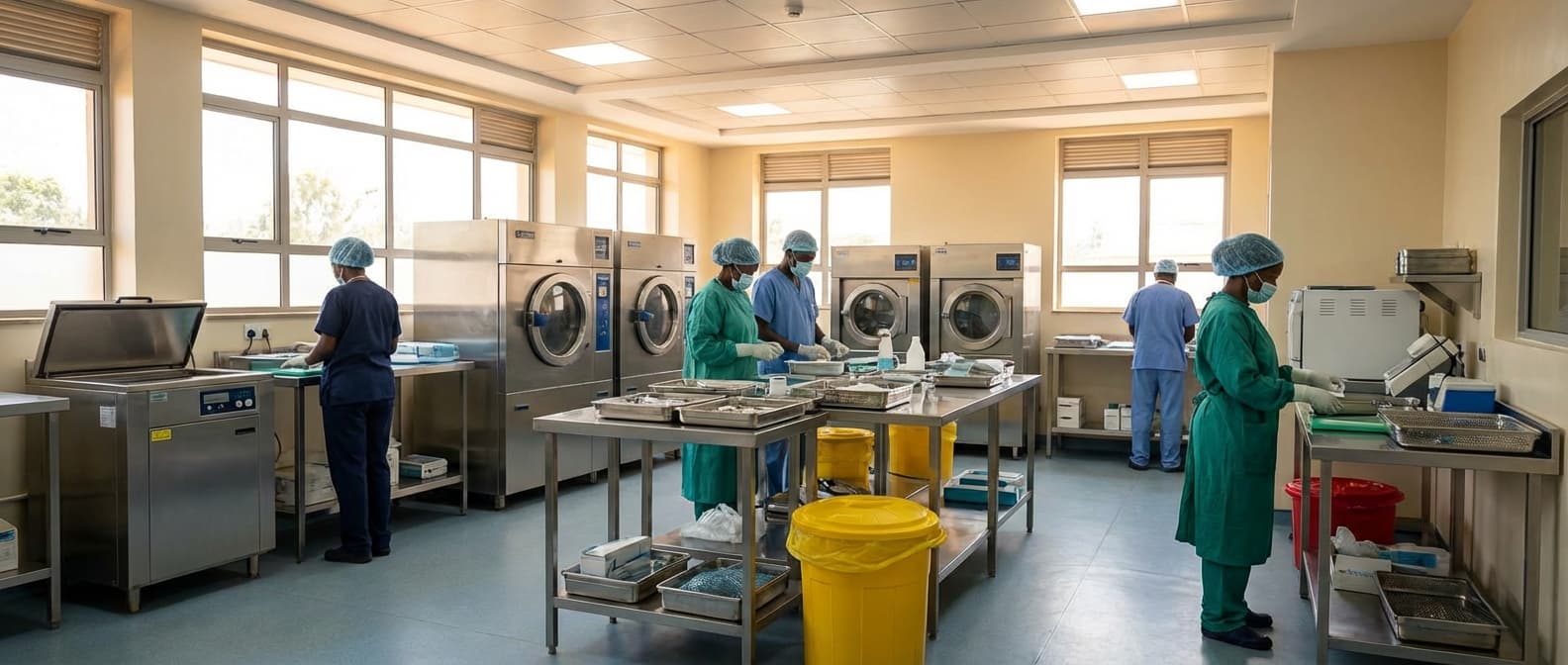
Endoscope Reprocessing Equipment Support Service in Rwanda
Engineering Excellence & Technical Support
Endoscope Reprocessing Equipment Support Service High-standard technical execution following OEM protocols and local regulatory frameworks.
Remote Diagnostic & Predictive Maintenance
Leveraging advanced remote monitoring, we provide proactive troubleshooting and predictive maintenance for endoscope reprocessing equipment, minimizing downtime and ensuring optimal performance across Rwanda's healthcare facilities.
Certified Technician Network & On-Demand Support
Our network of certified, on-site technicians offers rapid response and expert repair services for all endoscope reprocessing equipment, ensuring compliance with international standards and patient safety throughout Rwanda.
Comprehensive Parts Inventory & Training
We maintain a robust local inventory of genuine spare parts and provide comprehensive, hands-on training for your biomedical teams, empowering them with the knowledge to maintain and troubleshoot equipment effectively in Rwanda.
What Is Endoscope Reprocessing Equipment Support Service In Rwanda?
Endoscope reprocessing equipment support service in Rwanda refers to the specialized technical assistance, maintenance, and repair provision for automated and manual systems used in the cleaning, disinfection, and sterilization of flexible and rigid endoscopes within healthcare facilities. This service is critical for ensuring the safety and efficacy of endoscopic procedures by preventing the transmission of healthcare-associated infections (HAAs). It encompasses a range of activities designed to maintain the operational integrity and performance of endoscope reprocessing equipment, thereby safeguarding patient health and optimizing resource utilization.
| Service Category | Description | Target Audience | Typical Use Cases |
|---|---|---|---|
| Preventive Maintenance | Proactive servicing to avert breakdowns. | Hospitals, specialized clinics, diagnostic centers with endoscope reprocessing capabilities. | Routine annual or semi-annual servicing of automated endoscope reprocessors (AERs), washer-disinfectors, drying cabinets, and leak testing equipment. |
| Corrective Maintenance & Repair | Reactive troubleshooting and fixing of equipment issues. | Facilities experiencing equipment downtime or performance degradation. | Repairing faulty pumps, heating elements, spray arms, or control panels in AERs; troubleshooting error codes on disinfection units; resolving mechanical issues in drying systems. |
| Validation & Performance Testing | Confirming equipment adherence to safety and efficacy standards. | All facilities performing endoscope reprocessing, especially those subject to audits or requiring certification. | Post-installation validation of new reprocessing equipment; periodic revalidation of existing systems; verification of cleaning effectiveness (e.g., protein residue testing) and disinfection/sterilization parameters (e.g., temperature, cycle time). |
| Technical Training & Consultation | Enhancing in-house expertise and operational efficiency. | Biomedical engineering departments, sterile processing departments, nursing staff involved in endoscope handling. | Training new technicians on AER operation and basic troubleshooting; advising on best practices for endoscope pre-cleaning and manual disinfection; consultation on workflow optimization for reprocessing suites. |
Key Components of Endoscope Reprocessing Equipment Support Service:
- Preventive Maintenance: Scheduled inspections, calibration, cleaning, lubrication, and replacement of worn parts to minimize the risk of equipment failure and extend its lifespan.
- Corrective Maintenance & Repair: Diagnostic troubleshooting and prompt repair of malfunctions and breakdowns to restore equipment functionality.
- Validation & Performance Testing: Verification that reprocessing equipment meets manufacturer specifications and regulatory standards (e.g., ISO, AAMI) for cleaning, disinfection, and sterilization efficacy. This includes cyclical testing and process validation.
- Software Updates & Calibration: Ensuring that equipment software is up-to-date and that sensors and measurement systems are accurately calibrated.
- Spare Parts Management: Maintaining an adequate inventory of genuine or equivalent spare parts to minimize downtime during repairs.
- Technical Training & Consultation: Providing training to in-house biomedical technicians and end-user staff on the proper operation, maintenance, and troubleshooting of the equipment.
- Documentation & Reporting: Maintaining detailed records of all maintenance, repair, and validation activities for compliance and traceability purposes.
Who Needs Endoscope Reprocessing Equipment Support Service In Rwanda?
Endoscope reprocessing equipment support services are crucial for ensuring the safe and effective reuse of endoscopes, a vital tool in modern medical diagnostics and treatment. In Rwanda, as healthcare infrastructure continues to develop, the demand for reliable and specialized support for this equipment is growing. This service ensures that hospitals and clinics can maintain the highest standards of patient safety by preventing cross-contamination and extending the lifespan of expensive endoscopic instruments.
| Target Customer | Relevant Departments | Key Needs Served |
|---|---|---|
| Public Hospitals (e.g., CHUK, CHUB, District Hospitals) | Gastroenterology, Pulmonology, Urology, Surgery, Endoscopy Units, Central Sterile Supply Department (CSSD) | Preventive maintenance, emergency repairs, validation and calibration, staff training on equipment operation and maintenance, spare parts supply to minimize downtime and ensure patient safety. |
| Private Hospitals and Clinics | Gastroenterology, Pulmonology, Urology, Surgery, Endoscopy Units, CSSD | Ensuring high uptime for revenue-generating procedures, compliance with international standards, access to specialized technicians for prompt service, maintenance contracts for predictable costs. |
| Specialized Clinics (e.g., Gastroenterology Clinics) | Endoscopy Suites, Technical Support Staff | Expertise in specific endoscope models, regular servicing to maintain diagnostic accuracy, troubleshooting of complex technical issues, advice on equipment upgrades and replacements. |
| Diagnostic Centers | Endoscopy Service Providers, Technical Personnel | Reliability of equipment for consistent diagnostic services, calibration to ensure accurate imaging, proactive maintenance to avoid unexpected breakdowns impacting patient flow. |
| Surgical Centers | Operating Rooms, CSSD | Immediate availability of functional endoscopes for procedures, efficient turnaround time for reprocessing, compliance with strict infection control protocols. |
Who Needs Endoscope Reprocessing Equipment Support Service in Rwanda?
- Hospitals (Public and Private)
- Specialized Clinics (e.g., Gastroenterology, Pulmonology, Urology)
- Diagnostic Centers
- Surgical Centers
Endoscope Reprocessing Equipment Support Service Process In Rwanda
This document outlines the workflow for Endoscope Reprocessing Equipment Support Services in Rwanda. It details the step-by-step process from an initial inquiry by a healthcare facility to the successful execution and completion of the support service. The process is designed to ensure efficient, effective, and timely resolution of equipment issues, maintaining the highest standards of patient safety and infection control.
| Stage | Description | Key Activities | Responsible Party | Documentation |
|---|---|---|---|---|
| The healthcare facility identifies a need for support services related to their endoscope reprocessing equipment. | Contacting the support service provider (e.g., via phone, email, web portal). Providing initial details of the issue. | Healthcare Facility (Client), Support Service Provider (SSP) - Initial Contact Person | Inquiry Log/Record |
| The SSP gathers detailed information to understand the nature and scope of the problem. | Remote troubleshooting, asking clarifying questions, requesting equipment details (model, serial number), potentially requesting photos/videos of the issue. Preliminary diagnosis. | SSP - Technical Support Specialist/Service Engineer | Troubleshooting Log, Initial Diagnosis Report |
| Formalizing the service to be provided and outlining costs and terms. | Generating a detailed quotation including labor, parts, travel (if applicable), and estimated timelines. Obtaining client approval and agreement on terms. | SSP - Sales/Service Coordinator, Healthcare Facility (Client) - Approving Authority | Quotation, Service Level Agreement (SLA) (if applicable), Purchase Order (PO) |
| Planning the service intervention based on availability and urgency. | Scheduling the service visit, assigning a qualified service engineer, and ensuring necessary parts and tools are ready. | SSP - Service Dispatcher/Scheduler | Service Schedule, Technician Assignment Log |
| The qualified technician visits the facility to perform the necessary service. | Performing on-site inspection, detailed diagnosis, repair or maintenance, replacing faulty parts, and ensuring the equipment is functioning as per specifications. | SSP - On-site Service Engineer | Service Report, Parts Used Log, Technician's Work Log |
| Ensuring the equipment is fully operational and meets all performance standards. | Conducting functional tests, performance checks, and validation procedures. This may include leak testing, cleaning cycle tests, and documentation verification. | SSP - On-site Service Engineer, Healthcare Facility - Biomedical Engineer/User | Test Results Report, Validation Certificate (if applicable) |
| Formally concluding the service and handing over the equipment to the client. | Explaining the work performed, demonstrating functionality, providing maintenance recommendations, and obtaining client sign-off on the completed service. | SSP - On-site Service Engineer, Healthcare Facility (Client) - Authorized Representative | Service Completion Form, Client Sign-off Sheet |
| Ensuring client satisfaction and maintaining comprehensive records. | Post-service follow-up with the client to confirm satisfaction, filing all service reports and documentation, and updating client equipment maintenance history. | SSP - Service Coordinator/Administrator, Healthcare Facility (Client) | Customer Feedback Survey, Service History Records, Invoice |
Endoscope Reprocessing Equipment Support Service Process Workflow
- Inquiry and Initial Contact
- Needs Assessment and Diagnosis
- Service Agreement and Quotation
- Scheduling and Resource Allocation
- On-site Intervention and Repair
- Testing and Validation
- Completion and Handover
- Follow-up and Documentation
Endoscope Reprocessing Equipment Support Service Cost In Rwanda
Endoscope reprocessing equipment support services in Rwanda are crucial for maintaining the functionality and safety of these vital medical devices. These services encompass routine maintenance, calibration, troubleshooting, and repair of automated endoscope reprocessors (AERs) and associated equipment. The cost of these services is influenced by several key factors, leading to a range of pricing in Rwandan Francs (RWF).
| Service Type | Typical Pricing Range (RWF) | Notes |
|---|---|---|
| Annual Preventative Maintenance (Single Chamber AER) | 300,000 - 600,000 | Covers scheduled checks, cleaning, calibration, and basic operational tests. |
| Annual Preventative Maintenance (Multi-Chamber AER) | 500,000 - 1,000,000+ | More comprehensive checks, potentially including multiple cycles and advanced diagnostics. |
| On-Demand Repair Service (per visit/hour) | 75,000 - 150,000 (hourly rate) + parts | Covers troubleshooting and repair for unexpected breakdowns. Parts cost is additional. |
| Emergency/Rush Repair Service | 150,000 - 300,000 (call-out fee) + hourly rate + parts | Higher fees for immediate response, often outside standard working hours. |
| Full Service Contract (Annual, comprehensive) | 1,000,000 - 2,500,000+ | Includes preventative maintenance, unlimited on-demand repairs, and potentially parts. Varies greatly by equipment and contract scope. |
| Spare Parts (per item) | 50,000 - 500,000+ | Highly variable depending on the specific part and equipment model (e.g., pumps, valves, sensors, filters). |
Key Pricing Factors for Endoscope Reprocessing Equipment Support Service in Rwanda:
- Type and Complexity of Equipment: Simpler, single-chamber AERs generally have lower service costs compared to more advanced, multi-chamber units with integrated documentation systems or specialized functionalities.
- Age and Condition of Equipment: Older equipment may require more frequent or extensive repairs due to wear and tear, potentially increasing the overall service cost. New equipment typically falls under manufacturer warranties for an initial period.
- Scope of Service Agreement: A comprehensive support contract covering preventative maintenance, on-demand repairs, and parts replacement will be more expensive than a pay-per-incident service model.
- Frequency of Service: Regular preventative maintenance, though an upfront cost, can prevent more costly breakdowns later. The frequency of scheduled maintenance will influence the annual service cost.
- Technician Expertise and Certification: Services performed by highly trained and certified technicians, especially those with specific manufacturer certifications, may command higher fees.
- Availability of Spare Parts: The cost and availability of genuine or compatible spare parts for specific endoscope reprocessing equipment models can significantly impact repair costs. Import duties and shipping to Rwanda can add to this.
- Geographic Location of Service: While Rwanda is relatively small, travel time and logistics for technicians to reach remote healthcare facilities might be factored into the pricing.
- Service Provider's Overhead and Reputation: Established service providers with a strong reputation, robust infrastructure, and skilled personnel may have higher pricing due to their overhead and perceived quality.
- Urgency of Service: Emergency or rush service requests, often requiring immediate dispatch and potentially overtime, will likely incur additional charges.
- Included Services: Some service packages might include software updates, operational training, or performance validation, which would contribute to the overall cost.
Affordable Endoscope Reprocessing Equipment Support Service Options
This document outlines affordable endoscope reprocessing equipment support service options, emphasizing the value of service bundles and strategic cost-saving measures. Ensuring the optimal functioning of endoscope reprocessing equipment is critical for patient safety and operational efficiency. However, the cost of comprehensive support contracts can be a significant burden for many healthcare facilities. Exploring flexible service models, bundled offerings, and proactive maintenance strategies can significantly reduce expenditure without compromising quality or compliance.
| Support Service Component | Cost-Saving Strategy | Value Proposition |
|---|---|---|
| Preventive Maintenance (PM) Visits | Bundle PM with corrective maintenance; schedule PM during off-peak hours. | Reduces unexpected breakdowns, extends equipment life, ensures optimal performance, and improves patient safety. |
| Corrective Maintenance (On-Demand Repairs) | Include a defined number of service calls or hours in a bundle; utilize remote diagnostics first. | Minimizes downtime and associated patient care disruptions; faster resolution of critical issues. |
| Spare Parts | Negotiate discounted parts pricing within a bundle; establish a critical spares inventory for frequently failing components. | Reduces the cost of repairs; ensures availability of essential parts to minimize downtime. |
| Labor | Bundle labor with parts and PM; consider tiered response times for cost variation. | Predictable labor costs; ensures access to skilled technicians when needed. |
| Remote Monitoring & Diagnostics | Integrate remote monitoring into service agreements; invest in compatible equipment. | Early detection of issues, reduced need for on-site visits, faster problem resolution, and proactive maintenance. |
| Technical Training | Include basic equipment troubleshooting and maintenance training in bundles for in-house staff. | Empowers staff to handle minor issues, reduces reliance on external service for simple problems, and improves internal efficiency. |
| Software Updates & Calibration | Ensure these are included in service contracts or scheduled regularly as part of PM. | Maintains equipment accuracy, compliance with regulatory standards, and optimal functionality. |
Key Service Bundle Components & Cost-Saving Strategies
- {"title":"Value-Based Service Bundles","description":"These are pre-packaged service offerings designed to provide comprehensive support at a potentially lower overall cost than purchasing individual services. Bundles often include a combination of preventive maintenance, corrective maintenance, parts, labor, and sometimes training."}
- {"title":"Tiered Support Levels","description":"Offering different levels of service (e.g., Basic, Standard, Premium) allows facilities to choose a plan that aligns with their budget and critical needs. Higher tiers typically offer faster response times, broader coverage, and more inclusive services."}
- {"title":"Preventive Maintenance (PM) Focus","description":"Regularly scheduled PM is crucial for identifying and addressing potential issues before they lead to costly breakdowns. Bundles often prioritize PM, which is generally more cost-effective than emergency repairs."}
- {"title":"Remote Diagnostics & Monitoring","description":"Leveraging technology for remote access allows service technicians to diagnose issues and sometimes resolve them without an on-site visit, saving time and travel costs."}
- {"title":"Parts Management Programs","description":"Bundled services may include access to discounted or pre-stocked spare parts, reducing the lead time and cost of replacements. Consider negotiating for favorable parts pricing within the bundle."}
- {"title":"Extended Warranty Options","description":"While an upfront cost, extending warranties on critical equipment can protect against unexpected major repair expenses, especially for older or heavily used units."}
- {"title":"Strategic Outsourcing","description":"Evaluating whether to outsource specific maintenance tasks to specialized third-party providers can sometimes be more cost-effective than relying solely on OEM contracts, especially for routine services."}
- {"title":"Training & Skill Development","description":"Investing in in-house technician training can empower staff to handle minor repairs and maintenance, reducing reliance on external services for basic issues. This can be a component of a bundled training offering."}
- {"title":"Negotiation & Contract Review","description":"Thoroughly review all contract terms, including response times, service exclusions, and renewal clauses. Negotiate pricing and service levels based on your facility's specific usage patterns and risk tolerance."}
- {"title":"Long-Term Planning & Equipment Lifespan","description":"Factor in the expected lifespan of your equipment when considering support contracts. For older equipment, a more flexible, pay-as-you-go approach for repairs might be more economical than a comprehensive long-term contract."}
Verified Providers In Rwanda
Finding reliable healthcare providers is paramount to ensuring your well-being. In Rwanda, 'Verified Providers' signifies a commitment to quality, ethical practice, and patient safety. Franance Health stands out as a leading example, offering a robust network of credentialed professionals and facilities. Their rigorous vetting process ensures that every provider on their platform meets stringent standards, from educational qualifications and professional licenses to a track record of patient care and adherence to ethical guidelines. Choosing Franance Health means accessing healthcare services backed by trust, expertise, and a dedication to your health outcomes. This verification process not only safeguards patients but also elevates the overall standard of healthcare delivery in Rwanda.
| Credential Type | Verification Standard | Franance Health Assurance |
|---|---|---|
| Medical Licenses | Valid and current national/international licenses | Checked and confirmed for all registered practitioners. |
| Educational Qualifications | Accredited medical degrees and specialization certifications | Verified against recognized institutions and accreditation bodies. |
| Professional Memberships | Membership in reputable medical associations | Confirmed as a sign of professional engagement and standards. |
| Continuing Medical Education (CME) | Mandatory participation in ongoing training | Ensured through periodic review of CME records. |
| Background Checks | Criminal record and professional conduct reviews | Conducted to uphold patient safety and trust. |
| Specialty Certifications | Proof of expertise in specific medical fields | Validated for all specialist providers. |
Why Franance Health Credentials Matter:
- Rigorous Vetting Process: Franance Health employs a multi-faceted verification system that scrutinizes educational background, professional licenses, and certifications.
- Commitment to Ethical Practice: All verified providers adhere to a strict code of conduct, ensuring patient confidentiality, respect, and informed consent.
- Proven Track Record: Franance Health assesses the professional history and patient feedback of providers to ensure a consistent standard of care.
- Up-to-date Qualifications: Providers are regularly checked to ensure their skills and knowledge remain current with the latest medical advancements.
- Patient Safety Focus: Verification includes checks on facility safety standards and adherence to best practices for patient well-being.
- Seamless Access to Quality Care: By choosing Franance Health, you gain access to a network of trusted professionals, simplifying your healthcare journey.
Scope Of Work For Endoscope Reprocessing Equipment Support Service
This Scope of Work (SOW) outlines the requirements for Endoscope Reprocessing Equipment Support Services. The service provider will be responsible for the maintenance, repair, and calibration of a specified set of endoscope reprocessor machines, ensuring optimal performance, safety, and compliance with relevant regulatory standards. The objective is to minimize downtime, maintain high levels of hygiene, and extend the operational lifespan of the equipment.
| Parameter | Standard Specification | Measurement Unit | Acceptance Criteria |
|---|---|---|---|
| Preventive Maintenance Frequency | Quarterly PMs for all reprocessors | Frequency | All scheduled PMs completed within +/- 5 days of the due date. |
| Response Time for Critical Equipment Failure | Within 4 business hours of notification | Hours | Technician on-site or remote diagnostic initiated within the specified timeframe. |
| Calibration Accuracy (e.g., Temperature) | ± 1°C of setpoint | °C | Calibration readings within the specified tolerance after service. |
| Calibration Accuracy (e.g., Pressure) | ± 5% of setpoint | % | Calibration readings within the specified tolerance after service. |
| Detergent Dispensing Accuracy | ± 2% of programmed volume | % | Verified through independent testing during PM. |
| Water Conductivity | < 20 µS/cm (deionized water) | µS/cm | Measured and recorded during each PM. |
| Cycle Time Adherence | Within ± 5% of programmed cycle time | % | Verified by functional testing post-service. |
| Component Replacement Rate | To be minimized through proactive PM | N/A | Tracked and reported quarterly. Target to keep below 5% of PM visits requiring unplanned part replacement. |
| Training Session Effectiveness | Post-training assessment score > 85% | % | Measured via a standardized assessment. |
| Equipment Uptime (after service) | 98% for critical functions | % | Measured over a 3-month period post-service. |
Technical Deliverables
- Preventive Maintenance (PM) services performed according to manufacturer recommendations and internal protocols.
- Corrective maintenance and repair services for equipment malfunctions, including on-site diagnosis and resolution.
- Calibration of critical parameters of the reprocessors to ensure accuracy and efficacy of the reprocessing cycles.
- Routine inspections and functional testing of all reprocessor components and systems.
- Provision of all necessary spare parts, consumables, and specialized tools for maintenance and repair.
- Development and maintenance of a detailed equipment logbook, documenting all service activities, repairs, and part replacements.
- Regular reporting on equipment status, maintenance performed, and any identified risks or potential issues.
- On-site training for designated hospital staff on basic operation, troubleshooting, and routine cleaning of the reprocessors.
- Emergency support services for critical equipment failures, with defined response times.
- Assistance with software updates and system diagnostics as required by the equipment manufacturer.
- Disposal of old or obsolete parts and consumables in accordance with environmental regulations.
- Ensuring compliance with all relevant healthcare regulations and standards (e.g., FDA, ISO, local health authority guidelines) related to medical device reprocessing.
Service Level Agreement For Endoscope Reprocessing Equipment Support Service
This Service Level Agreement (SLA) outlines the guaranteed response times and uptime for the support service provided for endoscope reprocessing equipment. This SLA is intended to ensure the efficient and reliable operation of critical reprocessing workflows, minimizing downtime and supporting patient safety.
| Service Level | Response Time Target | Uptime Guarantee | Notes |
|---|---|---|---|
| Critical Equipment Failure (e.g., complete machine shutdown, inability to run any cycle) | 1 hour | 98% Uptime (averaged monthly) | Applies to equipment that prevents any reprocessing of endoscopes. |
| Major Functional Impairment (e.g., inability to complete a specific essential cycle, significant error preventing normal operation) | 2 business hours | 97% Uptime (averaged monthly) | Applies to equipment where a critical workflow is severely impacted, but some limited reprocessing may still be possible. |
| Minor Functional Issue (e.g., intermittent error, non-critical component malfunction not affecting overall cycle completion) | 4 business hours | 95% Uptime (averaged monthly) | Applies to issues that do not immediately prevent the successful reprocessing of endoscopes, but require attention. |
| Preventive Maintenance and Scheduled Servicing | As per scheduled appointment | N/A | Uptime is not affected by scheduled maintenance activities, which will be communicated in advance. |
Key Service Metrics and Guarantees
- This SLA applies to all endoscope reprocessing equipment covered under the active support contract.
- All times are stated in business hours (Monday-Friday, 8:00 AM - 5:00 PM Local Time), unless otherwise specified.
- Downtime is defined as the period during which the endoscope reprocessing equipment is non-operational and unable to perform its primary function.
- Response time is measured from the initiation of a support request by the customer to the acknowledgement and commencement of troubleshooting by the service provider.
Frequently Asked Questions

Ready when you are
Let's scope your Endoscope Reprocessing Equipment Support Service in Rwanda project in Rwanda.

Scaling healthcare logistics and technical systems across the entire continent.