
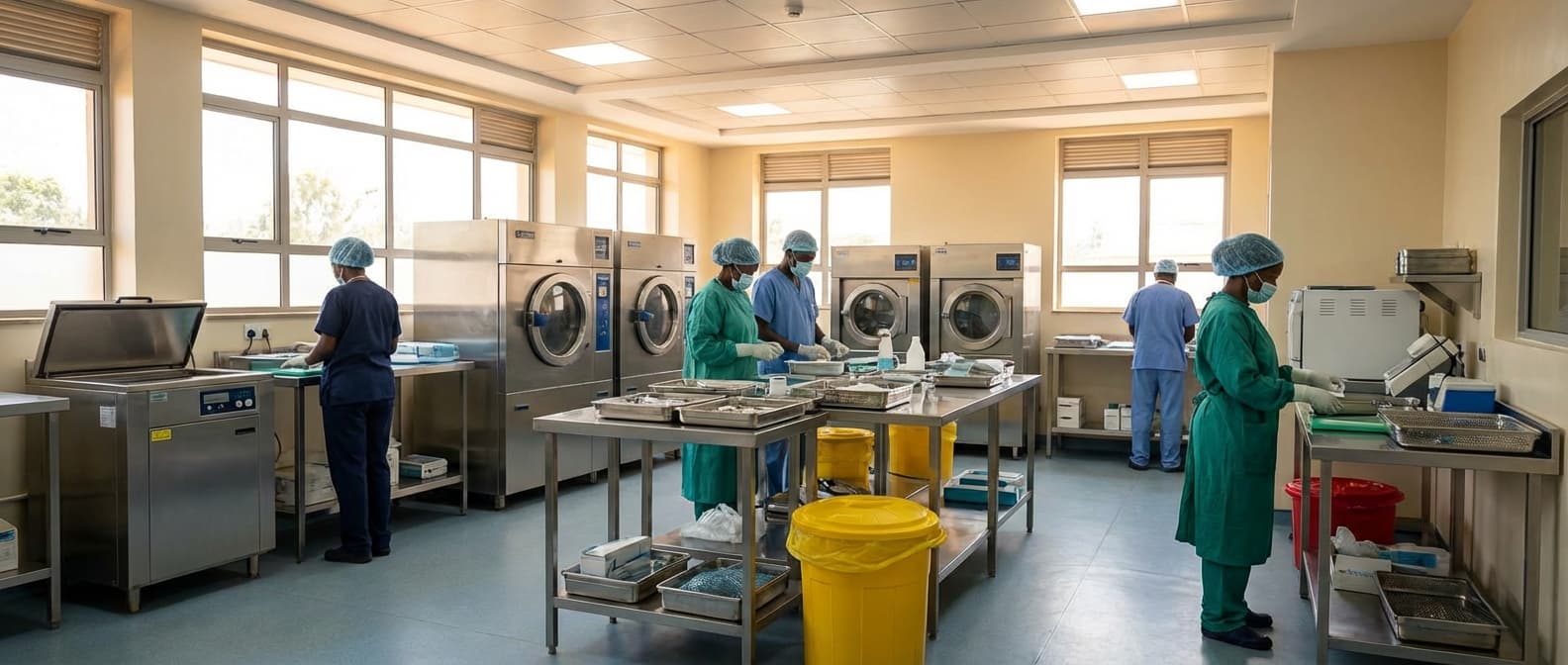
Autoclave Validation Support Service in Rwanda
Engineering Excellence & Technical Support
Autoclave Validation Support Service High-standard technical execution following OEM protocols and local regulatory frameworks.
Robust Sterilization Assurance
Our service guarantees the highest level of autoclave validation for critical medical and laboratory equipment in Rwanda. We employ rigorous, multi-stage testing protocols using calibrated biological and chemical indicators to ensure effective sterilization and minimize the risk of cross-contamination. Our meticulous approach provides peace of mind and upholds patient safety and research integrity.
Compliance-Driven Protocol Development
We design and implement autoclave validation protocols specifically tailored to Rwandan healthcare and research standards, as well as international guidelines (e.g., ISO 17665). Our expertise ensures your sterilization processes meet all regulatory requirements, facilitating smoother audits and uninterrupted operations. We focus on efficiency and cost-effectiveness without compromising on quality.
Comprehensive Documentation & Reporting
Receive detailed, auditable documentation of all validation procedures, including calibration certificates, test results, and validation reports. Our comprehensive reports provide clear evidence of your autoclave's performance, aiding in regulatory compliance, quality management systems, and continuous improvement initiatives. We ensure all records are meticulously maintained and readily accessible.
What Is Autoclave Validation Support Service In Rwanda?
Autoclave validation support services in Rwanda refer to the provision of specialized technical expertise and documented verification processes to ensure that steam sterilizers (autoclaves) are functioning correctly, consistently, and are capable of achieving the required level of sterilization for medical devices and other critical materials. This service is crucial for maintaining the sterility assurance level (SAL) of processed items, thereby preventing healthcare-associated infections (HAIs) and ensuring patient safety. The validation process involves a comprehensive assessment of the autoclave's performance against established standards and regulatory requirements, typically adhering to international guidelines such as ISO 17665 series.
| Who Needs Autoclave Validation Support Service? | Typical Use Cases | ||
|---|---|---|---|
| Healthcare facilities (hospitals, clinics, dental practices, diagnostic laboratories) processing reusable medical devices, surgical instruments, and laboratory glassware. | Sterilization of surgical instruments and implants in operating theaters. | Decontamination of laboratory consumables and media in research and diagnostic labs. | Processing of heat-stable, moisture-stable materials in specific industrial applications (e.g., certain food processing, pharmaceutical manufacturing where sterilization is required). |
| Central Sterile Supply Departments (CSSDs) responsible for the reprocessing of surgical instruments and other patient-care equipment. | Veterinary clinics and animal research facilities requiring sterilization of instruments and equipment. | Any organization handling biological materials or requiring microbial inactivation through steam sterilization for safety or regulatory compliance. | Manufacturers of sterilization equipment requiring third-party validation services for product certification and client assurance. |
Key Components of Autoclave Validation Support Service
- Installation Qualification (IQ): Verifies that the autoclave is installed according to manufacturer specifications and relevant safety standards.
- Operational Qualification (OQ): Assesses the autoclave's ability to operate within its defined parameters and perform the sterilization cycle as intended, often involving empty chamber runs.
- Performance Qualification (PQ): Demonstrates the autoclave's consistent ability to achieve and maintain the required sterilization conditions (temperature, pressure, time) throughout the entire chamber, using biological and chemical indicators with actual or simulated loads.
- Validation Protocol Development: Creation of detailed, documented plans outlining the validation methodology, acceptance criteria, and test procedures.
- Testing and Data Collection: Execution of the validation protocol, including the use of calibrated monitoring devices (thermocouples, pressure sensors) and sterilization indicators (biological and chemical).
- Data Analysis and Reporting: Interpretation of collected data, statistical analysis, and the generation of a comprehensive validation report that certifies the autoclave's performance.
- Calibration of Monitoring Equipment: Ensuring all measurement devices used during validation are within their calibration periods and traceable to national or international standards.
- Revalidation and Periodic Monitoring: Establishing schedules and protocols for ongoing validation and routine monitoring to ensure continued compliance and performance.
Who Needs Autoclave Validation Support Service In Rwanda?
Autoclave validation is a critical process that ensures autoclaves, also known as steam sterilizers, are functioning correctly and effectively eliminating microorganisms. This validation is essential for maintaining the highest standards of sterilization, preventing infections, and complying with regulatory requirements. While autoclaves are vital across many sectors, certain organizations and departments in Rwanda face a specific and pressing need for professional autoclave validation support services. This need is driven by the imperative to guarantee patient safety, preserve the integrity of sensitive materials, and avoid costly failures or regulatory non-compliance.
| Customer Type | Key Departments Requiring Support | Primary Needs/Concerns |
|---|---|---|
| Hospitals & Clinics | Sterile Processing Department (SPD) / Central Sterile Supply Department (CSSD), Operating Rooms, Intensive Care Units (ICUs), Dental Departments, Veterinary Clinics | Patient safety, prevention of HAIs, regulatory compliance (e.g., Ministry of Health guidelines), operational efficiency. |
| Laboratories (Research, Diagnostic, QC) | Microbiology Labs, Molecular Biology Labs, Chemistry Labs, Clinical Pathology Labs, Pharmaceutical QC Labs | Preventing contamination, ensuring experimental validity, product quality assurance, data integrity, compliance with GLP/GMP. |
| Pharmaceutical & Biopharmaceutical Manufacturers | Manufacturing Operations, Quality Control (QC), Quality Assurance (QA), Validation Departments | Product sterility, GMP compliance, regulatory submissions (e.g., FDA, WHO), risk mitigation, process validation. |
| Medical Device Manufacturers | Manufacturing, Quality Control, R&D, Validation Teams | Device sterility, ISO 13485 compliance, product safety, regulatory approvals. |
| Educational Institutions (Universities, Colleges) | Science Departments, Medical Schools, Veterinary Schools, Research Laboratories | Student and researcher safety, integrity of research findings, adherence to laboratory safety protocols. |
| Emergency Services | Logistics & Equipment Management | Readiness of essential equipment, crew safety, public health. |
| Cosmetic & Tattoo/Piercing Studios | Operations Management, Health & Safety Officers | Client safety, reputation management, compliance with local health regulations. |
Who Needs Autoclave Validation Support Service in Rwanda? - Target Customers and Departments
- Healthcare Facilities: Hospitals, clinics, dental practices, and veterinary clinics rely heavily on autoclaves for sterilizing surgical instruments, medical devices, and other reusable equipment. Ensuring the efficacy of these autoclaves is paramount for preventing healthcare-associated infections (HAIs) and maintaining patient safety.
- Laboratories: Research laboratories, diagnostic labs, and quality control laboratories in various industries (e.g., pharmaceuticals, food and beverage) use autoclaves to sterilize media, glassware, and other equipment. Accurate sterilization is crucial for preventing contamination and ensuring the reliability of experimental results and product quality.
- Manufacturing Facilities: Particularly in the pharmaceutical, biopharmaceutical, and medical device manufacturing sectors, autoclaves are used for sterilizing components, packaging materials, and production equipment. Validation is essential for meeting stringent regulatory requirements (e.g., GMP) and ensuring product sterility.
- Educational Institutions: Universities and colleges with science departments, medical schools, and veterinary programs utilize autoclaves for educational purposes and research. While perhaps less frequent than in clinical settings, validation remains important for the safety and integrity of experiments.
- Emergency Services: Ambulance services and other emergency response units that sterilize their own equipment need to ensure their autoclaves are functioning optimally.
- Cosmetic and Tattoo/Piercing Studios: While often subject to local health regulations, these businesses use autoclaves to sterilize equipment, and validation is a best practice for client safety.
Autoclave Validation Support Service Process In Rwanda
This document outlines the standard workflow for an Autoclave Validation Support Service in Rwanda, guiding clients from initial inquiry to the successful execution of validation procedures.
| Phase | Key Activities | Client Involvement | Service Provider Responsibility | Deliverables/Outcomes |
|---|---|---|---|---|
| 1. Inquiry and Initial Consultation | Client contacts the service provider with a need for autoclave validation. Initial discussion to understand the client's autoclave type, usage, regulatory requirements (e.g., Ministry of Health guidelines), and specific validation goals (e.g., PQ, IQ, OQ). | Initiates contact, provides basic information about the autoclave and its application. | Responds to inquiry, schedules initial consultation, gathers preliminary information. | Understanding of client's needs, preliminary assessment of scope. |
| 2. Proposal and Agreement | Based on the initial consultation, the service provider prepares a detailed proposal outlining the scope of work, methodologies, timelines, required resources, and pricing. Client reviews and approves the proposal. A formal service agreement is signed. | Reviews and approves the proposal, provides feedback, signs the service agreement. | Develops a comprehensive proposal, negotiates terms, finalizes and issues the service agreement. | Signed service agreement, clear understanding of scope, cost, and timeline. |
| 3. Planning and Preparation | Detailed validation plan is developed, including specific test protocols based on relevant standards (e.g., EN 285, ISO 17665) and client requirements. Necessary equipment (calibrated sensors, data loggers) is procured and prepared. Client ensures the autoclave is in good working condition and accessible. | Provides access to the autoclave, ensures its operational readiness, confirms availability of trained personnel. | Develops detailed validation protocol, calibrates and prepares validation equipment, identifies and trains validation team. | Approved validation protocol, calibrated validation equipment, scheduled validation dates. |
| 4. Execution of Validation Procedures | The validation team performs Installation Qualification (IQ), Operational Qualification (OQ), and Performance Qualification (PQ) tests as per the approved protocol. This involves running the autoclave under various conditions, collecting data using specialized equipment, and documenting all steps and observations. | Provides access to the autoclave and facility, allows the validation team to perform tests without disruption. | Conducts IQ, OQ, and PQ tests meticulously, collects and records all data accurately, maintains detailed logs. | Raw validation data, completed test logs, visual evidence of test execution. |
| 5. Reporting and Documentation | The service provider analyzes the collected data, generates a comprehensive validation report that includes executive summary, test results, analysis of deviations (if any), and conclusions on whether the autoclave meets the specified performance criteria. The report is submitted to the client. | Reviews the validation report, raises any queries or requests for clarification. | Analyzes data, compiles the validation report, provides a clear interpretation of results, addresses client queries. | Finalized Autoclave Validation Report, certificates of calibration for equipment used. |
| 6. Post-Validation Support | Upon acceptance of the report, the service provider may offer further support, such as recommendations for maintenance, re-validation scheduling, or troubleshooting if issues arise. The validation documentation is archived by both parties. | Implements recommendations, contacts for further support as needed, maintains records. | Provides recommendations for ongoing autoclave performance, offers support for future validation needs, archives project documentation. | Successful validation of the autoclave, ongoing confidence in sterilization processes, adherence to regulatory standards. |
Autoclave Validation Support Service Process in Rwanda
- Phase 1: Inquiry and Initial Consultation
- Phase 2: Proposal and Agreement
- Phase 3: Planning and Preparation
- Phase 4: Execution of Validation Procedures
- Phase 5: Reporting and Documentation
- Phase 6: Post-Validation Support
Autoclave Validation Support Service Cost In Rwanda
Providing autoclave validation support services in Rwanda involves a range of pricing factors that influence the overall cost. These factors are crucial for healthcare facilities, laboratories, and other organizations that rely on the sterility of their equipment. Understanding these elements will help in budgeting and selecting appropriate service providers.
| Service Component / Scope | Estimated Price Range (RWF) | Notes |
|---|---|---|
| Basic Autoclave Operational Qualification (OQ) | 300,000 - 600,000 | Covers essential operational checks and parameter verification for a standard autoclave. |
| Full Autoclave Validation (IQ, OQ, PQ) | 700,000 - 1,500,000+ | Comprehensive validation including installation, operational, and performance qualification for one unit. Price increases with size and complexity. |
| Annual/Routine Validation Contract (Per Autoclave) | 400,000 - 800,000 | May include periodic OQ/PQ checks. Discounts can apply for multi-year contracts or multiple units. |
| Re-validation after Major Repair | 250,000 - 600,000 | Focuses on ensuring parameters are met post-repair. May not require a full IQ. |
| Travel and Logistics Fee (Outside Kigali) | 50,000 - 200,000+ | Varies based on distance and mode of transport. Can be per trip or a consolidated fee. |
| Additional Autoclave Validation (Same Visit) | 200,000 - 500,000 | Discounted rate for each subsequent autoclave validated during the same site visit. |
Key Pricing Factors for Autoclave Validation Support Services in Rwanda:
- Type of Validation: The scope of the validation is a primary driver of cost. This can include installation qualification (IQ), operational qualification (OQ), performance qualification (PQ), or a full validation cycle encompassing all three. More comprehensive validation packages naturally incur higher fees.
- Autoclave Size and Capacity: Larger autoclaves with higher capacities require more validation points, potentially more complex testing procedures, and longer on-site presence from the technician, thus increasing the cost.
- Number of Autoclaves: If multiple autoclaves require validation within the same facility, service providers may offer tiered pricing or a discount for bulk services. However, the total cost will increase proportionally with the number of units.
- Complexity of Autoclave Technology: Advanced autoclaves with sophisticated control systems, multiple cycles, or specialized sterilization capabilities may demand more specialized expertise and testing, leading to higher validation costs.
- Frequency of Validation: Routine validation, whether annual or biannual, might have a standard pricing. However, re-validation due to equipment malfunction, major repairs, or changes in operational procedures could incur additional costs.
- Geographic Location within Rwanda: Travel and accommodation expenses for the validation technician can impact the final price. Services in remote areas might involve higher logistical costs compared to those in major cities like Kigali.
- Service Provider Reputation and Expertise: Established service providers with a proven track record, certified technicians, and advanced validation equipment often command higher prices due to the assurance of quality and reliability they offer.
- Additional Services: Some providers may bundle validation services with preventative maintenance, calibration, or training. The inclusion of these extras will naturally increase the overall service cost.
- Reporting and Documentation Standards: The level of detail and the format of the validation report required can influence cost. Highly detailed reports with extensive data analysis might be priced higher.
- Urgency of Service: Requesting emergency or expedited validation services can often come with a premium charge.
Affordable Autoclave Validation Support Service Options
Our Affordable Autoclave Validation Support Service is designed to provide essential validation expertise without breaking your budget. We understand the critical nature of autoclave validation for regulatory compliance and operational safety, and we've developed flexible options to meet diverse needs and financial constraints. Our approach focuses on delivering high-quality, compliant validation while employing smart strategies to maximize your investment.
| Cost-Saving Strategy | Description | Benefit |
|---|---|---|
| Tiered Service Levels | Offering different packages from basic to premium allows clients to choose the level of support that aligns with their budget and validation needs. | Avoids overpaying for services not required, offering flexibility and control over expenses. |
| Preventative Maintenance Integration | Bundling validation services with recommended preventative maintenance checks can identify potential issues before they impact validation. | Reduces the risk of costly failures and re-validation attempts, saving time and resources. |
| Remote Support Options | Utilizing remote monitoring and diagnostic tools where applicable for certain aspects of validation. | Minimizes on-site visit costs and reduces disruption to your operations. |
| Staff Training & Empowerment | Offering training on routine checks and basic troubleshooting can empower your internal team for ongoing compliance. | Reduces reliance on external support for minor issues and builds internal competency, lowering long-term costs. |
| Volume Discounts | For organizations with multiple autoclaves or recurring validation needs, we offer attractive discounts for bulk services. | Significant cost reductions for higher volume clients, making ongoing validation more economical. |
| Proactive Scheduling | Scheduling validation services during off-peak hours or in advance can sometimes lead to better rates. | Potential for reduced service fees and minimized operational impact. |
Value Bundles for Comprehensive Support
- Basic Validation Package: Ideal for routine re-validation or smaller facilities. Includes essential performance qualification (PQ) testing, documentation review, and a basic report. Focuses on core parameters to ensure operational efficacy.
- Standard Validation Package: A balanced option offering comprehensive PQ testing, including cycle development support, calibration verification, and a detailed validation report. Suitable for most standard operational needs and initial validations.
- Premium Validation Package: For facilities requiring the highest level of assurance or those undergoing significant changes. Includes all features of the Standard package, plus advanced cycle analysis, risk assessment integration, and on-site training for your staff. This package ensures complete validation and preparedness.
- Customizable Solution: We can tailor a validation plan to your specific equipment, processes, and regulatory requirements. Speak to our experts to build a package that precisely fits your needs and budget.
Verified Providers In Rwanda
In Rwanda's evolving healthcare landscape, access to verified and trustworthy medical providers is paramount. Franance Health stands out as a beacon of reliability, offering a curated network of credentialed professionals committed to delivering exceptional patient care. This commitment is not just a promise; it's backed by a rigorous vetting process that ensures every provider within their network meets the highest standards of expertise, ethical practice, and patient safety. Choosing Franance Health means entrusting your well-being to a system built on transparency, quality, and a deep understanding of the healthcare needs of Rwanda.
| Credential Type | Franance Health Verification | Importance for Patients |
|---|---|---|
| Medical Licenses | Active and valid Rwandan Medical Council licenses confirmed. | Ensures the provider is legally authorized to practice medicine. |
| Academic Qualifications | Verification of degrees and diplomas from accredited institutions. | Confirms foundational medical education and theoretical knowledge. |
| Specialist Certifications | Validation of board certifications and recognized specialist training. | Guarantees expertise in specific medical fields. |
| Continuing Medical Education (CME) | Evidence of ongoing professional development and skill enhancement. | Indicates commitment to staying updated with the latest medical advancements. |
| Practice History & Reputation | Review of past employment and, where applicable, patient feedback mechanisms. | Provides insight into a provider's practical experience and patient interactions. |
| Ethical Conduct | Checks for adherence to professional ethical guidelines and lack of significant disciplinary actions. | Assures patients of professional integrity and responsible medical practice. |
Why Franance Health Credentials Represent the Best Choice:
- Rigorous Verification Process: Franance Health goes above and beyond standard credentialing. They meticulously verify medical licenses, academic qualifications, specialist certifications, and practice history of every provider.
- Commitment to Ethical Standards: Beyond technical proficiency, Franance Health ensures all listed providers adhere to a strict code of medical ethics, prioritizing patient well-being and confidentiality.
- Focus on Patient Safety: The vetting process includes checks for any disciplinary actions or malpractice claims, guaranteeing that patients are connected with safe and responsible practitioners.
- Ensured Expertise and Specialization: Franance Health categorizes and verifies providers by their specific medical specialties, making it easier for patients to find the right expert for their unique health concerns.
- Continuous Quality Assurance: The commitment to quality doesn't end with initial verification. Franance Health maintains an ongoing monitoring system to ensure providers continue to meet their high standards.
- Transparent Provider Information: Patients have access to clear and verifiable information about their chosen healthcare professional's qualifications and experience.
- Building Trust in Rwandan Healthcare: By championing verified providers, Franance Health actively contributes to building a more trustworthy and accessible healthcare system for all Rwandans.
Scope Of Work For Autoclave Validation Support Service
This Scope of Work (SOW) outlines the services to be provided for Autoclave Validation Support. The objective is to ensure the autoclave consistently performs its intended sterilization function according to established standards and regulatory requirements. This includes all phases of validation, from Installation Qualification (IQ) through Performance Qualification (PQ), and the generation of comprehensive documentation.
| Deliverable | Description | Standard/Specification | Acceptance Criteria |
|---|---|---|---|
| Validation Master Plan (VMP) - Autoclave Specific Section | Defines the overall strategy, scope, and responsibilities for autoclave validation. | Relevant GMP/GxP guidelines (e.g., FDA 21 CFR Part 211, Part 11; EU GMP Annex 1), company SOPs. | Approved by Quality Assurance (QA) and relevant stakeholders. |
| Installation Qualification (IQ) Protocol | Documents verification of correct installation, materials, and components of the autoclave. | Manufacturer's specifications, design documentation, relevant industry standards, company SOPs. | Protocol approved by QA before execution. |
| IQ Report | Summarizes the results of the IQ execution, including deviations and their resolution. | Based on IQ Protocol execution, manufacturer's installation documentation. | All tests passed, deviations resolved and approved by QA. Signed and dated by execution team and QA. |
| Operational Qualification (OQ) Protocol | Verifies that the autoclave operates within its defined parameters and ranges across its operational envelope. | Manufacturer's operating manual, process parameters, relevant industry standards, company SOPs. | Protocol approved by QA before execution. |
| OQ Report | Summarizes the results of the OQ execution, including deviations and their resolution. | Based on OQ Protocol execution, manufacturer's operating specifications. | All tests passed, deviations resolved and approved by QA. Signed and dated by execution team and QA. |
| Performance Qualification (PQ) Protocol | Demonstrates that the autoclave consistently performs its intended sterilization function under normal operating conditions. | Defined sterilization cycles, load configurations, biological indicators (BIs), chemical indicators (CIs), relevant pharmacopoeia (e.g., USP, EP), company SOPs. | Protocol approved by QA before execution. Includes number of runs, parameters to be monitored, success criteria. |
| PQ Report | Summarizes the results of the PQ execution, including deviations and their resolution. | Based on PQ Protocol execution, raw data from BIs, CIs, temperature, pressure, time monitoring. | All runs successful, all parameters within acceptance criteria, deviations resolved and approved by QA. Signed and dated by execution team and QA. |
| Validation Summary Report | Provides an overall summary of the autoclave validation effort, concluding on its validated state. | Combines findings from IQ, OQ, and PQ reports. Includes risk assessment summary. | Approved by QA and relevant management. Concludes that the autoclave is fit for its intended use. |
| Calibrated and Certified Validation Equipment | All equipment used for validation (temperature probes, pressure gauges, etc.) must be calibrated and certified. | NIST traceable calibration certificates, manufacturer's specifications, company SOPs for calibration intervals. | Calibration certificates are current and within their validity period. Equipment is suitable for the required measurement accuracy. |
| Training on Validation Procedures (as applicable) | Ensures personnel involved in validation are adequately trained on protocols, procedures, and equipment. | Training records, competency assessments, relevant SOPs. | Personnel have received and documented training on assigned tasks and procedures. |
Key Deliverables
- Validation Master Plan (VMP) - Autoclave Specific Section
- Installation Qualification (IQ) Protocol
- IQ Report
- Operational Qualification (OQ) Protocol
- OQ Report
- Performance Qualification (PQ) Protocol
- PQ Report
- Validation Summary Report
- Calibrated and Certified Validation Equipment
- Training on Validation Procedures (as applicable)
Service Level Agreement For Autoclave Validation Support Service
This Service Level Agreement (SLA) outlines the response times and uptime guarantees for the Autoclave Validation Support Service provided by [Your Company Name]. This SLA is intended to ensure reliable and timely support for our clients utilizing our autoclave validation services.
| Issue Severity | Response Time (Business Hours) | Target Resolution Time (Business Hours) |
|---|---|---|
Definitions
- {"term":"Autoclave Validation Support Service","definition":"Refers to the technical assistance, troubleshooting, and consultation provided by [Your Company Name] regarding the validation of autoclaves."}
- {"term":"Critical Issue","definition":"A problem that renders the autoclave completely non-operational or poses a significant risk to the validation process or product sterility."}
- {"term":"Major Issue","definition":"A problem that impairs the performance or accuracy of the autoclave but does not completely prevent its operation. This may include minor deviations or issues affecting a specific test parameter."}
- {"term":"Minor Issue","definition":"A problem that has minimal impact on the autoclave's operation or validation process, such as minor software glitches, documentation inquiries, or non-critical system alerts."}
- {"term":"Business Hours","definition":"Monday to Friday, 9:00 AM to 5:00 PM [Your Time Zone], excluding public holidays."}
- {"term":"Response Time","definition":"The maximum time allowed from the initiation of a support request to the first acknowledgement from [Your Company Name]'s support team."}
- {"term":"Resolution Time","definition":"The target time for resolving an issue, measured from the initiation of the support request. This may involve providing a workaround, a permanent fix, or scheduling a site visit."}
- {"term":"Uptime Guarantee","definition":"The percentage of time the Autoclave Validation Support Service is available and functional, excluding scheduled maintenance and events beyond our reasonable control."}
Frequently Asked Questions

Ready when you are
Let's scope your Autoclave Validation Support Service in Rwanda project in Rwanda.

Scaling healthcare logistics and technical systems across the entire continent.