
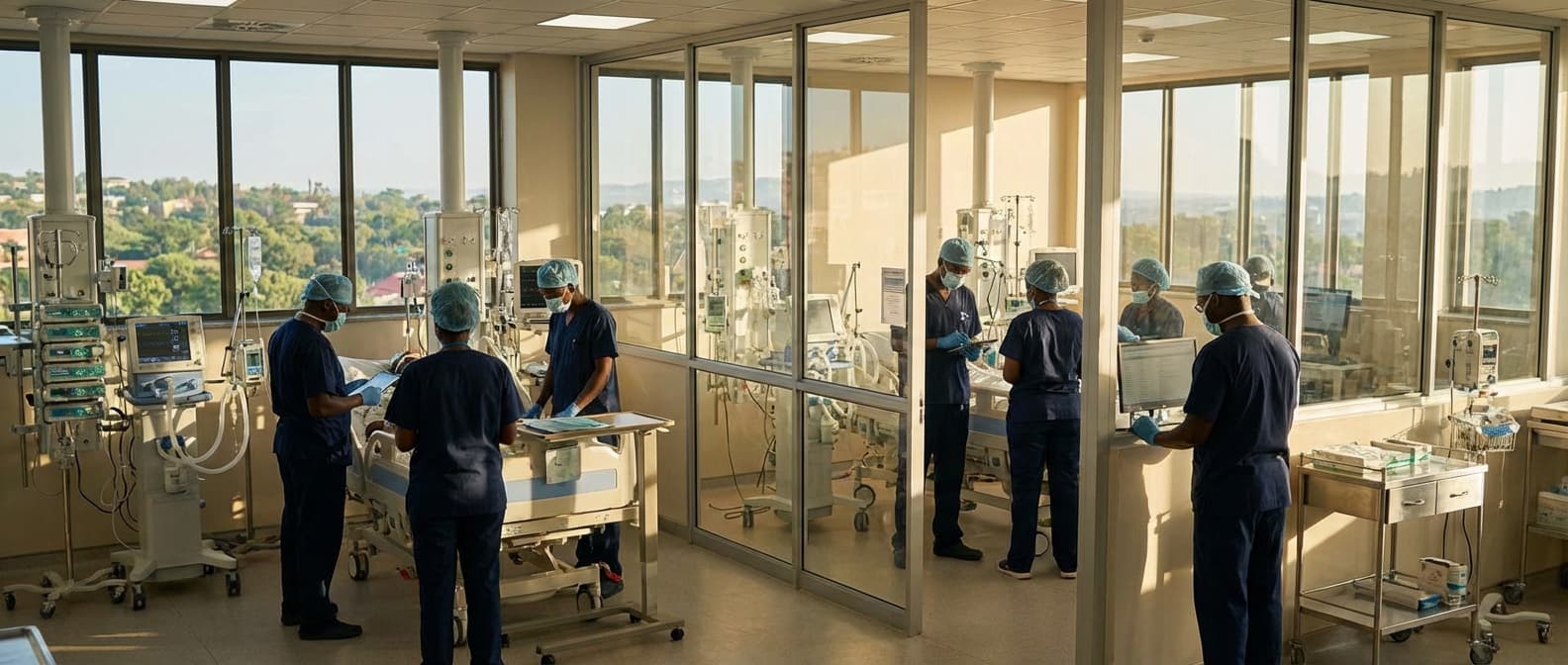
Ventilator Fleet Management & PM in Rwanda
Engineering Excellence & Technical Support
Preventive maintenance and fleet management for ICU ventilators High-standard technical execution following OEM protocols and local regulatory frameworks.
Real-time Ventilator Performance Monitoring
Implementation of a centralized dashboard providing real-time operational status, error logs, and key performance indicators for the entire ventilator fleet across Rwanda. This enables immediate identification of any device malfunctions or performance deviations, ensuring optimal patient care and minimizing downtime.
Proactive Predictive Maintenance Scheduling
Leveraging data analytics on usage patterns and historical maintenance records to predict potential component failures. This allows for proactive scheduling of preventive maintenance, reducing unexpected breakdowns and extending the lifespan of critical respiratory equipment, particularly vital in remote or resource-constrained areas.
Secure Cloud-Based Asset Registry & Calibration Tracking
Establishment of a secure, cloud-based inventory of all ventilators, including serial numbers, purchase dates, calibration history, and service records. This centralized repository ensures compliance with regulatory standards, simplifies asset management, and facilitates efficient recall or software update distribution when necessary.
What Is Ventilator Fleet Management & Pm In Rwanda?
Ventilator Fleet Management and Preventative Maintenance (PM) in Rwanda refers to the comprehensive operational and upkeep framework designed to ensure the continuous availability, optimal performance, and extended lifespan of mechanical ventilators within the Rwandan healthcare system. This service encompasses a range of activities focused on the strategic acquisition, deployment, monitoring, servicing, and eventual decommissioning of ventilator equipment. The primary objective is to maximize the therapeutic efficacy and cost-effectiveness of the ventilator fleet, particularly critical in addressing acute respiratory distress, infectious disease outbreaks, and the management of chronic respiratory conditions. This integrated approach aims to mitigate equipment failure, reduce downtime, and ensure that essential life-support technology is reliably accessible to patients in need across various healthcare facilities.
| Stakeholder/Entity | Need for Ventilator Fleet Management & PM | Typical Use Cases |
|---|---|---|
| Ministry of Health (Rwanda Biomedical Centre - RBC) | Ensuring national health security, equitable access to critical care infrastructure, efficient resource allocation, and data-driven policy making for respiratory support. | Responding to public health emergencies (e.g., pandemics like COVID-19), managing respiratory disease burdens in public hospitals, establishing national standards for medical equipment maintenance. |
| Public Hospitals & Health Facilities | Maintaining operational readiness, guaranteeing patient safety and optimal therapeutic outcomes, reducing patient morbidity and mortality associated with respiratory failure, managing departmental budgets effectively. | Providing mechanical ventilation for patients in Intensive Care Units (ICUs), Neonatal Intensive Care Units (NICUs), Emergency Departments (EDs), and during surgical procedures. Managing a fleet of ventilators across multiple wards or specialized units. |
| Private Healthcare Providers | Upholding quality of care standards, ensuring compliance with accreditation requirements, optimizing return on investment for medical equipment, maintaining a competitive edge. | Offering specialized respiratory care services, managing ventilators in private hospitals and clinics for elective and emergency cases, implementing advanced monitoring and ventilation modes. |
| Biomedical Engineering Departments/Technicians | Ensuring the safe and reliable functioning of medical equipment, performing essential maintenance and repairs, minimizing equipment downtime, extending equipment lifespan. | Conducting scheduled preventative maintenance, troubleshooting and repairing ventilator malfunctions, performing calibration and safety checks, managing spare parts inventory. |
| Clinical Staff (Physicians, Nurses, Respiratory Therapists) | Having access to functioning ventilators when needed, understanding proper operation and patient interface, ensuring patient comfort and adherence to prescribed ventilation settings. | Initiating mechanical ventilation for critically ill patients, adjusting ventilator settings based on patient response, monitoring patient-ventilator synchrony, performing basic troubleshooting and reporting issues. |
| Medical Equipment Suppliers & Service Providers | Fulfilling contractual obligations for maintenance and support, generating revenue through service agreements, providing technical expertise and spare parts. | Offering service contracts for ventilator fleets, providing on-site repair and maintenance services, supplying genuine spare parts and consumables, conducting training for hospital staff. |
Key Components of Ventilator Fleet Management & PM in Rwanda
- Inventory Management & Asset Tracking: Establishing and maintaining a detailed, up-to-date registry of all ventilator units, including serial numbers, acquisition dates, locations, service history, and current operational status.
- Preventative Maintenance (PM) Scheduling & Execution: Developing and adhering to a rigorous schedule of routine inspections, cleaning, calibration, and component replacement as per manufacturer specifications and clinical requirements. This includes pre-operative checks and post-use decontamination protocols.
- Corrective Maintenance & Repair: Prompt identification, diagnosis, and resolution of equipment malfunctions and breakdowns. This involves ensuring the availability of spare parts, qualified technicians, and diagnostic tools.
- Performance Monitoring & Optimization: Continuously tracking ventilator usage patterns, performance metrics, and efficacy to identify areas for operational improvement and resource allocation.
- Training & Capacity Building: Providing comprehensive training for clinical staff on the proper operation, basic troubleshooting, and immediate care of ventilators, as well as for biomedical engineers and technicians on advanced maintenance and repair procedures.
- Logistics & Spare Parts Management: Establishing a robust supply chain for essential consumables, accessories, and spare parts to minimize repair turnaround times and prevent operational delays.
- Regulatory Compliance & Standardization: Ensuring all management and maintenance practices adhere to national healthcare regulations, international standards, and manufacturer guidelines for medical devices.
- End-of-Life Management & Replacement Planning: Developing strategies for the planned obsolescence and responsible decommissioning of aging or irreparable equipment, including planning for timely replacement to maintain fleet capacity.
Who Needs Ventilator Fleet Management & Pm In Rwanda?
Effective ventilator fleet management and preventive maintenance (PM) are crucial for ensuring the reliable operation of life-saving medical equipment. In Rwanda, as in many developing nations, optimizing the use and upkeep of these complex devices is paramount to providing quality healthcare and responding effectively to public health crises.
| Customer Type | Primary Need for Ventilator Management & PM | Relevant Departments/Stakeholders |
|---|---|---|
| Public Hospitals | Ensuring availability of critical life support equipment, cost-effective maintenance, compliance with national standards, maximizing equipment lifespan, preparedness for health emergencies. | Biomedical Engineering, ICU, Anesthesiology, Emergency Dept, Administration, Procurement. |
| Private Hospitals & Clinics | Maintaining high standards of patient care, minimizing downtime, brand reputation, efficient resource allocation, service level agreements with manufacturers. | Biomedical Engineering (if available), ICU, Anesthesiology, Administration, Quality Assurance. |
| Tertiary Care / Referral Centers | Handling complex cases requiring advanced ventilation, ensuring specialized equipment readiness, training clinical staff on advanced ventilator use and basic troubleshooting. | ICU, Anesthesiology, Respiratory Therapy, Biomedical Engineering, Training Departments. |
| Emergency Medical Services (EMS) | Ensuring mobile ventilators are operational and reliable for pre-hospital care, rapid deployment during emergencies, maintenance of transport-grade equipment. | EMS Operations, Logistics, Biomedical Engineering (for vehicle integration). |
| NGOs & Healthcare Initiatives | Maximizing impact of donated or acquired equipment, ensuring sustainability of medical services in underserved areas, capacity building of local healthcare workers. | Program Managers, Logistics Officers, Local Healthcare Staff, Biomedical Technicians (trained). |
| Ministry of Health | National health security, equitable access to critical care, setting standards and regulations, national equipment inventory management, strategic planning for healthcare infrastructure. | Department of Health Services, Planning Department, Procurement Unit, National Biomedical Engineering Directorate. |
| Medical Equipment Suppliers | Fulfilling warranty and service obligations, providing reliable after-sales support, building long-term relationships with healthcare facilities, ensuring parts availability. | Service Department, Technical Support, Sales & Marketing. |
Who Needs Ventilator Fleet Management & PM in Rwanda? Target Customers & Departments
- {"items":["Public Hospitals (national, provincial, and district levels)","Private Hospitals and Clinics","Tertiary Care and Referral Centers","Emergency Medical Services (EMS) Providers","Non-Governmental Organizations (NGOs) involved in healthcare provision","Government Ministries of Health and their affiliated agencies","Medical Equipment Suppliers and Distributors (for after-sales service contracts)","Research Institutions and Universities with clinical training programs"],"title":"Target Customers"}
- {"items":["Anesthesiology Departments","Intensive Care Units (ICUs) / Critical Care Units","Emergency Departments / Accident & Emergency (A&E)","Respiratory Therapy Departments","Medical Engineering / Biomedical Engineering Departments","Procurement and Logistics Departments","Quality Assurance and Patient Safety Departments","Infection Prevention and Control Teams","Hospital Administration and Management","Ministry of Health (National Level Policy and Oversight)"],"title":"Key Departments & Stakeholders"}
Ventilator Fleet Management & Pm Process In Rwanda
This document outlines the workflow for Ventilator Fleet Management and Preventive Maintenance (PM) processes in Rwanda. It details the steps involved from the initial inquiry for a ventilator service to the successful execution of the maintenance or repair, ensuring the continued operational readiness of the national ventilator fleet. This structured approach aims to standardize processes, improve response times, and maintain the highest quality of care.
| Step | Description | Responsible Party | Key Deliverables/Outcomes |
|---|---|---|---|
| Initial request for ventilator service (PM, repair, or new installation) is received. This could be a scheduled PM or an emergency repair request due to a malfunction. | Healthcare Facility Staff, Ministry of Health (MoH) Representative | Clear understanding of the service required. |
| Formal service request is submitted to the designated fleet management unit. Requests are prioritized based on urgency (e.g., critical patient care, widespread equipment failure) and available resources. | Fleet Management Unit (FMU), MoH | Prioritized service queue, assigned ticket/reference number. |
| Based on the priority, the FMU dispatches the appropriate technical team. Technicians are assigned based on their specialization, location, and availability. | Fleet Management Unit (FMU) | Assigned technician(s), dispatch order, estimated arrival time. |
| Technicians arrive at the facility and conduct a thorough inspection and diagnostic tests to identify the exact issue (for repairs) or confirm the equipment's status (for PM). | Biomedical Technician(s) | Detailed diagnosis of the problem, list of required actions (PM checklist completion or specific repairs). |
| If repairs require spare parts, the technician identifies the necessary components. The FMU or procurement department initiates the procurement process if parts are not in stock. | Biomedical Technician(s), Fleet Management Unit (FMU), Procurement Department | Ordered spare parts list, confirmed lead times. |
| Preventive maintenance is performed according to the manufacturer's schedule and established protocols. Repairs are carried out by replacing faulty parts and rectifying identified issues. | Biomedical Technician(s) | Completed PM checklist, successfully repaired ventilator. |
| After PM or repair, the ventilator undergoes rigorous functional testing and calibration to ensure it meets all performance specifications and safety standards. This includes verifying breathing parameters, alarms, and battery backup. | Biomedical Technician(s) | Verified ventilator performance, calibration certificates (if applicable). |
| All service activities, including diagnosis, parts used, maintenance performed, testing results, and technician observations, are meticulously documented in a standardized service report and logged in the fleet management system. | Biomedical Technician(s), Fleet Management Unit (FMU) | Completed service report, updated fleet management database. |
| The serviced ventilator is handed back to the healthcare facility staff. A confirmation of successful service and return to operational status is obtained from the facility. | Biomedical Technician(s), Healthcare Facility Staff | Signed handover form, confirmation of operational readiness. |
| The FMU updates the overall fleet status to reflect the serviced equipment. A follow-up may be scheduled to ensure continued proper functioning and address any post-service queries. | Fleet Management Unit (FMU) | Updated fleet inventory, confirmed long-term operational efficiency. |
Ventilator Fleet Management & PM Process Workflow
- Inquiry and Needs Assessment
- Request and Prioritization
- Service Dispatch and Technician Assignment
- On-site Assessment and Diagnosis
- Parts Procurement (if necessary)
- Preventive Maintenance (PM) or Repair Execution
- Testing and Calibration
- Documentation and Reporting
- Handover and Confirmation
- Fleet Status Update and Follow-up
Ventilator Fleet Management & Pm Cost In Rwanda
Effective ventilator fleet management and preventative maintenance (PM) are crucial for ensuring the optimal functioning and longevity of medical equipment in Rwanda. This includes not only the initial procurement cost of ventilators but also ongoing operational expenses, particularly for PM. The cost of PM is influenced by a variety of factors, including the type and complexity of the ventilator, the availability of spare parts, the expertise of the technicians, the service provider's overhead, and the frequency of maintenance. In Rwanda, these costs are typically discussed and budgeted in Rwandan Francs (RWF).
| Service Type | Estimated Cost Range (RWF) | Notes |
|---|---|---|
| Annual Preventative Maintenance (Standard Ventilator) | 150,000 - 400,000 | Covers routine checks, calibration, cleaning, and minor part replacement. Cost varies by brand and service provider. |
| Annual Preventative Maintenance (Advanced/Specialty Ventilator) | 300,000 - 700,000+ | For complex ventilators (e.g., HFOV, critical care units) requiring specialized technicians and parts. May involve software updates. |
| On-Demand Repair (Minor Issue) | 50,000 - 200,000 | Includes diagnostic, labor, and cost of a single minor part. Excludes major component failures. |
| On-Demand Repair (Major Component Failure) | 200,000 - 1,000,000+ | Cost heavily dependent on the specific component (e.g., compressor, turbine, motherboard) and its price. May involve sending the unit for repair. |
| Service Contract (Annual Fee - Comprehensive) | 500,000 - 1,500,000+ | Often includes scheduled PM, labor for repairs, and some spare parts. Provides cost predictability. |
| Biomedical Technician Salary (Monthly) | 300,000 - 800,000 | For a skilled and experienced technician. Higher end for senior or specialized technicians. This is an operational cost, not direct PM cost but influences in-house PM. |
| Cost of a Single Critical Spare Part (e.g., Turbine, Compressor) | 200,000 - 800,000+ | Highly variable by ventilator model and brand. Can be a significant factor in repair costs. |
Factors Influencing Ventilator Fleet Management & PM Costs in Rwanda
- Ventilator Technology & Age: Newer, more complex ventilators (e.g., high-frequency oscillatory ventilators) generally have higher PM costs due to specialized components and calibration requirements compared to simpler, older models. Extended use and aging can also necessitate more frequent and intensive maintenance.
- Brand & Manufacturer: Different brands and manufacturers have varying pricing structures for their recommended PM schedules, required parts, and service contracts. Some brands may have higher initial costs but more affordable long-term maintenance.
- Spare Parts Availability & Cost: The cost and accessibility of genuine spare parts are significant determinants. If parts are imported, customs duties, shipping costs, and potential currency fluctuations can drive up prices. Local availability of certified parts can mitigate these costs.
- Technician Expertise & Training: Highly skilled and certified biomedical technicians are essential for proper PM. The cost of employing or contracting such expertise, including ongoing training to keep up with new technologies, contributes to overall PM expenses.
- Service Provider Model: Costs can differ based on whether PM is performed by in-house hospital biomedical engineering departments, the original equipment manufacturer (OEM) service teams, or third-party service providers. Third-party providers might offer more competitive pricing but require careful vetting for quality.
- Maintenance Schedule & Scope: The frequency and depth of PM (e.g., annual comprehensive service vs. semi-annual checks) directly impact costs. Following manufacturer recommendations is vital, but some institutions might opt for extended intervals, which can be cost-effective but riskier.
- Location & Logistics: The geographical location of the hospital within Rwanda can influence logistical costs for technicians and parts. Remote areas might incur higher travel and transportation expenses.
- Warranty & Service Contracts: Ventilators often come with a warranty period. Post-warranty, securing comprehensive service contracts can provide predictable costs and access to timely support, but the annual fees for these contracts are a direct expense.
- Consumables: Certain PM procedures require specific consumables (e.g., filters, calibration gases) which add to the operational cost.
- Regulatory Compliance: Adherence to national and international medical device regulations may necessitate specific calibration and testing procedures, impacting PM time and resources.
Affordable Ventilator Fleet Management & Pm Options
Managing a ventilator fleet effectively is crucial for ensuring patient safety and operational efficiency. This often involves significant capital expenditure and ongoing maintenance costs. Affordable ventilator fleet management and planned maintenance (PM) options focus on maximizing equipment uptime, extending lifespan, and minimizing total cost of ownership through smart strategies and value-added service bundles. This approach recognizes that preventative measures are far more cost-effective than reactive repairs and that optimized utilization reduces the need for excessive capital investment.
| Cost-Saving Strategy | Description | Impact on Costs |
|---|---|---|
| Proactive Planned Maintenance (PM) | Regularly scheduled inspections, cleaning, lubrication, and calibration to prevent breakdowns. | Reduces costly emergency repairs, extends equipment lifespan, minimizes unplanned downtime impacting patient care and potential revenue loss. |
| Optimized Equipment Utilization | Analyzing usage patterns to ensure ventilators are deployed effectively and avoiding overstocking. | Reduces capital expenditure on unnecessary equipment, lowers storage and maintenance costs for idle units. |
| Extended Equipment Lifespan | Implementing robust PM programs and using high-quality replacement parts. | Delays the need for capital replacement, maximizing return on investment for existing assets. |
| Bundled Service Contracts | Negotiating comprehensive service agreements that include PM, repairs, parts, and potentially loaner units. | Often provides discounted rates compared to ad-hoc services, predictable budgeting, and streamlined procurement. |
| Refurbishment & Remanufacturing | Partnering with providers who can refurbish or remanufacture older but still functional ventilators. | Offers a cost-effective alternative to purchasing new equipment, especially for less critical or backup needs. |
| Remote Monitoring & Predictive Maintenance | Utilizing technology to anticipate failures based on performance data. | Minimizes unexpected downtime, reduces emergency service call-outs, and allows for more efficient scheduling of maintenance. |
| Strategic Parts Management | Implementing just-in-time inventory or consignment stock for critical parts. | Reduces carrying costs of spare parts, ensures availability when needed, and avoids obsolescence. |
Key Value Bundles for Affordable Ventilator Fleet Management & PM
- {"title":"Comprehensive PM Packages","description":"These bundles typically include routine scheduled maintenance, calibration, firmware updates, and safety checks performed by certified technicians. They often offer a tiered approach (e.g., basic, standard, premium) with increasing levels of service and proactive diagnostics."}
- {"title":"Equipment Lifecycle Management","description":"This goes beyond routine PM to include strategic planning for equipment acquisition, deployment, repair, refurbishment, and eventual disposal. Value bundles can encompass asset tracking, utilization analysis, and recommendations for upgrades or replacements."}
- {"title":"Loaner/Exchange Programs","description":"To minimize downtime during repairs, these programs provide access to replacement ventilators. This ensures continuous patient care without requiring hospitals to maintain a large internal buffer stock, thus reducing capital tied up in idle equipment."}
- {"title":"Remote Monitoring & Diagnostics","description":"Leveraging technology to remotely monitor ventilator performance and identify potential issues before they lead to failure. This enables proactive intervention and can reduce the need for on-site technician visits for minor issues."}
- {"title":"Parts & Consumables Management","description":"Bundled services can include optimized inventory management for spare parts and consumables, ensuring availability while minimizing excess stock. Some providers offer consignment stock or guaranteed pricing."}
- {"title":"Training & Education","description":"Offering training for clinical staff on proper ventilator operation and basic troubleshooting, and for biomedical engineers on advanced maintenance. This empowers in-house teams and reduces reliance on external services for common issues."}
Verified Providers In Rwanda
Finding reliable healthcare services is paramount, and in Rwanda, this assurance is often tied to the credibility and transparency of healthcare providers. Franance Health stands out as a beacon of trust, offering a robust platform that connects individuals with verified medical professionals. This verification process is not merely a formality; it's a cornerstone of their commitment to patient safety and quality of care. By meticulously vetting their network of doctors, specialists, and clinics, Franance Health ensures that every provider listed on their platform meets stringent standards. This dedication to credentialing translates into peace of mind for users, allowing them to make informed decisions about their health with confidence.
| Verification Aspect | Franance Health's Approach | Benefit to Patients |
|---|---|---|
| Licensing and Accreditation | Mandatory verification of all medical licenses and institutional accreditations. | Ensures providers meet legal and professional requirements. |
| Professional Qualifications | Thorough review of educational background, specializations, and ongoing training. | Guarantees access to expertise in specific medical fields. |
| Reputation and Feedback | Incorporates patient reviews and, where applicable, peer endorsements. | Provides insights into patient experiences and provider performance. |
| Adherence to Standards | Checks for compliance with national healthcare regulations and best practices. | Confirms that providers operate with the highest ethical and medical standards. |
Why Franance Health's Verified Providers are the Best Choice:
- Unwavering Commitment to Safety: Rigorous credentialing processes ensure you are connecting with qualified and licensed healthcare professionals, minimizing risks.
- Access to Quality Care: Verified providers adhere to high standards of medical practice, offering you the best possible treatment and diagnostic services.
- Transparency and Trust: Franance Health's clear verification system builds trust, eliminating the guesswork in finding reputable healthcare.
- Informed Decision-Making: Detailed provider profiles, including specializations and experience, empower you to choose the right expert for your needs.
- Streamlined Healthcare Access: Easily locate and book appointments with verified providers, saving you time and reducing stress.
- Focus on Patient Well-being: The core mission of Franance Health is to prioritize patient outcomes through reliable and accessible healthcare connections.
Scope Of Work For Ventilator Fleet Management & Pm
This Scope of Work (SOW) outlines the requirements for comprehensive ventilator fleet management and preventative maintenance (PM) services. The objective is to ensure optimal performance, safety, and longevity of the organization's ventilator equipment, minimizing downtime and associated costs. This includes detailed technical deliverables and adherence to standard specifications.
| Category | Technical Deliverables | Standard Specifications / Compliance |
|---|---|---|
| Ventilator Inventory & Tracking | Establish and maintain a comprehensive digital inventory of all ventilators, including make, model, serial number, acquisition date, location, and maintenance history. | Asset management system integration; GS1 standards for labeling (if applicable). |
| Preventative Maintenance (PM) | Develop and implement a standardized PM schedule for each ventilator model based on manufacturer recommendations and regulatory guidelines. | Manufacturer's PM schedule; AAMI ST79 for sterilization (if applicable); FDA guidelines. |
| PM Procedures | Perform scheduled PM tasks, including cleaning, disinfection, calibration, functional testing, and replacement of wear-and-tear parts. | Manufacturer's service manuals; validated cleaning and disinfection protocols; NIST traceable calibration standards. |
| Corrective Maintenance (CM) | Respond to unscheduled equipment failures or malfunctions within defined response times. | 24/7 availability for critical equipment; defined Mean Time To Repair (MTTR) targets; documented troubleshooting procedures. |
| Parts & Consumables Management | Maintain an adequate stock of critical spare parts and consumables for common repairs and PM. | Genuine manufacturer parts or approved equivalent; inventory management system with reorder points. |
| Service Reports | Provide detailed service reports for all PM and CM activities, including date, technician, tasks performed, parts used, test results, and any recommendations. | Standardized report template; digital archiving of reports. |
| Equipment Calibration & Certification | Ensure all critical measurement components of ventilators are regularly calibrated and certified. | ISO/IEC 17025 accredited calibration laboratories; NIST traceable calibration equipment. |
| Software Updates & Management | Manage and implement software updates and firmware revisions for ventilators as recommended by the manufacturer. | Manufacturer's approved software; documented update process; validation of functional changes. |
| Training & Competency | Ensure all technicians performing maintenance are adequately trained and certified on the specific ventilator models. | Manufacturer's training programs; documented technician competency assessments. |
| Performance Monitoring | Periodically assess ventilator performance against baseline specifications and manufacturer data. | Data logging capabilities; comparative analysis against manufacturer specifications. |
| Decommissioning & Disposal | Establish and execute a process for the safe and compliant decommissioning and disposal of end-of-life ventilators. | Environmental regulations compliance; data sanitization procedures. |
| Regulatory Compliance | Ensure all maintenance activities and documentation comply with relevant national and international regulations. | FDA Quality System Regulation (21 CFR Part 820); ISO 13485; local healthcare regulations. |
Key Objectives
- Maintain all ventilators in optimal working condition, meeting manufacturer specifications and regulatory requirements.
- Minimize equipment downtime through proactive and reactive maintenance strategies.
- Ensure patient safety by guaranteeing the reliability and accuracy of all ventilation devices.
- Optimize the lifespan of the ventilator fleet through effective preventative maintenance.
- Provide accurate and timely reporting on fleet status, maintenance activities, and equipment performance.
- Manage the inventory of ventilators, including tracking, deployment, and decommissioning.
- Ensure compliance with all relevant industry standards and regulations (e.g., FDA, AAMI, ISO).
Service Level Agreement For Ventilator Fleet Management & Pm
This Service Level Agreement (SLA) outlines the performance standards and guarantees for Ventilator Fleet Management & Preventative Maintenance (PM) services provided by [Provider Name] to [Client Name]. This SLA defines response times for critical issues and uptime guarantees for the managed ventilator fleet.
| Service Category | Response Time Guarantee | Resolution Target | Uptime Guarantee |
|---|---|---|---|
| Critical Equipment Failure (e.g., ventilator completely non-operational and no immediate replacement available) | Within 1 hour (from notification) | Within 4 hours (for initial diagnosis and repair/replacement action) | 98% Uptime (excluding scheduled PM) |
| Urgent Equipment Malfunction (e.g., ventilator operational but with significant performance degradation, impacting patient care) | Within 2 hours (from notification) | Within 8 hours (for initial diagnosis and repair/replacement action) | 98% Uptime (excluding scheduled PM) |
| Scheduled Preventative Maintenance (PM) | As per mutually agreed schedule | As per manufacturer recommendations and mutually agreed schedule | N/A (scheduled downtime is expected) |
| Routine Inquiries/Reporting Requests | Within 24 business hours | N/A | N/A |
Scope of Service
- Comprehensive management of the client's ventilator fleet, including asset tracking, inventory control, and lifecycle management.
- Scheduled and unscheduled preventative maintenance (PM) for all ventilators within the defined fleet.
- On-demand repair services for ventilator malfunctions.
- Reporting on fleet status, maintenance activities, and equipment performance.
Frequently Asked Questions

Ready when you are
Let's scope your Ventilator Fleet Management & PM in Rwanda project in Rwanda.

Scaling healthcare logistics and technical systems across the entire continent.