
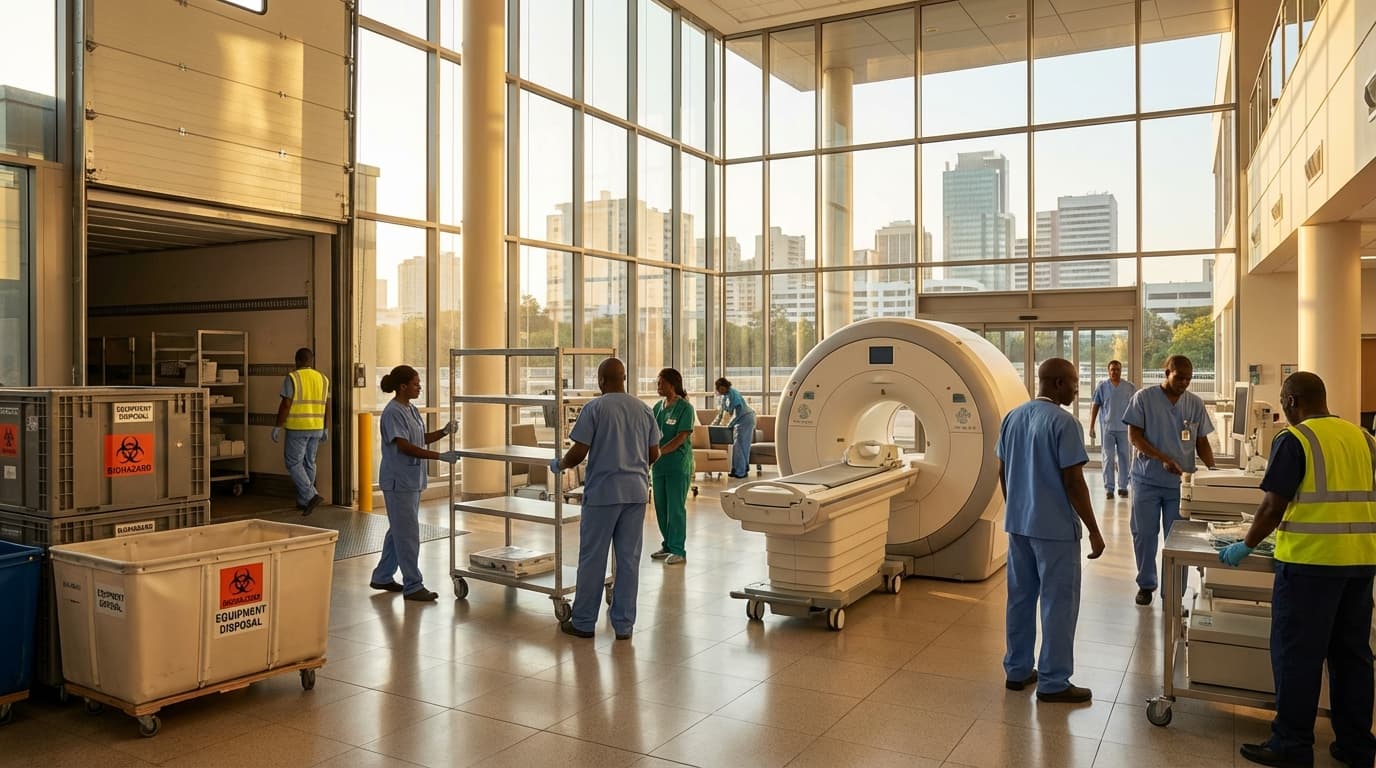
Site Restoration Service After Equipment Removal in Rwanda
Engineering Excellence & Technical Support
Site Restoration Service After Equipment Removal High-standard technical execution following OEM protocols and local regulatory frameworks.
Eco-Restoration & Biodiversity Reintegration
Leveraging advanced phytoremediation techniques and native Rwandan flora to rapidly stabilize disturbed soil, prevent erosion, and re-establish a thriving ecosystem, fostering biodiversity and ecological balance post-equipment removal.
Precision Land Grading & Topsoil Regeneration
Employing GPS-guided machinery for accurate land grading to restore original contours and drainage patterns, coupled with the application of nutrient-rich topsoil and organic amendments to accelerate soil fertility and support future vegetation growth.
Advanced Aerial Survey & Monitoring
Utilizing high-resolution drone imagery for comprehensive site assessment, precise mapping of disturbed areas, and ongoing monitoring of restoration progress. This technology ensures efficient resource allocation and data-driven decision-making for optimal site rehabilitation.
What Is Site Restoration Service After Equipment Removal In Rwanda?
Site Restoration Service After Equipment Removal in Rwanda refers to the comprehensive process of returning a land parcel to its pre-installation or a defined acceptable condition following the deactivation and removal of industrial, commercial, or infrastructural equipment. This service is crucial for mitigating environmental impact, ensuring land usability, and adhering to regulatory compliance. It involves a systematic approach encompassing assessment, remediation, and rehabilitation to address physical disturbances, potential contamination, and ecological impacts.
| Who Needs Site Restoration Service in Rwanda? | Typical Use Cases |
|---|---|
| Industrial Facility Owners/Operators (e.g., mining, manufacturing, energy) | Decommissioning of defunct or relocated factories and processing plants. |
| Infrastructure Project Developers (e.g., telecommunications, energy, transportation) | Removal of old communication towers, abandoned power substations, and former pipeline routes. |
| Agricultural and Agro-processing Companies | Restoration of land after removal of processing machinery or storage facilities. |
| Government and Municipalities | Rehabilitation of sites previously occupied by public utilities or temporary infrastructure. |
| Real Estate Developers | Clearing and preparing land for new development after the removal of temporary construction equipment or former industrial use. |
| Mining and Extractive Industries | Reclamation of mine sites, including the removal of processing equipment and infrastructure. |
Key Components of Site Restoration Service:
- Decommissioning and Demolition: Safe and methodical dismantling of existing structures and equipment.
- Hazardous Material Abatement: Identification, containment, and disposal of any hazardous substances (e.g., asbestos, heavy metals, fuels).
- Contaminant Remediation: Treatment or removal of soil and groundwater contamination resulting from equipment operation or spills.
- Landform Reconstruction: Re-grading and reshaping the land to restore original topography or meet specific land use requirements.
- Soil Management and Amendment: Topsoil replacement, amendment with nutrients, and stabilization to promote revegetation.
- Revegetation and Landscaping: Planting native or appropriate vegetation to restore ecological function and aesthetics.
- Infrastructure Removal and Restoration: Removal of associated infrastructure (e.g., concrete pads, pipelines, fencing) and restoration of the underlying land.
- Monitoring and Verification: Post-restoration monitoring to ensure the site meets established environmental and usability standards.
Who Needs Site Restoration Service After Equipment Removal In Rwanda?
Site restoration services are crucial after equipment removal in Rwanda for any entity that has operated industrial or heavy machinery. This involves returning the site to its original or a pre-agreed condition, mitigating environmental impact, and ensuring safety and compliance. The need arises from various types of equipment, including but not limited to: mining machinery, construction equipment, agricultural machinery, manufacturing production lines, power generation units, and any other heavy-duty installations.
| Target Customer Type | Typical Departments Involved | Specific Needs Post-Equipment Removal |
|---|---|---|
| Mining Companies | Operations, Environmental Health & Safety (EHS), Reclamation, Legal | Soil remediation, regrading, revegetation, removal of contaminated materials, dismantling of surface infrastructure, closure of shafts/pits. |
| Construction Firms | Project Management, Site Management, Health & Safety, Procurement | Removal of temporary structures, filling of excavations, leveling of ground, disposal of construction debris, site reinstatement to original condition. |
| Manufacturing Plants | Operations, Facilities Management, EHS, Maintenance | Decommissioning of production lines, removal of foundations, soil decontamination (if applicable), floor resurfacing, building demolition (if required). |
| Agricultural Cooperatives/Large Farms | Farm Management, Operations, Finance | Removal of large agricultural machinery, leveling of fields, soil restoration for continued agricultural use, removal of fuel storage tanks. |
| Energy Companies (e.g., Power Plants, Solar Farms) | Engineering, Operations, EHS, Asset Management | Decommissioning of turbines, removal of substations, remediation of spills, restoration of land to its former use or ecological condition. |
| Telecommunications Infrastructure Providers | Network Operations, Field Services, Real Estate | Removal of towers, shelters, and associated equipment, site clearing, and potential reinstatement of underground cables. |
| Government Agencies (e.g., Public Works, Roads Department) | Infrastructure Planning, Project Management, Environmental Compliance | Restoration of sites used for temporary construction yards, material storage, or equipment depots for public projects. |
| Real Estate Developers/Landowners (post-lease or sale) | Asset Management, Legal, Development | Ensuring former tenants or lessees have properly restored the site, fulfilling lease agreement obligations, preparing land for new development. |
Key Industries and Sectors Requiring Site Restoration
- Mining and Quarrying
- Construction and Infrastructure Development
- Manufacturing and Industrial Production
- Agriculture and Agribusiness
- Energy Production (including oil, gas, and renewables)
- Telecommunications
- Water and Wastewater Management
- Logistics and Warehousing (with specialized equipment)
- Government and Public Works Projects
Site Restoration Service After Equipment Removal Process In Rwanda
This document outlines the comprehensive workflow for Site Restoration Services following Equipment Removal in Rwanda. Our process is designed to be transparent, efficient, and tailored to meet the specific needs of each project, ensuring a safe, compliant, and environmentally responsible restoration.
| Phase | Key Activities | Deliverables/Outcomes |
|---|---|---|
| Inquiry & Consultation | Client contact, discussion of needs, initial project scope definition. | Understanding of client requirements, preliminary project scope. |
| Site Assessment & Survey | On-site evaluation, environmental impact assessment, data collection (soil, vegetation, etc.). | Detailed site report, identification of restoration needs. |
| Proposal & Planning | Developing detailed plan, methodology, timeline, cost estimation, client review and approval. | Approved Restoration Proposal and Plan. |
| Permitting & Approvals | Submitting applications, liaising with authorities, obtaining necessary permits. | All required permits and regulatory approvals. |
| Site Preparation | Area demarcation, site security, initial cleanup. | Ready-to-execute restoration site. |
| Restoration Execution | Implementing grading, soil work, planting, erosion control, etc. | Visibly restored site according to the plan. |
| Waste Management & Disposal | Segregation, transport, and disposal of waste materials. | Compliant and environmentally sound waste disposal. |
| Monitoring & Quality Control | Regular checks of progress, adherence to standards, problem-solving. | Ensured quality and adherence to the restoration plan. |
| Handover & Documentation | Final inspection, client sign-off, report generation. | Completed restoration, final project report, client acceptance. |
| Follow-up & Maintenance (Optional) | Scheduled site visits, intervention if needed, vegetation care. | Sustained successful restoration. |
Site Restoration Workflow
- 1. Initial Inquiry & Consultation: The process begins with a client initiating contact, expressing their need for site restoration after equipment removal. This is followed by an in-depth consultation to understand the scope of work, site specifics, equipment removed, and desired restoration outcomes.
- 2. Site Assessment & Survey: Our team conducts a thorough site visit to evaluate the condition of the land, identify any environmental impacts from the equipment and its removal, and assess the extent of the restoration required. This includes soil testing, vegetation assessment, and identification of any hazardous materials.
- 3. Proposal & Planning: Based on the site assessment, a detailed proposal is developed. This includes a scope of work, methodology, timelines, cost breakdown, and proposed restoration techniques (e.g., grading, soil remediation, revegetation). Client approval of the proposal initiates the planning phase.
- 4. Permitting & Approvals: We manage all necessary permits and approvals from relevant Rwandan authorities, ensuring compliance with local environmental regulations and land use policies.
- 5. Site Preparation: Prior to execution, the site is prepared. This may involve marking boundaries, securing the area, and removing any residual debris or contaminants not addressed during equipment removal.
- 6. Restoration Execution: This is the core phase where the approved restoration plan is implemented. Activities can include land grading, soil amendment, erosion control, and planting of native vegetation as per the agreed-upon plan.
- 7. Waste Management & Disposal: Any generated waste during the restoration process is managed and disposed of in accordance with Rwandan environmental regulations, prioritizing recycling and responsible disposal of hazardous materials if any are encountered.
- 8. Monitoring & Quality Control: Throughout the execution phase, regular monitoring and quality control checks are performed to ensure the restoration is progressing as planned and meets the highest standards.
- 9. Handover & Documentation: Upon completion of the restoration, a final site inspection is conducted with the client. A comprehensive report is provided, detailing the work performed, materials used, and any post-restoration recommendations. The site is then formally handed over to the client.
- 10. Follow-up & Maintenance (Optional): Depending on the project scope and client requirements, follow-up site visits and maintenance services can be arranged to ensure the long-term success of the restoration effort.
Site Restoration Service After Equipment Removal Cost In Rwanda
Restoring a site after equipment removal in Rwanda involves a range of services designed to return the land to its pre-construction or a specified post-operation condition. The cost of these services is highly variable and depends on several key factors. These factors influence the complexity of the work, the resources required, and the duration of the restoration project. Understanding these elements is crucial for budgeting and planning effectively for site restoration in Rwanda.
| Service Component | Typical Range (RWF) | Notes |
|---|---|---|
| Site Assessment & Planning | 150,000 - 750,000 | Includes initial surveys, soil testing, and development of a restoration plan. |
| Demolition & Decommissioning (if applicable) | 500,000 - 5,000,000+ | Cost depends heavily on the size and complexity of removed structures or foundations. |
| Hazardous Material Remediation (if applicable) | 1,000,000 - 10,000,000+ | Highly variable based on the type and extent of contamination (e.g., oil, chemicals). |
| Earthworks (Grading, Excavation, Filling) | 300,000 - 3,000,000 | Influenced by the volume of earth moved and terrain difficulty. |
| Topsoil Replacement & Amendment | 200,000 - 1,500,000 | Cost of purchasing and spreading quality topsoil and any necessary amendments. |
| Revegetation (Seeding/Planting) | 100,000 - 1,000,000 | Depends on the area size, chosen plant species, and seeding density. |
| Landscaping & Final Finishing | 200,000 - 2,000,000 | Includes mulching, planting of ornamental species, and final site aesthetic touches. |
| Waste Disposal | 50,000 - 500,000+ | Cost of transporting and disposing of debris and contaminated materials legally. |
| Project Management & Supervision | 10% - 20% of total project cost | Covers coordination, quality control, and administrative tasks. |
| Permits & Fees | 50,000 - 500,000 | Varies by local authority and project complexity. |
Key Pricing Factors for Site Restoration in Rwanda
- Scope of Work: This is the most significant factor. It encompasses the extent of the land to be restored, the type of equipment removed (e.g., heavy machinery, tanks, underground pipes), and the degree of disturbance to the soil and surrounding vegetation.
- Site Accessibility: Remote locations or sites with difficult terrain will incur higher transportation costs for personnel, equipment, and materials.
- Environmental Conditions: The existing state of the environment, including soil contamination, presence of hazardous materials, or sensitive ecosystems, will dictate the complexity and cost of remediation and restoration efforts.
- Type of Restoration Required: This can range from simple grading and revegetation to complex soil remediation, landscaping, or the reconstruction of specific natural features.
- Equipment and Labor Costs: The availability and cost of specialized restoration equipment (e.g., excavators, loaders, grading machinery) and skilled labor in Rwanda will directly impact the overall price.
- Materials and Supplies: Costs for topsoil, compost, fertilizers, seeds, plants, and any necessary construction materials for drainage or stabilization are also factored in.
- Permits and Approvals: Obtaining necessary permits from local authorities and regulatory bodies can add to the overall cost and timeline.
- Project Duration: The longer the restoration project takes, the higher the labor and equipment rental costs will be.
- Contractor's Overhead and Profit: Like any service, contractors will include their operational costs, insurance, and a profit margin in their quotes.
- Regulatory Requirements: Specific environmental regulations in Rwanda or contractual obligations might necessitate certain restoration standards or methods, potentially increasing costs.
Affordable Site Restoration Service After Equipment Removal Options
Removing heavy equipment from a site, whether for construction, demolition, or remediation, often leaves behind a disturbed landscape. Site restoration is crucial for returning the area to a safe, functional, and aesthetically pleasing state. This service can involve grading, soil amendment, seeding, planting, and debris removal. To make this essential process more accessible, many providers offer affordable site restoration services through value bundles and strategic cost-saving measures. Understanding these options can significantly reduce the overall expense while ensuring a high-quality outcome.
| Value Bundle Type | Description | Cost-Saving Strategies Included |
|---|---|---|
| Basic Restoration Bundle | Focuses on essential tasks to make the site usable and safe. Includes grading, basic debris removal, and minimal soil amendment. | Standardized service package, bulk material purchasing, efficient crew deployment. |
| Eco-Friendly Restoration Bundle | Prioritizes sustainable practices, such as using recycled materials for fill, native plant species for revegetation, and minimizing soil disturbance. | Use of salvaged materials, selection of drought-tolerant/low-maintenance plants, reduced water usage for establishment. |
| Comprehensive Restoration Bundle | Offers a full-service solution, including advanced landscaping, soil testing and correction, and long-term vegetation establishment. | Integrated project management, optimized resource allocation, potential for phased implementation to spread costs. |
| Seasonal Special Bundles | Offered during off-peak seasons or with specific plant availability, often at a reduced rate. | Leveraging seasonal labor availability, discounted pricing on dormant plant materials. |
Key Components of Site Restoration
- Site assessment and planning
- Debris and material removal
- Grading and leveling the land
- Soil compaction remediation
- Soil amendment and enrichment
- Erosion control measures
- Seeding, sodding, or planting vegetation
- Final site cleanup and inspection
Verified Providers In Rwanda
Ensuring access to high-quality healthcare is paramount in Rwanda. The Rwandan Ministry of Health, through rigorous accreditation processes, identifies and certifies healthcare providers who meet stringent standards. Franance Health stands out among these verified providers, consistently demonstrating excellence in patient care, medical expertise, and operational integrity. Their commitment to these principles makes them a distinguished choice for individuals seeking reliable and effective medical services in Rwanda.
| Service Area | Key Differentiators | Benefits for Patients |
|---|---|---|
| Primary Care | Experienced general practitioners, accessible appointments, comprehensive health assessments | Early detection and management of common illnesses, personalized health advice |
| Specialized Clinics (e.g., Cardiology, Pediatrics) | Board-certified specialists, advanced diagnostic tools, tailored treatment plans | Expert management of complex conditions, access to specialized expertise |
| Diagnostic Services | Modern laboratory equipment, efficient turnaround times, accurate and reliable results | Prompt diagnosis, informed treatment decisions |
| Preventative Health Programs | Health education workshops, vaccination services, screening programs | Reduced risk of disease, improved long-term health outcomes |
Why Franance Health is a Top Verified Provider in Rwanda:
- Rigorous Accreditation: Franance Health has successfully navigated the Rwandan Ministry of Health's comprehensive verification and accreditation process.
- Commitment to Quality: They consistently adhere to the highest standards of medical practice, patient safety, and ethical conduct.
- Skilled Professionals: Franance Health employs highly qualified and experienced medical practitioners across various specializations.
- State-of-the-Art Facilities: Their facilities are equipped with modern technology and infrastructure to support advanced medical treatments.
- Patient-Centric Approach: A strong emphasis is placed on delivering compassionate and personalized care to every patient.
Scope Of Work For Site Restoration Service After Equipment Removal
This Scope of Work (SOW) details the requirements for site restoration services following the removal of equipment. The objective is to return the affected site to a safe, environmentally sound, and aesthetically acceptable condition as per regulatory standards and client specifications. This document outlines the technical deliverables, standard specifications, and general requirements for all restoration activities.
| Activity | Description | Technical Deliverables | Standard Specifications/References |
|---|---|---|---|
| Site Assessment & Characterization | Initial survey to identify the extent of disturbance, potential contamination, and existing site conditions. Includes photographic documentation. | Site assessment report, photographic records, preliminary remediation plan. | ASTM E1527-13 (Phase I Environmental Site Assessment), client-provided site plans. |
| Surface Preparation | Removal of any residual construction debris, equipment mounting hardware, and preparation of the ground surface for restoration. | Cleaned and graded surface, documentation of removed materials. | OSHA safety standards, client-specific site preparation guidelines. |
| Decontamination & Cleaning | Cleaning of any affected surfaces (e.g., concrete pads, walls) using approved methods to remove residues. | Cleaning logs, material safety data sheets (MSDS) for cleaning agents, verification of cleaning effectiveness (visual or analytical). | Manufacturer's recommendations for cleaning agents, client-approved cleaning protocols. |
| Soil Excavation & Remediation (if required) | Excavation and disposal of contaminated soil, or in-situ treatment if feasible and approved. | Excavated soil manifests, analytical reports for excavated soil, confirmation soil sampling reports, remediation completion report. | EPA RCRA regulations, state/local environmental regulations (e.g., 40 CFR Part 261), relevant ASTM soil sampling standards (e.g., D1452, D4768). |
| Subsurface Restoration | Backfilling of excavated areas with approved fill material, compaction to specified density. | Compaction test results, certified fill material documentation, site grading plan. | Client-specified compaction density (e.g., 95% Standard Proctor), relevant geotechnical engineering standards. |
| Surface Restoration (Paving/Concrete) | Repair or replacement of damaged pavement or concrete surfaces to match existing grade and material. | As-built drawings of repaired/replaced surfaces, material certifications. | ACI 301 (Specifications for Structural Concrete), AASHTO (American Association of State Highway and Transportation Officials) standards for pavement repair. |
| Surface Restoration (Landscaping) | Restoration of disturbed landscaped areas, including topsoil placement, seeding/sodding, and planting as specified. | Site grading plan, list of materials used (topsoil, seed, plants), photographic documentation of completed landscaping. | Client-specified native plant species list, local horticultural guidelines, soil erosion control standards. |
| Waste Management & Disposal | Proper segregation, transportation, and disposal of all removed materials and waste streams in accordance with regulatory requirements. | Waste manifests, disposal certificates, waste characterization reports (if applicable). | RCRA regulations, DOT hazardous materials transportation regulations, local landfill acceptance criteria. |
| Final Inspection & As-Built Documentation | Joint walk-through with client representative, submission of all project documentation. | Final inspection report, sign-off form, complete set of as-built drawings, final project report including all technical deliverables. | Client-approved final inspection checklist, project-specific documentation requirements. |
Key Restoration Phases
- Site Assessment and Preparation
- Decontamination and Cleaning
- Soil Remediation (if applicable)
- Surface Restoration (e.g., paving, landscaping)
- Waste Management and Disposal
- Final Inspection and Documentation
Service Level Agreement For Site Restoration Service After Equipment Removal
This Service Level Agreement (SLA) outlines the commitment for site restoration services following the removal of equipment. It defines response times for incidents and guarantees a specific level of service availability for the restoration process.
| Service Level | Response Time Target | Uptime Guarantee (Restoration Process) |
|---|---|---|
| Critical Incident: (e.g., significant environmental impact, safety hazard) | 1 Hour (initiation of action after notification) | 99.5% Availability (during active restoration phases) |
| Major Incident: (e.g., substantial deviation from restoration plan) | 4 Business Hours (initiation of action after notification) | 98% Availability (during active restoration phases) |
| Minor Incident: (e.g., minor delays, aesthetic issues) | 8 Business Hours (initiation of action after notification) | 95% Availability (during active restoration phases) |
Key Service Components
- Incident Definition: An incident is defined as any disruption to the agreed-upon site restoration process that requires immediate attention to prevent further deterioration or delay.
- Restoration Scope: The scope of restoration includes [Specify the scope, e.g., re-grading, reseeding, repairing minor structural damage, debris removal, etc.].
- Exclusions: This SLA does not cover [Specify exclusions, e.g., major structural repairs, damage caused by external factors not related to equipment removal, etc.].
- Reporting: All incidents must be reported through [Specify reporting method, e.g., dedicated ticketing system, email, phone number] to initiate the response process.
Frequently Asked Questions

Ready when you are
Let's scope your Site Restoration Service After Equipment Removal in Rwanda project in Rwanda.

Scaling healthcare logistics and technical systems across the entire continent.