
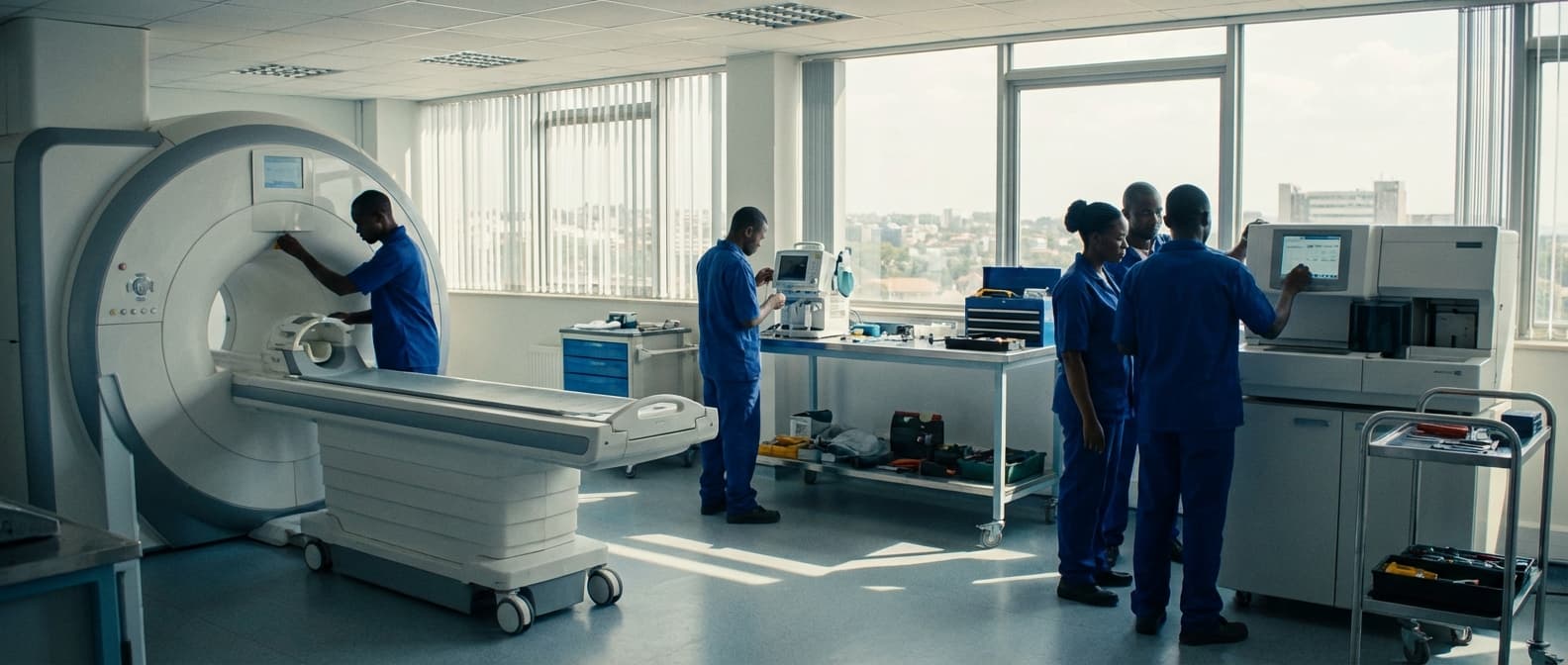
Uptime, Downtime & Root-Cause Analysis Reporting Service in Rwanda
Engineering Excellence & Technical Support
Uptime, Downtime & Root-Cause Analysis Reporting Service High-standard technical execution following OEM protocols and local regulatory frameworks.
Proactive Uptime Assurance
Leverage our advanced monitoring infrastructure to detect and alert on potential service disruptions in real-time across Rwanda. Minimize business impact with our swift response protocols and continuous uptime verification.
Rapid Downtime Recovery
Experience accelerated recovery from unexpected outages. Our service provides immediate diagnostics and actionable insights to pinpoint the source of downtime, enabling swift resolution and restoration of critical services for Rwandan businesses.
Comprehensive Root-Cause Reporting
Gain clarity and prevent future incidents with detailed root-cause analysis reports. We meticulously document every downtime event, identifying underlying issues and providing data-driven recommendations to enhance system resilience and performance in Rwanda.
What Is Uptime, Downtime & Root-cause Analysis Reporting Service In Rwanda?
Uptime, Downtime & Root-Cause Analysis (RCA) Reporting Service in Rwanda refers to a professional offering designed to monitor, document, and analyze the operational availability and unavailability of IT infrastructure and critical business systems. This service aims to provide actionable insights into system performance, identify the underlying causes of disruptions, and recommend corrective actions to enhance reliability and minimize future outages. It encompasses continuous surveillance of system health metrics, automated alerts for deviations, incident logging, and post-incident forensic analysis to pinpoint the originating factors of downtime. The ultimate goal is to improve the resilience and efficiency of IT operations for businesses operating within or targeting the Rwandan market.
| Who Needs This Service? | Typical Use Cases |
|---|---|
| Enterprises with critical IT infrastructure: Organizations heavily reliant on servers, networks, databases, and cloud services for daily operations. | Financial Institutions (Banks, Microfinance): Ensuring uninterrupted service for transactions, online banking, and ATM networks is paramount for customer trust and regulatory compliance. |
| Telecommunication Providers: Maintaining high availability for voice, data, and internet services directly impacts subscriber satisfaction and revenue. | Government Agencies & Public Services: Ensuring continuous access to essential services like e-government portals, healthcare systems, and public safety networks. |
| E-commerce Platforms & Online Businesses: Downtime directly translates to lost sales, customer churn, and brand damage. | Healthcare Providers: Uninterrupted access to patient records, diagnostic systems, and communication tools is critical for patient care and emergency response. |
| Cloud Service Providers & SaaS Vendors: Demonstrating and guaranteeing uptime to their clients is a core value proposition. | Manufacturing & Industrial Control Systems (ICS): Minimizing production stoppages by ensuring the reliability of operational technology (OT) and IT systems. |
| Any business operating in Rwanda experiencing performance issues or seeking to optimize IT resilience. | IT Operations Teams: To gain visibility into system health, track incident resolution times, and justify resource allocation for infrastructure improvements. |
| Business Continuity & Disaster Recovery (BC/DR) Planning: RCA findings are crucial inputs for strengthening BC/DR strategies and minimizing the impact of future disruptions. | |
| Vendor Performance Management: Evaluating the uptime and reliability provided by third-party IT service providers against contractual SLAs. | |
| Capacity Planning & Performance Tuning: Identifying performance bottlenecks and trends that necessitate upgrades or optimizations. |
Key Components of Uptime, Downtime & RCA Reporting Service
- Uptime Monitoring: Continuous tracking of system availability and performance against defined Service Level Agreements (SLAs). This includes metrics like response times, transaction success rates, and resource utilization.
- Downtime Detection & Alerting: Real-time notification of system outages or performance degradation exceeding predefined thresholds via various channels (email, SMS, dashboards).
- Incident Logging & Management: Comprehensive recording of all detected incidents, including timestamps, affected systems, impact assessment, and resolution steps.
- Root-Cause Analysis (RCA): In-depth investigation into the origin of downtime events, employing methodologies like the '5 Whys', Fishbone diagrams, or Fault Tree Analysis to identify the fundamental issues.
- Reporting & Dashboards: Generation of regular reports detailing uptime percentages, downtime durations, incident trends, RCA findings, and recommended remediation strategies. Interactive dashboards for real-time visibility.
- SLA Compliance Tracking: Verification and reporting against agreed-upon service level objectives to ensure vendor or internal team accountability.
- Proactive Recommendations: Identification of potential vulnerabilities and suggestions for system enhancements, preventative maintenance, or process improvements based on RCA findings.
Who Needs Uptime, Downtime & Root-cause Analysis Reporting Service In Rwanda?
In today's highly interconnected and competitive business landscape, reliable IT infrastructure is not just a convenience; it's a critical necessity. Organizations in Rwanda, regardless of their sector, are increasingly reliant on their digital systems to operate, serve customers, and drive growth. This dependence makes the ability to maintain continuous operations (uptime), understand and address service interruptions (downtime), and proactively identify and resolve underlying issues (root-cause analysis) paramount. A dedicated reporting service for these critical aspects provides invaluable insights, enabling businesses to optimize performance, minimize financial losses, enhance customer satisfaction, and maintain a competitive edge.
| Target Customers (Industry/Sector) | Key Departments Benefiting | Specific Needs Addressed |
|---|---|---|
| Telecommunications | Network Operations Center (NOC), Service Assurance, Engineering | Monitoring network uptime, identifying service degradation, proactive issue resolution to minimize subscriber impact. |
| Banking & Financial Services | IT Operations, Risk Management, Compliance, Customer Support | Ensuring 24/7 availability of banking platforms, preventing financial losses due to outages, meeting stringent regulatory uptime requirements. |
| E-commerce & Retail | E-commerce Operations, IT Infrastructure, Marketing, Customer Service | Maximizing online sales by ensuring website and payment gateway uptime, understanding customer journey disruptions, swift resolution of technical glitches. |
| Government & Public Sector | IT Departments, Service Delivery Units, Citizen Support | Maintaining essential public services (e.g., online portals, digital ID systems), ensuring citizen access, improving efficiency and reliability of government IT systems. |
| Healthcare | IT Operations, Clinical Support Systems, Administration | Ensuring availability of Electronic Health Records (EHR), medical imaging systems, and patient portals for uninterrupted patient care and administrative efficiency. |
| Manufacturing & Logistics | Operations Management, IT Operations, Supply Chain Management | Monitoring production line uptime, ensuring smooth operation of supply chain software, minimizing disruptions to goods movement and delivery. |
| Hospitality & Tourism | IT Operations, Reservations & Booking, Guest Services | Ensuring booking systems and website availability, maintaining guest Wi-Fi and in-room technology, providing seamless customer experiences. |
| Small & Medium Enterprises (SMEs) | General Management, IT Support (internal or outsourced) | Optimizing limited IT resources, preventing business disruptions due to technical issues, ensuring core business applications remain functional. |
Who Needs Uptime, Downtime & Root-Cause Analysis Reporting Service in Rwanda?
- Businesses of all sizes experiencing reliance on IT systems for daily operations.
- Organizations seeking to improve service delivery and customer experience.
- Companies aiming to reduce operational costs associated with IT failures.
- Sectors heavily dependent on digital platforms, e-commerce, and online services.
- Enterprises looking to meet regulatory compliance and audit requirements related to system availability.
Uptime, Downtime & Root-cause Analysis Reporting Service Process In Rwanda
This document outlines the Uptime, Downtime & Root-Cause Analysis Reporting Service Process in Rwanda. The service aims to provide clients with comprehensive reports on system availability, identify causes of failures, and recommend corrective actions to improve reliability. The workflow begins with an initial inquiry and progresses through data collection, analysis, reporting, and follow-up.
| Stage | Description | Key Activities | Responsible Party | Output/Deliverable |
|---|---|---|---|---|
| Initial contact from a client seeking uptime, downtime, and root-cause analysis reporting services. | Client expresses interest, service provider clarifies scope, pricing, and service level agreements (SLAs). | Client, Service Provider | Signed Service Agreement/Contract |
| Establishing the necessary infrastructure and configurations to monitor client systems. | Installation and configuration of monitoring tools, defining key performance indicators (KPIs) for uptime/downtime, setting up alert thresholds. | Service Provider, Client (for access/information) | Configured Monitoring System, Defined KPIs |
| Real-time identification of system outages or performance degradations. | Automated alerts triggered by monitoring tools when predefined thresholds are breached, immediate notification to designated client personnel and the service provider's incident response team. | Monitoring System, Service Provider (Incident Response) | Downtime Incident Alert, Initial Incident Log |
| Investigating the underlying reasons for downtime incidents. | Gathering logs, configuration data, system metrics, interviewing relevant personnel, employing RCA methodologies (e.g., 5 Whys, Fishbone Diagram), identifying contributing factors. | Service Provider (RCA Specialists), Client (for information/access) | Identified Root Cause(s), Contributing Factors Document |
| Compiling comprehensive reports based on collected data and RCA findings. | Aggregating uptime/downtime statistics, detailing incident timelines, presenting RCA findings, quantifying impact (e.g., lost productivity, financial loss), formulating recommendations. | Service Provider (Analysts/Reporting Team) | Draft Uptime, Downtime & RCA Report |
| Sharing the generated report with the client and explaining the findings. | Formal submission of the report, scheduled presentation meeting with client stakeholders to discuss findings, answer questions, and clarify details. | Service Provider (Account Manager, Analysts) | Final Uptime, Downtime & RCA Report, Presentation Session |
| Assisting the client in implementing recommendations and monitoring their effectiveness. | Providing guidance on corrective actions, offering consulting services for implementation, scheduling follow-up reviews to assess the impact of implemented changes on system uptime. | Client (for implementation), Service Provider (for guidance/monitoring) | Implemented Corrective Actions, Follow-up Monitoring Data, Updated System Performance Metrics |
Key Stages of the Uptime, Downtime & Root-Cause Analysis Reporting Service Process
- Inquiry and Service Engagement
- Data Collection and Monitoring Setup
- Downtime Incident Detection and Notification
- Root-Cause Analysis (RCA)
- Report Generation
- Report Delivery and Presentation
- Recommendation Implementation and Follow-up
Uptime, Downtime & Root-cause Analysis Reporting Service Cost In Rwanda
The cost of Uptime, Downtime, and Root-Cause Analysis (RCA) reporting services in Rwanda can vary significantly based on several key factors. These services are crucial for businesses to understand their system availability, identify the reasons behind disruptions, and implement preventative measures. When seeking such services in Rwanda, consider the complexity of your infrastructure, the required depth of analysis, the frequency of reporting, and the vendor's expertise and reputation.
Pricing Factors:
- Infrastructure Complexity: The number and type of systems (servers, networks, applications, cloud services) being monitored and analyzed directly impact the cost. A complex, distributed environment will require more sophisticated tools and greater expertise to cover comprehensively.
- Data Volume and Granularity: The amount of data generated by your systems and the level of detail required for analysis (e.g., real-time vs. historical, specific event logs) influence processing and storage costs.
- Reporting Frequency and Customization: Standard, periodic reports are generally less expensive than highly customized, real-time, or on-demand reports. The format and delivery method of reports (e.g., dashboards, detailed PDF documents, API integrations) also play a role.
- Root-Cause Analysis Depth: Basic uptime/downtime tracking is simpler than in-depth RCA that involves forensic analysis, correlation of multiple events, and recommendations for mitigation. The level of investigation required will dictate the labor and expertise needed.
- Vendor Expertise and Reputation: Established IT service providers or specialized monitoring companies with a proven track record and deep expertise in RCA will likely command higher fees but may offer more comprehensive and reliable services.
- Service Level Agreements (SLAs): The specific uptime guarantees and response times for reporting and analysis outlined in an SLA will influence the pricing. Higher availability and faster response usually come at a premium.
- Tooling and Technology: The proprietary or third-party tools used for monitoring and analysis can impact costs, especially if specialized software licenses are involved.
- Duration of Engagement: One-time RCA projects might be priced differently from ongoing monitoring and reporting contracts.
Pricing Ranges in Rwandan Francs (RWF):
Given the developing IT service landscape in Rwanda, precise standardized pricing can be elusive. However, based on typical service models and considering local market conditions, the following ranges are indicative. These are estimates and can vary substantially. It's highly recommended to get custom quotes from multiple providers.
- Basic Uptime/Downtime Monitoring & Reporting (Monthly): For smaller businesses with straightforward IT setups, this might involve basic monitoring tools and standard reports.
* **Range:** RWF 150,000 - RWF 500,000 per month.
- Standard Uptime/Downtime & Basic RCA Reporting (Monthly): This level includes more comprehensive monitoring, potentially across a few more systems, with regular reports and initial RCA for identified incidents.
* **Range:** RWF 400,000 - RWF 1,500,000 per month.
- Advanced Uptime/Downtime & In-Depth RCA Reporting (Monthly/Project-Based): For larger enterprises or those with critical infrastructure, this involves sophisticated monitoring, granular data analysis, and thorough, detailed RCA for all significant incidents. This could also be a project-based cost for a one-off in-depth analysis.
* **Range:** RWF 1,000,000 - RWF 5,000,000+ per month, or project fees starting from RWF 2,000,000 for specific RCA investigations.
| Service Level | Estimated Monthly Cost (RWF) | Typical Scope |
|---|---|---|
| Basic Uptime/Downtime Monitoring & Reporting | 150,000 - 500,000 | Small businesses, limited systems, standard reports |
| Standard Uptime/Downtime & Basic RCA Reporting | 400,000 - 1,500,000 | Medium businesses, multiple systems, regular reports, initial RCA |
| Advanced Uptime/Downtime & In-Depth RCA Reporting | 1,000,000 - 5,000,000+ | Large enterprises, critical infrastructure, detailed analysis, custom reports |
| One-time In-depth RCA Project | Starting from 2,000,000 | Specific incident investigation, detailed findings and recommendations |
Key Pricing Factors for Uptime, Downtime & RCA Reporting Services in Rwanda
- Infrastructure Complexity
- Data Volume and Granularity
- Reporting Frequency and Customization
- Root-Cause Analysis Depth
- Vendor Expertise and Reputation
- Service Level Agreements (SLAs)
- Tooling and Technology
- Duration of Engagement
Affordable Uptime, Downtime & Root-cause Analysis Reporting Service Options
Ensuring application uptime and proactively addressing downtime are critical for business success. However, comprehensive reporting on uptime, downtime events, and detailed root-cause analysis (RCA) can often come with a hefty price tag. This document outlines affordable service options, highlighting the value found in bundled offerings and effective cost-saving strategies.
| Service Bundle | Description | Target Audience | Estimated Cost Range (Monthly) | Value Proposition |
|---|---|---|---|---|
| Basic Uptime Monitor | Core uptime tracking and basic alerting. Limited RCA. | Small businesses, startups with simple infrastructure. | $20 - $75 | Essential visibility into service availability at a low entry cost. |
| Standard Uptime & Incident Reporter | Enhanced uptime monitoring, detailed downtime incident logging, and basic RCA templates. | Growing businesses, SaaS providers with moderate complexity. | $75 - $250 | Provides actionable data on downtime and initial insights into causes. |
| Comprehensive Uptime & RCA Suite | Advanced monitoring, proactive anomaly detection, in-depth automated RCA, historical trend analysis, and integration capabilities. | Medium to large enterprises, mission-critical applications. | $250 - $1000+ | Minimizes downtime through thorough analysis, improves operational efficiency, and supports continuous improvement. |
| Customizable Enterprise Solution | Tailored monitoring, AI-driven RCA, bespoke reporting dashboards, SLA compliance tracking, and dedicated support. | Large enterprises with unique requirements, complex hybrid cloud environments. | Custom Quote (often starting from $1000+) | Unparalleled insight and control over uptime and operational resilience. |
Key Reporting Service Components
- Uptime Monitoring & Reporting: Tracks availability of services, applications, and infrastructure.
- Downtime Incident Tracking: Logs the occurrence, duration, and impact of service disruptions.
- Root-Cause Analysis (RCA): Investigates the underlying reasons for downtime events to prevent recurrence.
- Performance Metrics Reporting: Collects and analyzes data on system performance, often correlated with downtime.
- Alerting & Notification Systems: Notifies relevant personnel about uptime deviations and critical incidents.
Verified Providers In Rwanda
In Rwanda's burgeoning healthcare landscape, identifying trustworthy and competent healthcare providers is paramount for individuals and organizations seeking quality medical services. Franance Health stands out as a beacon of reliability, offering a comprehensive suite of services backed by stringent credentialing processes. Their commitment to excellence and adherence to international standards make them a top-tier choice for a wide range of healthcare needs. This document outlines the key credentials of Franance Health and elaborates on why they represent the best choice for verified healthcare in Rwanda.
| Reason | Benefit to Patients | Franance Health's Commitment |
|---|---|---|
| Verified Competence of Medical Professionals | Ensures accurate diagnoses, effective treatments, and reduced risk of medical errors. | Thorough credentialing, ongoing training, and adherence to professional standards. |
| Commitment to Quality and Safety | Provides a secure and reliable healthcare environment, prioritizing patient well-being. | Strict adherence to national and international quality assurance protocols and patient safety measures. |
| Access to Advanced Medical Care | Offers a wider range of specialized services and access to the latest medical technologies. | Investment in modern infrastructure and technology, alongside a highly skilled and diverse medical team. |
| Trust and Reliability | Builds confidence and peace of mind, knowing you are receiving care from reputable and accountable providers. | Transparency in operations, ethical practices, and a proven track record of excellent patient care. |
| Compliance with Regulations | Guarantees that services meet the highest legal and ethical standards set by the Rwandan government. | Full licensing and accreditation by the Rwandan Ministry of Health and relevant regulatory bodies. |
Key Credentials of Franance Health
- Accreditation by National Health Authorities: Franance Health is fully licensed and accredited by the Rwandan Ministry of Health, ensuring compliance with all national healthcare regulations and quality standards.
- International Certifications and Partnerships: The organization actively pursues and maintains relevant international certifications and fosters partnerships with globally recognized healthcare institutions, demonstrating a commitment to best practices.
- Rigorous Professional Staff Vetting: All medical professionals employed by Franance Health undergo a comprehensive vetting process, including verification of academic qualifications, professional licenses, and continuous professional development records.
- Specialized Training and Expertise: Franance Health prioritizes continuous training for its staff, ensuring they are up-to-date with the latest medical advancements, technologies, and treatment protocols in their respective fields.
- Robust Quality Assurance and Patient Safety Protocols: The organization implements a strong quality assurance framework, with a keen focus on patient safety, infection control, and evidence-based medical practices.
- Ethical Practice and Patient Confidentiality: Franance Health adheres to the highest ethical standards in healthcare delivery, with a strict policy on patient confidentiality and transparent communication.
- Technological Integration and Modern Infrastructure: Investment in modern medical equipment and technology underscores Franance Health's dedication to providing advanced diagnostic and treatment capabilities.
Scope Of Work For Uptime, Downtime & Root-cause Analysis Reporting Service
This Scope of Work (SOW) outlines the requirements for a comprehensive Uptime, Downtime & Root-Cause Analysis (RCA) Reporting Service. The service aims to provide detailed, actionable insights into system availability and the underlying causes of any disruptions. The technical deliverables will be standardized to ensure consistency and ease of integration into client reporting systems. This SOW covers the scope of work, technical deliverables, and standard specifications for the service.
| Deliverable | Description | Format | Frequency/Trigger | Standard Specification |
|---|---|---|---|---|
| Uptime Report | Provides a summary of system availability over a defined period, including uptime percentages and key availability metrics. | PDF, CSV, JSON | Weekly, Monthly, Quarterly | Includes: System Name, Uptime Percentage, Total Uptime Hours, Total Downtime Hours, Service Level Agreement (SLA) Compliance Status. |
| Downtime Incident Report | Details specific instances of system downtime, including duration, impact, and initial assessment. | PDF, JSON | Per Incident (within X hours of detection) | Includes: Incident ID, System Name, Start Time, End Time, Duration, Impact Assessment, Initial Cause Hypothesis. |
| Root-Cause Analysis (RCA) Report | A comprehensive investigation into the underlying causes of downtime incidents, including contributing factors and recommended preventive actions. | PDF, JSON | Per Incident (within Y hours of incident resolution) | Includes: Incident ID, Detailed Timeline of Events, Root Cause Identification, Contributing Factors, Impact Analysis, Corrective Actions Taken, Preventive Recommendations, Lessons Learned. |
| Executive Summary Dashboard | A high-level overview of system availability trends, major incidents, and overall system health. | Web-based Dashboard / Interactive PDF | Weekly, Monthly | Visualizations of uptime trends, top downtime causes, SLA status, and recent critical incidents. |
Scope of Work
- Proactive monitoring of designated systems and applications for availability.
- Real-time alerting and notification for any detected downtime events.
- Comprehensive data collection during downtime events, including system logs, performance metrics, and environmental factors.
- In-depth root-cause analysis (RCA) for all identified downtime incidents.
- Generation of standardized Uptime, Downtime, and RCA reports.
- Timely delivery of reports to designated stakeholders.
- Adherence to agreed-upon service level agreements (SLAs) for incident response and reporting turnaround times.
- Continuous improvement of monitoring and analysis methodologies based on historical data and feedback.
Service Level Agreement For Uptime, Downtime & Root-cause Analysis Reporting Service
This Service Level Agreement (SLA) outlines the guaranteed uptime, acceptable downtime, and reporting procedures for the Root-Cause Analysis (RCA) service. It defines response times for critical incidents and establishes the framework for clear communication during service disruptions.
| Metric | Guarantee/Target | Description | Reporting Interval |
|---|---|---|---|
| Monthly Uptime Guarantee | 99.9% | The RCA service will be available 99.9% of the time in a given calendar month, excluding Scheduled Downtime. | Monthly |
| Maximum Unscheduled Downtime per Month | 43.2 minutes | The total duration of Unscheduled Downtime in a given calendar month will not exceed 43.2 minutes. | Monthly |
| Scheduled Downtime | Max 4 hours per quarter | Scheduled Downtime will be announced at least 7 days in advance and will be limited to a maximum of 4 hours per quarter. Notification will include the planned duration and purpose. | Quarterly Announcement |
| Critical Incident Response Time (Acknowledgement) | Within 15 minutes | For Critical Incidents, the support team will acknowledge the incident and initiate investigation within 15 minutes of receipt. | Per Incident |
| Critical Incident Update Frequency | Every 30 minutes | During an active Critical Incident, updates on the investigation and expected resolution will be provided every 30 minutes. | Per Incident |
| Root-Cause Analysis (RCA) Report Delivery | Within 5 business days of incident resolution | A comprehensive RCA report detailing the cause, impact, and preventative measures will be delivered within 5 business days of the resolution of a Critical Incident. | Per Incident |
Key Definitions
- Uptime: The percentage of time the RCA service is available and operational.
- Downtime: The percentage of time the RCA service is unavailable or not operational.
- Scheduled Downtime: Pre-announced periods when the RCA service will be unavailable for planned maintenance or upgrades.
- Unscheduled Downtime: Any period when the RCA service is unavailable or not operational that was not previously announced as Scheduled Downtime.
- Critical Incident: An event that renders the RCA service entirely unavailable or causes significant degradation of core functionality, impacting all users.
- Root-Cause Analysis (RCA): A systematic process of identifying the underlying causes of a problem or incident.
- Response Time: The time taken for the support team to acknowledge and begin actively working on a reported incident.
Frequently Asked Questions

Ready when you are
Let's scope your Uptime, Downtime & Root-Cause Analysis Reporting Service in Rwanda project in Rwanda.

Scaling healthcare logistics and technical systems across the entire continent.