
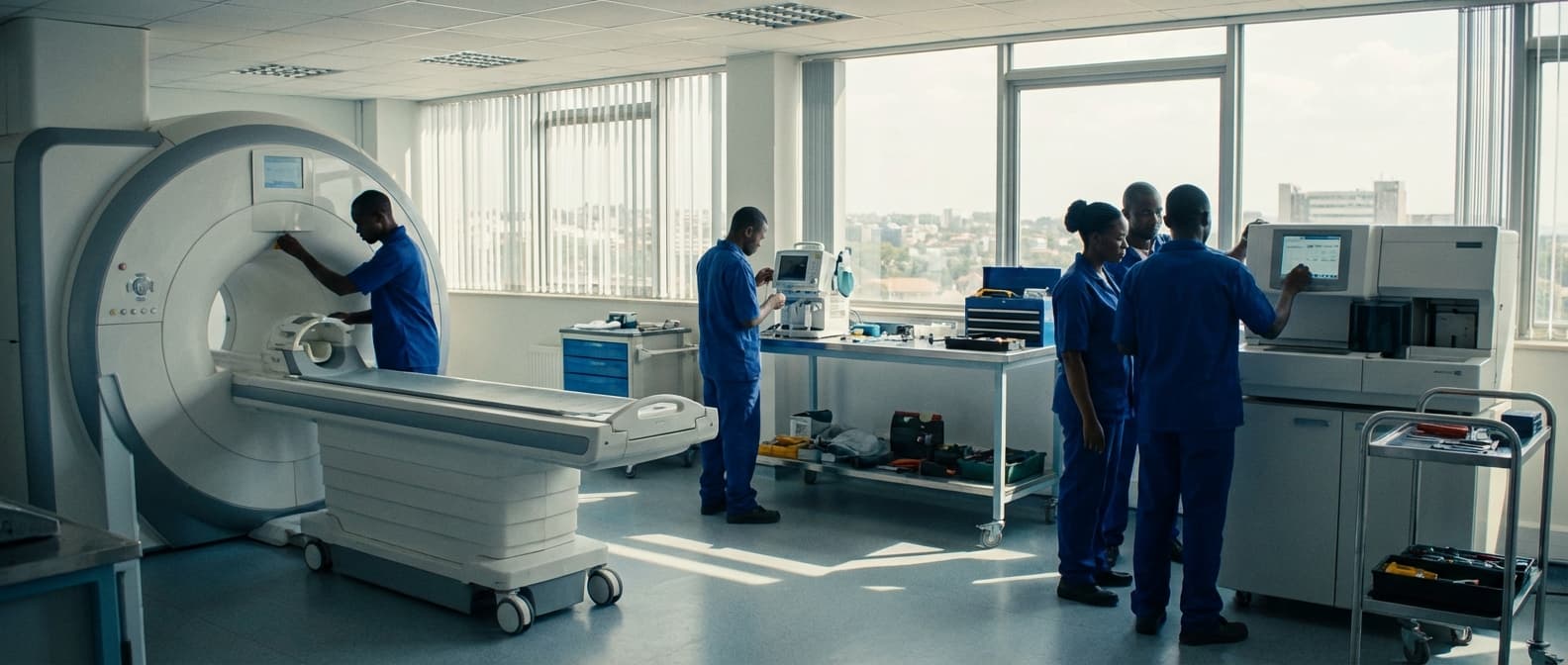
Preventive Maintenance Visit Service (On-Demand) in Rwanda
Engineering Excellence & Technical Support
Preventive Maintenance Visit Service (On-Demand) High-standard technical execution following OEM protocols and local regulatory frameworks.
Proactive Equipment Health Monitoring
Leverage our on-demand preventive maintenance service in Rwanda to schedule regular, expert-led inspections of your critical assets. We go beyond simple fixes, employing advanced diagnostic tools to identify potential issues before they escalate, ensuring uninterrupted operations and minimizing costly downtime.
Optimized Asset Longevity & Performance
Our skilled technicians in Rwanda provide meticulous, scheduled maintenance tailored to your specific equipment. By adhering to manufacturer recommendations and best practices, we ensure your machinery operates at peak efficiency, extending its lifespan and maximizing your return on investment.
Rapid Response & Expert On-Demand Support
When you need it most, our on-demand preventive maintenance service offers swift and reliable support across Rwanda. Our certified technicians are equipped to handle scheduled inspections and address minor issues during these visits, preventing minor problems from becoming major breakdowns and keeping your business running smoothly.
What Is Preventive Maintenance Visit Service (On-demand) In Rwanda?
Preventive Maintenance Visit Service (On-Demand) in Rwanda refers to a proactive and scheduled service intervention for mechanical, electrical, or electro-mechanical equipment designed to minimize the likelihood of failure or degradation. Unlike reactive or breakdown maintenance, this service is initiated before a malfunction occurs, aiming to maintain optimal performance, extend asset lifespan, and ensure operational reliability. The 'On-Demand' aspect signifies that the service can be requested and scheduled by the asset owner or operator at a time of their choosing, rather than being part of a rigid, pre-determined contract, though it can also be integrated into such agreements. This service is crucial for industries and individuals reliant on the consistent and efficient functioning of their equipment. It involves a systematic inspection, cleaning, lubrication, calibration, testing, and replacement of worn-out or aging components based on manufacturer recommendations, operational history, and expert assessment. The primary objective is to detect and rectify minor issues before they escalate into significant failures, thereby preventing costly downtime, repair expenses, and potential safety hazards. The service is typically performed by certified technicians or specialized maintenance providers equipped with the necessary diagnostic tools and expertise.
| Who Needs Preventive Maintenance Visit Service (On-Demand)? | Typical Use Cases in Rwanda |
|---|---|
| Industrial Sector: Manufacturers, processing plants, energy producers, and mining operations relying on heavy machinery and production lines. | Maintenance of industrial generators, pumps, compressors, conveyor systems, and processing machinery in factories and agricultural processing units. |
| Commercial Sector: Businesses with critical infrastructure that requires continuous operation, such as data centers, telecommunications providers, and large retail establishments. | Servicing of HVAC systems, uninterruptible power supplies (UPS), backup generators, and network equipment in commercial buildings and critical infrastructure. |
| Healthcare Sector: Hospitals, clinics, and laboratories where medical equipment must function reliably to ensure patient care and diagnostics. | Maintenance of diagnostic imaging equipment (e.g., X-ray, MRI), laboratory analysers, sterilizers, and patient monitoring systems in healthcare facilities. |
| Transportation Sector: Logistics companies, public transportation operators, and fleet management services. | Scheduled checks and servicing of fleet vehicles (trucks, buses), specialized transport equipment, and related infrastructure (e.g., loading docks). |
| Agricultural Sector: Large-scale farms and agro-businesses utilizing mechanized equipment. | Preventive checks on tractors, harvesters, irrigation systems, and other agricultural machinery to ensure readiness for planting and harvesting seasons. |
| Building Management: Owners and operators of commercial and residential buildings with complex building services. | Routine servicing of elevators, escalators, building automation systems, and electrical distribution panels. |
| Individuals/SMEs: Owners of high-value or critical equipment not covered by standard warranty or regular service plans. | On-demand servicing for specialized equipment such as high-capacity generators for homes or businesses, or critical IT infrastructure for small enterprises. |
Key Components of Preventive Maintenance Visit Service (On-Demand)
- Scheduled Inspections: Thorough visual and diagnostic checks of equipment to identify any signs of wear, damage, or potential malfunctions.
- Cleaning and Lubrication: Removal of dirt, dust, and contaminants, followed by the application of appropriate lubricants to reduce friction and wear.
- Calibration and Adjustment: Ensuring that equipment operates within specified tolerances and adjusting settings as needed for optimal performance.
- Component Testing: Performing functional tests on critical components to verify their operational integrity.
- Proactive Component Replacement: Identifying and replacing parts that are nearing the end of their service life, as per manufacturer guidelines or predictive analysis.
- Performance Monitoring: Assessing the equipment's efficiency and identifying any deviations from baseline performance metrics.
- Documentation and Reporting: Recording all activities performed, findings, recommendations, and the condition of the equipment for future reference and analysis.
Who Needs Preventive Maintenance Visit Service (On-demand) In Rwanda?
In Rwanda, the demand for on-demand preventive maintenance (PM) visit services is growing across various sectors as organizations recognize the crucial role of proactive upkeep in ensuring operational efficiency, minimizing downtime, and extending the lifespan of their critical assets. This service offers a flexible and responsive approach to maintenance, allowing businesses to schedule visits as needed rather than adhering to rigid, long-term contracts. This is particularly beneficial for organizations with fluctuating operational demands, seasonal businesses, or those operating in remote areas where consistent access to skilled maintenance personnel can be a challenge.
| Customer Segment | Key Needs | Relevant Departments |
|---|---|---|
| SMEs | Cost-effectiveness, flexibility, access to specialized skills. | Operations, Management |
| Manufacturing | Minimizing downtime, maximizing production output, equipment longevity. | Operations, Engineering, Production |
| Healthcare | Patient safety, continuity of care, regulatory compliance, equipment reliability. | Operations, Facilities Management, Biomedical Engineering |
| Hospitality | Guest satisfaction, operational efficiency, safety standards. | Operations, Facilities Management |
| Telecommunications | Network uptime, service reliability, remote site maintenance. | Operations, Engineering, Network Management |
| Government/Public Sector | Public service continuity, asset management, cost control. | Facilities Management, Operations, Procurement |
Target Customers and Departments in Rwanda for On-Demand Preventive Maintenance Visit Services
- {"items":["Small and Medium-sized Enterprises (SMEs): Often have limited in-house maintenance capabilities and budget constraints, making on-demand services a cost-effective solution.","Large Corporations: May have internal maintenance teams but require specialized expertise or overflow support for specific equipment or during peak periods.","Government Agencies and Public Institutions: Operating a wide range of infrastructure and equipment, from public transport to utilities, where consistent uptime is vital.","Non-Governmental Organizations (NGOs): Particularly those involved in development projects, healthcare, or education, requiring reliable operation of facilities and equipment in potentially challenging environments.","Industrial and Manufacturing Plants: Rely heavily on machinery that requires regular, scheduled checks to prevent costly breakdowns.","Hospitality Sector (Hotels, Resorts): Ensuring the smooth operation of HVAC systems, elevators, kitchen equipment, and generators is critical for guest satisfaction and revenue.","Healthcare Facilities (Hospitals, Clinics): Medical equipment and infrastructure demand stringent maintenance to ensure patient safety and continuity of care.","Telecommunications Companies: Maintaining critical network infrastructure and base stations to ensure uninterrupted service delivery.","Agricultural Cooperatives and Large Farms: Especially those utilizing mechanized farming equipment that requires regular servicing.","Construction Companies: For the maintenance of heavy machinery and equipment on project sites.","Educational Institutions (Schools, Universities): For the upkeep of laboratory equipment, IT infrastructure, and building facilities.","Financial Institutions (Banks, ATMs): Ensuring the operational integrity of ATMs and other critical IT infrastructure."],"title":"Target Customers"}
- {"items":["Operations Department: Directly responsible for the day-to-day functioning of equipment and facilities.","Facilities Management Department: Oversees the maintenance and upkeep of buildings, infrastructure, and related systems.","Engineering Department: Manages technical aspects of equipment, machinery, and infrastructure.","IT Department: For the maintenance of servers, network equipment, and other critical technological assets.","Maintenance Department (where existing): To supplement internal capabilities or handle specialized tasks.","Procurement Department: Involved in sourcing and contracting external service providers.","Fleet Management Department: For the maintenance of company vehicles and transport equipment.","Production Department (in manufacturing): Directly impacted by machinery downtime.","Biomedical Engineering Department (in healthcare): Responsible for the maintenance of medical devices."],"title":"Target Departments"}
Preventive Maintenance Visit Service (On-demand) Process In Rwanda
This document outlines the workflow for Preventive Maintenance Visit Services (On-Demand) in Rwanda, detailing the process from initial customer inquiry to the successful execution of the service. This on-demand model allows customers to request scheduled maintenance outside of regular, pre-defined service contracts, offering flexibility for unexpected needs or proactive upkeep.
| Stage | Description | Key Activities | Responsible Party | Outputs/Deliverables |
|---|---|---|---|---|
| Inquiry & Information Gathering | The customer initiates a request for a preventive maintenance visit. | Customer contacts the service provider (phone, email, online portal). Provider gathers details: equipment type, model, serial number, nature of inquiry (e.g., scheduled check, specific concern), desired date/time, location. Provider assesses preliminary needs and potential scope of work. | Customer, Service Provider Representative | Initial service request, gathered equipment and customer details. |
| Service Scheduling & Confirmation | The service provider confirms availability and schedules the visit. | Service provider checks technician availability and parts inventory. Proposes potential dates and times to the customer. Customer agrees to the proposed schedule. Service provider sends a formal confirmation (email, SMS) including date, time, estimated cost, technician's name/ID, and necessary preparations for the customer. | Service Provider Representative, Customer | Confirmed service appointment, service order number, confirmation details. |
| Technician Dispatch & Preparation | The assigned technician prepares for and travels to the customer's location. | Technician reviews service order details and customer information. Ensures necessary tools, equipment, and genuine spare parts are readily available. Travels to the customer's site. | Service Technician, Service Provider Dispatch | Prepared technician with required tools and parts. |
| On-Site Service Execution | The technician performs the agreed-upon preventive maintenance tasks. | Technician introduces themselves to the customer upon arrival. Performs visual inspection of the equipment. Carries out scheduled maintenance checks (cleaning, lubrication, calibration, part replacement as needed). Conducts functional tests to ensure proper operation. Communicates any unforeseen issues or additional recommendations to the customer. | Service Technician, Customer (for clarification) | Preventive maintenance tasks completed, functional equipment. |
| Completion & Documentation | The service visit is concluded and documented. | Technician completes a service report detailing all performed tasks, findings, parts used, and any recommendations. Customer signs off on the service report, acknowledging completion. Technician leaves the site, ensuring the work area is clean. | Service Technician, Customer | Signed service report, updated maintenance records. |
| Billing & Follow-up | Invoicing is generated, and customer satisfaction is assessed. | Service provider generates an invoice based on the service report and agreed pricing. Invoice is sent to the customer. Customer makes payment. Service provider may follow up with the customer for feedback on the service. | Service Provider (Finance/Admin), Customer | Issued invoice, payment received, customer feedback. |
Key Stages of the Preventive Maintenance Visit Service (On-Demand) Process
- Inquiry & Information Gathering
- Service Scheduling & Confirmation
- Technician Dispatch & Preparation
- On-Site Service Execution
- Completion & Documentation
- Billing & Follow-up
Preventive Maintenance Visit Service (On-demand) Cost In Rwanda
The cost of a preventive maintenance visit service (on-demand) in Rwanda can vary significantly based on several factors. Unlike scheduled, recurring maintenance contracts, on-demand services are typically priced on a per-visit basis and can be more expensive due to the urgency and flexibility required from the service provider. This type of service is crucial for ensuring the longevity and optimal performance of various equipment, from vehicles to industrial machinery and home appliances.
| Service Type/Equipment Category | Estimated Price Range (RWF) | Notes |
|---|---|---|
| Vehicle Preventive Maintenance (e.g., Oil Change, Filter Replacement, Basic Inspection) | 15,000 - 50,000 RWF | Varies by vehicle type (sedan, SUV, truck), brand, and workshop. May include basic diagnostic checks. |
| Home Appliance Preventive Maintenance (e.g., Refrigerator, Washing Machine, AC Unit) | 20,000 - 70,000 RWF | Depends on appliance complexity, size, and the extent of the service (cleaning, minor part checks, coolant top-up for AC). |
| Small to Medium Business Equipment (e.g., Office Printers, Laptops, basic IT infrastructure) | 25,000 - 80,000 RWF per visit | Can be higher for complex IT systems or specialized equipment. Often priced per hour or per device. |
| Industrial Machinery Preventive Maintenance (e.g., Pumps, Generators, Small Production Machines) | 50,000 - 250,000+ RWF | Highly dependent on the size, complexity, and criticality of the machinery. May involve specialized technicians and extensive parts replacement. Labor rates can be hourly and substantial. |
| Emergency Call-Out Fee (Outside Business Hours/Weekends) | Additional 10,000 - 30,000+ RWF | Often added on top of the standard service fee for urgent requests. |
Key Pricing Factors for On-Demand Preventive Maintenance in Rwanda:
- Type of Equipment: The complexity and size of the equipment are primary drivers of cost. Maintaining a car will be different from servicing industrial pumps or a commercial HVAC system.
- Scope of Work: The specific tasks involved in the preventive maintenance are crucial. This includes inspection, cleaning, lubrication, minor adjustments, and replacement of wear-and-tear parts. A more extensive service package will naturally cost more.
- Brand and Model of Equipment: Some brands have proprietary parts and specialized diagnostic tools, which can influence labor and parts costs. High-end or specialized equipment may also command higher service fees.
- Service Provider's Expertise and Reputation: Established companies with certified technicians, specialized equipment, and a proven track record often charge more than smaller, less experienced outfits. However, their reliability and quality of service can justify the higher price.
- Location and Accessibility: If the equipment is located in a remote area or is difficult to access, additional travel time and transportation costs may be factored into the overall price.
- Urgency of the Request: On-demand services, by nature, can be requested with short notice. If immediate service is required outside of normal business hours or on weekends/holidays, a premium or emergency call-out fee is often applied.
- Parts and Consumables: The cost of any replacement parts, filters, lubricants, or other consumables used during the maintenance will be added to the labor cost. The availability and price of these items in Rwanda will also play a role.
- Warranty and Guarantees: Some service providers may offer warranties on their work or the parts they replace, which can be reflected in the pricing.
- Market Competition: The general pricing trends within the Rwandan market for similar services will also influence the cost. Providers will price competitively while aiming to cover their operational expenses and generate a profit.
Affordable Preventive Maintenance Visit Service (On-demand) Options
Maintaining your vehicle is crucial for its longevity, performance, and safety. Our affordable preventive maintenance visit service offers on-demand convenience, ensuring your car stays in top shape without breaking the bank. We understand that proactive care can prevent costly repairs down the line, and we've designed our service to be accessible and cost-effective.
| Value Bundle Name | Included Services | On-Demand Price | Savings Compared to Individual Services |
|---|---|---|---|
| Essential Check-Up | Oil & Filter Change, Tire Rotation, Fluid Level Checks, Battery Test | $99.99 | 15% |
| Seasonal Tune-Up | Essential Check-Up + Brake Inspection, Wiper Blades, Air Filter Replacement | $179.99 | 20% |
| Comprehensive Care Package | Seasonal Tune-Up + Belt & Hose Inspection, Cabin Air Filter Replacement | $249.99 | 25% |
Our On-Demand Preventive Maintenance Services Include:
- Oil and Filter Change
- Tire Rotation and Pressure Check
- Brake Inspection
- Fluid Level Checks (coolant, brake, power steering, windshield washer)
- Battery Test
- Wiper Blade Inspection and Replacement
- Belt and Hose Inspection
- Air Filter Replacement
- Cabin Air Filter Replacement
Verified Providers In Rwanda
In Rwanda's rapidly evolving healthcare landscape, identifying trustworthy and competent medical service providers is paramount for individuals and organizations alike. Verified providers offer a crucial layer of assurance, ensuring that practitioners meet stringent standards for education, licensing, and ethical practice. Franance Health stands out as a leading example of such a verified entity, consistently demonstrating a commitment to excellence, patient-centered care, and adherence to the highest professional benchmarks. Their credentials, which encompass rigorous accreditation, experienced medical teams, and a dedication to continuous improvement, position them as the best choice for comprehensive and reliable healthcare services in Rwanda.
| Provider Name | Key Strengths | Why They Are the Best Choice | Verification Status |
|---|---|---|---|
| Franance Health | Comprehensive medical services, specialized clinics, patient-centric approach, advanced diagnostics. | Combines advanced medical expertise with a strong ethical framework and proven patient care, making them a trusted leader. | Verified and accredited by relevant Rwandan health authorities. |
| Other Verified Clinics (General) | Variety of services, adherence to basic standards. | Offer reliable healthcare options meeting national requirements. | Verified and licensed. |
Key Credentials of Verified Providers like Franance Health:
- Accreditation by Rwanda Biomedical Centre (RBC) and Ministry of Health.
- Licensing of all medical practitioners by relevant professional bodies.
- Demonstrated track record of successful patient outcomes and satisfaction.
- Adherence to international standards of medical practice and hygiene.
- Investment in state-of-the-art medical technology and equipment.
- Highly qualified and experienced medical professionals across various specialties.
- Commitment to ongoing training and professional development for staff.
Scope Of Work For Preventive Maintenance Visit Service (On-demand)
This Scope of Work (SOW) outlines the requirements for an on-demand Preventive Maintenance (PM) visit service. The service provider will perform scheduled or ad-hoc maintenance on specified equipment to ensure optimal performance, prevent failures, and extend equipment lifespan. This SOW details the technical deliverables and standard specifications to be adhered to during the PM visit.
| Technical Deliverable | Description | Standard Specifications / Criteria | Verification Method |
|---|---|---|---|
| Equipment Inspection | Visual and functional check of all critical components. | No visible signs of damage, wear, corrosion, or leaks. All components are securely fastened and properly aligned. | Technician's visual assessment and recorded observations. |
| Cleaning | Removal of dust, dirt, debris, and contaminants from equipment surfaces and internal components. | Equipment surfaces are clean to a level specified by the manufacturer or client. No residual cleaning agents left behind. | Visual inspection by technician and client representative (if present). |
| Lubrication | Application of appropriate lubricants to moving parts as per manufacturer recommendations. | Correct type and quantity of lubricant applied. No over-lubrication or under-lubrication. Lubricants are free from contamination. | Technician's record of lubricant type and quantity used. Visual check of lubrication points. |
| Adjustment | Calibration and adjustment of mechanical and electrical settings. | Settings are within manufacturer's specified tolerances. Equipment operates smoothly and efficiently. | Measurement using calibrated tools (e.g., torque wrench, multimeter, pressure gauge). Functional testing. |
| Testing & Calibration | Functional testing of all operational modes and safety features. | All functions operate as per design specifications. Safety interlocks and alarms are active and responsive. Calibration to manufacturer standards. | Performance tests with specific test parameters and expected outcomes. Use of calibrated test equipment. |
| Minor Component Replacement | Replacement of worn or degraded consumable parts (e.g., filters, seals, belts). | Only approved or genuine replacement parts are used. Replaced parts are disposed of properly. No adverse impact on equipment performance after replacement. | Technician's record of replaced parts. Visual inspection of replaced components and their installation. |
| Performance Verification | Confirmation that the equipment meets or exceeds its specified performance benchmarks post-maintenance. | Key performance indicators (KPIs) such as output, efficiency, power consumption, and cycle times are within acceptable limits. | Data logging during operation, comparison against baseline or benchmark data. Client acceptance testing (if applicable). |
| Preventive Maintenance Report | Detailed documentation of all activities, findings, measurements, parts used, and recommendations. | Report is clear, concise, and accurate. Includes date of service, technician details, equipment serial number, list of tasks performed, any anomalies found, recommended actions, and future maintenance schedule suggestions. | Client review and acceptance of the report. |
Key Components of Preventive Maintenance Visit Service
- Objective: To proactively identify and address potential issues, minimize downtime, and maintain equipment reliability.
- Service Type: On-demand preventive maintenance.
- Frequency: As per client's request or pre-defined schedule (if applicable).
- Scope of Work: Detailed below, covering inspection, cleaning, lubrication, adjustment, testing, and minor component replacement.
- Reporting: Comprehensive report detailing all activities performed, findings, recommendations, and any parts used.
- Service Personnel: Qualified and certified technicians with expertise in the specific equipment being serviced.
- Response Time: Defined by service level agreement (SLA), typically hours from request confirmation.
- Parts & Materials: Use of genuine or approved equivalent parts and lubricants.
- Safety Protocols: Adherence to all relevant safety regulations and client-specific safety procedures.
Service Level Agreement For Preventive Maintenance Visit Service (On-demand)
This Service Level Agreement (SLA) outlines the terms and conditions for the On-Demand Preventive Maintenance Visit Service. It defines the expected response times and uptime guarantees for the services provided to ensure optimal performance and reliability of the client's equipment.
| Service Component | Response Time Guarantee | Uptime Guarantee |
|---|---|---|
| On-Demand Preventive Maintenance Visit - Critical Equipment | Within 4 business hours of service request acknowledgment. | 99.5% Uptime for critical equipment (excluding scheduled downtime). |
| On-Demand Preventive Maintenance Visit - Standard Equipment | Within 8 business hours of service request acknowledgment. | 98.0% Uptime for standard equipment (excluding scheduled downtime). |
Definitions
- Preventive Maintenance Visit (PMV): A scheduled or on-demand service visit conducted by a qualified technician to inspect, clean, calibrate, and perform minor adjustments to the client's equipment, aiming to prevent unexpected failures.
- On-Demand Service: A PMV requested by the client outside of pre-scheduled maintenance plans, typically due to an identified need or concern.
- Response Time: The maximum allowable time from the moment a service request is acknowledged by the service provider until a qualified technician is actively working on the issue or dispatched to the client's site.
- Uptime: The percentage of time that the client's equipment is operational and performing its intended function, free from unplanned downtime caused by issues that could have been mitigated by preventive maintenance.
- Scheduled Downtime: Planned periods when the equipment is intentionally taken offline for maintenance, upgrades, or other approved activities.
- Unscheduled Downtime: Periods when the equipment is unavailable due to unexpected failures or malfunctions.
- Service Provider: The entity responsible for delivering the On-Demand Preventive Maintenance Visit Service.
- Client: The entity receiving the On-Demand Preventive Maintenance Visit Service.
Frequently Asked Questions

Ready when you are
Let's scope your Preventive Maintenance Visit Service (On-Demand) in Rwanda project in Rwanda.

Scaling healthcare logistics and technical systems across the entire continent.