
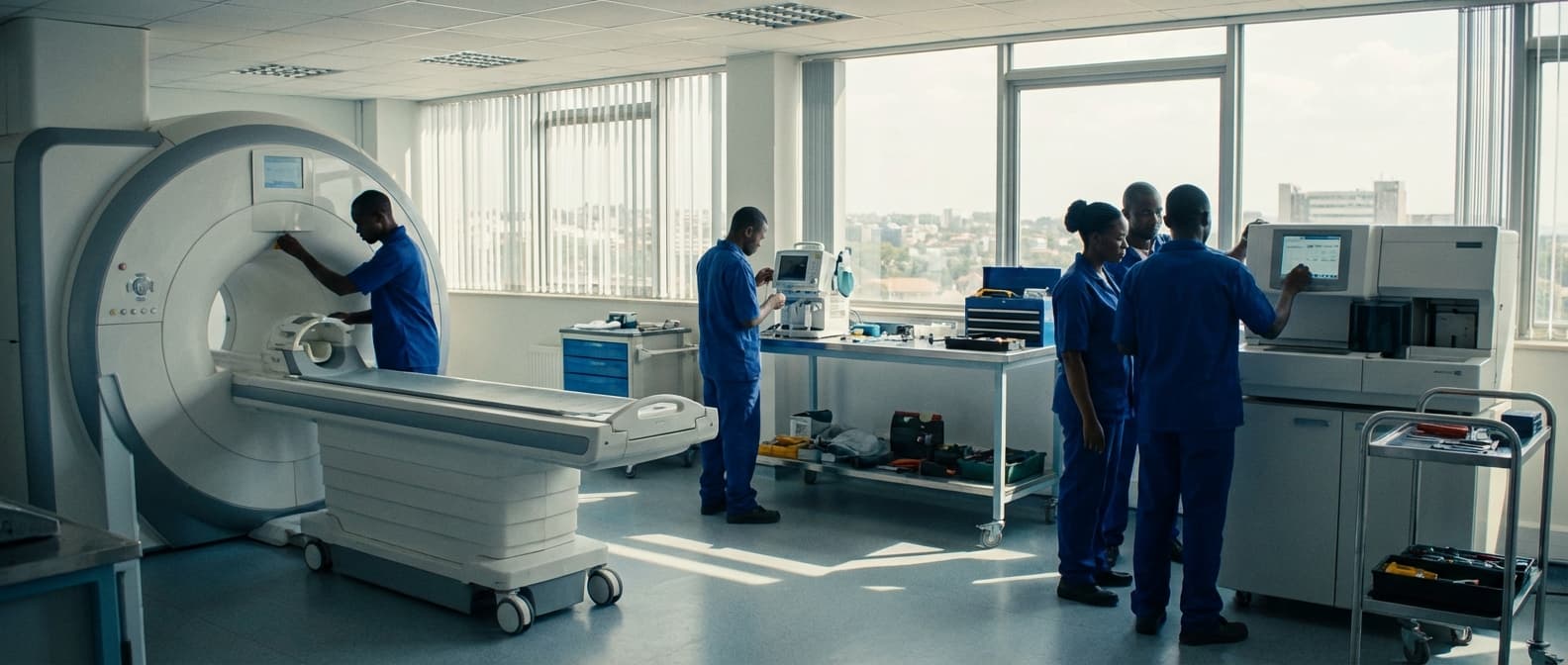
Planned Shutdown Coordination Service for Critical Equipment in Rwanda
Engineering Excellence & Technical Support
Planned Shutdown Coordination Service for Critical Equipment High-standard technical execution following OEM protocols and local regulatory frameworks.
Proactive Scheduling & Risk Mitigation
Leveraging advanced planning tools, our service identifies optimal shutdown windows for critical equipment in Rwanda, minimizing disruption to operations and proactively mitigating risks associated with unplanned downtime. This includes rigorous impact analysis and contingency planning tailored to the Rwandan industrial landscape.
Expert Coordination & Resource Optimization
Our dedicated team of experienced coordinators manages all facets of planned shutdowns for critical equipment in Rwanda. This includes precise resource allocation, vendor management, and seamless integration of internal teams to ensure efficient execution, adherence to safety protocols, and cost-effectiveness.
Data-Driven Performance Tracking & Continuous Improvement
We implement robust monitoring systems to track shutdown progress against predefined KPIs in Rwanda. This data-driven approach enables real-time adjustments, thorough post-shutdown analysis, and the identification of opportunities for continuous improvement in future planned maintenance activities, enhancing equipment reliability and operational efficiency.
What Is Planned Shutdown Coordination Service For Critical Equipment In Rwanda?
The Planned Shutdown Coordination Service for Critical Equipment in Rwanda is a formalized process designed to ensure the safe, efficient, and minimally disruptive planned deactivation and recommissioning of vital infrastructure and industrial assets. This service is paramount in environments where downtime of essential equipment can lead to significant economic losses, safety hazards, or service interruptions. It involves meticulous planning, resource allocation, stakeholder communication, and execution oversight to mitigate risks and optimize the shutdown period for maintenance, upgrades, or replacements. The service adheres to established safety protocols and regulatory frameworks prevalent in Rwanda's industrial and utility sectors.
| Target Audience | Needs Addressed | Typical Use Cases |
|---|---|---|
| Energy Sector (Power Plants, Substations) | Ensuring grid stability, preventing cascading failures, optimizing energy generation efficiency, scheduled maintenance of turbines, generators, transformers, and switchgear. | Routine overhaul of hydro-electric turbines, replacement of aging transformers, installation of new grid control systems, planned inspection of nuclear reactor components (if applicable). |
| Water and Sanitation Utilities | Maintaining water supply and wastewater treatment, preventing contamination, ensuring compliance with public health standards, scheduled maintenance of pumps, filtration systems, and distribution networks. | Annual cleaning and inspection of water treatment plants, replacement of critical pumping stations, rehabilitation of sewer lines, installation of new disinfection systems. |
| Telecommunications Infrastructure | Minimizing service disruption for communication networks, facilitating hardware upgrades and maintenance, ensuring network reliability. | Planned upgrades to base station equipment, fiber optic cable splicing and repair during off-peak hours, maintenance of data center hardware. |
| Industrial Manufacturing Facilities | Maximizing production uptime, minimizing output loss, ensuring equipment longevity, scheduled maintenance of production lines, assembly units, and heavy machinery. | Overhaul of assembly line robotics, replacement of critical molds in injection molding, scheduled maintenance of large-scale industrial furnaces, integration of new automation systems. |
| Transportation Infrastructure (Airports, Ports) | Ensuring operational continuity of critical systems, facilitating safety inspections and upgrades, minimizing impact on passenger and cargo flow. | Scheduled maintenance of air traffic control systems, runway resurfacing, port crane inspections and maintenance, dredging operations. |
| Healthcare Facilities (Hospitals, Clinics) | Ensuring uninterrupted operation of life-support systems, medical imaging equipment, and facility utilities, maintaining patient safety and care standards. | Planned maintenance of MRI/CT scanners, HVAC system overhauls in critical care units, generator testing and maintenance. |
Key Components of Planned Shutdown Coordination Service
- Scope Definition and Objective Setting
- Detailed Workscope Development (Maintenance, Inspection, Replacement, Upgrades)
- Risk Assessment and Mitigation Planning (Safety, Environmental, Operational)
- Resource Mobilization (Personnel, Equipment, Materials)
- Schedule Development and Optimization (Critical Path Analysis, Buffer Management)
- Stakeholder Identification and Communication Strategy
- Permitting and Regulatory Compliance
- Execution Management and Supervision
- Quality Assurance and Control
- Post-Shutdown Analysis and Lessons Learned
Who Needs Planned Shutdown Coordination Service For Critical Equipment In Rwanda?
Planned shutdown coordination services for critical equipment in Rwanda are essential for organizations that rely heavily on their operational continuity and are exposed to significant risks and costs associated with unexpected downtime. These services ensure that planned maintenance, upgrades, or repairs are executed efficiently, safely, and with minimal disruption to business operations.
| Target Customer Type | Relevant Departments | Reason for Need |
|---|---|---|
| Manufacturing Companies | Operations, Maintenance, Production Planning, Engineering, Safety | Minimizing production losses, ensuring equipment longevity, preventing safety incidents during shutdowns, optimizing resource allocation for maintenance. |
| Energy Providers | Generation, Transmission, Distribution, Operations, Maintenance, Grid Control, Safety | Ensuring grid stability, preventing widespread blackouts, performing critical repairs on power plants and transmission lines, meeting regulatory compliance. |
| Telecommunication Companies | Network Operations, Field Operations, Engineering, IT, Customer Service | Maintaining network availability, upgrading infrastructure without impacting subscriber services, ensuring data integrity. |
| Water and Wastewater Treatment Plants | Operations, Maintenance, Engineering, Environmental Compliance, Public Health | Ensuring continuous supply of clean water, effective wastewater treatment, preventing environmental contamination, maintaining public health standards. |
| Mining and Minerals Processing Facilities | Operations, Maintenance, Engineering, Health & Safety, Environmental Management | Maximizing ore extraction and processing efficiency, preventing equipment failure in harsh environments, ensuring worker safety during complex maintenance procedures. |
| Hospitals and Healthcare Facilities | Facilities Management, Biomedical Engineering, IT Department, Operations | Ensuring uninterrupted operation of critical medical equipment (e.g., MRI, CT scanners), maintaining life support systems, safeguarding patient data, compliance with healthcare regulations. |
| Government Ministries (Infrastructure, ICT, etc.) | Technical Operations, Planning, Asset Management, Project Management | Managing and maintaining national infrastructure assets (power grids, water networks, communication backbones), ensuring public service delivery, coordinating inter-agency efforts for large-scale maintenance. |
Target Customers & Departments in Rwanda
- {"items":["Manufacturing (food & beverage, textiles, automotive, cement, etc.)","Mining and Minerals Processing","Energy (power generation, transmission, distribution)","Telecommunications","Water and Wastewater Treatment","Healthcare (hospitals, large clinics)","Transportation and Logistics (airports, ports, major rail operations)","Hospitality (large resorts, convention centers)","Agriculture (large-scale processing plants)"],"title":"Industries"}
- {"items":["Ministries responsible for infrastructure (Energy, Water, Transport, ICT)","Public utilities","National security and defense organizations with critical systems","Large public hospitals and health facilities"],"title":"Government & Public Sector"}
- {"items":["Banks and financial service providers with critical IT infrastructure and data centers"],"title":"Financial Institutions"}
Planned Shutdown Coordination Service For Critical Equipment Process In Rwanda
This document outlines the workflow for the Planned Shutdown Coordination Service for Critical Equipment in Rwanda. The service aims to streamline and manage the process of scheduled shutdowns for essential machinery, ensuring minimal disruption and maximum efficiency. The workflow begins with an initial inquiry from a client and culminates in the successful execution and post-shutdown review of the planned maintenance event.
| Phase | Description | Key Activities | Deliverables/Outcomes | Responsible Parties |
|---|---|---|---|---|
| The client identifies the need for a planned shutdown and contacts the service provider. | Receive client request, understand equipment to be shut down, initial discussion of criticality, preliminary impact assessment. | Confirmation of service engagement, preliminary understanding of scope and timeline. | Client, Service Provider (Coordinator) |
| Detailed planning and defining the precise scope of the shutdown. | On-site assessment, detailed identification of affected equipment, defining shutdown duration, identifying maintenance tasks, risk assessment and mitigation planning, defining communication protocols, establishing key performance indicators (KPIs). | Detailed Shutdown Plan (including Gantt chart, task breakdown), Risk Management Plan, Communication Plan, Stakeholder Register. | Service Provider (Coordinator), Client (Technical Teams, Operations) |
| Gathering and allocating all necessary resources for the shutdown. | Identifying and securing internal and external technicians, specialized tools, spare parts, safety equipment, coordinating with affected departments (e.g., operations, IT), finalizing shutdown schedule with precise timings. | Confirmed team roster, procured spare parts and tools, finalized schedule with critical milestones. | Service Provider (Coordinator), Client (Procurement, HR, Operations) |
| Ensuring all is ready before the actual shutdown commences. | Pre-shutdown safety briefings, site preparation (e.g., isolation points, signage), final check of all resources, confirmation with all stakeholders, issuing necessary permits (e.g., work permits, lockout/tagout), testing of standby equipment. | Completed safety checks, all resources in place, confirmed readiness of all teams, issued permits. | Service Provider (Coordinator), Client (Safety Officers, Operations, Maintenance Teams) |
| The planned shutdown and execution of maintenance tasks. | Controlled shutdown of equipment according to the schedule, execution of defined maintenance tasks (e.g., repair, replacement, calibration, inspection), real-time monitoring of progress and adherence to schedule, immediate identification and resolution of any unforeseen issues. | Completed maintenance tasks, functional equipment (post-maintenance checks). | Service Provider (Coordinator), Client (Maintenance Teams, Technicians) |
| Finalizing the shutdown and reviewing its effectiveness. | Post-maintenance testing and commissioning of equipment, final safety checks, demobilization of resources, compilation of shutdown report (including actual vs. planned duration, tasks completed, issues encountered and resolved, lessons learned), post-shutdown review meeting with client. | Commissioned equipment, final Shutdown Report, documented lessons learned, agreed upon follow-up actions. | Service Provider (Coordinator), Client (Operations, Maintenance Management) |
Planned Shutdown Coordination Service Workflow
- Inquiry & Initial Assessment
- Scope Definition & Planning
- Resource Mobilization & Scheduling
- Pre-Shutdown Preparations
- Shutdown Execution
- Post-Shutdown & Reporting
Planned Shutdown Coordination Service For Critical Equipment Cost In Rwanda
Coordinating planned shutdowns for critical equipment in Rwanda involves a multifaceted service that goes beyond simple scheduling. It encompasses risk assessment, resource allocation, stakeholder communication, safety protocols, and post-shutdown analysis. The cost of such a service is influenced by several key factors, making it crucial to understand these elements for accurate budgeting. These factors dictate the complexity, duration, and expertise required for a successful shutdown, directly impacting the final price.
| Service Component | Estimated Price Range (RWF) | Notes |
|---|---|---|
| Initial Consultation & Scoping | 50,000 - 250,000 | Covers understanding project needs, site visits, and initial assessment. |
| Risk Assessment & Safety Planning | 150,000 - 750,000 | Includes HAZOP studies, safety audits, and development of safety protocols. |
| Resource Planning & Logistics | 100,000 - 600,000 | Covers labor, equipment, materials, and transportation planning. |
| Stakeholder Communication & Management | 75,000 - 400,000 | Includes drafting communications, organizing meetings, and managing expectations. |
| On-Site Coordination (Daily Rate) | 100,000 - 500,000 | Rate for the lead coordinator and supporting staff during the shutdown period. |
| Post-Shutdown Analysis & Reporting | 75,000 - 300,000 | Includes performance review, lessons learned documentation, and final reports. |
| Comprehensive Shutdown Coordination Package (Example for a medium complexity shutdown) | 1,500,000 - 7,000,000+ | This is an indicative range for a multi-day shutdown involving several critical assets. Actual costs will vary significantly. |
Key Pricing Factors for Planned Shutdown Coordination Services in Rwanda:
- Scope and Complexity of Equipment: The number, type, and criticality of the equipment requiring shutdown directly influence the service cost. Coordinating a shutdown for a single piece of machinery will be less complex and expensive than for an entire production line or a critical infrastructure component.
- Duration of the Planned Shutdown: Longer shutdown periods generally translate to higher coordination costs due to extended personnel involvement, prolonged site presence, and increased communication efforts.
- Level of Expertise and Specialization Required: Different equipment necessitates varying levels of technical knowledge. Coordinating shutdowns for highly specialized or complex machinery may require consultants with specific industry experience, thus increasing the cost.
- Risk Assessment and Mitigation Planning: The thoroughness of risk assessment and the development of comprehensive mitigation strategies are crucial. Services that include detailed HAZOP (Hazard and Operability Study) analysis or other advanced safety planning will command higher fees.
- Stakeholder Management and Communication: The number and diversity of stakeholders (internal departments, external vendors, regulatory bodies) impact the communication effort. Extensive engagement and reporting requirements will add to the service cost.
- Resource Planning and Management: This includes coordinating internal and external labor, specialized tools, materials, and logistics. Efficient and proactive resource management by the coordination service adds value and can influence pricing.
- Emergency Preparedness and Response Planning: Developing robust contingency plans for unforeseen issues during the shutdown is a critical, value-adding component that affects pricing.
- Geographic Location within Rwanda: While less of a primary driver, accessibility and logistical challenges in certain remote areas of Rwanda might slightly influence costs related to travel and on-site personnel.
- Reporting and Documentation Requirements: The level of detail and frequency of reporting, including post-shutdown performance analysis and lessons learned, will be factored into the service price.
- Vendor/Contractor Integration: If the coordination service also manages and integrates third-party vendors and contractors, this adds a layer of complexity and will be reflected in the cost.
Affordable Planned Shutdown Coordination Service For Critical Equipment Options
Our Affordable Planned Shutdown Coordination Service is designed to help businesses minimize disruption and maximize efficiency during critical equipment maintenance. We offer flexible value bundles that cater to different operational needs and budgets, along with proven cost-saving strategies to ensure you get the most out of your investment. By meticulously planning and executing shutdowns, we reduce downtime, prevent costly emergency repairs, and extend the lifespan of your valuable assets.
| Cost-Saving Strategy | Description | Benefit |
|---|---|---|
| Minimized Unplanned Downtime | Proactive scheduling and efficient execution prevent unexpected equipment failures and costly emergency repairs. | Significant reduction in lost production and revenue. |
| Optimized Resource Allocation | Careful planning ensures the right personnel, equipment, and materials are available precisely when needed, avoiding overspending or delays. | Reduced labor costs and rental fees. |
| Extended Equipment Lifespan | Adherence to planned maintenance schedules and best practices prevents premature wear and tear, delaying the need for expensive replacements. | Lower capital expenditure over the long term. |
| Improved Safety Compliance | Our structured approach emphasizes safety protocols, reducing the risk of accidents and associated costs (medical, legal, and reputational). | Reduced insurance premiums and potential liabilities. |
| Negotiated Vendor Rates | Leveraging our experience, we can negotiate favorable terms with third-party service providers and material suppliers. | Direct cost savings on external services and parts. |
| Streamlined Communication | Clear and consistent communication channels between all stakeholders minimize misunderstandings and rework, saving time and resources. | Reduced project delays and associated costs. |
Key Service Components & Value Bundles
- Core Shutdown Planning & Scheduling: This forms the foundation of our service, encompassing detailed risk assessments, resource allocation, and a comprehensive project timeline.
- On-Site Supervision & Execution: Our experienced coordinators provide on-the-ground oversight, ensuring adherence to the plan, managing contractors, and facilitating communication.
- Post-Shutdown Analysis & Reporting: We provide in-depth reports on performance, lessons learned, and recommendations for future maintenance cycles.
- Value Bundle: 'Essential Efficiency': Includes core planning, scheduling, and basic on-site support. Ideal for organizations with in-house maintenance teams needing expert coordination.
- Value Bundle: 'Comprehensive Care': Builds on 'Essential Efficiency' with extended on-site supervision, dedicated communication channels, and advanced reporting. Best for businesses seeking full-service support.
- Value Bundle: 'Proactive Partnership': Our premium offering, incorporating predictive maintenance insights, vendor management, and a customized risk mitigation strategy, designed for organizations prioritizing long-term asset health and minimal disruption.
Verified Providers In Rwanda
In Rwanda, ensuring access to quality healthcare hinges on trusting verified providers. Franance Health stands out as a premier choice, offering a robust network of credentialed healthcare professionals and facilities. This commitment to verification translates into a higher standard of care, patient safety, and overall positive health outcomes. Understanding what makes Franance Health a leading provider is key to making informed healthcare decisions in Rwanda.
| Provider Type | Verification Criteria | Franance Health Advantage |
|---|---|---|
| Doctors & Specialists | Valid medical licenses, board certifications, ongoing professional development, clean disciplinary records. | Access to a network of doctors with verified expertise, reducing the risk of unqualified practitioners and ensuring specialized care. |
| Hospitals & Clinics | Accreditation by relevant national and international bodies, adherence to safety protocols, proper equipment and facilities, qualified medical staff. | Partnerships with accredited facilities that meet stringent operational and safety standards, guaranteeing a secure and effective treatment environment. |
| Laboratories & Diagnostic Centers | Proper licensing, use of calibrated equipment, adherence to quality control measures, skilled technicians. | Ensures accurate and reliable diagnostic results from centers that have met rigorous quality benchmarks. |
| Pharmacies | Valid operating licenses, proper drug storage and dispensing practices, availability of essential medicines. | Access to licensed pharmacies that guarantee the authenticity and safe dispensing of medications. |
Why Franance Health Represents the Best Choice in Rwanda:
- Rigorous Credentialing Process: Franance Health implements a stringent vetting process for all its affiliated providers, ensuring they meet and exceed established medical standards and ethical guidelines.
- Comprehensive Network: Access a wide range of specialists, general practitioners, hospitals, and clinics, all pre-vetted for your convenience and peace of mind.
- Focus on Patient Safety: Prioritizing patient well-being through the selection of providers with proven track records and adherence to best practices.
- Enhanced Transparency: Franance Health offers clear information about its providers' qualifications and areas of expertise, empowering patients to make informed choices.
- Improved Accessibility: By partnering with verified providers across Rwanda, Franance Health aims to make quality healthcare more accessible to all its members.
- Commitment to Quality: The emphasis on verified credentials signifies a deep commitment to delivering high-quality medical services and upholding the highest standards of care.
Scope Of Work For Planned Shutdown Coordination Service For Critical Equipment
This document outlines the Scope of Work (SOW) for a Planned Shutdown Coordination Service focused on critical equipment. The service aims to ensure the safe, efficient, and timely execution of planned maintenance, inspections, and minor upgrades for designated critical assets, minimizing downtime and associated risks. The service will cover all phases from pre-shutdown planning to post-shutdown review and reporting.
| Deliverable | Description | Standard Specification/Format | Responsibility |
|---|---|---|---|
| Shutdown Execution Plan | Detailed schedule of all activities, including sequencing, dependencies, resource allocation, and contingency plans. | Gantt chart format (e.g., Microsoft Project, Primavera P6) with clear task breakdowns, durations, and critical path identification. Version control is mandatory. | Service Provider, Client Approval |
| Risk Assessment & Mitigation Plan | Identification of potential hazards associated with shutdown activities, and detailed strategies to mitigate these risks. | Structured document (e.g., HAZOP report, JSA - Job Safety Analysis) following industry best practices (e.g., OSHA, HSE guidelines). | Service Provider, Client Approval |
| Permit-to-Work (PTW) Management Log | Tracking of all permits issued, reviewed, and closed out for shutdown activities. | Digital or paper-based log with unique permit numbers, activity description, validity period, issuing authority, and closure verification. | Service Provider, Site Management |
| Daily Progress Reports | Summaries of work completed, progress against schedule, any deviations, issues encountered, and immediate next steps. | Standardized daily report template including date, shift, key activities, % complete, downtime, manpower, and safety observations. Email distribution to key stakeholders. | Service Provider |
| Shutdown Close-out Report | Comprehensive summary of the entire shutdown, including actual vs. planned schedule, performance metrics, lessons learned, and recommendations for future shutdowns. | Formal report document including executive summary, detailed schedule comparison, cost analysis (if applicable), equipment status post-shutdown, safety performance, and action items. | Service Provider, Client Review & Approval |
| As-Built Documentation Update (as applicable) | Incorporation of any minor modifications or updates to equipment documentation resulting from shutdown activities. | Digital or physical red-line markups of existing drawings or specifications, submitted for client's official archival. | Service Provider (based on information from maintenance teams) |
| Resource & Logistics Plan | Detailed plan for personnel, equipment, materials, and temporary facilities required for the shutdown. | Spreadsheet or database format detailing required personnel (skills, numbers), tools, heavy equipment, consumables, scaffolding, temporary lighting, etc. | Service Provider, Client Approval |
| Communication Plan | Outline of communication channels, frequency, and key stakeholders for managing the shutdown. | Matrix detailing communication methods (e.g., daily meetings, email, alerts), recipients, and purpose of communication. | Service Provider |
Key Service Components
- Pre-Shutdown Planning & Preparation
- On-Site Coordination & Execution
- Post-Shutdown Activities & Reporting
Service Level Agreement For Planned Shutdown Coordination Service For Critical Equipment
This Service Level Agreement (SLA) outlines the terms and conditions for the Planned Shutdown Coordination Service for Critical Equipment. It defines the responsibilities of both the Service Provider and the Customer, and establishes service level objectives, including response times and uptime guarantees related to the coordination and execution of planned equipment shutdowns.
This SLA is applicable to all services provided by the Service Provider for the purpose of coordinating and facilitating planned shutdowns of critical equipment as defined in the accompanying Service Order.
| Service Component | Service Level Objective (SLO) | Measurement Method | Remedy/Penalty |
|---|---|---|---|
| Shutdown Planning & Scheduling Support | Response Time for initial planning meeting request: 8 business hours. | Time stamp of email/request receipt and time of first communication. | N/A (Service Delivery) |
| Pre-Shutdown Coordination Communication | Confirmation of readiness for critical stakeholders: within 24 hours of final shutdown plan approval. | Tracking of confirmation acknowledgements from identified stakeholders. | N/A (Service Delivery) |
| Real-time Shutdown Monitoring Support (if applicable) | Availability of coordination platform/system: 99.5% during scheduled shutdown windows. | Monitoring logs of platform uptime and accessibility. | 10% service credit for every hour or portion thereof of downtime below the guaranteed uptime, capped at 50% of monthly service fee. |
| Post-Shutdown Recommissioning Support | Response time for critical issues reported during recommissioning: 4 business hours. | Time stamp of issue reporting and time of first assigned resource acknowledgement. | N/A (Service Delivery) |
| Emergency Shutdown Notification & Coordination (within planned shutdown context) | Acknowledgement of emergency communication: within 1 business hour. | Time stamp of communication receipt and time of acknowledgement. | N/A (Service Delivery) |
Key Definitions
- Planned Shutdown: A scheduled cessation of operation for critical equipment for maintenance, upgrade, or other necessary activities, coordinated and managed by the Service Provider.
- Critical Equipment: Equipment designated by the Customer as essential for operational continuity, where downtime must be minimized and carefully managed.
- Service Provider: The entity responsible for delivering the Planned Shutdown Coordination Service.
- Customer: The entity receiving the Planned Shutdown Coordination Service.
- Response Time: The maximum time allowed for the Service Provider to acknowledge and begin addressing a Customer request or issue related to the Planned Shutdown Coordination Service.
- Uptime Guarantee: A commitment from the Service Provider regarding the availability and reliability of the coordination platform or services used for planned shutdown management.
Frequently Asked Questions

Ready when you are
Let's scope your Planned Shutdown Coordination Service for Critical Equipment in Rwanda project in Rwanda.

Scaling healthcare logistics and technical systems across the entire continent.