
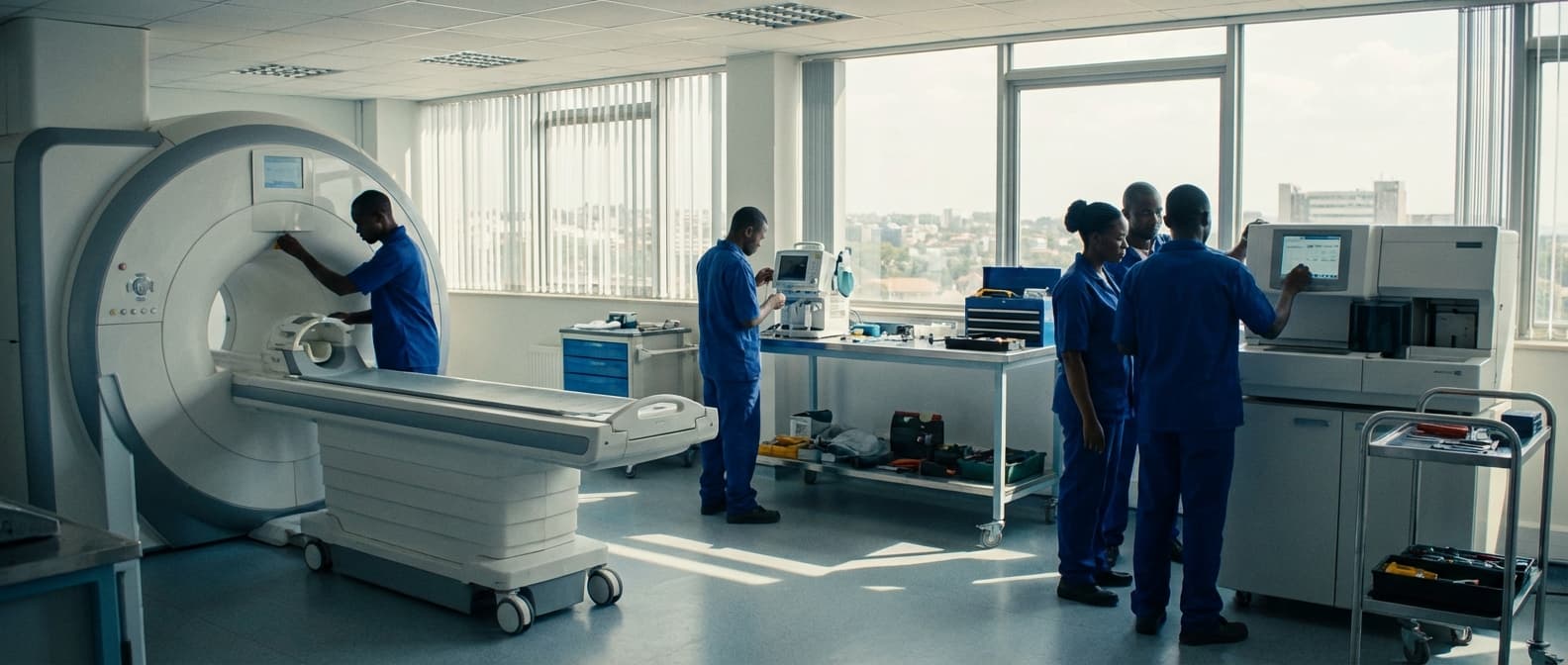
Comprehensive Maintenance Contract (CMC) Management Service (Parts & Labor) in Rwanda
Engineering Excellence & Technical Support
Comprehensive Maintenance Contract (CMC) Management Service (Parts & Labor) High-standard technical execution following OEM protocols and local regulatory frameworks.
Guaranteed Uptime & Budget Control
Leverage our comprehensive CMC service in Rwanda to ensure critical machinery remains operational, minimizing costly downtime. Benefit from predictable, fixed costs covering both parts and labor, enabling precise budget forecasting and resource allocation for your Rwandan operations.
Expert Rwandan Technicians & Genuine Parts
Access a network of certified, local Rwandan technicians with deep expertise in your specific equipment. Our CMC guarantees the use of genuine, high-quality parts, ensuring optimal performance, longevity, and compliance with all manufacturer warranties, safeguarding your investment in Rwanda.
Proactive Maintenance & Performance Optimization
Our CMC in Rwanda goes beyond reactive repairs. We implement proactive maintenance schedules, predictive analytics, and performance monitoring to identify potential issues before they escalate, thereby maximizing equipment lifespan, improving efficiency, and reducing operational risks across your Rwandan business.
What Is Comprehensive Maintenance Contract (Cmc) Management Service (Parts & Labor) In Rwanda?
Comprehensive Maintenance Contract (CMC) Management Service (Parts & Labor) in Rwanda refers to the outsourced management of all aspects of maintaining critical assets, encompassing both the provision of spare parts and the execution of labor for repairs, preventive maintenance, and corrective actions. This service is designed to ensure optimal operational uptime, prolong asset lifespan, and manage maintenance expenditures effectively for organizations in Rwanda. It moves beyond simple repair services by offering a holistic, proactive, and integrated approach to asset upkeep.
| Stakeholder/Organization Type | Why CMC Management Service is Needed | Typical Use Cases/Asset Categories |
|---|---|---|
| Healthcare Facilities (Hospitals, Clinics): | Ensuring critical medical equipment (e.g., MRI machines, ventilators, X-ray units) is operational 24/7 to provide uninterrupted patient care. Minimizing downtime of life-saving devices. | Maintenance of diagnostic imaging equipment, surgical instruments, laboratory analyzers, patient monitoring systems, anesthesia machines. |
| Industrial & Manufacturing Plants: | Maximizing production output by minimizing unplanned downtime of machinery and production lines. Optimizing operational efficiency and reducing manufacturing defects. | Maintenance of heavy machinery (e.g., presses, lathes, CNC machines), conveyor systems, automation equipment, power generation units, HVAC systems. |
| **Telecommunications Companies: | Maintaining network infrastructure and equipment to ensure reliable communication services and minimal service interruptions for subscribers. High availability is paramount. | Maintenance of base stations, switching equipment, data centers, network servers, transmission systems, power backup systems. |
| Financial Institutions (Banks, ATMs): | Ensuring the continuous operation of critical IT infrastructure, including ATMs and server rooms, to facilitate seamless financial transactions and protect sensitive data. | Maintenance of ATMs, branch IT infrastructure, data center servers, uninterruptible power supplies (UPS), physical security systems. |
| **Government & Public Sector Agencies: | Maintaining essential public service infrastructure and operational equipment to ensure the efficient delivery of services to citizens. | Maintenance of public transportation systems (e.g., buses, trains), water treatment plants, waste management facilities, IT infrastructure for government offices, emergency response equipment. |
| Commercial & Hospitality Sector (Hotels, Shopping Malls): | Ensuring a comfortable and reliable environment for guests and tenants by maintaining critical building systems. Enhancing guest experience and operational continuity. | Maintenance of HVAC systems, elevators, escalators, electrical systems, plumbing, fire safety systems, kitchen equipment, audiovisual systems. |
| **Mining & Energy Sector: | Ensuring the reliable operation of heavy-duty equipment and infrastructure in remote and challenging environments, crucial for resource extraction and energy production. | Maintenance of mining machinery (e.g., excavators, haul trucks), processing plants, power generators, pipelines, exploration equipment. |
Key Components of CMC Management Service (Parts & Labor) in Rwanda
- Preventive Maintenance (PM) Planning & Execution: Proactive scheduling and performance of routine maintenance tasks to identify and rectify potential issues before they lead to breakdowns. This includes inspections, lubrication, adjustments, and replacements of wear-and-tear components.
- Corrective Maintenance (CM) & Breakdown Repair: Rapid response and execution of repairs for unexpected equipment failures. This involves diagnosis, sourcing of necessary spare parts, and skilled technician deployment.
- Spare Parts Inventory Management: Strategic procurement, warehousing, and management of critical spare parts to ensure availability when needed, minimizing downtime and associated costs. This can include vendor-managed inventory (VMI) or consignment stock.
- Labor Management & Skill Augmentation: Provision of qualified and certified technical personnel for maintenance activities, including specialized skills that may not be available in-house. This also encompasses workforce scheduling, training, and supervision.
- Technical Support & Troubleshooting: Offering remote or on-site expert assistance for diagnosing complex issues and providing guidance for resolution.
- Performance Monitoring & Reporting: Continuous tracking of asset performance, maintenance activities, and costs. Regular reporting to clients on key performance indicators (KPIs) such as uptime, mean time between failures (MTBF), and maintenance expenditure.
- Root Cause Analysis (RCA) & Continuous Improvement: Investigating the underlying causes of recurring failures or performance degradation to implement corrective actions and enhance reliability over time.
- Warranty Management: Tracking and managing equipment warranties to leverage manufacturer support for covered repairs and part replacements.
- Budgeting & Cost Control: Developing and managing maintenance budgets, optimizing resource allocation, and identifying cost-saving opportunities.
- Asset Lifecycle Management Integration: Aligning maintenance strategies with the overall lifecycle of assets, including end-of-life planning and recommendations for upgrades or replacements.
- Compliance & Safety Management: Ensuring all maintenance activities adhere to relevant industry standards, regulations, and safety protocols in Rwanda.
Who Needs Comprehensive Maintenance Contract (Cmc) Management Service (Parts & Labor) In Rwanda?
Comprehensive Maintenance Contract (CMC) Management Services, covering both parts and labor, are crucial for a wide array of organizations in Rwanda. These services ensure that critical equipment and infrastructure are consistently maintained in optimal working condition, minimizing downtime, extending asset lifespan, and optimizing operational efficiency. The demand for such services stems from the need to manage the complexity of maintaining diverse assets, from IT hardware and medical equipment to industrial machinery and building systems, often requiring specialized technical expertise and proactive planning.
| Target Customer Sector | Key Departments Requiring CMC Management |
|---|---|
| Manufacturing | Operations Department, Maintenance Department, Engineering Department, Production Management |
| Healthcare | Biomedical Engineering Department, Facilities Management, IT Department, Procurement Department |
| Telecommunications | Network Operations Center (NOC), Field Operations, IT Infrastructure, Engineering |
| Financial Institutions | IT Department, Facilities Management, Operations Department, Security Department |
| Government Agencies | IT Department, Facilities Management, Procurement Department, Department of Public Works |
| Utility Companies | Operations & Maintenance (O&M) Department, Engineering Department, Asset Management |
| Transportation & Logistics | Fleet Management, Maintenance Department, Operations Department, IT Department |
| Educational Institutions | IT Department, Facilities Management, Campus Operations, Procurement |
| Hospitality | Engineering/Maintenance Department, IT Department, Front Office Operations, Housekeeping Management |
| Real Estate/Property Management | Facilities Management, Maintenance Department, Operations Department, Tenant Relations |
Target Customers and Departments for CMC Management Services in Rwanda
- {"item":"Large-Scale Manufacturing Plants"}
- {"item":"Healthcare Facilities (Hospitals, Clinics, Diagnostic Centers)"}
- {"item":"Telecommunications Providers"}
- {"item":"Financial Institutions (Banks, Insurance Companies)"}
- {"item":"Government Agencies and Ministries"}
- {"item":"Utility Companies (Energy, Water)"}
- {"item":"Transportation and Logistics Companies"}
- {"item":"Educational Institutions (Universities, Large Schools)"}
- {"item":"Hospitality Sector (Large Hotels, Resorts)"}
- {"item":"Real Estate Developers and Property Management Firms"}
Comprehensive Maintenance Contract (Cmc) Management Service (Parts & Labor) Process In Rwanda
This document outlines the comprehensive workflow for managing Comprehensive Maintenance Contracts (CMCs) for Parts & Labor services within Rwanda. It covers the entire process from the initial customer inquiry to the successful execution and closure of the contract. The service aims to ensure the efficient and effective upkeep of client assets, minimizing downtime and maximizing their operational lifespan.
| Stage | Description | Key Activities | Responsible Party | Deliverables/Outcomes |
|---|---|---|---|---|
| Inquiry & Initial Consultation | The process begins with a potential client expressing interest in CMC services. | Receive inquiry, understand basic needs, provide initial information about CMC offerings. | Client, Sales/Business Development Team | Initial understanding of client's requirements, interest in proceeding. |
| Site Assessment & Needs Analysis | A thorough evaluation of the client's assets and operational environment. | On-site visit, asset inventory, condition assessment, identification of critical equipment, understanding usage patterns and environmental factors. | Technical Team, Client Representatives | Detailed asset register, risk assessment report, comprehensive understanding of maintenance needs. |
| Proposal Development & Quotation | Creation of a tailored CMC proposal based on the assessment. | Develop scope of work, define service levels (SLAs), specify covered parts and labor, determine pricing based on asset complexity, age, and service frequency, prepare detailed quotation. | Sales/Business Development Team, Technical Team | Formal CMC proposal document, detailed quotation. |
| Contract Negotiation & Signing | Discussion and finalization of contract terms and conditions. | Review proposal with client, negotiate pricing, SLAs, payment terms, and other contractual clauses, finalize contract document, obtain signatures from both parties. | Sales/Business Development Team, Legal Department, Client | Signed and executed CMC contract. |
| Onboarding & Asset Registration | Formal integration of the client and their assets into the service management system. | Establish client account, formally register all covered assets with serial numbers, model numbers, installation dates, and previous service history; assign a dedicated account manager. | Operations Team, Technical Team, Client | Fully populated asset database, client onboarding complete, dedicated account manager assigned. |
| Preventive Maintenance Scheduling | Proactive maintenance activities to prevent failures. | Develop a preventive maintenance schedule based on manufacturer recommendations and asset usage; coordinate with the client for access and scheduling; perform routine inspections, cleaning, lubrication, and minor adjustments. | Operations Team, Technical Team | Scheduled maintenance visits completed, maintenance reports generated. |
| Corrective Maintenance & Repair | Addressing unexpected equipment failures and breakdowns. | Client reports a fault/breakdown; service request is logged; technician is dispatched; diagnosis of the problem; repair execution, including parts replacement and labor. | Client, Operations Team, Technical Team | Fault diagnosed, repair completed, equipment restored to operational status, service report generated. |
| Parts Procurement & Management | Ensuring the availability of necessary spare parts. | Identify required parts for both preventive and corrective maintenance; manage inventory of common spare parts; procure specialized parts from authorized suppliers within Rwanda or internationally if necessary; maintain a stock of critical components. | Procurement Department, Technical Team, Operations Team | Availability of required spare parts, minimized lead times for parts procurement. |
| Labor Management & Technician Deployment | Efficient allocation and management of skilled technical personnel. | Maintain a roster of qualified technicians; assign technicians based on expertise and asset type; manage technician schedules and travel; ensure continuous training and skill development for technicians. | Operations Team, Human Resources Department | Skilled technicians deployed effectively, timely response to service requests. |
| Reporting & Performance Monitoring | Tracking and evaluating service performance against agreed SLAs. | Generate regular reports on maintenance activities (preventive and corrective), response times, repair completion rates, parts usage, and overall asset health; conduct performance reviews with the client. | Operations Team, Account Management | Performance reports, client satisfaction feedback, identification of areas for improvement. |
| Invoicing & Payment | Financial transactions related to the CMC. | Generate invoices based on contractual terms (e.g., monthly, quarterly, annual fees, parts usage if applicable); submit invoices to the client; process payments received; reconcile accounts. | Finance Department, Account Management | Timely invoicing, accurate financial records, payment collection. |
| Contract Renewal/Closure | Concluding or extending the existing maintenance contract. | Review contract performance prior to expiry; discuss renewal terms with the client; provide a final report; if not renewed, ensure smooth handover of asset information; if renewed, initiate the renewal process. | Account Management, Sales/Business Development Team, Client | Contract renewal or formal closure, final asset handover if applicable. |
Key Stages in CMC Management Process
- Inquiry & Initial Consultation
- Site Assessment & Needs Analysis
- Proposal Development & Quotation
- Contract Negotiation & Signing
- Onboarding & Asset Registration
- Preventive Maintenance Scheduling
- Corrective Maintenance & Repair
- Parts Procurement & Management
- Labor Management & Technician Deployment
- Reporting & Performance Monitoring
- Invoicing & Payment
- Contract Renewal/Closure
Comprehensive Maintenance Contract (Cmc) Management Service (Parts & Labor) Cost In Rwanda
Managing Comprehensive Maintenance Contracts (CMCs) for parts and labor in Rwanda involves a range of costs influenced by several key factors. These services are crucial for ensuring the longevity and optimal performance of various assets, from IT equipment and industrial machinery to medical devices and vehicles. The pricing is not a one-size-fits-all scenario but rather a dynamic calculation based on the specific needs and complexities of the maintenance required.
Key Pricing Factors:
- Type and Complexity of Equipment: The inherent nature of the equipment is the primary driver of cost. High-tech, specialized, or complex machinery will invariably require more expensive parts and highly skilled labor. For instance, maintaining an MRI machine will be significantly more costly than servicing standard office printers. Similarly, industrial automation systems or advanced medical equipment demand specialized expertise and often proprietary parts, driving up the price.
- Age and Condition of Equipment: Older equipment, or that which is already in a state of disrepair, often requires more frequent and extensive maintenance. This translates to a higher probability of part replacements and more time-intensive labor. The risk of unexpected breakdowns also increases with age, necessitating a higher contingency in the CMC.
- Scope of Coverage (Parts & Labor): The comprehensiveness of the contract is paramount. Does it cover all parts, including consumables and wear-and-tear items? What is the response time for labor? Are there different tiers of service (e.g., 24/7 support vs. business hours)? A wider scope, faster response times, and inclusion of all parts will naturally lead to a higher contract cost.
- Downtime Sensitivity: For businesses where equipment downtime translates directly into significant financial losses (e.g., manufacturing plants, critical healthcare facilities), the need for rapid response and proactive maintenance is high. This increased urgency and the commitment to minimizing downtime will be reflected in the pricing.
- Geographic Location and Accessibility: While Rwanda is a relatively compact country, the accessibility of the equipment's location can play a role. Remote areas might incur additional travel costs for technicians, which would be factored into the CMC.
- Service Provider's Reputation and Expertise: Established service providers with a proven track record, certified technicians, and robust service infrastructure often command higher prices. Their expertise reduces the risk of errors and ensures efficient problem resolution.
- Contract Duration: Longer-term contracts may sometimes offer a slightly reduced per-annoy price due to the guaranteed business for the service provider. However, this can also introduce price escalation clauses to account for inflation and potential increases in part costs over time.
- Preventive vs. Reactive Maintenance: Contracts that emphasize regular, scheduled preventive maintenance (which aims to avoid breakdowns) might have a different cost structure than those primarily focused on reactive repairs (fixing issues as they arise). A strong preventive maintenance component often leads to lower overall costs in the long run by reducing major failures.
- Availability of Local Parts: The cost and availability of spare parts locally within Rwanda will directly impact the pricing. If parts need to be imported, shipping costs, customs duties, and lead times will increase the overall CMC expense.
Pricing Ranges in Rwandan Francs (RWF):
It is challenging to provide exact figures without specific details of the equipment and service requirements. However, the following ranges offer a general indication of what a CMC for parts and labor might cost in Rwanda. These are estimates and can vary significantly.
- For relatively simple IT equipment (e.g., office printers, basic computers) with standard service level agreements (SLAs): This could range from 200,000 RWF to 1,000,000 RWF per year, depending on the number of units and the breadth of coverage.
- For more complex IT infrastructure (e.g., servers, networking equipment) or small-scale office machinery: Expect costs to be in the range of 500,000 RWF to 3,000,000 RWF per year.
- For industrial equipment, manufacturing machinery, or advanced medical devices: These contracts are highly specialized and can range from 1,000,000 RWF to over 10,000,000 RWF per year, or even a percentage of the equipment's value. The complexity, criticality, and cost of spare parts for such assets are the main drivers.
| Equipment Category | Estimated Annual Cost Range (RWF) | Notes |
|---|---|---|
| Simple IT Equipment (Printers, Basic Computers) | 200,000 - 1,000,000 | Standard SLAs, moderate number of units |
| Complex IT Infrastructure (Servers, Networking) | 500,000 - 3,000,000 | Includes higher-end hardware, potentially faster response |
| Small-Scale Office Machinery | 500,000 - 2,000,000 | e.g., photocopiers, specific business machines |
| Industrial Equipment / Manufacturing Machinery | 1,000,000 - 10,000,000+ | Highly specialized, critical uptime, expensive parts, may be % of asset value |
| Advanced Medical Devices | 1,000,000 - 10,000,000+ | Requires certified technicians, specific regulatory compliance, critical patient care |
| Vehicles (Fleet Maintenance) | Varies significantly based on fleet size, vehicle type, and mileage | Can be per vehicle or for the entire fleet, includes routine service and repairs |
Factors Influencing CMC Management Service Costs in Rwanda
- Type and complexity of equipment
- Age and condition of equipment
- Scope of coverage (parts and labor, response times)
- Downtime sensitivity and criticality of the asset
- Geographic location and accessibility
- Service provider's reputation, expertise, and certifications
- Contract duration and terms
- Emphasis on preventive vs. reactive maintenance
- Local availability and cost of spare parts
- Inclusion of consumables and wear-and-tear items
Affordable Comprehensive Maintenance Contract (Cmc) Management Service (Parts & Labor) Options
Our Affordable Comprehensive Maintenance Contract (CMC) Management Service offers a strategic approach to ensuring your equipment runs optimally while minimizing your operational expenses. We provide flexible options designed to fit your budget and needs, focusing on proactive maintenance to prevent costly breakdowns and extend equipment lifespan. Our service covers both parts and labor, offering peace of mind and predictable costs. We achieve this through value bundles and smart cost-saving strategies.
| Cost-Saving Strategy | Description | Impact on CMC |
|---|---|---|
| Preventative Maintenance Focus | Regular, scheduled maintenance to identify and fix minor issues before they escalate into major, expensive failures. | Reduces the frequency and severity of emergency repairs, lowering overall labor and part costs. |
| Bulk Purchasing & Negotiated Part Pricing | Leveraging our network and volume to secure discounted prices on commonly used replacement parts. | Directly lowers the cost of parts included in the CMC, making bundles more affordable. |
| Remote Monitoring & Diagnostics | Utilizing technology to proactively monitor equipment health and diagnose issues remotely, minimizing the need for on-site visits. | Reduces travel costs and speeds up resolution, leading to less downtime and lower labor expenses. |
| Extended Equipment Lifespan | Proper maintenance and timely repairs help extend the operational life of your assets, delaying capital expenditure on new equipment. | Increases the return on investment for your existing equipment and reduces long-term replacement costs. |
| Predictable Budgeting | Fixed monthly or annual fees for CMC provide clear visibility into maintenance expenses, eliminating budget surprises. | Allows for better financial planning and avoids sudden, large outflows for unexpected repairs. |
| Tiered Service Levels | Offering different levels of coverage allows clients to select a plan that aligns with their risk tolerance and budget, avoiding overspending on unnecessary services. | Ensures you only pay for the level of support you truly need, maximizing cost-efficiency. |
Value Bundles Explained
- {"title":"Basic Coverage Bundle","description":"Ideal for standard equipment with moderate usage. Includes scheduled preventative maintenance, remote diagnostics, and priority response for on-site service. Labor included for all scheduled and unscheduled maintenance. Parts may be priced separately or capped with a defined annual budget."}
- {"title":"Standard Coverage Bundle","description":"Our most popular option, balancing cost and comprehensive protection. Features all of Basic Coverage plus includes a pre-defined allowance for common replacement parts, ensuring prompt repairs without unexpected part costs. Extended warranty on replaced parts."}
- {"title":"Premium Coverage Bundle","description":"The ultimate peace of mind. This bundle encompasses all of Standard Coverage and includes 100% coverage for all parts and labor for a specified period. Offers the highest level of predictability and protection against unforeseen expenses. May include additional benefits like enhanced uptime guarantees or dedicated account management."}
- {"title":"Customizable Solutions","description":"We understand that one size doesn't fit all. Work with our experts to tailor a CMC package that precisely matches your equipment, usage patterns, and budget constraints. This can include specific service intervals, part stocking agreements, or tailored response times."}
Verified Providers In Rwanda
In Rwanda's evolving healthcare landscape, identifying trusted and competent medical service providers is paramount for individuals seeking quality care. Franance Health stands out as a leading example of a verified provider, distinguished by its rigorous credentialing processes and unwavering commitment to patient well-being. This dedication to excellence makes Franance Health a compelling choice for those prioritizing reliable and superior healthcare services in Rwanda.
| Aspect | Franance Health's Advantage |
|---|---|
| Verification Process | Rigorous, multi-stage credentialing for all providers and facilities. |
| Professional Expertise | Access to highly qualified, licensed, and experienced Rwandan medical professionals. |
| Quality of Care | Commitment to evidence-based practices and continuous improvement. |
| Patient Experience | Emphasis on personalized attention, clear communication, and ethical treatment. |
| Service Range | Comprehensive medical services to address a wide array of health concerns. |
| Trust and Reliability | Built on a foundation of transparency, integrity, and a proven track record. |
Why Franance Health Represents the Best Choice:
- Rigorous Credentialing: Franance Health employs a stringent vetting process for all its practitioners and facilities, ensuring they meet the highest standards of medical expertise, ethical practice, and regulatory compliance within Rwanda.
- Experienced Medical Professionals: The network comprises highly qualified and experienced doctors, nurses, and specialists who are licensed and accredited by relevant Rwandan health authorities.
- Patient-Centric Approach: Franance Health prioritizes patient satisfaction, offering personalized care plans, clear communication, and a supportive environment throughout the healthcare journey.
- Comprehensive Services: From general consultations to specialized treatments, Franance Health provides a wide spectrum of medical services, catering to diverse healthcare needs.
- Commitment to Quality: Through continuous professional development, adherence to best practices, and investment in modern medical technology, Franance Health consistently delivers high-quality healthcare outcomes.
- Accessibility and Affordability: Efforts are made to ensure that their services are accessible to a broad segment of the population, with a focus on transparent pricing and potential insurance integration where applicable.
- Strong Community Ties: Franance Health actively engages with the Rwandan community, understanding local health challenges and tailoring its services to meet specific regional needs.
Scope Of Work For Comprehensive Maintenance Contract (Cmc) Management Service (Parts & Labor)
This Scope of Work (SOW) defines the requirements for a Comprehensive Maintenance Contract (CMC) Management Service, encompassing both parts and labor for various technical equipment. The service provider will be responsible for the proactive and reactive maintenance of the specified assets to ensure optimal performance, minimize downtime, and extend the operational lifespan of the equipment. This includes planning, execution, and reporting of all maintenance activities, as well as management of spare parts inventory and third-party service providers if applicable.
| Technical Deliverable | Description | Standard Specifications / Acceptance Criteria |
|---|---|---|
| Preventive Maintenance (PM) Schedule | A detailed schedule outlining all planned preventive maintenance tasks for each asset, including frequency, duration, and required resources. | PM schedule developed within 30 days of contract commencement, covering 100% of critical assets. Adherence to manufacturer recommendations or industry best practices. All PM tasks completed within +/- 10% of scheduled time. |
| Corrective Maintenance Response Time | The maximum acceptable time for a technician to be dispatched to an asset after a reported failure. | Critical Assets: < 4 hours. High Priority Assets: < 8 hours. Medium Priority Assets: < 24 hours. Response time measured from notification to on-site arrival. |
| Repair Completion Time | The maximum acceptable time to complete a repair after diagnosis, assuming parts are readily available. | Critical Assets: < 24 hours. High Priority Assets: < 48 hours. Medium Priority Assets: < 72 hours. Repair completion time measured from commencement of repair work. |
| Spare Parts Management & Inventory | Management of an adequate inventory of critical spare parts to support timely repairs. | Maintain a minimum stock level of 95% for critical spares identified. Inventory accuracy maintained at 98%. Lead time for non-stocked critical spares not exceeding 7 days. |
| Maintenance Reports | Regular reports detailing all maintenance activities, equipment status, downtime, costs, and recommendations. | Monthly reports submitted by the 5th business day of the following month. Reports to include asset utilization, PM completion rates (>95%), breakdown analysis, and spare parts consumption. Annual summary report. |
| Technician Qualifications | All technicians performing maintenance must possess the necessary skills, certifications, and experience. | Minimum of 5 years of relevant experience. Relevant certifications for specific equipment types (e.g., manufacturer certifications, industry-specific qualifications). Technicians to undergo regular refresher training (at least annually). |
| Quality Assurance & Audits | Procedures for ensuring the quality of maintenance work performed and regular audits. | Implement a QA program with documented procedures. Conduct internal audits quarterly. Third-party audits may be required annually. Achieve an overall QA score of >90% on audits. |
| Service Level Agreement (SLA) Compliance | Adherence to agreed-upon service levels for all maintenance activities. | Achieve an SLA compliance rate of >98% for all defined metrics (response time, repair time, PM completion, etc.). |
| Documentation & Record Keeping | Comprehensive and accurate record-keeping of all maintenance activities, parts used, and costs incurred. | All maintenance logs and records to be maintained for a minimum of 5 years. Digital record-keeping system to be implemented and accessible to the client. All parts used to be tracked with serial numbers and cost. |
| Cost Control & Reporting | Management of maintenance costs and transparent reporting on expenditures. | Provide detailed cost breakdowns for all maintenance activities, including labor, parts, and any third-party services. Implement cost-saving initiatives. Report on projected vs. actual expenditure monthly. |
Key Responsibilities of the CMC Management Service Provider
- Development and implementation of a comprehensive preventive maintenance program.
- Management and coordination of all scheduled and unscheduled maintenance activities.
- Procurement and management of spare parts, ensuring availability and cost-effectiveness.
- Supervision and quality control of all labor, whether in-house or outsourced.
- Troubleshooting and diagnosis of equipment failures.
- Coordination of repairs and replacements.
- Maintenance of detailed maintenance records and documentation.
- Regular reporting on equipment performance, maintenance activities, and cost analysis.
- Management of warranty claims and vendor interactions.
- Implementation of best practices for equipment maintenance and lifecycle management.
Service Level Agreement For Comprehensive Maintenance Contract (Cmc) Management Service (Parts & Labor)
This Service Level Agreement (SLA) outlines the response times and uptime guarantees for the Comprehensive Maintenance Contract (CMC) Management Service, covering both parts and labor. This SLA is an integral part of the overall CMC agreement between [Your Company Name] and [Client Company Name].
| Service Type | Priority Level | Response Time (On-site Technician Arrival) | Uptime Guarantee (Equipment Availability) |
|---|---|---|---|
| Scheduled/Preventive Maintenance | N/A | As per agreed schedule | N/A (aims to prevent downtime) |
| Critical Equipment Failure (e.g., System Down) | P1 - Highest | Within 4 business hours | 99.5% |
| Major Equipment Malfunction (e.g., Performance Degradation) | P2 - High | Within 8 business hours | 99.0% |
| Minor Equipment Issue (e.g., Aesthetic or Non-critical Function) | P3 - Medium | Within 24 business hours | 98.0% |
| Routine Inquiries/Support | P4 - Low | Within 48 business hours (remote resolution attempted first) | N/A |
Scope of Service
- Proactive maintenance and inspections as per the agreed schedule.
- Reactive maintenance and repair services for equipment failures or malfunctions.
- Provision and replacement of necessary spare parts (OEM or equivalent quality).
- Skilled technician deployment for on-site repairs and maintenance.
- Remote troubleshooting and support.
- Regular reporting on maintenance activities, performance, and equipment status.
Frequently Asked Questions

Ready when you are
Let's scope your Comprehensive Maintenance Contract (CMC) Management Service (Parts & Labor) in Rwanda project in Rwanda.

Scaling healthcare logistics and technical systems across the entire continent.