
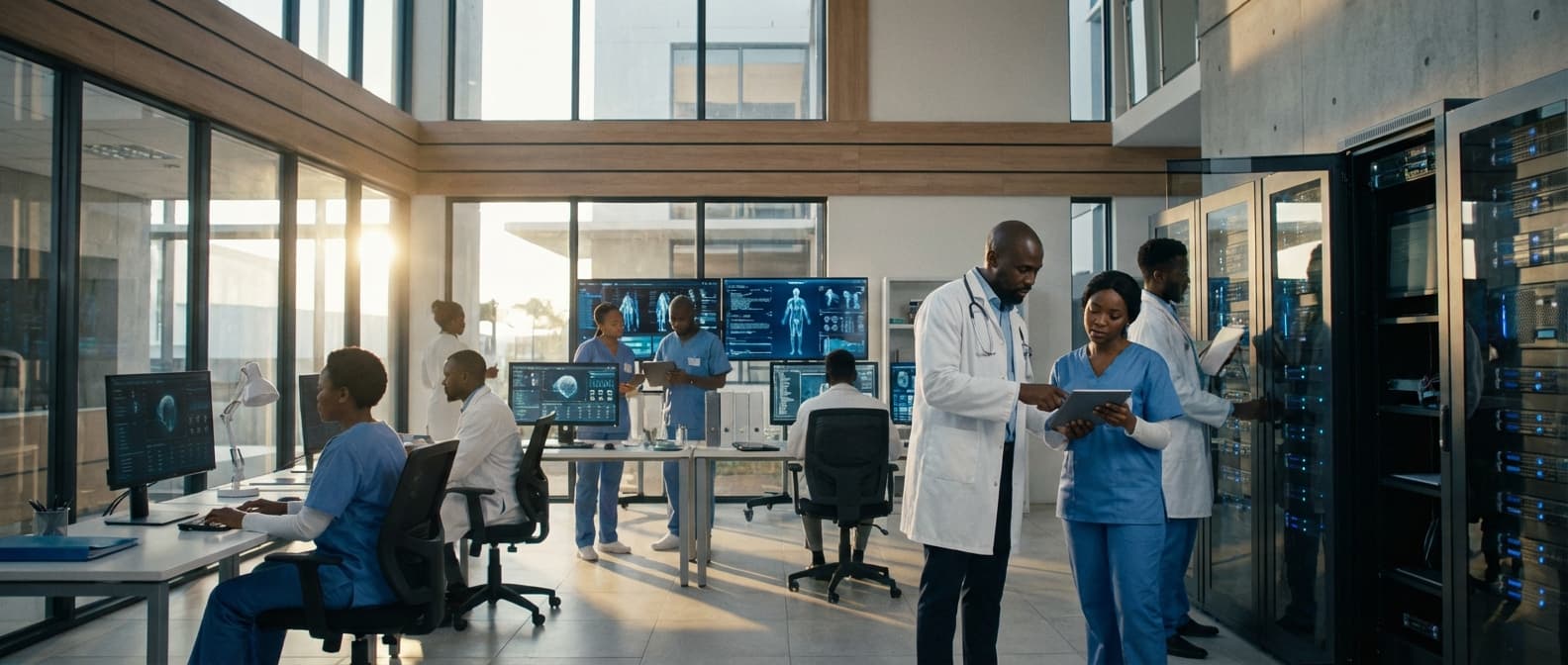
Tele-Radiology in Rwanda
Engineering Excellence & Technical Support
24/7 access to certified radiologists providing rapid, accurate remote interpretation of diagnostic imaging studies. High-standard technical execution following OEM protocols and local regulatory frameworks.
Expanding Access to Expert Diagnostics
Leveraging satellite internet and PACS technology, tele-radiology solutions are extending the reach of expert radiologists to remote clinics and underserved regions across Rwanda, ensuring timely and accurate diagnoses for a wider population.
Seamless Digital Image Transfer
Secure and efficient cloud-based Picture Archiving and Communication Systems (PACS) enable rapid upload and transmission of medical imaging data from local health facilities to specialized radiologists, overcoming geographical barriers and optimizing workflow.
Capacity Building for Local Technicians
Tele-radiology platforms facilitate remote training and consultation, empowering local radiographers and technicians with enhanced skills in image acquisition and quality control, thereby strengthening the overall healthcare infrastructure.
What Is Tele-radiology In Rwanda?
Tele-radiology in Rwanda refers to the practice of transmitting radiological images (such as X-rays, CT scans, and MRIs) from one location to another for interpretation by a radiologist. This service leverages telecommunications technology, specifically the internet, to facilitate remote diagnosis and consultation. It bridges geographical barriers, enabling patients and healthcare providers in underserved or remote areas to access specialized radiological expertise, which may be scarce locally. The service is crucial for improving diagnostic accuracy, expediting patient care, and optimizing the utilization of limited radiological resources within the Rwandan healthcare system.
| User Group | Needs Addressed | Typical Use Cases |
|---|---|---|
| Rural/Remote Health Centers: | Limited access to on-site radiologists and advanced imaging equipment. | X-ray interpretation for suspected fractures, pneumonia, or tuberculosis screening. CT scan interpretation for trauma or stroke when CT is available but no radiologist is present. |
| District Hospitals: | Potential shortages of subspecialty radiologists; high patient load. | General radiography interpretation, mammography screening, interpretation of more complex CT and MRI studies, neurological imaging, orthopedic imaging. |
| Referral Hospitals (e.g., University Teaching Hospital of Kigali): | Managing high volumes of complex cases; need for subspecialty expertise not always available locally. | Advanced cross-sectional imaging (CT, MRI) interpretation, interventional radiology support, subspecialty consultations (e.g., pediatric radiology, neuroradiology, musculoskeletal radiology). |
| Emergency Departments: | Urgent need for rapid diagnosis in critical situations. | Timely interpretation of trauma imaging (CT head, chest, abdomen, pelvis), stroke imaging (CT brain), acute abdominal pain workups. |
| Public Health Programs: | Facilitating large-scale screening and surveillance programs. | Mass screening for tuberculosis using chest X-rays, detection of potential outbreaks through aggregated imaging data analysis. |
Key Components and Stakeholders of Tele-radiology in Rwanda
- Image Acquisition: Radiographic equipment (X-ray, CT, MRI) located at healthcare facilities in Rwanda.
- Image Transmission: Secure and robust digital networks (e.g., internet, VPNs) for transferring DICOM-compliant images.
- Image Storage: Picture Archiving and Communication Systems (PACS) or cloud-based storage solutions.
- Interpretation: Board-certified radiologists, potentially located remotely (domestically or internationally), analyzing the transmitted images.
- Reporting: Generation of comprehensive diagnostic reports by the interpreting radiologist.
- Report Delivery: Secure transmission of reports back to the referring physician or healthcare facility.
- Healthcare Facilities: Hospitals, health centers, and clinics across Rwanda, particularly those lacking on-site radiology services.
- Referring Physicians: Clinicians who order radiological examinations and require expert interpretation.
- Patients: Individuals requiring diagnostic imaging services, especially those in rural or remote areas.
- Radiologists: Specialized medical doctors trained in interpreting medical images.
- IT Infrastructure Providers: Companies or organizations responsible for establishing and maintaining the necessary telecommunications and IT systems.
- Ministry of Health (Rwanda): Oversight and regulatory body, facilitating policy and infrastructure development.
Who Needs Tele-radiology In Rwanda?
Tele-radiology in Rwanda presents a transformative opportunity to bridge the gap in radiological expertise and access, particularly in underserved areas and for specialized imaging needs. Its adoption is crucial for improving diagnostic accuracy, reducing wait times, and ultimately enhancing patient care across the nation.
| Target Customer/Department | Specific Needs & Benefits of Tele-Radiology | Key Use Cases |
|---|---|---|
| Primary Healthcare Facilities (Health Centers & District Hospitals) | Lack of on-site radiologists, limited equipment maintenance, need for basic X-ray interpretation, ultrasound, and CT scan analysis. | Remote interpretation of X-rays for common conditions (fractures, pneumonia), basic ultrasound assessments, referral for complex cases, capacity building for local technicians. |
| Referral Hospitals | High patient volume, specialized imaging modalities (MRI, CT angiography), need for subspecialist interpretation (neurology, cardiology, oncology), managing radiologist workload. | Second opinions on complex scans, rapid interpretation of emergency imaging (stroke, trauma), subspecialty reporting (neuroradiology, musculoskeletal, abdominal), quality assurance and training. |
| Specialized Medical Centers (e.g., Cancer Centers, Cardiology Clinics) | Demand for highly specialized interpretation for cancer staging, treatment monitoring, cardiovascular imaging, and advanced interventional radiology procedures. | Expert interpretation of oncologic imaging (PET-CT, contrast-enhanced CT/MRI), cardiac MRI/CT analysis, interventional radiology procedure planning and remote guidance, fetal imaging expertise. |
| Training & Educational Institutions | Need for diverse case studies, expert-led teaching sessions, and opportunities for trainees to gain exposure to a wider range of imaging findings. | Remote lectures and case presentations by experienced radiologists, facilitated learning on complex cases, structured training programs for aspiring radiologists and radiographers. |
Who Needs Tele-Radiology in Rwanda? Target Customers & Departments
- Primary Healthcare Facilities (Health Centers & District Hospitals)
- Referral Hospitals
- Specialized Medical Centers
- Training & Educational Institutions
Tele-radiology Process In Rwanda
Tele-radiology in Rwanda involves a structured workflow to facilitate remote interpretation of medical imaging. This process begins with an inquiry from a referring healthcare facility, often a district hospital or health center lacking on-site radiologists. An image is acquired locally and then securely transmitted to a central tele-radiology hub or a pool of remote radiologists. The radiologist reviews the images, generates a report, and transmits it back to the originating facility. This workflow aims to improve access to expert diagnostic services, especially in underserved areas, leading to faster diagnosis and better patient management. The process is supported by digital imaging technology, secure communication channels, and trained local personnel. Key elements include image acquisition, secure data transmission, remote interpretation, report generation, and feedback mechanism.
| Stage | Description | Key Actors | Technology/Tools | Challenges |
|---|---|---|---|---|
| Inquiry and Referral | A clinical need for radiological interpretation arises at a peripheral health facility. The facility formally requests the service. | Referring clinician, Nurse, Health center/hospital administrator | Phone, WhatsApp, Internal communication system | Limited awareness of tele-radiology services, bureaucratic delays |
| Image Acquisition | Medical imaging (X-ray, Ultrasound, CT, MRI) is performed at the referring facility using available equipment. | Radiographer, Technician | Diagnostic imaging equipment (X-ray machine, Ultrasound probe, CT/MRI scanner) | Equipment maintenance and calibration, availability of skilled radiographers |
| Secure Data Transmission | Acquired images are anonymized and securely uploaded to a central server or directly to a radiologist via a dedicated platform. | Radiographer, IT support | Picture Archiving and Communication System (PACS), secure internet connection, VPN, encrypted data transfer protocols | Internet connectivity issues, data security concerns, bandwidth limitations |
| Remote Interpretation | A qualified radiologist, located remotely, accesses and reviews the transmitted images. | Radiologist | Workstation with high-resolution monitor, tele-radiology software, PACS viewer | Workload management, ensuring timely reviews, radiologist availability |
| Report Generation | The radiologist dictates or types a diagnostic report based on their findings. | Radiologist | Voice recognition software, reporting templates, tele-radiology software | Standardization of report formats, ensuring clarity and completeness |
| Report Delivery and Feedback | The final report is securely transmitted back to the referring facility. The referring clinician reviews the report and may seek clarification. | Radiologist, Referring clinician, Administrative staff | Tele-radiology platform, email, secure messaging | Ensuring timely delivery, understanding of findings by referring clinicians, mechanisms for feedback |
| Patient Management and Follow-up | The referring clinician uses the radiological findings to inform patient diagnosis, treatment, and follow-up plans. | Referring clinician | Electronic Health Records (EHR) (if available), clinical judgment | Integration into existing clinical workflows, continuous training for clinicians on interpreting and utilizing reports |
Tele-Radiology Workflow Stages in Rwanda
- Inquiry and Referral
- Image Acquisition
- Secure Data Transmission
- Remote Interpretation
- Report Generation
- Report Delivery and Feedback
- Patient Management and Follow-up
Tele-radiology Cost In Rwanda
Tele-radiology, the practice of interpreting medical images remotely, is an emerging field in Rwanda offering a potential solution to the shortage of radiologists and specialized diagnostic services, particularly in rural areas. The cost of tele-radiology services in Rwanda is influenced by several key factors, leading to a range of pricing. These factors include the complexity of the imaging study, the urgency of the report, the technology and infrastructure employed by the service provider, and the specific subspecialty required (e.g., neuro-radiology, musculoskeletal radiology). Furthermore, the business model adopted by the tele-radiology provider – whether it's a direct service to hospitals, a partnership with imaging centers, or a platform connecting local facilities with international radiologists – will also impact the pricing structure. Currently, due to its nascent stage and limited established providers, precise and widely published pricing data is scarce. However, based on anecdotal evidence and the general cost of healthcare services in Rwanda, a general understanding of the cost factors and potential ranges can be established.
| Type of Imaging Study (Common Examples) | Estimated Cost Range (RWF) | Notes |
|---|---|---|
| Plain X-ray (e.g., Chest X-ray, Limb X-ray) | 20,000 - 60,000 RWF | Basic interpretation. May vary slightly based on number of views. |
| Ultrasound (e.g., Abdominal, Pelvic, Obstetric) | 30,000 - 80,000 RWF | Depends on the area scanned and whether it's a routine or specialized scan (e.g., fetal anomaly scan). |
| CT Scan (e.g., Head CT, Abdomen/Pelvis CT) | 80,000 - 200,000 RWF | Cost is significantly influenced by the number of slices and the complexity of the scan. Urgent reports may add 20-30%. |
| MRI Scan (e.g., Brain MRI, Spine MRI) | 150,000 - 400,000+ RWF | Generally the most expensive due to equipment and interpretation time. Subspecialty interpretation adds to this cost. |
| Urgent/STAT Report Surcharge | Additional 20-30% of base cost | For reports required within a few hours. |
| Subspecialty Interpretation Fee | Additional 15-40% of base cost | For interpretation by specialized radiologists (e.g., neuroradiology, interventional radiology). |
Key Pricing Factors for Tele-Radiology in Rwanda
- Complexity of Imaging Study: Simple X-rays might be priced differently than complex CT scans or MRIs.
- Urgency of Report: 'STAT' or 'STAT' reports, requiring immediate turnaround, typically incur a surcharge.
- Subspecialty Required: Interpretation by a radiologist with a specific subspecialty (e.g., neuroradiologist, pediatric radiologist) will be more expensive than a general radiologist.
- Technology and Infrastructure: Providers with advanced, reliable PACS (Picture Archiving and Communication System) and teleradiology platforms may have higher operational costs reflected in pricing.
- Service Provider Model: Whether the service is provided by a local Rwandan entity, a regional hub, or an international provider will influence costs due to varying overheads and currency exchange rates.
- Volume and Contractual Agreements: Hospitals or clinics with higher volumes of imaging studies may negotiate bulk discounts.
- Ancillary Services: Additional services like consultations with the reporting radiologist or multi-disciplinary team meetings can add to the overall cost.
Affordable Tele-radiology Options
Tele-radiology offers a cost-effective solution for medical facilities by enabling remote interpretation of medical images. This service can significantly reduce overhead costs associated with in-house radiologists, including salaries, benefits, and infrastructure. Affordable tele-radiology options are available through various service models, with value bundles and strategic cost-saving approaches being key differentiators.
| Value Bundle Type | Included Services | Potential Cost Savings | Ideal For |
|---|---|---|---|
| Comprehensive Coverage Bundle | Routine reads, STAT reads, subspecialty reads, peer review | Reduced per-study cost through volume, predictable monthly spend | Hospitals, large imaging centers with diverse needs |
| Overnight/Weekend Coverage Bundle | STAT reads, preliminary reads for emergency departments | Avoids high costs of hiring full-time night/weekend radiologists | Emergency departments, urgent care centers |
| Subspecialty Focus Bundle | Specialized reads for specific modalities (e.g., neuroimaging, cardiac imaging) | Access to expertise without hiring niche specialists, potentially lower per-read cost than locums | Facilities with high volume of specific complex imaging |
| Basic Diagnostic Bundle | Routine diagnostic reads across common modalities | Streamlined service, cost-effective for moderate volumes | Smaller clinics, outpatient facilities |
Understanding Value Bundles and Cost-Saving Strategies in Tele-Radiology
- {"title":"Value Bundles Defined","description":"Value bundles are pre-packaged service offerings that combine multiple tele-radiology services into a single, predictable price. These bundles are designed to provide comprehensive coverage and greater cost certainty for healthcare providers."}
- {"title":"Common Tele-Radiology Services Included in Bundles","description":"Bundles often include services like routine diagnostic reads, subspecialty reads, preliminary reads, STAT reads, peer reviews, and quality assurance. The specific services can be tailored to the needs of the client."}
- {"title":"Cost-Saving Strategy: Volume-Based Pricing","description":"Many tele-radiology providers offer tiered pricing, where the per-study cost decreases as the volume of studies increases. This incentivizes larger healthcare systems or facilities with higher patient throughput to leverage tele-radiology."}
- {"title":"Cost-Saving Strategy: Flexible Service Models","description":"Providers may offer different models, such as on-demand reading, dedicated radiologist coverage for specific shifts, or overflow support. Choosing the right model based on facility needs can optimize costs."}
- {"title":"Cost-Saving Strategy: Technology Integration","description":"Seamless integration with a facility's existing PACS (Picture Archiving and Communication System) and EMR (Electronic Medical Record) systems can reduce implementation costs and improve workflow efficiency."}
- {"title":"Cost-Saving Strategy: Geographic Reach","description":"Tele-radiology providers can access a global pool of radiologists, allowing for competitive pricing and access to specialized expertise without the need for local recruitment."}
- {"title":"Cost-Saving Strategy: Focus on Specific Modalities or Subspecialties","description":"Some providers specialize in certain imaging modalities (e.g., MRI, CT) or subspecialties (e.g., neuroradiology, musculoskeletal radiology), which can lead to more competitive pricing for those specific services."}
- {"title":"Key Benefits of Value Bundles","description":"Benefits include budget predictability, simplified billing, access to a broader range of expertise, and often a lower overall cost compared to purchasing individual services separately."}
Verified Providers In Rwanda
In Rwanda's burgeoning healthcare landscape, the concept of 'verified providers' is gaining significant traction, ensuring patients receive quality care from reputable institutions. Franance Health stands out as a leading example of such a verified provider, distinguished by its unwavering commitment to excellence, patient-centric approach, and adherence to the highest medical standards. This document outlines Franance Health's key credentials and articulates why they represent the best choice for healthcare services in Rwanda.
| Credential/Strength | Significance for Patients | Franance Health's Commitment |
|---|---|---|
| Accreditation & Certifications | Assures adherence to internationally recognized quality and safety standards. | Actively pursues and maintains accreditations from relevant health authorities, ensuring a high standard of care. |
| Qualified Medical Team | Ensures expert diagnosis, effective treatment, and compassionate care from experienced professionals. | Recruits and retains top medical talent, investing in their ongoing training and specialization. |
| Advanced Facilities & Technology | Enables accurate diagnoses, efficient treatments, and improved patient comfort and recovery. | Continuously upgrades medical equipment and infrastructure to provide cutting-edge healthcare solutions. |
| Patient-Centered Approach | Guarantees personalized attention, clear communication, and a supportive healthcare experience. | Places patient needs and preferences at the forefront of all care delivery processes. |
| Comprehensive Services | Offers a wide spectrum of medical services, providing convenient access to diverse healthcare needs. | Strives to be a one-stop solution for healthcare, covering various medical specialties and general wellness. |
| Ethical Practices & Transparency | Builds trust and confidence through honest communication and responsible healthcare provision. | Operates with integrity, ensuring all patient interactions and financial dealings are transparent. |
Franance Health Credentials and Strengths
- Accreditation and Certifications: Franance Health has obtained crucial accreditations from national and international health bodies, signifying adherence to rigorous quality and safety protocols. These certifications are a testament to their commitment to world-class healthcare delivery.
- Highly Qualified Medical Professionals: The institution boasts a team of experienced and specialized doctors, nurses, and support staff. Continuous professional development and a focus on evidence-based medicine ensure patients receive the most up-to-date and effective treatments.
- State-of-the-Art Facilities and Technology: Franance Health invests in modern medical equipment and maintains advanced facilities, enabling accurate diagnostics and a wide range of treatment options. This technological advantage translates to improved patient outcomes and a more comfortable experience.
- Patient-Centric Care Philosophy: Beyond medical expertise, Franance Health prioritizes patient well-being. This includes clear communication, personalized treatment plans, empathetic care, and a focus on patient education to empower individuals in their health journey.
- Comprehensive Service Offerings: From primary care to specialized medical services, Franance Health provides a holistic approach to healthcare. This comprehensive range means patients can address most of their medical needs under one roof, simplifying their healthcare management.
- Strong Ethical Standards and Transparency: Upholding the highest ethical principles is paramount. Franance Health operates with transparency in all its dealings, fostering trust and confidence among its patients and the wider community.
- Community Engagement and Health Education: Actively participating in community health initiatives and providing educational resources demonstrates Franance Health's dedication to improving public health and well-being beyond its immediate patient base.
Scope Of Work For Tele-radiology
This Scope of Work (SOW) outlines the requirements for a Tele-Radiology service. It details the technical deliverables, standard specifications, and operational aspects necessary for providing remote radiological interpretation services. The objective is to ensure efficient, accurate, and secure delivery of diagnostic imaging interpretations.
1. Introduction
This SOW defines the scope of services for a Tele-Radiology solution. It covers the technical requirements for the platform, communication, data handling, security, and reporting, as well as the expected deliverables and performance standards from the service provider.
| Category | Technical Deliverables | Standard Specifications |
|---|---|---|
| Tele-Radiology Platform | Secure, web-based platform for image upload, viewing, interpretation, and reporting. | HIPAA/GDPR compliant, DICOM compliant, HL7 integration capabilities, audit trails, user role management, image manipulation tools (zoom, pan, window/level), and multi-modal viewing support (CT, MRI, X-ray, Ultrasound, etc.). |
| Image Acquisition & Transmission | Seamless integration with client's PACS/RIS for image acquisition and secure transmission. | DICOM standard for image transfer, secure VPN or encrypted protocols (e.g., TLS/SSL) for data transmission, minimal latency for real-time viewing. |
| Radiologist Workstation | High-resolution diagnostic monitors, ergonomic workstation setup, and PACS viewer software. | Minimum 3MP/5MP diagnostic displays, calibrated for accurate image display, certified radiologists with appropriate credentials and licensure. |
| Data Storage & Archiving | Secure, compliant storage for acquired images and reports. | Cloud-based or on-premises storage solutions, meeting data retention policies (e.g., 7-10 years), regular backups and disaster recovery plan. |
| Reporting | Standardized, templated reporting system with digital signature capability. | Integration with RIS for report distribution, HL7 integration for seamless EHR/EMR updates, customizable report templates, turnaround time (TAT) SLAs for different urgency levels. |
| Security | Robust security measures to protect patient data. | End-to-end encryption, multi-factor authentication, regular security audits and vulnerability assessments, access control logs. |
| Network Connectivity | Reliable and high-speed internet connectivity for both client and provider sites. | Minimum bandwidth requirements to be defined based on expected image volume and modality, redundant network connections where feasible. |
| Interoperability | Ability to integrate with existing client IT infrastructure (PACS, RIS, EHR/EMR). | Adherence to industry standards like HL7, DICOM, FHIR for seamless data exchange. |
Key Areas of the Scope of Work
- Service Provider Obligations
- Client Responsibilities
- Technical Requirements (Platform, Network, Security)
- Data Management and Storage
- Reporting and Communication
- Quality Assurance and Performance Metrics
- Implementation and Training
- Support and Maintenance
- Compliance and Legal Aspects
Service Level Agreement For Tele-radiology
This Service Level Agreement (SLA) outlines the performance expectations and guarantees for tele-radiology services provided by [Provider Name] to [Client Name]. It defines response times for critical and routine reads, and guarantees a minimum uptime for the tele-radiology platform.
| Service Component | Service Level Objective (SLO) | Measurement Method | Remedy for Failure |
|---|---|---|---|
| Critical Findings Reporting | Within 60 minutes of image availability and prior to the referring physician's decision-making needs. | Timestamp of image availability in PACS/RIS and timestamp of critical finding notification (phone, secure message, or EHR alert). | A service credit of [Percentage]% of the monthly fee for each instance of failure, up to a maximum of [Maximum Percentage]% per month. |
| Routine Interpretations | Within 24 business hours of image availability for routine studies. For STAT reads, within 4 business hours. | Timestamp of image availability in PACS/RIS and timestamp of final report generation in PACS/RIS. | A service credit of [Percentage]% of the monthly fee for each instance of failure, up to a maximum of [Maximum Percentage]% per month. |
| Platform Uptime | 99.9% availability during scheduled service hours ([Specify Hours, e.g., 24/7/365]). | Monitoring of platform accessibility through independent network monitoring tools. Downtime excludes scheduled maintenance windows. | For every hour or portion thereof of unplanned downtime exceeding the guaranteed uptime, a service credit of [Percentage]% of the monthly fee will be applied, up to a maximum of [Maximum Percentage]% per month. |
Key Service Level Objectives
- Response Time for Critical Findings: The time taken to communicate critical findings to the referring physician or designated contact.
- Response Time for Routine Interpretations: The time taken to provide a final radiology report for non-critical studies.
- System Uptime Guarantee: The percentage of time the tele-radiology platform is available and accessible for image upload, viewing, and reporting.
Frequently Asked Questions

Ready when you are
Let's scope your Tele-Radiology in Rwanda project in Rwanda.

Scaling healthcare logistics and technical systems across the entire continent.