
Radiology Reader & Reporting Support in Rwanda
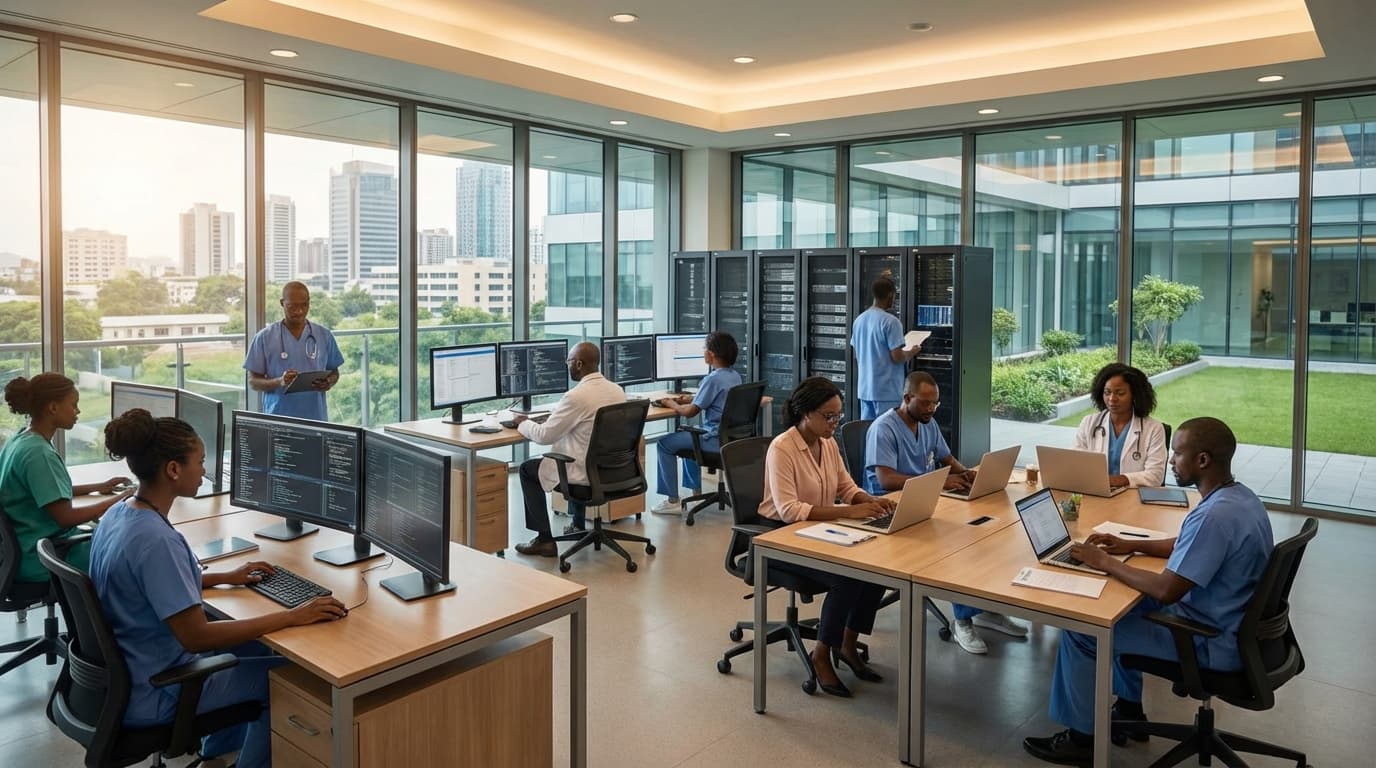
Engineering Excellence & Technical Support
Remote radiology reading and reporting services High-standard technical execution following OEM protocols and local regulatory frameworks.
AI-Powered Image Analysis
Leveraging advanced Artificial Intelligence algorithms to enhance image quality, detect subtle abnormalities, and prioritize critical findings, improving diagnostic accuracy and speed for radiologists.
Remote Reporting & Collaboration
Facilitating seamless tele-radiology workflows, enabling expert reporting from anywhere, and fostering real-time collaboration among radiologists across different facilities to ensure consistent, high-quality patient care.
Streamlined Reporting Workflow
Implementing intuitive reporting interfaces, automated report generation for common findings, and intelligent dictation tools to significantly reduce reporting time and minimize administrative burden on radiologists.
What Is Radiology Reader & Reporting Support In Rwanda?
Radiology Reader & Reporting Support in Rwanda refers to the provision of specialized services aimed at enhancing the diagnostic capabilities and workflow efficiency of radiology departments. This encompasses the interpretation of medical imaging studies (such as X-rays, CT scans, MRIs, and ultrasounds) by qualified radiologists and the subsequent generation of comprehensive, accurate, and timely diagnostic reports. The service is designed to address potential deficits in local radiologist expertise, capacity, or availability, thereby improving patient care outcomes and healthcare system performance. It leverages technology, often including Picture Archiving and Communication Systems (PACS) and specialized reporting software, to facilitate remote or assisted interpretation and reporting.
| Who Needs It? | Typical Use Cases | |||||
|---|---|---|---|---|---|---|
| Hospitals and Clinics in Rwanda with Limited In-house Radiology Expertise: Facilities lacking sufficient numbers of qualified radiologists or specific subspecialists. | Teleradiology Services: Providing remote interpretation for imaging studies performed in underserved areas or during off-hours (nights, weekends, holidays). | Outpatient Imaging Centers: Ensuring timely and accurate interpretation of scans for ambulatory patients. | Public Health Initiatives: Supporting large-scale screening programs or disaster response where immediate diagnostic capacity is required. | Training Institutions: Supplementing resident training by providing access to expert interpretations and case examples. | Tertiary Care Centers: Augmenting existing radiology departments with subspecialty coverage or managing high patient volumes. | |
| Emergency Department (ED) Imaging: Urgent interpretation of trauma, stroke, or acute abdominal conditions. | Oncology Imaging: Monitoring treatment response, staging, and follow-up for cancer patients. | Cardiology Imaging: Interpretation of echocardiograms, cardiac CTs, and MRIs. | Neurology Imaging: Diagnosis of stroke, tumors, degenerative diseases, and other neurological conditions. | Orthopedic Imaging: Evaluation of fractures, joint pathology, and sports injuries. | Pediatric Imaging: Specialized interpretation of imaging studies in neonates and children. | General Medical Imaging: Routine interpretation of chest X-rays, abdominal ultrasounds, and other common modalities. |
Key Components of Radiology Reader & Reporting Support
- Image Interpretation: Professional analysis of medical images by board-certified or credentialed radiologists.
- Diagnostic Report Generation: Creation of structured, clear, and concise reports detailing findings, impressions, and recommendations.
- Quality Assurance: Mechanisms for peer review, quality control, and continuous improvement of interpretation and reporting accuracy.
- Turnaround Time (TAT) Management: Strategies to ensure timely delivery of reports to referring physicians, critical for patient management.
- Workflow Integration: Seamless integration with existing hospital information systems (HIS) and PACS for efficient data exchange.
- Subspecialty Expertise: Access to radiologists with specialized knowledge in areas like neuroradiology, musculoskeletal radiology, interventional radiology, etc.
- Technology Utilization: Employing advanced imaging viewers, AI-assisted tools, and secure communication platforms.
Who Needs Radiology Reader & Reporting Support In Rwanda?
Radiology departments and healthcare facilities in Rwanda face unique challenges in providing timely and accurate diagnostic imaging services. These challenges are often compounded by a shortage of specialized radiologists, limited access to advanced reporting tools, and the need for efficient workflow management. Radiology reader and reporting support can significantly alleviate these pressures, improving patient care, diagnostic accuracy, and operational efficiency. The target customers for such support are diverse, ranging from public hospitals to private clinics, and their needs are often tailored to their specific resources and patient populations.
| Customer Type | Primary Departments Served | Key Needs Addressed |
|---|---|---|
| Public Hospitals (District and Referral) | Radiology Department, Emergency Department, Inpatient Wards (various specialties: Internal Medicine, Surgery, Pediatrics, Oncology, Neurology, Cardiology) | Tackling radiologist workload, improving turnaround time for critical reports, supporting subspecialty interpretations, enabling remote consultations/second opinions, enhancing diagnostic accuracy, facilitating training and knowledge transfer. |
| Private Hospitals and Clinics | Radiology Department, Outpatient Clinics, Surgical Suites, Specialist Clinics (e.g., Orthopedics, Gastroenterology) | Ensuring consistent and high-quality reporting, managing increasing imaging volumes, offering advanced reporting features, improving efficiency and patient throughput, maintaining competitive service standards. |
| Imaging Centers | Radiology Department, Diagnostic Services | Streamlining reporting workflows, standardizing report quality, providing specialized reporting expertise for diverse modalities (X-ray, Ultrasound, CT, MRI), enhancing operational efficiency. |
| Mobile Radiology Units | Radiology Unit, Outreach Programs, Remote Health Centers | Facilitating remote reading and reporting from central locations, ensuring consistent report quality for geographically dispersed patients, supporting diagnostic decision-making in underserved areas. |
| Research Institutions | Radiology Department, Research Labs | Providing specialized reporting for research studies, ensuring data consistency for analysis, supporting the interpretation of advanced imaging techniques, contributing to medical knowledge. |
| Medical Schools | Radiology Department, Training Programs | Enhancing resident and fellow training through structured reporting feedback, providing access to diverse case libraries, supporting educational initiatives with real-time reporting assistance. |
Target Customers and Departments for Radiology Reader & Reporting Support in Rwanda:
- Public Hospitals (District and Referral)
- Private Hospitals and Clinics
- Imaging Centers
- Mobile Radiology Units
- Research Institutions (with imaging capabilities)
- Medical Schools (for training and research)
Radiology Reader & Reporting Support Process In Rwanda
The Radiology Reader & Reporting Support Process in Rwanda outlines a standardized workflow designed to ensure efficient and accurate interpretation of radiological images and the subsequent generation of comprehensive reports. This process is crucial for patient diagnosis, treatment planning, and continuity of care within the Rwandan healthcare system. The workflow typically begins with an inquiry from a referring clinician, leading through image acquisition, interpretation by a radiologist (or reader), and culminating in the delivery of a finalized report.
| Stage | Description | Key Actors | Tools/Systems | Critical Success Factors |
|---|---|---|---|---|
| Inquiry & Request Generation | A clinician identifies a need for radiological imaging for a patient. A formal request is initiated, detailing patient information, clinical history, and the specific imaging modality required. | Referring Clinician, Nursing Staff | Hospital Information System (HIS), Electronic Medical Records (EMR), Paper Requisition Forms | Accurate patient data, clear clinical indication, timely request submission. |
| Image Acquisition | The patient undergoes the requested radiological examination (e.g., X-ray, CT scan, ultrasound) using specialized equipment. Images are captured digitally. | Radiology Technologist/Radiographer | Radiology Information System (RIS), Picture Archiving and Communication System (PACS), Imaging Modalities (X-ray machines, CT scanners, Ultrasound machines) | Correct patient positioning, appropriate technical parameters, image quality, patient comfort and safety. |
| Image Archiving & Retrieval | Acquired images are digitally stored, organized, and made retrievable for interpretation and future reference. This is often managed by a PACS. | PACS Administrator, Radiology Technologist | PACS, Storage Servers, Network Infrastructure | Secure storage, efficient retrieval, data integrity, adherence to retention policies. |
| Radiological Interpretation (Reading) | A qualified radiologist reviews the acquired images, looking for abnormalities, identifying findings, and correlating them with the patient's clinical information. This is the core 'reading' stage. | Radiologist (Specialist, Generalist) | PACS workstations, viewing software, dictation software | Radiologist expertise, availability of relevant clinical history, adequate viewing conditions, efficient workflow. |
| Report Generation | Based on the interpretation, the radiologist dictates or writes a formal report detailing the findings, impressions, and recommendations. This can be done using dictation or direct typing. | Radiologist | Dictation software, word processing software, RIS | Clarity, conciseness, accuracy of findings, appropriate medical terminology, structured reporting format. |
| Report Review & Approval | In some settings, a senior radiologist may review and approve reports generated by junior radiologists to ensure quality and consistency. For critical findings, prompt review is essential. | Senior Radiologist (if applicable), Radiologist | RIS, PACS | Adherence to quality standards, promptness, constructive feedback. |
| Report Distribution & Communication | The finalized report is transmitted back to the referring clinician for integration into the patient's overall care plan. This can be electronic or paper-based. | Radiology Department Staff, Referring Clinician | HIS, EMR, Fax, Printed Reports, Secure Messaging Systems | Timely delivery, accessibility to the referring clinician, clear communication of critical findings, secure transmission. |
Key Stages of the Radiology Reader & Reporting Support Process:
- Inquiry & Request Generation
- Image Acquisition
- Image Archiving & Retrieval
- Radiological Interpretation (Reading)
- Report Generation
- Report Review & Approval
- Report Distribution & Communication
Radiology Reader & Reporting Support Cost In Rwanda
The cost of radiology reading and reporting support in Rwanda is influenced by several key factors, including the complexity and modality of the imaging (e.g., X-ray, CT, MRI, Ultrasound), the radiologist's specialization and experience, the urgency of the report, and the specific provider or service model used (e.g., in-house vs. outsourced, local vs. international tele-radiology). Pricing is typically quoted in Rwandan Francs (RWF).
| Imaging Modality / Service Type | Estimated Price Range (RWF) | Notes |
|---|---|---|
| X-ray Interpretation & Reporting (Routine) | 15,000 - 40,000 RWF | Basic plain radiography. |
| Ultrasound Interpretation & Reporting (Routine) | 25,000 - 70,000 RWF | Abdominal, pelvic, obstetric scans. |
| CT Scan Interpretation & Reporting (Routine) | 60,000 - 150,000 RWF | Per region or full body scan. |
| MRI Scan Interpretation & Reporting (Routine) | 90,000 - 250,000 RWF | Per region or full body scan. |
| Specialized Interpretation (e.g., Mammography, Cardiac CT) | 50,000 - 200,000 RWF | Varies significantly based on specialization. |
| STAT/Urgent Reporting Fee | Add 20% - 50% to base price | For immediate turnaround needs. |
| Tele-radiology Services (Per Study) | 30,000 - 180,000 RWF | Can vary based on provider origin and service level. |
| Monthly/Annual Service Agreements (Bulk) | Negotiable, significantly lower per-study rate | For high-volume healthcare facilities. |
Key Pricing Factors for Radiology Reading & Reporting Support in Rwanda
- Modality of Imaging: Different imaging techniques require varying levels of expertise and time for interpretation. MRI and CT scans generally incur higher costs than X-rays or basic ultrasounds.
- Complexity of the Case: Routine studies are less expensive than complex cases requiring in-depth analysis, comparison with prior imaging, or consultation with other specialists.
- Radiologist Expertise and Specialization: Highly specialized radiologists (e.g., neuroradiologists, interventional radiologists) or those with extensive experience may command higher fees.
- Urgency of the Report: STAT (immediate) readings and reports are usually priced at a premium compared to routine turnaround times.
- Provider Type and Location: Local radiologists working in private clinics or hospitals might have different pricing structures than international tele-radiology providers who often offer competitive rates but may have additional logistical considerations.
- Volume and Contractual Agreements: Hospitals or clinics with high volumes of studies may negotiate discounted rates through service level agreements (SLAs).
- Technology and Infrastructure: The cost of maintaining advanced PACS (Picture Archiving and Communication System) and reporting software can influence overall pricing.
- Geographic Accessibility: For remote areas, the cost of ensuring timely access to expert radiologists, potentially through tele-radiology, can be a factor.
Affordable Radiology Reader & Reporting Support Options
Radiology practices and hospitals are constantly seeking ways to optimize costs without compromising the quality of patient care. Access to skilled radiology readers and efficient reporting tools is paramount. This document outlines various affordable options, focusing on value bundles and cost-saving strategies to achieve this balance.
| Value Bundle Component | Description | Cost-Saving Strategy | Potential Benefits |
|---|---|---|---|
| Teleradiology + AI Triage | Remote reading services integrated with AI tools that pre-screen images and flag potential abnormalities. | Reduced radiologist time per study, efficient workflow, reduced need for in-house subspecialists. | Lower per-study cost, faster turnaround times, access to subspecialty reads, improved radiologist productivity. |
| Subspecialty Coverage Pack | A tiered service offering access to a panel of subspecialist radiologists for a fixed monthly fee or per-study rate, covering specific modalities or body parts. | Predictable costs, access to expertise without high overhead, scalability based on demand. | Enhanced diagnostic accuracy, broader service offering, improved patient outcomes, reduced recruitment challenges. |
| Reporting Efficiency Suite | Bundle of speech recognition software, structured reporting templates, and potentially AI-assisted report generation tools. | Eliminates or reduces transcription costs, standardizes reports, speeds up reporting turnaround. | Increased radiologist throughput, improved report quality and consistency, significant cost reduction in reporting. |
| 24/7 Overflow & After-Hours Support | Dedicated remote reading services for covering peak times, weekends, and holidays, ensuring continuous coverage. | Avoids overtime costs for in-house staff, prevents burnout, maintains service availability. | Consistent patient care regardless of time, reduced staffing strain, improved work-life balance for permanent staff. |
| Managed IT & PACS Integration | Outsourced management of PACS, RIS, and IT infrastructure, often bundled with tele-radiology services. | Reduces IT staff and infrastructure costs, ensures system uptime and security, simplifies technology management. | Lower IT overhead, focus on core clinical operations, access to up-to-date technology without capital investment. |
Affordable Radiology Reader & Reporting Support Options
- Tele-Radiology Services: Leveraging remote radiologists to read images and generate reports. This can significantly reduce overhead compared to in-house staffing and offers 24/7 coverage possibilities.
- Subspecialty Expertise on Demand: Instead of hiring full-time subspecialists, utilize tele-radiology providers who offer access to a wide range of subspecialties as needed, paying only for the services utilized.
- AI-Powered Teleradiology Integration: Combining AI tools for initial image analysis and anomaly detection with human oversight from remote radiologists. AI can triage studies, highlight potential findings, and streamline the reading process.
- Virtual Radiology Departments: Building a flexible, remote radiology department model where reading is done by a distributed network of radiologists, reducing the need for physical office space and infrastructure.
- Managed Radiology Services: Outsourcing the entire radiology reading and reporting function to a specialized vendor who manages the radiologists, technology, and workflow.
- Hybrid Models: Combining in-house radiologists for core services with tele-radiology for overflow, after-hours, or subspecialty needs.
- Flexible Staffing Models: Utilizing locum tenens radiologists or part-time contracts for fluctuating workloads instead of permanent hires.
- Reporting Software Solutions: Implementing cost-effective dictation, voice recognition, and structured reporting software to improve radiologist efficiency and reduce transcription costs.
- Cloud-Based PACS and RIS: Migrating to cloud-based Picture Archiving and Communication Systems (PACS) and Radiology Information Systems (RIS) can reduce IT infrastructure costs and maintenance.
Verified Providers In Rwanda
In Rwanda's rapidly evolving healthcare landscape, ensuring access to verified and high-quality medical services is paramount. Franance Health stands out as a leading provider, distinguished by its rigorous credentialing processes and commitment to patient well-being. This dedication to excellence positions Franance Health as the best choice for individuals and families seeking reliable and competent healthcare.
| Aspect | Franance Health's Approach | Benefits for Patients |
|---|---|---|
| Credential Verification | Multi-stage process including license checks, degree validation, and experience assessment. | Guaranteed access to legally qualified and experienced medical professionals. |
| Provider Quality | Evaluation of clinical skills, patient feedback, and adherence to ethical standards. | Higher likelihood of receiving effective, compassionate, and safe medical treatment. |
| Network Scope | Extensive network covering primary care, surgical specialties, diagnostics, and more. | Comprehensive healthcare solutions available through a single, trusted platform. |
| Patient Experience | User-friendly platform for searching, booking, and managing appointments. | Reduced administrative burden and improved accessibility to healthcare services. |
| Transparency | Clear presentation of provider information and qualifications. | Empowered decision-making based on reliable and accessible information. |
Why Franance Health is the Best Choice for Verified Providers in Rwanda
- Rigorous Vetting of Medical Professionals: Franance Health employs a multi-stage credentialing process that scrutinizes the qualifications, licenses, and experience of every healthcare provider within its network. This ensures that patients are connected with genuinely competent and authorized medical experts.
- Focus on Patient Safety and Outcomes: Beyond credentials, Franance Health prioritizes providers with a proven track record of excellent patient care and a commitment to ethical medical practices. This focus directly translates to safer procedures and improved health outcomes for patients.
- Comprehensive Network of Specialists: Franance Health offers access to a diverse and extensive network of specialists across various medical disciplines. Whether you require a general practitioner, a surgeon, or a niche specialist, Franance Health can connect you with verified experts.
- Streamlined Access and Convenience: By partnering with Franance Health, patients benefit from an efficient and user-friendly system for finding and booking appointments with verified providers. This reduces the stress and uncertainty often associated with seeking medical care.
- Commitment to Continuous Improvement: Franance Health actively monitors the performance and feedback of its partnered providers, fostering a culture of continuous professional development and ensuring that standards remain exceptionally high.
- Empowering Patients with Information: Franance Health provides transparent information about its providers, allowing patients to make informed decisions about their healthcare. This includes details about specialties, experience, and affiliations.
- Adherence to International Standards: The credentialing and operational standards adopted by Franance Health align with best practices in global healthcare, guaranteeing a level of quality that meets international benchmarks.
Scope Of Work For Radiology Reader & Reporting Support
This Scope of Work (SOW) outlines the requirements for Radiology Reader & Reporting Support services. This service will provide qualified radiologists to review medical imaging studies, generate comprehensive diagnostic reports, and ensure timely delivery of these reports to referring physicians and relevant healthcare providers. The scope includes the provision of expert interpretation, quality assurance, and adherence to established reporting standards. This document details the technical deliverables and standard specifications expected from the service provider.
| Deliverable | Description | Standard Specification | Format/Medium |
|---|---|---|---|
| Interpreted Imaging Studies | All assigned radiology examinations (e.g., X-ray, CT, MRI, Ultrasound, Nuclear Medicine). | Studies reviewed by board-certified radiologists in relevant subspecialties. | Digital DICOM images (accessible via PACS/viewer). |
| Diagnostic Radiology Reports | Detailed reports outlining findings, impressions, and recommendations. | Reports written in clear, concise medical language, adhering to clinical guidelines and institutional templates. | Digital text reports (e.g., PDF, HL7 FHIR, integrated into RIS). |
| Urgent/STAT Report Turnaround Time (TAT) | Time from study completion to report availability for critical findings. | Typically within 1 hour for STAT reads, as defined by client protocol. | Real-time notification of report availability. |
| Routine Report Turnaround Time (TAT) | Time from study completion to report availability for non-urgent findings. | Typically within 24-48 hours, as defined by client protocol. | Real-time notification of report availability. |
| Quality Assurance Metrics | Tracking of report accuracy, clarity, and timeliness. | Regular internal peer review, error rate monitoring, and adherence to established quality standards. | Monthly/Quarterly QA reports. |
| Data Security and Privacy | Protection of patient health information (PHI). | Full compliance with HIPAA, GDPR, and other relevant data privacy regulations. | Encrypted data transmission, secure access controls. |
| System Integration Requirements | Seamless connectivity with the client's Picture Archiving and Communication System (PACS) and Radiology Information System (RIS). | Secure VPN or API integration; adherence to HL7 standards for data exchange. | Verified system interoperability. |
| Radiologist Qualifications | Expertise and credentials of reading radiologists. | Board certification (or eligibility) in Radiology by a recognized board; state medical license; fellowship training in subspecialties as required. | CVs and credentialing documentation. |
| Reporting Templates | Standardized report structures for various imaging modalities and examinations. | Customizable templates to align with client-specific needs and preferences. | Digital template files (e.g., Word, XML). |
Key Service Components
- Radiology Image Interpretation and Diagnosis
- Comprehensive Diagnostic Report Generation
- Adherence to Reporting Turnaround Times (TAT)
- Quality Assurance and Peer Review
- Secure Data Transmission and Archiving
- Integration with PACS and RIS Systems
- Continuous Improvement and Feedback Mechanisms
Service Level Agreement For Radiology Reader & Reporting Support
This Service Level Agreement (SLA) outlines the performance standards and guarantees for the Radiology Reader & Reporting Support services provided by [Your Company Name] (the "Provider") to [Client Name] (the "Client"). This SLA applies to all services related to the interpretation of radiological images and the generation of corresponding reports by qualified radiologists and reporting staff. The primary objective is to ensure timely and accurate diagnostic support, contributing to efficient patient care.
| Service Component | SLA Guarantee | Measurement Metric | Reporting Period | Remedy for Breach |
|---|---|---|---|---|
| Interpretation Response Time (Standard Cases) | 95% of requests within 4 business hours | Percentage of requests commenced within the defined time. | Monthly | 10% service credit on monthly fees for each full percentage point below 95% up to a maximum of 50%. |
| Interpretation Response Time (Critical Cases) | 99% of requests within 1 business hour | Percentage of critical requests commenced within the defined time. | Monthly | 20% service credit on monthly fees for each full percentage point below 99% up to a maximum of 75%. |
| Report Turnaround Time (Standard Cases) | 90% of reports finalized and delivered within 24 business hours of interpretation commencement. | Percentage of reports delivered within the defined TAT. | Monthly | 5% service credit on monthly fees for each full percentage point below 90% up to a maximum of 25%. |
| Report Turnaround Time (Critical Cases) | 98% of reports finalized and delivered within 2 business hours of interpretation commencement. | Percentage of critical reports delivered within the defined TAT. | Monthly | 15% service credit on monthly fees for each full percentage point below 98% up to a maximum of 70%. |
| System Uptime Guarantee | 99.5% uptime during contracted service hours (e.g., 24/7/365 or specified business hours) | Percentage of scheduled service availability. | Monthly | 15% service credit on monthly fees for each full hour of unplanned downtime exceeding 0.5% of the total contracted service hours. |
Key Service Components & Definitions
- Radiology Reader & Reporting Support: This encompasses the services of qualified radiologists and reporting personnel in interpreting medical images (e.g., X-ray, CT, MRI, Ultrasound) and generating comprehensive, accurate, and clinically relevant reports.
- Response Time: The maximum allowable time from a request being logged or an image being available for interpretation to a radiologist commencing the interpretation process.
- Report Turnaround Time (TAT): The maximum allowable time from the commencement of interpretation to the finalization and delivery of the diagnostic report to the Client's designated system.
- Uptime Guarantee: The percentage of time the Provider's reading platform and associated reporting systems are available and operational for use by the Client.
- Critical Cases: Cases identified by the Client's referring physician or the referring facility as requiring urgent interpretation due to immediate patient safety concerns or imminent clinical decisions. These are typically designated with specific urgency codes.
Frequently Asked Questions

Ready when you are
Let's scope your Radiology Reader & Reporting Support in Rwanda project in Rwanda.

Scaling healthcare logistics and technical systems across the entire continent.