
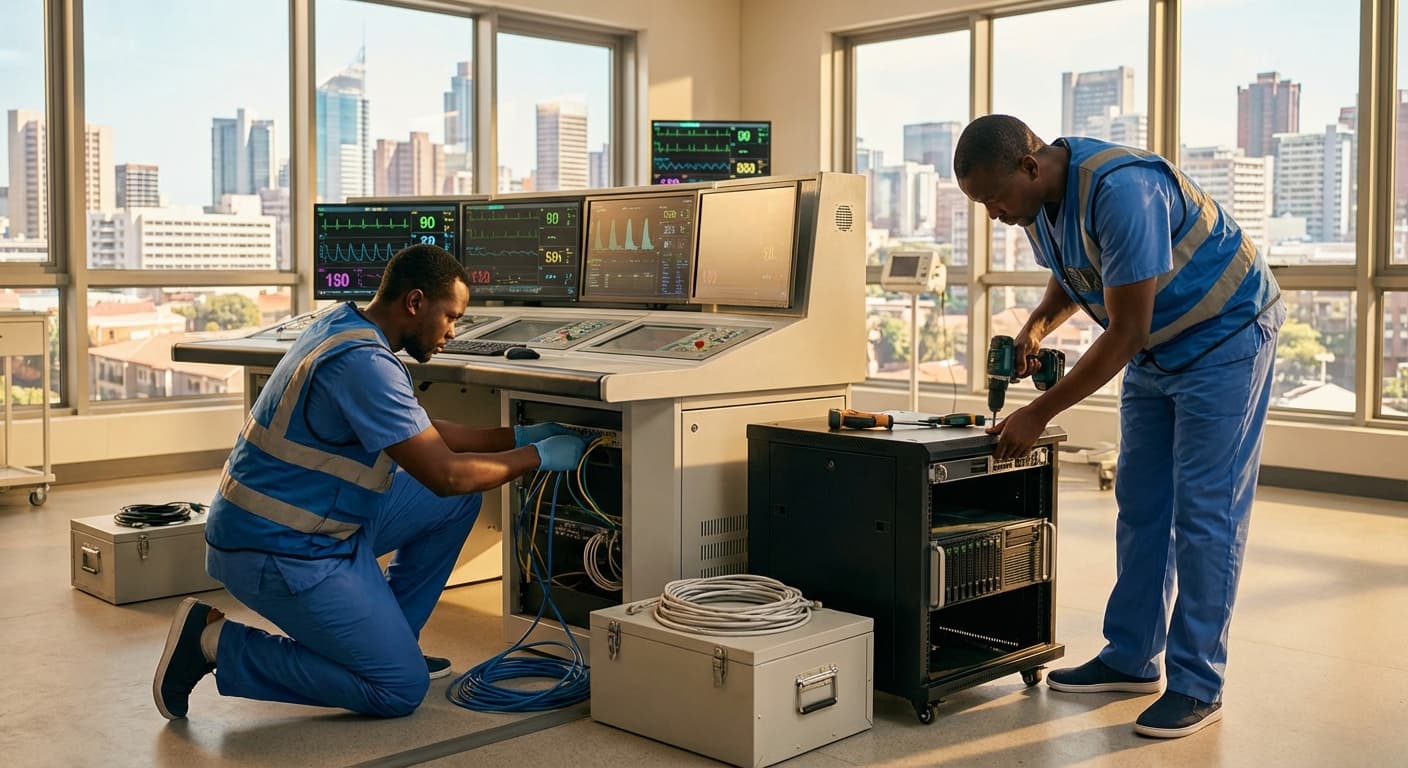
ICU Central Monitoring Station Installation Service in Rwanda
Engineering Excellence & Technical Support
ICU Central Monitoring Station Installation Service High-standard technical execution following OEM protocols and local regulatory frameworks.
Robust Network Infrastructure
We deploy high-availability, secure, and scalable network architectures specifically designed for critical healthcare environments. Our installations in Rwanda ensure reliable data transmission for real-time patient monitoring, integrating seamlessly with existing hospital IT systems for uninterrupted critical care.
Uninterrupted Power & Data Redundancy
Our service includes the meticulous setup of redundant power supplies (UPS, generators) and data pathways. This guarantees continuous operation of your ICU central monitoring station in Rwanda, safeguarding against power outages and network failures, thus maintaining vital patient oversight at all times.
Seamless Device & System Integration
We specialize in the expert integration of diverse patient monitoring devices (ventilators, ECG, SpO2, etc.) with your central monitoring platform. Our installations in Rwanda are tailored to ensure accurate data aggregation, intuitive visualization, and immediate alert management, empowering clinicians with comprehensive patient insights.
What Is Icu Central Monitoring Station Installation Service In Rwanda?
ICU Central Monitoring Station Installation Service in Rwanda refers to the comprehensive process of setting up, configuring, and integrating a centralized system designed to monitor vital physiological parameters of critically ill patients admitted to Intensive Care Units (ICUs) within healthcare facilities in Rwanda. This service encompasses the procurement, installation, calibration, network integration, and initial training for the hardware and software components of a central monitoring station. The objective is to provide real-time, continuous observation of patient data, enabling prompt clinical intervention, improved patient outcomes, and enhanced operational efficiency for ICU staff.
| Who Needs This Service? | Typical Use Cases | ||||||
|---|---|---|---|---|---|---|---|
| Hospitals and Healthcare Facilities: Public and private hospitals, particularly those with dedicated Intensive Care Units (ICUs), High Dependency Units (HDUs), and post-operative recovery areas. | Management of Critically Ill Patients: Continuous surveillance of hemodynamic parameters (e.g., heart rate, blood pressure, CVP), respiratory status (e.g., respiratory rate, oxygen saturation), and other vital signs in patients with severe illness, trauma, or undergoing major surgery. | University Teaching Hospitals and Research Institutions: Facilities requiring advanced patient monitoring for clinical education, research projects, and evidence-based practice development. | Emergency and Trauma Centers: Rapid assessment and ongoing monitoring of patients with acute life-threatening conditions requiring immediate and sustained critical care. | Government Health Ministries and Agencies: Overseeing the implementation of critical care infrastructure and setting standards for patient monitoring across the nation. | Post-Surgical Monitoring: Close observation of patients recovering from complex or high-risk surgical procedures to detect early signs of complications. | Facilities undergoing Renovation or Expansion: Integration of new or upgraded ICU facilities with advanced monitoring capabilities. | Cardiac and Neurological ICUs: Specialized monitoring of patients with cardiac arrhythmias, myocardial infarction, stroke, or other neurological emergencies. |
Key Components of ICU Central Monitoring Station Installation Service:
- System Design and Planning: Site assessment, determination of optimal hardware placement, network infrastructure evaluation, and development of a detailed installation blueprint.
- Hardware Procurement and Installation: Sourcing and physical installation of central monitoring consoles, network switches, cabling, power distribution units, and associated infrastructure.
- Patient Monitor Integration: Connecting bedside patient monitors (e.g., ECG, SpO2, NIBP, invasive pressure, respiration, temperature) to the central station via a robust and secure network protocol (e.g., HL7, proprietary protocols).
- Software Configuration and Deployment: Installation and configuration of the central monitoring software, including user interface customization, alarm management settings, data archiving, and potential integration with Electronic Health Records (EHR) systems.
- Network Infrastructure Setup: Establishing reliable and secure network connectivity between bedside monitors and the central station, ensuring data integrity and minimal latency.
- Calibration and Testing: Rigorous calibration of all connected monitoring devices and comprehensive system testing to validate data accuracy and functionality.
- User Training: Providing in-depth training to ICU physicians, nurses, and technicians on the operation of the central monitoring station, alarm interpretation, data retrieval, and troubleshooting.
- Documentation and Handover: Supplying comprehensive system documentation, including technical manuals, user guides, and warranty information, followed by a formal system handover.
Who Needs Icu Central Monitoring Station Installation Service In Rwanda?
The installation of an ICU Central Monitoring Station (CMS) service in Rwanda is crucial for enhancing critical care capabilities across healthcare facilities. A CMS allows for real-time, remote monitoring of multiple Intensive Care Unit (ICU) patients from a central location, improving patient outcomes through timely intervention, reduced workload for nursing staff, and optimized resource allocation. This service is particularly relevant in Rwanda as the nation continues to invest in and strengthen its healthcare infrastructure.
| Department | Specific Needs/Benefits of CMS Installation |
|---|---|
| Intensive Care Unit (ICU) | Direct real-time monitoring of all ventilated and critically ill patients. Early detection of deteriorating conditions. Improved patient safety. Reduced alarm fatigue for bedside nurses through centralized alarm management. Facilitation of rapid response by medical teams. Enhanced documentation and data collection for quality improvement and research. |
| Anesthesiology | Monitoring of critically ill patients in the immediate post-operative period within the ICU. Collaboration with ICU teams for seamless patient management. Real-time data for anesthetic management decisions. |
| Cardiology | Continuous monitoring of cardiac vital signs (ECG, blood pressure, etc.) for patients with severe cardiac conditions. Early identification of arrhythmias and hemodynamic instability. Support for specialized cardiac care units within the ICU. |
| Pulmonology | Close observation of respiratory status, oxygen saturation, and ventilator settings for patients with severe respiratory failure. Centralized monitoring aids in timely adjustments to mechanical ventilation and respiratory support. |
| Nephrology | Monitoring of fluid balance, electrolyte levels, and hemodynamic parameters for critically ill patients with acute kidney injury or on dialysis within the ICU. |
| Infectious Diseases | Continuous monitoring of vital signs and patient response to treatment for critically ill patients with severe infections (e.g., sepsis). |
| Nursing Administration | Improved staff efficiency and workload management. Enhanced supervision and support for bedside nurses. Facilitation of nurse-to-nurse handovers. Optimization of staffing levels based on patient acuity. |
| Medical Administration/Hospital Management | Improved patient outcomes and reduced mortality rates. Enhanced reputation for quality of care. Potential for cost savings through early intervention and reduced complications. Data for performance evaluation and strategic planning. Compliance with international healthcare standards. |
| IT and Biomedical Engineering Departments | Integration of new monitoring systems with existing hospital IT infrastructure. Maintenance, troubleshooting, and calibration of CMS equipment. Data security and network management for the CMS. |
Target Customers for ICU Central Monitoring Station Installation Service in Rwanda
- Hospitals with existing or planned Intensive Care Units (ICUs)
- Government-funded public hospitals
- Private hospitals and specialized medical centers
- Tertiary referral hospitals
- University teaching hospitals
- Healthcare organizations seeking to upgrade their critical care infrastructure
- Organizations involved in national health system development
Icu Central Monitoring Station Installation Service Process In Rwanda
This document outlines the workflow for the ICU Central Monitoring Station Installation Service Process in Rwanda, from initial inquiry to successful execution. This structured approach ensures clarity, efficiency, and adherence to best practices for a critical healthcare infrastructure deployment.
| Stage | Description | Key Activities | Deliverables/Outcomes | Responsible Party |
|---|---|---|---|---|
| The process begins with a client expressing interest in the ICU Central Monitoring Station installation service. | Contacting the service provider, initial discussion of needs and scope, preliminary information exchange. | Confirmation of interest, basic understanding of project requirements. | Client, Service Provider Sales/Consultation Team |
| A thorough evaluation of the client's facility to determine specific installation needs and constraints. | On-site visit, assessment of existing infrastructure (power, networking, physical space), detailed discussion of functional requirements, identification of potential challenges. | Site assessment report, detailed technical specifications, confirmed system requirements. | Service Provider Technical Team, Client Biomedical Engineering/IT |
| Based on the site assessment, a comprehensive proposal and quotation are prepared and submitted to the client. | Development of a detailed technical proposal, bill of materials, cost breakdown, installation timeline, and service level agreements (SLAs). | Formal proposal document, detailed quotation, preliminary project timeline. | Service Provider Sales/Technical Team |
| Formalizing the agreement between the client and the service provider. | Review of proposal, negotiation of terms and conditions, pricing adjustments, finalization of contract documents, signing of the agreement. | Signed contract, agreed-upon scope of work, payment schedule. | Client Management/Legal, Service Provider Management/Legal |
| Developing a detailed plan for the execution of the installation project. | Creation of a comprehensive project plan, defining tasks, milestones, resource allocation, risk assessment, and communication protocols. Scheduling of installation phases. | Detailed project plan, Gantt chart, resource allocation matrix, communication plan. | Service Provider Project Manager |
| Acquiring all necessary equipment and materials and arranging for their delivery to the site. | Ordering of hardware, software, cables, and accessories. Coordination of shipping, customs clearance (if applicable in Rwanda), and delivery to the installation site. | All required equipment and materials delivered to the site. | Service Provider Procurement/Logistics Team |
| The physical installation of the central monitoring station and associated components. | Installation of servers, workstations, network infrastructure, cabling, and any other hardware. Software installation and initial configuration. Integration with existing medical devices. | Physically installed and configured central monitoring station hardware and software. | Service Provider Installation Technicians/Engineers |
| Verifying that the installed system functions correctly and meets all specified requirements. | Performing functional tests, performance tests, integration tests, and user acceptance testing (UAT). Calibration of sensors and devices. Final system checks. | Tested and commissioned central monitoring station, test reports, UAT sign-off. | Service Provider Technical Team, Client Biomedical Engineering/IT |
| Ensuring the client's staff are proficient in operating and maintaining the new system. | Conducting training sessions for clinicians, biomedical engineers, and IT personnel on system operation, troubleshooting, and basic maintenance. Formal handover of the system and documentation. | Trained staff, user manuals, administrator guides, system handover document. | Service Provider Training Specialist, Client End-Users |
| Providing ongoing support and ensuring the long-term optimal performance of the system. | Offering technical support, routine maintenance, software updates, and warranty services as per the contract. Regular system performance checks and optimization. | Ongoing system uptime, resolved support issues, scheduled maintenance reports. | Service Provider Support Team, Client Biomedical Engineering/IT |
Key Stages of the ICU Central Monitoring Station Installation Service Process
- Inquiry and Initial Consultation
- Site Assessment and Requirements Gathering
- Proposal and Quotation
- Contract Negotiation and Signing
- Project Planning and Scheduling
- Procurement and Logistics
- On-site Installation and Configuration
- Testing and Commissioning
- Training and Handover
- Post-Installation Support and Maintenance
Icu Central Monitoring Station Installation Service Cost In Rwanda
The cost of installing an ICU central monitoring station in Rwanda can vary significantly based on several factors. These include the size and complexity of the ICU, the specific features and capabilities of the monitoring system chosen (e.g., number of beds monitored, types of parameters tracked, integration with EMR systems), the brand and quality of the equipment, and the installation and configuration services required from the vendor. Additional costs may arise for network infrastructure upgrades, power backup solutions, and ongoing maintenance contracts. Given the specialized nature of this equipment and the limited number of suppliers in Rwanda, pricing can also be influenced by import duties, shipping costs, and the vendor's overhead.
It's crucial for healthcare facilities to obtain detailed quotes from multiple reputable suppliers. These quotes should clearly outline the equipment costs, installation fees, warranty periods, and any training provided. Local currency (Rwandan Franc - RWF) pricing will fluctuate based on the current exchange rates for imported components and the vendor's pricing strategy. As a general guideline, a basic ICU central monitoring station installation could range from several million to tens of millions of Rwandan Francs.
| Cost Component | Estimated Range (RWF - Millions) | Notes |
|---|---|---|
| Monitoring Equipment (per bed unit) | 1.5 - 5.0 | Varies significantly by brand, features, and quality. |
| Central Monitoring Station Console | 5.0 - 15.0 | Depends on screen size, processing power, and software capabilities. |
| Installation & Configuration Services | 2.0 - 8.0 | Includes setup, calibration, and initial testing by technicians. |
| Network Cabling & Infrastructure | 1.0 - 4.0 | If existing network is insufficient for real-time data transfer. |
| Power Backup (UPS/Generator) | 1.0 - 5.0 | Essential for continuous operation during power outages. |
| Software Licenses & EMR Integration | 2.0 - 10.0+ | Can be a significant cost, especially for advanced analytics or custom integrations. |
| Training | 0.5 - 2.0 | For clinical and technical staff. |
| Contingency & Miscellaneous (e.g., import duties) | 10% - 20% of total equipment cost | Unforeseen expenses and import-related charges. |
Key Pricing Factors for ICU Central Monitoring Station Installation in Rwanda
- Number of ICU Beds to be Monitored
- Complexity of the Monitoring System (e.g., advanced waveform analysis, data storage)
- Integration with Existing Hospital Information Systems (HIS) or Electronic Medical Records (EMR)
- Brand and Quality of Monitoring Equipment (e.g., Philips, GE Healthcare, Dräger, Mindray)
- Specific Physiological Parameters Monitored (e.g., ECG, SpO2, NIBP, IBP, EtCO2, Temperature)
- Software Features and Analytics Capabilities
- Installation and Configuration Services Provided by the Vendor
- Network Infrastructure Requirements and Upgrades
- Power Backup Solutions (e.g., UPS, generators)
- Training for Medical Staff on System Operation
- Warranty and After-Sales Support Agreements
- Import Duties, Taxes, and Shipping Costs for Imported Equipment
- Vendor Overhead and Profit Margins
Affordable Icu Central Monitoring Station Installation Service Options
Installing an Intensive Care Unit (ICU) Central Monitoring Station is a critical investment for any healthcare facility. Ensuring timely and accurate patient data is paramount for effective patient care and improved outcomes. This service focuses on providing reliable and cost-effective installation solutions, allowing facilities to access advanced monitoring capabilities without prohibitive expenses. We offer a range of options designed to meet diverse budgetary needs, from basic setup to comprehensive, integrated systems. Our goal is to deliver high-quality installations that enhance patient safety and operational efficiency.
| Cost-Saving Strategy | Description | Impact on Installation Cost |
|---|---|---|
| Phased Implementation | Install the central monitoring system in stages, prioritizing critical areas or functionalities first. This allows for gradual budget allocation and minimizes upfront capital expenditure. | Reduces immediate financial outlay, spreads costs over time. |
| Open-Source Software Integration | Where applicable and compliant with healthcare regulations, explore integrating open-source software for data analysis and reporting. This can significantly reduce software licensing fees. | Lowers software acquisition costs. |
| Refurbished or Certified Pre-Owned Equipment | For non-critical components or certain hardware, consider using high-quality, certified refurbished equipment. This can offer substantial savings compared to new equipment. | Reduces hardware procurement costs. |
| Standardized Hardware Selection | Opting for standardized hardware across multiple units or facilities can lead to bulk purchasing discounts and simplified maintenance and training. | Potentially lower hardware costs through bulk discounts, streamlined logistics. |
| Remote Installation and Configuration | For certain aspects of the installation, leveraging remote access for configuration and initial setup can reduce the need for extensive on-site technician time. | Minimizes on-site labor costs and travel expenses. |
| Leasing Options | Explore equipment leasing programs as an alternative to outright purchase, which can offer predictable monthly payments and avoid large upfront capital investments. | Shifts capital expenditure to operational expenditure, potentially improving cash flow. |
| Bundled Service Agreements | Negotiate bundled contracts for installation, maintenance, and support. This often results in more favorable pricing than separate agreements. | Potential discounts for consolidated service contracts. |
Value Bundles for ICU Central Monitoring Station Installation
- Essential Monitoring Package: This bundle includes the core components for basic central monitoring, focusing on essential vital signs (heart rate, blood pressure, SpO2, respiration). It's ideal for facilities with limited budgets or for expanding existing monitoring capabilities in less critical areas.
- Standard Integrated Package: This mid-tier option expands on the essential package by incorporating additional monitoring parameters (e.g., temperature, end-tidal CO2) and offers enhanced data logging and retrieval features. It also includes basic network integration for data sharing.
- Advanced Comprehensive Package: This premium bundle provides a fully integrated solution, including advanced waveform analysis, sophisticated alarm management, EMR/EHR integration capabilities, and optional telemedicine features. It's designed for high-acuity ICUs demanding the most robust monitoring and data management.
- Customizable Solutions: We understand that every facility is unique. We offer the flexibility to customize any bundle, allowing you to select specific hardware, software, and services that best suit your operational requirements and budget.
- Training and Support Add-ons: Enhance the value of your installation with our comprehensive training programs for clinical staff and IT support packages, ensuring optimal utilization and ongoing maintenance of your central monitoring system.
Verified Providers In Rwanda
In Rwanda's evolving healthcare landscape, identifying reliable and high-quality healthcare providers is crucial for ensuring patient well-being. "Verified Providers" signifies a commitment to excellence, adhering to stringent standards and best practices. Franance Health stands out as a leading example of such a provider. Their dedication to credentialing and unwavering focus on patient care make them a distinguished choice for individuals seeking trustworthy medical services in Rwanda.
| Aspect | Franance Health's Distinction | Benefit to Patients |
|---|---|---|
| Credential Verification | Extensive background checks, validation of licenses and certifications. | Ensures competence and reduces risk of unqualified practitioners. |
| Continuing Professional Development | Mandatory participation in ongoing training and education. | Access to the latest medical knowledge and treatment methodologies. |
| Patient Feedback Mechanisms | Active collection and analysis of patient experiences and satisfaction. | Continuous improvement of services based on real user input. |
| Ethical Standards and Compliance | Strict adherence to ethical guidelines and regulatory requirements. | Guarantees professional conduct and patient privacy. |
| Specialized Expertise | A diverse team of specialists with proven track records. | Access to tailored care for specific health concerns. |
Why Franance Health Represents the Best Choice for Verified Providers:
- Rigorous Credentialing Process: Franance Health employs a comprehensive vetting process for all its medical professionals, ensuring they meet and exceed industry standards for qualifications, experience, and ethical conduct.
- Commitment to Quality Care: Beyond credentials, Franance Health prioritizes a patient-centric approach, emphasizing compassionate care, effective treatments, and positive patient outcomes.
- Adherence to Best Practices: The organization consistently adopts and implements the latest medical advancements and best practices, ensuring patients receive up-to-date and effective healthcare.
- Patient Trust and Safety: Franance Health's verified status fosters a high level of trust among patients, assuring them of a safe and professional healthcare experience.
- Accessibility and Inclusivity: They strive to make quality healthcare accessible to a broad spectrum of the Rwandan population, addressing diverse medical needs.
Scope Of Work For Icu Central Monitoring Station Installation Service
This Scope of Work (SOW) outlines the requirements for the installation of an Integrated Intensive Care Unit (ICU) Central Monitoring Station (CMS) service. The service includes the complete installation, configuration, testing, and commissioning of the CMS hardware and software, ensuring seamless integration with existing ICU patient monitoring devices. The project aims to provide a robust and reliable system for real-time patient data aggregation, visualization, and alarm management within the ICU environment.
| Item | Description | Standard Specification Reference | Acceptance Criteria |
|---|---|---|---|
| CMS Server | High-performance server with adequate processing power, RAM, and storage for real-time data processing and historical data storage. | Industry standard server specifications (e.g., Dell PowerEdge, HP ProLiant) with minimum recommended specifications provided by CMS vendor. | Server successfully installed, configured, and passes all diagnostic tests. Meets specified uptime and performance metrics. |
| CMS Workstations | High-resolution workstations for displaying patient data, trends, and alarms. | Industry standard workstation specifications with minimum recommended specifications provided by CMS vendor. Dual monitor support recommended. | Workstations successfully installed, configured, and display data correctly. Ergonomic setup and user comfort considered. |
| Network Infrastructure | Installation of new network cabling (e.g., Cat 6/6a Ethernet) and network devices (switches, routers) as required for CMS connectivity and patient monitor integration. Adherence to hospital IT network standards. | TIA-568-C.2 standards for cabling. Hospital's approved network equipment and IP addressing scheme. | All network drops tested for connectivity and bandwidth. Successful IP communication between CMS and all connected patient monitors. Network security policies implemented. |
| Patient Monitor Integration | Configuration and connection of existing ICU patient monitoring devices (e.g., vital signs monitors, ventilators) to the CMS. | Compatibility with patient monitor communication protocols (e.g., HL7, proprietary vendor protocols). Secure data transmission. | Real-time data from all integrated patient monitors is accurately displayed on the CMS workstations. No data loss or corruption observed during testing. |
| CMS Software | Installation and configuration of the CMS software application, including database, middleware, and user interface components. | Vendor-provided software, licensed and installed according to vendor specifications. Compliance with hospital IT security policies. | CMS software is fully functional, all modules are operational, and users can log in and access their designated functionalities. System performance meets or exceeds vendor-specified benchmarks. |
| Alarm Management | Configuration of alarm thresholds, prioritization, and notification pathways (audible, visual, pager, SMS) for critical patient events. | Clinical guidelines and hospital policies for alarm management. HIPAA compliance for data transmission. | Alarms are correctly triggered based on configured thresholds and are delivered to designated personnel via specified pathways within defined latency periods. |
| Testing and Commissioning | Comprehensive testing of the entire CMS system, including data flow, alarm functionality, user access, and system stability. | Defined test plans and scripts. User Acceptance Testing (UAT) by authorized ICU and IT personnel. | All test cases passed. Successful completion of UAT with sign-off from stakeholders. System is declared ready for production use. |
| Documentation | Provision of complete and accurate technical documentation, including installation, configuration, user, and maintenance manuals, as-built drawings, and network diagrams. | Professional, clear, and concise documentation in a format specified by the hospital (e.g., PDF, CAD). | All documentation is delivered on time, is complete, and accurately reflects the installed system. |
Technical Deliverables
- CMS Server Hardware Installation and Configuration
- CMS Workstation Hardware Installation and Configuration
- CMS Software Installation, Licensing, and Configuration
- Network Cabling and Connectivity for CMS and Patient Monitors
- Integration of Existing Patient Monitoring Devices with CMS
- Data Acquisition and Storage Configuration
- Alarm Management and Notification System Configuration
- User Interface and Display Configuration
- System Security and Access Control Configuration
- System Testing and Validation (Unit, Integration, System, and User Acceptance Testing)
- Comprehensive System Documentation (Installation Guide, Configuration Manual, User Manual, Maintenance Guide)
- Training Materials and Sessions for ICU Staff and IT Personnel
- As-Built Drawings and Network Diagrams
- Post-Installation Support and Warranty Statement
Service Level Agreement For Icu Central Monitoring Station Installation Service
This Service Level Agreement (SLA) outlines the response times and uptime guarantees for the installation service of an ICU Central Monitoring Station. It is designed to ensure timely and reliable deployment of critical healthcare infrastructure.
| Service Component | Response Time (During Business Hours) | Response Time (Outside Business Hours / Emergency) | Resolution Target (During Business Hours) | Uptime Guarantee |
|---|---|---|---|---|
| Critical System Failure (Installation Phase): Complete inability to proceed with installation due to equipment defect or major software issue. | 1 hour | 2 hours | 4 business hours (to restore ability to continue installation) | N/A (This SLA focuses on installation, not operational uptime post-installation) |
| Major System Malfunction (Installation Phase): Significant configuration error or hardware fault hindering progress on a substantial part of the installation. | 2 hours | 4 hours | 8 business hours (to resolve the issue and resume installation) | N/A |
| Minor System Issue (Installation Phase): Small configuration or connectivity problem that doesn't halt the overall installation process. | 4 business hours | Next Business Day | 1 business day (to provide a workaround or scheduled fix) | N/A |
Key Definitions
- Installation Service: Refers to the complete process of setting up, configuring, and testing the ICU Central Monitoring Station, including hardware and software deployment.
- Critical System Failure: An event where the ICU Central Monitoring Station is completely inoperable, preventing the monitoring of all ICU patients.
- Major System Malfunction: An event where a significant portion of the ICU Central Monitoring Station's functionality is impaired, affecting the monitoring of a substantial number of ICU patients or key features.
- Minor System Issue: An event where a non-critical component or feature of the ICU Central Monitoring Station is not functioning as expected, but core monitoring capabilities remain operational.
- Business Hours: Defined as 8:00 AM to 5:00 PM, Monday through Friday, excluding national holidays. (Specific holidays to be appended in Appendix A).
- Emergency Support: Support available 24 hours a day, 7 days a week, 365 days a year.
Frequently Asked Questions

Ready when you are
Let's scope your ICU Central Monitoring Station Installation Service in Rwanda project in Rwanda.

Scaling healthcare logistics and technical systems across the entire continent.