
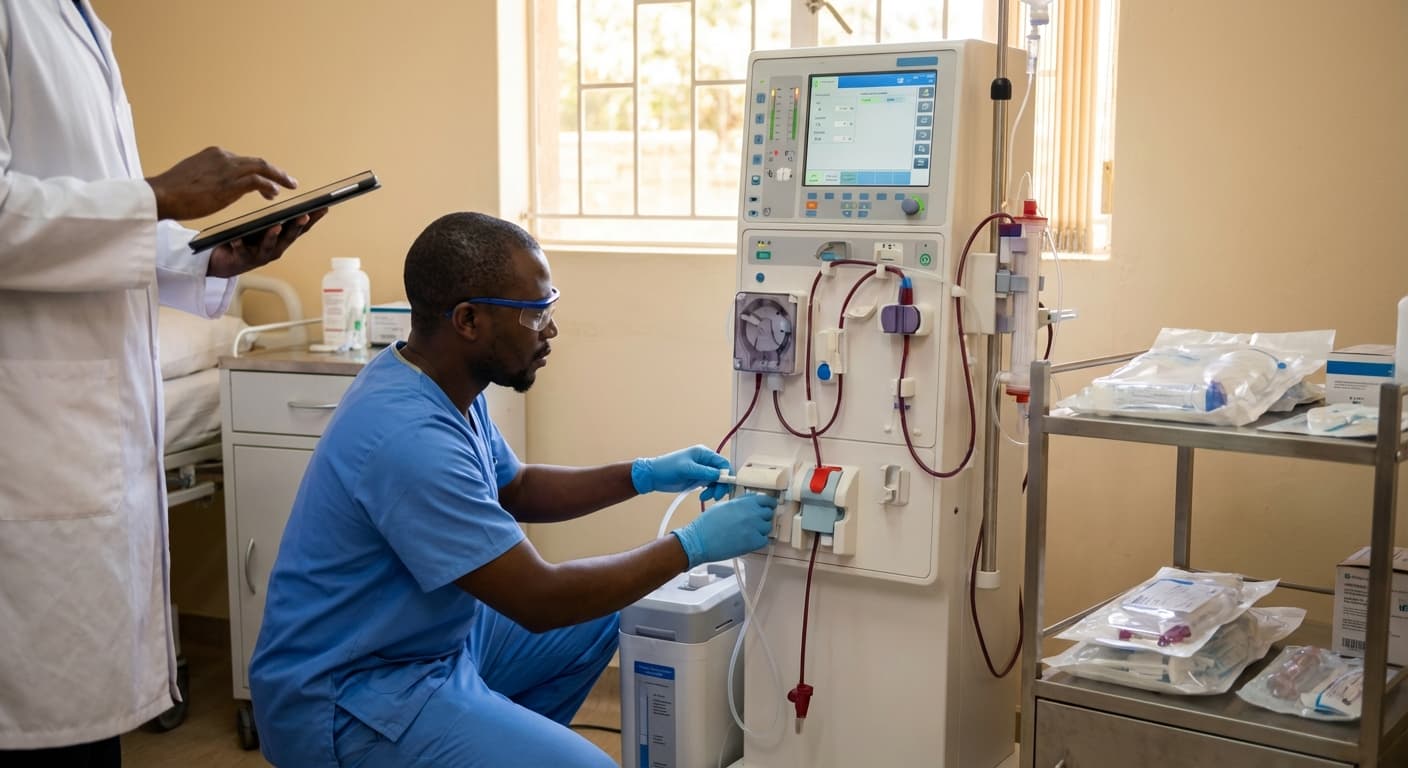
Hemodialysis Machine Installation Service in Rwanda
Engineering Excellence & Technical Support
Hemodialysis Machine Installation Service High-standard technical execution following OEM protocols and local regulatory frameworks.
Expert Medical Equipment Integration
Our certified technicians ensure seamless integration of advanced hemodialysis machines with existing hospital infrastructure, adhering to Rwanda's healthcare standards and regulatory requirements for optimal patient care.
Rapid Deployment & Calibration
We guarantee swift installation and precise calibration of hemodialysis units across Rwanda, minimizing downtime and ensuring immediate readiness for critical patient treatments, supported by local training for your clinical staff.
Safety-First Installation & Compliance
Prioritizing patient and staff safety, our installation process strictly follows international safety protocols and local Rwandan health guidelines, including comprehensive electrical safety checks and water purity system validation.
What Is Hemodialysis Machine Installation Service In Rwanda?
Hemodialysis Machine Installation Service in Rwanda refers to the comprehensive process of setting up and preparing hemodialysis machines for clinical use within healthcare facilities across Rwanda. This service ensures that the equipment is correctly integrated into the existing infrastructure, calibrated to meet stringent performance standards, and ready for safe and effective operation by trained medical personnel. It encompasses a range of technical and logistical activities necessary for the deployment of these life-sustaining medical devices.
| Who Needs Hemodialysis Machine Installation Service? | Typical Use Cases | |||
|---|---|---|---|---|
| Nephrology Departments in Hospitals: Public and private hospitals with dedicated renal units requiring new or replacement hemodialysis machines. | Renal Dialysis Centers: Standalone facilities established to provide outpatient hemodialysis treatment. | Medical Research Institutions: Facilities conducting clinical trials or research involving hemodialysis procedures. | Government Health Initiatives: Public health programs aimed at expanding access to renal care. | Emergency Preparedness Facilities: Setting up temporary or permanent dialysis capabilities for disaster response or outbreak management. |
| Establishment of New Dialysis Units: Installing a complete set of machines for a newly constructed or renovated dialysis facility. | Replacement of Aging Equipment: Upgrading or replacing older, malfunctioning, or obsolete hemodialysis machines. | Expansion of Existing Capacity: Adding new machines to an existing dialysis unit to accommodate an increased patient load. | Relocation of Dialysis Facilities: Dismantling, transporting, and reinstalling existing machines at a new location. | Introduction of Advanced Technology: Installing new models of hemodialysis machines with enhanced features or different operational requirements. |
Key Components of Hemodialysis Machine Installation Service:
- Site Assessment and Planning: Evaluating the physical space, utility requirements (water, electricity, drainage), and environmental conditions of the installation site to ensure compatibility with the hemodialysis machine's specifications.
- Unpacking and Physical Placement: Carefully removing the machine from its packaging and positioning it according to the approved site plan, considering ergonomics and accessibility for maintenance.
- Utility Connections: Connecting the machine to dedicated water treatment systems (if applicable), electrical power sources (including backup power), and waste disposal lines, adhering to all relevant safety and engineering protocols.
- Calibration and Testing: Performing rigorous calibration of all machine parameters, including flow rates, pressures, temperature, and dialysate composition, followed by functional testing to verify accuracy and reliability.
- Disinfection and Sterilization: Executing thorough disinfection and sterilization procedures for all internal and external components to prevent cross-contamination and ensure patient safety.
- Integration with Ancillary Equipment: Connecting and configuring the hemodialysis machine with other essential medical devices such as monitors, infusion pumps, and dialysis chairs.
- Documentation and Handover: Providing comprehensive documentation, including installation reports, calibration certificates, user manuals, and maintenance schedules, along with a formal handover to the facility's biomedical engineering or nursing staff.
- Initial User Training (Optional but often included): Basic operational and safety training for the clinical staff who will be operating the machine.
Who Needs Hemodialysis Machine Installation Service In Rwanda?
The installation of hemodialysis machines is a critical service for healthcare facilities in Rwanda aiming to provide comprehensive kidney care. This service ensures that these life-saving machines are set up correctly, calibrated, and ready for operation, adhering to all safety and operational standards. Proper installation is paramount for patient safety, machine longevity, and the efficient delivery of dialysis treatments.
| Customer Type | Primary Need | Key Departments Involved |
|---|---|---|
| Public Hospitals | Providing essential kidney care to a broad population, often with limited resources. | Nephrology, Internal Medicine, Biomedical Engineering, Procurement |
| Private Hospitals and Clinics | Offering specialized and potentially higher-end dialysis services, focusing on patient experience and efficiency. | Nephrology, Renal Unit, Biomedical Engineering, Administration |
| Dialysis Centers | Solely focused on providing hemodialysis, requiring efficient workflow and high machine uptime. | Renal Unit, Technical Operations, Administration |
| NGOs / International Organizations | Establishing or expanding dialysis services in underserved areas, often with specific project goals. | Healthcare Program Management, Clinical Services, Logistics |
| Research Institutions | Integrating dialysis capabilities for clinical trials or studies related to kidney disease. | Nephrology Research, Clinical Trials Unit, Biomedical Engineering |
Target Customers and Departments for Hemodialysis Machine Installation Service in Rwanda
- {"items":["Public Hospitals (National, Provincial, and District)","Private Hospitals and Clinics","Dialysis Centers (dedicated facilities)","Non-Governmental Organizations (NGOs) involved in healthcare provision","Research Institutions with clinical components","International Healthcare Organizations operating in Rwanda"],"title":"Target Customers"}
- {"items":["Nephrology Department","Internal Medicine Department (often housing nephrology services)","Renal Unit / Dialysis Unit","Critical Care / Intensive Care Unit (ICU) (for temporary dialysis needs)","Surgical Departments (for post-operative kidney support)","Procurement and Biomedical Engineering Departments (involved in acquisition and maintenance planning)"],"title":"Target Departments within Healthcare Facilities"}
Hemodialysis Machine Installation Service Process In Rwanda
This document outlines the comprehensive workflow for Hemodialysis Machine Installation Services in Rwanda, covering the entire process from initial inquiry to successful execution. It aims to provide a clear and structured understanding of the steps involved for both clients and service providers.
| Stage | Description | Key Activities | Responsible Party | Deliverables/Outcomes |
|---|---|---|---|---|
| The client expresses interest in a hemodialysis machine installation service. | Receive and acknowledge client inquiry, schedule initial consultation, discuss client needs, machine requirements, and service scope. | Client, Service Provider Sales/Technical Team | Clear understanding of client requirements, preliminary project scope defined. |
| On-site evaluation of the installation location to ensure suitability and plan logistics. | Conduct site survey (space, power, water, drainage), assess existing infrastructure, identify potential challenges, develop preliminary installation plan. | Service Provider Technical Team | Detailed site report, confirmed installation feasibility, preliminary technical plan. |
| Formal proposal and agreement on terms, scope, and cost. | Prepare detailed quotation based on site assessment and client requirements, negotiate terms, finalize contract, secure client approval and signature. | Service Provider Sales/Management, Client | Approved quotation, signed contract, agreed payment schedule. |
| Acquiring the hemodialysis machine and transporting it to Rwanda. | Order machine from manufacturer/supplier, manage customs clearance, arrange transportation to the installation site. | Service Provider Procurement/Logistics Team, Client (for payment) | Hemodialysis machine delivered to Rwanda, customs documentation completed. |
| Ensuring the installation site is ready before machine arrival. | Prepare installation area (cleaning, minor structural modifications if needed), ensure availability of utilities (power, water, drainage) as per specifications, verify access for delivery. | Client (with guidance from Service Provider) | Ready installation site with required utilities and access. |
| The physical installation and setup of the hemodialysis machine. | Unpack machine, connect to power, water, and drainage systems, install necessary accessories and consumables, perform initial configuration according to manufacturer guidelines. | Service Provider Technical Installation Team | Hemodialysis machine physically installed and connected. |
| Verifying the proper functioning of the installed machine. | Conduct functional tests (e.g., water purification, dialysate preparation, blood pump), run simulation tests, calibrate machine parameters, document test results. | Service Provider Technical Commissioning Team | Machine fully tested and operational, commissioning report generated. |
| Educating the client's staff on machine operation and maintenance. | Provide comprehensive training on machine operation, basic troubleshooting, daily maintenance, and safety procedures, conduct Q&A session, obtain client acceptance of the installation. | Service Provider Technical Trainer, Client's Medical Staff | Trained staff, signed handover certificate, operational machine. |
| Ongoing support to ensure continued optimal performance. | Provide warranty support, schedule preventive maintenance visits, offer troubleshooting assistance, respond to service calls. | Service Provider Technical Support & Maintenance Team | Continued machine functionality, client satisfaction, long-term relationship. |
Hemodialysis Machine Installation Service Process in Rwanda
- Inquiry & Initial Consultation
- Site Assessment & Planning
- Quotation & Contract Agreement
- Machine Procurement & Logistics
- Pre-installation Preparations
- On-site Installation & Configuration
- Testing & Commissioning
- User Training & Handover
- Post-installation Support & Maintenance
Hemodialysis Machine Installation Service Cost In Rwanda
The cost of installing a hemodialysis machine in Rwanda can vary significantly based on several factors. These include the type and complexity of the machine, the specific hospital or clinic's infrastructure, the vendor chosen, and the extent of services included in the installation package. Generally, installation involves not just the physical setup of the machine but also the connection to water purification systems, electrical outlets, and potentially specialized plumbing. The training of medical staff is also a crucial component and is often bundled with the installation service. It's important to obtain detailed quotes from multiple reputable suppliers and service providers to compare offerings and ensure the best value.
| Service Component | Estimated Price Range (RWF) | Notes |
|---|---|---|
| Basic Machine Installation & Setup | 500,000 - 1,500,000 | Covers physical setup, initial connection to utilities. |
| Water Treatment System Integration | 700,000 - 2,000,000 | Installation and integration of Reverse Osmosis (RO) or other water purification systems. |
| Electrical & Plumbing Modifications | 300,000 - 1,000,000 | Depending on existing infrastructure and required upgrades. |
| Staff Training (Initial) | 400,000 - 1,200,000 | On operation, maintenance, and basic troubleshooting. |
| Calibration & Testing | 200,000 - 500,000 | Ensuring the machine functions optimally. |
| Comprehensive Installation Package (Machine + Services) | 2,000,000 - 7,000,000+ | This is a broad range, highly dependent on machine cost and specific needs. This typically includes the above components and potential ongoing support. |
Factors Influencing Hemodialysis Machine Installation Costs in Rwanda
- Machine Specifications: The model, brand, and technological features of the hemodialysis machine itself will impact installation complexity and cost. Newer, more advanced machines might require more intricate setups.
- Infrastructure Readiness: The existing water purification system, power supply reliability, and plumbing at the installation site play a significant role. Upgrades or new installations of these essential services will add to the overall cost.
- Vendor and Service Provider: Different companies will have varying pricing structures for their installation services, warranty periods, and after-sales support. Reputation and experience are also factors.
- Scope of Services: Does the quote include transportation, on-site assembly, calibration, initial testing, comprehensive staff training, and post-installation support? Clarifying the exact services included is vital.
- Geographic Location: While Rwanda is a relatively small country, minor variations in transportation costs for technicians and equipment might exist between major cities like Kigali and more remote areas.
- Regulatory Compliance and Certifications: Ensuring the installation meets all local health and safety regulations might involve specific testing or documentation that could incur additional fees.
Affordable Hemodialysis Machine Installation Service Options
Installing a hemodialysis machine is a significant undertaking that requires careful planning and specialized expertise. This guide outlines affordable hemodialysis machine installation service options, emphasizing the value of bundled services and effective cost-saving strategies to ensure accessibility and efficiency for healthcare facilities.
| Value Bundle Component | Description | Cost-Saving Strategy |
|---|---|---|
| Machine Setup & Calibration | Professional installation, configuration, and initial calibration of the hemodialysis machine to ensure optimal performance and safety. | Bundle Discount: Often included at a reduced rate when packaged with other services. DIY (Limited): Basic setup guidance can sometimes be provided, but professional calibration is crucial. |
| Plumbing & Water Treatment Integration | Connecting the machine to water sources, drainage, and integrating a specialized water treatment system (e.g., reverse osmosis) essential for dialysis. | Bundled Pricing: Integrating water treatment and plumbing within a single service package often leads to economies of scale. Phased Installation: If infrastructure is being upgraded, consider scheduling plumbing and machine installation concurrently. |
| Electrical & Ventilation Assessment | Ensuring adequate and safe electrical supply to the machine and proper ventilation to meet safety standards. | Combined Site Survey: A single assessment for electrical and plumbing needs can be more cost-effective than separate inspections. Energy-Efficient Solutions: Investigate if any upgrades can also improve energy efficiency in the long run. |
| Training & Certification (Staff) | Comprehensive training for clinical staff on machine operation, maintenance, and emergency procedures, along with necessary certifications. | Group Training Discounts: Negotiate lower rates for training multiple staff members simultaneously. Online Resources: Supplement in-person training with manufacturer-provided online modules and documentation. |
| Post-Installation Testing & Validation | Thorough testing and validation of the entire system to confirm it meets all regulatory and operational requirements. | Bundled Quality Assurance: Included in a comprehensive installation package, reducing the need for separate third-party validation. |
| Preventive Maintenance & Service Contracts | Ongoing scheduled maintenance, emergency repair services, and access to technical support to ensure continuous operation. | Long-Term Contracts: Negotiate discounted rates for multi-year service agreements. Local vs. National Providers: Local providers may offer lower travel costs for routine maintenance. |
Key Considerations for Affordable Hemodialysis Machine Installation
- Scope of Work: Clearly define all aspects of the installation, including machine setup, plumbing, electrical work, water treatment system integration, and testing.
- Service Provider Reputation: Research and choose providers with proven experience, positive client testimonials, and necessary certifications.
- Geographic Location: Proximity of the service provider can impact travel costs and response times.
- Machine Type and Complexity: Different hemodialysis machines have varying installation requirements.
- Facility Infrastructure: Assess existing plumbing, electrical, and ventilation systems to identify potential upgrade needs.
- Ongoing Maintenance & Support: Factor in the long-term costs of maintenance and service contracts.
Verified Providers In Rwanda
In Rwanda's burgeoning healthcare landscape, identifying reliable and high-quality healthcare providers is paramount. Franance Health has emerged as a leading force, distinguished by its commitment to verified credentials, patient-centric care, and innovative healthcare solutions. This document outlines the core credentials of Franance Health and explains why they represent the best choice for healthcare needs in Rwanda.
| Provider Type | Franance Health's Standard | Benefit to Patients |
|---|---|---|
| Doctors & Specialists | Verified degrees from recognized medical schools, active licenses, board certifications, and continuous professional development. | Access to highly qualified and experienced medical professionals, ensuring accurate diagnoses and effective treatment plans. |
| Nurses | Registered Nursing credentials, specialized training (where applicable), and a commitment to compassionate care. | Receiving attentive, skilled, and empathetic nursing care that supports recovery and well-being. |
| Technicians & Allied Health Professionals | Certified in their respective fields, with demonstrated proficiency and adherence to safety protocols. | Reliable and accurate diagnostic testing and therapeutic services. |
| Facilities & Equipment | Adherence to international standards for hygiene, safety, and modern medical equipment that is regularly maintained and calibrated. | Safe and effective healthcare environment with access to advanced diagnostic and treatment technologies. |
Key Credentials of Franance Health
- Rigorous Medical Professional Vetting: All healthcare professionals associated with Franance Health undergo a stringent vetting process. This includes verification of their medical licenses, educational qualifications from accredited institutions, and professional certifications. We ensure that every practitioner is not only qualified but also up-to-date with the latest medical advancements.
- Accreditation and Affiliations: Franance Health actively seeks and maintains accreditations from reputable national and international healthcare organizations. These accreditations signify adherence to stringent quality standards and best practices in patient care, safety, and operational efficiency.
- Patient Satisfaction & Feedback Mechanisms: Beyond formal credentials, Franance Health places immense value on patient experience. We have robust systems in place for collecting and analyzing patient feedback, using this invaluable input to continuously improve our services and ensure high levels of patient satisfaction.
- Technological Integration & Innovation: Franance Health is committed to leveraging technology to enhance healthcare delivery. This includes investments in modern medical equipment, telemedicine capabilities, and secure electronic health records, all contributing to more efficient, accessible, and personalized care.
- Ethical Practice & Transparency: A core tenet of Franance Health is unwavering ethical conduct and transparency in all dealings. Patients are provided with clear information regarding their treatment options, costs, and expected outcomes, fostering trust and informed decision-making.
- Community Health Initiatives: Franance Health actively engages in community health programs and outreach. This commitment demonstrates a dedication to improving public health beyond the confines of individual patient care and building a healthier Rwanda.
Scope Of Work For Hemodialysis Machine Installation Service
This Scope of Work (SOW) outlines the requirements for the professional installation of hemodialysis machines at designated healthcare facilities. The service includes all necessary technical tasks, equipment, materials, and personnel to ensure a safe, functional, and compliant installation. This SOW also details the expected technical deliverables and standard specifications for the installed hemodialysis machines.
| Phase/Activity | Description | Deliverables | Standard Specifications/Requirements |
|---|---|---|---|
| Pre-Installation Site Assessment | On-site evaluation of the installation location, including power, water, drainage, and environmental conditions. | Site assessment report including recommendations for any necessary modifications. | Compliance with local building codes, electrical codes (e.g., grounding, circuit capacity), plumbing requirements, and ventilation standards. Power outlets to be medical-grade, properly grounded, and adequately rated. Water quality to meet dialysis standards (e.g., RO system integration if applicable). Adequate space for machine operation, maintenance, and patient access. |
| Equipment Delivery and Unpacking | Receipt, inspection, and careful unpacking of hemodialysis machines and associated accessories. | Confirmation of all delivered items against the packing list. Damage report if any. | Machines to be handled with care to prevent physical damage. All accessories to be accounted for and inspected for damage. |
| Machine Placement and Mounting | Positioning of hemodialysis machines in the pre-approved locations. | Machines securely placed and leveled. | Machines to be placed on stable, level surfaces. Adequate clearance for ventilation and maintenance access. Proper anchoring if required by manufacturer or site assessment. |
| Electrical Connection | Connecting the hemodialysis machine to the designated power source. | Successful electrical connection and initial power-on test. | Connection to appropriate medical-grade power outlets with correct voltage and amperage. Compliance with electrical safety standards. Proper grounding of the machine. |
| Water and Dialysate Connection | Connecting the machine to the facility's purified water supply and dialysate delivery system (if applicable). | Secure and leak-free water and dialysate connections. | Use of appropriate, non-reactive tubing and connectors. Compliance with water quality standards for dialysis. Proper integration with Reverse Osmosis (RO) systems or central dialysate supply. |
| Drainage Connection | Connecting the machine's waste outlet to the facility's drainage system. | Secure and leak-free drainage connection. | Use of appropriate drainage piping. Compliance with local plumbing and sanitation codes. Prevention of backflow or cross-contamination. |
| Initial System Check and Calibration | Performing initial operational checks and calibrating the machine according to manufacturer specifications. | Successful completion of initial system checks and calibration. Diagnostic test results. | Adherence to manufacturer's calibration procedures. Verification of all sensor readings and alarm functions. Setting up patient-specific parameters if pre-programmed. |
| Functional Testing | Conducting full operational tests using simulated or actual dialysis procedures. | Demonstration of successful dialysis treatment cycles. Test logs and performance reports. | Testing of all treatment modes, safety features (e.g., air detection, blood loss prevention), and alarm systems. Verification of fluid balance accuracy. |
| Documentation and Handover | Providing all necessary documentation, including user manuals, installation reports, and calibration certificates. Training facility staff on machine operation and basic maintenance. | Complete installation package provided to facility. Trained personnel confirmed. | User manuals in the correct language. Installation and calibration certificates signed and dated. Training provided to designated biomedical engineers and nursing staff. Competency assessment of trained personnel. |
| Post-Installation Support | Providing a period of on-site support after installation to address any immediate issues or questions. | Resolution of any initial operational issues. Sign-off on successful installation. | Defined warranty period for installation workmanship. Availability of technical support for troubleshooting. |
Key Objectives
- To ensure the safe and correct installation of hemodialysis machines according to manufacturer guidelines and relevant regulatory standards.
- To verify the proper functioning of all installed hemodialysis machines and associated peripherals.
- To provide comprehensive documentation and training for facility staff.
- To minimize disruption to patient care during the installation process.
Service Level Agreement For Hemodialysis Machine Installation Service
This Service Level Agreement (SLA) outlines the agreed-upon response times and uptime guarantees for the Hemodialysis Machine Installation Service provided by [Your Company Name] to [Client Name]. This SLA aims to ensure minimal disruption to patient care and efficient operational readiness of the installed hemodialysis machines.
| Service Metric | Definition | Target/Guarantee | Measurement Period | Remedy for Breach |
|---|---|---|---|---|
| Installation Completion Time | Time taken from site readiness notification to successful installation and initial testing of a hemodialysis machine. | Within [Number] business days of site readiness confirmation. | Per installation event. | No direct service credit. Extended delays may be subject to review and potential renegotiation of installation fees. |
| Post-Installation Support Response Time | Time to acknowledge and initiate troubleshooting for issues reported within [Number] days of installation. | Within [Number] business hours. | From report of issue during business hours. | 10% discount on next service visit if target is missed by more than [Number] hours. |
| Routine Maintenance Response Time | Time to acknowledge and schedule routine maintenance visits after request. | Within [Number] business days. | From request for routine maintenance. | No direct service credit. Prioritization of scheduling if consistently missed. |
| Emergency Technical Support Response Time (Critical Failure) | Time to acknowledge and dispatch technician for critical machine failures impacting patient safety or availability. | Within [Number] business hours. | From report of critical failure (24/7 availability for critical issues). | 15% service credit on next monthly fee if target is missed by more than [Number] hours. If downtime exceeds [Number] hours, an additional [Percentage]% credit per [Number] hours of downtime. |
| Uptime Guarantee (Installed Machines) | Percentage of time installed hemodialysis machines are functional and available for use, excluding scheduled maintenance and planned downtime. | 98% monthly uptime. | Monthly basis. | For every 1% the uptime falls below 98%, a service credit of [Percentage]% of the monthly service fee will be issued. If uptime falls below [Percentage]%, client may have the option to terminate the contract without penalty. |
Key Service Metrics
- Response Time: The time it takes for [Your Company Name]'s technical support to acknowledge and begin addressing a reported issue.
- Uptime Guarantee: The percentage of time the installed hemodialysis machines are expected to be operational and available for use.
- Service Credit: Compensation provided to the client in the event of SLA breaches.
- Exclusions: Situations or events that are not covered by this SLA.
Frequently Asked Questions

Ready when you are
Let's scope your Hemodialysis Machine Installation Service in Rwanda project in Rwanda.

Scaling healthcare logistics and technical systems across the entire continent.