
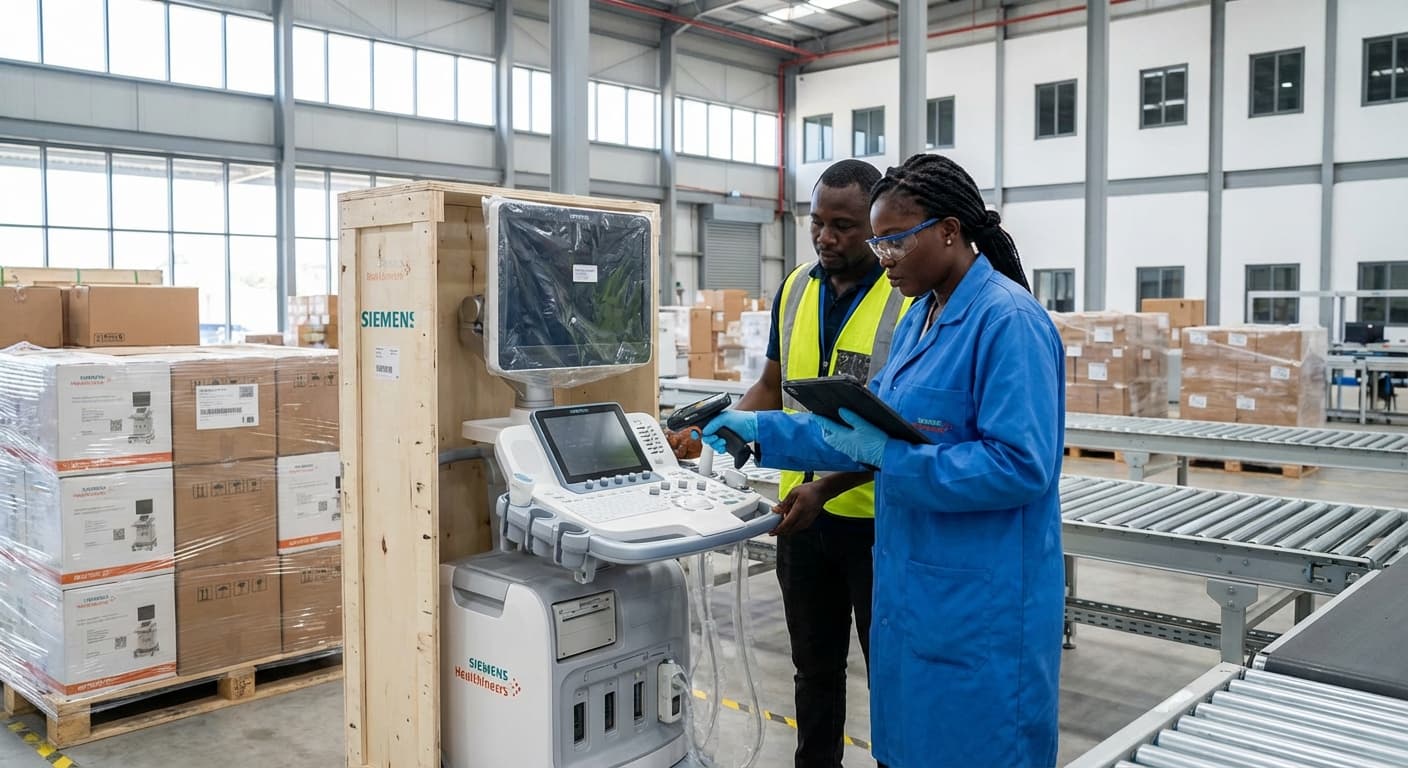
Warehouse Receiving Inspection Service (Medical Equipment) in Rwanda
Engineering Excellence & Technical Support
Warehouse Receiving Inspection Service (Medical Equipment) High-standard technical execution following OEM protocols and local regulatory frameworks.
Precision Medical Equipment Verification
Our certified inspectors employ advanced scanning technologies and rigorous multi-point checks to ensure the precise identification, verification of specifications, and authenticity of all incoming medical equipment, minimizing the risk of errors and discrepancies.
Adherence to Rwandan Healthcare Standards
We guarantee full compliance with Rwandan Ministry of Health regulations, ISO certifications, and manufacturer-specific quality control protocols for medical equipment receiving, ensuring your supply chain meets all national and international safety and efficacy requirements.
End-to-End Traceability & Documentation
Leveraging a robust digital platform, we provide comprehensive, auditable records for every piece of medical equipment received, from initial inspection to final warehouse placement, enabling seamless tracking and recall management for enhanced patient safety and inventory control.
What Is Warehouse Receiving Inspection Service (Medical Equipment) In Rwanda?
Warehouse Receiving Inspection Service (Medical Equipment) in Rwanda refers to the systematic and documented process of verifying incoming medical equipment against predefined standards, purchase orders, and regulatory requirements upon its arrival at a designated warehouse or storage facility within Rwanda. This service is critical for ensuring the quality, safety, efficacy, and compliance of medical devices before they are disseminated into the healthcare supply chain.
| Stakeholder Group | Reason for Requiring Service | Typical Use Cases |
|---|---|---|
| Healthcare Facilities (Hospitals, Clinics, Health Centers) | To ensure that procured medical equipment meets specifications, is functional, and safe for patient use, thereby mitigating risks associated with faulty or counterfeit devices. | Receiving new diagnostic equipment, surgical instruments, patient monitoring systems, or essential medical consumables. |
| Medical Equipment Distributors and Importers | To fulfill contractual obligations with suppliers, adhere to import regulations, and maintain product integrity before onward distribution, minimizing liability and customer complaints. | Receiving large shipments of imported medical devices, ensuring compliance with import permits and customs declarations. |
| Government Procurement Agencies (e.g., Rwanda Medical Supply Chain Agency - RMSC) | To guarantee the quality and conformity of bulk medical equipment procured for public health programs, ensuring efficient use of public funds and patient safety. | Inspection of tenders for essential medicines and equipment, receiving national stockpiles of critical medical supplies. |
| Non-Governmental Organizations (NGOs) and Humanitarian Organizations | To verify the quality and suitability of donated or purchased medical equipment for specific health interventions, ensuring effective program delivery. | Receiving medical kits and specialized equipment for health outreach programs or emergency response. |
| Manufacturers (Local and International) | To ensure their products meet the receiving entity's quality standards and regulatory requirements upon entry into the Rwandan market, upholding brand reputation. | Pre-shipment inspection verification upon arrival at the Rwandan distribution hub, or as part of a quality assurance agreement with local partners. |
Key Components of the Service
- Verification of Documentation: Cross-referencing physical shipments against purchase orders, invoices, packing lists, certificates of origin, and quality/conformity certificates.
- Physical Inspection: Visual examination of packaging for damage, integrity, and correct labeling. Inspection of the equipment itself for visible defects, completeness, and correct model/serial number verification.
- Functional Testing (where applicable): Basic operational checks to confirm that the equipment powers on and performs its fundamental functions as per manufacturer specifications.
- Adherence to Storage Conditions: Assessment of whether the equipment was transported and stored under appropriate environmental conditions (temperature, humidity, light) to prevent degradation.
- Regulatory Compliance Check: Verification against Rwandan Ministry of Health (MoH) regulations, Rwanda Standards Board (RSB) standards, and other relevant national or international guidelines for medical devices.
- Identification and Segregation: Proper identification of inspected items and segregation of any non-conforming items for further action (e.g., return, rework, destruction).
- Record Keeping and Reporting: Meticulous documentation of inspection findings, including any discrepancies, damages, or non-conformities, leading to a formal inspection report.
Who Needs Warehouse Receiving Inspection Service (Medical Equipment) In Rwanda?
Warehouse Receiving Inspection Service for Medical Equipment in Rwanda is crucial for ensuring the quality, safety, and regulatory compliance of incoming medical devices and supplies. This service verifies that the equipment received matches the order specifications, is free from damage, and meets all applicable standards and regulations before it enters the storage facility. This is particularly vital in Rwanda, where the healthcare sector is continuously growing and reliant on a consistent supply of reliable medical equipment to provide effective patient care and public health services.
| Target Customer | Key Departments Involved | Primary Need Addressed |
|---|---|---|
| Hospitals (Public & Private) | Procurement, Biomedical Engineering, Pharmacy, Clinical Departments, Quality Assurance | Patient Safety, Operational Efficiency, Regulatory Compliance, Cost Reduction |
| Clinics and Health Centers | Head of Facility, Procurement Officer (if applicable) | Reliable Service Delivery, Patient Well-being, Resource Optimization |
| Medical Equipment Suppliers/Distributors | Warehouse Management, Quality Control, Sales/Logistics | Customer Satisfaction, Reputation Management, Contractual Compliance |
| Government Health Agencies (Ministry of Health) | Procurement Department, National Medical Stores, Regulatory Affairs | National Health Standards, Public Health Security, Efficient Resource Deployment |
| NGOs & International Aid Organizations | Procurement Team, Logistics, Program Management | Effective Aid Delivery, Accountability, Impact Maximization |
| Research Institutions & Laboratories | Lab Management, Procurement, Technical Staff | Research Accuracy, Equipment Longevity, Data Integrity |
| Medical Training Institutions | Procurement, Faculty Heads, Technical Workshops | Student Training Quality, Safety in Training Environment |
| 3PL Providers (Healthcare Logistics) | Warehouse Operations, Quality Control, Client Services | Comprehensive Service Offering, Risk Mitigation for Clients |
Who Needs Warehouse Receiving Inspection Service (Medical Equipment) in Rwanda?
- Hospitals (Public and Private): Essential for ensuring that procured medical equipment, from basic consumables to complex diagnostic and surgical machinery, is fit for purpose and safe for patient use. This reduces the risk of equipment failure, patient harm, and costly recalls or replacements.
- Clinics and Health Centers: Especially important for smaller facilities that may have limited in-house expertise or resources for detailed equipment inspection. Ensuring the quality of items received is paramount for their operational efficiency and the health outcomes of the communities they serve.
- Medical Equipment Suppliers and Distributors: To maintain their reputation, ensure customer satisfaction, and comply with contractual obligations. Receiving inspection is a key quality control step before onward distribution or installation.
- Government Health Agencies and Ministries (e.g., Ministry of Health): Responsible for public health procurement, regulation, and ensuring the availability of quality medical equipment nationwide. They need to trust that the equipment entering the national supply chain meets standards.
- Non-Governmental Organizations (NGOs) and International Aid Organizations: Frequently involved in supplying medical equipment to underserved areas. Rigorous inspection guarantees that donated or procured equipment is of good quality and will serve its intended purpose effectively and safely.
- Research Institutions and Laboratories: Requiring precise and calibrated equipment for accurate research and diagnostic testing. Receiving inspection ensures that delicate or specialized equipment is handled and verified correctly upon arrival.
- Medical Training Institutions: For ensuring that the equipment used for training healthcare professionals is functional, safe, and representative of what they will encounter in practice.
- Third-Party Logistics (3PL) Providers specializing in Healthcare: To offer comprehensive supply chain management services that include quality assurance at the receiving stage for their healthcare clients.
- Procurement Departments of all Healthcare Facilities: To mitigate risks associated with faulty, damaged, or non-compliant medical equipment, thereby safeguarding patient safety and optimizing resource allocation.
- Quality Assurance (QA) and Quality Control (QC) Departments: To implement and enforce quality management systems, ensuring that all incoming medical equipment meets predefined quality benchmarks.
- Biomedical Engineering Departments: To support their role in equipment maintenance, calibration, and ensuring that newly received items are properly documented and integrated into their asset management systems.
- Pharmacies and Central Medical Stores: For ensuring the integrity and quality of pharmaceuticals and medical devices before they are distributed to healthcare facilities.
- Manufacturers' Representatives and Agents: To ensure that equipment delivered to their Rwandan clients meets the manufacturer's specifications and is in optimal condition.
- Importing Companies of Medical Equipment: To comply with Rwandan customs regulations and ensure that imported goods meet local standards and client requirements.
Warehouse Receiving Inspection Service (Medical Equipment) Process In Rwanda
This document outlines the standard workflow for the Warehouse Receiving Inspection Service for Medical Equipment in Rwanda, from the initial client inquiry to the final execution and reporting. This process ensures that all medical equipment entering a warehouse meets predefined quality, safety, and documentation standards before being accepted.
| Stage | Description | Key Activities | Responsible Party | Documentation/Output |
|---|---|---|---|---|
| The initial contact from a client requesting inspection services for incoming medical equipment. | Client contacts the inspection service provider, expresses need for receiving inspection. | Client, Inspection Service Provider (Sales/Business Development) | Email, Phone Call, Inquiry Form |
| Understanding the client's specific needs, the type of equipment, and the desired inspection criteria to provide an accurate quote. | Discuss equipment details (type, quantity, origin), inspection standards, timelines. Prepare and submit a formal quotation. | Inspection Service Provider (Technical Team, Sales) | Scope of Work Document, Quotation |
| Formalizing the service agreement and setting a date/time for the inspection. | Client accepts quotation. Contract/Agreement is signed. Inspection date and time are confirmed. | Client, Inspection Service Provider (Legal, Operations) | Service Agreement/Contract, Confirmed Schedule |
| Gathering necessary information and resources before the inspection takes place. | Review equipment manifests, purchase orders, manufacturer specifications. Prepare inspection checklists and tools. Brief the inspection team. | Inspection Service Provider (Inspection Team Lead) | Inspection Checklists, Technical Data Sheets, Team Briefing Notes |
| The physical examination of the medical equipment at the receiving warehouse. | Verify equipment against documentation, check for damage (packaging and product), confirm correct model/serial numbers, assess basic functionality (if applicable). | Inspection Service Provider (Inspectors) | Field Inspection Notes, Photographic Evidence |
| Verifying the completeness and authenticity of all required accompanying documents. | Check for: Certificates of Origin, Quality Certificates, User Manuals, Maintenance Records, Regulatory Approvals (e.g., from Rwanda FDA). | Inspection Service Provider (Inspectors) | Document Verification Log |
| Compiling findings into a comprehensive report and providing actionable recommendations. | Document all observations (conforming and non-conforming items), provide clear recommendations (accept, reject, re-inspect, require further action). | Inspection Service Provider (Inspection Team Lead, Report Writer) | Detailed Inspection Report, Non-Conformance Report (if applicable) |
| Ensuring client satisfaction and completing the administrative aspects of the service. | Client reviews report. Resolution of any discrepancies. Invoice submission and payment. Archiving of records. | Client, Inspection Service Provider (Operations, Finance) | Finalized Report, Invoices, Payment Records, Service Completion Confirmation |
Key Stages of Warehouse Receiving Inspection Service
- Client Inquiry and Service Request
- Scope Definition and Quotation
- Agreement and Scheduling
- Pre-Inspection Preparation
- On-Site Inspection Execution
- Documentation Review
- Reporting and Recommendations
- Follow-up and Closure
Warehouse Receiving Inspection Service (Medical Equipment) Cost In Rwanda
The cost of Warehouse Receiving Inspection Services for medical equipment in Rwanda is influenced by several key factors, leading to a range of pricing. These services are crucial for ensuring the quality, safety, and compliance of incoming medical devices, protecting both patient health and the reputation of healthcare providers and distributors. Understanding these pricing determinants is vital for budgeting and procurement.
| Inspection Type/Service Level | Estimated Price Range (RWF - Rwandan Francs) | Description/Assumptions |
|---|---|---|
| Basic Visual Inspection & Documentation Check | 20,000 - 60,000 RWF per batch/shipment | Covers visual integrity, damage assessment, and verification of essential documents (e.g., certificates of conformity, manuals). Assumes a moderate volume of less complex equipment. |
| Standard Inspection (Visual + Basic Functionality) | 50,000 - 150,000 RWF per batch/shipment | Includes basic visual checks, documentation review, and initial functional testing of common medical devices. Assumes a standard inspection scope and moderate complexity. |
| Comprehensive Inspection (Advanced Functionality & Calibration) | 150,000 - 500,000+ RWF per unit/batch | For more complex or high-value equipment. Involves in-depth functional tests, performance verification, and potentially calibration checks. Price highly dependent on equipment type and complexity. May be quoted per unit for very sophisticated items. |
| Express/Urgent Inspection | Add 50% - 100% to standard rates | Applies a surcharge for expedited service, typically for same-day or next-day inspections. |
| On-site Inspection (Remote Locations) | Additional 30,000 - 100,000+ RWF per trip | Covers travel, accommodation, and per diem for inspectors when the inspection site is outside major urban centers. Varies significantly based on distance and duration. |
Key Pricing Factors for Warehouse Receiving Inspection Services (Medical Equipment) in Rwanda:
- Type and Complexity of Medical Equipment: Highly specialized, complex, or sensitive equipment (e.g., imaging machines, surgical robots) will naturally incur higher inspection costs due to the expertise and specialized tools required. Simpler devices like basic consumables will be less expensive.
- Volume of Equipment Inspected: The total number of items or batches being inspected significantly impacts the overall cost. Inspectors often offer volume discounts for larger consignments.
- Scope of Inspection: The depth and breadth of the inspection are critical. This can range from basic visual checks and documentation verification to more in-depth functional testing, calibration checks, and environmental condition assessments.
- Required Turnaround Time: Urgent inspection requests often come with premium charges compared to standard turnaround times. This reflects the need for expedited resource allocation.
- Certification and Accreditation of the Inspection Body: Reputable inspection agencies with relevant certifications (e.g., ISO 17020) and a proven track record may command higher fees, but this also guarantees a higher standard of service and credibility.
- Geographical Location within Rwanda: While major cities like Kigali might have a more competitive market, inspections in more remote locations could incur additional travel and logistical costs for the inspection team.
- Specific Regulatory Requirements: Compliance with specific Rwandan health regulations or international standards (e.g., WHO guidelines) might necessitate specialized checks, influencing the cost.
- Reporting Requirements: The complexity and detail of the inspection report required can affect pricing. Detailed reports with extensive data and analysis will be more costly than summary reports.
- Pre-Inspection Requirements: If the client needs the inspection body to conduct pre-inspection activities like reviewing technical documentation or setting up test environments, this will add to the cost.
Affordable Warehouse Receiving Inspection Service (Medical Equipment) Options
Navigating the complexities of medical equipment warehouse receiving inspections requires a balance of thoroughness, efficiency, and cost-effectiveness. This service is critical for ensuring the integrity, functionality, and compliance of incoming medical devices. This document outlines affordable options, value bundles, and cost-saving strategies for medical equipment warehouse receiving inspection services.
| Service Offering | Description | Value Proposition | Estimated Cost Range (per inspection/item) |
|---|---|---|---|
| Basic Receiving Check | Visual inspection for damage, PO verification, and serial number recording. Focuses on immediate physical integrity and order accuracy. | Ensures shipments match orders and are free from obvious transit damage at a low cost. | $20 - $40 |
| Standard Receiving Inspection | Includes basic checks plus detailed documentation review, verification of sterile packaging (if applicable), and basic configuration checks. | Provides a more comprehensive initial review, catching potential compliance and quality issues early. | $35 - $70 |
| Comprehensive Receiving & Pre-Installation Check | Includes standard checks plus preliminary functional testing (e.g., power on, basic diagnostics), and review of all accompanying documentation for regulatory compliance. | Minimizes the risk of receiving non-functional or non-compliant equipment, saving on potential return and replacement costs. | $60 - $120 |
| Volume-Based Discounted Rates | Tiered pricing where inspection costs decrease significantly per item as the volume of inspections increases over a defined period (e.g., monthly, quarterly). | Significant cost savings for facilities receiving a high volume of medical equipment. | Negotiable based on volume tiers |
| Customized Inspection Protocols | Development of tailored inspection checklists based on specific equipment types, manufacturers, or regulatory requirements. | Ensures relevant checks are performed, improving accuracy and reducing unnecessary steps for cost efficiency. | One-time setup fee + per inspection cost |
| Technology Integration (e.g., Barcode Scanning) | Utilizing barcode scanners and software for rapid and accurate data capture of serial numbers, lot numbers, and PO details. | Increases inspection speed and accuracy, reducing manual data entry errors and labor costs. | Potential upfront technology investment, but lowers per-inspection labor costs |
Key Components of a Warehouse Receiving Inspection for Medical Equipment
- Unpacking and physical damage assessment
- Verification against purchase orders (PO) and packing lists
- Serial number and lot/batch number recording
- Initial visual inspection for completeness and correct model/configuration
- Verification of packaging integrity and sterile seals (if applicable)
- Documentation review (e.g., certificates of origin, compliance documents)
- Preliminary functional checks (if feasible and specified)
- Reporting of discrepancies and non-conformances
Verified Providers In Rwanda
Ensuring access to reliable healthcare is paramount, and in Rwanda, this means identifying and trusting Verified Providers. Among these, Franance Health stands out due to its robust credentials and commitment to quality care. Understanding why Franance Health represents the best choice involves examining their accreditation, expertise, patient-centric approach, and integration with the Rwandan healthcare landscape.
| Credential/Aspect | Franance Health's Offering | Benefit to Patients |
|---|---|---|
| National Health Regulatory Authority (NHRA) Compliance | Fully licensed and compliant with all Rwandan Ministry of Health regulations. | Guarantees adherence to national standards for quality and safety. |
| Medical Staff Qualifications | Employs a team of board-certified physicians, specialist doctors, and experienced nurses with local and international training. | Ensures access to expert diagnosis and treatment across a wide range of medical disciplines. |
| International Partnerships/Affiliations | May have collaborations with international health organizations or renowned medical institutions (if applicable). | Facilitates access to global best practices and potential for specialized overseas referrals if needed. |
| Quality Assurance Systems | Implements rigorous internal quality control and patient feedback mechanisms. | Promotes continuous improvement in service delivery and patient satisfaction. |
| Technological Integration | Utilizes modern diagnostic equipment and electronic health records (EHRs). | Enhances diagnostic accuracy, streamlines patient care, and provides efficient record management. |
| Patient Rights and Confidentiality Policies | Adheres to strict protocols for patient privacy and upholds patient rights. | Builds trust and provides a secure environment for healthcare interactions. |
Why Franance Health is a Top Verified Provider in Rwanda:
- Comprehensive Accreditation and Licensing
- Highly Qualified and Specialized Medical Professionals
- Advanced Medical Technology and Infrastructure
- Patient-Centric Care Philosophy
- Strong Community Integration and Outreach
- Commitment to Ethical Practices and Patient Safety
Scope Of Work For Warehouse Receiving Inspection Service (Medical Equipment)
This Scope of Work (SOW) outlines the requirements for Warehouse Receiving Inspection Services for medical equipment. The service aims to ensure that all incoming medical equipment meets established quality, safety, and contractual specifications before being accepted into the warehouse inventory. This includes verification of identity, quantity, condition, documentation, and adherence to regulatory standards.
| Activity | Description | Technical Deliverables | Standard Specifications/Requirements |
|---|---|---|---|
| Pre-Receipt Verification | Review of incoming shipment notifications, purchase orders, and packing lists. | Pre-shipment verification report (if applicable). | Accuracy of order details, vendor information, and shipment tracking numbers. |
| On-Site Receiving Inspection | Physical inspection of received medical equipment upon arrival at the warehouse. | Detailed Inspection Report (see below). | Visual inspection for damage, contamination, or cosmetic defects. Verification of model number, serial number, and manufacturer. Check for proper packaging and labeling. Sample verification of quantity per item. Random checks of batch/lot numbers against documentation. |
| Documentation Review | Inspection of all supporting documents accompanying the shipment. | Certified copies of verified documentation attached to the Inspection Report. | Verification of completeness and accuracy of: Certificate of Analysis (CoA), Certificate of Conformance (CoC), calibration certificates, sterilization certificates, user manuals, warranty cards, safety data sheets (SDS), regulatory compliance documentation (e.g., FDA 510(k) clearance, CE marking). |
| Quality Control Checks | Specific quality control checks based on equipment type and criticality. | Summary of QC findings in the Inspection Report. | Functional testing (basic verification of power on, key features) for critical equipment. Verification of expiry dates for consumables. Integrity checks for sterile packaging. Electrical safety testing (where applicable and specified). |
| Discrepancy and Non-Conformance Reporting | Identification and documentation of any deviations from specifications. | Formal Non-Conformance Report (NCR) issued for any rejected items or significant discrepancies. Immediate notification to the client's designated representative. | Clear description of the discrepancy/non-conformance. Photographic evidence of damage or defects. Root cause analysis (preliminary, if readily identifiable). Recommended corrective actions (e.g., return to vendor, quarantine, rework). |
| Data Recording and Archiving | Systematic recording of all inspection data and associated documentation. | Secure digital archive of all Inspection Reports, NCRs, and supporting evidence. Timely data entry into client's inventory management system (if integrated). | Compliance with data retention policies. Traceability of inspection records to specific shipments and equipment. Data integrity and security measures. |
Standard Specifications/Requirements
- General:
- All inspections shall be conducted by trained and qualified personnel with knowledge of medical equipment and relevant standards.
- Inspections shall adhere to Good Documentation Practices (GDP).
- All equipment used for inspection (e.g., calipers, thermometers) shall be calibrated and traceable.
- Visual Inspection:
- No visible signs of damage, scratches, dents, or corrosion.
- Correct labeling including manufacturer, model number, serial number, and regulatory marks.
- Packaging integrity: no tears, punctures, or signs of tampering that could compromise product safety or quality.
- Documentation Verification:
- Documents must be current, legible, and accurately reflect the received equipment.
- Manufacturer's stated specifications must be met or exceeded.
- Regulatory Compliance:
- Equipment must bear appropriate regulatory markings (e.g., CE, UL, FDA clearance number).
- Compliance with relevant standards such as ISO 13485 (Quality Management Systems for Medical Devices), ISO 14971 (Risk Management for Medical Devices), and any specific national or international regulations applicable to the equipment.
- For sterile products, verification of valid sterilization dates and expiry dates. For single-use devices, confirmation of non-reusability.
- Acceptance Criteria:
- Equipment will be accepted if it meets all specified requirements and no significant non-conformances are identified.
- Equipment failing inspection will be quarantined, and disposition will be determined in consultation with the client.
- Reporting Timeliness:
- Initial notification of critical issues (e.g., significant damage, major discrepancies) within 4 business hours of discovery.
- Full Inspection Reports and NCRs issued within 24 business hours of completion of the inspection.
Service Level Agreement For Warehouse Receiving Inspection Service (Medical Equipment)
This Service Level Agreement (SLA) outlines the terms and conditions governing the Warehouse Receiving Inspection Service for Medical Equipment, specifically focusing on response times and uptime guarantees. This SLA is intended to ensure the efficient and reliable inspection of incoming medical equipment shipments to meet regulatory requirements and operational needs.
| Service Element | Target | Measurement Method | Remedy for Failure |
|---|---|---|---|
| Response Time for Inspection Request Acknowledgement | Within 2 business hours | Timestamp of request submission vs. timestamp of acknowledgement notification. | For each instance exceeding the target, a 5% discount on the next month's service fee for the affected inspection requests. |
| Inspection Completion Time (Standard Equipment) | Within 8 business hours of confirmed arrival and availability for inspection | Timestamp of inspection commencement vs. timestamp of report issuance. | For each instance exceeding the target by more than 2 hours, a 10% discount on the next month's service fee for the affected inspection. |
| Inspection Completion Time (Complex/High-Volume Equipment) | Within 24 business hours of confirmed arrival and availability for inspection | Timestamp of inspection commencement vs. timestamp of report issuance. | For each instance exceeding the target by more than 4 hours, a 15% discount on the next month's service fee for the affected inspection. |
| System Uptime Guarantee (Inspection Platform) | 99.5% during business hours (Monday-Friday, 8 AM - 6 PM local time) | Monthly calculation of accessible uptime based on system logs and monitoring tools. | For each full percentage point below the 99.5% guarantee in a given month, a credit equivalent to 1 day of service fees will be applied to the next invoice. |
| System Uptime Guarantee (Reporting Tool) | 99.0% during business hours (Monday-Friday, 8 AM - 6 PM local time) | Monthly calculation of accessible uptime based on system logs and monitoring tools. | For each full percentage point below the 99.0% guarantee in a given month, a credit equivalent to 0.5 days of service fees will be applied to the next invoice. |
Key Performance Indicators (KPIs)
- Response Time for Inspection Request Acknowledgement: The time elapsed from when a warehouse receiving inspection request is officially submitted to its acknowledgement by the inspection team.
- Inspection Completion Time: The time elapsed from the start of the physical inspection to the issuance of the final inspection report.
- System Uptime Guarantee: The percentage of time the digital inspection platform and related reporting tools are operational and accessible for submitting requests and accessing reports.
Frequently Asked Questions

Ready when you are
Let's scope your Warehouse Receiving Inspection Service (Medical Equipment) in Rwanda project in Rwanda.

Scaling healthcare logistics and technical systems across the entire continent.