
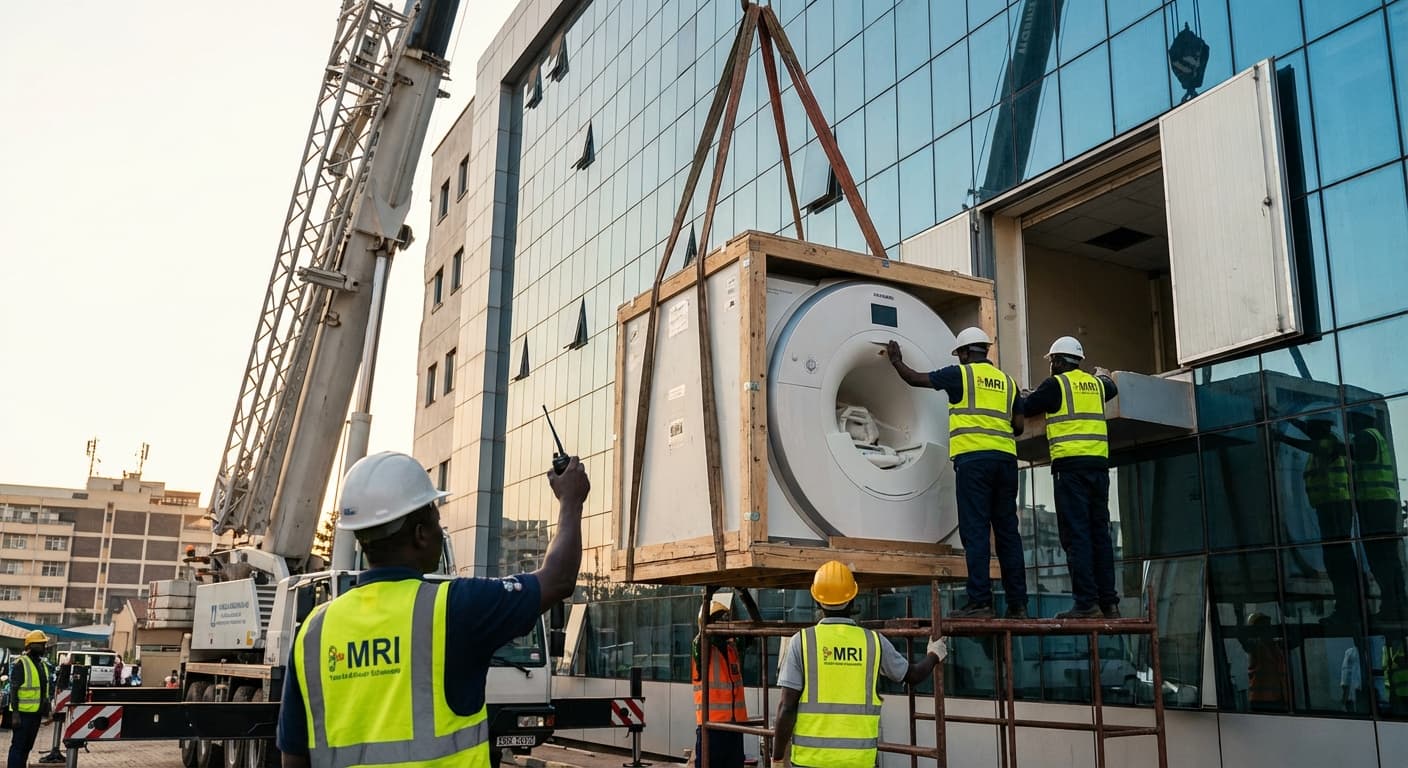
Cranage & Rigging Supervision Service in Rwanda
Engineering Excellence & Technical Support
Cranage & Rigging Supervision Service High-standard technical execution following OEM protocols and local regulatory frameworks.
Certified Expertise in Complex Lifts
Our certified crane and rigging supervisors in Rwanda bring extensive experience to every project, ensuring meticulous planning, execution, and oversight of complex lifts, from heavy industrial components to delicate infrastructure installations. We prioritize safety and efficiency through adherence to international standards and local regulations.
Robust Risk Assessment & Mitigation
We implement a proactive approach to risk management. Our supervision services include comprehensive site assessments, detailed load calculations, and the development of robust safety protocols. By identifying potential hazards and implementing effective mitigation strategies, we guarantee the highest level of safety for personnel, equipment, and the environment throughout crane and rigging operations in Rwanda.
Optimized Operational Efficiency
Leveraging advanced planning tools and real-time monitoring, our supervisors in Rwanda optimize crane and rigging operations for maximum efficiency. We focus on minimizing downtime, ensuring precise equipment placement, and streamlining workflow, resulting in faster project completion times and reduced operational costs for our clients.
What Is Cranage & Rigging Supervision Service In Rwanda?
Cranage and Rigging Supervision Service in Rwanda refers to the professional oversight and management of lifting operations involving cranes and rigging equipment. This service ensures that all lifting activities are conducted safely, efficiently, and in compliance with relevant national and international standards and regulations. It involves a skilled and experienced supervisor who directs and monitors the entire process, from pre-lift planning to post-lift execution. The primary objective is to mitigate risks associated with heavy lifting, prevent accidents, protect personnel and assets, and optimize the lifting process for operational effectiveness.
| Who Needs It? | Typical Use Cases | ||||||
|---|---|---|---|---|---|---|---|
| Construction Companies (building, infrastructure, industrial) | Manufacturing and Production Facilities | Oil and Gas Exploration and Production Companies | Mining Operations | Port and Logistics Operations | Heavy Industry Projects | Any entity undertaking complex lifting operations involving significant loads and height. | |
| Installation of heavy machinery and equipment | Erection of structural components (e.g., steel beams, precast concrete) | Offloading and loading of oversized and heavy cargo | Component placement in power plants, refineries, and factories | Bridge construction and repair | Wind turbine installation and maintenance | Dismantling and removal of heavy structures | Emergency recovery operations involving fallen loads or damaged equipment |
Key Components of Cranage & Rigging Supervision Service:
- Pre-lift planning and assessment
- Development of lift plans
- Equipment inspection and certification verification
- Toolbox talks and safety briefings
- Competent person oversight during lifting operations
- Load securing and balancing verification
- Communication and signaling coordination
- Emergency response planning and execution
- Post-lift review and reporting
Who Needs Cranage & Rigging Supervision Service In Rwanda?
Cranage and rigging supervision services are essential for any project in Rwanda involving the lifting, moving, or securing of heavy, oversized, or complex loads. These services ensure that operations are conducted safely, efficiently, and in compliance with all relevant regulations and best practices. Effective supervision minimizes risks of accidents, equipment damage, and project delays, ultimately contributing to cost savings and successful project completion.
| Industry/Sector | Typical Departments Requiring Supervision | Specific Needs/Examples |
|---|---|---|
| Construction | Project Management, Site Management, Operations, Safety (HSE) | Erection of steel structures, placement of pre-fabricated components, lifting heavy machinery, bridge construction. |
| Oil and Gas | Project Engineering, Operations, Maintenance, Safety (HSE), Logistics | Installation of large process equipment, modular unit placement, pipeline lifting, rig moves. |
| Mining and Quarrying | Operations, Maintenance, Engineering, Safety (HSE) | Installation and relocation of heavy mining machinery (crushers, excavators), loading/unloading of large components, mill relining. |
| Manufacturing and Industrial | Production, Engineering, Maintenance, Logistics, Safety (HSE) | Installation of new machinery, relocation of production lines, handling of large raw materials or finished goods. |
| Infrastructure Development | Project Management, Civil Engineering, Construction Management, Safety (HSE) | Placement of bridge segments, erection of towers, installation of large turbines, heavy equipment deployment for road construction. |
| Logistics and Warehousing | Warehouse Operations, Fleet Management, Safety (HSE) | Loading and unloading of oversized cargo, placement of heavy racking systems, movement of large containers. |
Target Customers for Cranage & Rigging Supervision Service in Rwanda
- Construction Companies
- Oil and Gas Companies
- Mining and Quarrying Operations
- Manufacturing and Industrial Plants
- Logistics and Warehousing Providers
- Infrastructure Development Projects (e.g., bridges, roads, power plants)
- Event Organizers (for stage setups, large installations)
- Heavy Equipment Rental Companies
- Shipping and Port Authorities
Cranage & Rigging Supervision Service Process In Rwanda
Our Cranage & Rigging Supervision Service in Rwanda is designed to ensure the safe, efficient, and compliant execution of lifting operations. The process begins with an initial inquiry from a client, followed by a detailed assessment, planning, mobilization, on-site supervision, and finally, project closeout and reporting. This workflow emphasizes clear communication, risk management, and adherence to international safety standards and local regulations.
| Phase | Description | Key Activities | Deliverables/Outcomes | Responsible Party |
|---|---|---|---|---|
| The client contacts us to request cranage and rigging supervision services for a specific project in Rwanda. | Understanding client needs, project scope, location, and lifting requirements. Providing initial service overview and potential quotation framework. | Preliminary understanding of project scope, initial quotation, service proposal. | Client, Service Provider (Sales/Consultation Team) |
| A thorough evaluation of the project site and the proposed lifting operations is conducted. | Site survey (access, ground conditions, overhead obstructions, environmental factors). Identifying potential hazards and risks associated with the lifting operation. Reviewing existing project plans and documentation. | Detailed site assessment report, comprehensive risk register, identification of critical lift parameters. | Service Provider (Supervision Team Lead, Safety Officer) |
| Developing a detailed and compliant plan for the entire lifting operation. | Creating a detailed Method Statement outlining lifting procedures, equipment selection, personnel roles and responsibilities, communication protocols, emergency procedures. Obtaining necessary permits and approvals from relevant authorities (if applicable). | Approved Method Statement, lift plans, permit documentation (if required). | Service Provider (Supervision Team Lead, Rigging Engineers, Safety Officer) |
| Gathering and deploying all necessary personnel and equipment to the site. | Mobilizing qualified and certified cranage and rigging personnel. Ensuring all lifting equipment (cranes, slings, shackles, etc.) meets relevant standards and is inspected. Conducting pre-job safety briefings and toolbox talks. | On-site personnel, certified and inspected equipment, pre-job briefing records. | Service Provider (Project Manager, Operations Team) |
| Direct supervision and management of the lifting operations to ensure safety and efficiency. | Monitoring all lifting activities in real-time. Enforcing safety procedures and the Method Statement. Directing and coordinating lifting crews. Managing communication between all stakeholders. Responding to any unforeseen issues or emergencies. | Safe and efficient execution of lifts, continuous risk monitoring, immediate incident response (if any). | Service Provider (Supervision Team Lead, Rigging Supervisors, Safety Officers, Crane Operators) |
| Analyzing the performance of the lifting operations and documenting outcomes. | Conducting a post-lift review meeting. Compiling a comprehensive report detailing the operation, any deviations from the plan, incidents (if any), lessons learned, and recommendations for future operations. | Post-operation report, lessons learned document, incident reports (if applicable). | Service Provider (Supervision Team Lead, Project Manager) |
| Finalizing all administrative and financial aspects of the service. | Verifying completion of services according to the contract. Submitting final invoices. Obtaining client sign-off on completed services. | Final invoice, client satisfaction confirmation, project closure documentation. | Service Provider (Finance Department, Project Manager) |
Cranage & Rigging Supervision Service Workflow in Rwanda
- Inquiry & Initial Consultation
- Site Assessment & Risk Evaluation
- Planning & Method Statement Development
- Resource Mobilization & Pre-deployment Checks
- On-Site Supervision & Execution
- Post-Operation Review & Reporting
- Project Closeout & Invoicing
Cranage & Rigging Supervision Service Cost In Rwanda
The cost of Cranage & Rigging Supervision services in Rwanda can vary significantly based on several factors. Understanding these factors is crucial for budgeting and obtaining accurate quotes from service providers. These services are essential for the safe and efficient lifting and movement of heavy or oversized equipment and materials on construction sites, industrial facilities, and other project locations.
| Service Component | Typical Price Range (RWF) | Notes |
|---|---|---|
| Daily Cranage & Rigging Supervisor Rate | 100,000 - 300,000 | This is a general range for experienced supervisors. Specialized roles or extremely complex projects may exceed this. |
| Weekly Cranage & Rigging Supervision Package | 500,000 - 1,500,000 | Often offers a slight discount compared to daily rates for longer engagements. May include planning assistance. |
| Monthly Cranage & Rigging Supervision Contract | 2,000,000 - 6,000,000 | Suitable for long-term construction projects. Typically includes a dedicated team and comprehensive oversight. |
| Specialized/Lead Rigger/Supervisor (per day) | 150,000 - 400,000 | For highly critical lifts, extensive experience, or leadership roles in complex operations. |
| Lift Plan Development & Review (one-off) | 50,000 - 200,000 | Can be a separate service or integrated into supervision. Varies with complexity. |
| Mobilization/Demobilization Fee (if applicable) | Variable | Depending on distance and personnel numbers. Usually a separate charge. |
Key Pricing Factors for Cranage & Rigging Supervision in Rwanda:
- Project Duration: The longer the project, the higher the overall supervision costs due to the extended engagement of supervisors. Daily, weekly, and monthly rates are common pricing structures.
- Complexity and Scale of Operations: Highly complex lifts requiring specialized rigging techniques, multiple cranes, or extensive planning will command higher supervision fees. The sheer volume and weight of the items being lifted also play a significant role.
- Type and Size of Equipment Being Lifted: Supervising the rigging and lifting of extremely heavy or delicate machinery (e.g., large turbines, industrial reactors, generators) demands more experienced and specialized supervisors, thus increasing costs.
- Number of Supervisors Required: Depending on the project's scale and the number of simultaneous lifting operations, multiple supervisors might be needed, impacting the total cost.
- Supervisor Experience and Qualifications: Highly experienced and certified riggers and crane supervisors with a proven track record in similar projects will typically charge higher rates than less experienced personnel.
- Geographical Location: While less of a primary driver, the specific project location within Rwanda might influence costs due to travel, accommodation, and logistical considerations for the supervision team.
- Working Hours and Overtime: Standard working hours are usually factored into daily rates. Any work performed outside these hours, including nights, weekends, or public holidays, will often incur overtime charges.
- Additional Services: Some providers may include preliminary site assessments, lift plan development, or post-lift inspections as part of their supervision package, which can affect the overall price.
- Insurance and Risk Assessment: While not directly a supervision cost, the insurance requirements and the level of risk associated with a particular lift can influence the perceived value and therefore the pricing of the supervision service.
- Market Demand and Availability: As with any service, high demand and limited availability of qualified supervision personnel can drive up prices.
Affordable Cranage & Rigging Supervision Service Options
Accessing expert cranage and rigging supervision doesn't have to break the bank. We offer flexible service options designed to provide maximum value while controlling costs. Our approach focuses on understanding your specific project needs to deliver tailored solutions. We believe in transparency and empowering our clients with knowledge of how to achieve cost savings without compromising safety or efficiency.
| Service Component | Standard Rate | Value Bundle (Example) | Bundle Savings (%) | Cost-Saving Tip |
|---|---|---|---|---|
| Crane Rental (100 Ton) | $X / hour | Included in 'Heavy Lift Package' | N/A | Book for extended durations to reduce per-hour cost. |
| Certified Crane Operator | $Y / hour | Included in all packages | N/A | Ensure operator has experience relevant to your lift type. |
| Rigging Supervision | $Z / hour | Included in 'All-Inclusive Rigging' | 15% | Leverage supervision for site logistics planning. |
| Rigging Crew (2 personnel) | $A / hour | Optional add-on to packages | 5% | Confirm crew size matches lift complexity. |
| Site Inspection & Lift Plan | $B (One-time) | Included in 'Project Starter Bundle' | 100% (if bundled) | Essential for accurate quoting and safety. |
| Equipment Transport (within 50 miles) | $C (One-time) | Discounted when bundled | 10% | Coordinate with other site deliveries/pickups. |
Understanding Value Bundles & Cost-Saving Strategies
- Value Bundles: These are pre-packaged service combinations designed to address common project requirements at a more advantageous price point than individual services. Bundles often include a combination of cranage equipment, skilled operators, and the necessary rigging supervision for a specific scope of work.
- Cost-Saving Strategy 1: Early Planning & Consultation: Engaging our services early allows for meticulous planning. This minimizes unexpected issues, rework, and extended operational hours, all significant cost drivers.
- Cost-Saving Strategy 2: Right-Sizing Equipment: We assess your lift requirements to ensure you're not over or under-utilizing equipment. This prevents unnecessary rental costs for oversized cranes or the delays and risks associated with undersized ones.
- Cost-Saving Strategy 3: Off-Peak Scheduling: If your project timeline allows, scheduling your cranage and rigging operations during off-peak hours or days can often result in lower hourly rates.
- Cost-Saving Strategy 4: Bundle Discounts: Our pre-defined value bundles offer a built-in discount compared to procuring each service separately. We regularly review and update these bundles to reflect market efficiencies.
- Cost-Saving Strategy 5: Long-Term Contract Rates: For ongoing projects or recurring needs, we offer preferential rates for longer-term commitments, providing predictable budgeting and substantial savings.
- Cost-Saving Strategy 6: Material Handling Optimization: Our supervision expertise extends to optimizing the placement and movement of materials, reducing handling time and the need for additional equipment or labor.
- Cost-Saving Strategy 7: Proactive Risk Management: Thorough risk assessments conducted by our supervisors identify potential hazards and implement mitigation strategies, preventing costly accidents, delays, and equipment damage.
Verified Providers In Rwanda
In Rwanda's burgeoning healthcare landscape, access to verified and trustworthy medical providers is paramount. Franance Health stands out as a leading entity, offering a robust network of credentialed professionals and facilities. This commitment to verification ensures patients receive high-quality, safe, and effective care. Understanding Franance Health's credentialing process and the benefits it brings illuminates why they are the optimal choice for healthcare needs in Rwanda.
| Aspect | Franance Health's Approach | Benefit to Patients |
|---|---|---|
| Provider Credentialing | Multi-faceted verification: education, experience, ethics, and licensing checks. | Ensures competence and reduces risk of sub-standard care. |
| Quality Assurance | Continuous monitoring and adherence to established healthcare protocols. | Provides confidence in the medical services received. |
| Patient Safety | Partnership with providers committed to ethical practices and patient well-being. | Minimizes potential harm and promotes positive health outcomes. |
| Network Scope | Extensive network of specialists and facilities across Rwanda. | Facilitates easy access to a wide range of medical expertise. |
| Reputation and Trust | Building a reputation as a reliable source for verified healthcare. | Empowers patients to choose providers with confidence. |
Why Franance Health Represents the Best Choice:
- Rigorous Provider Vetting: Franance Health employs a comprehensive verification process that goes beyond basic licensing. This includes scrutinizing educational backgrounds, professional experience, and adherence to ethical standards.
- Commitment to Quality Care: By partnering with only verified providers, Franance Health guarantees a baseline of competence and quality, reducing the risk of medical errors and ensuring patient satisfaction.
- Enhanced Patient Trust: The "verified" status instilled by Franance Health fosters significant trust among patients, allowing them to make informed decisions about their healthcare with confidence.
- Access to Specialized Services: Their network encompasses a wide range of medical specialties, ensuring that patients can find the right expert for their specific health concerns, all within a trusted framework.
- Streamlined Healthcare Navigation: Franance Health simplifies the process of finding and accessing quality healthcare, saving patients time and reducing the stress often associated with medical appointments.
- Upholding International Standards: The credentialing processes align with best practices in healthcare accreditation, demonstrating a dedication to global standards of excellence.
Scope Of Work For Cranage & Rigging Supervision Service
This Scope of Work (SOW) outlines the requirements for providing Cranage & Rigging Supervision Services. The service encompasses the oversight, planning, and execution of all lifting and rigging operations to ensure safety, efficiency, and compliance with industry standards and project-specific requirements. The service provider will be responsible for providing qualified and experienced supervision for all lifting and rigging activities.
| Technical Deliverable | Description | Standard Specification/Reference |
|---|---|---|
| Lifting Plans & Procedures | Detailed documented plans for all lifting operations, including risk assessments and method statements. | Project-specific lifting plan templates, BS 7121 (Safe Use of Cranes), LOLER (Lifting Operations and Lifting Equipment Regulations - UK), ANSI B30 (Safety Standards for Lifting Devices). |
| Equipment Certification & Inspection Records | Proof of valid certification and inspection records for all lifting gear and appliances. | Manufacturer's documentation, third-party inspection certificates, site inspection logs, relevant national standards. |
| Competency & Training Records | Documentation verifying the competency and certifications of all lifting personnel (operators, riggers, signal persons, supervisors). | Operator licenses, rigger certifications, industry-recognized training certificates, site-specific competency assessments. |
| Daily Lifting Operation Reports | Daily summary of all lifting activities, including loads lifted, equipment used, personnel involved, and any issues encountered. | Project-specific reporting templates, detailing date, time, location, lift description, equipment, personnel, weather conditions, and any deviations. |
| Incident/Near Miss Reports | Detailed reports for any lifting-related incidents or near misses, including root cause analysis and corrective actions. | Project-specific incident reporting forms, OSHA (Occupational Safety and Health Administration - US) guidelines, internal company incident investigation procedures. |
| Risk Assessments | Comprehensive assessments of potential hazards associated with each lifting operation and proposed mitigation measures. | JSA (Job Safety Analysis) or RA (Risk Assessment) templates, HAZID (Hazard Identification) studies, SIL (Safety Integrity Level) assessments for critical lifts. |
| Load Charts & Crane Specific Data | Availability and understanding of crane load charts and operational limits. | Manufacturer's crane operating manuals, load chart appendices. |
| Communication Protocols | Established and documented communication procedures during lifting operations. | Project-specific communication plans, standardized hand signals (ANSI B30.26), radio communication protocols. |
| Method Statements | Step-by-step instructions for executing specific lifting tasks. | Project-specific method statement templates, detailing sequence of operations, personnel roles, and safety precautions. |
| Site Specific Safety Rules | Adherence to project-specific safety regulations and procedures. | Project Health, Safety, and Environmental (HSE) Plan, site inductions, permit-to-work systems. |
Key Responsibilities of Cranage & Rigging Supervision Service
- Develop and review detailed lifting plans, including method statements, risk assessments, and lift calculations for all lifts, especially critical and heavy lifts.
- Ensure all lifting equipment (cranes, hoists, slings, shackles, etc.) is inspected, certified, and suitable for the intended use, adhering to manufacturer recommendations and relevant standards.
- Supervise and direct all rigging and lifting operations, ensuring strict adherence to approved lifting plans, safety procedures, and communication protocols.
- Monitor and control all aspects of the lifting operation, including load positioning, environmental conditions, personnel competency, and exclusion zones.
- Conduct pre-lift toolbox talks and briefings to ensure all personnel involved understand their roles, responsibilities, and the specific hazards of the lift.
- Oversee the correct rigging of loads, ensuring proper sling angles, attachment points, and load stability.
- Ensure proper communication channels are maintained between the crane operator, signal person, riggers, and supervisor throughout the lift.
- Identify and report any unsafe conditions, practices, or deviations from the lifting plan immediately to the relevant parties.
- Maintain accurate records of all lifting operations, including daily reports, incident reports, and equipment logs.
- Participate in site safety meetings and contribute to the overall safety culture of the project.
- Ensure compliance with all applicable local, national, and international safety regulations and standards.
- Provide guidance and training to site personnel on safe lifting practices as required.
- Review and approve any changes or modifications to lifting plans.
- Liaise with project management, engineers, and other relevant stakeholders regarding lifting operations.
- Ensure that all personnel involved in lifting operations are competent and hold the necessary certifications.
Service Level Agreement For Cranage & Rigging Supervision Service
This Service Level Agreement (SLA) outlines the response times and uptime guarantees for the Cranage & Rigging Supervision Service provided by [Your Company Name] to [Client Company Name]. This SLA is a supplement to the Master Service Agreement (MSA) dated [MSA Date].
| Service Component | Service Level Target | Measurement Metric | Service Credit/Remedy |
|---|---|---|---|
| Response Time for Critical Issues | 1 Hour | Time from notification to first diagnostic action by [Your Company Name] | For each Critical Issue exceeding the Response Time, Client may be eligible for a [Percentage]% credit on the monthly service fee for the affected component. If the issue remains unresolved for > [Number] hours, an additional [Percentage]% credit will apply. |
| Response Time for Non-Critical Issues | 4 Business Hours | Time from notification to first diagnostic action by [Your Company Name] | Non-critical issues will be addressed in the next available support window or during business hours. Service Credits do not apply unless the issue escalates to Critical. |
| Service Uptime Guarantee | 99.5% per calendar month | Percentage of time the Service is available, excluding Scheduled Maintenance and Force Majeure | For each full 1% below the Uptime Guarantee, Client may be eligible for a [Percentage]% credit on the monthly service fee. For example, 98.5% uptime would be a 1% shortfall, potentially eligible for a [Percentage]% credit. |
| Scheduled Maintenance Window | Limited to [Maximum Hours] per month, outside of peak operational hours (e.g., weekends, overnight) | Total hours of Scheduled Maintenance per month | Notification will be provided at least [Notification Period] in advance. Unsatisfactory impact from Scheduled Maintenance may be discussed on a case-by-case basis. |
Key Definitions
- Service: Cranage & Rigging Supervision Service, which includes on-site supervision, planning assistance, safety checks, and coordination of cranage and rigging operations.
- Downtime: Any period during which the Cranage & Rigging Supervision Service is unavailable or significantly degraded, preventing the client from executing critical operations requiring supervision.
- Scheduled Maintenance: Pre-announced periods during which the Service may be temporarily unavailable for planned upgrades or maintenance. Clients will be notified at least [Notification Period, e.g., 48 hours] in advance.
- Emergency Maintenance: Unscheduled maintenance required to address critical issues or security vulnerabilities. While efforts will be made to minimize disruption, emergency maintenance may occur with less notice.
- Response Time: The maximum time allowed from the moment a critical issue is reported by the client to the commencement of diagnostic efforts by [Your Company Name]'s technical support team.
- Uptime Guarantee: The percentage of time the Cranage & Rigging Supervision Service is available and functional, excluding Scheduled Maintenance and Force Majeure events.
- Critical Issue: An issue that renders the Cranage & Rigging Supervision Service completely unavailable or causes significant operational disruption, impacting the client's ability to perform essential tasks.
- Non-Critical Issue: An issue that degrades the Service's performance or functionality but does not completely prevent its use.
- Force Majeure: Events beyond the reasonable control of either party, including but not limited to acts of God, war, terrorism, natural disasters, strikes, or government action.
Frequently Asked Questions

Ready when you are
Let's scope your Cranage & Rigging Supervision Service in Rwanda project in Rwanda.

Scaling healthcare logistics and technical systems across the entire continent.