
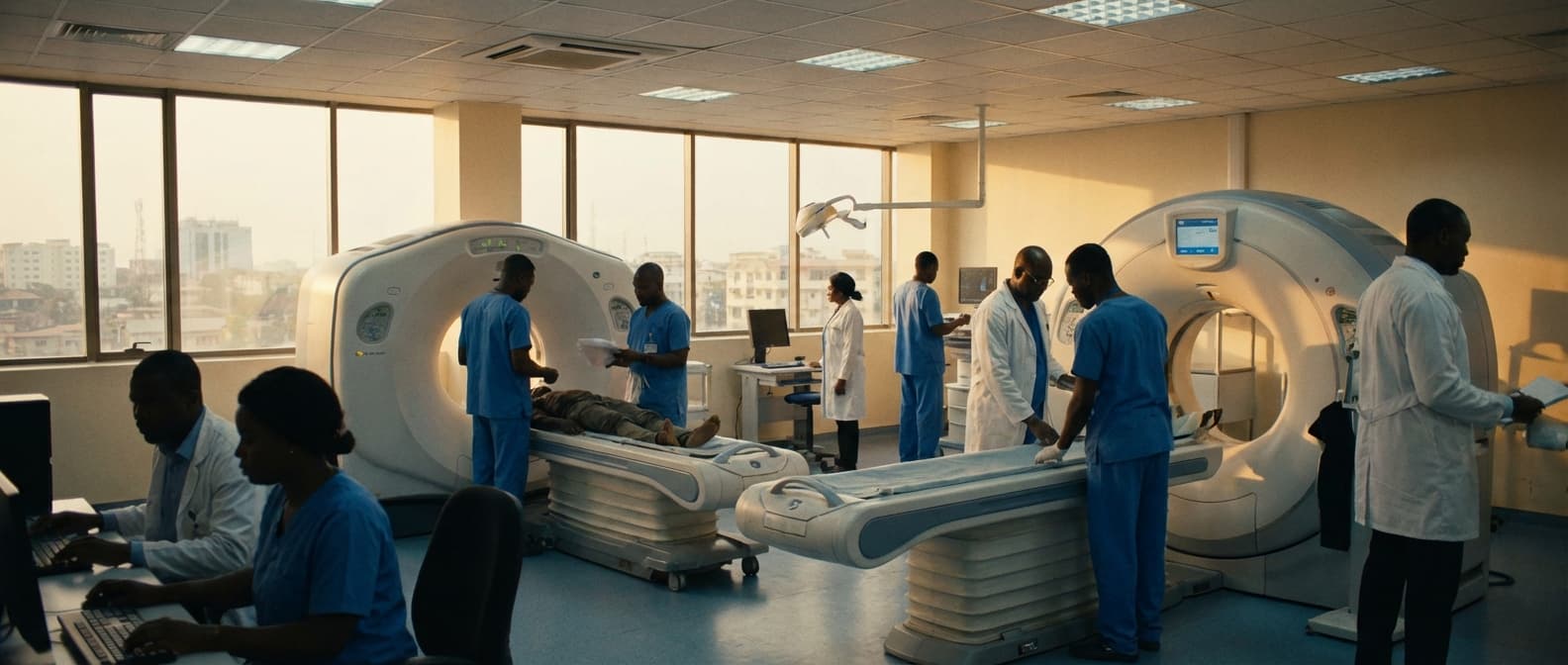
Radiology Room Design & Shielding Calculation in Rwanda
Engineering Excellence & Technical Support
Turnkey room planning, shielding drawings and approvals for imaging suites. High-standard technical execution following OEM protocols and local regulatory frameworks.
Optimized Radiation Shielding Design for Radiology Suite
Engineered precise lead shielding calculations for CT scanners and X-ray rooms in Rwanda, ensuring compliance with international radiation safety standards and minimizing patient and staff exposure while optimizing material usage.
Integrated Room Layout for Enhanced Workflow and Safety
Developed a comprehensive radiology room design incorporating ergonomic layouts, efficient equipment placement, and dedicated shielded areas, facilitating smooth patient throughput and adhering to stringent safety protocols in Rwandan healthcare facilities.
Advanced Simulation for Shielding Verification and Cost Efficiency
Utilized sophisticated modeling software to simulate radiation dispersion and verify shielding effectiveness, providing Rwanda's healthcare providers with cost-effective solutions and robust safety assurances for their diagnostic imaging departments.
What Is Radiology Room Design & Shielding Calculation In Rwanda?
Radiology room design and shielding calculation in Rwanda is a specialized engineering and architectural service focused on the safe and effective installation of diagnostic imaging equipment. This service involves the meticulous planning of radiology suites, encompassing architectural layout, equipment placement, workflow optimization, and, critically, the calculation and specification of radiation shielding to protect patients, staff, and the public from ionizing radiation.
The process begins with an assessment of the proposed radiology department's imaging modalities (e.g., X-ray, CT, fluoroscopy, mammography, MRI - though MRI shielding is for RF, not ionizing radiation). Detailed architectural plans are reviewed or developed, considering factors such as room dimensions, door and window placement, interventional procedure requirements, and the specific shielding needs of each imaging modality. Shielding calculations are paramount, employing principles of radiation physics and established dose limits (e.g., those defined by the Rwanda Biomedical Centre - RBC - or international recommendations like ICRP). These calculations determine the necessary thickness and material (typically lead, concrete, or specialized baryte plaster) for walls, floors, ceilings, doors, and viewing areas to attenuate radiation to acceptable levels for controlled and uncontrolled areas.
Key components of the service include:
- Facility Layout and Workflow Analysis: Optimizing patient and staff flow to enhance efficiency and minimize radiation exposure.
- Equipment Specification Integration: Incorporating the spatial and shielding requirements of specific imaging devices.
- Radiation Shielding Design: Calculating the required attenuation for each barrier based on factors like X-ray tube workload, beam orientation, occupancy factors, and distance from the source.
- Shielding Material Specification: Recommending appropriate materials and their thicknesses.
- Compliance with Regulations: Ensuring adherence to national radiation protection regulations and standards enforced by regulatory bodies such as the Rwanda Biomedical Centre (RBC) – Directorate of Radiation Protection.
- Construction Supervision and Verification: Providing oversight during the construction phase to ensure adherence to design specifications and performing post-construction radiation surveys to confirm shielding effectiveness.
This service is essential for any facility intending to install or upgrade diagnostic imaging equipment that utilizes ionizing radiation. It is a mandatory requirement for licensing and operational approval by regulatory authorities.
| Use Case | Imaging Modality | Primary Shielding Considerations |
|---|---|---|
| General Radiography Room | X-ray (plain films) | Wall shielding (lead or concrete) for primary and secondary beams, door shielding, protective screens |
| Computed Tomography (CT) Suite | CT Scanners | Extensive wall, ceiling, and floor shielding (lead or concrete) due to high X-ray output and rotational beam, robust door shielding, control room protection |
| Fluoroscopy / Interventional Radiology Suite | Fluoroscopy units, C-arms, Angiography systems | Dynamic shielding requirements for variable beam positions, lead curtains/drapes, table shielding, control room protection, high workload considerations |
| Mammography Suite | Mammography units | Specific wall shielding for scatter radiation, control booth design, potential need for leaded glass for monitoring |
| X-ray Angiography / Cardiac Catheterization Lab | Angiography systems | Similar to interventional radiology with emphasis on protection for operators during prolonged procedures, high patient dose considerations, and extensive shielding |
| Dental X-ray Suite | Intraoral and Panoramic X-ray units | Wall shielding, door shielding, consideration of patient and operator positioning, lower but continuous exposure risks |
Who Needs Radiology Room Design & Shielding Calculation Services in Rwanda?
- Hospitals (public and private)
- Diagnostic imaging centers
- Specialty clinics (e.g., orthopedic, cardiology with interventional suites)
- Government health facilities
- Research institutions utilizing X-ray or CT equipment
- Veterinary clinics employing diagnostic radiography
Who Needs Radiology Room Design & Shielding Calculation In Rwanda?
In Rwanda, the demand for specialized radiology room design and shielding calculations is driven by the growing healthcare sector and the increasing adoption of advanced medical imaging technologies. These services are crucial for ensuring the safety of patients, staff, and the public from radiation exposure, as well as for optimizing the functionality and efficiency of radiology departments. The primary need arises from facilities that either currently operate or plan to operate diagnostic and therapeutic imaging equipment emitting ionizing radiation.
| Customer Type | Relevant Departments | Specific Needs & Justification |
|---|---|---|
| Hospitals (Public and Private) | Radiology/Medical Imaging Department, Nuclear Medicine, Radiation Oncology, Operating Rooms (for intraoperative imaging) | Installation of new X-ray machines, CT scanners, MRI suites, PET-CT scanners, and linear accelerators requires robust shielding design to prevent radiation leakage. Existing facilities may need upgrades due to new equipment or updated safety regulations. Ensures compliance with national radiation safety standards. |
| Diagnostic Imaging Centers | General Radiology (X-ray, Fluoroscopy), CT Scanning, MRI, Ultrasound (though ultrasound doesn't use ionizing radiation, room acoustics and layout are still important for imaging workflow) | Dedicated centers focused on imaging services need precise shielding calculations to maximize patient throughput while maintaining safety. Essential for investing in high-end imaging equipment and ensuring a secure environment. |
| Specialized Clinics (e.g., Oncology, Cardiology) | Radiation Oncology, Interventional Cardiology (requiring fluoroscopy) | Oncology clinics performing radiotherapy require extensive shielding for treatment rooms. Cardiology departments utilizing fluoroscopic imaging during procedures need correctly designed rooms to protect both patients and medical staff from scattered radiation. |
| Health Training Institutions | Medical Schools (Radiography programs), Nursing Schools | Institutions training future radiographers and medical professionals need to have functional and safe radiology departments for practical training. Design and shielding ensure a controlled learning environment, mirroring real-world clinical settings. |
| Government Health Agencies and Regulatory Bodies | Ministry of Health (Radiation Protection Department), Rwanda Biomedical Centre (RBC) | These bodies are responsible for setting and enforcing radiation safety regulations. They require expertise in design and shielding calculations to review and approve plans for new installations, conduct inspections, and ensure compliance with international best practices and national laws. |
Target Customers and Departments in Rwanda Requiring Radiology Room Design & Shielding Calculations
- Hospitals (Public and Private)
- Diagnostic Imaging Centers
- Specialized Clinics (e.g., Oncology, Cardiology)
- Health Training Institutions
- Government Health Agencies and Regulatory Bodies
Radiology Room Design & Shielding Calculation Process In Rwanda
This document outlines the typical workflow for Radiology Room Design and Shielding Calculations, specifically tailored to the context of Rwanda. It covers the process from initial client inquiry through the final execution of the shielding installation and room commissioning. This workflow emphasizes adherence to international radiation safety standards, local regulations (where applicable and evolving), and practical considerations for implementation in Rwanda.
| Phase | Key Activities | Responsible Parties | Deliverables | Typical Timeline (Rwanda Context) | Key Considerations (Rwanda) | ||||||||
|---|---|---|---|---|---|---|---|---|---|---|---|---|---|
| Phase 1: Inquiry & Initial Assessment |
| Client (Hospital/Clinic Management), Project Manager, Radiation Physicist/Consultant | Project Brief, Site Survey Report, Preliminary Needs Assessment | 1-2 Weeks | Availability of detailed equipment brochures. <br> Access to existing blueprints or willingness to measure accurately. <br> Understanding of local construction practices. | Local regulations on radiation safety (evolving). <br> Import duties and availability of specialized shielding materials. <br> Currency exchange rates affecting material costs. | Phase 1: Inquiry & Initial Assessment |
| Client (Hospital/Clinic Management), Project Manager, Radiation Physicist/Consultant | Project Brief, Site Survey Report, Preliminary Needs Assessment | 1-2 Weeks | Availability of detailed equipment brochures. <br> Access to existing blueprints or willingness to measure accurately. <br> Understanding of local construction practices. | Local regulations on radiation safety (evolving). <br> Import duties and availability of specialized shielding materials. <br> Currency exchange rates affecting material costs. |
| Phase 2: Design & Shielding Calculation |
| Radiation Physicist/Consultant, Architect, Structural Engineer | Detailed Shielding Calculation Report, Architectural Drawings, Structural Drawings, Material Specifications | 2-4 Weeks | Accurate equipment workload data is crucial. <br> Local availability and cost of specific shielding materials. <br> Collaboration between physicist and architect for integration of shielding into design. | Availability of qualified radiation physicists. <br> Cost-effectiveness of imported lead shielding versus locally sourced, denser concrete. <br> Need for robust design to withstand local environmental conditions (e.g., humidity). | Phase 2: Design & Shielding Calculation |
| Radiation Physicist/Consultant, Architect, Structural Engineer | Detailed Shielding Calculation Report, Architectural Drawings, Structural Drawings, Material Specifications | 2-4 Weeks | Accurate equipment workload data is crucial. <br> Local availability and cost of specific shielding materials. <br> Collaboration between physicist and architect for integration of shielding into design. | Availability of qualified radiation physicists. <br> Cost-effectiveness of imported lead shielding versus locally sourced, denser concrete. <br> Need for robust design to withstand local environmental conditions (e.g., humidity). |
| Phase 3: Procurement & Fabrication |
| Procurement Department, Suppliers, Logistics Providers, Project Manager | Procured Materials, Fabricated Components, Delivery Confirmation | 4-8 Weeks (highly variable due to import times) | Lead times for imported materials. <br> Reliable suppliers with quality certifications. <br> Efficient customs clearance processes. | Import duties and taxes on shielding materials. <br> Potential for delays at customs. <br> Availability of local expertise for specialized fabrication. | Phase 3: Procurement & Fabrication |
| Procurement Department, Suppliers, Logistics Providers, Project Manager | Procured Materials, Fabricated Components, Delivery Confirmation | 4-8 Weeks (highly variable due to import times) | Lead times for imported materials. <br> Reliable suppliers with quality certifications. <br> Efficient customs clearance processes. | Import duties and taxes on shielding materials. <br> Potential for delays at customs. <br> Availability of local expertise for specialized fabrication. |
| Phase 4: Installation & Construction |
| Construction Team, Specialized Installers, Radiation Physicist/Consultant, Project Manager | Installed Shielding, Completed Room Construction, Site Inspection Reports | 3-6 Weeks | Skilled labor for precise installation of lead. <br> Site accessibility for material delivery and equipment. <br> Coordination between construction and shielding installation. | Availability of trained installers for lead. <br> Quality control during installation to ensure no radiation leaks. <br> Need for proper ventilation during construction. | Phase 4: Installation & Construction |
| Construction Team, Specialized Installers, Radiation Physicist/Consultant, Project Manager | Installed Shielding, Completed Room Construction, Site Inspection Reports | 3-6 Weeks | Skilled labor for precise installation of lead. <br> Site accessibility for material delivery and equipment. <br> Coordination between construction and shielding installation. | Availability of trained installers for lead. <br> Quality control during installation to ensure no radiation leaks. <br> Need for proper ventilation during construction. |
| Phase 5: Commissioning & Handover |
| Radiation Physicist/Consultant, Client (Hospital/Clinic Management), Project Manager | Radiation Shielding Certification Report, As-Built Drawings, Operations & Maintenance Manual, Final Project Report | 1-2 Weeks | Availability of calibrated survey equipment. <br> Cooperation from radiology staff for survey measurements. <br> Clear understanding of acceptance criteria. | Need for certified radiation safety officers or physicists to conduct surveys. <br> Formal recognition of certification by relevant authorities. <br> Provision for ongoing quality assurance and periodic re-surveys. |
Radiology Room Design & Shielding Calculation Process in Rwanda: Workflow
- Phase 1: Inquiry & Initial Assessment
- Phase 2: Design & Shielding Calculation
- Phase 3: Procurement & Fabrication
- Phase 4: Installation & Construction
- Phase 5: Commissioning & Handover
Radiology Room Design & Shielding Calculation Cost In Rwanda
Designing a radiology room involves meticulous planning to ensure radiation safety, workflow efficiency, and patient comfort. In Rwanda, the cost of such design and the subsequent lead shielding calculations are influenced by several factors. These include the complexity of the room layout, the type and number of imaging equipment to be installed, the required level of radiation shielding, the specific expertise of the architectural and radiological physics consultants, and the overall project scale. The pricing is typically provided in Rwandan Francs (RWF) by local engineering firms, architectural practices with radiology experience, and specialized radiological physicists.
| Service Component | Estimated Price Range (RWF) | Notes |
|---|---|---|
| Radiology Room Architectural Design (Conceptual & Detailed) | 1,500,000 - 5,000,000 RWF | Covers layout, workflow, and general building integration. |
| Detailed Radiation Shielding Calculation (per room/modality) | 1,000,000 - 3,000,000 RWF | Includes physics calculations for lead thickness for walls, doors, and windows. |
| Combined Design & Shielding Consultation Package | 3,000,000 - 8,000,000 RWF | For a comprehensive approach, often preferred for new builds or major renovations. |
| Radiological Physics Expert Site Assessment & Consultation | 500,000 - 1,500,000 RWF | Initial assessment to guide the design and shielding strategy. |
| Project Management & Regulatory Liaison (Design Phase) | 500,000 - 2,000,000 RWF | Assistance with permit applications and regulatory compliance. |
Key Pricing Factors for Radiology Room Design & Shielding Calculation in Rwanda
- Scope of Design Services: This covers architectural drawings, equipment placement plans, electrical and mechanical considerations, and workflow optimization.
- Radiation Shielding Calculations: This is a critical component, involving detailed analysis of X-ray beam intensity, workload, occupancy factors, and distance to determine the precise thickness and material of lead shielding required for walls, doors, windows, and floors.
- Consultant Expertise & Reputation: Experienced and specialized consultants, particularly those with a strong understanding of Rwandan building codes and radiation safety regulations, will command higher fees.
- Complexity of Imaging Equipment: Different modalities (e.g., X-ray, CT, MRI, fluoroscopy) have varying radiation output and shielding requirements, impacting the design and calculation complexity.
- Room Size & Layout: Larger and more complex room configurations will naturally incur higher design costs.
- Material & Labor Costs (for Shielding Implementation): While not part of the design calculation cost, the cost of lead and its installation is a significant related expense that consultants may indirectly advise on.
- Regulatory Approvals: The cost associated with navigating and obtaining necessary permits from Rwandan health and nuclear regulatory bodies.
- Project Timeline: Rush projects may incur premium charges.
Affordable Radiology Room Design & Shielding Calculation Options
Designing an affordable radiology room involves careful consideration of layout, workflow, and crucially, radiation shielding. Balancing patient care, staff safety, and budget requires strategic planning. This document outlines cost-effective design options and shielding calculation approaches, highlighting the value of bundled services and implementing smart cost-saving measures.
| Value Bundle/Strategy | Description | Cost-Saving Benefit | Key Components |
|---|---|---|---|
| Integrated Design-Build Services | Combines architectural design, engineering, and construction under a single contract. | Reduces coordination issues, minimizes change orders, and streamlines the project timeline. | Architectural plans, structural engineering, radiation shielding calculations, construction management. |
| Comprehensive Shielding Consultation & Design | Expert analysis of radiation sources, occupancy factors, and required shielding materials. | Avoids over-shielding (unnecessary material cost) or under-shielding (safety and compliance risks). | Shielding thickness calculations for walls, doors, windows; material recommendations (lead, concrete, etc.). |
| Standardized Room Packages | Pre-defined room layouts and shielding specifications for common radiology modalities (e.g., X-ray, CT). | Faster design process, economies of scale in material procurement, reduced engineering time. | Standardized blueprints, pre-calculated shielding requirements, typical equipment placement. |
| Phased Implementation | Breaking down the project into manageable phases, allowing for staggered investment. | Spreads capital expenditure over time, can accommodate funding availability. | Initial phase for essential infrastructure and shielding, subsequent phases for finishing and specialized equipment. |
| Value Engineering Workshops | Collaborative sessions with stakeholders to identify cost-saving alternatives without compromising quality or safety. | Explores alternative materials, construction methods, and design features. | Materials review, construction method analysis, layout optimization discussions. |
Key Considerations for Affordable Radiology Room Design
- Efficient Layout: Optimizing space to minimize travel distances for patients and staff reduces room size requirements, leading to lower construction and shielding costs.
- Workflow Analysis: Understanding the sequence of procedures helps in placing equipment and support areas strategically, avoiding costly rework or expansion later.
- Modular Design: Utilizing prefabricated elements or modular construction can significantly speed up the build process and reduce labor costs.
- Material Selection: Choosing durable yet cost-effective finishes for walls, floors, and ceilings that meet infection control and radiation safety standards.
- Lighting and Ventilation: Incorporating energy-efficient lighting and HVAC systems to reduce long-term operational expenses.
- Future-Proofing: Designing with flexibility in mind to accommodate potential equipment upgrades or changes in service offerings without major renovations.
Verified Providers In Rwanda
In Rwanda, accessing reliable and trustworthy healthcare providers is paramount for individuals and families. Franance Health stands out as a premier platform for discovering and verifying healthcare professionals, ensuring you receive the highest quality of care. This document outlines the credentials and advantages that make Franance Health the best choice for your healthcare needs in Rwanda.
| Credential Type | Verification Standard | Franance Health Assurance |
|---|---|---|
| Medical Licenses | Official registration with the Rwanda Ministry of Health and relevant professional bodies. | Confirms legal authorization to practice medicine in Rwanda. |
| Educational Qualifications | Verification of degrees and diplomas from accredited medical institutions. | Ensures providers have received foundational medical training from recognized sources. |
| Specialist Certifications | Confirmation of completion of recognized postgraduate training and board certifications. | Validates expertise in specific medical fields and advanced knowledge. |
| Professional Experience | Documentation and validation of prior work history and practice settings. | Provides insight into a provider's practical experience and track record. |
| Continuing Medical Education (CME) | Verification of participation in ongoing professional development programs. | Demonstrates a commitment to staying updated with the latest medical advancements and best practices. |
| Reputation and Patient Feedback | Collection and analysis of patient reviews and testimonials (where applicable). | Offers valuable insights into patient satisfaction and the provider's interpersonal skills. |
Why Franance Health is the Best Choice:
- Rigorous Verification Process: Franance Health implements a stringent vetting system that goes beyond basic licensing. We meticulously examine educational qualifications, professional experience, certifications, and any relevant specializations.
- Comprehensive Provider Profiles: Our platform offers detailed profiles for each healthcare provider, including their medical expertise, areas of specialization, patient reviews, and service offerings. This transparency empowers you to make informed decisions.
- Focus on Quality and Safety: The well-being of patients is our top priority. By verifying credentials, Franance Health actively contributes to a safer healthcare environment in Rwanda, reducing the risk of encountering unqualified practitioners.
- Streamlined Access to Care: Finding the right doctor or specialist can be challenging. Franance Health simplifies this process, connecting you with verified professionals efficiently.
- Commitment to Excellence: We are dedicated to maintaining the highest standards in healthcare provider verification, ensuring that every provider listed on our platform meets our exacting criteria.
Scope Of Work For Radiology Room Design & Shielding Calculation
This Scope of Work (SOW) outlines the requirements for the design of a new radiology room, including the detailed calculation of radiation shielding. The objective is to ensure the room meets all regulatory requirements for radiation safety, operational efficiency, and provides an optimal environment for diagnostic imaging procedures. This document specifies the technical deliverables and standard specifications expected from the consultant.
| Technical Deliverable | Description | Applicable Standards/Specifications | Format |
|---|---|---|---|
| Needs Assessment Report | Summary of site conditions, operational requirements, and stakeholder input. | N/A | Written Report |
| Conceptual Layout Drawings | Preliminary room layouts, equipment placement, workflow diagrams. | NCRP Report No. 147 (or equivalent), Local Building Codes | CAD Drawings (e.g., DWG), PDF |
| Radiation Shielding Calculation Report | Detailed calculations for required shielding thickness, including assumptions, methodology, and results. | NCRP Report No. 147/151 (or equivalent), ICRP Publication 103/121, Local Radiation Safety Regulations | Written Report, Shielding Design Drawings |
| Detailed Architectural Drawings | Floor plans, elevations, sections, wall sections, door/window details. | Local Building Codes, Architectural Standards (e.g., AIA) | CAD Drawings (e.g., DWG), PDF |
| Detailed Structural Drawings | Structural elements supporting shielding, wall construction details. | Local Building Codes, Structural Engineering Standards | CAD Drawings (e.g., DWG), PDF |
| Electrical & Mechanical Design Integration Drawings | Layouts for power, lighting, HVAC, data cabling. | Local Electrical & Mechanical Codes, ASHRAE Standards, Imaging Equipment Manufacturer Specifications | CAD Drawings (e.g., DWG), PDF |
| Specifications Manual | Detailed specifications for all materials, finishes, and construction methods. | CSI MasterFormat (or equivalent), Manufacturer Specifications | Written Document |
| Final Design Package | Complete set of all drawings, specifications, and reports for bidding and construction. | N/A | CAD Drawings, PDF Reports, Written Specifications |
Key Activities and Deliverables
- Site Survey and Needs Assessment: Conduct a thorough site survey to understand existing conditions, room dimensions, adjacent areas, and any specific architectural constraints. Interview key stakeholders (radiologists, technologists, facility managers) to gather detailed operational requirements for the imaging modality planned (e.g., X-ray, CT, MRI, Fluoroscopy).
- Conceptual Design Development: Based on the needs assessment, develop conceptual layouts for the radiology room, including equipment placement, patient workflow, control room configuration, and ancillary spaces (e.g., waiting area, changing rooms, equipment storage).
- Radiation Shielding Calculations: Perform detailed radiation shielding calculations in accordance with relevant national and international standards (e.g., NCRP, ICRP, local regulatory body guidelines). This includes determining the required thickness of lead, concrete, or other shielding materials for walls, doors, windows, and viewing areas. Calculations must consider the specific imaging modality, workload, occupancy factors, and distance from the radiation source.
- Detailed Architectural & Structural Design: Develop detailed architectural and structural drawings for the radiology room, incorporating the approved conceptual design and shielding requirements. This includes floor plans, elevations, sections, and detail drawings.
- Electrical and Mechanical Services Integration: Coordinate and integrate electrical and mechanical services required for the radiology room, including power supply for imaging equipment, ventilation, lighting, and HVAC. Specific attention should be paid to electromagnetic interference (EMI) considerations for sensitive imaging equipment.
- Finishes and Material Specification: Specify appropriate finishes and materials for the radiology room, considering durability, ease of cleaning, infection control, and aesthetic requirements.
- Coordination with Equipment Vendors: Liaise with imaging equipment vendors to obtain specific room dimension requirements, power needs, and any specialized installation considerations.
- Regulatory Compliance Review: Ensure the design and shielding calculations comply with all applicable local, state, and national radiation safety regulations and licensing requirements. This may involve submission of design and shielding plans to regulatory authorities for approval.
- Final Design Documentation: Prepare a comprehensive set of final design drawings, specifications, and reports, including a detailed shielding report, for tender and construction purposes.
- Construction Administration Support (Optional/As Specified): Provide support during the construction phase, including responding to Requests for Information (RFIs), reviewing shop drawings, and conducting site visits to ensure compliance with the design and specifications.
Service Level Agreement For Radiology Room Design & Shielding Calculation
This Service Level Agreement (SLA) outlines the guaranteed response times and uptime for services related to Radiology Room Design & Shielding Calculation. It establishes the expected service levels and the remedies for failing to meet these standards.
| Service Component | Response Time Guarantee (Business Hours) | Uptime Guarantee |
|---|---|---|
| Initial Inquiry Response | 2 Business Hours | N/A (Service initiation) |
| Design Consultation Scheduling | 1 Business Day | N/A (Service initiation) |
| Provision of Preliminary Design Concepts | 5 Business Days (after requirements finalized) | N/A (Deliverable) |
| Shielding Calculation & Report Generation | 7 Business Days (per typical room, complexity dependent) | N/A (Deliverable) |
| Design Review & Feedback Incorporation | 3 Business Days (per round) | N/A (Deliverable) |
| Response to Urgent Design/Shielding Query | 1 Business Hour | N/A (Support) |
| Access to Design & Shielding Software Platform (if applicable) | N/A | 99.5% per month |
| Support for Design/Shielding Documentation Access | 4 Business Hours | N/A (Support) |
Scope of Services Covered
- Initial consultation and requirements gathering for radiology room design.
- Development of architectural layouts and workflow optimizations for radiology suites.
- Radiation shielding calculations for walls, doors, windows, and other structural elements.
- Review and approval of design documents by qualified health physicists or medical physicists.
- Provision of shielding design reports and specifications.
- Assistance during the construction/implementation phase for shielding verification.
- Post-construction shielding surveys and validation.
Frequently Asked Questions

Ready when you are
Let's scope your Radiology Room Design & Shielding Calculation in Rwanda project in Rwanda.

Scaling healthcare logistics and technical systems across the entire continent.