
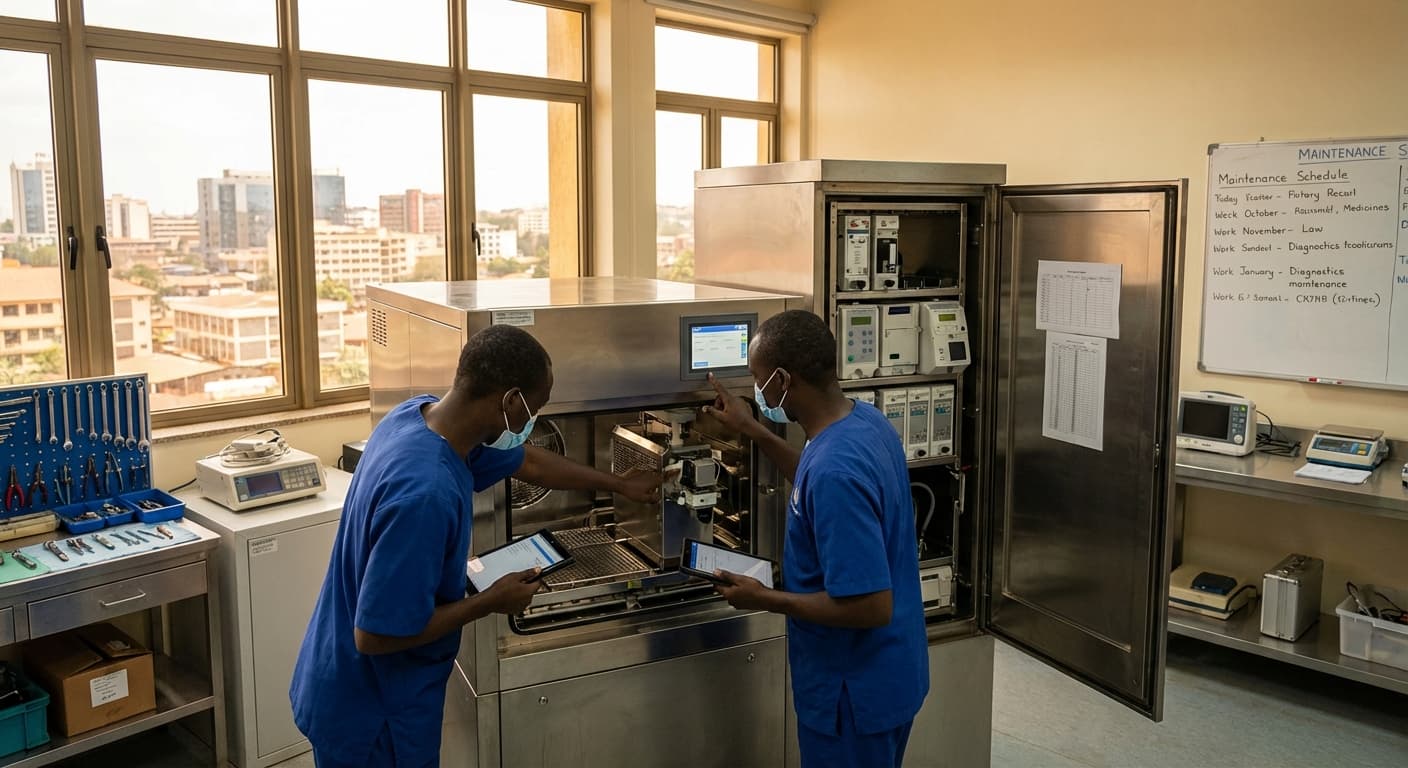
Total Cost of Ownership (TCO) & Lifecycle Budgeting Service in Rwanda
Engineering Excellence & Technical Support
Total Cost of Ownership (TCO) & Lifecycle Budgeting Service High-standard technical execution following OEM protocols and local regulatory frameworks.
Optimized Asset Lifecycle Costing
Leverage our advanced TCO models to precisely forecast and manage all costs associated with your assets throughout their entire lifecycle – from acquisition and operation to maintenance and disposal – ensuring predictable budgeting and minimizing hidden expenses in Rwanda's unique economic landscape.
Strategic Lifecycle Budgeting for Infrastructure
Our service provides robust lifecycle budgeting frameworks for large-scale infrastructure projects in Rwanda. We meticulously analyze capital expenditures, operational efficiencies, and future replacement costs to secure long-term financial sustainability and inform strategic investment decisions.
Data-Driven TCO for Operational Excellence
Gain actionable insights through our data-driven TCO analysis, enabling Rwandan businesses to identify cost-saving opportunities, benchmark performance, and make informed decisions regarding procurement, maintenance strategies, and technology adoption for enhanced operational efficiency and profitability.
What Is Total Cost Of Ownership (Tco) & Lifecycle Budgeting Service In Rwanda?
Total Cost of Ownership (TCO) & Lifecycle Budgeting Service in Rwanda refers to a comprehensive financial management and strategic planning methodology designed to assess the complete costs associated with acquiring, operating, maintaining, and eventually disposing of an asset, project, or system over its entire lifespan. This service moves beyond initial purchase price to incorporate all direct and indirect expenditures, as well as potential revenues or savings, throughout the lifecycle of an entity. Lifecycle Budgeting, intrinsically linked to TCO, involves the systematic estimation and allocation of financial resources required to support an asset or project from its inception through its decommissioning. It provides a structured framework for long-term financial forecasting and risk management.
| Who Needs TCO & Lifecycle Budgeting Service? | Typical Use Cases |
|---|---|
| Government Ministries and Agencies: For public infrastructure projects (roads, power plants, water systems), procurement of IT systems, and fleet management, ensuring long-term fiscal responsibility and optimal resource allocation. | Large-Scale Infrastructure Development: Assessing the full cost of national or regional projects, including construction, operation, maintenance, and eventual decommissioning of assets like bridges, airports, or telecommunication networks. |
| Parastatals and Public Enterprises: For major capital investments in utilities, telecommunications, transportation, and manufacturing, optimizing operational efficiency and long-term profitability. | Information Technology (IT) and Digital Infrastructure: Evaluating the TCO of enterprise software solutions, cloud services, hardware procurements, and cybersecurity investments to guide strategic IT decisions. |
| Private Sector Corporations (especially those with significant asset bases): For investment decisions in machinery, equipment, facilities, and vehicles, aiming to maximize return on investment and minimize operational expenditure. | Real Estate and Facility Management: Determining the lifecycle costs of buildings, including construction, operational utilities, routine maintenance, major renovations, and eventual demolition or repurposing. |
| Non-Governmental Organizations (NGOs) and Development Partners: For evaluating the sustainability and long-term financial viability of development projects, including the procurement and maintenance of equipment, vehicles, and operational infrastructure. | Fleet Management: Analyzing the total cost of owning and operating vehicles, including purchase price, fuel, maintenance, insurance, and disposal, to optimize fleet composition and operational efficiency. |
| Financial Institutions and Investors: To assess the financial risk and potential return of investments involving significant physical or technological assets. | Strategic Planning and Budgetary Control: Providing a robust framework for long-term financial planning, capital budgeting, and informed decision-making by leadership. |
| Educational Institutions and Healthcare Providers: For managing capital assets like buildings, medical equipment, and IT infrastructure, ensuring efficient use of resources and long-term service delivery. | Energy and Resource Management: Evaluating the TCO of renewable energy installations, power generation equipment, and resource extraction projects to ensure economic and environmental sustainability. |
Key Components of TCO & Lifecycle Budgeting Service
- Acquisition Costs: Includes purchase price, installation, setup, initial training, and integration expenses.
- Operating Costs: Encompasses consumables, energy, labor for operation, licensing fees, and software subscriptions.
- Maintenance & Support Costs: Covers planned preventative maintenance, unscheduled repairs, spare parts, warranty services, and technical support contracts.
- Upgrade & Enhancement Costs: Includes costs for periodic upgrades, system expansions, and technology refresh cycles.
- Downtime & Risk Costs: Estimates the financial impact of potential system failures, productivity losses, and associated mitigation strategies.
- Disposal Costs: Accounts for deinstallation, decommissioning, recycling, environmental remediation, and data destruction upon end-of-life.
- Salvage Value/Residual Value: Considers any potential revenue generated from the sale or reuse of an asset at the end of its lifecycle.
- Financing Costs: Incorporates interest payments, loan origination fees, and any other costs associated with capital acquisition.
- Training & Skill Development: Costs associated with ensuring personnel are adequately trained to operate and maintain the asset or system.
Who Needs Total Cost Of Ownership (Tco) & Lifecycle Budgeting Service In Rwanda?
Businesses and organizations in Rwanda often face challenges in accurately forecasting and managing the long-term expenses associated with their assets, projects, and services. Without a comprehensive understanding of Total Cost of Ownership (TCO) and Lifecycle Budgeting, they risk underestimating expenses, overspending, facing unexpected maintenance costs, and making suboptimal investment decisions. A dedicated TCO & Lifecycle Budgeting Service helps address these critical issues by providing data-driven insights and strategic financial planning.
| Department | Key Responsibilities Requiring TCO/Lifecycle Budgeting | Benefits of Service |
|---|---|---|
| Finance/Accounting | Budgeting, financial planning, capital expenditure analysis, asset depreciation, risk management. | Accurate forecasting, improved financial control, optimized capital allocation, identification of cost savings opportunities. |
| Procurement/Purchasing | Vendor selection, contract negotiation, asset acquisition decisions, long-term supply chain management. | Informed purchasing decisions based on total cost, better supplier relationships, reduced total cost of ownership for acquired assets. |
| Operations/Asset Management | Asset lifecycle management, maintenance planning, operational efficiency, performance monitoring, resource allocation. | Optimized asset utilization, proactive maintenance strategies, reduced downtime, extended asset lifespan. |
| IT Department | Technology acquisition and lifecycle management, software licensing, hardware upgrades, cloud service costs, cybersecurity investments. | Strategic IT investment planning, optimized IT spending, reduced technical debt, improved return on IT investments. |
| Project Management | Project planning, capital budgeting, risk assessment, resource forecasting, long-term project viability analysis. | Realistic project cost projections, improved project financial control, informed go/no-go decisions for long-term projects. |
| Facilities Management | Building maintenance, utility management, space planning, capital improvements, energy efficiency initiatives. | Optimized facility operating costs, improved building performance, strategic capital investment in facilities. |
| Strategic Planning/C-Suite | Long-term business strategy, investment decisions, competitive analysis, profitability analysis, organizational efficiency. | Data-driven strategic decision-making, improved competitive advantage, enhanced long-term organizational sustainability. |
Target Customers and Departments in Rwanda Benefiting from TCO & Lifecycle Budgeting Services:
- {"heading":"Large Corporations & Conglomerates","description":"Companies with significant asset portfolios, complex operational structures, and long-term strategic goals. They manage a diverse range of equipment, facilities, and IT infrastructure that require careful cost management over their entire lifespan."}
- {"heading":"Manufacturing & Industrial Companies","description":"Businesses involved in production processes, relying on heavy machinery, plant equipment, and sophisticated production lines. Understanding the TCO of their capital investments is crucial for profitability and competitiveness."}
- {"heading":"Telecommunications Providers","description":"Companies managing extensive network infrastructure, data centers, and customer-facing technology. The rapid evolution of technology necessitates robust lifecycle budgeting for network upgrades and maintenance."}
- {"heading":"Energy & Utilities Sector","description":"Organizations responsible for power generation, distribution, and water management. Infrastructure projects in this sector have exceptionally long lifecycles, requiring meticulous TCO analysis for long-term sustainability and investment planning."}
- {"heading":"Real Estate Developers & Property Management Firms","description":"Companies involved in constructing, acquiring, and managing commercial and residential properties. Understanding the TCO of buildings, including operational, maintenance, and eventual disposal costs, is vital for investment returns."}
- {"heading":"Government Agencies & Public Sector Organizations","description":"Ministries, local authorities, and public service providers responsible for managing public assets, infrastructure projects (roads, bridges, public buildings), and IT systems. Efficient use of taxpayer money demands rigorous TCO and lifecycle budgeting."}
- {"heading":"Financial Institutions (Banks, Insurance Companies)","description":"Organizations with significant IT investments, branch networks, and evolving digital platforms. Managing the TCO of their technology stack and physical infrastructure is key to operational efficiency and cost control."}
- {"heading":"Transportation & Logistics Companies","description":"Businesses operating fleets of vehicles (trucks, buses, aircraft), managing distribution centers, and investing in transportation infrastructure. The TCO of their assets directly impacts operational costs and service delivery."}
- {"heading":"Technology Companies & IT Service Providers","description":"Companies developing, deploying, and maintaining software, hardware, and IT services. Understanding the TCO of their own infrastructure and the solutions they offer clients is fundamental."}
- {"heading":"Startups and Growing Businesses (with significant capital investments)","description":"While often focused on initial growth, businesses making significant capital outlays for equipment, facilities, or technology will benefit from early adoption of TCO principles to avoid future financial surprises."}
Total Cost Of Ownership (Tco) & Lifecycle Budgeting Service Process In Rwanda
This document outlines the workflow for a Total Cost of Ownership (TCO) & Lifecycle Budgeting service process specifically tailored for organizations operating in Rwanda. The process begins with an initial inquiry from a client and culminates in the delivery of a comprehensive TCO and lifecycle budget report, along with ongoing support. The aim is to provide clients with a clear, data-driven understanding of the long-term financial implications of their assets and projects, enabling better strategic decision-making and resource allocation within the Rwandan context.
| Phase | Key Activities | Deliverables | Rwandan Context Considerations | Responsible Party |
|---|---|---|---|---|
| Client expresses interest in TCO & Lifecycle Budgeting services. Initial meeting to understand client's needs, objectives, and potential assets/projects. Discussion of service benefits and preliminary scope. | Understanding of client needs, preliminary service scope identified. | Understanding of local business environment, regulatory nuances (e.g., tax incentives, import duties), and common asset types in Rwanda. | Service Provider |
| Detailed discussion to define project scope, specific assets/projects to be analyzed, key stakeholders, and desired outcomes. Development of a formal proposal outlining methodologies, timeline, deliverables, and fees. | Formal Proposal, Statement of Work (SOW). | Consideration of availability of reliable data in Rwanda, potential local partners for data verification, and language considerations (e.g., Kinyarwanda, French, English). | Service Provider & Client |
| Gathering all relevant financial and operational data. This includes acquisition costs, operational expenses (energy, maintenance, labor), disposal costs, financing costs, and any relevant economic factors. Site visits may be conducted to verify asset condition and usage. | Comprehensive Asset Register, Data Log. | Access to local suppliers' pricing, understanding of common maintenance practices and costs for equipment used in Rwanda, potential impact of currency fluctuations (RWF). | Client & Service Provider |
| Applying TCO methodologies to calculate all costs associated with an asset/project over its entire lifecycle. This involves cost categorization (e.g., acquisition, operation, maintenance, disposal) and forecasting. Development of lifecycle cost models. | TCO Calculations, Lifecycle Cost Models, Financial Projections. | Incorporating specific Rwandan economic indicators, inflation rates, interest rates, and potential government policies impacting cost over time. | Service Provider |
| Identifying potential risks that could impact the TCO (e.g., technological obsolescence, regulatory changes, market volatility). Performing sensitivity analysis to understand how changes in key assumptions affect the overall costs. | Risk Register, Sensitivity Analysis Reports. | Awareness of specific Rwandan-related risks such as infrastructure reliability, political stability, and local market disruptions. | Service Provider |
| Compiling all findings into a comprehensive TCO and lifecycle budget report. This includes detailed cost breakdowns, assumptions, risk assessments, and recommendations. Presenting the report to the client, explaining methodologies and findings. | TCO & Lifecycle Budget Report, Executive Summary, Presentation Deck. | Ensuring clarity and relevance for Rwandan business leaders, possibly including examples of successful TCO implementation in similar sectors within Rwanda or the East African region. | Service Provider & Client |
| Assisting the client in implementing recommendations derived from the TCO analysis. This might involve procurement strategies, maintenance planning, or asset management improvements. Establishing monitoring mechanisms to track actual costs against the budget. | Implementation Plan, Monitoring Framework, Performance Reports. | Facilitating connections with local service providers for implementation, advising on best practices for asset management within the Rwandan context. | Service Provider & Client |
| Periodic reviews of the TCO model and budget performance. Updating the model with new data and refining assumptions as the asset/project lifecycle progresses. Providing ongoing advisory services. | Updated TCO Models, Performance Reviews, Advisory Notes. | Adapting to evolving economic conditions, new technologies, and policy changes in Rwanda. | Service Provider & Client |
Total Cost of Ownership (TCO) & Lifecycle Budgeting Service Process Workflow (Rwanda)
- Inquiry & Initial Consultation
- Scope Definition & Proposal Development
- Data Collection & Asset Inventory
- TCO & Lifecycle Cost Modeling
- Risk Assessment & Sensitivity Analysis
- Report Generation & Presentation
- Implementation Support & Monitoring
- Review & Refinement
Total Cost Of Ownership (Tco) & Lifecycle Budgeting Service Cost In Rwanda
This document outlines the Total Cost of Ownership (TCO) and Lifecycle Budgeting service costs in Rwanda, detailing key pricing factors and providing estimated cost ranges in Rwandan Francs (RWF). TCO and lifecycle budgeting are crucial for organizations to understand the complete financial implications of an asset or service over its entire lifespan, from acquisition to disposal. In Rwanda, like elsewhere, these costs are influenced by a variety of factors, making a standardized pricing structure challenging. However, by understanding these influencing elements, businesses can better estimate and budget for these services.
| Service Component | Estimated Cost Range (RWF) | Notes |
|---|---|---|
| Basic TCO Assessment (e.g., single asset, limited scope) | 200,000 - 800,000 RWF | Suitable for smaller businesses or simple asset evaluations. Primarily focuses on direct costs. |
| Standard TCO Analysis (e.g., multiple assets, moderate complexity) | 800,000 - 3,000,000 RWF | Includes operational, maintenance, and disposal costs. May involve initial data collection and basic scenario planning. |
| Comprehensive Lifecycle Costing (e.g., major projects, complex systems) | 3,000,000 - 15,000,000+ RWF | Involves detailed analysis of all cost categories, risk assessment, financial modeling, and strategic recommendations. Often requires extensive data gathering and expert consultation. |
| Lifecycle Budgeting (as a standalone service or part of TCO) | 1,000,000 - 10,000,000+ RWF | Focuses on forecasting and allocating budgets over the asset's lifecycle. The cost is highly dependent on the number of assets and the length of the lifecycle being budgeted. |
| Consultant Hourly Rate (for ad-hoc support or specific tasks) | 30,000 - 100,000+ RWF per hour | Varies significantly based on the consultant's expertise, experience, and the complexity of the task. |
| Data Collection & Validation Assistance | 200,000 - 1,500,000 RWF | If significant effort is needed to gather or clean data, this cost will be added. |
| Custom Report Development & Presentation | 300,000 - 2,000,000 RWF | For highly customized reports, dashboards, or detailed presentations. |
Key Pricing Factors for TCO & Lifecycle Budgeting Services in Rwanda
- Scope and Complexity of Assets/Services: The number, type, and complexity of assets or services being analyzed significantly impact the effort and expertise required. A detailed TCO for a single piece of IT equipment will be less expensive than for a large-scale infrastructure project.
- Data Availability and Quality: The ease of access to accurate and comprehensive historical data (purchase costs, maintenance records, operational expenses, etc.) directly affects the time and resources needed for analysis. Poor or missing data will increase the cost of data gathering and validation.
- Depth of Analysis: The level of detail required in the TCO report. This can range from a high-level overview to a highly granular breakdown of every cost component.
- Consultant Expertise and Experience: The reputation, specialization, and years of experience of the consulting firm or individual offering the TCO and lifecycle budgeting services. Highly specialized consultants will command higher rates.
- Service Provider's Location and Overhead: The operational costs of the service provider, including their office space, administrative staff, and technology infrastructure, can influence their pricing.
- Methodology and Tools Used: The specific TCO and lifecycle budgeting methodologies and software tools employed by the service provider. More sophisticated tools and custom methodologies may incur higher costs.
- Reporting and Deliverable Format: The type and complexity of the final reports and presentations. Detailed visual aids, executive summaries, and interactive dashboards will generally increase the cost.
- Project Duration and Timeline: Shorter, more urgent projects may incur premium pricing due to the need for expedited resource allocation.
- Ongoing Support and Updates: Whether the service includes post-analysis support, periodic updates, or training for internal teams.
- Industry-Specific Considerations: Certain industries may have unique cost drivers and regulatory requirements that necessitate specialized knowledge and thus higher service fees.
Affordable Total Cost Of Ownership (Tco) & Lifecycle Budgeting Service Options
Our Affordable Total Cost of Ownership (TCO) & Lifecycle Budgeting service empowers organizations to gain a comprehensive understanding of all costs associated with their assets and projects throughout their entire lifespan. We offer flexible value bundles designed to meet diverse needs, from initial assessment to ongoing management. Our cost-saving strategies are deeply integrated into our TCO analysis, identifying opportunities for optimization from procurement to disposal.
| Cost-Saving Strategy | Description | TCO Impact |
|---|---|---|
| Optimized Procurement: | Leveraging bulk purchasing, negotiating favorable contracts, and selecting vendors based on TCO, not just initial price. | Reduces acquisition costs, maintenance expenses, and potential downtime. |
| Preventative Maintenance Planning: | Implementing proactive maintenance schedules to minimize unexpected breakdowns and costly repairs. | Lowers repair costs, extends asset lifespan, and reduces operational disruptions. |
| Energy Efficiency Upgrades: | Identifying and implementing energy-saving technologies and practices for equipment and facilities. | Decreases utility expenses and contributes to sustainability goals. |
| Resource Optimization: | Analyzing and streamlining the use of materials, labor, and consumables throughout the lifecycle. | Reduces waste and operational expenses. |
| Strategic Disposal & Recycling: | Planning for the end-of-life of assets to maximize residual value and minimize disposal costs through responsible recycling. | Recoups investment through resale and reduces environmental liabilities. |
| Technology Refresh Planning: | Developing a strategic approach to technology upgrades to avoid obsolescence and leverage advancements, balancing upgrade costs against potential productivity gains. | Minimizes the cost of outdated technology and improves operational efficiency. |
Key Value Bundles
- Basic TCO Assessment: Ideal for smaller projects or single assets, this bundle provides an initial TCO calculation, highlighting major cost drivers and immediate savings potentials.
- Comprehensive Lifecycle Budgeting: Our most popular offering, this bundle includes detailed TCO analysis, multi-year budget forecasting, risk assessment, and recommendations for optimization across the entire lifecycle.
- Strategic Asset Management Integration: For organizations seeking to embed TCO principles into their strategic planning, this bundle focuses on aligning asset investments with long-term financial goals, including scenario planning and capital expenditure optimization.
- Custom TCO Solutions: Tailored packages designed to address specific industry challenges, unique asset types, or complex organizational structures.
Verified Providers In Rwanda
In Rwanda's evolving healthcare landscape, ensuring access to reliable and qualified medical professionals is paramount. Verified providers, particularly those with strong credentials like Franance Health, stand out as beacons of trust and quality care. This document outlines what makes a provider 'verified' in Rwanda and specifically highlights why Franance Health's commitment to excellence makes them the premier choice for your healthcare needs.
| Franance Health Credential | Significance for Patients | Why it Represents the Best Choice |
|---|---|---|
| Highly Qualified and Licensed Medical Professionals: Franance Health employs doctors, nurses, and specialists who are all fully licensed by the Rwanda Health Professions Council (RHPC) and possess advanced degrees and specializations. | Ensures you are treated by competent individuals with the necessary expertise and legal authority to practice medicine. | Guarantees a high standard of medical care delivered by experienced professionals who are up-to-date with modern medical knowledge and techniques. |
| Commitment to Evidence-Based Practices: The organization prioritizes treatment protocols and diagnostic approaches grounded in scientific research and international best practices. | Means your diagnosis and treatment are based on the most effective and proven methods available. | Reduces the risk of ineffective or outdated treatments, leading to better health outcomes and faster recovery. |
| Robust Quality Assurance Systems: Franance Health implements rigorous internal quality control measures, including regular peer reviews, case audits, and patient satisfaction surveys. | Ensures consistent quality of care across all services and departments, with continuous efforts to identify and address any potential shortcomings. | Demonstrates a proactive approach to maintaining the highest standards of medical excellence and patient safety. |
| Advanced Medical Technology and Infrastructure: The facilities are equipped with modern diagnostic and treatment equipment, adhering to international safety and hygiene standards. | Provides access to accurate diagnostics and effective treatments, enhancing the precision and efficacy of medical interventions. | Offers a comfortable, safe, and technologically advanced environment for your healthcare journey, contributing to a positive patient experience. |
| Patient-Centric Approach and Ethical Conduct: Franance Health places a strong emphasis on patient rights, clear communication, and compassionate care, adhering strictly to ethical medical principles. | Ensures you feel respected, informed, and involved in your healthcare decisions, fostering trust and a strong patient-provider relationship. | Provides peace of mind knowing that your well-being and privacy are paramount, and that you will receive empathetic and respectful treatment. |
What Makes a Healthcare Provider 'Verified' in Rwanda?
- Professional Licensing and Registration: All healthcare professionals must be registered and licensed by the Rwanda Health Professions Council (RHPC) and other relevant regulatory bodies. This ensures they meet minimum educational and competency standards.
- Adherence to Ethical Standards: Verified providers commit to upholding a strict code of medical ethics, prioritizing patient well-being, confidentiality, and informed consent.
- Continuous Professional Development (CPD): Many verified providers actively engage in ongoing training and education to stay abreast of the latest medical advancements and best practices.
- Facility Accreditation and Compliance: Healthcare facilities associated with verified providers are typically accredited and comply with national safety and quality standards.
- Patient Feedback and Quality Assurance: Reputable providers often have mechanisms in place for collecting and acting upon patient feedback to continuously improve service delivery.
- Insurance Network Participation: Being part of recognized insurance networks signifies a level of scrutiny and adherence to established quality and billing practices.
Scope Of Work For Total Cost Of Ownership (Tco) & Lifecycle Budgeting Service
This Scope of Work (SOW) outlines the services to be provided for the Total Cost of Ownership (TCO) and Lifecycle Budgeting (LCB) for [Project/Asset Name]. The objective is to establish a comprehensive financial framework that accounts for all direct and indirect costs associated with an asset from acquisition through disposal, ensuring informed decision-making, optimized resource allocation, and long-term financial sustainability. The services include data collection, analysis, modeling, reporting, and the development of a standardized TCO/LCB framework.
| Deliverable | Description | Standard Specifications |
|---|---|---|
| Project Kick-off Meeting Minutes | Summary of discussions, agreed objectives, scope refinements, stakeholder roles, and initial action items. | Documented and distributed within 2 business days of the meeting. Includes attendee list, key decisions, and action owner/due date tracking. |
| Data Collection Plan | Detailed plan outlining data sources, required information, collection methods, and responsibilities for gathering all relevant TCO/LCB data. | Includes a matrix of data points, responsible parties, timelines, and validation procedures. Must be approved by the client prior to data collection commencement. |
| Validated TCO/LCB Data Set | Cleaned, validated, and organized dataset containing all identified cost categories across the lifecycle of the asset/project. | Data presented in a structured format (e.g., CSV, Excel) with clear data definitions, units, and timestamps. Includes evidence of validation checks and reconciliation with source documents. |
| TCO/LCB Analytical Model | A dynamic financial model incorporating all identified cost drivers, discount rates, inflation, and other relevant financial parameters. | Built in a user-friendly spreadsheet software (e.g., Microsoft Excel) with clear formula logic, documentation, and scenario management capabilities. Model must be auditable and allow for easy updates. |
| TCO/LCB Baseline Report | Comprehensive report detailing the total cost of ownership and lifecycle budget projections for the asset/project based on the validated data and analytical model. | Includes executive summary, methodology, detailed cost breakdowns by lifecycle phase and category, key assumptions, and a summary of findings. Presented in a professional report format (e.g., PDF). |
| Scenario Analysis Report | Analysis of potential cost impacts under different operational, economic, or technological scenarios (e.g., increased maintenance, changes in energy prices). | Includes definition of scenarios, impact analysis on TCO/LCB, and recommendations for risk mitigation. Integrated within or supplementary to the Baseline Report. |
| Sensitivity Analysis Report | Assessment of the impact of variations in key cost drivers on the overall TCO/LCB. | Identifies critical cost drivers and their potential range of impact. Presented graphically and numerically, integrated within or supplementary to the Baseline Report. |
| Final TCO/LCB Presentation | Presentation of findings, key insights, recommendations, and the developed TCO/LCB framework to stakeholders. | Delivered in a clear, concise, and visually engaging format (e.g., PowerPoint). Includes Q&A session and distribution of presentation slides. |
| TCO/LCB Framework Documentation | A standardized guide and template for future TCO/LCB assessments within the organization. | Includes detailed instructions on data collection, modeling approach, cost categorization, and reporting requirements. Designed for reusability and consistency. |
| Knowledge Transfer Session Minutes | Documentation of training sessions conducted to transfer knowledge on using the TCO/LCB model and framework. | Includes attendee list, topics covered, and any follow-up actions or questions raised. |
Key Service Components
- Project Kick-off and Requirements Gathering
- Data Collection and Validation
- TCO/LCB Model Development
- Scenario Analysis and Sensitivity Testing
- Reporting and Presentation
- Knowledge Transfer and Training
- Framework Standardization
Service Level Agreement For Total Cost Of Ownership (Tco) & Lifecycle Budgeting Service
This Service Level Agreement (SLA) outlines the response times and uptime guarantees for the Total Cost of Ownership (TCO) & Lifecycle Budgeting Service. It defines the expected performance and availability of the service to ensure predictable and reliable support for our clients. This agreement aims to foster trust and transparency, ensuring that clients can effectively manage their assets and investments.
| Incident Severity | Definition | Target Response Time | Target Resolution Time (Workaround/Fix) | Escalation Path |
|---|---|---|---|---|
| Critical | Service is completely unavailable or a core TCO/Lifecycle Budgeting function is unusable, preventing any analysis or budgeting activities. | 1 Hour | 4 Business Hours | Technical Account Manager (TAM) & Senior Support Lead |
| Major | Significant degradation of service performance or a key feature is impaired, impacting productivity in TCO analysis or lifecycle budgeting. | 4 Business Hours | 2 Business Days | Technical Account Manager (TAM) & Support Manager |
| Minor | Minor functional issues, UI glitches, or requests for information that do not impede the primary functions of TCO and lifecycle budgeting. | 1 Business Day | 3 Business Days | Assigned Support Engineer |
Service Level Objectives (SLOs)
- Uptime Guarantee: The TCO & Lifecycle Budgeting Service is guaranteed to be available 99.5% of the time, calculated on a monthly basis.
- Response Time for Critical Incidents: For issues that severely impact the ability to conduct TCO analysis or lifecycle budgeting (e.g., service unavailability, core functionality failure), a response will be initiated within 1 hour of reporting.
- Response Time for Major Incidents: For issues that significantly degrade service performance or impact a key feature of TCO and lifecycle budgeting (e.g., slow performance, inability to access specific reports), a response will be initiated within 4 business hours of reporting.
- Response Time for Minor Incidents: For issues that do not significantly impact service functionality or performance (e.g., minor UI glitches, documentation clarification), a response will be initiated within 1 business day of reporting.
- Resolution Targets: While immediate resolution is not always possible, we aim to provide a resolution or a viable workaround for critical incidents within 4 business hours, for major incidents within 2 business days, and for minor incidents within 3 business days. Actual resolution times may vary based on the complexity of the issue.
- Scheduled Maintenance: Scheduled maintenance will be communicated at least 48 hours in advance and will be performed during off-peak hours to minimize disruption. Any unscheduled maintenance requiring downtime will be communicated as soon as possible.
Frequently Asked Questions

Ready when you are
Let's scope your Total Cost of Ownership (TCO) & Lifecycle Budgeting Service in Rwanda project in Rwanda.

Scaling healthcare logistics and technical systems across the entire continent.