
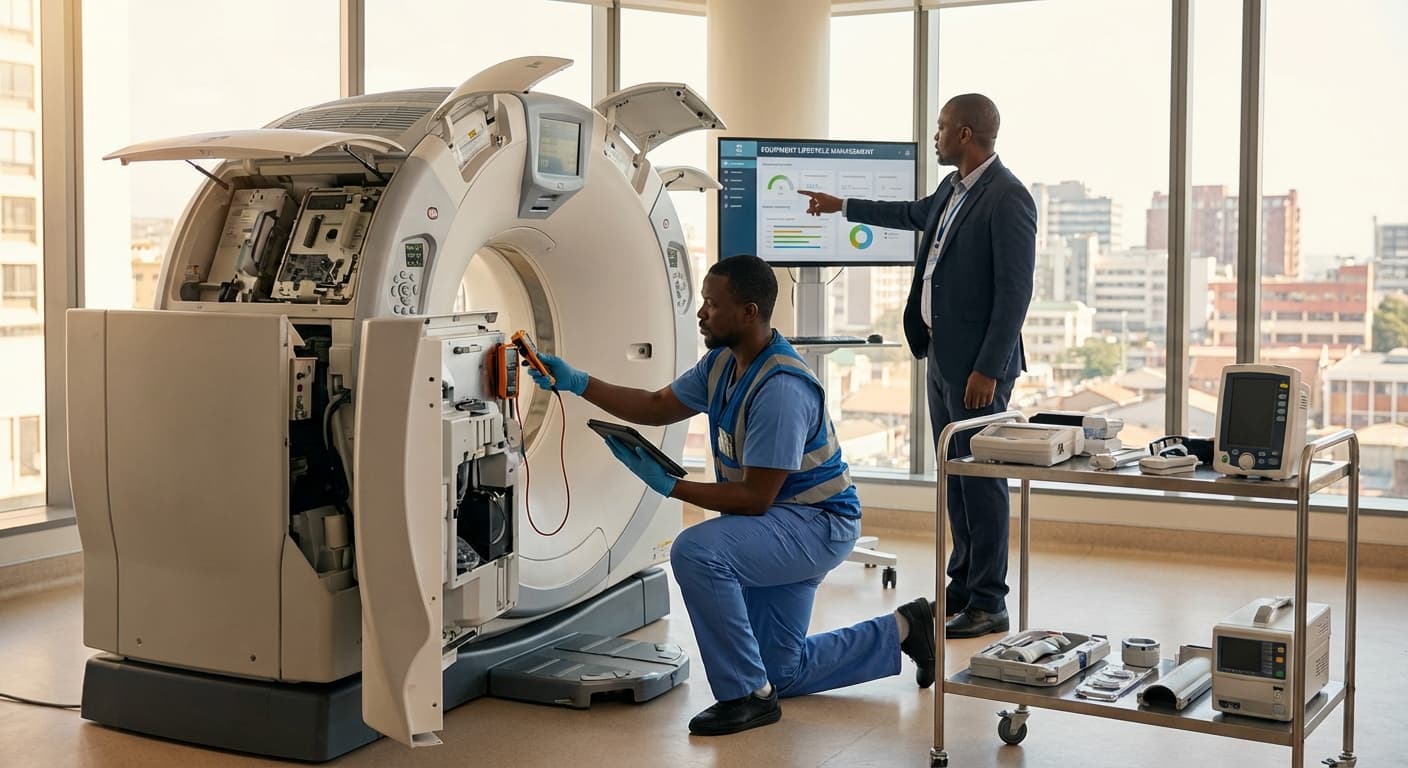
Equipment Replacement Planning & Obsolescence Strategy Service in Rwanda
Engineering Excellence & Technical Support
Equipment Replacement Planning & Obsolescence Strategy Service High-standard technical execution following OEM protocols and local regulatory frameworks.
Proactive Asset Lifecycle Management
Leveraging advanced analytics and predictive modeling, our service identifies critical equipment approaching end-of-life or obsolescence in Rwanda's infrastructure. We provide actionable insights to plan strategic replacements, minimizing downtime and ensuring operational continuity for key industries and public services.
Mitigating Obsolescence Risks for Rwandese Industries
Our service conducts thorough risk assessments of existing equipment fleets against evolving technological landscapes and supply chain vulnerabilities in Rwanda. We develop tailored obsolescence strategies, including component sourcing, upgrade paths, and phased replacement plans, to safeguard critical operations from disruptive technology gaps.
Optimizing Equipment Replacement Investments in Rwanda
We deliver data-driven equipment replacement planning that prioritizes ROI for Rwandese businesses and government entities. By analyzing total cost of ownership, potential savings from upgrades, and strategic sourcing opportunities, our service ensures capital investments are made efficiently and effectively, maximizing asset value and future readiness.
What Is Equipment Replacement Planning & Obsolescence Strategy Service In Rwanda?
Equipment Replacement Planning & Obsolescence Strategy Service in Rwanda is a specialized consulting offering focused on optimizing the lifecycle management of industrial and operational assets within the Rwandan context. It encompasses the systematic evaluation of an organization's equipment portfolio to determine optimal replacement cycles, mitigate the risks associated with technological obsolescence, and ensure continued operational efficiency and compliance. This service integrates technical, financial, and strategic considerations to develop proactive and cost-effective solutions tailored to the specific economic and regulatory landscape of Rwanda.
| Stakeholder Group | Needs and Benefits | Typical Use Cases |
|---|---|---|
| Manufacturing Companies | Maintaining production efficiency, reducing downtime, ensuring product quality, complying with evolving industry standards, managing energy consumption, optimizing CAPEX/OPEX. | Replacing aging machinery in a textile factory to improve thread consistency; upgrading outdated packaging equipment in a food processing plant to meet new hygiene regulations; developing a roadmap for the phased replacement of assembly line robots. |
| Energy & Utilities Providers (Power Generation, Water Treatment) | Ensuring grid stability, extending asset lifespan, minimizing maintenance costs, complying with environmental and safety regulations, planning for future demand. | Developing a long-term strategy for replacing aging turbines in a hydroelectric power station; planning the obsolescence management of water purification filters to ensure continuous supply; assessing the need for upgrading control systems in a thermal power plant. |
| Mining and Extractive Industries | Optimizing extraction efficiency, reducing operational risks, ensuring worker safety, managing the harsh operating environment, complying with stringent environmental mandates. | Planning the replacement of heavy-duty excavators and haul trucks based on operational hours and wear; evaluating the obsolescence of drilling equipment due to advancements in exploration technology; developing a strategy for phased replacement of conveyor belt systems. |
| Logistics and Transportation Companies | Maintaining fleet efficiency, reducing fuel consumption, ensuring compliance with safety and emissions standards, optimizing delivery schedules. | Developing a replacement schedule for a fleet of trucks based on mileage, age, and maintenance costs; assessing the obsolescence of warehouse automation systems; planning for the transition to electric or alternative fuel vehicles. |
| Healthcare Institutions (Hospitals, Clinics) | Ensuring reliable patient care, maintaining diagnostic accuracy, complying with medical device regulations, managing lifecycle costs of critical equipment. | Developing a replacement plan for MRI scanners and CT machines; managing the obsolescence of laboratory diagnostic equipment; strategizing the upgrade of sterilization units. |
| Telecommunications Providers | Maintaining network performance, ensuring service availability, managing the obsolescence of network infrastructure, complying with evolving technological standards. | Planning the upgrade of cellular base stations to support 5G technology; managing the obsolescence of fixed-line switching equipment; developing a strategy for replacing aging fiber optic cable infrastructure. |
| Government Agencies & Public Sector | Ensuring public service continuity, optimizing public expenditure, maintaining infrastructure, complying with procurement regulations and sustainability goals. | Developing a replacement plan for public transport vehicles (buses, trains); assessing the obsolescence of IT infrastructure in government offices; strategizing the upgrade of water distribution networks. |
Key Components of the Service:
- Asset Inventory and Condition Assessment: Comprehensive cataloging of all relevant equipment, including specifications, age, maintenance history, and current operational status.
- Performance Monitoring and Analysis: Establishment of key performance indicators (KPIs) to track equipment efficiency, reliability, and output, identifying deviations from expected performance.
- Technological Trend Analysis: Research and evaluation of emerging technologies and their potential impact on existing equipment, including performance enhancements, cost reductions, and regulatory compliance.
- Obsolescence Risk Assessment: Identification and quantification of risks associated with outdated technology, including maintenance challenges, spare parts unavailability, safety concerns, and performance degradation.
- Lifecycle Cost Modeling: Development of detailed financial models to project the total cost of ownership for each asset, including acquisition, operation, maintenance, and disposal costs.
- Replacement Strategy Development: Formulation of data-driven recommendations for equipment replacement, considering optimal timing, vendor selection, and integration strategies.
- Obsolescence Mitigation Planning: Design of strategies to address existing obsolescence, such as refurbishment, upgrade programs, or alternative technology adoption.
- Risk Management and Contingency Planning: Development of plans to address potential disruptions caused by equipment failure or obsolescence.
- Regulatory Compliance Review: Ensuring that equipment and replacement plans align with Rwandan environmental, safety, and industry-specific regulations.
- Budgeting and Financial Planning Support: Assistance in developing capital expenditure (CAPEX) and operational expenditure (OPEX) budgets related to equipment management.
- Knowledge Transfer and Training: Provision of training to internal teams on best practices for equipment lifecycle management and the developed strategies.
Who Needs Equipment Replacement Planning & Obsolescence Strategy Service In Rwanda?
In Rwanda, organizations across various sectors face the critical need for robust Equipment Replacement Planning and Obsolescence Strategy services. Proactive planning ensures operational continuity, minimizes costly downtime, optimizes capital expenditure, and mitigates the risks associated with aging or outdated equipment. This service is particularly vital for sectors heavily reliant on specialized machinery, technology, and infrastructure.
| Industry/Sector | Target Customer Examples | Key Departments Requiring the Service |
|---|---|---|
| Manufacturing & Processing | Food and beverage producers, textile manufacturers, cement plants, mining operations, chemical processing facilities | Operations, Production, Maintenance, Engineering, Finance, Procurement |
| Telecommunications | Mobile network operators, internet service providers, broadcast stations | Network Operations, Engineering, IT Infrastructure, Asset Management, Finance |
| Energy & Utilities | Power generation companies, water and sanitation utilities, oil and gas exploration/distribution companies | Operations, Engineering, Asset Management, Maintenance, Planning, Finance |
| Transportation & Logistics | Airlines, railway operators, shipping companies, fleet management businesses | Fleet Management, Maintenance & Engineering, Operations, Procurement, Finance |
| Healthcare | Hospitals, clinics, diagnostic laboratories, medical equipment suppliers | Biomedical Engineering, Facilities Management, IT, Procurement, Finance |
| Agriculture | Large-scale farms, agro-processing companies, agricultural machinery suppliers | Operations, Farm Management, Maintenance, Procurement, Finance |
| Construction & Infrastructure | Construction companies, road and bridge authorities, urban development agencies | Project Management, Plant & Equipment Management, Maintenance, Procurement, Finance |
| Information Technology (IT) | Large enterprises, data centers, government IT departments, software development companies | IT Infrastructure Management, Systems Administration, Procurement, Finance, Security |
| Government Agencies | Ministries (e.g., Infrastructure, Health, ICT), public service providers, defense forces | Asset Management, Procurement, Engineering, Operations, Planning, Finance |
Target Customers and Departments for Equipment Replacement Planning & Obsolescence Strategy Services in Rwanda
- Industries with High Capital Investment in Machinery
- Sectors with Rapid Technological Advancements
- Government and Public Infrastructure Entities
- Businesses with Long Asset Lifecycles
- Companies Prioritizing Risk Management and Operational Efficiency
Equipment Replacement Planning & Obsolescence Strategy Service Process In Rwanda
This document outlines the service process for Equipment Replacement Planning & Obsolescence Strategy in Rwanda. This comprehensive workflow guides clients from their initial inquiry to the successful execution of the strategy, ensuring their operational assets remain efficient, up-to-date, and cost-effective. The process emphasizes proactive management to mitigate risks associated with aging or obsolete equipment.
| Phase | Key Activities | Deliverables | Responsibility |
|---|---|---|---|
| Client expresses interest in the service. Initial discussion to understand broad requirements, objectives, and potential challenges. | Understanding of client's core needs, initial project scope definition. | Client, Service Provider (SP) Sales/Consulting Team |
| Detailed collection of information on existing equipment inventory, operational data, maintenance history, budget constraints, future operational needs, and risk tolerance. Site visits may be conducted. Understanding of regulatory requirements in Rwanda. | Comprehensive equipment inventory, operational performance data, cost data, obsolescence risk profiles, stakeholder input. | Client (IT, Operations, Finance, Maintenance), SP Technical Consultants |
| Analysis of gathered data to identify critical equipment, assess obsolescence risks, evaluate total cost of ownership (TCO), forecast replacement timelines, and explore alternative strategies (e.g., refurbishment, upgrades, phased replacement). Alignment with Rwandan economic and technological landscape. | Obsolescence risk assessment report, TCO analysis, preliminary replacement roadmap, identification of strategic options. | SP Technical Consultants, SP Analysts |
| Development of a tailored Equipment Replacement Plan and Obsolescence Strategy proposal. Presentation of findings, proposed strategies, estimated costs, timelines, and expected benefits to key client stakeholders. | Formal proposal document, detailed strategy presentation, financial projections, risk mitigation plan. | SP Project Manager, SP Lead Consultant |
| Client reviews the proposal and provides feedback. Negotiation of terms and conditions. Formal approval and signing of the service contract. | Signed service contract, agreed-upon scope of work, budget, and timelines. | Client (Procurement, Senior Management), SP Management |
| Detailed project plan development. Resource allocation, scheduling of procurement, installation, and decommissioning activities. Development of communication and change management plans. Consideration of local Rwandan supply chains and logistics. | Detailed implementation project plan, procurement strategy, training plan, communication plan. | SP Project Manager, SP Implementation Team |
| Procurement of new equipment, installation, testing, and commissioning. Decommissioning of old equipment. Continuous monitoring of progress against the plan, budget, and quality standards. Regular progress reporting. | Installed and operational new equipment, decommissioned old equipment, progress reports, performance metrics. | SP Implementation Team, Client Operations & Maintenance |
| Post-implementation review to assess effectiveness and identify lessons learned. Provision of ongoing support, including warranty management, training, and recommendations for future asset management. Periodic review of the obsolescence strategy. | Post-implementation review report, updated asset management documentation, ongoing support services agreement (optional). | SP Project Manager, SP Support Team, Client Asset Management Team |
Equipment Replacement Planning & Obsolescence Strategy Service Process Workflow
- Inquiry & Initial Consultation
- Needs Assessment & Data Gathering
- Analysis & Strategy Development
- Proposal & Presentation
- Approval & Contract Finalization
- Implementation Planning
- Execution & Monitoring
- Review & Ongoing Support
Equipment Replacement Planning & Obsolescence Strategy Service Cost In Rwanda
Planning for equipment replacement and developing an obsolescence strategy is crucial for businesses in Rwanda to ensure operational efficiency, minimize downtime, and manage capital expenditure effectively. The cost of such a service can vary significantly based on several factors. Understanding these factors will help organizations budget appropriately and select a service provider that meets their specific needs and financial capacity.
| Service Type/Scope | Estimated Cost Range (RWF) | Notes |
|---|---|---|
| Basic Equipment Inventory & Replacement Scheduling (Small to Medium Enterprise - SME) | 1,500,000 - 4,000,000 | Focus on identifying key assets, current age, and general replacement timelines. May include initial consultation and a basic report. |
| Comprehensive Equipment Replacement Plan & Obsolescence Strategy (SME) | 4,000,000 - 10,000,000 | Includes detailed asset assessment, lifecycle cost analysis, risk profiling, technology forecasting, and a structured replacement strategy with budget considerations. |
| Advanced Asset Management & Obsolescence Strategy (Large Enterprise) | 10,000,000 - 30,000,000+ | Covers extensive asset portfolios, complex interdependencies, integration with existing ERP/CMMS systems, advanced risk mitigation, and long-term strategic roadmap. May involve multiple phases and dedicated teams. |
| Consulting Hours (Ad-hoc/Specialized Advice) | 50,000 - 150,000 per hour | For specific queries, expert opinions, or assistance with particular aspects of the planning process. Varies by consultant's seniority and specialization. |
| Software/Tool Implementation (If part of the service) | Variable (often a separate cost) | Costs for specialized asset management software or tools can add significantly, either as a one-time license or subscription. |
Key Pricing Factors for Equipment Replacement Planning & Obsolescence Strategy Services in Rwanda:
- {"title":"Scope of the Service","description":"The complexity and breadth of the service are primary cost drivers. This includes the number of equipment types, criticality of the assets, and the depth of analysis required (e.g., simple replacement schedules vs. in-depth lifecycle cost analysis and risk assessment)."}
- {"title":"Size and Complexity of the Organization","description":"Larger organizations with more extensive and diverse equipment inventories will generally incur higher costs due to the increased workload and data management involved."}
- {"title":"Data Availability and Quality","description":"The ease with which a service provider can access and analyze existing equipment data (maintenance records, purchase history, performance data) impacts costs. Poor or incomplete data may require more time for data collection and cleansing."}
- {"title":"Level of Customization","description":"Standardized approaches are typically less expensive than highly customized solutions tailored to unique operational requirements or specific industry standards."}
- {"title":"Expertise and Experience of the Service Provider","description":"Reputable firms with a proven track record and specialized expertise in asset management and obsolescence planning will likely command higher fees."}
- {"title":"Technology and Tools Used","description":"The use of advanced software, analytical tools, or specialized methodologies can influence pricing. Some providers may offer proprietary platforms."}
- {"title":"Duration of the Engagement","description":"One-time assessments will differ in cost from ongoing advisory services or the implementation of a long-term asset management program."}
- {"title":"Reporting and Deliverables","description":"The detail, format, and frequency of reports and strategic recommendations provided will affect the overall cost."}
- {"title":"Geographic Location and Travel","description":"While services are often delivered remotely, on-site assessments or client meetings in specific locations within Rwanda might incur additional travel and accommodation costs."}
Affordable Equipment Replacement Planning & Obsolescence Strategy Service Options
Our Affordable Equipment Replacement Planning & Obsolescence Strategy Service offers flexible options designed to optimize your capital expenditure and minimize the risks associated with aging or outdated equipment. We understand that managing equipment lifecycles is crucial for operational efficiency and cost control. Our service helps you proactively identify, plan for, and execute equipment replacements, thereby avoiding costly emergency repairs, production downtime, and the inefficiencies of obsolete technology. We focus on delivering tangible value through intelligent planning and strategic foresight, ensuring your investments are maximized and your business operations remain robust and competitive.
| Value Bundle Option | Description | Target Audience | Key Features & Deliverables | Cost-Saving Strategies Enabled | Estimated Price Range (Illustrative) |
|---|---|---|---|---|---|
| Essential Planning | A foundational service focusing on critical equipment assessment and initial replacement planning. | Small to medium-sized businesses with a core set of essential equipment. | Equipment inventory audit, criticality assessment, basic lifecycle analysis, initial replacement roadmap, risk identification. | Avoids immediate costly breakdowns, informs initial budgeting, prioritizes critical replacements. | $2,500 - $7,500 |
| Strategic Advantage | An integrated approach that combines detailed planning with obsolescence risk mitigation and proactive upgrade recommendations. | Growing businesses and organizations with diverse equipment portfolios and a need for continuous improvement. | Comprehensive lifecycle management, obsolescence forecasting, technology trend analysis, strategic upgrade/replacement recommendations, multi-year financial planning support. | Leverages economies of scale for bulk purchases, minimizes impact of technology shifts, secures better pricing through early planning, reduces future upgrade costs. | $7,500 - $15,000 |
| Enterprise Optimization | A holistic, long-term solution for large organizations requiring sophisticated asset management, predictive obsolescence, and integrated capital planning. | Large enterprises, manufacturing plants, critical infrastructure operators, organizations with complex and high-value equipment fleets. | Advanced predictive analytics for obsolescence, total cost of ownership (TCO) modeling, scenario planning for disruptive technologies, customized funding strategies, ongoing advisory services. | Maximizes ROI on capital assets, minimizes risk of disruptive obsolescence, enables data-driven investment decisions, optimizes depreciation and tax implications, potential for negotiating better vendor terms due to long-term commitment. | $15,000+ (Customized) |
Key Benefits of Our Service
- Proactive identification of end-of-life equipment.
- Reduced risk of unplanned downtime and costly emergency repairs.
- Optimized capital expenditure through planned replacements.
- Enhanced operational efficiency with up-to-date technology.
- Mitigated risks associated with technology obsolescence.
- Extended asset lifespan through strategic maintenance and upgrades.
- Improved budgeting and financial forecasting for capital investments.
- Competitive advantage through modern and reliable equipment.
Verified Providers In Rwanda
In Rwanda's rapidly evolving healthcare landscape, identifying trustworthy and qualified medical professionals is paramount. Verified providers, those who have undergone rigorous credentialing processes, offer unparalleled peace of mind to patients seeking quality care. Among these, Franance Health stands out, not just for its extensive network but for its unwavering commitment to patient safety and excellence. This document delves into the credentials that solidify Franance Health's position as a leading choice for healthcare services in Rwanda.
| Franance Health Credential | Significance for Patients | Examples of Rigor |
|---|---|---|
| Rigorous Provider Vetting Process | Ensures that only highly qualified and ethically sound medical professionals join the Franance Health network. | Includes verification of medical licenses, educational degrees, and specialized training from accredited institutions. |
| Emphasis on Continuing Medical Education (CME) | Guarantees that Franance Health providers are at the forefront of medical advancements and best practices. | Mandatory participation in workshops, conferences, and online courses approved by Rwandan health authorities. |
| Active Collaboration with Rwandan Health Authorities | Demonstrates a commitment to meeting and exceeding national healthcare standards and regulations. | Regular audits and compliance checks with the Ministry of Health and other relevant regulatory bodies. |
| Patient-Centric Approach and Feedback Mechanisms | Focuses on providing compassionate, high-quality care that prioritizes patient well-being and satisfaction. | Implementation of patient satisfaction surveys and a clear grievance redressal system. |
| Specialized Network and Referral System | Facilitates access to a broad spectrum of medical expertise and seamless referrals when complex care is needed. | Careful selection of specialists based on their proven track record and peer recognition. |
Key Credentials and Standards for Verified Providers in Rwanda:
- Professional Licensure and Registration: All providers must hold current and valid licenses from relevant Rwandan medical boards (e.g., Rwanda Medical Council, Rwanda Allied Health Professions Council).
- Educational Attainment and Specialization: Verification of degrees, diplomas, and postgraduate specializations from recognized institutions.
- Continuing Professional Development (CPD): Evidence of ongoing training and education to maintain up-to-date knowledge and skills.
- Criminal Background Checks: Ensuring a safe environment for patients through thorough background investigations.
- Peer Review and Performance Evaluation: Periodic assessments of clinical practice and patient outcomes.
- Adherence to Ethical Standards: Commitment to the Rwandan Code of Medical Ethics and patient rights.
- Facility Accreditation (where applicable): For healthcare facilities, accreditation by recognized national or international bodies.
Scope Of Work For Equipment Replacement Planning & Obsolescence Strategy Service
This Scope of Work (SOW) outlines the services to be provided for Equipment Replacement Planning and Obsolescence Strategy. The objective is to develop a comprehensive, data-driven strategy for proactively managing equipment lifecycles, mitigating risks associated with obsolescence, and optimizing capital expenditure for replacement. This will involve assessment of current equipment, identification of obsolescence risks, development of replacement strategies, and creation of an actionable roadmap.
| Technical Deliverable | Description | Standard Specification / Format | Purpose |
|---|---|---|---|
| Equipment Inventory Database | A comprehensive, searchable database detailing all analyzed equipment, including specifications, purchase date, installation date, manufacturer, model, serial number, maintenance logs, criticality rating, and estimated remaining useful life. | Microsoft Excel Spreadsheet, SQL Database, or dedicated Asset Management Software (e.g., CMMS/EAM). Data fields to be agreed upon, but should include at minimum: Equipment ID, Name, Category, Manufacturer, Model, Serial Number, Location, Installation Date, Purchase Date, Criticality Level, Current Condition Score, Estimated Remaining Useful Life (Yrs), Last Maintenance Date, Next Scheduled Maintenance. | Provides a centralized, accurate repository of all equipment assets for ongoing management and analysis. |
| Obsolescence Risk Assessment Report | A detailed report outlining identified obsolescence risks for each piece of equipment, including the rationale for the risk assessment (e.g., manufacturer end-of-support, availability of critical spare parts, outdated technology). This will include a risk scoring system and prioritized list of equipment requiring immediate attention. | Microsoft Word Document or PDF. Structure to include: Executive Summary, Methodology, Detailed Equipment Risk Assessment (per equipment item or category), Prioritized Obsolescence Risk Register, Recommendations. | Highlights critical equipment facing obsolescence and guides proactive mitigation efforts. |
| Equipment Replacement Strategy Document | A comprehensive document detailing recommended replacement strategies for different equipment categories, including recommended replacement timelines, alternative solutions (e.g., refurbishment, upgrade), and justification for each recommendation. This will also include defined trigger points for replacement. | Microsoft Word Document or PDF. Structure to include: Executive Summary, Introduction, Replacement Strategy Framework, Category-Specific Strategies (e.g., High Criticality, Medium Criticality, Low Criticality), Trigger Point Definitions, Technology Outlook Integration, Business Case Examples. | Provides a clear framework for making informed replacement decisions and optimizing capital allocation. |
| Multi-Year Capital Expenditure Plan (CEP) | A projected budget for equipment replacement over a defined period (e.g., 3-5 years), broken down by year, equipment category, and projected cost. Includes justification for the expenditure and alignment with the obsolescence strategy. | Microsoft Excel Spreadsheet. Columns to include: Year, Equipment ID/Category, Description, Estimated Replacement Cost, Funding Source (e.g., CAPEX), Justification, Strategic Alignment (e.g., Obsolescence Mitigation, Performance Improvement). | Supports financial planning and resource allocation for upcoming equipment replacements. |
| Spare Parts & Support Strategy Recommendations | An analysis of current spare parts inventory and existing support contracts, with recommendations for optimization, including strategies for managing obsolete parts and securing long-term support for critical equipment. | Microsoft Word Document or PDF. Structure to include: Executive Summary, Current State Analysis (Inventory, Contracts), Risk Assessment (Parts Availability), Recommendations (e.g., Strategic Stocking, Alternative Suppliers, Contract Renegotiation). | Ensures operational continuity by mitigating risks associated with spare parts unavailability and inadequate technical support. |
| Obsolescence Management Roadmap | A phased, actionable plan outlining the steps, responsibilities, timelines, and KPIs for implementing the developed obsolescence strategy and replacement plans. | Microsoft Project File, Gantt Chart (Excel or specialized software), or detailed Microsoft Word Document. Key elements include: Phases, Key Activities, Deliverables, Owners, Start Dates, End Dates, Dependencies, Milestones, KPIs. | Provides a clear implementation guide and facilitates tracking of progress towards the strategic objectives. |
Key Service Components
- Assessment of Current Equipment Inventory: Detailed cataloging and evaluation of all critical equipment, including age, condition, maintenance history, and remaining useful life.
- Obsolescence Risk Identification & Prioritization: Analysis of equipment for potential obsolescence based on manufacturer support, technology evolution, spare parts availability, and regulatory compliance.
- Development of Replacement Strategies: Creation of tailored replacement strategies for different equipment categories, considering criticality, risk level, budget, and operational impact. This includes defining trigger points for replacement (e.g., end-of-life, high maintenance costs, critical failure risk).
- Financial Planning & Budgetary Alignment: Development of multi-year capital expenditure plans for equipment replacement, aligning with organizational financial goals and operational needs.
- Spare Parts & Support Strategy: Assessment of current spare parts inventory and long-term support contracts, with recommendations for optimization and mitigation of obsolescence-related supply chain risks.
- Technology Trend Analysis: Monitoring of relevant technological advancements and their potential impact on existing and future equipment.
- Development of an Actionable Roadmap: Creation of a phased implementation plan for the obsolescence strategy, including timelines, responsibilities, and key performance indicators (KPIs).
- Knowledge Transfer & Training: Provision of training to relevant internal personnel on the implemented strategies and ongoing management processes.
Service Level Agreement For Equipment Replacement Planning & Obsolescence Strategy Service
This Service Level Agreement (SLA) outlines the commitments for the Equipment Replacement Planning & Obsolescence Strategy Service (hereinafter referred to as 'the Service'). It defines the response times for support requests and the uptime guarantees for the platform facilitating this Service. This SLA is an integral part of the overall service agreement between [Your Company Name] and [Client Company Name].
| Service Component | Severity Level | Response Time Target | Resolution Target |
|---|---|---|---|
| Strategic Planning & Analysis | Critical (Service Disruption/Major Impact) | 4 Business Hours | 24 Business Hours (initial assessment & workaround/mitigation plan) |
| Strategic Planning & Analysis | High (Significant Impact on Operations) | 8 Business Hours | 48 Business Hours (initial assessment & workaround/mitigation plan) |
| Strategic Planning & Analysis | Medium (Moderate Impact) | 1 Business Day | 72 Business Hours (initial assessment & workaround/mitigation plan) |
| Strategic Planning & Analysis | Low (Informational/Minor Issue) | 2 Business Days | As feasible, within agreed project timelines |
| Platform Access & Performance | Platform Unavailability (Major Outage) | Immediate | 4 Business Hours (restoration of critical functionality) |
| Platform Access & Performance | Platform Degraded Performance (Slowdowns affecting multiple users) | 1 Business Hour | 8 Business Hours (restoration to acceptable performance levels) |
Scope of Service
- Proactive identification and analysis of equipment nearing end-of-life or end-of-support.
- Development of strategic replacement plans, including cost-benefit analysis and budgetary recommendations.
- Creation and maintenance of an obsolescence risk register.
- Recommendations for technology refresh cycles and future-proofing strategies.
- Facilitation of vendor evaluation and selection for replacement equipment.
- Regular reporting and review meetings with the client.
Frequently Asked Questions

Ready when you are
Let's scope your Equipment Replacement Planning & Obsolescence Strategy Service in Rwanda project in Rwanda.

Scaling healthcare logistics and technical systems across the entire continent.