
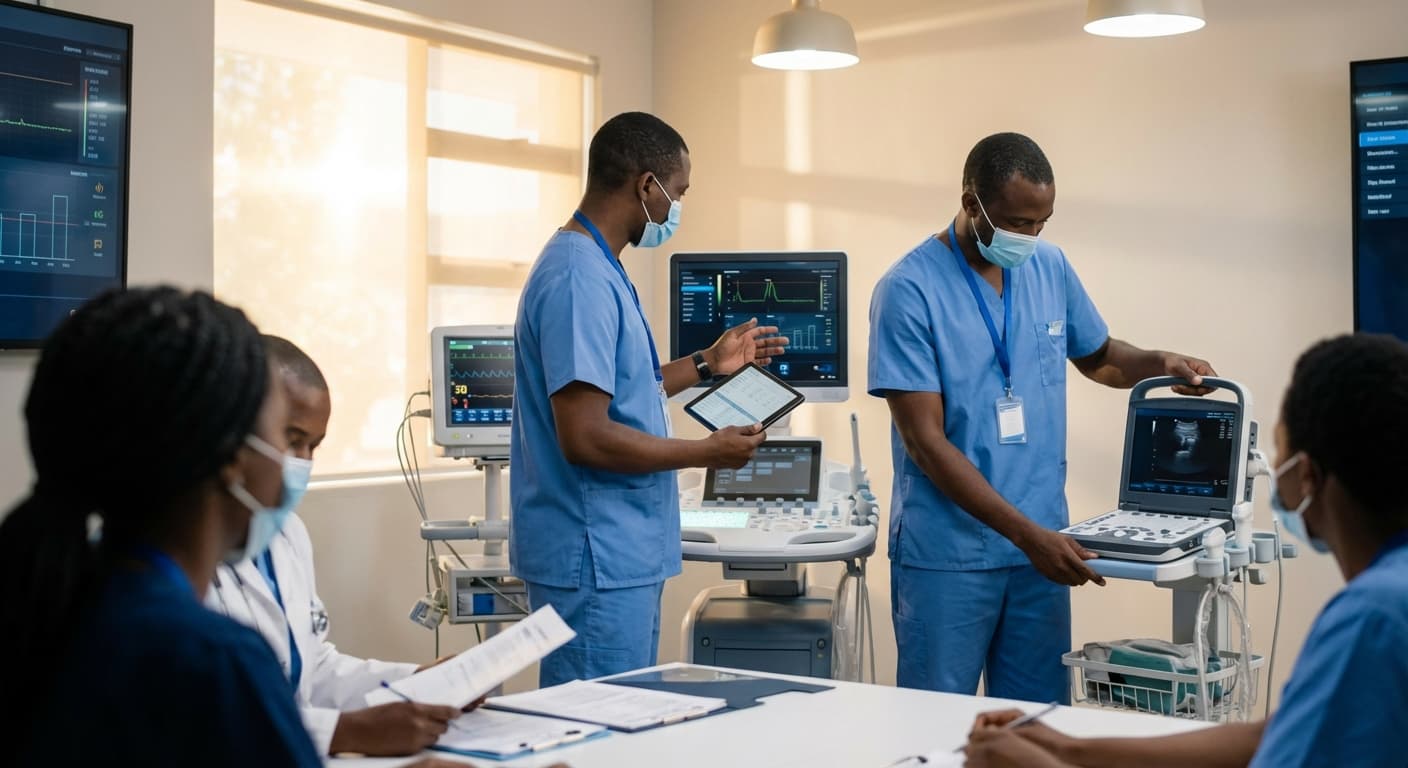
Clinical Needs Assessment for Medical Equipment in Rwanda
Engineering Excellence & Technical Support
Clinical Needs Assessment for Medical Equipment High-standard technical execution following OEM protocols and local regulatory frameworks.
Data-Driven Prioritization Engine
Leverages real-time health data, disease prevalence, and patient demographics to scientifically prioritize medical equipment needs, ensuring investments align with Rwanda's most pressing public health challenges and maximizing resource impact.
Collaborative Stakeholder Platform
Facilitates seamless collaboration between Ministry of Health officials, healthcare providers (doctors, nurses, technicians), biomedical engineers, and international partners, fostering consensus-driven needs identification and ensuring buy-in for equipment procurement and deployment strategies.
Geospatial Needs Mapping & Gap Analysis
Utilizes GIS technology to visualize existing medical equipment distribution, identify underserved regions, and pinpoint critical gaps in healthcare infrastructure across Rwanda, enabling targeted procurement and equitable access to essential medical technologies.
What Is Clinical Needs Assessment For Medical Equipment In Rwanda?
Clinical Needs Assessment for Medical Equipment in Rwanda is a systematic and data-driven process designed to identify, prioritize, and quantify the medical equipment requirements of healthcare facilities within the Rwandan context. This service involves a comprehensive evaluation of existing infrastructure, patient demographics, disease prevalence, current service delivery models, and national health policies to ensure that procured equipment aligns with the specific clinical needs and strategic objectives of the healthcare system. It aims to optimize resource allocation, improve patient outcomes, and enhance the efficiency and effectiveness of healthcare delivery by providing evidence-based recommendations for equipment acquisition, maintenance, and utilization.
| Who Needs It? | Typical Use Cases |
|---|---|
| Ministry of Health (Rwanda): For national health infrastructure planning, resource allocation, and policy formulation. | Development of National Essential Medical Equipment Lists (EMEL). Formulation of procurement strategies and budgets for public health facilities. Guiding the establishment of new health centers or upgrading existing ones. Developing strategies for equipment replacement and modernization. |
| District Hospitals and Referral Hospitals: To identify specific equipment gaps and prioritize procurements for improved service delivery. | Planning for the expansion or introduction of new clinical services (e.g., cardiology, oncology). Responding to changes in disease patterns or public health emergencies. Optimizing the utilization of existing equipment through needs-based acquisition. Justifying budget requests for capital equipment investments. |
| Health Center Networks and Primary Healthcare Facilities: To ensure appropriate equipment availability at the grassroots level. | Equipping new health centers. Upgrading equipment in existing health centers to offer a wider range of basic services. Ensuring availability of essential diagnostic and treatment tools for common ailments. Improving referral pathways by understanding upstream equipment capabilities. |
| International Development Partners and NGOs: To inform their investment in medical equipment for supported facilities and programs. | Designing and implementing health system strengthening projects. Ensuring that donated or funded equipment meets actual clinical needs and is sustainable. Conducting needs assessments for specific disease programs (e.g., malaria, HIV/AIDS, maternal and child health). Evaluating the impact and effectiveness of past equipment interventions. |
| Private Healthcare Providers (Hospitals, Clinics, Diagnostic Centers): For strategic planning, service expansion, and competitive advantage. | Planning for the acquisition of advanced diagnostic or therapeutic equipment. Assessing the need for specialized equipment to cater to niche patient populations. Ensuring compliance with regulatory standards for medical equipment. Optimizing capital expenditure on equipment to maximize return on investment. |
| Biomedical Engineering Departments and Maintenance Providers: To understand the scope of equipment and associated maintenance requirements. | Developing proactive maintenance schedules based on equipment type and usage. Forecasting the demand for spare parts and consumables. Identifying training needs for their technical staff. Planning for the disposal of obsolete or unserviceable equipment. |
Key Components of a Clinical Needs Assessment for Medical Equipment:
- Facility Assessment: Evaluation of current infrastructure, power supply, space availability, and environmental conditions.
- Clinical Service Analysis: Review of the range and volume of medical services provided, including diagnostics, therapeutics, and surgical procedures.
- Disease Burden and Epidemiology: Analysis of prevalent diseases, epidemiological trends, and their impact on equipment demand.
- Patient Demographics and Flow: Understanding patient populations, accessibility, and patient throughput.
- Existing Equipment Inventory and Condition: Audit of currently available equipment, including age, functionality, maintenance history, and obsolescence.
- Human Resources and Training Needs: Assessment of the availability of trained personnel to operate and maintain equipment.
- Technological Advancements and Best Practices: Consideration of current and emerging medical technologies relevant to Rwandan healthcare.
- National Health Policies and Strategic Goals: Alignment with the Ministry of Health's priorities, essential medical equipment lists, and long-term health strategies.
- Budgetary Constraints and Funding Mechanisms: Consideration of financial resources, procurement models, and sustainability.
- Procurement and Logistics Planning: Development of specifications, tender processes, and supply chain considerations.
- Training and Capacity Building: Identification of training needs for end-users and biomedical technicians.
- Maintenance and Service Strategies: Planning for routine and corrective maintenance, spare parts, and service contracts.
Who Needs Clinical Needs Assessment For Medical Equipment In Rwanda?
Clinical needs assessment for medical equipment in Rwanda is a critical process for ensuring that healthcare facilities are equipped with the right technology to deliver effective and efficient patient care. This process is not a one-size-fits-all endeavor and is crucial for various stakeholders across the Rwandan healthcare landscape. Identifying these specific needs allows for informed procurement decisions, optimal resource allocation, and ultimately, improved health outcomes for the population.
| Department/Unit | Specific Needs Assessment Focus |
|---|---|
| Emergency Room/A&E | Resuscitation equipment (defibrillators, ventilators), vital signs monitors, trauma kits, basic surgical instruments, diagnostic imaging (portable X-ray). |
| Intensive Care Unit (ICU) | Advanced ventilators, continuous vital signs monitoring systems, infusion pumps, dialysis machines, specialized patient beds, diagnostic imaging (CT scanner access). |
| Surgical Theatres | Anesthesia machines, surgical lights, operating tables, electro-cautery units, specialized surgical instrument sets, patient monitoring systems, sterilization equipment. |
| Maternity/Obstetrics | Fetal dopplers, delivery beds, infant warmers, phototherapy units, basic surgical equipment for C-sections, ultrasound machines. |
| Pediatrics | Pediatric-specific ventilators, infant incubators, specialized monitoring equipment, weight scales, vital signs monitors, diagnostic imaging for children. |
| Internal Medicine/General Wards | Vital signs monitors, basic diagnostic equipment (thermometers, stethoscopes), infusion pumps, patient beds, ECG machines. |
| Diagnostic Imaging (Radiology, Ultrasound) | X-ray machines (fixed and mobile), CT scanners, MRI scanners (depending on facility level), ultrasound machines (various modalities), PACS systems. |
| Laboratory Services | Hematology analyzers, chemistry analyzers, microscopes, centrifuges, incubators, refrigerators, PCR machines, biosafety cabinets. |
| Outpatient Departments (OPD) | Examination couches, vital signs monitors, basic diagnostic tools, minor procedure equipment, nebulizers. |
| Rehabilitation Services | Therapy equipment (treadmills, exercise bikes), electrotherapy devices, assessment tools, assistive devices. |
| Pharmacy | Refrigerators for medications, automated dispensing systems (in larger facilities), controlled substance cabinets. |
| Sterilization and Central Supply | Autoclaves, instrument washers, sterile packaging materials, supply chain management systems. |
| Anesthesia Department | Anesthesia machines, vaporizers, ventilators, monitoring equipment for anesthesia depth. |
| Cardiology | ECG machines, stress test equipment, echocardiogram machines, Holter monitors. |
| Oncology | Chemotherapy infusion pumps, radiation therapy equipment (in specialized centers), supportive care equipment. |
Target Customers for Clinical Needs Assessment of Medical Equipment in Rwanda:
- Public Hospitals (National, Referral, and District)
- Private Hospitals and Clinics
- Health Centers (Health Posts and Community Health Centers)
- Specialized Medical Centers (e.g., cancer centers, cardiac units)
- Diagnostic Laboratories and Imaging Centers
- Rehabilitation Centers
- Medical Training Institutions (for simulation and practical training)
- Non-Governmental Organizations (NGOs) involved in healthcare delivery
- Government Ministries and Agencies responsible for health policy and planning (e.g., Ministry of Health, Rwanda Biomedical Centre)
- International Development Partners funding healthcare initiatives
Clinical Needs Assessment For Medical Equipment Process In Rwanda
This document outlines the comprehensive workflow for conducting a Clinical Needs Assessment for Medical Equipment (CNAME) in Rwanda, from the initial inquiry stage through to the execution and finalization of the assessment. The process is designed to ensure that medical equipment procured aligns with the actual clinical needs and priorities of healthcare facilities, thereby optimizing resource allocation and improving healthcare service delivery.
| Phase | Stage | Key Activities | Responsible Parties | Deliverables | Timeline (Indicative) |
|---|---|---|---|---|---|
| Request for Assessment | Healthcare facility or Ministry of Health (MoH) identifies a need for new or replacement medical equipment. Formal request submitted to the CNAME coordination unit. | Healthcare Facility Management, MoH Departments | Formal Request Document | 1-2 Weeks |
| Initial Screening & Eligibility | CNAME unit reviews the request for completeness, clarity, and alignment with national health priorities. Initial needs verification. | CNAME Coordination Unit | Screening Report, Decision to Proceed/Reject | 1 Week | |
| Formation of Assessment Team | Assembling a multidisciplinary team of clinical specialists, biomedical engineers, procurement experts, and data analysts. | CNAME Coordination Unit | Assessment Team Composition | 1 Week | |
| Needs Assessment Planning | Developing a detailed work plan, including objectives, methodology, data collection tools, and timelines for the specific assessment. | Assessment Team Lead, CNAME Coordination Unit | Work Plan, Data Collection Protocols | 1-2 Weeks |
| Stakeholder Consultation (Initial) | Engaging with key stakeholders at the facility level (e.g., doctors, nurses, administrators) to understand their perspectives on current equipment status and future needs. | Assessment Team | Stakeholder Engagement Minutes | 1 Week | |
| Facility Assessment | On-site visits to healthcare facilities. Reviewing existing equipment inventory, maintenance records, infrastructure, and patient flow. Observing clinical practices. | Assessment Team (Clinical Specialists, Biomedical Engineers) | Facility Assessment Reports, Equipment Inventory | 2-4 Weeks (per facility/group of facilities) |
| Clinical Needs Identification | Interviewing healthcare professionals to identify specific clinical needs, gaps in current services, and desired equipment based on patient caseloads and treatment protocols. | Assessment Team (Clinical Specialists) | Clinical Needs Matrices | Concurrent with Facility Assessment | |
| Technical Feasibility Assessment | Evaluating the suitability of proposed equipment in terms of technical specifications, compatibility with existing systems, and availability of skilled personnel for operation and maintenance. | Assessment Team (Biomedical Engineers) | Technical Feasibility Reports | Concurrent with Facility Assessment | |
| Economic & Infrastructure Assessment | Assessing the financial implications, including procurement, installation, operation, and maintenance costs. Evaluating existing infrastructure (power, space) to support new equipment. | Assessment Team (Procurement, Biomedical Engineers) | Cost-Benefit Analysis, Infrastructure Evaluation | Concurrent with Facility Assessment | |
| Data Consolidation & Analysis | Aggregating and analyzing all collected data to identify common needs, discrepancies, and overarching requirements. | Assessment Team (Data Analysts, Team Lead) | Consolidated Data Sets, Preliminary Findings | 2-3 Weeks |
| Needs Prioritization | Ranking identified needs based on urgency, impact on patient care, alignment with national health strategies, and feasibility. Using predefined scoring criteria. | Assessment Team, CNAME Technical Committee | Prioritized List of Equipment Needs | 1-2 Weeks | |
| Draft Report Preparation | Compiling a comprehensive report detailing the assessment methodology, findings, prioritized equipment list, and recommendations. | Assessment Team Lead | Draft CNAME Report | 2 Weeks |
| Stakeholder Validation (Final) | Presenting the draft report to relevant stakeholders (MoH, facility representatives, technical experts) for review, feedback, and validation. | CNAME Coordination Unit, Assessment Team | Validated CNAME Report, Feedback Incorporations | 2 Weeks | |
| Final Report Submission | Submitting the finalized and approved CNAME report, which serves as the basis for procurement decisions. | CNAME Coordination Unit | Final CNAME Report | 1 Week | |
| Procurement Planning & Execution | Utilizing the CNAME report to inform the procurement process for the identified and prioritized medical equipment. | MoH Procurement Unit, CNAME Coordination Unit | Procurement Plans, Tender Documents | Ongoing (aligned with procurement cycles) |
| Installation & Training | Ensuring proper installation of procured equipment and provision of adequate training for healthcare personnel. | Suppliers, Biomedical Engineers, Facility Staff | Installed Equipment, Training Records | Ongoing (post-procurement) | |
| Monitoring & Evaluation | Periodically assessing the utilization, performance, and impact of the newly acquired equipment. Reviewing maintenance and service effectiveness. | CNAME Coordination Unit, MoH M&E Department | Post-Implementation Review Reports | Quarterly/Annually |
Clinical Needs Assessment for Medical Equipment (CNAME) Workflow in Rwanda
- Initiation & Inquiry
- Scope Definition & Planning
- Data Collection
- Data Analysis & Prioritization
- Report Generation & Validation
- Implementation & Follow-up
Clinical Needs Assessment For Medical Equipment Cost In Rwanda
This document outlines a clinical needs assessment for medical equipment costs in Rwanda, focusing on pricing factors and typical ranges in local currency (Rwandan Francs - RWF). Understanding these elements is crucial for effective healthcare planning, budgeting, and procurement. Several factors influence the cost of medical equipment in Rwanda, including:
- Equipment Type and Complexity: The fundamental driver of cost is the nature of the equipment. Basic consumables will naturally be significantly cheaper than advanced diagnostic imaging machines.
- Brand and Manufacturer: Reputable international brands often come with a premium due to perceived quality, reliability, and established service networks. Local or regional manufacturers, if available, might offer more competitive pricing.
- New vs. Refurbished: New equipment is more expensive but comes with warranties and the latest technology. Refurbished equipment can offer substantial cost savings, but requires careful vetting for quality and remaining lifespan.
- Supplier and Distributor: The choice of supplier, whether a direct manufacturer's representative, a local distributor, or an international vendor, impacts pricing through markups, shipping costs, and negotiation power.
- Import Duties and Taxes: Rwanda, like most countries, imposes import duties and taxes on medical equipment, significantly affecting the final landed cost.
- Currency Exchange Rates: Fluctuations in the RWF against major currencies (USD, EUR) directly influence the cost of imported equipment.
- Volume and Negotiation: Larger bulk purchases or long-term contracts can often lead to significant discounts.
- After-Sales Service and Maintenance: The cost of installation, training, preventive maintenance, and spare parts availability needs to be factored into the total cost of ownership.
- Technological Obsolescence: Older technologies, even if functional, may be cheaper but less efficient or capable than newer models.
It is important to note that the following ranges are estimates and can vary widely based on the specific model, supplier, and current market conditions. These are intended to provide a general understanding for basic to intermediate-level equipment commonly found in Rwandan healthcare facilities, from rural health centers to district hospitals.
| Equipment Category | Estimated Price Range (RWF) | Typical Units/Examples |
|---|---|---|
| Basic Diagnostic Tools & Consumables | 5,000 - 500,000 | Thermometers, blood pressure monitors, stethoscopes, syringes, gloves, bandages, basic lab reagents |
| Diagnostic & Imaging (Entry-Level) | 500,000 - 5,000,000 | Basic ultrasound machines, ECG machines, digital X-ray (smaller units), portable microscopes |
| Laboratory Equipment (Intermediate) | 1,000,000 - 15,000,000 | Hematology analyzers, biochemistry analyzers, centrifuges, incubators, sterilizers (autoclaves) |
| Surgical Instruments & Equipment (Basic) | 100,000 - 3,000,000 | Surgical instrument kits, basic operating tables, anesthetic machines (older models) |
| Patient Monitoring & Life Support (Basic) | 500,000 - 10,000,000 | Basic patient monitors, portable oxygen concentrators, suction machines, CPAP/BiPAP machines |
| Dental Equipment (Basic) | 500,000 - 5,000,000 | Dental chairs, basic handpieces, sterilization units |
| Diagnostic & Imaging (Advanced) | 20,000,000 - 200,000,000+ | Advanced ultrasound, CT scanners, MRI machines (less common in public facilities, more in referral hospitals or private clinics) |
| Operating Theatre Equipment (Advanced) | 10,000,000 - 100,000,000+ | Modern operating tables, surgical lighting systems, advanced anesthetic workstations |
Key Pricing Factors for Medical Equipment in Rwanda
- Equipment Type and Complexity
- Brand and Manufacturer
- New vs. Refurbished Status
- Supplier and Distributor Markup
- Import Duties and Taxes
- Currency Exchange Rate Fluctuations
- Purchase Volume and Negotiation Power
- After-Sales Service, Maintenance, and Spare Parts
- Technological Age and Features
Affordable Clinical Needs Assessment For Medical Equipment Options
Conducting a thorough clinical needs assessment is crucial for optimizing medical equipment acquisition. This process ensures that procured equipment directly addresses patient care requirements and aligns with clinical workflows. Affordability is a key consideration, and understanding value bundles and implementing cost-saving strategies can significantly reduce overall expenditure while maximizing utility. Value bundles often combine equipment, maintenance, training, and consumables into a single package, offering predictable costs and potential discounts. Cost-saving strategies extend beyond initial purchase price, encompassing leasing options, refurbished equipment, bulk purchasing, and carefully negotiated service agreements.
| Strategy/Bundle Component | Description | Potential Cost Savings | Considerations |
|---|---|---|---|
| Value Bundles (Integrated Solutions) | Package of equipment, accessories, consumables, and software. | Volume discounts, simplified procurement, predictable budgeting. | Ensure all included components are genuinely needed and cost-effective. |
| Value Bundles (Maintenance & Training) | Includes extended warranties, support, and user education. | Reduced downtime, minimized repair costs, efficient staff utilization. | Compare bundled service levels with independent service contracts. |
| Leasing Medical Equipment | Acquiring equipment use for a fixed period without ownership. | Lower upfront capital outlay, easier upgrades, predictable operating expenses. | Long-term cost can exceed purchase price; understand lease terms and termination clauses. |
| Certified Refurbished Equipment | Pre-owned equipment that has been professionally inspected, repaired, and restored. | Significant reduction in initial purchase price (up to 50% or more). | Verify vendor reputation, warranty, and availability of spare parts. |
| Bulk Purchasing | Buying multiple units of the same or similar equipment at once. | Negotiating power leading to lower per-unit costs and volume discounts. | Requires accurate forecasting of needs to avoid overstocking. |
| Negotiated Service Agreements | Customizing maintenance contracts based on usage and critical needs. | Avoids paying for unnecessary services, potential for multi-year discounts. | Clearly define response times, service scope, and parts availability. |
| Total Cost of Ownership (TCO) Analysis | Holistic evaluation of all costs associated with equipment lifecycle. | Identifies hidden costs and allows for informed decisions beyond initial price. | Requires detailed data collection and analysis across various cost categories. |
Key Cost-Saving Strategies and Value Bundle Components
- Value Bundles:
- Integrated Solutions: Bundles often include the core equipment alongside essential accessories, consumables, and necessary software licenses, providing a complete solution.
- Extended Warranties & Maintenance: Packages frequently incorporate comprehensive maintenance and support services, reducing the risk of unexpected repair costs and downtime.
- Training & Implementation Support: Bundles may include user training for clinical staff and technical support for installation and initial setup, ensuring smooth integration and adoption.
- Consumable Supply Agreements: Negotiated pricing for ongoing consumables specific to the equipment can be integrated, offering predictable budgeting.
- Software Updates & Upgrades: Some bundles include access to future software updates and potential upgrade paths, ensuring the equipment remains current.
- Cost-Saving Strategies:
- Leasing vs. Purchasing: Evaluate the total cost of ownership for both options, considering depreciation, financing costs, and flexibility for future upgrades.
- Refurbished Equipment: Explore certified refurbished medical equipment from reputable vendors, offering significant cost savings with warranties and performance assurances.
- Bulk Purchasing & Group Discounts: Consolidate equipment needs across departments or collaborate with other institutions to leverage economies of scale for better pricing.
- Negotiate Service Agreements: Carefully review and negotiate maintenance contracts to ensure they align with actual needs and explore tiered support options.
- Phased Implementation: For large equipment procurements, consider a phased rollout to manage capital expenditure and allow for iterative learning and optimization.
- Open-Source or Compatible Software: Investigate if equipment can utilize cost-effective or open-source software solutions instead of proprietary, expensive alternatives.
- Total Cost of Ownership (TCO) Analysis: Beyond the sticker price, factor in installation, training, maintenance, consumables, energy consumption, and disposal costs.
Verified Providers In Rwanda
In Rwanda's evolving healthcare landscape, identifying trustworthy and qualified providers is paramount for individuals seeking reliable medical services. Verified providers, particularly those accredited by esteemed organizations like Franance Health, stand out as the gold standard. This verification process signifies adherence to rigorous quality, safety, and ethical standards, offering patients peace of mind and assurance in their healthcare choices. Franance Health's credentialing ensures that providers meet specific benchmarks for clinical expertise, patient care protocols, and operational integrity, making them the most dependable option for your health needs.
| Provider Category | Franance Health Verification Criteria (Examples) | Benefits for Patients |
|---|---|---|
| Hospitals | State-of-the-art facilities, qualified medical staff, patient-to-staff ratios, infection control protocols, emergency preparedness. | Access to comprehensive medical services, advanced diagnostic and treatment technologies, expert medical teams, safe and sterile environment. |
| Specialist Clinics (e.g., Cardiology, Oncology) | Board-certified specialists, advanced diagnostic equipment, evidence-based treatment protocols, patient follow-up procedures. | Expert diagnosis and treatment for specific conditions, access to cutting-edge therapies, personalized care plans, improved treatment outcomes. |
| Diagnostic Laboratories | Accredited laboratory professionals, quality control measures, accuracy and reliability of test results, turnaround times. | Accurate and timely diagnostic information, reliable test results for informed medical decisions, reduced risk of misdiagnosis. |
| Pharmacies | Licensed pharmacists, secure medication storage, dispensing accuracy, patient counseling on medication use. | Access to genuine and safe medications, expert advice on prescriptions and over-the-counter drugs, proper medication management. |
| General Practitioners/Primary Care | Licensed physicians, patient-centered approach, comprehensive health assessments, referral networks. | Trusted first point of contact for healthcare needs, ongoing health monitoring, early detection of potential health issues, coordination of care. |
Why Franance Health Verified Providers are the Best Choice:
- Uncompromised Quality of Care: Franance Health rigorously assesses and approves providers based on their clinical excellence, advanced treatment methodologies, and commitment to patient well-being.
- Patient Safety and Trust: Accreditation by Franance Health assures that providers adhere to the highest safety protocols and ethical practices, fostering a secure and trusting patient-provider relationship.
- Access to Expertise: Verified providers often demonstrate specialized knowledge and skills, ensuring you receive care from qualified professionals best suited to your specific health concerns.
- Streamlined Healthcare Experience: Franance Health's network typically offers efficient appointment scheduling, clear communication, and a focus on patient satisfaction.
- Peace of Mind: Knowing your provider has met the stringent standards of a reputable organization like Franance Health allows you to focus on your recovery without unnecessary worry.
- Commitment to Continuous Improvement: Franance Health encourages and monitors ongoing professional development among its accredited providers, ensuring they remain at the forefront of medical advancements.
Scope Of Work For Clinical Needs Assessment For Medical Equipment
This Scope of Work (SOW) outlines the activities, technical deliverables, and standard specifications required for conducting a comprehensive clinical needs assessment for medical equipment. The primary objective is to ensure that the hospital acquires appropriate, functional, and cost-effective medical equipment aligned with current and future clinical demands, patient care objectives, and operational efficiency. This assessment will inform procurement decisions, asset management strategies, and infrastructure planning.
| Deliverable | Description | Format/Standard | Responsible Party |
|---|---|---|---|
| Project Plan | Detailed outline of activities, timelines, resource allocation, communication plan, and risk management strategy for the needs assessment. | Microsoft Project/Gantt Chart, Word Document | Project Manager/Assessment Team Lead |
| Clinical Workflow Analysis Report | Documentation of current clinical workflows for key departments, identifying areas for improvement and equipment requirements. | Word Document, Flowcharts (Visio/Lucidchart) | Clinical Subject Matter Experts (SMEs), Assessment Team |
| Data Collection Tools | Surveys, interview guides, observation checklists, and existing asset inventory review protocols. | Microsoft Forms/SurveyMonkey, Word Document | Assessment Team |
| Needs Assessment Report (Interim) | Preliminary findings on identified clinical needs, including quantitative and qualitative data, and initial equipment recommendations. | Word Document | Assessment Team |
| Prioritized Equipment List | Ranked list of medical equipment based on clinical impact, urgency, patient safety, and strategic alignment. | Excel Spreadsheet, Word Document | Assessment Team, Clinical Leadership |
| Technical Specification Documents | Detailed specifications for each prioritized equipment item, including performance requirements, technical features, safety standards, compatibility, and integration needs. | Word Document, standardized templates (e.g., based on ISO, FDA, national standards) | Biomedical Engineers, Clinical SMEs, Procurement Specialists |
| Standard Specifications Guide | A compilation of commonly used technical standards and specifications for various medical equipment categories to ensure consistency and quality. | PDF, Word Document | Biomedical Engineering Department |
| Final Needs Assessment Report | Comprehensive report summarizing the entire assessment process, including validated clinical needs, prioritized equipment list, detailed technical specifications, justification for recommendations, and cost-benefit analysis. | Word Document, PDF | Assessment Team Lead, Project Manager |
| Presentation of Findings | Formal presentation of the final report and recommendations to key stakeholders (e.g., hospital administration, department heads, procurement committee). | PowerPoint Presentation | Assessment Team Lead |
| Procurement Support Documentation (Optional) | Assistance in developing tender documents, evaluating vendor proposals, and supporting the procurement process based on the defined specifications. | Tender Documents, Evaluation Matrices | Procurement Department, Assessment Team (as advisors) |
Key Activities and Phases
- Phase 1: Project Initiation and Planning
- Phase 2: Data Collection and Analysis
- Phase 3: Needs Definition and Prioritization
- Phase 4: Technical Specification Development
- Phase 5: Reporting and Validation
- Phase 6: Procurement Support (Optional)
Service Level Agreement For Clinical Needs Assessment For Medical Equipment
This Service Level Agreement (SLA) outlines the agreed-upon performance standards for the Clinical Needs Assessment (CNA) service for medical equipment provided by [Your Company Name] to [Client Name]. This SLA covers response times for critical issues and uptime guarantees for the assessment platform and related services.
| Service Component | Priority Level | Response Time Target | Resolution Time Target | Uptime Guarantee |
|---|---|---|---|---|
| CNA Platform Access & Functionality | Critical | 1 Hour | 4 Business Hours | 99.9% Monthly |
| CNA Platform Access & Functionality | High | 2 Business Hours | 8 Business Hours | 99.9% Monthly |
| CNA Platform Access & Functionality | Normal | 4 Business Hours | 24 Business Hours | 99.9% Monthly |
| Data Import/Export Functionality | Critical | 2 Hours | 6 Business Hours | 99.8% Monthly |
| Data Import/Export Functionality | High | 4 Business Hours | 12 Business Hours | 99.8% Monthly |
| Support Consultation & Guidance | Critical | 1 Hour | N/A (Ongoing during resolution) | N/A |
| Support Consultation & Guidance | High | 2 Business Hours | N/A (Ongoing during resolution) | N/A |
| Support Consultation & Guidance | Normal | 8 Business Hours | N/A (Ongoing during resolution) | N/A |
Key Definitions
- Clinical Needs Assessment (CNA): The process of evaluating the requirements for medical equipment within a clinical setting to ensure optimal patient care, operational efficiency, and cost-effectiveness.
- Critical Issue: Any problem that significantly disrupts or prevents the performance of the CNA, impacting the ability to conduct assessments or deliver critical data.
- High Priority Issue: An issue that degrades the performance of the CNA or affects a significant portion of the assessment process, but does not completely halt operations.
- Normal Priority Issue: An issue that has a minor impact on the CNA performance or affects a limited scope of the assessment process.
- Response Time: The maximum time allowed from the initiation of a service request (ticket submission or notification) to the acknowledgment and commencement of work by [Your Company Name]'s support team.
- Resolution Time: The maximum time allowed to permanently fix or provide a workaround for an issue.
- Uptime Guarantee: The percentage of time the CNA platform and related services are available and fully operational.
Frequently Asked Questions

Ready when you are
Let's scope your Clinical Needs Assessment for Medical Equipment in Rwanda project in Rwanda.

Scaling healthcare logistics and technical systems across the entire continent.