
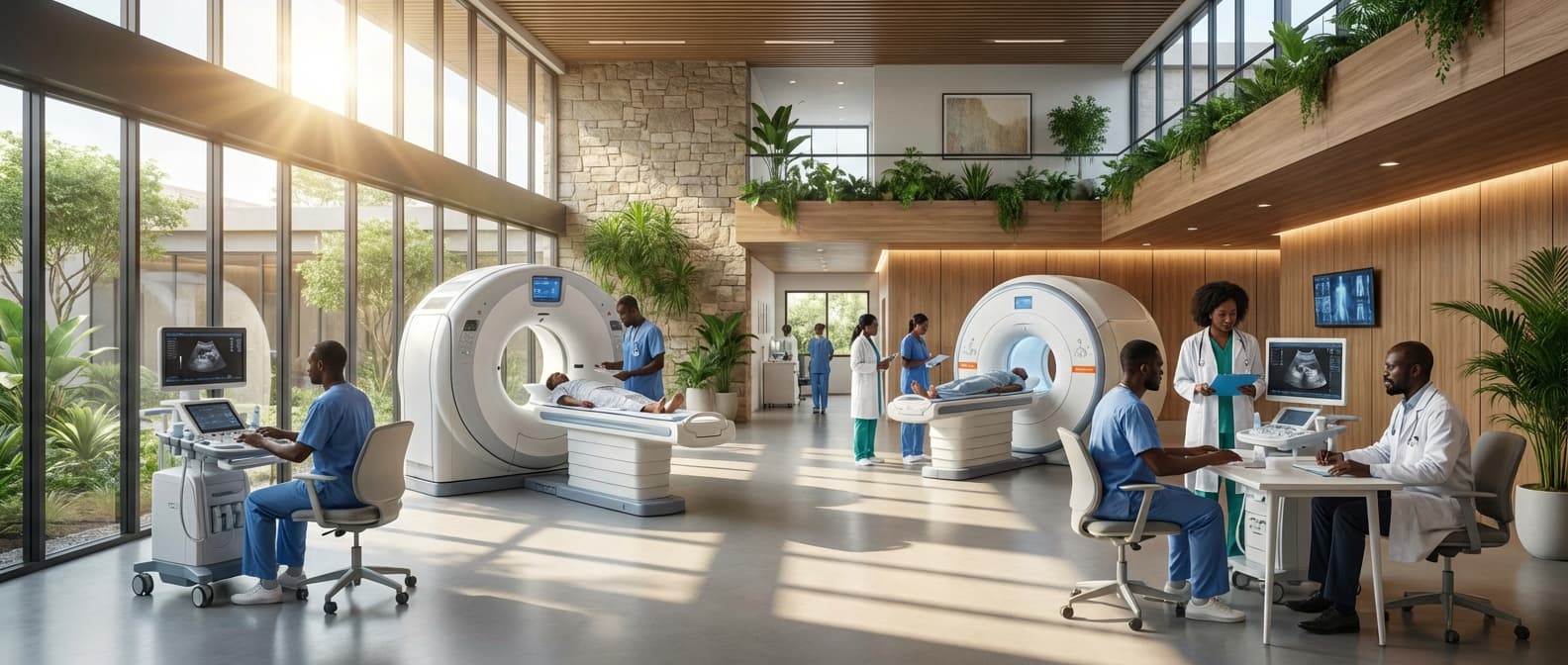
Endoscopy Solutions in Rwanda
Engineering Excellence & Technical Support
Advanced endoscopic equipment delivering superior visualization and diagnostic precision for minimally invasive procedures. High-standard technical execution following OEM protocols and local regulatory frameworks.
Advanced Diagnostic Endoscopy
Empowering Rwandan healthcare facilities with state-of-the-art flexible and rigid endoscopes for minimally invasive diagnostics and treatments across gastroenterology, pulmonology, and urology. Our solutions offer superior image clarity and maneuverability, leading to earlier and more accurate diagnoses.
Endoscopic Training & Skill Development
Investing in the future of Rwandan healthcare by providing comprehensive training programs and simulation tools for medical professionals. We ensure proficiency in advanced endoscopic procedures, fostering a skilled workforce capable of delivering world-class patient care.
Reliable Endoscopy Maintenance & Support
Ensuring consistent operational excellence for endoscopy units across Rwanda with our dedicated maintenance and support services. We offer rapid response, genuine parts, and preventative care to maximize uptime and minimize disruption for critical procedures.
What Is Endoscopy Solutions In Rwanda?
Endoscopy Solutions in Rwanda refer to a range of diagnostic and therapeutic procedures utilizing endoscopes to visualize internal organs and cavities. These minimally invasive techniques are crucial for accurate diagnosis, biopsy acquisition, and treatment of various gastrointestinal, respiratory, and genitourinary conditions. The implementation and accessibility of these services are vital components of Rwanda's growing healthcare infrastructure, aiming to improve patient outcomes and reduce the burden of non-communicable diseases.
| Who Needs Endoscopy Solutions? | Typical Use Cases | ||||||
|---|---|---|---|---|---|---|---|
| Patients presenting with chronic or acute gastrointestinal symptoms (e.g., abdominal pain, dysphagia, persistent diarrhea, constipation, rectal bleeding, vomiting blood). | Diagnosis of peptic ulcer disease, gastritis, esophagitis, inflammatory bowel disease (Crohn's disease, ulcerative colitis). Screening and surveillance for gastrointestinal cancers (e.g., esophageal, gastric, colorectal). Management of upper gastrointestinal bleeding (e.g., variceal bleeding, bleeding ulcers). Removal of gastrointestinal polyps to prevent colorectal cancer. | Patients with suspected or diagnosed respiratory conditions (e.g., chronic cough, hemoptysis, recurrent pneumonia). | Bronchoscopy for diagnosis of lung cancer, interstitial lung diseases, and infection. Bronchial biopsy for tissue sampling. Airway foreign body removal. | Patients with urinary tract abnormalities or symptoms. | Cystoscopy for diagnosis of bladder cancer, recurrent urinary tract infections, or bladder stones. Ureteroscopy for evaluation and treatment of kidney stones or upper urinary tract tumors. | Patients requiring intraoperative guidance or post-operative monitoring. | Endoscopic retrograde cholangiopancreatography (ERCP) for diagnosing and treating biliary and pancreatic duct diseases (e.g., gallstones in the bile duct, strictures, tumors). |
Key Aspects of Endoscopy Solutions in Rwanda
- Diagnostic Endoscopy: Visualizing internal structures to identify abnormalities such as inflammation, ulcers, polyps, or tumors.
- Therapeutic Endoscopy: Performing interventions like polypectomy, stricture dilation, hemostasis (stopping bleeding), and foreign body removal.
- Biopsy Acquisition: Obtaining tissue samples for histopathological examination and definitive diagnosis.
- Advanced Imaging Techniques: Integration of technologies like narrow-band imaging (NBI) or confocal laser endomicroscopy (CLE) for enhanced visualization and early detection.
- Patient Preparation and Sedation: Protocols for ensuring patient comfort, safety, and optimal visualization during procedures.
- Equipment Sterilization and Infection Control: Strict adherence to international standards to prevent cross-contamination.
- Training and Capacity Building: Development of skilled endoscopists and support staff through specialized training programs.
Who Needs Endoscopy Solutions In Rwanda?
Endoscopy, a vital diagnostic and therapeutic tool, plays a crucial role in identifying and treating a wide range of gastrointestinal and respiratory conditions. In Rwanda, the demand for effective and accessible endoscopy solutions is growing, driven by increasing awareness of digestive health issues, a rising prevalence of certain diseases, and a national commitment to improving healthcare infrastructure. This makes it imperative to understand who specifically benefits from these advanced medical technologies within the Rwandan healthcare landscape.
| Customer Type | Primary Departments Served | Key Needs & Benefits |
|---|---|---|
| Public Hospitals | Gastroenterology, Internal Medicine, Surgery, Pulmonology, Oncology, Emergency Medicine | Diagnostic capabilities for common GI/respiratory ailments (ulcers, GERD, gastritis, infections), screening for cancers (colorectal, esophageal, stomach), therapeutic interventions (polypectomy, stricture dilation, foreign body removal), training new medical professionals, public health initiatives, cost-effectiveness, reliability, ease of use, robust service and maintenance. |
| Private Hospitals | Gastroenterology, Internal Medicine, Surgery, Pulmonology, Oncology | Advanced diagnostic and therapeutic capabilities to offer comprehensive patient care, competitive service offerings, patient comfort, faster turnaround times, integration with existing PACS/HIS systems, high-quality imaging, specialized scopes (e.g., ERCP, EUS), training for specialists, premium patient experience. |
| Specialty Clinics (Gastroenterology & Pulmonology) | Gastroenterology, Pulmonology | Dedicated equipment for specialized procedures, advanced diagnostic tools for complex cases, therapeutic endoscopy capabilities, patient convenience for routine and follow-up procedures, research and innovation, specialized training for staff. |
| Diagnostic Centers | Internal Medicine, Gastroenterology, Pulmonology | Efficient and accurate diagnostic services, high-volume throughput, reliable equipment, trained technicians, cost-effective solutions for screening and initial diagnosis, accessible services for referring physicians. |
| Medical Training Institutions | Medical Schools, Nursing Schools, Postgraduate Training Programs | Simulation training tools, access to real-time procedures for learning, hands-on experience with modern equipment, development of skilled endoscopy practitioners, research opportunities, advanced technology for educational purposes. |
| Government Health Programs & NGOs | Public Health Initiatives, Disease Control Programs | Scalable and affordable endoscopy solutions for widespread screening (e.g., H. pylori, early cancer detection), support for remote or underserved areas, training programs for healthcare workers in public health facilities, data collection for epidemiological studies, disease prevention and management. |
Target Customers and Departments for Endoscopy Solutions in Rwanda
- Hospitals (Public and Private)
- Specialty Clinics (Gastroenterology, Pulmonology)
- Diagnostic Centers
- Medical Training Institutions
- Government Health Programs
Endoscopy Solutions Process In Rwanda
This document outlines the typical workflow for obtaining and executing endoscopy solutions in Rwanda, covering the process from initial inquiry to the completion of the procedure. The process is designed to ensure patient safety, quality of care, and efficient resource utilization within the Rwandan healthcare system.
| Stage | Key Activities | Responsible Parties | Key Considerations/Outputs |
|---|---|---|---|
| Healthcare provider (doctor, clinic, hospital) or patient initiates contact to inquire about endoscopy services. This may involve understanding the need for the procedure, available facilities, costs, and required documents. | Referring Physician/Clinic, Hospital Administration, Patient | Understanding of patient's medical history and symptoms. Information on service availability, pricing, and necessary pre-requisites. Initial patient registration. |
| A qualified physician assesses the patient's suitability for endoscopy. This includes reviewing medical history, current medications, allergies, and performing a physical examination. Informed consent is obtained. | Gastroenterologist/Endoscopist, Nursing Staff, Patient | Determination of medical necessity. Risk assessment. Patient education regarding the procedure, risks, benefits, and alternatives. Signed informed consent form. |
| The endoscopy procedure is scheduled. The patient receives detailed instructions on dietary restrictions (e.g., fasting), bowel preparation (if applicable for lower endoscopy), and any necessary medication adjustments. | Endoscopy Unit Coordinator, Nursing Staff, Patient | Appointment confirmation. Clear and comprehensive pre-procedure instructions provided to the patient. Confirmation of necessary supplies and equipment availability. |
| On the day of the procedure, the patient arrives at the facility. Vital signs are monitored, and intravenous access is established if needed. The procedure is performed by a trained endoscopist, with sedation or anesthesia as required. Biopsies may be taken. | Endoscopist, Anesthesiologist/Sedation Nurse, Endoscopy Nurse | Safe and effective performance of the endoscopy. Collection of samples for analysis. Patient monitoring throughout the procedure. Immediate post-procedure assessment. |
| The patient is transferred to a recovery area for monitoring until the effects of sedation wear off. Instructions for post-procedure care, diet, and potential warning signs are provided. Follow-up appointments are scheduled for result discussion and further management. | Nursing Staff, Endoscopist, Patient | Patient recovery and stabilization. Discharge instructions provided. Appointment for results and any subsequent treatment plan. Coordination with referring physician for ongoing care. |
Endoscopy Solutions Process in Rwanda: Workflow Overview
- Inquiry & Information Gathering
- Patient Assessment & Eligibility Screening
- Scheduling & Preparation
- Procedure Execution
- Post-Procedure Care & Follow-up
Endoscopy Solutions Cost In Rwanda
The cost of endoscopy procedures in Rwanda can vary significantly due to a number of factors, including the type of endoscopy, the facility where it's performed, the specific diagnostic or therapeutic interventions required, and the expertise of the medical professional. These procedures are crucial for diagnosing and treating a range of gastrointestinal and respiratory conditions. While exact pricing can fluctuate, understanding the contributing factors helps patients prepare for potential expenses.
Key pricing factors include:
- Type of Endoscopy: Different endoscopic procedures have varying complexities and equipment requirements. For instance, a standard upper endoscopy (esophagogastroduodenoscopy - EGD) is typically less expensive than a colonoscopy or a bronchoscopy. More specialized procedures like ERCP (Endoscopic Retrograde Cholangiopancreatography) or capsule endoscopy will command higher prices.
- Facility Type: Government hospitals generally offer more subsidized rates compared to private hospitals or specialized clinics, which often have higher overheads and offer more amenities. The quality of equipment and the availability of advanced technology can also influence pricing.
- Diagnostic vs. Therapeutic: Procedures that involve only diagnosis (e.g., visual inspection and biopsy) are usually cheaper than those that include therapeutic interventions. Therapeutic procedures might involve removing polyps, dilating strictures, stopping bleeding, or placing stents, all of which require specialized skills and additional equipment.
- Anesthesia/Sedation: The type and administration of anesthesia or sedation used during the procedure will add to the overall cost. Local anesthesia, conscious sedation, or general anesthesia have different cost implications.
- Biopsy and Laboratory Analysis: If biopsies are taken during the endoscopy, there will be additional charges for laboratory analysis of these tissue samples.
- Pre- and Post-Procedure Consultations: Consultation fees with the gastroenterologist or pulmonologist before the procedure and follow-up consultations afterward contribute to the total expense.
- Materials and Consumables: The cost of disposable items, such as biopsy forceps, snares, and cleaning solutions, are factored into the procedure's price.
- Geographic Location: While less pronounced in a country like Rwanda, minor variations might exist between urban centers and more remote areas due to logistical costs and demand.
| Procedure Type (Estimated Range) | Approximate Cost in Rwandan Francs (RWF) | Notes |
|---|---|---|
| Upper Endoscopy (EGD) | 100,000 - 250,000 RWF | Includes basic examination, potential biopsy. Higher end for specialized diagnostic tools or minor interventions. |
| Colonoscopy | 150,000 - 350,000 RWF | Includes examination of the large intestine, potential polyp removal. Cost increases with polyp burden or difficult procedures. |
| Bronchoscopy | 180,000 - 400,000 RWF | For examination of the airways. Includes potential biopsies or bronchoalveolar lavage. |
| ERCP (Endoscopic Retrograde Cholangiopancreatography) | 300,000 - 700,000+ RWF | Complex procedure for bile and pancreatic ducts. Often involves therapeutic interventions like stone removal or stenting. |
| Capsule Endoscopy (Esophageal/Small Bowel) | 350,000 - 600,000 RWF | Includes capsule, reading, and interpretation. Primarily diagnostic. |
Factors Influencing Endoscopy Costs in Rwanda
- Type of Endoscopy (e.g., Upper GI, Colonoscopy, Bronchoscopy)
- Facility Type (Government Hospital vs. Private Hospital/Clinic)
- Inclusion of Therapeutic Interventions (e.g., polyp removal, stenting)
- Anesthesia and Sedation Used
- Biopsy and Laboratory Analysis Fees
- Pre- and Post-Procedure Medical Consultations
- Cost of Consumable Materials
- Complexity of the Procedure
Affordable Endoscopy Solutions Options
Affordable endoscopy solutions are crucial for ensuring widespread access to vital diagnostic and therapeutic procedures. Understanding the cost landscape and exploring value bundles, along with implementing strategic cost-saving measures, can significantly reduce the financial burden for both patients and healthcare providers. This involves a multi-faceted approach, from negotiating better equipment prices to optimizing procedural efficiency and exploring alternative service models.
| Value Bundle Concept | Description | Cost-Saving Impact |
|---|---|---|
| Procedure-Specific Bundles | A single price covers all services related to a specific endoscopic procedure, including the physician's fee, facility charges, anesthesia, pathology, and post-procedure follow-up. | Encourages coordination of care, reduces administrative overhead by consolidating billing, and incentivizes providers to manage resources efficiently to stay within the bundled price. |
| Condition-Specific Bundles | Covers the entire continuum of care for a specific condition managed with endoscopy, such as inflammatory bowel disease (IBD) or gastroesophageal reflux disease (GERD), over a defined period. | Promotes preventative care and long-term management, aiming to reduce complications and the need for more expensive interventions. Focuses on overall patient health outcomes rather than individual encounters. |
| Integrated Service Bundles | Combines diagnostic endoscopy with subsequent therapeutic interventions and even post-procedure rehabilitation or lifestyle coaching, often delivered by a single healthcare system or a coordinated network. | Streamlines patient journey, reduces fragmentation of care, and allows for better control over the entire treatment pathway, potentially leading to better outcomes and lower overall costs. |
Key Cost-Saving Strategies for Endoscopy
- Value-Based Purchasing & Bundled Payments: Focusing on outcomes and integrated care pathways rather than individual service fees.
- Equipment Procurement & Leasing: Negotiating bulk discounts, exploring refurbished options, or utilizing leasing agreements to reduce upfront capital expenditure.
- Inventory Management: Implementing just-in-time inventory for disposables and standardizing equipment to minimize waste and storage costs.
- Staff Training & Skill Mix Optimization: Cross-training staff to perform multiple roles can improve efficiency and reduce the need for specialized personnel for every task.
- Technology Adoption: Utilizing advanced imaging, AI-assisted diagnostics, and robotic-assisted endoscopy can potentially reduce procedure times and improve accuracy, leading to long-term cost savings.
- Outpatient & Ambulatory Surgery Centers (ASCs): Performing procedures in ASCs, which often have lower overhead than hospitals, can be more cost-effective.
- Telehealth & Remote Monitoring: Utilizing telehealth for pre- and post-procedure consultations can reduce facility utilization and patient travel costs.
- Consumable Standardization & Bulk Purchasing: Negotiating with suppliers for better pricing on commonly used disposable items and endoscopes.
Verified Providers In Rwanda
Finding trustworthy healthcare providers is paramount for your well-being. In Rwanda, identifying verified and reputable services can be a challenge. This guide highlights Franance Health, a leading organization committed to ensuring access to quality medical care. We'll explore their credentials and explain why they stand out as the best choice for your healthcare needs in Rwanda.
| Credential/Aspect | Franance Health's Approach | Benefit to Patients |
|---|---|---|
| Provider Licensing and Certification | Mandatory verification of all medical licenses and specialty certifications. | Ensures that all healthcare professionals have met the required educational and professional standards. |
| Professional Experience and Reputation | Thorough background checks and assessment of professional conduct and patient feedback. | Guarantees that you are being treated by experienced and well-regarded medical practitioners. |
| Adherence to Medical Ethics | Strict adherence to ethical medical practices and patient confidentiality protocols. | Provides peace of mind that your health information and treatment are handled with the utmost integrity. |
| Quality of Facilities and Equipment | Partnerships with healthcare facilities that meet established quality and safety standards. | Ensures access to a safe and well-equipped environment for your medical procedures and consultations. |
| Continuous Professional Development | Encourages and supports ongoing training and skill enhancement for affiliated providers. | Guarantees that you will receive care informed by the latest medical advancements and techniques. |
Why Franance Health is the Premier Choice for Verified Providers in Rwanda
- Rigorous Vetting Process: Franance Health employs a stringent selection process for all their affiliated providers. This includes verifying medical licenses, certifications, and professional histories to ensure that only qualified and ethical practitioners are part of their network.
- Commitment to Quality Standards: They uphold high standards of care, aligning with national and international best practices. This dedication ensures patients receive effective and safe medical treatments.
- Patient-Centric Approach: Franance Health prioritizes patient satisfaction and well-being. They focus on facilitating access to care that is not only clinically excellent but also convenient and compassionate.
- Comprehensive Network: Their network encompasses a wide range of medical specialties, from general practitioners to specialists in areas like cardiology, pediatrics, and surgery, providing a one-stop solution for diverse healthcare requirements.
- Transparency and Accessibility: Franance Health is dedicated to transparent operations. They provide clear information about their providers and services, making it easier for individuals to make informed decisions about their healthcare.
Scope Of Work For Endoscopy Solutions
This Scope of Work (SOW) outlines the requirements for the procurement and implementation of Endoscopy Solutions. It details the technical deliverables, standard specifications, and acceptance criteria to ensure the successful integration and operation of the chosen systems within the healthcare facility. The objective is to acquire state-of-the-art endoscopy equipment and associated software that enhances diagnostic accuracy, procedural efficiency, and patient safety. This includes both hardware (endoscopes, processors, light sources, monitors, recording devices) and software components (imaging management, reporting, workflow integration).
| Deliverable Category | Technical Deliverable | Standard Specification (minimum) | Acceptance Criteria |
|---|---|---|---|
| Endoscopes | Gastroscopes | Working length: ≥ 1030 mm, Distal end diameter: ≤ 9.8 mm, Channel size: ≥ 2.8 mm, Field of view: ≥ 140 degrees, Angulation: Up ≥ 210°, Down ≥ 90°, Left ≥ 100°, Right ≥ 100°, High-definition image quality. | Visual inspection for damage, functional testing of angulation and articulation, image clarity and color reproduction, sterility verification of delivered units. |
| Endoscopes | Colonoscopes | Working length: ≥ 1330 mm, Distal end diameter: ≤ 12.9 mm, Channel size: ≥ 3.7 mm, Field of view: ≥ 140 degrees, Angulation: Up ≥ 180°, Down ≥ 180°, Left ≥ 160°, Right ≥ 160°, High-definition image quality, enhanced imaging technologies (e.g., NBI, i-Scan). | Visual inspection for damage, functional testing of angulation and articulation, image clarity and color reproduction, verification of enhanced imaging features, sterility verification. |
| Imaging & Processing | Video Processor | Output resolution: Minimum 1920x1080 (Full HD), Connectivity: HDMI, DVI, USB 3.0. Support for multiple endoscope types. Image enhancement filters. | Successful connection and display from all procured endoscope models. Verification of image resolution and artifact-free display. Functionality of all input/output ports. |
| Imaging & Processing | Light Source | Type: LED, Minimum illuminance: ≥ 300,000 lux. Long lifespan (> 20,000 hours). Consistent color temperature. | Verification of illuminance output, consistent color rendering, and absence of flickering. Lamp life counter verification. |
| Recording & Documentation | Digital Recorder | Storage capacity: Minimum 1TB SSD. Recording format: H.264/MPEG-4. Connectivity: USB, HDMI output. DICOM 3.0 compatibility for PACS integration. | Successful recording of video and still images. Verification of recording quality and file format. Successful DICOM export and verification of metadata. |
| Software | Endoscopy Management Software (EMS) | User-friendly interface. Patient data management. Procedure documentation (templates for reports). Image and video archiving. Search and retrieval capabilities. Audit trails. DICOM and HL7 compatibility for EHR/PACS integration. | Successful installation and configuration. Testing of all modules (patient registration, procedure recording, reporting, search). Verification of data integrity and security. Successful integration with existing PACS/EHR systems. |
| Reprocessing | Automated Endoscope Reprocessor (AER) | Compliance with ISO 15883 standards. Multiple cycle options (high-level disinfection, cleaning). Chemical compatibility with approved disinfectants. Leak testing capability. Data logging of cycles. | Successful completion of all configured cycles. Verification of leak test functionality. Review of cycle logs for accuracy and completeness. Chemical compatibility verification. |
| Integration | PACS/EHR Integration | Bi-directional HL7 interface. DICOM compatibility for image transfer and worklist management. Secure data transmission. | Successful transmission of patient demographics, procedure lists, and acquired images to PACS/EHR. Successful retrieval of relevant patient data from EHR. Verification of data consistency and security. |
Key Components of Endoscopy Solutions
- Rigid and flexible endoscopes (gastroscopes, colonoscopes, bronchoscopes, duodenoscopes, etc.)
- Video processors and imaging systems
- LED light sources
- High-definition (HD) or 4K monitors
- Digital recording and documentation systems (DICOM compatibility)
- Electrosurgical units (ESUs) with advanced safety features
- Insufflators (CO2)
- Irrigation/suction pumps
- Endoscope reprocessing equipment and accessories
- Integrated endoscopy management software (EMS) for workflow, reporting, and image archiving
- Networking and integration capabilities with Picture Archiving and Communication Systems (PACS) and Electronic Health Records (EHR)
- Ancillary accessories (biopsy forceps, snares, injection needles, retrieval baskets, etc.)
- Training and technical support services
Service Level Agreement For Endoscopy Solutions
This Service Level Agreement (SLA) outlines the response times and uptime guarantees for our Endoscopy Solutions. It is designed to ensure the reliable and efficient operation of your endoscopy equipment and services.
| Service Component | Uptime Guarantee | Response Time (Target) | Resolution Target (Estimated) | ||||
|---|---|---|---|---|---|---|---|
| Endoscope System (Camera, Light Source, Processor) | 99.5% (excluding scheduled maintenance) | 1 hour (for Critical Incidents) | 4-8 business hours | 2 hours (for Major Incidents) | 1-2 business days | 4 hours (for Minor Incidents) | 2-3 business days |
| Video/Image Capture & Storage System | 99.0% (excluding scheduled maintenance) | 1 hour (for Critical Incidents) | 4-8 business hours | 2 hours (for Major Incidents) | 1-2 business days | 4 hours (for Minor Incidents) | 2-3 business days |
| Software Suite (EMR Integration, Reporting) | 98.5% (excluding scheduled maintenance) | 2 hours (for Critical Incidents) | 8-16 business hours | 4 hours (for Major Incidents) | 2-3 business days | 8 hours (for Minor Incidents) | 3-5 business days |
| Ancillary Equipment (Insufflators, Pumps, etc.) | 99.0% (excluding scheduled maintenance) | 2 hours (for Critical Incidents) | 8-16 business hours | 4 hours (for Major Incidents) | 2-3 business days | ||
| Remote Support & Monitoring | N/A (service is ongoing) | 30 minutes (for escalated critical alerts) | Proactive monitoring and notification |
Key Definitions
- Uptime: The percentage of time the Endoscopy Solutions are available and fully functional.
- Downtime: The percentage of time the Endoscopy Solutions are unavailable or not fully functional.
- Response Time: The maximum time allowed from the moment a support request is logged until a qualified technician begins active work on the issue.
- Critical Incident: An event that renders the primary endoscopy function unusable, significantly impacting patient care and workflow. This includes complete system failure, inability to capture or store images, or failure of essential equipment components.
- Major Incident: An event that impairs the functionality of the Endoscopy Solutions but does not render the primary function completely unusable. This may include intermittent issues, partial system degradation, or problems with non-critical features.
- Minor Incident: An issue that causes inconvenience or affects non-essential functionalities, but does not impact the primary endoscopy function or patient care. This could include minor software glitches, cosmetic issues, or reporting discrepancies.
Frequently Asked Questions

Ready when you are
Let's scope your Endoscopy Solutions in Rwanda project in Rwanda.

Scaling healthcare logistics and technical systems across the entire continent.