
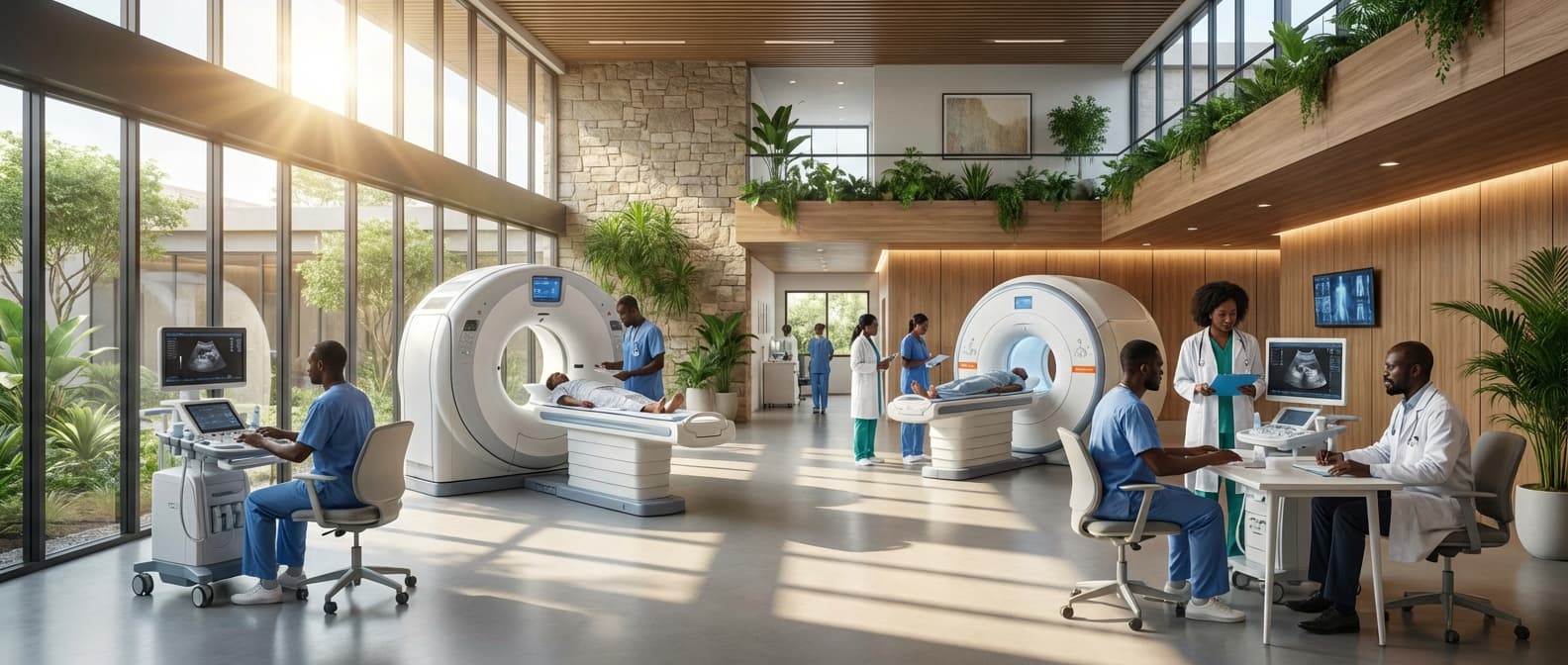
Diagnostic Imaging in Rwanda
Engineering Excellence & Technical Support
High-resolution imaging systems including CT scanners, MRI, X-ray, and ultrasound technology for accurate clinical diagnosis. High-standard technical execution following OEM protocols and local regulatory frameworks.
Mobile Diagnostic Units Expansion
Deployment of fully equipped mobile X-ray and ultrasound units to remote health centers, significantly reducing travel time and costs for patients in underserved rural areas. This initiative utilizes GPS tracking for efficient route planning and rapid response.
Cloud-Based PACS System
Implementation of a secure, cloud-based Picture Archiving and Communication System (PACS) enabling seamless sharing of diagnostic images between hospitals and specialized radiologists nationwide. This facilitates faster diagnoses, remote consultations, and improved inter-facility collaboration.
AI-Powered Image Analysis Pilot
Piloting artificial intelligence algorithms to assist radiologists in detecting anomalies in X-rays and CT scans, improving diagnostic accuracy and speed, especially for common conditions like tuberculosis and certain fractures. This technology is integrated with existing imaging workflows for practical application.
What Is Diagnostic Imaging In Rwanda?
Diagnostic imaging in Rwanda refers to the medical specialty that uses non-invasive imaging technology to create visual representations of the interior of the body for clinical analysis and medical intervention. These imaging modalities are crucial for disease detection, diagnosis, treatment monitoring, and surgical planning. The service encompasses a range of techniques, each employing different physical principles to generate images.
Definition of the Service: Diagnostic imaging involves the application of various technologies, including X-rays, computed tomography (CT) scans, magnetic resonance imaging (MRI), ultrasound, and nuclear medicine, to visualize anatomical structures and physiological processes within the human body. This visualization aids healthcare professionals in identifying abnormalities, assessing the extent of disease, and guiding therapeutic interventions. The process typically involves trained radiographers operating specialized equipment under the supervision of radiologists who interpret the acquired images.
Who Needs Diagnostic Imaging: A broad spectrum of the Rwandan population requires diagnostic imaging services. This includes:
- Patients presenting with symptoms: Individuals experiencing pain, discomfort, or functional limitations often require imaging to identify the underlying cause.
- Patients with suspected or confirmed diseases: Imaging is vital for staging, monitoring treatment efficacy, and detecting recurrence of various conditions, including cancer, cardiovascular diseases, and neurological disorders.
- Patients undergoing pre-operative assessment: Imaging helps surgeons plan procedures, assess risks, and identify anatomical variations.
- Patients requiring follow-up care: Routine imaging may be necessary to monitor chronic conditions or the progress of healing.
- Pediatric patients: Specialized imaging techniques are used for the diagnosis and management of congenital abnormalities and childhood illnesses.
- Trauma patients: Emergency imaging (e.g., X-rays, CT scans) is critical for assessing injuries following accidents.
Typical Use Cases: Diagnostic imaging in Rwanda is utilized across numerous medical specialties and clinical scenarios. Key use cases include:
- Orthopedics: Evaluation of fractures, dislocations, arthritis, and other musculoskeletal injuries and diseases.
- Cardiology: Assessment of the heart and blood vessels, including the diagnosis of coronary artery disease, valve abnormalities, and congenital heart defects.
- Neurology: Diagnosis of stroke, brain tumors, spinal cord injuries, and neurodegenerative diseases.
- Oncology: Detection, staging, and monitoring of various cancers, as well as assessment of treatment response.
- Gastroenterology: Investigation of abdominal pain, digestive disorders, and evaluation of organs like the liver, pancreas, and intestines.
- Pulmonology: Diagnosis of pneumonia, tuberculosis, lung nodules, and other respiratory conditions.
- Obstetrics and Gynecology: Antenatal screening, evaluation of pelvic masses, and assessment of reproductive health.
- Urology: Diagnosis of kidney stones, urinary tract infections, and prostate abnormalities.
- Emergency Medicine: Rapid assessment of trauma, acute abdominal conditions, and suspected critical illnesses.
| Modality | Principle | Primary Applications | Limitations/Considerations in Rwanda |
|---|---|---|---|
| X-ray (Radiography) | Ionizing radiation passing through tissues, absorbed to varying degrees based on density. | Bone fractures, chest pathology (pneumonia, TB), abdominal obstruction, dental imaging. | Limited soft tissue detail; radiation exposure; availability of advanced machines. |
| Computed Tomography (CT) | Uses X-rays and computer processing to create cross-sectional images. | Complex fractures, head trauma, abdominal/pelvic pathology, cancer staging, vascular imaging. | Higher radiation dose than X-ray; requires specialized equipment and contrast agents; cost. |
| Magnetic Resonance Imaging (MRI) | Uses strong magnetic fields and radio waves to generate detailed images of soft tissues. | Neurological conditions, musculoskeletal disorders, organ imaging (liver, prostate), soft tissue tumors. | High cost of equipment and maintenance; long scan times; contraindications (pacemakers); need for skilled operators and radiologists. |
| Ultrasound (Sonography) | Uses high-frequency sound waves that reflect off tissues to create images. | Obstetrics and gynecology, abdominal organs, superficial structures, vascular assessment, point-of-care imaging. | Operator-dependent; limited penetration in obese patients or through bone/air; portability is an advantage. |
| Nuclear Medicine | Involves administering radioactive tracers that emit gamma rays, detected by a scanner. | Assessing organ function (thyroid, kidney, heart), bone scans for metastases, infection localization. | Requires specialized radioactive isotopes and handling protocols; limited availability of advanced scanners (e.g., SPECT/CT). |
Diagnostic Imaging Modalities Used in Rwanda
- X-ray (Radiography)
- Computed Tomography (CT)
- Magnetic Resonance Imaging (MRI)
- Ultrasound (Sonography)
- Nuclear Medicine (e.g., SPECT, PET - though PET is less common in resource-limited settings)
Who Needs Diagnostic Imaging In Rwanda?
Diagnostic imaging plays a crucial role in modern healthcare by providing visual insights into the human body for diagnosis, treatment planning, and monitoring. In Rwanda, the need for these services is driven by a growing burden of both communicable and non-communicable diseases, an increasing population, and a commitment to improving healthcare access and quality.
| Medical Condition/Specialty | Commonly Used Imaging Modalities | Departmental Need |
|---|---|---|
| Trauma & Fractures | X-ray, CT Scan | Emergency, Orthopedics, Surgery |
| Neurological Disorders (Stroke, Tumors) | CT Scan, MRI | Neurology, Internal Medicine, Neurosurgery |
| Cardiovascular Diseases (Heart, Blood Vessels) | Echocardiography (Ultrasound), CT Angiography, MRI | Cardiology, Internal Medicine |
| Respiratory Diseases (Pneumonia, Tuberculosis, Lung Cancer) | X-ray, CT Scan | Pulmonology, Internal Medicine, Oncology |
| Gastrointestinal Issues (Abdominal Pain, Organ Abnormalities) | Ultrasound, CT Scan, MRI | Gastroenterology, Internal Medicine, Surgery |
| Cancer Diagnosis and Staging | Ultrasound, CT Scan, MRI, Mammography (where available) | Oncology, Surgery, Radiology |
| Prenatal Care & Gynecological Issues | Ultrasound | Obstetrics & Gynecology, MCH |
| Pediatric Conditions (Congenital Abnormalities, Infections) | X-ray, Ultrasound, CT Scan (with adjusted protocols) | Pediatrics |
Target Customers and Departments for Diagnostic Imaging in Rwanda
- {"items":["Patients Presenting with Symptoms: Individuals experiencing a wide range of symptoms, from acute pain and trauma to chronic conditions requiring in-depth investigation.","Individuals Requiring Screening: Patients at risk for certain diseases (e.g., cancer, cardiovascular disease) who may undergo screening imaging.","Patients Undergoing Treatment: Individuals who require imaging to monitor the effectiveness of treatment or detect complications.","Referred Patients from Primary Healthcare Centers: Patients whose initial assessment suggests the need for advanced diagnostic capabilities.","Patients from Rural and Remote Areas: Individuals who often have limited access to specialized medical services and may require imaging services when referred to district or referral hospitals.","Tourists and Expats: Visitors to Rwanda who may require medical attention and diagnostic imaging.","Pediatric Patients: Children with various conditions requiring specialized imaging techniques and protocols."],"title":"Target Customers"}
- {"items":["Radiology Department: The primary department responsible for all diagnostic imaging procedures, staffed by radiologists, radiographers, and technicians.","Emergency/Trauma Department: Crucial for rapid diagnosis of injuries, fractures, and internal bleeding following accidents or critical events.","Surgical Departments (General Surgery, Orthopedics, Neurosurgery, etc.): Essential for pre-operative planning, intra-operative guidance, and post-operative assessment.","Internal Medicine Departments (Cardiology, Pulmonology, Gastroenterology, Neurology, etc.): Vital for diagnosing and managing a wide array of conditions affecting various organ systems.","Oncology Department: Indispensable for cancer diagnosis, staging, treatment monitoring, and follow-up.","Pediatrics Department: For diagnosing congenital abnormalities, infections, and other childhood illnesses.","Maternal and Child Health (MCH) Services (including Obstetrics and Gynecology): For prenatal ultrasounds, assessment of gynecological conditions, and monitoring of high-risk pregnancies.","Rehabilitation Centers: For assessing progress and guiding therapeutic interventions, particularly in cases of stroke or musculoskeletal injuries."],"title":"Target Departments (in Hospitals and Clinics)"}
Diagnostic Imaging Process In Rwanda
The diagnostic imaging process in Rwanda, like in many developing healthcare systems, involves a series of steps to ensure accurate and timely diagnosis for patients. This workflow typically begins with a clinical inquiry from a healthcare provider and culminates in the delivery of imaging results. The process is often influenced by resource availability, technological infrastructure, and the availability of trained personnel. While the core principles of diagnostic imaging remain universal, the specific implementation in Rwanda may exhibit variations based on the healthcare facility's level (e.g., district hospital, referral hospital, specialized center) and its geographical location.
| Stage | Description | Key Actors | Potential Challenges in Rwanda | Example Technologies |
|---|---|---|---|---|
| A clinician identifies the need for diagnostic imaging to aid in diagnosis, treatment planning, or monitoring. This is documented in the patient's medical record, and a referral for a specific imaging modality is made. | Referring Physician/Clinician, Nurse | Lack of awareness of imaging benefits among some clinicians, limited access to specialist opinions for complex cases. | Paper-based referral forms, Electronic Health Records (EHRs) if available. |
| The patient is scheduled for the imaging examination. This may involve informing the patient about preparation instructions (e.g., fasting, fluid intake), and ensuring the necessary equipment and consumables are available. | Radiology Department Staff (Technologists, Nurses, Administrative Staff) | Long waiting times due to high patient volume and limited equipment, stock-outs of contrast agents or other consumables, inadequate patient education. | Scheduling software (basic or advanced), patient information leaflets. |
| The actual imaging procedure is performed by a trained radiographer/technologist using the designated imaging equipment. | Radiographer/Radiologic Technologist | Equipment malfunction or downtime, insufficient trained personnel, power outages, lack of advanced imaging modalities (e.g., limited availability of MRI or advanced CT scanners). | X-ray machines (conventional and digital), Ultrasound machines (portable and stationary), CT scanners, MRI scanners (less common, often in referral hospitals). |
| A radiologist interprets the acquired images and generates a comprehensive diagnostic report outlining findings, potential diagnoses, and recommendations. | Radiologist (or sometimes a General Practitioner with radiology training in remote areas) | Severe shortage of qualified radiologists, high workload leading to delays, limited access to subspecialty expertise. | Picture Archiving and Communication System (PACS) for digital images (where available), manual interpretation of films, reporting templates. |
| The imaging report is delivered to the referring clinician, who then integrates the findings into the patient's overall management plan. | Radiology Department Staff, Referring Physician/Clinician | Delays in report delivery (especially in paper-based systems), miscommunication between departments, challenges in accessing reports for remote clinicians. | Paper reports, CD-ROMs with images and reports, basic EHR integration. |
| Based on the imaging results, the clinician may order further investigations, initiate treatment, or schedule follow-up imaging. The patient's condition is monitored accordingly. | Referring Physician/Clinician, Specialists | Lack of access to advanced treatment options based on complex imaging findings, patient adherence to follow-up appointments. | Clinical assessment, laboratory tests, therapeutic interventions. |
Diagnostic Imaging Workflow in Rwanda
- Patient Referral and Inquiry Generation
- Scheduling and Preparation
- Image Acquisition (X-ray, Ultrasound, CT, MRI)
- Image Interpretation and Reporting
- Result Delivery and Clinical Integration
- Follow-up and Further Management
Diagnostic Imaging Cost In Rwanda
The cost of diagnostic imaging in Rwanda can vary significantly due to a combination of factors. These include the type of imaging modality used (e.g., X-ray, Ultrasound, CT scan, MRI), the specific body part or condition being examined, the reputation and location of the healthcare facility, and the expertise of the radiologist interpreting the images. Private hospitals and clinics generally have higher prices than public health facilities. Furthermore, the availability of specialized equipment can also influence pricing. While public facilities aim to provide affordable healthcare, their capacity might be limited. Prices are typically quoted in Rwandan Francs (RWF). It's important for patients to inquire about the total cost, including the procedure and the radiologist's report, before undergoing any diagnostic imaging.
| Imaging Modality | Estimated Cost Range (RWF) | Notes |
|---|---|---|
| X-ray (e.g., Chest X-ray) | 10,000 - 30,000 | Basic X-rays are generally the most affordable. Costs can vary by number of views. |
| Ultrasound (e.g., Abdominal, Pelvic) | 20,000 - 60,000 | Commonly used for soft tissue imaging. Price can depend on the complexity of the scan. |
| CT Scan (e.g., Head, Abdomen) | 70,000 - 200,000+ | More advanced and costly than X-rays and ultrasounds. Prices increase with contrast agents or specialized protocols. |
| MRI Scan (e.g., Brain, Spine) | 150,000 - 400,000+ | Typically the most expensive modality due to complex technology and longer scan times. Costs can increase with contrast agents. |
| Mammography | 25,000 - 70,000 | Specific for breast imaging. |
Factors Influencing Diagnostic Imaging Costs in Rwanda
- Imaging Modality (X-ray, Ultrasound, CT, MRI)
- Scope of Examination (specific body part/condition)
- Healthcare Facility Type (Public vs. Private)
- Facility Location and Reputation
- Radiologist's Expertise
- Availability of Specialized Equipment
- Inclusion of Radiologist's Report
Affordable Diagnostic Imaging Options
Navigating the healthcare system for diagnostic imaging can be daunting, especially when considering costs. Fortunately, there are affordable options available. Value bundles and strategic approaches can significantly reduce your out-of-pocket expenses for necessary procedures. This guide explores these strategies to help you make informed decisions about your diagnostic imaging needs.
| Strategy | Description | Potential Savings |
|---|---|---|
| Value Bundles | Pre-negotiated packages including procedure and interpretation. | Significant savings through bundled pricing. |
| Compare Prices | Research costs across different providers and facilities. | Can identify savings of 20-50% or more. |
| Outpatient Imaging Centers | Specialized centers often have lower overhead than hospitals. | Typically 20-40% cheaper than hospital outpatient departments. |
| Cash Prices/Self-Pay Discounts | Discounted rates for patients paying out-of-pocket. | Varies, but can offer substantial reductions. |
| HSA/FSA Funds | Using pre-tax dollars for medical expenses. | Tax savings, equivalent to your marginal tax rate. |
Understanding Value Bundles and Cost-Saving Strategies
- {"title":"What are Value Bundles in Diagnostic Imaging?","description":"Value bundles are pre-negotiated packages offered by imaging providers or insurance companies. These bundles typically include a specific diagnostic imaging procedure (e.g., MRI of the knee, CT scan of the abdomen) along with related services, such as the radiologist's interpretation, and sometimes even follow-up consultations. The goal is to offer a predictable and often reduced overall cost compared to paying for each service individually."}
- {"title":"Benefits of Value Bundles","description":"Choosing a value bundle can offer several advantages: \n- Predictable Costs: You know the total cost upfront, making budgeting easier. \n- Potential Savings: Bundles are usually priced lower than the sum of individual services. \n- Streamlined Process: Often includes all necessary components, reducing the need to coordinate multiple providers."}
- {"title":"Strategies for Cost Savings","description":"Beyond value bundles, several other strategies can help you save money on diagnostic imaging:\n- Compare Prices: Don't settle for the first option. Research prices at different imaging centers, hospitals, and outpatient facilities. Prices can vary significantly.\n- Understand Your Insurance Coverage: Know your deductible, copayments, and coinsurance for imaging services. Check if certain providers are in-network, as out-of-network services are typically much more expensive.\n- Ask About Cash Prices/Self-Pay Discounts: If you don't have insurance or have a high deductible, inquire about discounted cash prices or self-pay options. Many facilities offer these to uninsured patients.\n- Consider Outpatient Imaging Centers: Outpatient imaging centers are often significantly less expensive than hospital-based departments for the same procedures.\n- Discuss Necessity with Your Doctor: Ensure the imaging study is truly necessary. Sometimes, alternative diagnostic methods may be considered.\n- Negotiate with Providers: In some cases, especially if paying out-of-pocket, you may be able to negotiate the price with the imaging facility.\n- Health Savings Accounts (HSAs) and Flexible Spending Accounts (FSAs): If you have an HSA or FSA, use these pre-tax dollars to pay for eligible diagnostic imaging costs, which can save you money on taxes."}
- {"title":"How to Find Affordable Options","description":"To find affordable diagnostic imaging:\n- Talk to Your Doctor: They can often recommend facilities known for quality and fair pricing.\n- Use Online Price Comparison Tools: Many insurance companies and independent websites offer tools to compare costs for medical procedures in your area.\n- Contact Imaging Centers Directly: Call and ask about prices for your specific procedure.\n- Check for Imaging Network Agreements: Some insurance plans have preferred imaging networks that offer lower rates."}
Verified Providers In Rwanda
In Rwanda's evolving healthcare landscape, identifying truly verified and high-quality providers is paramount for individuals seeking reliable medical services. Franance Health stands out as a leading organization committed to this verification process, ensuring that its network comprises only the most competent and ethical healthcare professionals and facilities. Their rigorous credentialing process and dedication to patient well-being make them the premier choice for accessing trusted healthcare in Rwanda.
| Provider Type | Franance Health Verification Criteria | Benefits for Patients |
|---|---|---|
| Doctors (Specialists & General Practitioners) | Valid medical license, board certification (where applicable), verifiable experience, clean disciplinary record, proof of continuous professional development. | Access to highly qualified and experienced medical professionals, confidence in accurate diagnosis and effective treatment. |
| Hospitals & Clinics | Accreditation by relevant health authorities, adherence to safety and hygiene standards, availability of essential medical equipment, qualified nursing and support staff, positive patient feedback. | Safe and well-equipped healthcare environments, access to a range of medical services, assurance of quality care delivery. |
| Laboratories & Diagnostic Centers | Accreditation and licensing, use of calibrated and up-to-date equipment, employment of qualified laboratory technicians, adherence to quality control measures. | Reliable and accurate diagnostic test results, informed medical decision-making. |
| Pharmacies | Valid operating license, stock of genuine and approved medications, presence of licensed pharmacists, adherence to dispensing regulations. | Access to safe and authentic prescription and over-the-counter medications, expert pharmaceutical advice. |
Why Franance Health is the Best Choice for Verified Providers in Rwanda:
- Rigorous Vetting and Credentialing: Franance Health employs a multi-stage verification process, examining medical licenses, professional qualifications, and practice history of all listed providers.
- Commitment to Ethical Standards: Beyond technical expertise, Franance Health assesses providers for their adherence to ethical medical practices and patient-centered care.
- Comprehensive Network: Franance Health offers access to a diverse range of specialists and facilities, covering various medical needs across Rwanda.
- Patient-Centric Approach: The organization prioritizes patient satisfaction and safety, ensuring that all verified providers are equipped to deliver exceptional care.
- Continuous Monitoring: Franance Health maintains an ongoing review of its network to ensure sustained quality and responsiveness to evolving healthcare standards.
Scope Of Work For Diagnostic Imaging
This Scope of Work (SOW) outlines the requirements for providing comprehensive diagnostic imaging services. It details the technical deliverables expected from the service provider, including the types of imaging modalities, reporting standards, data management, and quality assurance protocols. Standard specifications for equipment, image acquisition, and interpretation are also defined to ensure consistency, accuracy, and patient safety.
| Specification Category | Standard/Requirement | Details/Notes |
|---|---|---|
| Image Quality | High Resolution, Minimal Artifacts | Adherence to established radiological guidelines (e.g., ACR, RSNA) for optimal diagnostic quality. Artifacts should be minimized and documented if unavoidable. |
| Image Format | DICOM (Digital Imaging and Communications in Medicine) | All images and associated metadata must be in DICOM format. Compliance with DICOM standards for storage, transmission, and display. |
| Reporting Standards | ACR Appropriateness Criteria & Reporting Guidelines | Reports to be clear, concise, and follow established reporting structures. Include findings, impressions, and recommendations. Mention of adherence to ACR appropriateness criteria for exam selection. |
| Report Turnaround Time (TAT) | Standard vs. STAT | Standard reports: within 24-48 hours. STAT reports: within 1-2 hours. Specific TATs for each modality to be defined in the service agreement. |
| Radiologist Qualifications | Board-Certified or Board-Eligible Radiologists | All interpreting physicians must be licensed and credentialed in the relevant specialties. Subspecialty expertise should be available as required. |
| Equipment Maintenance & Calibration | Regular Maintenance Schedules & Calibration Logs | Provider must demonstrate a robust program for equipment maintenance, calibration, and quality control to ensure accuracy and safety. |
| Data Security & Privacy | HIPAA Compliance | Strict adherence to HIPAA regulations for patient data protection, including encryption, access controls, and audit trails. |
| Image Archiving | Secure, Long-Term Storage | Provider must offer secure, long-term archiving of images and reports, with defined retrieval policies and durations as per regulatory requirements and client needs. |
| Quality Assurance (QA) | Routine QA Audits & Performance Metrics | Implementation of a formal QA program including peer review of reports, image quality assessments, and performance monitoring against defined metrics. |
| Contrast Media & Safety | Protocols for Contrast Administration & Adverse Event Management | Adherence to latest guidelines for contrast media administration, including patient screening, dosage protocols, and immediate management of adverse reactions. |
Key Imaging Modalities and Deliverables
- Radiography (X-ray): Digital images (DICOM format), radiologist reports.
- Computed Tomography (CT): Multi-planar reconstructions (MPRs), 3D renderings (as applicable), radiologist reports.
- Magnetic Resonance Imaging (MRI): Multi-planar views, specialized sequences (e.g., DWI, fMRI if applicable), radiologist reports.
- Ultrasound: Real-time imaging, Doppler studies, annotated images, radiologist reports.
- Nuclear Medicine (PET, SPECT): Functional imaging, quantitative analysis (as applicable), radiologist reports.
- Mammography: Full-field digital mammography (FFDM) images, tomosynthesis (if applicable), radiologist reports.
- Interventional Radiology (IR): Procedure images, post-procedure images, radiologist reports.
- Image Archiving and Communication System (PACS) Integration: Seamless integration with the client's existing PACS for image and report retrieval.
Service Level Agreement For Diagnostic Imaging
This Service Level Agreement (SLA) outlines the performance standards and guarantees for diagnostic imaging services provided by [Your Company Name] to [Client Name]. It covers key performance indicators such as report turnaround times and system uptime.
| Service Metric | Target (Normal Hours) | Target (Off-Hours/Weekends) | Downtime Notification Period | Service Credit Calculation |
|---|---|---|---|---|
| Report Turnaround Time (Radiologist Report) | Within 24 business hours | Within 48 business hours | N/A | N/A (Report timeliness is a primary service goal) |
| System Uptime (PACS, RIS, Workstations) | 99.5% | 99.0% | Client will be notified within 30 minutes of scheduled maintenance, and within 1 hour of unscheduled critical downtime. | For every 1% drop below the guaranteed uptime per calendar month, client will receive a 5% credit on the monthly service fee. |
| Image Accessibility (PACS) | 99.8% | 99.5% | Client will be notified within 30 minutes of scheduled maintenance, and within 1 hour of unscheduled critical downtime affecting image access. | For every 0.5% drop below the guaranteed accessibility per calendar month, client will receive a 3% credit on the monthly service fee. |
| Technical Support Availability | 24x7x365 | 24x7x365 | N/A | N/A (Support availability is a continuous service goal) |
Key Service Metrics
- Report Turnaround Time: The maximum time allowed for the delivery of diagnostic imaging reports from the time the imaging study is completed.
- System Uptime: The guaranteed percentage of time the diagnostic imaging systems and related software are operational and accessible to the client.
Frequently Asked Questions

Ready when you are
Let's scope your Diagnostic Imaging in Rwanda project in Rwanda.

Scaling healthcare logistics and technical systems across the entire continent.