
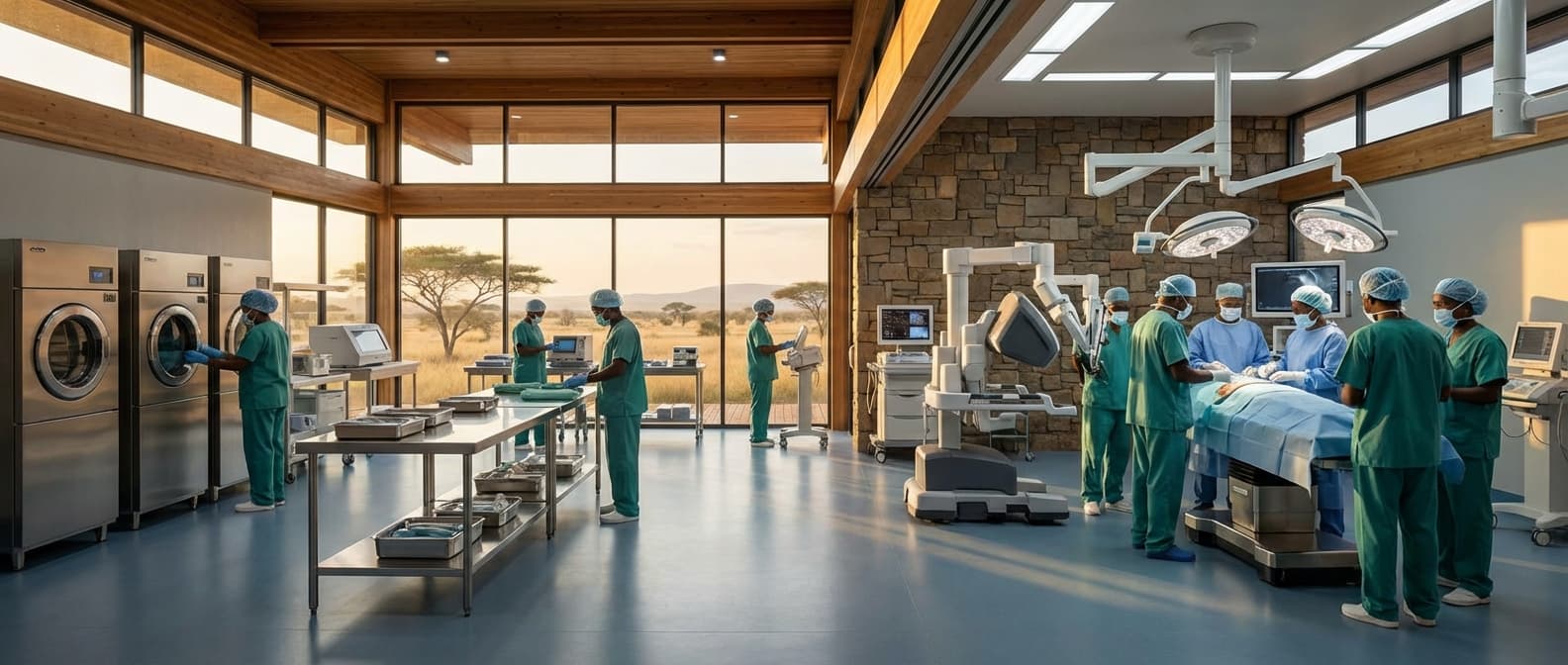
Medical Gas System Design & Installation in Rwanda
Engineering Excellence & Technical Support
Medical gas pipeline systems: O2, N2O, air, vacuum High-standard technical execution following OEM protocols and local regulatory frameworks.
Advanced Medical Gas Purity Standards
Implementation of medical gas systems in Rwanda adhering to the highest international purity standards (e.g., ISO 7396-1) for Oxygen, Medical Air, and Nitrous Oxide, ensuring patient safety and treatment efficacy through rigorous quality control and certified materials.
Robust Centralized Gas Distribution
Design and installation of state-of-the-art centralized medical gas pipeline systems, featuring redundant sources, leak detection technology, and pressure monitoring, to guarantee uninterrupted supply of critical gases to operating rooms, ICUs, and patient wards across Rwandan healthcare facilities.
Localized Training & Sustainable Installation
Commitment to empowering Rwandan healthcare professionals and technicians through comprehensive training programs on the operation, maintenance, and minor repair of medical gas systems, fostering local expertise and ensuring the long-term sustainability and reliability of installed infrastructure.
What Is Medical Gas System Design & Installation In Rwanda?
Medical gas system design and installation in Rwanda refers to the comprehensive process of planning, engineering, and implementing the infrastructure required to safely and reliably deliver medical gases to patient care areas within healthcare facilities. This service encompasses the selection of appropriate medical gas types (e.g., oxygen, medical air, nitrous oxide, vacuum), the design of the piping network, the specification of control and alarm systems, and the physical installation of all components according to national and international standards. The objective is to ensure uninterrupted supply, purity, and correct pressure of medical gases essential for a wide range of clinical applications. This service is crucial for maintaining patient safety and facilitating advanced medical treatments.
| Who Needs Medical Gas System Design & Installation? | Typical Use Cases |
|---|---|
| Hospitals (all sizes) | Respiratory support (oxygen therapy, mechanical ventilation) Anesthesia delivery (operating rooms, intensive care units) Surgical procedures (medical air for tools, nitrous oxide for sedation) Diagnostic procedures (e.g., medical air for spirometry) Emergency response and resuscitation Neonatal care (specialized oxygen delivery) |
| Clinics and Health Centers with inpatient facilities | Basic oxygen therapy and resuscitation Management of common respiratory conditions |
| Specialized Medical Facilities (e.g., surgical centers, critical care units) | High-dependency patient monitoring and intervention Advanced anesthetic techniques |
| Rehabilitation Centers | Oxygen therapy for individuals with chronic respiratory diseases |
| Veterinary Hospitals | Anesthesia and oxygen administration for animal patients |
| Research Laboratories (requiring specific gas mixtures) | Controlled experimental environments |
Key Components of Medical Gas System Design & Installation:
- Gas Source Management: Establishing and maintaining reliable sources for medical gases, including bulk storage tanks, medical gas cylinders, or on-site generators.
- Distribution Piping Network: Designing and installing a robust, leak-free piping system made of appropriate materials (e.g., copper tubing) that adheres to strict medical gas standards for pressure, purity, and flow.
- Alarm and Monitoring Systems: Implementing sophisticated systems to detect pressure fluctuations, gas failures, and other anomalies, providing timely alerts to medical staff.
- Outlet Stations and Terminations: Installing standardized medical gas outlets at patient bedsides, in operating rooms, and other critical areas, ensuring easy and safe connection of medical devices.
- Pressure Regulators and Control Valves: Integrating devices to maintain correct gas pressures throughout the distribution network and at point-of-use.
- Ventilation and Safety Features: Incorporating safety measures such as purge panels, emergency shut-off valves, and appropriate ventilation to prevent gas accumulation and ensure patient safety.
- Testing and Commissioning: Conducting rigorous testing and validation to verify system integrity, performance, and compliance with regulatory requirements prior to operational handover.
Who Needs Medical Gas System Design & Installation In Rwanda?
Designing and installing a medical gas system is crucial for ensuring patient safety, efficient healthcare delivery, and adherence to international standards. In Rwanda, several types of healthcare facilities and their associated departments require these specialized systems to provide optimal medical care. This includes ensuring the reliable supply of vital gases like oxygen, medical air, nitrous oxide, and vacuum for various medical procedures and patient support.
| Target Customer/Facility Type | Key Departments Requiring Medical Gas Systems | Specific Needs/Applications |
|---|---|---|
| Hospitals (Public and Private) | Operating Theatres/Surgical Suites | Anesthesia administration, ventilation support during surgery, resuscitation. |
| Hospitals (Public and Private) | Intensive Care Units (ICU/CCU) | Continuous oxygen therapy, mechanical ventilation, respiratory support. |
| Hospitals (Public and Private) | Emergency Departments/Trauma Centers | Immediate oxygen administration, resuscitation, airway management. |
| Hospitals (Public and Private) | Neonatal Intensive Care Units (NICU) | Precise oxygen delivery for premature infants, respiratory support, incubator gases. |
| Hospitals (Public and Private) | Maternity Wards/Labor & Delivery Rooms | Oxygen for mothers during labor, resuscitation of newborns. |
| Hospitals (Public and Private) | Pulmonology/Respiratory Care Units | Long-term oxygen therapy, management of respiratory diseases. |
| Hospitals (Public and Private) | Emergency Resuscitation Rooms | Rapid delivery of oxygen and other gases for life-saving interventions. |
| Hospitals (Public and Private) | Dialysis Units | Medical air supply for dialysis machines. |
| Hospitals (Public and Private) | General Wards | Oxygen for patients with various medical conditions requiring respiratory support. |
| Specialized Medical Centers (e.g., Cardiac Centers, Cancer Centers) | Cardiac Catheterization Labs | Oxygen for conscious sedation, emergency resuscitation. |
| Specialized Medical Centers (e.g., Cardiac Centers, Cancer Centers) | Radiology/Imaging Departments (e.g., MRI, CT Scan Rooms) | Medical air for certain imaging equipment, oxygen for patient comfort/sedation. |
| Large Clinics and Health Centers | Minor Procedure Rooms | Oxygen for sedation and post-procedure recovery. |
| Large Clinics and Health Centers | Observation/Recovery Areas | Oxygen support for patients recovering from procedures. |
| Research and Training Institutions | Medical Simulation Labs | Controlled environments for training healthcare professionals on respiratory equipment and gas usage. |
| Research and Training Institutions | Laboratories | Specialized gases for research experiments and analysis. |
Target Customers & Departments in Rwanda Requiring Medical Gas System Design & Installation
- Hospitals (Public and Private)
- Specialized Medical Centers
- Large Clinics and Health Centers
- Research and Training Institutions
Medical Gas System Design & Installation Process In Rwanda
Designing and installing medical gas systems in Rwanda involves a structured workflow, from initial client inquiry to the final handover and commissioning. This process is crucial for ensuring the safe and reliable supply of essential medical gases to healthcare facilities. The entire lifecycle is governed by regulatory requirements and best practices to guarantee patient safety and system integrity.
| Phase | Key Activities | Deliverables | Responsible Parties | Rwanda Specific Considerations |
|---|---|---|---|---|
| Inquiry & Initial Consultation | Client expresses interest; preliminary discussion of needs, scope, and budget. | Initial proposal, meeting minutes. | Healthcare Facility, Potential Service Provider. | Understanding the specific gas requirements (Oxygen, Medical Air, Vacuum, etc.) of the facility. |
| Needs Assessment & Site Survey | Detailed evaluation of the facility's current and future gas demands, infrastructure review, site measurements, and risk assessment. | Site survey report, detailed requirements documentation. | Service Provider, Healthcare Facility Representative. | Assessing existing building plans, power supply reliability, and potential locations for main supply units. |
| System Design & Specification | Development of detailed engineering drawings, P&IDs (Piping and Instrumentation Diagrams), material specifications, and compliance with relevant standards (e.g., ISO, local Rwandan building codes). | Design drawings, Bill of Quantities (BoQ), technical specifications. | Service Provider (Design Engineers). | Adherence to international standards for medical gas systems is paramount, potentially supplemented by local interpretations or guidelines from the Ministry of Health. |
| Regulatory Approvals & Permits | Submission of design documents to relevant authorities (e.g., Ministry of Health, Rwanda Standards Board, local district authorities) for review and approval. | Approved drawings, construction permits. | Service Provider, Local Authorities. | Navigating the specific approval processes and timelines set by Rwandan regulatory bodies is critical. Familiarity with local building and safety regulations is essential. |
| Procurement of Materials & Equipment | Sourcing and purchasing of all necessary medical gas cylinders, bulk supply units, piping, valves, regulators, alarms, outlets, and other components. | Procured materials and equipment. | Service Provider, Suppliers. | Ensuring availability of certified and high-quality medical-grade materials and equipment. Considering local import duties and lead times for specialized components. |
| Installation & Construction | Installation of piping networks, supply units, alarm systems, and outlets according to approved designs, adhering to safety protocols. | Installed medical gas system infrastructure. | Service Provider (Installation Technicians/Engineers), Site Supervisors. | Strict adherence to welding standards, pressure testing, and proper labeling of medical gas lines to prevent cross-contamination or misidentification, especially in high-traffic areas. Ensuring trained local personnel are involved in installation. |
| Testing & Commissioning | Thorough testing of all components and the entire system for leaks, pressure integrity, gas purity, and alarm functionality. | Test reports, commissioning certificates, performance validation. | Service Provider, Independent Testing Agency (if required). | Verification of oxygen purity levels according to WHO guidelines or specific Rwandan health standards. Ensuring the reliability of alarm systems for critical gas supply monitoring. |
| Training & Handover | Training of healthcare facility staff on the operation, maintenance, and emergency procedures for the medical gas system. | Training materials, handover documentation, O&M manuals. | Service Provider, Healthcare Facility Staff. | Providing training in a language accessible to the facility staff. Emphasizing the critical role of the system in patient care and the importance of prompt response to alarms. |
| Maintenance & Support | Ongoing scheduled maintenance, emergency repairs, and periodic system checks to ensure continued optimal performance and compliance. | Maintenance schedules, service reports, warranty support. | Service Provider, Healthcare Facility. | Establishing long-term service agreements and ensuring availability of spare parts and qualified technicians in Rwanda for timely support and repairs. |
Medical Gas System Design & Installation Process in Rwanda: Workflow
- Inquiry & Initial Consultation
- Needs Assessment & Site Survey
- System Design & Specification
- Regulatory Approvals & Permits
- Procurement of Materials & Equipment
- Installation & Construction
- Testing & Commissioning
- Training & Handover
- Maintenance & Support
Medical Gas System Design & Installation Cost In Rwanda
Designing and installing a medical gas system in Rwanda involves several key considerations that influence the overall cost. These factors range from the complexity and scale of the installation to the specific materials and equipment chosen. Understanding these elements is crucial for accurate budgeting and project planning. The cost is primarily driven by the type and quantity of medical gases required, the number of outlets, the size of the facility, the distance of pipeline runs, and the specific regulatory standards that must be met.
| Item/Service | Estimated Cost Range (RWF) |
|---|---|
| Basic Design & Engineering Services: (per facility size estimate) | 500,000 - 3,000,000+ |
| Medical Gas Outlets: (each, including piping and installation) | 80,000 - 250,000+ |
| Pipeline Installation: (per linear meter, depending on gas and diameter) | 20,000 - 70,000+ |
| Central Oxygen Manifold/Regulator System: | 1,500,000 - 10,000,000+ |
| Medical Air Compressor System: | 2,000,000 - 15,000,000+ |
| Vacuum Pump System: | 1,000,000 - 8,000,000+ |
| Bulk Oxygen Storage (Liquid/Gas): (highly variable based on capacity) | 5,000,000 - 50,000,000+ (rental/purchase) |
| Alarm Systems: (per system) | 500,000 - 2,000,000+ |
| Testing & Commissioning: (per system) | 1,000,000 - 5,000,000+ |
| Total Estimated Cost (Small Clinic - few outlets): | 10,000,000 - 30,000,000 |
| Total Estimated Cost (Medium Hospital - ~50-100 outlets): | 50,000,000 - 150,000,000 |
| Total Estimated Cost (Large Hospital - 100+ outlets, complex systems): | 150,000,000 - 500,000,000+ |
Key Pricing Factors for Medical Gas Systems in Rwanda
- Type and Quantity of Medical Gases: The most common gases include oxygen, medical air, vacuum, and nitrous oxide. The demand for each gas, determined by the number of beds and the complexity of medical procedures, directly impacts system sizing and cost.
- System Complexity and Scale: A small clinic will have significantly lower costs than a large hospital. Factors like the number of operating theaters, ICU beds, and general wards influence the required pipeline network and outlet density.
- Number of Medical Gas Outlets: Each outlet where a medical gas connection is made incurs costs for the outlet itself, piping, and labor for installation and testing.
- Pipeline Infrastructure: The length and diameter of the medical gas pipelines are major cost drivers. Longer runs and larger diameter pipes (needed for higher flow rates) increase material and installation expenses.
- Central Plant Equipment: This includes bulk storage tanks (for liquid oxygen, for example), pressure regulators, alarms, compressors (for medical air), vacuum pumps, and manifolds. The capacity and brand of this equipment significantly affect the budget.
- Ancillary Equipment: This encompasses gas outlets, flowmeters, regulators, humidifiers, alarm systems, and medical gas panels. Higher-quality or specialized equipment will command higher prices.
- Installation Labor: The cost of skilled labor for designing, fabricating, installing, and testing the medical gas system is a substantial component. This includes project managers, engineers, certified technicians, and pipefitters.
- Testing and Commissioning: Rigorous testing, including leak detection, pressure testing, and purity analysis, is essential to ensure safety and compliance. These services add to the overall cost.
- Regulatory Compliance and Certification: Adherence to Rwandan and international standards for medical gas systems adds to the design and installation complexity and may require specialized equipment and documentation, impacting costs.
- Site Preparation and Building Integration: Modifications to existing structures, including wall penetrations, structural supports, and aesthetic finishing, can add to the overall project cost.
- Project Management and Design Fees: Professional services for system design, engineering, and project management are necessary and contribute to the total expenditure.
- Geographic Location within Rwanda: While not as significant as other factors, transportation costs for materials and personnel to more remote locations might slightly influence pricing.
Affordable Medical Gas System Design & Installation Options
Designing and installing a medical gas system is a critical undertaking for healthcare facilities, demanding both precision and cost-effectiveness. This guide explores affordable design and installation options, focusing on value bundles and strategic cost-saving measures to ensure you get a safe, compliant, and budget-friendly system.
| Cost-Saving Strategy | Description | Impact on Cost |
|---|---|---|
Value Bundles for Medical Gas Systems
- {"title":"Integrated Design-Build Packages","description":"These bundles combine the design, engineering, procurement, and installation phases under a single contract. This streamlined approach often leads to better coordination, reduced project timelines, and fewer change orders, ultimately saving costs."}
- {"title":"Equipment & Installation Combos","description":"Many suppliers offer packages that include essential medical gas equipment (e.g., manifolds, regulators, alarm systems) bundled with their installation services. This can provide a predictable price and ensure compatibility between components."}
- {"title":"Phased Installation & Retrofitting Services","description":"For existing facilities, phased installation allows for the system to be implemented in stages, minimizing disruption and spreading costs over time. Some providers offer specialized retrofitting bundles to integrate new systems into older infrastructure efficiently."}
- {"title":"Maintenance & Monitoring Contracts","description":"While not strictly installation, long-term maintenance and monitoring contracts bundled with initial installation can offer discounted rates. This ensures ongoing system reliability and can prevent costly emergency repairs."}
Verified Providers In Rwanda
When seeking healthcare services in Rwanda, identifying verified and trustworthy providers is paramount. Franance Health stands out as a leading organization committed to delivering high-quality medical care and has earned a reputation for excellence. This document outlines Franance Health's credentials and elaborates on why they represent the best choice for your healthcare needs in Rwanda.
| Credential/Aspect | Description | Benefit to Patients |
|---|---|---|
| Accreditation & Regulatory Compliance | Franance Health adheres strictly to all Rwandan Ministry of Health regulations and international healthcare standards. They often hold accreditations from recognized bodies, ensuring adherence to quality and safety protocols. | Guarantees that services are delivered according to established best practices, ensuring safety, quality, and reliability of care. |
| Qualified Medical Professionals | The organization employs a team of highly skilled and experienced doctors, nurses, specialists, and support staff, many of whom have undergone international training and possess specialized expertise. | Access to expert medical advice and treatment from competent professionals, leading to better diagnostic accuracy and treatment outcomes. |
| Comprehensive Service Offering | Franance Health provides a wide spectrum of medical services, ranging from general consultations and diagnostics to specialized treatments and preventive care, catering to diverse health needs. | Convenient access to a broad range of healthcare services under one roof, eliminating the need to seek care from multiple providers. |
| Patient-Centric Care Philosophy | Their approach prioritizes patient well-being, comfort, and clear communication, fostering a supportive and trusting relationship between patients and healthcare providers. | A more positive and empowering healthcare experience, with patients feeling heard, respected, and actively involved in their treatment plans. |
| Advanced Technology and Facilities | Franance Health invests in modern medical equipment and maintains well-equipped facilities, enhancing diagnostic capabilities and treatment efficacy. | Improved diagnostic accuracy, more effective treatments, and access to the latest medical advancements. |
| Ethical Standards and Integrity | Upholds the highest ethical standards in all its operations, ensuring patient confidentiality, transparent pricing, and a commitment to doing no harm. | Peace of mind knowing that your health information is protected and that you will receive honest and fair treatment. |
| Community Engagement | Actively participates in community health initiatives and outreach programs, demonstrating a commitment to the overall health and well-being of the Rwandan population. | Contribution to a healthier community and access to health education and preventive services that benefit everyone. |
Franance Health's Key Credentials and Strengths
- Accreditation and Regulatory Compliance
- Qualified and Experienced Medical Professionals
- Comprehensive Range of Services
- Patient-Centric Approach
- Technological Integration and Innovation
- Commitment to Ethical Practices
- Strong Community Ties and Outreach
Scope Of Work For Medical Gas System Design & Installation
This Scope of Work outlines the requirements for the comprehensive design and installation of a medical gas system, ensuring compliance with all applicable codes, standards, and project-specific requirements. The project encompasses the full lifecycle from initial design and engineering through final testing, commissioning, and handover. The system will include the design and installation of the necessary piping, outlets, alarms, central supply equipment, and distribution networks for specified medical gases.
| Deliverable Category | Description | Technical Deliverables | Standard Specifications & Codes |
|---|---|---|---|
| Design & Engineering | Development of detailed engineering plans and specifications for the medical gas system. | Schematic Diagrams, Piping and Instrumentation Diagrams (P&IDs), Isometric Drawings, Equipment Schedules, Pressure Drop Calculations, Valve Schedules, Alarm System Design, Central Supply Equipment Specification, Outlet and Regulator Specification, Trenching and Routing Plans. | NFPA 99 (Health Care Facilities Code), NFPA 70 (National Electrical Code), CSA Z305.1 (Medical Gas Pipeline Systems), Local Building Codes, ASHRAE Standards, Manufacturer's Installation Manuals. |
| Procurement & Material Management | Sourcing and management of all materials and equipment required for the medical gas system. | Material Submittals for Approval, Quality Control Reports for Materials, Inventory and Tracking of Materials. | Approved Material Lists, Certification of Materials (e.g., ASTM, ASME), Traceability of Materials. |
| Installation & Construction | Execution of the physical installation of the medical gas system according to approved design drawings and specifications. | Installation of Medical Gas Piping (e.g., oxygen, medical air, vacuum, nitrogen), Installation of Medical Gas Outlets, Installation of Pressure Regulators and Gauges, Installation of Alarm Systems, Installation of Central Supply Equipment (e.g., compressors, vacuum pumps, manifolds), Seismic Bracing and Supports, Weld Documentation. | NFPA 99, CSA Z305.1, Manufacturer's Installation Guidelines, Welding Procedures (ASME Section IX if applicable), Site-Specific Safety Plans. |
| Testing & Commissioning | Verification of the system's functionality, safety, and performance through rigorous testing and commissioning. | Pressure Testing, Leak Testing, Purity Testing (for medical gases), Flow Rate Testing, Alarm System Testing, System Purging and Cleaning, Functional Performance Tests, Commissioning Report. | NFPA 99, CSA Z305.1, Site-Specific Commissioning Plan, Manufacturer's Testing Procedures, Third-Party Testing (if required). |
| Training & Handover | Provision of comprehensive training to facility staff and handover of all project documentation. | Operation and Maintenance Manuals, As-Built Drawings, Training Materials, Certificate of Occupancy/Acceptance, System Warranty Documentation. | Facility Operations and Maintenance Procedures, Manufacturer's O&M Manuals, Project Closeout Requirements. |
Key Project Phases and Activities
- Design & Engineering
- Procurement & Material Management
- Installation & Construction
- Testing & Commissioning
- Training & Handover
Service Level Agreement For Medical Gas System Design & Installation
This Service Level Agreement (SLA) outlines the agreed-upon response times and uptime guarantees for the design and installation of medical gas systems. This SLA is between [Client Name] (hereinafter referred to as 'Client') and [Provider Name] (hereinafter referred to as 'Provider') for services rendered regarding the medical gas system at [Client Facility Address].
| Service Component | Response Time (Business Hours) | Response Time (24/7) | Uptime Guarantee |
|---|---|---|---|
| Design Phase (Initial Consultation & Specification Review) | 4 Business Hours | N/A | N/A |
| Design Phase (Submission of Preliminary Design) | 5 Business Days | N/A | N/A |
| Design Phase (Submission of Final Design Documents) | 7 Business Days | N/A | N/A |
| Installation Phase (Site Readiness Assessment) | 2 Business Days | N/A | N/A |
| Installation Phase (Commencement of Work after Notice to Proceed) | 5 Business Days | N/A | N/A |
| Post-Installation Testing & Commissioning | Within [Number] days of completion of installation | N/A | N/A |
| Emergency Support (Critical System Failure) | 1 Hour | 1 Hour | 99.9% (Annual) |
| Urgent Support (Non-Critical System Failure) | 4 Business Hours | 8 Business Hours | 99.5% (Annual) |
| Routine Support (Minor Issues, Inquiries) | 8 Business Hours | N/A | N/A |
| Scheduled Maintenance Notification | N/A | N/A | N/A |
Key Definitions
- Critical System Failure: A failure of the medical gas system that directly impacts patient care and poses an immediate safety risk. This includes but is not limited to, complete loss of oxygen, nitrous oxide, or medical air supply.
- Non-Critical System Failure: A failure of the medical gas system that does not pose an immediate safety risk but hinders normal operations or deviates from design specifications. Examples include minor leaks, pressure fluctuations outside acceptable ranges, or failure of non-essential components.
- Scheduled Maintenance: Pre-planned maintenance activities performed by the Provider to ensure optimal system performance and prevent failures. Scheduled maintenance will be communicated to the Client at least [Number] days in advance.
- Response Time: The maximum time allowed for the Provider's technical personnel to acknowledge and begin actively working on a reported issue.
- Resolution Time: The maximum time allowed for the Provider to resolve a reported issue to a functional state, restoring the medical gas system to its operational capacity.
- Uptime Guarantee: The minimum percentage of time the medical gas system is expected to be fully operational and available for use.
Frequently Asked Questions

Ready when you are
Let's scope your Medical Gas System Design & Installation in Rwanda project in Rwanda.

Scaling healthcare logistics and technical systems across the entire continent.