
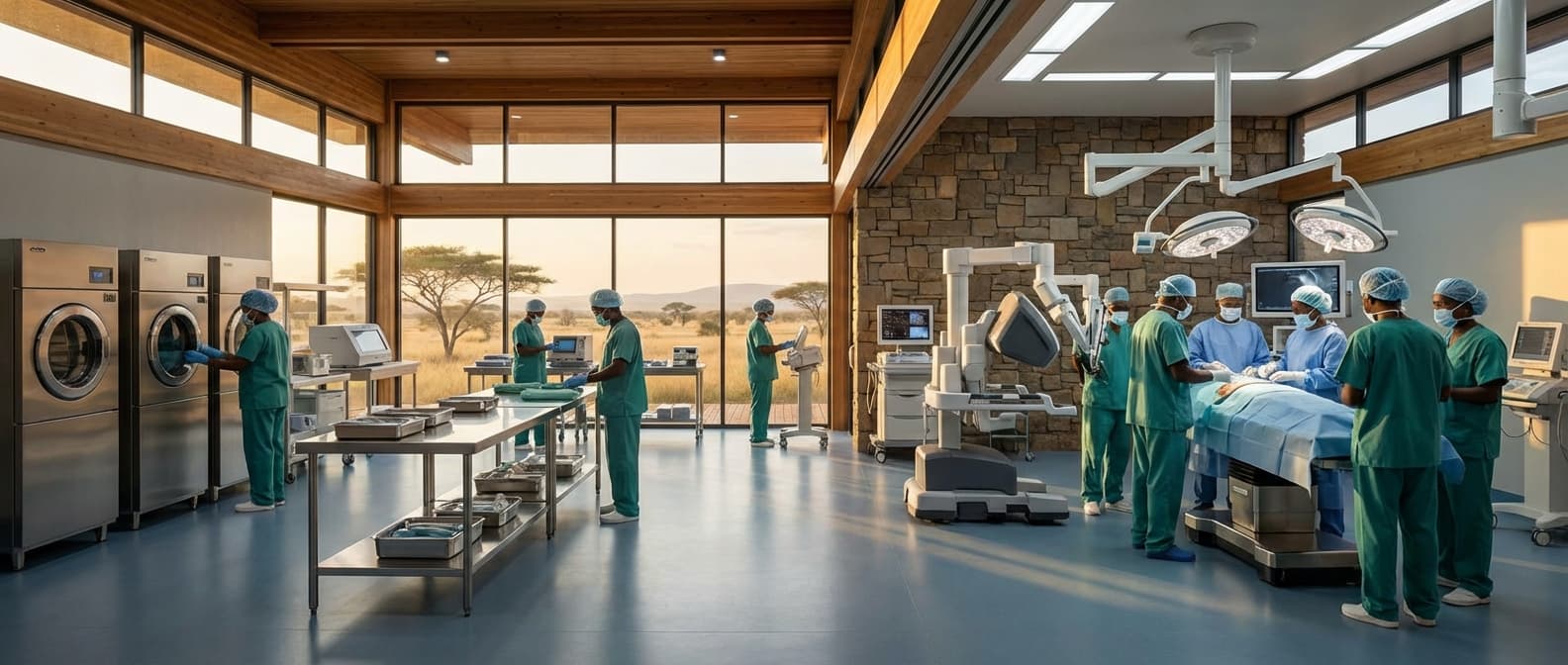
Endoscopy Reprocessing Validation in Rwanda
Engineering Excellence & Technical Support
AER validation, SOP development and compliance High-standard technical execution following OEM protocols and local regulatory frameworks.
Rigorous Validation Protocols Established
Rwanda has implemented stringent, ISO-compliant validation protocols for endoscopy reprocessing, ensuring each step meets international best practices for infection prevention and control.
Advanced Biological Indicator Testing Deployed
The country is utilizing advanced biological indicator testing to confirm the efficacy of automated washer-disinfectors and steam sterilization cycles, guaranteeing complete microbial inactivation.
Certified Re-processing Technicians Trained
A cadre of highly trained and certified endoscopy reprocessing technicians are now operational across Rwanda, equipped with the knowledge and skills to execute validated protocols consistently and accurately.
What Is Endoscopy Reprocessing Validation In Rwanda?
Endoscopy reprocessing validation in Rwanda refers to the systematic verification process ensuring that reusable endoscopic devices are cleaned, disinfected, and/or sterilized according to established national and international standards, thereby minimizing the risk of healthcare-associated infections (HAIs) transmitted via contaminated instruments. This service is crucial for maintaining patient safety and public health within Rwanda's healthcare system.
| Who Needs Endoscopy Reprocessing Validation | Typical Use Cases | ||||||
|---|---|---|---|---|---|---|---|
| Healthcare Facilities in Rwanda: Hospitals (public and private), specialized clinics, and any facility utilizing reusable endoscopic instruments for diagnostic or therapeutic procedures. | Endoscopic Procedures: Gastroscopy (esophagogastroduodenoscopy), colonoscopy, bronchoscopy, cystoscopy, hysteroscopy, laparoscopy, and other procedures involving flexible or rigid endoscopes. | Sterilization/Disinfection Units: Central sterile supply departments (CSSDs) and endoscopy suites responsible for the reprocessing of medical devices. | Regulatory Bodies: While not directly performing validation, regulatory agencies oversee compliance and may audit validation processes. | Manufacturers/Suppliers: May be involved in providing validated reprocessing equipment or consumables and supporting validation efforts. | Instrument Manufacturers: Endoscope manufacturers typically provide validated reprocessing instructions, which form the basis for facility-level validation. | Infection Prevention and Control (IPC) Departments: Key stakeholders responsible for overseeing and ensuring the safety and efficacy of reprocessing procedures. | Endoscopy Service Providers: Individual clinicians and technicians performing endoscopic procedures and directly benefiting from validated reprocessing. |
| Ensuring Patient Safety: The primary objective is to prevent the transmission of infections between patients through inadequately reprocessed endoscopes. | Compliance with National Guidelines: Adherence to standards set by the Ministry of Health and relevant Rwandan regulatory authorities. | Risk Management: Mitigating legal and financial risks associated with HAIs. | Quality Assurance: Maintaining a high standard of care and operational efficiency in endoscopy services. | Interoperability and Collaboration: Facilitating confidence in inter-facility transfers of patients requiring endoscopy. | Training and Competency Verification: Validating that staff possess the necessary skills and knowledge for correct reprocessing. | Equipment Performance Verification: Confirming that automated endoscope reprocessors (AERs) and other reprocessing equipment function as intended. | New Equipment or Protocol Implementation: Validating the effectiveness of newly acquired reprocessing equipment or revised reprocessing protocols. |
What Endoscopy Reprocessing Validation Entails:
- Validation Protocol Development: Establishing comprehensive protocols for each step of the reprocessing cycle (pre-cleaning, manual cleaning, automated cleaning, high-level disinfection (HLD), or sterilization).
- Process Monitoring: Implementing regular monitoring of critical reprocessing parameters, including water quality, detergent effectiveness, disinfectant concentration and contact time, and temperature (for sterilization).
- Microbiological Testing: Conducting periodic testing of reprocessed endoscopes to detect the presence of viable microorganisms, including specific pathogens known to be transmitted via flexible endoscopes (e.g., Pseudomonas aeruginosa, Mycobacterium tuberculosis, Clostridioides difficile).
- Performance Testing: Assessing the physical integrity and functional performance of the endoscope post-reprocessing to ensure it remains safe and effective for patient use.
- Documentation Review: Auditing reprocessing logs, competency assessments of staff, and equipment maintenance records to ensure compliance and traceability.
- Environmental Monitoring: In some advanced scenarios, assessing the reprocessing environment for potential contamination sources.
- Root Cause Analysis and Corrective Actions: Investigating any deviations or failures identified during validation and implementing corrective and preventive actions (CAPAs).
Who Needs Endoscopy Reprocessing Validation In Rwanda?
Endoscopy reprocessing validation is a critical process to ensure the safety and efficacy of reusable endoscopic instruments, particularly in preventing the transmission of healthcare-associated infections (HAIs). In Rwanda, the demand for this validation stems from the increasing adoption and use of endoscopic procedures across various medical specialties. Ensuring that reprocessed endoscopes are free from harmful microorganisms is paramount for patient safety and maintaining the integrity of the healthcare system.
| Department/Service | Role in Endoscopy Reprocessing Validation | Key Concerns | Impact of Validation |
|---|---|---|---|
| Gastroenterology | Performs gastroscopies, colonoscopies, ERCPs, etc. Endoscopes are frequently used and require immediate, thorough reprocessing. | Cross-contamination between patients, inadequate cleaning of complex channels, microbial biofilm formation. | Reduced risk of gastrointestinal infections, improved patient outcomes, enhanced procedure success rates. |
| Pulmonology | Utilizes bronchoscopes for diagnosis and treatment of lung conditions. Bronchoscopes have intricate designs. | Transmission of respiratory pathogens (e.g., TB, VAP), incomplete removal of biological debris. | Prevention of cross-infection of respiratory diseases, improved patient safety in critical care settings. |
| Urology | Employs cystoscopes and ureteroscopes for bladder and urinary tract examinations and interventions. | Risk of urinary tract infections (UTIs), insufficient disinfection of urological instruments. | Lower incidence of post-procedure UTIs, safer urological interventions. |
| Gynecology | Uses hysteroscopes for internal examinations of the uterus. | Potential for pelvic inflammatory disease (PID) transmission, incomplete sterilization. | Reduced risk of gynecological infections, improved patient comfort and trust. |
| Surgery (General and Specialized) | Uses laparoscopic and other surgical endoscopes for minimally invasive procedures. | Risk of surgical site infections (SSIs), contamination of surgical fields. | Decreased SSIs, enhanced surgical outcomes, adherence to best practices in surgical care. |
| Infection Prevention and Control (IPC) Department | Responsible for developing, implementing, and monitoring reprocessing protocols; conducting audits and training. | Ensuring compliance with national and international guidelines, identifying and mitigating risks, staff competency. | Establishment of a robust infection control program, reduced HAIs, improved overall patient safety. |
| Central Sterile Supply Department (CSSD) | The primary unit responsible for the entire reprocessing cycle, from cleaning to disinfection/sterilization and storage. | Adequacy of cleaning agents and equipment, proper sterilization parameters, efficient workflow, staff training. | Reliable supply of sterile and safe endoscopes, optimized operational efficiency, sustained patient safety. |
| Biomedical Engineering Department | Maintains and ensures the proper functioning of reprocessing equipment (e.g., automated endoscope reprocessors - AERs). | Calibration and maintenance of AERs, validation of equipment performance, troubleshooting of technical issues. | Ensured efficacy of reprocessing equipment, consistent and reliable reprocessing outcomes. |
| Quality Assurance (QA) Department | Oversees the quality management system, including validation processes and documentation. | Ensuring adherence to quality standards, documentation of validation results, continuous improvement. | Maintenance of high-quality reprocessing standards, regulatory compliance, enhanced trust and credibility. |
Target Customers and Departments Requiring Endoscopy Reprocessing Validation in Rwanda
- Hospitals (Public and Private): All hospitals performing endoscopic procedures, regardless of size or ownership, are primary targets.
- Tertiary and Referral Hospitals: These facilities typically handle a higher volume of complex procedures and often serve as centers for specialized care, making robust reprocessing protocols essential.
- University Teaching Hospitals: As centers for medical education and research, these institutions must adhere to the highest standards of patient care and infection control.
- District and Referral Hospitals: As healthcare access expands, these hospitals are increasingly equipped with endoscopy services and require validated reprocessing to serve their communities safely.
- Specialty Clinics: Clinics focusing on gastroenterology, pulmonology, urology, gynecology, and surgery, where endoscopy is a core diagnostic or therapeutic tool.
- Diagnostic and Imaging Centers: Facilities that offer endoscopy services as part of their diagnostic offerings.
- Government Health Agencies and Regulatory Bodies: To oversee and enforce infection control standards and patient safety regulations.
- Medical Device Manufacturers and Suppliers: For ensuring their products are supported by validated reprocessing procedures and for compliance with local regulations.
Endoscopy Reprocessing Validation Process In Rwanda
The endoscopy reprocessing validation process in Rwanda, while a critical component of infection prevention and control, is a structured workflow designed to ensure the safety and efficacy of reusable medical devices. This process typically begins with an initial inquiry or identification of a need, often driven by regulatory requirements, internal audits, or emerging best practices. It then moves through a series of defined stages, from planning and preparation to execution, documentation, and ultimately, a decision on the validation status.
| Stage | Description | Key Activities | Responsible Parties | Deliverables |
|---|---|---|---|---|
| Inquiry & Need Identification | Recognizing the requirement for validation of the endoscopy reprocessing process. | Reviewing regulatory guidelines (e.g., Ministry of Health directives, international standards), internal audit findings, incident reports, or new equipment introductions. | Infection Prevention and Control (IPC) Committee, Hospital Management, Biomedical Engineering Department. | Documented rationale for validation, initial scope definition. |
| Planning & Protocol Development | Defining the specific objectives, scope, and methodology for the validation study. | Developing a detailed validation protocol outlining the steps, parameters to be measured, acceptance criteria, sampling methods, and timelines. This often involves consulting relevant international guidelines (e.g., CDC, WHO, AAMI). | IPC Committee, Biomedical Engineering Department, Clinical Endoscopy Staff, Quality Assurance Department. | Approved Validation Protocol document. |
| Equipment & Material Procurement | Ensuring all necessary equipment, consumables, and reagents are available and functional. | Verifying the calibration and functionality of reprocessing equipment (e.g., automated endoscope reprocessors - AERs, drying cabinets). Procuring and confirming the quality of cleaning agents, disinfectants, and biological indicators. | Biomedical Engineering Department, Central Sterile Supply Department (CSSD), Procurement Department. | List of validated/calibrated equipment, certified consumables and reagents. |
| Validation Protocol Execution | Implementing the steps outlined in the validation protocol to test the reprocessing process. | Performing a series of reprocessing cycles under defined conditions. This includes manual cleaning steps, automated reprocessing cycles, high-level disinfection (HLD) or sterilization, and drying. Microbiological testing (e.g., using biological indicators or swab cultures) is often performed at critical stages. | CSSD Staff, Endoscopy Unit Staff, Biomedical Engineering Department (for equipment monitoring). | Raw data from reprocessing cycles, environmental monitoring data, microbiological test results. |
| Data Collection & Analysis | Gathering and meticulously analyzing all collected data. | Recording all parameters from reprocessing cycles (e.g., cycle times, temperatures, chemical concentrations, rinse water quality). Analyzing the results of microbiological testing against established acceptance criteria. Identifying any deviations or failures. | Biomedical Engineering Department, IPC Committee, Quality Assurance Department. | Compiled raw data, statistical analysis of results, identification of trends and anomalies. |
| Report Generation | Documenting the entire validation process and its findings. | Compiling a comprehensive validation report that includes the protocol, executed steps, raw data, analysis, results, conclusions, and any recommendations. This report should clearly state whether the reprocessing process meets the defined acceptance criteria. | Biomedical Engineering Department, IPC Committee, Quality Assurance Department. | Formal Validation Report. |
| Review & Decision Making | Formal review of the validation report by relevant stakeholders. | The IPC Committee, hospital management, and relevant department heads review the validation report to determine if the endoscopy reprocessing process is validated. This includes assessing compliance with safety standards and patient care requirements. | IPC Committee, Hospital Management, Clinical Department Heads. | Decision on validation status (validated, conditionally validated, or not validated). |
| Implementation of Corrective Actions (if needed) | Addressing any identified deficiencies or failures in the reprocessing process. | Developing and implementing a corrective action plan to rectify any issues identified during the validation. This might involve retraining staff, adjusting equipment settings, changing cleaning agents, or modifying the protocol. Re-validation may be required after corrective actions are implemented. | Biomedical Engineering Department, CSSD Management, IPC Committee. | Corrective Action Plan, updated Standard Operating Procedures (SOPs). |
| Ongoing Monitoring & Revalidation | Ensuring the validated process remains effective over time and periodic re-evaluation. | Implementing routine monitoring of reprocessing parameters and performance. Conducting periodic revalidation (e.g., annually or after significant changes to equipment, staff, or protocols) to ensure continued compliance and effectiveness. | IPC Committee, CSSD Management, Biomedical Engineering Department. | Routine monitoring records, periodic revalidation reports. |
Endoscopy Reprocessing Validation Workflow in Rwanda
- Inquiry & Need Identification
- Planning & Protocol Development
- Equipment & Material Procurement
- Validation Protocol Execution
- Data Collection & Analysis
- Report Generation
- Review & Decision Making
- Implementation of Corrective Actions (if needed)
- Ongoing Monitoring & Revalidation
Endoscopy Reprocessing Validation Cost In Rwanda
Endoscopy reprocessing validation is a critical step in ensuring patient safety by confirming that sterilization and disinfection processes effectively eliminate pathogens from reusable endoscopes. In Rwanda, the cost associated with this validation process is influenced by several key factors. These include the specific reprocessing method being validated (e.g., high-level disinfection vs. sterilization), the type and number of endoscopes to be validated, the laboratory conducting the validation, the complexity of the tests required (such as biological indicators or chemical indicator monitoring), and the required frequency of validation (initial validation, periodic revalidation, or after equipment malfunction). The pricing is typically presented in Rwandan Francs (RWF).
| Service/Component | Estimated Price Range (RWF) | Notes |
|---|---|---|
| Per-Endoscope Validation (HLD or Sterilization) | 70,000 - 150,000 | Covers biological/chemical indicator testing, consumables, and basic reporting. Price can vary based on endoscope complexity. |
| Initial Validation of a New Reprocessing Machine/Process | 300,000 - 800,000 | More comprehensive, including multiple tests across different conditions and potentially validation of the entire workflow. May involve on-site visits. |
| Routine Revalidation (Annual/Bi-annual) | 50,000 - 100,000 per endoscope | Typically involves fewer tests than initial validation, focusing on continued efficacy. |
| Validation After Equipment Repair/Malfunction | 80,000 - 180,000 per occurrence | Specific to the issue addressed, often requiring targeted testing to confirm resolution. |
| Cost of Biological Indicators (per test) | 15,000 - 30,000 | Price per spore strip or ampoule. Multiple are often required. |
| Cost of Chemical Indicators (per test) | 5,000 - 15,000 | Price per indicator strip/label. Usage varies by process. |
| Laboratory Report Generation Fee | 20,000 - 50,000 | May be included in overall service fees or itemized. |
Key Pricing Factors for Endoscopy Reprocessing Validation in Rwanda
- Reprocessing Method: High-level disinfection (HLD) validation may differ in cost from full sterilization validation due to the different efficacy levels and testing required.
- Number and Type of Endoscopes: A higher volume or a wider variety of endoscope models may incur greater costs due to increased testing and material usage.
- Laboratory Fees: The chosen accredited laboratory will have its own fee structure, often based on the scope of services and expertise.
- Test Complexity: The specific tests employed (e.g., spore testing, process challenge devices, chemical indicator performance) contribute to the overall cost.
- Validation Frequency: Initial validation, routine revalidation, and validation following equipment changes or breakdowns will have distinct pricing.
- Consumables and Reagents: The cost of biological indicators, chemical indicators, culture media, and other laboratory consumables directly impacts the price.
- Personnel Time: Labor costs associated with performing the validation tests, data analysis, and report generation are factored in.
- Accreditation and Quality Assurance: The laboratory's adherence to international standards and its own quality assurance processes can influence pricing.
Affordable Endoscopy Reprocessing Validation Options
Ensuring the efficacy and safety of flexible endoscope reprocessing is paramount, yet the validation process can be a significant financial burden for healthcare facilities. This document outlines affordable validation options, emphasizing the value of "value bundles" and detailing cost-saving strategies to navigate these essential requirements.
| Cost-Saving Strategy | Description | Potential Impact |
|---|---|---|
| Negotiate with Multiple Vendors | Obtain quotes from several validation service providers. Compare not only pricing but also the scope of services and the quality of their reporting and expertise. | Can lead to significant price reductions and better-tailored service packages. |
| Leverage Existing Partnerships | Inquire if your current medical equipment suppliers or group purchasing organizations (GPOs) have established partnerships with validation providers that offer discounted rates. | Access to pre-negotiated pricing and potentially expedited service. |
| Phased Validation Approach | Instead of validating all endoscope models simultaneously, consider a phased approach based on usage volume or risk. This can spread out upfront costs. | Manages cash flow and allows for learning and optimization of the validation process. |
| In-House Training and Competency Assessment | While external validation is crucial, investing in robust in-house training programs for staff can reduce the need for extensive external training components within bundles. | Empowers staff, improves reprocessing quality, and can lower the 'training' component cost of validation bundles. |
| Consolidate Validation Needs | If possible, work with a single provider who can offer a comprehensive suite of services, including biological, chemical, and potentially even equipment performance validation. This can lead to volume discounts. | Simplifies vendor management and often unlocks better pricing through economies of scale. |
| Review Regulatory Requirements Regularly | Stay informed about evolving regulations and guidelines. Ensure your validation approach is compliant but not exceeding requirements unnecessarily, which can add to costs. | Avoids overspending on validation activities that are not strictly mandated. |
| Consider Cloud-Based Documentation Platforms | Some validation providers offer integrated platforms for managing documentation and results. Evaluate if these platforms offer long-term cost savings through efficiency and reduced paper-based systems. | Improves efficiency, accessibility of data, and can reduce administrative overhead. |
| Explore Remote Monitoring Options | For ongoing validation, inquire about providers offering remote monitoring or analysis of data, which can be more cost-effective than frequent on-site visits. | Reduces travel costs for the provider, potentially lowering service fees. |
Understanding Value Bundles in Endoscopy Reprocessing Validation
- Definition: Value bundles in this context refer to a package of services and/or products offered by reprocessing validation providers that are designed to deliver comprehensive support at a more predictable and often reduced overall cost compared to procuring individual services piecemeal.
- Components of a Value Bundle: These can include:
- Initial Validation Studies: Performing the necessary biological and chemical challenge tests.
- Ongoing Monitoring Programs: Regular testing to ensure continued compliance.
- Documentation and Reporting: Providing comprehensive reports for regulatory compliance.
- Training and Education: On-site or remote training for reprocessing staff.
- Consultation Services: Expert advice on best practices and troubleshooting.
- Consumables: Discounted pricing on necessary testing reagents or supplies.
- Benefits of Value Bundles:
- Cost Predictability: Facilitates budgeting and avoids unexpected expenses.
- Streamlined Processes: Simplifies procurement and management of validation activities.
- Comprehensive Support: Ensures all aspects of validation are addressed.
- Potential for Discounts: Providers often offer preferential pricing for bundled services.
- Improved Compliance: Consistent and integrated validation efforts enhance adherence to standards.
Verified Providers In Rwanda
In Rwanda's evolving healthcare landscape, identifying reliable and qualified healthcare providers is paramount for individuals seeking quality medical services. Franance Health stands out as a distinguished entity, earning its reputation through a stringent credentialing process and a deep commitment to patient well-being. This document outlines what it means for a provider to be 'verified' in Rwanda and details why Franance Health's credentials make them the superior choice for your healthcare needs.
| Franance Health Credential | Significance | Why it Matters to You |
|---|---|---|
| Ministry of Health Approved Facility | Official recognition and licensing by Rwanda's governing health body. | Ensures compliance with national safety, hygiene, and operational standards, guaranteeing a safe and regulated environment for your treatment. |
| Certified Medical Professionals | All doctors, nurses, and specialists hold current and valid professional licenses and certifications. | Guarantees that you are being treated by highly trained, competent, and legally authorized healthcare practitioners with proven expertise in their respective fields. |
| Specialized Training and Continuous Professional Development | Evidence of advanced training and ongoing education for medical staff in various specialties. | Ensures access to the latest medical knowledge, techniques, and treatment protocols, leading to more accurate diagnoses and effective outcomes. |
| Advanced Diagnostic and Treatment Equipment | Investment in state-of-the-art medical technology and equipment. | Facilitates precise diagnosis and allows for the application of modern, efficient treatment methods, improving the quality and speed of your recovery. |
| Strong Ethical Framework and Patient-Centric Care | Adherence to a strict code of ethics, emphasizing patient confidentiality, respect, and informed decision-making. | Provides peace of mind knowing your privacy is protected, your rights are respected, and you will receive compassionate, personalized care tailored to your needs. |
| Established Track Record of Positive Patient Outcomes | A history of successful treatments and high patient satisfaction rates. | Offers confidence that Franance Health has a proven ability to deliver effective healthcare and positive results, making them a reliable partner in your health journey. |
What Makes a Healthcare Provider Verified in Rwanda?
- Regulatory Compliance: Verified providers adhere to all national health regulations and standards set forth by the Rwandan Ministry of Health and relevant professional bodies.
- Professional Licensing and Certification: All healthcare professionals associated with verified providers hold current and valid licenses and certifications from their respective medical councils or boards.
- Educational and Experiential Qualifications: Providers demonstrate that their medical staff possess the necessary academic backgrounds, specialized training, and practical experience relevant to their fields.
- Infrastructure and Equipment Standards: Verified facilities meet established standards for cleanliness, safety, and are equipped with appropriate medical technology to deliver effective care.
- Ethical Practice and Patient Rights: Commitment to ethical medical conduct, patient confidentiality, informed consent, and respect for patient rights are core tenets.
- Quality Assurance and Continuous Improvement: Verified providers engage in ongoing quality improvement initiatives, regularly reviewing their practices and patient outcomes.
- Reputation and Patient Feedback: While not always a formal requirement, a positive reputation and consistent positive patient feedback are strong indicators of a verified and trustworthy provider.
Scope Of Work For Endoscopy Reprocessing Validation
This Scope of Work outlines the requirements for validating the reprocessing of flexible endoscopes. The objective is to ensure that the established reprocessing procedures consistently achieve the required level of cleanliness and disinfection, thereby minimizing the risk of patient-to-patient transmission of infections. This validation will encompass a comprehensive review of the current reprocessing workflow, environmental controls, equipment performance, and personnel competency, culminating in a documented validation report.
| Deliverable | Description | Standard Specification / Reference |
|---|---|---|
| Validation Protocol | A detailed plan outlining the scope, methodology, acceptance criteria, and schedule for the validation study. | Shall include specific tests for cleaning efficacy, disinfection/sterilization efficacy, equipment performance, and environmental monitoring. References to relevant guidelines (e.g., AAMI ST58, CDC Guidelines for Disinfection and Sterilization in Healthcare Facilities). |
| Cleaning Efficacy Testing | Evaluation of the removal of visible and non-visible organic soil from critical endoscope components using appropriate testing methods. | Acceptance criteria: Zero visible soil. Chemical indicators (e.g., protein, hemoglobin, carbohydrate assays) below specified thresholds. Reference: Manufacturer's IFU, AAMI ST58. |
| Disinfection/Sterilization Efficacy Testing | Verification of the microbicidal efficacy of the HLD or sterilization process against a panel of microorganisms. | Acceptance criteria: Log reduction of at least 6 for specified microorganisms (e.g., Mycobacterium terrae for HLD, bacterial spores for sterilization). Reference: AAMI ST58, FDA guidance for HLD devices. |
| Automated Endoscope Reprocessor (AER) Performance Testing | Verification of the AER's ability to deliver the correct cycle parameters (temperature, flow rate, time, chemical concentration) for the chosen reprocessing cycle. | Acceptance criteria: All critical parameters within manufacturer specifications and validation protocol. Documented calibration records for all sensors and pumps. Reference: AER manufacturer's IFU, AAMI ST58. |
| High-Level Disinfection (HLD) Agent Testing | Verification of the concentration and efficacy of the HLD agent throughout its recommended use-life. | Acceptance criteria: HLD agent concentration within the manufacturer's specified range at the beginning and end of use-life. Verification of agent's efficacy using appropriate test strips or analytical methods. Reference: HLD agent manufacturer's IFU, regulatory guidance. |
| Rinsing Efficacy Testing | Assessment of the removal of residual cleaning and disinfection agents from the endoscope lumens. | Acceptance criteria: Residual levels of cleaning and disinfection agents below established safety limits. Reference: Manufacturer's IFU, relevant toxicology data. |
| Drying Process Validation | Confirmation that the endoscope is adequately dried after reprocessing to prevent microbial growth. | Acceptance criteria: All lumens visually dry and confirmed through indirect methods if necessary. Reference: Manufacturer's IFU, guidelines for infection control. |
| Environmental Monitoring | Assessment of the reprocessing environment (e.g., air, water, surfaces) to ensure it does not contribute to microbial contamination. | Acceptance criteria: Ambient air quality within acceptable limits. Potable water quality meeting relevant standards. Surface microbial counts below specified thresholds. Reference: CDC guidelines, facility-specific environmental monitoring program. |
| Personnel Competency Assessment | Evaluation of the knowledge and practical skills of reprocessing staff. | Acceptance criteria: Documented competency assessments for all reprocessing personnel, including theoretical knowledge and practical skills in manual cleaning, AER operation, and leak testing. Reference: SGNA guidelines, internal training programs. |
| Validation Report | A comprehensive document summarizing the validation protocol, executed tests, results, deviations, and conclusions. | Shall include all raw data, analysis, acceptance criteria, and recommendations for ongoing monitoring. Must be signed and approved by relevant stakeholders. Reference: FDA, AAMI ST58, facility quality management system. |
Key Objectives of Endoscopy Reprocessing Validation
- To confirm the efficacy of manual cleaning procedures.
- To verify the effectiveness of automated endoscope reprocessors (AERs) in achieving the specified disinfection/sterilization levels.
- To assess the adequacy of high-level disinfection (HLD) or sterilization agents and their concentration/exposure times.
- To ensure proper functioning and calibration of all reprocessing equipment.
- To evaluate the effectiveness of rinsing steps in removing residual cleaning/disinfection agents.
- To confirm the integrity of endoscope components during and after reprocessing.
- To validate the drying process to prevent microbial growth.
- To establish a baseline for ongoing quality monitoring and performance verification.
- To ensure compliance with relevant regulatory standards and guidelines (e.g., FDA, AAMI, CDC, ISG, SGNA).
- To document all validation activities and results in a comprehensive report.
Service Level Agreement For Endoscopy Reprocessing Validation
This Service Level Agreement (SLA) outlines the performance expectations for the Endoscopy Reprocessing Validation services provided by [Provider Name] to [Client Name]. It defines response times for critical issues and uptime guarantees for the validation platform and associated services.
| Service Component | Priority Level | Response Time Target | Resolution Time Target | Uptime Guarantee |
|---|---|---|---|---|
| Endoscopy Reprocessing Validation Platform (Core Functionality) | Critical (e.g., complete system outage, inability to validate any scopes) | 1 hour | 4 business hours | 99.5% |
| Endoscopy Reprocessing Validation Platform (Core Functionality) | High (e.g., specific validation step failing, performance degradation) | 2 business hours | 8 business hours | 99.5% |
| Reporting & Data Access | Critical (e.g., inability to access historical validation data) | 2 business hours | 8 business hours | 99.5% |
| Reporting & Data Access | High (e.g., slow report generation, minor data display issues) | 4 business hours | 24 business hours | 99.5% |
| User Support & Inquiries (Non-critical) | Standard (e.g., general questions, configuration assistance) | 8 business hours | 48 business hours | N/A (tracked via ticket resolution time) |
Key Performance Indicators (KPIs)
- Critical Issue Response Time: The maximum time allowed for [Provider Name] to acknowledge and begin working on a reported critical issue impacting reprocessing validation.
- Critical Issue Resolution Time: The maximum time allowed for [Provider Name] to resolve a critical issue, restoring full validation functionality.
- System Uptime Guarantee: The minimum percentage of time the Endoscopy Reprocessing Validation platform and its core functionalities are available and operational.
- Scheduled Maintenance Window: Defined periods during which planned maintenance may occur with prior notification.
Frequently Asked Questions

Ready when you are
Let's scope your Endoscopy Reprocessing Validation in Rwanda project in Rwanda.

Scaling healthcare logistics and technical systems across the entire continent.