
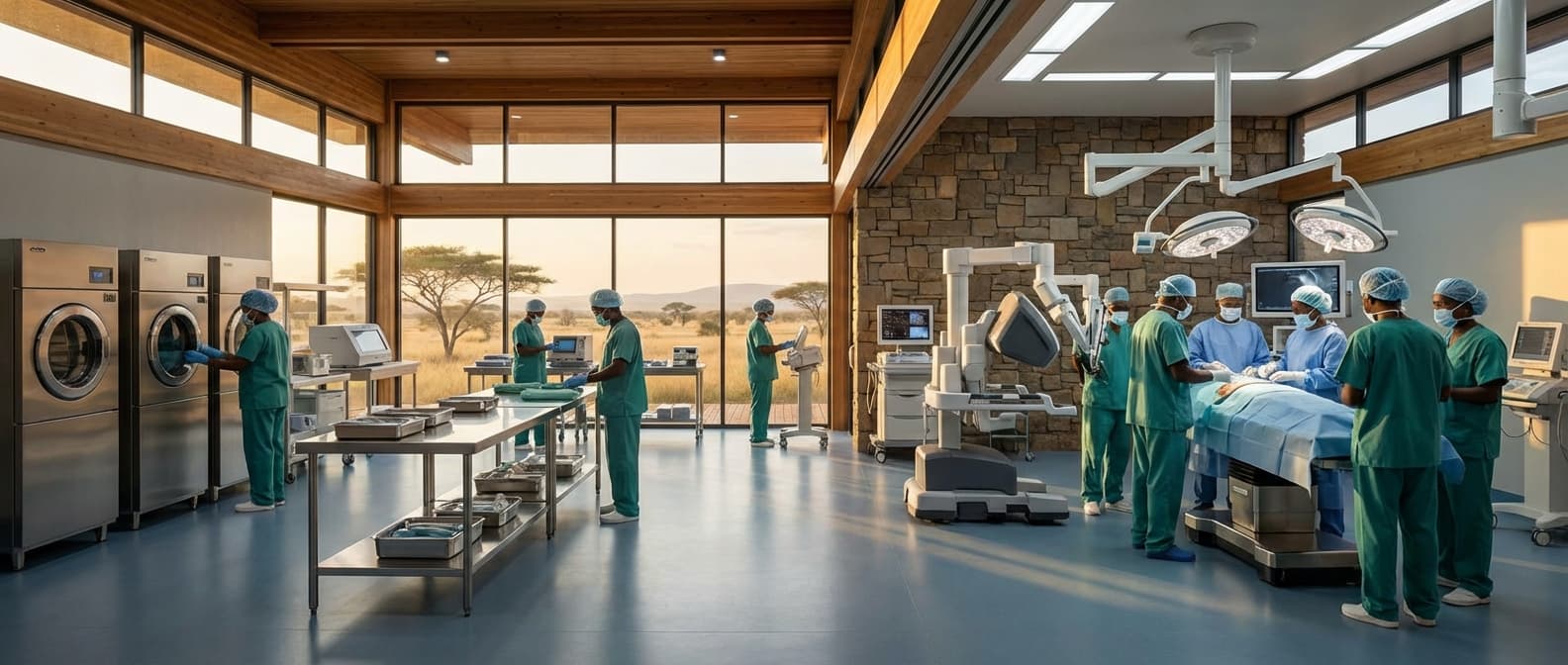
CSSD Design & Validation in Rwanda
Engineering Excellence & Technical Support
CSSD workflow design, validation and process development High-standard technical execution following OEM protocols and local regulatory frameworks.
Advanced Sterilization Unit Design
Spearheading the design and implementation of state-of-the-art Central Sterile Supply Department (CSSD) facilities in Rwanda, incorporating advanced steam, low-temperature, and plasma sterilization technologies to meet international standards for infection control and patient safety.
Rigorous Validation Protocols
Developing and executing comprehensive validation protocols for all sterilization cycles and equipment within Rwandan CSSD operations, ensuring efficacy, traceability, and compliance with national and global regulatory requirements for medical device reprocessing.
Process Optimization and Quality Assurance
Implementing robust quality assurance frameworks and continuous process improvement initiatives for CSSD workflows in Rwanda, focusing on maximizing efficiency, minimizing risk of recontamination, and optimizing turnaround times for sterile medical instruments.
What Is Cssd Design & Validation In Rwanda?
CSSD (Central Sterile Services Department) design and validation in Rwanda refers to the systematic process of planning, developing, and verifying the functional efficacy and safety of a CSSD facility and its associated workflows. This service encompasses the architectural and engineering design of the department, the selection and integration of equipment, the establishment of standard operating procedures (SOPs), and the rigorous validation of all processes to ensure the delivery of sterile medical devices compliant with international standards and local regulations. The primary objective is to prevent healthcare-associated infections (HAIs) by guaranteeing the complete removal of microorganisms from surgical instruments and other reusable medical equipment. This involves meticulous attention to facility layout, air handling, water quality, material flow, and personnel competency.
| Who Needs CSSD Design & Validation? | Typical Use Cases | ||||
|---|---|---|---|---|---|
| Hospitals (Public and Private): Particularly those with surgical departments, intensive care units, and emergency services. | Establishment of new CSSD facilities. | Renovation or expansion of existing CSSD departments. | Upgrading sterilization equipment and technologies. | Addressing recurrent issues with instrument reprocessing and infection control. | Compliance with new or updated national healthcare regulations. |
| Surgical Centers and Day Clinics. | Dental Clinics (requiring sterilization of dental instruments). | Specialized Medical Facilities (e.g., Endoscopy units, Ophthalmology clinics). | Research and Development laboratories that reprocess reusable equipment. | Manufacturers of medical devices requiring validation of their sterilization processes. | Government health ministries and regulatory bodies overseeing healthcare facility standards. |
Key Components of CSSD Design & Validation
- Facility Layout and Zoning: Segregation of clean, sterile, and contaminated areas.
- Environmental Controls: HVAC systems for positive/negative pressure differentials, temperature, and humidity control.
- Water Systems: Installation and validation of purified water systems (e.g., reverse osmosis).
- Equipment Selection and Integration: Sourcing and installation of autoclaves, washer-disinfectors, ultrasonic cleaners, sealing machines, and storage systems.
- Workflow Optimization: Designing efficient material and personnel flow to minimize cross-contamination.
- Sterilization Process Validation: Cycle development, testing, and documentation for various sterilization modalities (e.g., steam, low-temperature plasma).
- Cleaning and Disinfection Validation: Verification of efficacy for manual and automated cleaning processes.
- Packaging and Sterility Maintenance: Validation of packaging materials and procedures to maintain sterility until point of use.
- Documentation and Record Keeping: Establishing robust systems for traceability and quality assurance.
- Training and Competency Assessment: Ensuring personnel are adequately trained and qualified.
- Regulatory Compliance: Adherence to WHO guidelines, ISO standards (e.g., ISO 13485, ISO 17665), and Rwandan Ministry of Health directives.
Who Needs Cssd Design & Validation In Rwanda?
Central Sterile Services Department (CSSD) design and validation are critical for ensuring patient safety and operational efficiency within healthcare facilities. In Rwanda, a growing healthcare sector with an increasing demand for quality medical services necessitates robust CSSD infrastructure. This includes not only the initial design and construction of state-of-the-art CSSD units but also the ongoing validation of their processes and equipment to meet international standards and prevent the spread of infections.
| Customer Type | Relevant Departments within the Facility |
|---|---|
| Hospitals (Public & Private) | Operating Theatres (OT), Intensive Care Units (ICU), Emergency Departments (ED), Outpatient Clinics, Maternity Wards, Specialty Surgical Units (e.g., Orthopedics, Cardiology, Ophthalmology), Infection Control Department, Biomedical Engineering Department, Administration/Procurement |
| Surgical Centers & Clinics | Operating Rooms, Procedure Rooms, Patient Recovery Areas, Reception/Administration |
| Diagnostic Laboratories | Specimen Collection Areas, Analysis Laboratories (where instruments require sterilization) |
| Dental Clinics (with surgical procedures) | Treatment Rooms, Sterilization Area |
Target Customers and Departments for CSSD Design & Validation in Rwanda:
- Hospitals (Public and Private)
- Surgical Centers and Clinics
- Diagnostic Laboratories
- Dental Clinics with Surgical Procedures
- Veterinary Clinics with Surgical Procedures (if applicable to specific regulations)
Cssd Design & Validation Process In Rwanda
This document outlines the typical workflow for the Design and Validation Process of a Central Sterile Services Department (CSSD) in Rwanda, from initial inquiry to successful execution and handover. The process emphasizes adherence to national and international standards, ensuring the provision of safe and effective sterile medical devices.
| Stage | Description | Key Activities | Responsible Parties | Key Deliverables | Timeline (Indicative) |
|---|---|---|---|---|---|
| The process begins with a formal or informal inquiry from a healthcare facility requiring a new or upgraded CSSD. | Understanding the client's needs, scope of services, and budget. Initial discussions on regulatory requirements. | Healthcare Facility Management, Ministry of Health (MoH) representatives, potential CSSD Consultants/Designers. | Expression of Interest, preliminary project scope. | 1-2 Weeks |
| A thorough evaluation to determine the specific requirements, operational capacity, and viability of the CSSD project. | Analyzing current sterile processing practices, volume of surgical procedures, type of instruments, anticipated growth. Assessing site suitability, infrastructure availability (water, power, ventilation), and budget constraints. | CSSD Consultants, Biomedical Engineers, Facility Engineers, MoH representatives. | Needs Assessment Report, Feasibility Study Report, Preliminary Budget. | 4-8 Weeks |
| Developing the initial layout and workflow for the CSSD based on the needs assessment and international best practices. | Defining functional zones (decontamination, packing, sterilization, sterile storage, administration). Optimizing workflow to prevent cross-contamination. Considering staff flow and material movement. Adhering to ISO 13485 and relevant national guidelines. | CSSD Designers, Architects, Biomedical Engineers. | Conceptual Layout Drawings, Workflow Diagrams, Preliminary Equipment List. | 6-10 Weeks |
| Translating the conceptual design into detailed architectural, mechanical, electrical, and plumbing (MEP) drawings and specifications. | Producing detailed blueprints for construction. Specifying materials, finishes, ventilation systems (HEPA filters, negative/positive pressure zones), water treatment systems, electrical load calculations, lighting requirements. Developing technical specifications for all equipment. | Architects, MEP Engineers, CSSD Consultants, Equipment Specialists. | Detailed Architectural Drawings, MEP Drawings, Equipment Specifications, Bill of Quantities (BoQ). | 10-16 Weeks |
| Sourcing and acquiring all necessary equipment and materials for the CSSD. | Developing tender documents. Evaluating bids from suppliers. Selecting validated equipment that meets international standards (e.g., CE marking, FDA approval). Ensuring availability of spare parts and service agreements. | Procurement Department, Facility Management, Technical Evaluation Committee, CSSD Consultants. | Procurement Contracts, Equipment Purchase Orders, Delivery Schedules. | 8-12 Weeks |
| The physical construction of the CSSD facility and installation of all equipment. | Building the CSSD according to detailed designs. Installing all MEP systems, finishes, and fixtures. Installing and connecting all CSSD equipment (autoclaves, washer-disinfectors, sterile storage cabinets, etc.). Ensuring compliance with building codes and safety regulations. | Construction Company, MEP Contractors, Equipment Suppliers/Installers, Project Managers. | Completed CSSD Facility, Installed Equipment, As-Built Drawings. | 20-40 Weeks (highly variable based on project size) |
| A critical phase to ensure that the CSSD and its equipment function as intended and meet predefined standards. | Installation Qualification (IQ): Verifying that equipment is installed correctly according to manufacturer specifications. Operational Qualification (OQ): Testing the equipment's functionality across its intended operating range. Performance Qualification (PQ): Verifying that the CSSD processes consistently produce sterile products under normal operating conditions. This includes process challenge device (PCD) testing for sterilization cycles. Environmental Validation: Testing air quality, temperature, humidity, and pressure differentials. | Validation Engineers, Biomedical Engineers, CSSD Technicians, MoH Representatives. | IQ/OQ/PQ Reports, Validation Certificates, Commissioning Report, Standard Operating Procedures (SOPs) for validation. | 6-10 Weeks |
| Equipping staff with the knowledge and skills to operate the CSSD safely and effectively. | Developing comprehensive training programs for CSSD technicians and support staff on equipment operation, infection control practices, decontamination procedures, sterilization monitoring, and documentation. Developing and implementing SOPs. | CSSD Educators, Equipment Trainers, CSSD Technicians, Facility Management. | Training Materials, Trained Personnel, Approved SOPs, Competency Assessments. | 4-6 Weeks |
| The official transfer of the operational CSSD to the healthcare facility and establishing ongoing quality assurance mechanisms. | Final project review and acceptance. Transfer of all documentation (manuals, validation reports, as-built drawings). Establishing a routine monitoring and maintenance program. Periodic internal and external audits. Continuous improvement initiatives. | Project Management Team, Facility Management, CSSD Management, MoH Quality Assurance Team. | Project Completion Report, Operational CSSD, Maintenance Schedule, Audit Plan. | Ongoing |
Key Stages of the CSSD Design & Validation Process in Rwanda
- Inquiry & Initial Consultation
- Needs Assessment & Feasibility Study
- Conceptual Design & Space Planning
- Detailed Design & Engineering
- Procurement & Equipment Selection
- Construction & Installation
- Validation & Commissioning
- Training & Operationalization
- Handover & Post-Validation Monitoring
Cssd Design & Validation Cost In Rwanda
Designing and validating a Central Sterile Supply Department (CSSD) in Rwanda involves a multifaceted approach to ensuring sterile equipment for healthcare facilities. The costs associated with this process are influenced by several key factors, leading to a range of pricing in Rwandan Francs (RWF). Accurate budgeting requires understanding these drivers.
| Service Component | Estimated Price Range (RWF) | Notes |
|---|---|---|
| CSSD Design Consultation (Conceptual to Detailed) | 1,000,000 - 15,000,000+ | Varies based on scope (new build vs. renovation), size of facility, and consultant experience (local vs. international). |
| Equipment Specification & Selection Support | 500,000 - 5,000,000 | Involves detailed analysis of needs, market research, and vendor evaluation. |
| Validation Protocol Development | 500,000 - 3,000,000 | Creation of IQ, OQ, and PQ protocols tailored to the specific CSSD and its equipment. |
| Installation Qualification (IQ) & Operational Qualification (OQ) | 200,000 - 1,500,000 per equipment type | On-site verification of equipment installation and operational parameters. Can be higher for complex systems. |
| Performance Qualification (PQ) | 300,000 - 2,000,000 per equipment type/cycle | Testing the equipment's ability to consistently sterilize loads under real-world conditions. Number of cycles and complexity of loads influence cost. |
| Process Validation (Overall CSSD) | 2,000,000 - 10,000,000+ | Comprehensive validation of the entire CSSD workflow, including documentation and audits. This is a significant undertaking. |
| Staff Training (Basic) | 300,000 - 1,000,000 per training module | Covers operation of equipment, decontamination, sterilization, and sterile storage. May be bundled with equipment purchase. |
| Regulatory Compliance Review | 500,000 - 3,000,000 | Ensuring the design and processes meet Rwandan health standards and relevant international guidelines. |
Key Pricing Factors for CSSD Design & Validation in Rwanda
- Scope of Services: This is the primary driver. Does the project involve a complete greenfield CSSD design, retrofitting an existing space, or simply validating the processes and equipment of a pre-existing CSSD?
- Size and Complexity of the CSSD: A larger CSSD serving a major hospital will naturally incur higher design and validation costs than a smaller unit for a rural health center. The number of sterilization bays, workflows, and equipment required directly impacts complexity.
- Type and Quantity of Equipment: The selection of sterilization technologies (autoclaves, plasma sterilizers, etc.), washer-disinfectors, sterile storage solutions, and associated ancillary equipment significantly affects the overall budget. High-end, advanced equipment will increase costs.
- Regulatory Requirements and Standards: Adherence to Rwandan health regulations, as well as international standards (e.g., ISO 13485 for medical devices, relevant WHO guidelines), will dictate the level of detail in design and the rigor of validation. Compliance often necessitates specialized expertise and documentation.
- Consultancy Fees: The expertise of the design consultants (architects, biomedical engineers, CSSD specialists) will vary. Experienced international consultants may command higher fees than local firms, though local knowledge can be invaluable.
- Validation Process Complexity: Validation involves performance qualification (PQ), operational qualification (OQ), and installation qualification (IQ). The number of cycles to be validated, the types of instruments being processed, and the need for external validation services will influence this cost.
- Training Requirements: The cost of training CSSD staff on new equipment and validated procedures is a crucial component, often bundled with equipment or consultancy services.
- Location and Accessibility: For site assessments, design consultations, and validation activities, travel and accommodation expenses for consultants, especially in more remote areas of Rwanda, can add to the overall cost.
- Project Management: The overhead associated with managing the design and validation project itself, including communication, coordination, and oversight, will also be factored into pricing.
- Material and Construction Costs (for new builds/renovations): While not strictly design and validation, if the project includes construction or significant renovation of the CSSD space, these costs will be a major component that influences the design requirements and thus indirectly the design fees.
Affordable Cssd Design & Validation Options
Designing and validating a Central Sterile Services Department (CSSD) is a critical investment for healthcare facilities, ensuring patient safety through proper sterilization of medical instruments. While comprehensive, state-of-the-art solutions can be costly, various affordable design principles and validation options exist to optimize functionality and compliance without breaking the budget. This guide explores value bundles and cost-saving strategies that empower facilities to achieve robust CSSD operations efficiently.
| Value Bundle Category | Typical Inclusions | Cost-Saving Benefit |
|---|---|---|
| Basic Design Consultation | Workflow analysis, space planning, initial equipment recommendations, regulatory compliance overview. | Prevents costly design errors and rework by establishing a functional foundation. Minimizes future operational inefficiencies. |
| Standard Validation Package (per equipment type) | Installation Qualification (IQ), Operational Qualification (OQ), Performance Qualification (PQ) for standard autoclaves, washer-disinfectors. Includes necessary testing and documentation. | Ensures essential compliance and equipment functionality at a predictable cost. Avoids costly downtime due to non-compliance. |
| Equipment Optimization Bundle | Assessment of existing equipment for potential upgrades, energy efficiency improvements, or cost-effective replacement strategies. Includes recommendations for maintenance optimization. | Reduces energy consumption, extends equipment lifespan, and minimizes unexpected repair costs. |
| Staff Training & Competency Module | Basic training on decontamination, sterilization processes, equipment operation, and infection control principles. Includes development of internal competency assessment tools. | Reduces reliance on external trainers for routine competency checks, empowering internal staff and lowering ongoing training expenses. |
| Consumables Management Program | Analysis of current consumable usage, identification of cost-effective alternatives, and negotiation of bulk purchasing agreements. | Significant reduction in recurring operational expenses through strategic procurement and reduced waste. |
Key Cost-Saving Strategies & Value Bundles
- {"title":"Phased Implementation","description":"Instead of a complete overhaul, consider a phased approach. Prioritize critical areas like decontamination and sterilization first, then gradually upgrade other sections as budget allows. This distributes costs over time and minimizes disruption."}
- {"title":"Modular Design Elements","description":"Utilize modular workstations, shelving, and storage solutions. These are often more cost-effective than custom-built furniture, offer flexibility for future reconfigurations, and can be purchased as needed."}
- {"title":"Efficient Workflow Planning","description":"A well-designed workflow minimizes travel time, reduces the risk of cross-contamination, and optimizes staff productivity. Investing in expert workflow analysis during the design phase can prevent costly inefficiencies and rework later."}
- {"title":"Bulk Purchasing of Equipment & Consumables","description":"Negotiate discounts for larger equipment purchases (e.g., sterilizers, washers) and establish long-term contracts for consumables (e.g., sterilization wraps, chemical indicators) to secure better pricing."}
- {"title":"Strategic Equipment Selection","description":"Focus on essential, reliable, and energy-efficient equipment. Consider refurbished equipment from reputable suppliers for significant cost savings, ensuring it meets all performance and validation requirements."}
- {"title":"In-House Training & Competency Assessments","description":"While external validation expertise is crucial, investing in robust in-house training programs for staff can reduce reliance on external consultants for ongoing competency assessments, saving recurring costs."}
- {"title":"Tiered Validation Packages","description":"Reputable validation service providers often offer tiered packages. Basic packages may cover essential performance qualifications (PQ) and operational qualifications (OQ) for standard equipment, while premium packages include more extensive testing or specialized equipment."}
- {"title":"Shared Validation Services","description":"For smaller facilities or those with limited validation needs, exploring partnerships with neighboring hospitals or healthcare networks to share validation service providers can lead to significant cost reductions through bulk rates."}
- {"title":"Remote Monitoring & Diagnostics","description":"Invest in equipment with remote monitoring and diagnostic capabilities. This allows for proactive troubleshooting and reduces the need for costly on-site service calls for minor issues."}
- {"title":"Sustainable Design Choices","description":"While initial costs might seem higher, energy-efficient lighting, water-saving fixtures, and durable materials can lead to long-term operational cost savings through reduced utility bills and maintenance."}
Verified Providers In Rwanda
In the evolving landscape of healthcare in Rwanda, the presence of verified healthcare providers is paramount for ensuring quality, safety, and patient trust. Among these, Franance Health stands out as a leading example of excellence. This document outlines Franance Health's credentials and highlights why they represent the best choice for individuals seeking reliable and high-quality healthcare services in Rwanda.
| Credential/Aspect | Franance Health's Commitment | Why it Matters for Patients |
|---|---|---|
| Official Accreditation & Licensing | Fully compliant with Rwandan Ministry of Health regulations. | Guarantees adherence to national quality and safety standards, ensuring legitimate and safe medical practice. |
| Medical Professional Qualifications | Employs highly qualified, experienced, and continuously trained medical staff. | Ensures access to expert medical advice, accurate diagnoses, and effective treatment plans from competent professionals. |
| Technology & Infrastructure | Utilizes advanced medical technology and modern, well-equipped facilities. | Facilitates precise diagnostics, advanced treatment options, and a comfortable, efficient patient experience. |
| Patient Safety & Ethics | Prioritizes patient safety, confidentiality, and adheres to strict ethical guidelines. | Provides a secure, trustworthy healthcare environment where patient rights and well-being are paramount. |
| Service Breadth | Offers a comprehensive range of general and specialized medical services. | Provides a convenient 'one-stop shop' for diverse healthcare needs, from routine check-ups to specialized care. |
Franance Health Credentials and Why They Represent the Best Choice:
- Official Accreditation and Licensing: Franance Health operates under full compliance with the Rwandan Ministry of Health regulations. This includes possessing all necessary licenses and accreditations, demonstrating their adherence to national healthcare standards and quality assurance protocols. This official endorsement is a fundamental indicator of their legitimacy and commitment to providing safe medical practices.
- Highly Qualified and Experienced Medical Professionals: The cornerstone of Franance Health's service is its team of meticulously selected healthcare professionals. This includes doctors, nurses, specialists, and allied health workers who possess extensive experience, advanced training, and a dedication to patient-centered care. Continuous professional development is a key aspect, ensuring their staff remain at the forefront of medical advancements.
- Advanced Medical Technology and Infrastructure: Franance Health invests in state-of-the-art medical equipment and maintains modern facilities. This commitment to technological advancement allows for accurate diagnostics, effective treatments, and improved patient outcomes. Their infrastructure is designed to provide a comfortable and efficient healthcare experience.
- Commitment to Patient Safety and Ethical Practices: Patient well-being and safety are non-negotiable at Franance Health. They adhere to the highest ethical standards in medical practice, ensuring patient confidentiality, informed consent, and compassionate care. Rigorous protocols are in place to minimize risks and ensure the highest levels of safety during all procedures.
- Comprehensive Range of Services: Franance Health offers a broad spectrum of medical services, catering to diverse healthcare needs. From general consultations and specialized treatments to preventive care and diagnostics, they provide a holistic approach to health and wellness. This comprehensive offering makes them a convenient and reliable single point of contact for many healthcare requirements.
- Positive Patient Feedback and Testimonials: The consistent positive feedback and testimonials from satisfied patients are a testament to Franance Health's dedication to excellence. This real-world evidence underscores their ability to deliver exceptional care and build strong patient relationships.
- Community Engagement and Health Education: Beyond providing clinical services, Franance Health actively engages with the community through health education initiatives and outreach programs. This commitment to public health demonstrates their broader role in improving the overall well-being of the Rwandan population.
- Affiliation with Reputable International Standards (where applicable): While fully compliant with Rwandan standards, Franance Health may also align its practices with internationally recognized quality benchmarks, further solidifying their position as a top-tier healthcare provider.
Scope Of Work For Cssd Design & Validation
This document outlines the Scope of Work (SOW) for the design, validation, and documentation of a Central Sterile Supply Department (CSSD). It covers the technical deliverables required and the standard specifications that must be adhered to. The objective is to ensure the CSSD is designed to meet all relevant regulatory requirements, infection control standards, and operational efficiency needs, followed by a thorough validation process to confirm its functionality and compliance.
| Deliverable | Description | Standard/Specification Reference |
|---|---|---|
| CSSD Layout and Flow Diagrams | Detailed drawings showing the spatial arrangement, workflow paths for sterile processing, and separation of clean and dirty areas. | HTM 01-01 (UK), AAMI ST79 (USA), ISO 13085 |
| Equipment Specification Sheets | Detailed technical specifications for all CSSD equipment, including sterilizers, washer-disinfectors, ultrasonic cleaners, instrument washers, drying cabinets, packaging machines, and storage units. | Manufacturer's specifications, relevant EN/ISO standards for each equipment type (e.g., EN 285 for steam sterilizers) |
| Mechanical, Electrical, and Plumbing (MEP) Drawings | Detailed drawings for HVAC, electrical power, lighting, water supply, drainage, and medical gas systems tailored for CSSD requirements. | ASHRAE standards, local building codes, specific CSSD ventilation requirements (negative/positive pressure differentials) |
| Validation Protocol (IQ/OQ/PQ) | Comprehensive plan for Installation Qualification (IQ), Operational Qualification (OQ), and Performance Qualification (PQ) for all CSSD equipment and processes. | AAMI ST79, ISO 17665, relevant equipment manufacturer validation guidelines |
| Validation Reports | Detailed documentation of the IQ, OQ, and PQ testing results, analysis, and conclusions for each piece of equipment and the overall CSSD process. | As per Validation Protocol |
| Standard Operating Procedures (SOPs) | Documented procedures for all CSSD operations, including decontamination, cleaning, disinfection, sterilization, packaging, storage, and distribution of sterile medical devices. | AAMI ST79, CDC Guidelines, facility-specific infection control policies |
| Training Manuals | Comprehensive training materials for CSSD staff covering equipment operation, safety procedures, infection control practices, and quality assurance. | Based on SOPs and equipment manuals |
| Risk Assessment Report | Identification and evaluation of potential risks within the CSSD workflow and proposed mitigation strategies. | ISO 14971 (Medical device risk management), facility-specific risk management framework |
| Material and Finish Specifications | Requirements for durable, non-porous, and easily cleanable materials for floors, walls, ceilings, and work surfaces within the CSSD. | Healthcare facility design guidelines, infection control recommendations |
| Lighting and Ergonomics Report | Specifications for appropriate lighting levels and ergonomic considerations for workstations to ensure staff safety and efficiency. | OSHA guidelines, industry best practices |
Key Stages and Deliverables
- Phase 1: Conceptual Design and Planning
- Phase 2: Detailed Design and Engineering
- Phase 3: Procurement and Construction Oversight
- Phase 4: Commissioning and Validation
- Phase 5: Training and Documentation Handover
Service Level Agreement For Cssd Design & Validation
This Service Level Agreement (SLA) outlines the guaranteed response times and uptime for the CSSD (Central Sterile Services Department) Design & Validation services provided by [Your Company Name]. This SLA is an addendum to the Master Service Agreement between [Your Company Name] and [Client Company Name].
| Incident Severity | Response Time Guarantee (Business Hours) | Uptime Guarantee (CSSD Design & Validation Services) | Target Resolution Time (Business Hours - estimated) |
|---|---|---|---|
| Critical Incident | 30 Minutes | 99.9% | 4 Hours |
| Major Incident | 1 Hour | 99.5% | 8 Business Hours |
| Minor Incident | 4 Business Hours | 99.0% | 3 Business Days |
Key Definitions
- Business Hours: Monday to Friday, 9:00 AM to 5:00 PM [Client's Time Zone], excluding public holidays.
- Critical Incident: Any system failure, performance degradation, or service interruption that significantly impacts the ability of the CSSD to perform its core sterilization and reprocessing functions, leading to potential patient safety risks or significant operational disruption.
- Major Incident: Any incident that causes partial loss of service or significantly degrades performance, impacting a specific function or a subset of users, but does not pose an immediate patient safety risk.
- Minor Incident: Any incident that causes minimal impact on service or performance, affecting a single user or a non-critical function.
- Response Time: The maximum time allowed for [Your Company Name] to acknowledge and begin working on a reported incident.
- Resolution Time: The maximum time allowed for [Your Company Name] to restore service to the agreed-upon level. (Note: Resolution time may vary based on the complexity of the issue and may require client collaboration).
Frequently Asked Questions

Ready when you are
Let's scope your CSSD Design & Validation in Rwanda project in Rwanda.

Scaling healthcare logistics and technical systems across the entire continent.