
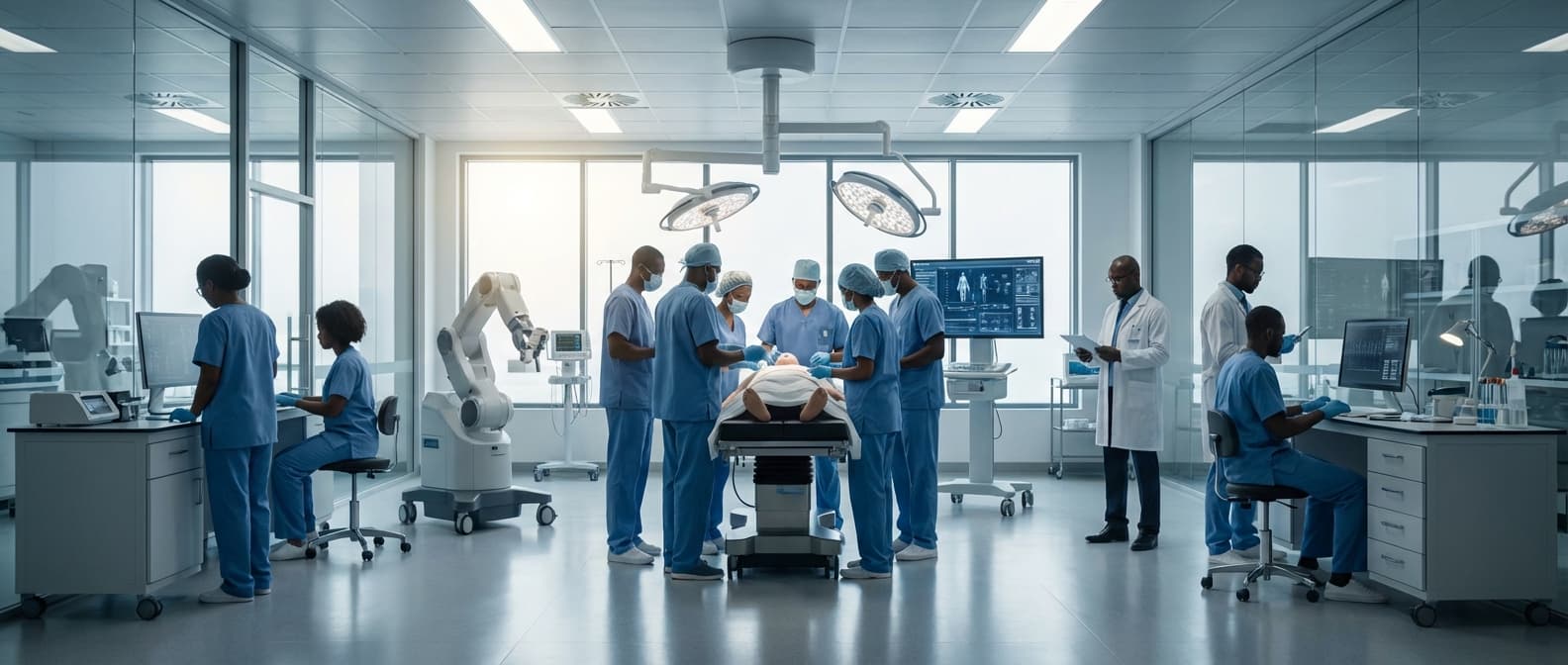
Managed Equipment Service (MES) in Rwanda
Engineering Excellence & Technical Support
Long‑term equipment provision with uptime SLAs and lifecycle management. High-standard technical execution following OEM protocols and local regulatory frameworks.
Enhanced Equipment Uptime
MES in Rwanda ensures critical medical equipment is consistently operational through proactive maintenance, rapid response to breakdowns, and access to genuine spare parts, directly improving patient care continuity.
Precision and Accuracy Assured
Our MES program in Rwanda guarantees that all medical devices undergo regular, expert calibration and validation, adhering to international standards for precise diagnostics and treatment delivery, minimizing errors.
Empowered Healthcare Professionals
Beyond maintenance, MES in Rwanda provides comprehensive training for local biomedical technicians and end-users on optimal equipment operation and troubleshooting, fostering local capacity and self-sufficiency.
What Is Managed Equipment Service (Mes) In Rwanda?
Managed Equipment Service (MES) in Rwanda refers to a comprehensive outsourcing model where a specialized third-party provider takes responsibility for the entire lifecycle management of critical medical equipment within healthcare facilities. This includes procurement, installation, maintenance, repair, calibration, training, and eventual replacement of diagnostic imaging systems, laboratory equipment, surgical instruments, and other essential medical technologies. The core objective of MES is to ensure optimal equipment uptime, enhance clinical efficacy, and reduce the total cost of ownership for healthcare providers by leveraging the expertise and economies of scale of the service provider.
| Who Needs MES? | Typical Use Cases | |||
|---|---|---|---|---|
| Public Hospitals and Referral Centers: Facilities with large, diverse equipment portfolios and limited in-house technical expertise. Often operate under budget constraints. | Enhancing diagnostic capabilities (e.g., CT scanners, MRI machines) in tertiary care hospitals without the capital outlay for direct purchase and maintenance. | Upgrading and maintaining laboratory equipment in central and district hospitals to support disease surveillance and diagnostics. | Ensuring the operational readiness of critical care equipment (e.g., ventilators, anesthesia machines) in intensive care units. | Implementing and managing specialized equipment for cardiology, oncology, or surgical departments. |
| Private Hospitals and Clinics: Healthcare providers seeking to optimize operational efficiency, reduce risk, and focus on patient care. | Outsourcing the management of imaging departments (X-ray, ultrasound, mammography) to ensure high availability and patient throughput. | Standardizing and managing a fleet of patient monitoring systems and infusion pumps across multiple wards. | Acquiring and maintaining advanced laboratory analyzers for comprehensive diagnostic testing. | Facilitating the adoption of new medical technologies without the burden of complex in-house management. |
| Non-Governmental Organizations (NGOs) and Mission Hospitals: Facilities often operating in remote areas with limited access to technical support and specialized personnel. | Providing reliable access to essential diagnostic equipment in underserved regions through a predictable service cost. | Ensuring the continuous operation of equipment in mobile clinics or outreach programs. | Training local healthcare workers to utilize and perform basic maintenance on provided equipment. | Securing long-term operational sustainability for essential medical technologies. |
| Government Health Ministries and Agencies: Entities responsible for the oversight and strategic planning of the national healthcare infrastructure. | Implementing nationwide programs for equipment modernization and standardization. | Centralizing the management of large-scale equipment procurement and maintenance contracts. | Gathering data on equipment utilization and performance to inform public health policy and resource allocation. | Ensuring equitable access to advanced medical technologies across the country. |
Key Components of Managed Equipment Service (MES) in Rwanda
- Equipment Procurement and Selection: Strategic sourcing and acquisition of appropriate medical technology based on facility needs and clinical protocols.
- Installation and Commissioning: Professional setup and validation of equipment to ensure compliance with manufacturer specifications and regulatory standards.
- Preventive Maintenance (PM): Scheduled servicing to mitigate potential failures, prolong equipment lifespan, and maintain performance levels.
- Corrective Maintenance and Repair: Rapid response to equipment malfunctions and breakdowns, including diagnostic troubleshooting and component replacement.
- Calibration and Performance Verification: Regular testing and adjustment to ensure accuracy and reliability of diagnostic and therapeutic functions.
- Training and Capacity Building: Comprehensive training programs for clinical and technical staff on equipment operation, maintenance, and safety.
- Technology Refresh and Replacement: Proactive planning and execution of equipment upgrades and replacements to maintain state-of-the-art capabilities.
- Inventory Management and Spare Parts Logistics: Efficient management of spare parts to minimize downtime and ensure availability.
- Asset Management and Reporting: Comprehensive tracking of equipment inventory, performance data, and service history for informed decision-making.
- Regulatory Compliance and Quality Assurance: Ensuring all equipment and services meet national and international healthcare standards.
Who Needs Managed Equipment Service (Mes) In Rwanda?
Managed Equipment Service (MES) offers a comprehensive solution for organizations looking to optimize their use and maintenance of critical equipment. In Rwanda, MES is particularly beneficial for entities that rely heavily on specialized machinery, medical devices, or industrial equipment, but may lack the in-house expertise, resources, or capital for outright purchase and ongoing maintenance. MES shifts the burden of ownership, maintenance, and upgrades to a service provider, allowing organizations to focus on their core operations and benefit from the latest technology without significant upfront investment.
| Customer Type | Key Departments/Units Benefiting from MES |
|---|---|
| Healthcare Facilities (Hospitals, Clinics, Diagnostic Centers) | Radiology, Cardiology, Oncology, Laboratory Services, Operating Theatres, Intensive Care Units (ICUs) |
| Manufacturing and Industrial Companies | Production Lines, Quality Control, Maintenance Departments, Research & Development |
| Government Agencies | Research Laboratories (e.g., for agriculture, environment), Public Works (e.g., road construction equipment), National Defense (e.g., specialized machinery) |
| Educational Institutions | Science Laboratories (Physics, Chemistry, Biology), Engineering Workshops, Medical Schools, Research Centers |
| Large-Scale Agriculture and Food Processing | Processing Plants, Cold Storage Facilities, Specialized Agricultural Machinery Operators |
| Telecommunications and IT Infrastructure | Data Centers, Network Operations Centers (NOCs), Equipment Deployment Teams |
Target Customers in Rwanda:
- Healthcare Facilities
- Manufacturing and Industrial Companies
- Government Agencies (e.g., research, public works)
- Educational Institutions (especially those with specialized labs)
- Large-Scale Agriculture and Food Processing Operations
- Telecommunications and IT Infrastructure Providers
Managed Equipment Service (Mes) Process In Rwanda
The Managed Equipment Service (MES) process in Rwanda is a comprehensive system designed to ensure the efficient and effective management of medical equipment within healthcare facilities. This workflow outlines the typical journey of an MES request, from initial inquiry to the successful execution of services. It involves multiple stakeholders, including the Ministry of Health (MoH), healthcare facilities, the MES provider, and potentially other government agencies.
| Phase | Key Activities | Responsible Parties | Key Deliverables/Outcomes | Typical Timeline (Illustrative) |
|---|---|---|---|---|
| Healthcare facility identifies a need for new or improved medical equipment. They may consult with MoH or directly with potential MES providers. | Healthcare Facility, Ministry of Health (MoH), Potential MES Providers | Identified equipment needs, preliminary budget considerations, understanding of MES benefits. | Ongoing (as needs arise) |
| Healthcare facility submits a formal request for MES. The MoH, or the facility itself based on established guidelines, issues a Request for Proposals (RFP). MES providers develop and submit detailed proposals outlining their technical and financial offers. | Healthcare Facility, MoH, MES Providers | Formal request documentation, RFP, Submitted MES proposals. | 1-3 Months |
| MoH and/or the healthcare facility evaluate proposals. Negotiations take place with the preferred bidder(s). A contract is awarded to the selected MES provider. | MoH, Healthcare Facility, Selected MES Provider | Evaluated proposals, Negotiated contract terms, Signed MES contract. | 2-4 Months |
| The MES provider procures, delivers, installs, and commissions the agreed-upon medical equipment according to specifications and international standards. | MES Provider, Healthcare Facility (support) | Installed and commissioned medical equipment, Technical documentation. | 3-12 Months (depending on scope) |
| The MES provider ensures the equipment is fully operational and provides comprehensive training to healthcare facility staff on its use, basic maintenance, and safety protocols. | MES Provider, Healthcare Facility Staff | Trained personnel, Operational equipment, Training materials. | 1-2 Months (concurrent with or after installation) |
| The MES provider performs scheduled preventative maintenance and calibration of all managed equipment to ensure optimal performance and longevity. | MES Provider | Scheduled maintenance reports, Calibration certificates, Equipment uptime. | Ongoing (continuous) |
| In case of equipment malfunction or breakdown, the MES provider responds promptly to diagnose and repair the equipment, minimizing downtime. | MES Provider, Healthcare Facility (reporting) | Repair reports, Downtime minimized, Functional equipment. | As needed (response times specified in contract) |
| As per the contract, the MES provider manages the planned upgrade or replacement of equipment that has reached its end-of-life or is no longer technologically viable. | MES Provider, MoH, Healthcare Facility | Updated equipment inventory, New or upgraded equipment installed. | Scheduled intervals (as per contract) or when obsolescence occurs |
| The MES provider regularly monitors equipment performance, maintenance activities, and user feedback, providing detailed reports to the MoH and healthcare facility. | MES Provider, MoH, Healthcare Facility | Performance reports, Equipment utilization data, Service level agreement (SLA) compliance. | Ongoing (monthly/quarterly/annually) |
| At the end of the contract term, parties evaluate performance. The contract may be renewed based on mutual agreement, or it may be terminated with a clear handover process. | MoH, Healthcare Facility, MES Provider | Contract renewal agreement or termination notice, Handover documentation. | End of contract term |
Managed Equipment Service (MES) Process Workflow in Rwanda
- Inquiry and Needs Assessment
- Formal Request and Proposal Development
- Contract Negotiation and Award
- Equipment Installation and Commissioning
- Operationalization and Training
- Routine Maintenance and Calibration
- Corrective Maintenance and Repairs
- Equipment Upgrade and Replacement
- Performance Monitoring and Reporting
- Contract Renewal or Termination
Managed Equipment Service (Mes) Cost In Rwanda
Managed Equipment Service (MES) in Rwanda offers a cost-effective and efficient way for healthcare facilities to acquire and maintain essential medical equipment. Instead of outright purchase, MES involves a service provider taking responsibility for the procurement, installation, maintenance, repair, and sometimes even eventual upgrade or replacement of medical equipment. This model shifts the capital expenditure burden and operational risks associated with equipment ownership to the service provider, allowing healthcare providers to focus on patient care. The cost of MES in Rwanda is influenced by a variety of factors, leading to a range of pricing structures. Understanding these factors is crucial for healthcare institutions when evaluating and negotiating MES contracts.
| Equipment Category | Typical MES Pricing Range (RWF per year) | Notes |
|---|---|---|
| Basic Diagnostic Equipment (e.g., ECG, basic ultrasound, digital X-ray) | 5,000,000 - 15,000,000 RWF | Covers routine maintenance, repairs, and essential spare parts. Price depends on the number and specific models. |
| Mid-Range Imaging & Diagnostic (e.g., advanced ultrasound, CT scanner - entry-level) | 15,000,000 - 40,000,000 RWF | Includes more complex maintenance, potentially higher uptime guarantees, and a wider range of spare parts. |
| High-End Imaging & Surgical (e.g., MRI, advanced CT, surgical robots, linear accelerators) | 40,000,000 - 150,000,000+ RWF | Significant investment, very high complexity, demanding SLAs, and comprehensive service packages. Can be highly variable based on specific technology. |
| Laboratory Equipment (e.g., automated analyzers, microscopes) | 3,000,000 - 10,000,000 RWF | Price depends on the automation level, throughput, and type of tests performed. May include calibration and quality control support. |
| General Ward & Critical Care Equipment (e.g., ventilators, patient monitors, infusion pumps) | 2,000,000 - 8,000,000 RWF | Focus on reliability and rapid response for critical care units. Price is sensitive to the quantity and sophistication of devices. |
Key Pricing Factors for MES in Rwanda
- Type and Complexity of Equipment: High-value, technologically advanced, and specialized equipment (e.g., MRI machines, CT scanners, advanced surgical robots) will naturally incur higher MES costs compared to basic diagnostic tools or general ward equipment. The number of individual pieces of equipment also directly impacts the overall service fee.
- Scope of Services Included: MES contracts can vary significantly in their comprehensiveness. This includes the level of preventive maintenance, the speed and availability of reactive maintenance and repairs, the inclusion of consumables, training for staff, software upgrades, and the provision of replacement parts. A more extensive scope of services will result in a higher price.
- Service Level Agreements (SLAs): The guaranteed uptime, response times for repairs, and availability of spare parts are critical components of an SLA. Stricter SLAs, demanding near-perfect equipment functionality, often come with a premium.
- Duration of the Contract: Longer-term MES contracts can sometimes offer more favorable pricing per unit or per year, as the provider can amortize their investment and operational costs over a longer period. Shorter contracts may have higher initial setup fees or annual costs.
- Provider's Expertise and Reputation: Established MES providers with a proven track record, a robust technical team, and a strong supply chain for spare parts may command higher prices due to their reliability and reduced risk to the healthcare facility.
- Geographic Location and Accessibility: While Rwanda is a relatively small country, remote or difficult-to-access healthcare facilities might incur slightly higher logistical costs for service engineers and spare parts delivery, which could be factored into the MES pricing.
- Training and Capacity Building: If the MES contract includes comprehensive training for the healthcare facility's staff on equipment operation and basic troubleshooting, this will add to the overall cost.
- Consumables and Spare Parts Management: Some MES agreements include the cost of standard consumables and spare parts, while others may operate on a pay-as-you-go basis for these items. The decision on what is included significantly impacts the pricing.
- Inflation and Currency Fluctuations: While pricing is typically in Rwandan Francs (RWF), long-term contracts may include clauses for adjustment based on inflation or significant currency fluctuations, especially if imported components are involved.
Affordable Managed Equipment Service (Mes) Options
Managed Equipment Service (MES) can be a significant investment for businesses, but several affordable options exist. The key to finding cost-effective solutions lies in understanding value bundles and implementing smart cost-saving strategies. MES encompasses the management, maintenance, and often replacement of essential equipment, ensuring operational efficiency and minimizing downtime. By leveraging the right MES provider and adopting strategic approaches, organizations can achieve substantial savings without compromising on service quality.
| Value Bundle Option | Description | Cost-Saving Benefit |
|---|---|---|
| Basic Monitoring & Preventative Maintenance | Includes scheduled maintenance, remote monitoring for basic alerts, and access to a help desk for non-critical issues. | Reduced downtime, lower emergency repair costs, extended equipment lifespan. |
| Standard Performance & Repair | Builds on basic, adding guaranteed response times for critical issues, on-site technician availability, and preventative maintenance based on usage data. | Improved operational uptime, faster resolution of critical problems, optimized maintenance scheduling. |
| Comprehensive Lifecycle & Upgrade | Encompasses all standard features, plus proactive equipment refresh planning, remote software updates, and bundled consumables. | Minimizes capital expenditure on new equipment, reduces obsolescence risk, streamlines supply chain for consumables. |
| Customized & Scalable Solutions | Designed around specific industry needs or unique equipment portfolios, allowing for flexible service levels and pricing. | Pay only for what you need, adaptability to changing business requirements, potential for bulk discounts on specific services. |
Key Components of Affordable MES
- Proactive Maintenance & Preventative Care: Minimizes unexpected breakdowns and costly emergency repairs.
- Remote Monitoring & Diagnostics: Enables early detection of issues, often resolving them before they impact operations.
- Optimized Equipment Lifecycle Management: Strategic replacement planning to avoid obsolescence and maximize asset value.
- Tiered Service Level Agreements (SLAs): Tailored support based on critical equipment and business needs.
- Predictive Analytics: Uses data to forecast potential failures and schedule maintenance proactively.
Verified Providers In Rwanda
Ensuring access to quality healthcare is paramount. In Rwanda, a growing number of healthcare providers are meeting rigorous standards, but understanding which ones are truly verified and excel in their services can be a challenge. This guide highlights the importance of verified providers and focuses on Franance Health, examining their credentials and explaining why they stand out as an excellent choice for your healthcare needs.
| Credential/Attribute | Franance Health's Standing | Significance for Patients |
|---|---|---|
| Medical Licensing & Accreditation | Fully licensed and accredited by the Rwanda Ministry of Health and relevant professional bodies. | Guarantees adherence to national healthcare standards and regulatory compliance, ensuring legally recognized and quality medical practice. |
| Staff Qualifications & Expertise | Employs highly qualified and experienced medical professionals, including specialists, with continuous professional development. | Ensures access to competent and up-to-date medical knowledge, leading to accurate diagnoses and effective treatment plans. |
| Patient Care Standards | Committed to patient-centered care, emphasizing empathy, respect, and effective communication. | Provides a supportive and comfortable healthcare experience, prioritizing patient well-being and satisfaction. |
| Facility & Equipment Standards | Maintains modern, well-equipped facilities that meet international hygiene and safety standards. | Offers advanced diagnostic and treatment capabilities in a safe and clean environment, contributing to better health outcomes. |
| Ethical Practice & Transparency | Operates with a strong ethical framework, ensuring patient confidentiality and transparent billing practices. | Builds trust and provides peace of mind, allowing patients to focus on their recovery without concerns about hidden costs or data breaches. |
Why Choose Verified Healthcare Providers in Rwanda?
- Trust and Reliability: Verification processes involve thorough checks of qualifications, licenses, and adherence to ethical practices, building confidence in the services offered.
- Quality of Care: Verified providers typically adhere to higher standards of medical practice, patient safety, and facility management.
- Patient Safety: Accreditation and verification often include assessments of infection control, equipment maintenance, and staff training, minimizing risks.
- Transparency: Verified providers are usually more transparent about their services, pricing, and patient rights.
- Insurance and Accreditation: Many insurance providers and international organizations prefer or require working with verified healthcare facilities.
Scope Of Work For Managed Equipment Service (Mes)
This document outlines the Scope of Work (SOW) for a Managed Equipment Service (MES) contract, detailing the technical deliverables and standard specifications required. The MES will encompass the provision, installation, maintenance, and management of specified medical equipment within the client's healthcare facilities. The objective is to ensure the optimal performance, availability, and cost-effectiveness of the medical equipment fleet.
| Technical Deliverable | Description | Standard Specification / Requirement | Key Performance Indicator (KPI) |
|---|---|---|---|
| Equipment Installation & Commissioning | Installation and setup of new medical equipment as per manufacturer guidelines and site-specific requirements. | Installation within X business days of delivery. Full functional testing and site acceptance. Adherence to all relevant safety and electrical codes. | Installation Completion Rate: >98% Site Acceptance Rate: 100% |
| Preventive Maintenance (PM) | Scheduled inspections, cleaning, lubrication, and functional checks of all managed equipment. | PM adherence to manufacturer's recommendations and regulatory standards. All PMs completed within +/- 10% of scheduled date. Use of approved parts and consumables. | PM Completion Rate: >95% PM Compliance Rate: >98% |
| Corrective Maintenance & Repair | Response to equipment malfunctions and breakdown, including diagnosis, repair, and return to service. | Response Time (On-site): < X hours for critical equipment, < Y hours for standard equipment. Repair Time (First Fix Rate): > Z% for common faults. Use of OEM or equivalent parts. | Mean Time To Repair (MTTR): < X hours First Time Fix Rate (FTFR): > Z% |
| Calibration & Performance Verification | Ensuring equipment accuracy and performance meets manufacturer specifications and regulatory requirements. | Calibration performed by certified technicians using traceable standards. Verification reports generated and maintained. | Calibration Compliance Rate: 100% Calibration Accuracy: Within manufacturer tolerances |
| Equipment Asset Management | Comprehensive tracking and management of all equipment lifecycle, including acquisition, location, status, and maintenance history. | Centralized, digital asset registry. Real-time tracking of equipment location and status. Regular asset audits. | Asset Register Accuracy: >99% Inventory Update Frequency: Daily |
| Clinical Engineering Support | Provision of technical advice, risk assessment, and support for clinical staff regarding equipment use and safety. | Availability of clinical engineers for consultation during business hours. Participation in clinical equipment committees. | Response to Clinical Inquiries: < X business hours Participation in Committee Meetings: > 90% |
| User Training & Competency | Training for clinical staff on the safe and effective operation of medical equipment. | Initial and refresher training programs. Competency assessments conducted. Training records maintained. | Training Completion Rate: 100% of new users Competency Pass Rate: >95% |
| Technology Refresh & Lifecycle Management | Proactive planning and execution of equipment replacement to ensure modern, efficient technology. | Annual technology roadmap development. Identification of end-of-life equipment and replacement recommendations. | Adherence to Technology Roadmap: >90% Identification of EOL Equipment: 100% of fleet |
| Service Reporting | Regular reports on equipment performance, maintenance activities, costs, and compliance. | Monthly, quarterly, and annual reports. Data presented in a clear, concise format, including trend analysis. | Report Submission Deadline Adherence: 100% Report Data Accuracy: >99% |
| Compliance & Regulatory Adherence | Ensuring all managed equipment meets relevant national and international medical device regulations and standards. | Regular audits of compliance. Documentation of all regulatory requirements and adherence. | Regulatory Compliance Audit Success Rate: 100% Documentation Availability: 100% |
Key Service Areas
- Equipment Procurement and Installation
- Preventive Maintenance
- Corrective Maintenance and Repair
- Calibration and Performance Verification
- Asset Management and Tracking
- Clinical Engineering Support
- Training and Competency Assessment
- Technology Refresh and Lifecycle Management
- Service Reporting and Performance Monitoring
- Compliance and Regulatory Adherence
Service Level Agreement For Managed Equipment Service (Mes)
This Service Level Agreement (SLA) outlines the performance standards and guarantees for the Managed Equipment Service (MES) provided by [Your Company Name] to [Client Name]. It details response times for incidents and defines the uptime guarantees for the managed equipment.
| Severity Level | Description | Response Time Target | Uptime Guarantee | Notes |
|---|---|---|---|---|
| Critical (Severity 1) | Complete system failure or significant degradation impacting a large number of users or core business functions. | 1 hour | 99.9% | Requires immediate escalation. Remote resolution attempted first; on-site dispatch if necessary. |
| High (Severity 2) | Significant impact on a single user or a small group of users, or a feature is unavailable causing moderate disruption. | 2 hours | 99.9% | Remote diagnosis and resolution. On-site dispatch may be required. |
| Medium (Severity 3) | Minor impact on functionality or performance, affecting a single user or a limited scope, with a viable workaround available. | 4 business hours | 99.5% | Remote support preferred. Resolution within standard business hours. |
| Low (Severity 4) | General inquiries, feature requests, or minor issues with minimal or no impact on operation. | 8 business hours | 99.5% | Handled within standard business hours. |
Key Definitions
- Managed Equipment Service (MES): Refers to the comprehensive management, maintenance, and support of designated equipment as agreed upon in the Master Service Agreement.
- Incident: Any event that disrupts or is likely to disrupt the normal operation of the managed equipment, impacting its functionality or availability.
- Severity Levels: A classification of incidents based on their impact and urgency.
- Response Time: The maximum allowable time from when an incident is reported and accepted by [Your Company Name]'s support team until the initial action is taken (e.g., diagnosis, workaround provided, technician dispatched).
- Resolution Time: The maximum allowable time from incident reporting until the issue is resolved and the equipment is restored to normal operation.
- Uptime Guarantee: The minimum percentage of time the managed equipment is expected to be operational and accessible.
- Scheduled Maintenance: Planned downtime for necessary updates, upgrades, or preventative maintenance, which will be communicated in advance.
- Unscheduled Downtime: Any downtime not classified as Scheduled Maintenance.
Frequently Asked Questions

Ready when you are
Let's scope your Managed Equipment Service (MES) in Rwanda project in Rwanda.

Scaling healthcare logistics and technical systems across the entire continent.