
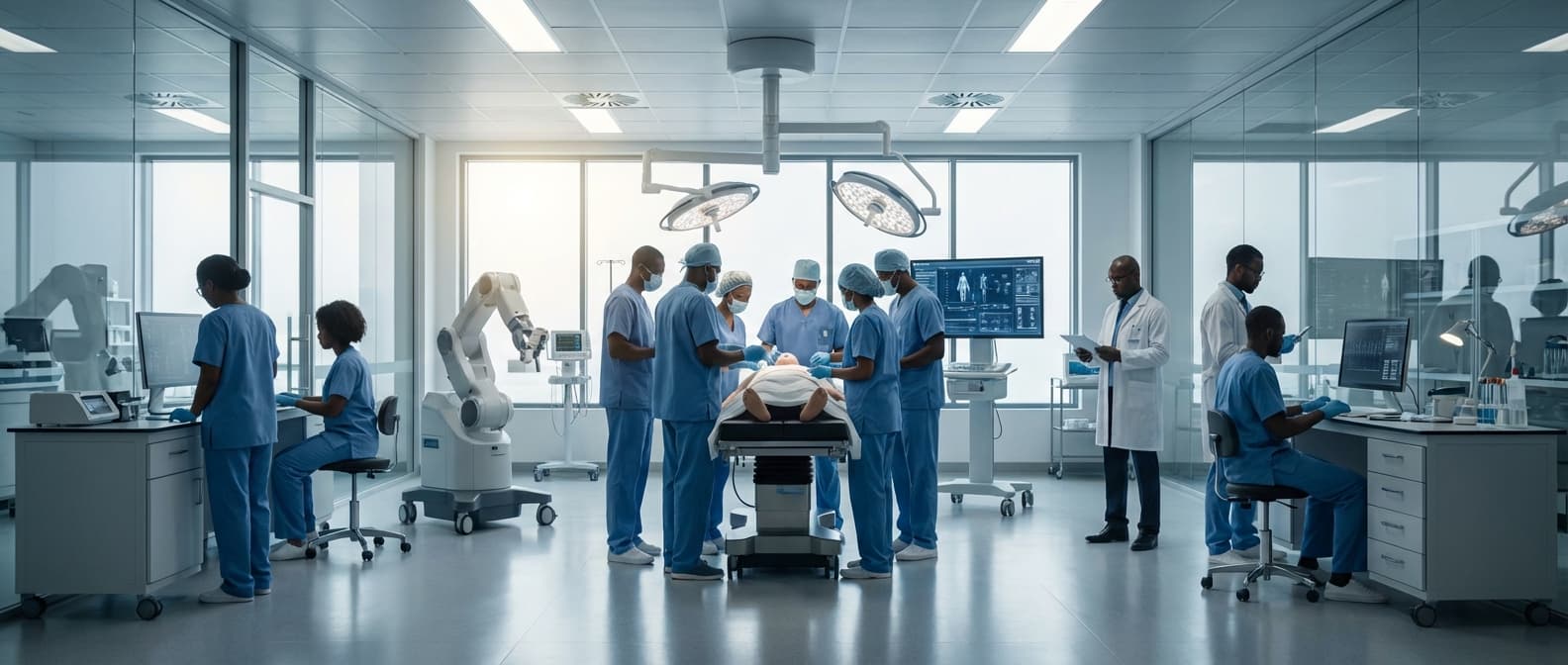
Biomedical Staffing Augmentation in Rwanda
Engineering Excellence & Technical Support
Onsite biomedical engineers and PACS administrators High-standard technical execution following OEM protocols and local regulatory frameworks.
Bridging the Skills Gap with Specialized Medical Professionals
Our augmentation services rapidly deploy highly skilled biomedical technicians and engineers, addressing critical shortages in specialized areas like medical imaging maintenance, diagnostic equipment calibration, and laboratory instrumentation support across Rwanda. We empower healthcare facilities with the expertise needed for accurate diagnoses and effective patient care.
Accelerating Equipment Uptime and Reliability
We provide on-demand, certified biomedical staff to ensure minimal downtime for essential medical equipment. Our augmented teams offer proactive maintenance, rapid troubleshooting, and efficient repairs, significantly improving the operational readiness and reliability of vital healthcare technologies in Rwandan hospitals and clinics, thereby maximizing patient access to care.
Facilitating Knowledge Transfer and Local Capacity Building
Beyond immediate staffing needs, our augmented biomedical professionals are committed to on-the-job training and mentorship for local Rwandan technicians. This strategic approach fosters sustainable in-country expertise, enhances the long-term capacity of healthcare institutions, and ensures continued high-quality biomedical services for the Rwandan population.
What Is Biomedical Staffing Augmentation In Rwanda?
Biomedical Staffing Augmentation in Rwanda refers to the strategic provision of specialized, skilled, and often temporary biomedical personnel to healthcare facilities and research institutions to supplement existing staff. This service aims to address critical gaps in human resources within the biomedical sector, enhancing the capacity for diagnosis, treatment, research, and healthcare technology management. It involves the external deployment of qualified professionals, ranging from biomedical engineers and technicians to laboratory scientists and clinical research associates, on a project-specific, contract, or on-demand basis. The objective is to ensure the optimal functioning of biomedical equipment, support complex clinical procedures, and advance scientific endeavors without the long-term commitment of permanent hiring.
| Who Needs Biomedical Staffing Augmentation? | Typical Use Cases | |||
|---|---|---|---|---|
| Public and Private Hospitals: Requiring support for specialized equipment maintenance, new technology implementation, or to manage high patient throughput. | Routine and emergency equipment calibration and repair. | Installation and commissioning of new imaging, diagnostic, or surgical equipment. | On-site support for complex medical device troubleshooting. | Temporary staffing for laboratory analysis during peak periods or specific assays. |
| Diagnostic Laboratories: Needing to scale up testing capacity, introduce new diagnostic methodologies, or manage specialized analytical instruments. | Deployment of medical laboratory scientists for specific molecular or serological testing. | Operation and maintenance of advanced automated laboratory analyzers. | Quality control and assurance support for laboratory diagnostics. | |
| Research Institutions and Universities: Seeking to execute research protocols that require specialized technical support or specific biomedical expertise. | Assisting with the operation and maintenance of research-grade equipment (e.g., sequencers, mass spectrometers). | Providing technical expertise for experimental design involving biomedical devices. | Data management and analysis support for biomedical research projects. | |
| Medical Device Manufacturers and Distributors: Requiring local technical representation for installation, training, and after-sales service. | Field service engineers for product installation and maintenance. | Technical trainers for healthcare professionals on new device usage. | On-demand repair services to ensure product uptime. | |
| Government Health Agencies and Ministries: Aiming to strengthen national health infrastructure through improved biomedical asset management. | Development and implementation of national biomedical equipment maintenance strategies. | Capacity building programs for local biomedical technicians. | Assessment and inventory of existing biomedical equipment across facilities. |
Key Aspects of Biomedical Staffing Augmentation
- Expertise Deployment: Access to specialized skills that may be scarce or in high demand within Rwanda.
- Capacity Enhancement: Enabling institutions to handle increased patient loads, complex procedures, or research initiatives.
- Operational Continuity: Maintaining essential biomedical services during staff shortages, leave, or recruitment challenges.
- Cost-Effectiveness: Offering a flexible and often more economical solution compared to full-time recruitment and training for specific needs.
- Technology Integration: Facilitating the installation, maintenance, and operation of advanced biomedical technologies.
- Quality Assurance: Improving the reliability and efficiency of diagnostic and therapeutic equipment.
Who Needs Biomedical Staffing Augmentation In Rwanda?
Rwanda's healthcare sector is experiencing significant growth and transformation, driven by government investment and a commitment to improving public health outcomes. This expansion, however, often outpaces the availability of specialized biomedical expertise. Biomedical staffing augmentation, therefore, becomes a critical solution for various healthcare institutions and departments seeking to enhance their operational efficiency, diagnostic capabilities, and patient care without the long-term commitment of full-time hires. This strategic approach allows organizations to access a pool of highly skilled professionals for specific projects, short-term needs, or to fill critical skill gaps, thereby ensuring continuity of service and driving innovation.
| Target Customer | Key Departments Requiring Augmentation | Specific Needs |
|---|---|---|
| Hospitals and Clinics (Public and Private) | Radiology/Imaging, Pathology, Laboratory Services, Biomedical Engineering & Maintenance, Operating Theatres (Anesthesia Technicians), Critical Care Units | Temporary staffing for specialized imaging equipment operation (CT, MRI), advanced diagnostic testing, urgent equipment repair and calibration, skilled technicians for specialized surgical equipment, support for critical care monitoring systems. |
| Diagnostic Laboratories | Hematology, Biochemistry, Microbiology, Molecular Diagnostics, Histopathology | Expertise in operating and maintaining advanced analytical instruments, specialized assay development and validation, quality control specialists, bioinformaticians for data analysis, staffing for high-throughput testing during outbreaks. |
| Research Institutions and Universities | Medical Research Facilities, Teaching Hospitals | Technicians for specialized research equipment (e.g., flow cytometers, mass spectrometers), data managers for research studies, clinical trial coordinators with technical expertise, instructors for advanced biomedical technology courses. |
| Medical Device Manufacturers and Distributors | Technical Support and Servicing, Quality Assurance, Training Departments | Field service engineers for installation and repair of new medical devices, application specialists for training healthcare professionals, quality control technicians for device validation, regulatory affairs specialists with technical backgrounds. |
| Government Health Agencies | Disease Surveillance Units, Public Health Laboratories, National Health Information Systems | Epidemiological data analysts with a biomedical understanding, laboratory scientists for national testing initiatives, IT specialists for health informatics systems, project managers for public health technology rollouts. |
| Non-Governmental Organizations (NGOs) in Healthcare | Mobile Clinics, Health Program Implementation Units | Biomedical technicians for maintaining equipment in resource-limited settings, logistics and supply chain specialists for medical equipment, trainers for local healthcare staff on equipment usage and basic maintenance, public health informatics support. |
Who Needs Biomedical Staffing Augmentation in Rwanda?
- Hospitals and Clinics (Public and Private)
- Diagnostic Laboratories
- Research Institutions and Universities
- Medical Device Manufacturers and Distributors
- Government Health Agencies
- Non-Governmental Organizations (NGOs) in Healthcare
Biomedical Staffing Augmentation Process In Rwanda
The Biomedical Staffing Augmentation Process in Rwanda outlines the systematic approach to addressing temporary or specialized staffing needs within the Rwandan healthcare sector. This process ensures that qualified biomedical professionals are efficiently deployed to fill critical gaps, enhancing the quality and accessibility of healthcare services. The workflow encompasses several key stages, from the initial identification of a need to the successful execution of the staffing augmentation.
| Stage | Description | Key Activities | Responsible Parties | Deliverables |
|---|---|---|---|---|
| The process begins with a recognized need for augmented biomedical staffing. | Identification of staffing gap, definition of required expertise, duration of need, budget allocation. | Healthcare Facility Management, Ministry of Health (MoH) Department responsible for human resources, Implementing Partners (if applicable). | Formalized request for augmentation, detailed job description, justification for need. |
| Identifying and screening potential biomedical professionals to fill the identified roles. | Advertising positions (internal/external), reviewing applications, conducting initial interviews, verifying qualifications and licenses, background checks. | MoH Human Resources Department, Recruitment Agencies (if contracted), Professional Bodies. | Shortlisted candidates, verified credentials, pool of eligible professionals. |
| Choosing the most suitable candidate(s) and extending employment offers. | Conducting technical interviews, final candidate selection, extending employment offers, negotiating terms and conditions (salary, benefits, contract duration). | Healthcare Facility Management, MoH Human Resources Department. | Selected candidate(s), signed employment contracts, offer letters. |
| Integrating the selected candidate(s) into the healthcare facility and their new roles. | Pre-deployment orientation (facility policies, procedures), provision of necessary equipment and resources, logistical arrangements for relocation (if applicable), introduction to the team and responsibilities. | Healthcare Facility Management, Departmental Supervisors, HR Department. | Augmented staff member on duty, access to systems and resources, understanding of role. |
| Continuously assessing the performance and impact of the augmented staff. | Performance reviews, patient feedback, impact on service delivery metrics, identification of any challenges or support needs. | Departmental Supervisors, Healthcare Facility Management, MoH. | Performance reports, feedback summaries, identified areas for improvement. |
| Formal conclusion of the staffing augmentation contract and gathering feedback for process improvement. | Final performance review, contract closure, exit interviews with augmented staff, feedback from facility and staff, knowledge transfer. | Healthcare Facility Management, MoH Human Resources Department, Augmented Staff. | Completed contract, final reports, documented lessons learned, recommendations for future augmentations. |
Biomedical Staffing Augmentation Workflow in Rwanda
- Inquiry and Needs Assessment
- Candidate Sourcing and Vetting
- Selection and Offer
- Onboarding and Deployment
- Monitoring and Evaluation
- Completion and Feedback
Biomedical Staffing Augmentation Cost In Rwanda
The cost of biomedical staffing augmentation in Rwanda is influenced by several key factors, leading to a range of pricing for essential services. These factors include the specialization and experience of the biomedical professional, the duration and intensity of the engagement, the geographic location within Rwanda, and the specific services required. For instance, highly specialized roles like medical equipment repair technicians or clinical engineers with advanced diagnostic skills will command higher rates than general biomedical support staff. Similarly, short-term, intensive projects requiring rapid deployment will have different cost structures compared to long-term, part-time support. Local market dynamics, including the availability of qualified personnel and the demand for their services, also play a significant role in shaping the pricing.
| Service Type/Role | Typical Duration/Engagement | Estimated Daily Rate (RWF) | Estimated Monthly Rate (RWF) |
|---|---|---|---|
| Biomedical Technician (General Maintenance & Repair) | Full-time (Monthly) | 150,000 - 300,000 | 3,000,000 - 6,000,000 |
| Biomedical Engineer (Specialized Equipment) | Full-time (Monthly) | 250,000 - 500,000 | 5,000,000 - 10,000,000 |
| Clinical Engineer (Advanced Diagnostics/Imaging) | Full-time (Monthly) | 400,000 - 800,000 | 8,000,000 - 16,000,000 |
| Biomedical Support Staff (Asset Management, Training Support) | Full-time (Monthly) | 100,000 - 200,000 | 2,000,000 - 4,000,000 |
| Project-Based Installation/Calibration (Senior Engineer) | Per Project (e.g., 1-2 weeks) | 300,000 - 600,000 (daily) | N/A (project dependent) |
| On-Call Emergency Repair Service | Per Incident/Call-out | 50,000 - 150,000 (plus parts/travel) | N/A (incident dependent) |
Key Pricing Factors for Biomedical Staffing Augmentation in Rwanda
- Professional Specialization and Experience (e.g., senior biomedical engineers vs. entry-level technicians)
- Duration and Scope of Engagement (e.g., short-term project vs. ongoing maintenance)
- Geographic Location within Rwanda (e.g., Kigali vs. rural areas)
- Specific Services Required (e.g., installation, calibration, repair, training, asset management)
- Skill Level and Certifications
- Urgency of Need
- Provider Type (e.g., local agency, international contractor, individual consultant)
- Overhead and Administrative Costs of the Augmentation Provider
Affordable Biomedical Staffing Augmentation Options
Healthcare organizations seeking to optimize their biomedical staffing can explore several affordable augmentation options. These strategies focus on enhancing existing teams with specialized skills, filling temporary gaps, or providing on-demand support without the long-term overhead of permanent hires. Key approaches include leveraging value bundles and implementing various cost-saving strategies.
| Strategy | Description | Cost-Saving Benefits | Value Bundle Examples |
|---|---|---|---|
| Value Bundles | Pre-packaged services combining multiple staffing and support elements at a potentially reduced overall cost compared to individual purchases. | Predictable budgeting, bulk discounts, streamlined procurement, integrated service delivery. |
|
| Strategic Outsourcing | Delegating specific non-core biomedical tasks to external specialists. | Reduces internal labor costs, access to specialized expertise, improved efficiency, lower training burden. |
|
| Flexible Staffing Models | Utilizing a mix of full-time, part-time, contract, and on-call personnel. | Aligns staffing levels with actual workload, avoids overstaffing, reduces benefits costs for non-permanent staff. |
|
| Technology Integration | Leveraging remote monitoring, CMMS (Computerized Maintenance Management System), and tele-diagnostics. | Reduces travel time for technicians, enables proactive issue identification, improves first-time fix rates, enhances efficiency. |
|
| Cross-Training & Skill Augmentation | Investing in training existing staff to perform a broader range of tasks or specialize in high-demand areas. | Increases internal capacity, reduces reliance on external specialists for common issues, improves staff retention, adaptable workforce. |
|
Affordable Biomedical Staffing Augmentation Options
- Temporary/Interim Staffing: Fills immediate needs due to leaves, unexpected departures, or project-based demands.
- On-Demand Support Services: Access to specialized technicians or engineers for specific tasks or troubleshooting.
- Managed Services: Outsourcing specific biomedical equipment management functions to external providers.
- Remote Support & Monitoring: Utilizing technology to provide diagnostic and troubleshooting assistance remotely.
- Training & Skill Development Programs: Upskilling existing staff to cover a wider range of responsibilities.
Verified Providers In Rwanda
In Rwanda's evolving healthcare landscape, identifying and trusting verified healthcare providers is paramount. Franance Health stands out as a beacon of quality, offering a comprehensive network of vetted professionals and facilities. This commitment to credentialing ensures patients receive safe, effective, and ethical medical care. Understanding why Franance Health is the best choice involves examining their rigorous vetting process and the tangible benefits it offers to individuals seeking healthcare services in Rwanda.
| Credential Aspect | Franance Health Verification | Benefit for Patients |
|---|---|---|
| Medical Licenses & Certifications | Mandatory submission and verification of all current and valid licenses and certifications from recognized authorities. | Ensures providers are legally qualified and possess the necessary expertise. |
| Educational Background | Scrutiny of academic qualifications, including degrees, diplomas, and specialized training from accredited institutions. | Confirms foundational knowledge and specialized training. |
| Professional Experience | Verification of past work experience and references from previous employers and institutions. | Validates practical skills and professional history. |
| Ethical Conduct & Reputation | Background checks for any disciplinary actions or ethical breaches. Inclusion of professional references. | Guarantees adherence to high ethical standards and trustworthiness. |
| Facility Standards (for institutions) | Assessment of infrastructure, equipment, hygiene, and compliance with healthcare regulations. | Ensures a safe, well-equipped, and compliant healthcare environment. |
Why Franance Health is the Premier Choice for Verified Providers in Rwanda:
- Rigorous Vetting Process: Franance Health employs a multi-stage verification process for all its providers, including individual doctors, nurses, specialists, and healthcare facilities. This involves meticulous review of academic qualifications, professional licenses, certifications, and a thorough background check. For institutions, it extends to quality of infrastructure, equipment, and adherence to safety protocols.
- Commitment to Ethical Standards: Beyond technical qualifications, Franance Health prioritizes providers who demonstrate a strong commitment to ethical medical practices, patient-centered care, and professional integrity. This ensures a compassionate and trustworthy healthcare experience.
- Continuous Quality Assurance: Verification is not a one-time event. Franance Health implements ongoing monitoring and quality assurance measures to ensure providers consistently meet and exceed established standards. This includes patient feedback mechanisms and periodic re-evaluation.
- Access to Specialized Care: The network comprises a diverse range of medical professionals and facilities, offering access to specialized treatments and cutting-edge medical technologies, all within a trusted and verified framework.
- Peace of Mind for Patients: By choosing Franance Health, patients gain the invaluable peace of mind that comes from knowing they are receiving care from thoroughly vetted and reputable healthcare professionals and institutions. This reduces anxiety and enhances the overall patient experience.
Scope Of Work For Biomedical Staffing Augmentation
This Scope of Work (SOW) outlines the requirements for augmenting the existing biomedical staff with specialized technical expertise. The objective is to enhance the capabilities of the biomedical department by integrating skilled professionals for specific projects and ongoing operational support. This SOW details the technical deliverables, standard specifications, and reporting requirements for the augmented staff.
1. Project Overview:
The biomedical department requires additional technical support to address a growing workload, implement new technologies, and ensure the optimal performance and safety of medical equipment. This augmentation will provide specialized skills in areas such as advanced diagnostic imaging equipment maintenance, laboratory automation systems, and critical care equipment troubleshooting.
2. Objectives:
- To ensure the efficient and effective maintenance, repair, and calibration of a diverse range of medical equipment.
- To support the integration and validation of new biomedical technologies.
- To provide specialized technical expertise for complex troubleshooting and repair scenarios.
- To enhance compliance with regulatory standards and internal protocols.
- To minimize equipment downtime and optimize resource utilization.
| Category | Item | Standard Specification | Metrics/Key Performance Indicators (KPIs) |
|---|---|---|---|
| Equipment Maintenance | Preventive Maintenance (PM) Completion Rate | 100% of scheduled PMs completed within the designated timeframe (± 5 days). | PM Completion Rate (%), Average Delay (days) |
| Equipment Maintenance | Corrective Maintenance (CM) Response Time | Critical Equipment: < 4 hours (initial response); < 24 hours (resolution for non-complex issues). Non-Critical Equipment: < 8 hours (initial response); < 48 hours (resolution for non-complex issues). | Average Response Time (hours), Average Resolution Time (hours) |
| Equipment Maintenance | Equipment Uptime | Target Uptime for critical equipment: > 95% Target Uptime for non-critical equipment: > 90% | Equipment Uptime (%) |
| Calibration | Calibration Accuracy | Within manufacturer specifications and relevant regulatory standards (e.g., IEC 60601 series). | Calibration Error Rate (%) |
| Calibration | Calibration Schedule Adherence | 100% of scheduled calibrations completed within the designated timeframe (± 5 days). | Calibration Schedule Adherence (%) |
| Technical Support | Troubleshooting Resolution Rate | 90% of reported issues resolved on the first visit. | First-Time Fix Rate (%) |
| Technical Support | Technical Documentation Quality | All documentation to be clear, concise, accurate, and conform to department standards. | Document Review Feedback Scores |
| Training | Training Session Effectiveness | Post-training assessment scores of > 80% for augmented staff to demonstrate comprehension. | Average Post-Training Assessment Score |
| Compliance | Regulatory Compliance | 100% adherence to all relevant local, national, and international regulations and standards. | Audit Findings (Number of non-conformities) |
Technical Deliverables
- Comprehensive technical assessments of assigned medical equipment.
- Routine preventive maintenance reports for all serviced equipment.
- Detailed repair and troubleshooting logs for all equipment interventions.
- Calibration certificates for all calibrated medical devices.
- Installation and validation reports for newly acquired or upgraded equipment.
- Technical documentation updates, including user manuals and service guides.
- Training materials and sessions for in-house biomedical staff on new technologies.
- Root Cause Analysis (RCA) reports for recurring equipment failures.
- Inventory management reports for spare parts and consumables.
- Performance optimization recommendations for critical medical equipment.
Service Level Agreement For Biomedical Staffing Augmentation
This Service Level Agreement (SLA) outlines the response times and uptime guarantees for biomedical staffing augmentation services provided by [Your Company Name] to [Client Company Name]. This agreement is effective as of [Start Date] and will remain in effect until terminated according to the terms of the Master Service Agreement.
| Service Component | Service Level Objective | Measurement Method | Remedy for Non-Compliance |
|---|---|---|---|
| Staffing Request Acknowledgement | Acknowledge urgent requests within 1 hour; routine requests within 4 business hours. | Timestamp of request receipt vs. timestamp of acknowledgement email/notification. | For each urgent request exceeding 1 hour: 5% discount on the hourly rate for that specific placement for the first 24 hours of service. For routine requests exceeding 4 hours: 2% discount on the hourly rate for that specific placement. |
| Initial Candidate Profile Delivery (Urgent) | Provide the first qualified candidate profile within 8 business hours of request acknowledgement. | Timestamp of acknowledgement vs. timestamp of profile delivery. | For each delay exceeding 8 hours: 5% discount on the hourly rate for that specific placement for the first 24 hours of service. |
| Initial Candidate Profile Delivery (Routine) | Provide the first qualified candidate profile within 24 business hours of request acknowledgement. | Timestamp of acknowledgement vs. timestamp of profile delivery. | For each delay exceeding 24 hours: 2% discount on the hourly rate for that specific placement. |
| Uptime Guarantee for Placed Professionals | 98% uptime during scheduled working hours for each placed biomedical professional. | Monthly calculation based on reported absences (excluding pre-approved leave and public holidays) against total scheduled hours. Absences due to client-provided equipment failure or site-specific issues are excluded. | For each percentage point below 98% but above 95%: 1% credit of the monthly billing for the affected professional. For uptime below 95%: 5% credit of the monthly billing for the affected professional, and [Your Company Name] will provide an expedited replacement plan. |
| Resolution of Critical Technical Issues (from placed professional) | Immediate acknowledgement and commencement of troubleshooting within 30 minutes for critical equipment or system failures impacting patient care. | Timestamp of issue reporting vs. timestamp of acknowledgement and commencement of troubleshooting. | For each incident exceeding 30 minutes: 2% discount on the hourly rate for the affected professional for the duration of the downtime impacting patient care. |
Key Service Level Objectives
- Response Time: The time taken by [Your Company Name] to acknowledge a staffing request and provide an initial candidate profile.
- Uptime Guarantee: The percentage of scheduled hours during which a placed biomedical professional is available and performing their duties as per the agreed scope.
- Service Credits: Compensation provided to the client for failure to meet agreed-upon service levels.
- Escalation Procedures: Defined steps to address service issues and ensure timely resolution.
Frequently Asked Questions

Ready when you are
Let's scope your Biomedical Staffing Augmentation in Rwanda project in Rwanda.

Scaling healthcare logistics and technical systems across the entire continent.