
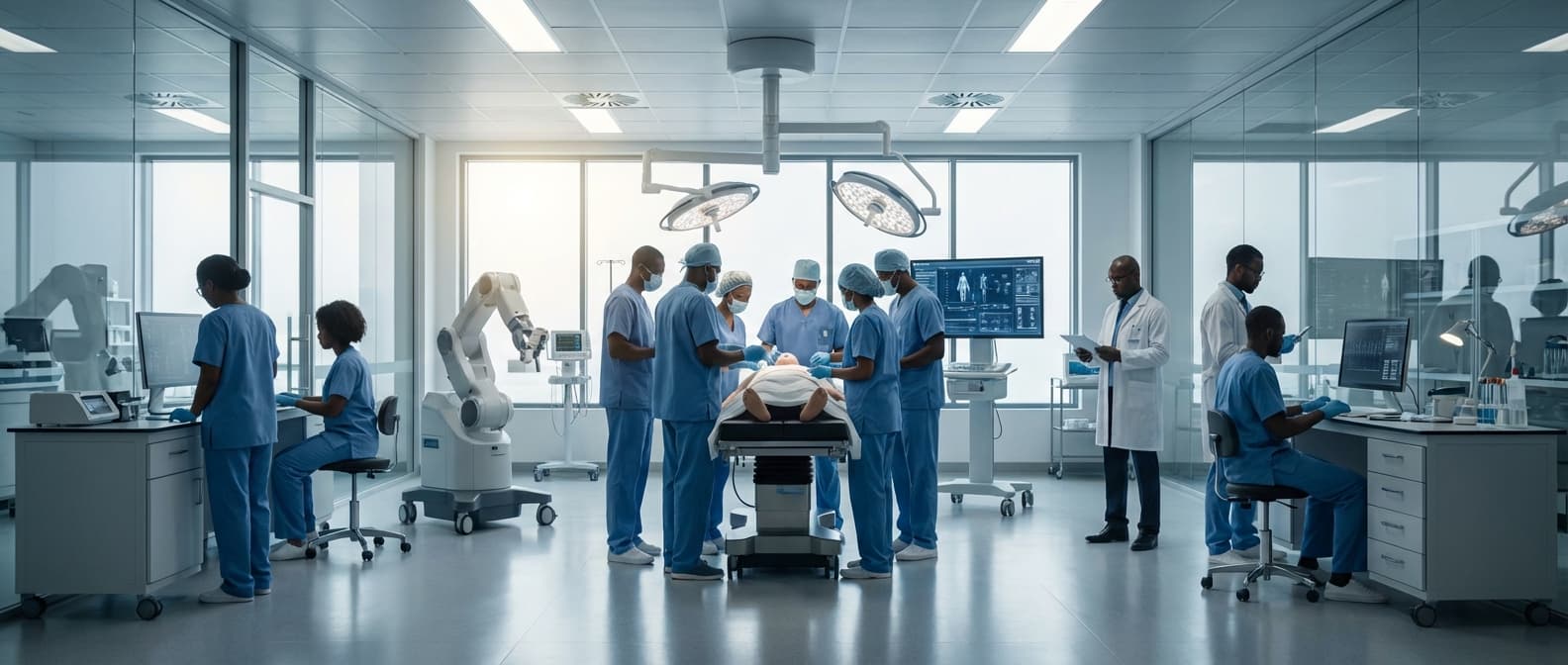
Biomedical Engineering Consulting in Rwanda
Engineering Excellence & Technical Support
Equipment selection, procurement and implementation consulting High-standard technical execution following OEM protocols and local regulatory frameworks.
Localized Medical Device Innovation
We leverage deep understanding of Rwanda's healthcare landscape to co-design and implement cost-effective, contextually appropriate medical devices, addressing specific needs for accessible diagnostics and treatment in underserved regions.
Biomedical Infrastructure Optimization
Our consulting services focus on enhancing the reliability and efficiency of existing biomedical equipment in Rwandan hospitals and clinics, providing expert maintenance strategies, training programs for local technicians, and procurement guidance for sustainable solutions.
Regulatory Compliance & Quality Assurance
We guide Rwandan healthcare organizations and manufacturers through the complexities of medical device regulations, ensuring adherence to national and international standards, and establishing robust quality assurance frameworks for improved patient safety and product efficacy.
What Is Biomedical Engineering Consulting In Rwanda?
Biomedical Engineering Consulting in Rwanda refers to the provision of specialized expertise and advisory services focused on the application of engineering principles to healthcare and biological systems within the Rwandan context. This field bridges the gap between technological advancements and clinical needs, aiming to enhance healthcare delivery, improve patient outcomes, and foster innovation in the Rwandan health sector. It encompasses strategic planning, technical assessments, regulatory compliance guidance, and the implementation of medical technologies and infrastructure. The demand for such services is driven by the evolving healthcare landscape in Rwanda, which is increasingly focused on modernizing its facilities, adopting new medical devices, ensuring the safety and efficacy of existing equipment, and developing local capacity in healthcare technology management.
| Use Case Category | Specific Applications in Rwanda | Consulting Services Provided |
|---|---|---|
| Medical Equipment Lifecycle Management | Procurement planning for new hospital wings, replacement of aging diagnostic imaging equipment, establishment of centralized maintenance departments. | Needs assessment, technical specifications development, vendor selection support, installation supervision, preventative maintenance program design, decommissioning plans. |
| Healthcare Infrastructure Development | Design and retrofitting of operating theaters, installation of medical gas systems, development of sterile processing departments, setting up emergency response units. | Architectural integration of medical equipment, utility planning (power, water, HVAC), infection control design considerations, project management support. |
| Regulatory Compliance and Quality Assurance | Registration of imported medical devices, audit of existing medical device inventories, development of patient safety protocols for device use, compliance with national medical device regulations. | Regulatory pathway analysis, dossier preparation assistance, quality management system development, risk assessment for medical devices, incident investigation support. |
| Technology Adoption and Innovation | Evaluation of new telehealth platforms, selection of electronic health record (EHR) systems, implementation of advanced laboratory automation, integration of AI in diagnostics. | Feasibility studies, technology scouting, system design and integration, change management strategies, digital health strategy development. |
| Biomedical Engineering Department Establishment and Enhancement | Setting up a new biomedical engineering department in a growing hospital, training existing technicians, developing standard operating procedures (SOPs) for repairs and maintenance. | Organizational structure design, curriculum development for technician training, SOP writing, performance metric development, capacity building initiatives. |
| Medical Device Safety and Risk Management | Post-market surveillance of high-risk medical devices, development of recall procedures, user training on safe device operation, incident reporting system improvement. | Adverse event analysis, root cause investigations, corrective and preventive action (CAPA) implementation, user education program design. |
Key Stakeholders and Their Needs for Biomedical Engineering Consulting in Rwanda
- {"title":"Public Healthcare Institutions (Hospitals, Health Centers)","description":"Require assistance with strategic planning for medical equipment procurement, installation, maintenance, and lifecycle management. Needs include ensuring regulatory compliance, developing robust service contracts, optimizing equipment utilization, and training local biomedical technicians."}
- {"title":"Private Healthcare Providers (Clinics, Diagnostic Centers, Private Hospitals)","description":"Seek expertise in selecting appropriate medical technologies that align with their service offerings and budget. Require guidance on infection control protocols related to medical devices, patient safety assessments, and adherence to national healthcare standards."}
- {"title":"Medical Device Manufacturers and Distributors","description":"Need support with navigating Rwanda's regulatory approval processes for medical devices, market entry strategies, and establishing post-market surveillance mechanisms. Assistance is also sought in understanding local infrastructure capabilities for installation and servicing."}
- {"title":"Government Ministries and Regulatory Bodies (e.g., Ministry of Health, Rwanda FDA)","description":"Benefit from consulting services for developing and updating national policies, standards, and guidelines related to medical devices, healthcare infrastructure, and biomedical engineering practice. Support is needed for capacity building within regulatory agencies for effective oversight."}
- {"title":"Research and Academic Institutions","description":"May require consultation on establishing and equipping research laboratories, selecting specialized scientific instruments, and integrating engineering principles into medical research projects. Assistance with grant applications for technology-intensive research is also a possibility."}
- {"title":"International Development Organizations and NGOs","description":"Often partner with the Rwandan healthcare sector and require expert advice on the selection, deployment, and sustainable management of donated medical equipment and infrastructure projects. Emphasis is placed on local capacity development and long-term impact."}
Who Needs Biomedical Engineering Consulting In Rwanda?
Biomedical engineering consulting in Rwanda plays a vital role in advancing healthcare infrastructure and services. This specialized field addresses the unique challenges and opportunities within the Rwandan healthcare landscape, from ensuring the optimal functioning of medical equipment to developing innovative solutions for public health issues. The demand for these services stems from a growing need to enhance patient care, improve diagnostic capabilities, and streamline healthcare operations across various institutions.
| Customer Type | Relevant Departments/Areas |
|---|---|
| Hospitals (Public and Private) | Biomedical Engineering Department, Procurement, IT, Clinical Departments (e.g., Radiology, Cardiology, Surgery), Quality Assurance, Facilities Management |
| Clinics and Health Centers | Technical Support, Procurement, Clinical Staff (for equipment selection and training) |
| Medical Device Manufacturers and Distributors | Technical Support, Sales and Marketing, Product Development, Regulatory Affairs |
| Research Institutions and Universities | Research Labs, Engineering Departments, Technology Transfer Offices, Medical Schools |
| Government Ministries and Agencies | Ministry of Health (procurement, policy, infrastructure, training), Rwanda Biomedical Centre (RBC), Rwanda Food and Drugs Authority (FDA) |
| Non-Governmental Organizations (NGOs) in Healthcare | Project Management, Procurement, Training, Infrastructure Development |
Target Customers and Departments for Biomedical Engineering Consulting in Rwanda
- Hospitals (Public and Private)
- Clinics and Health Centers
- Medical Device Manufacturers and Distributors
- Research Institutions and Universities
- Government Ministries and Agencies
- Non-Governmental Organizations (NGOs) in Healthcare
Biomedical Engineering Consulting Process In Rwanda
The biomedical engineering consulting process in Rwanda, like in many other regions, typically follows a structured workflow designed to address the unique needs of healthcare institutions and technology providers. This process ensures efficient problem-solving, successful implementation of solutions, and adherence to local regulations and best practices. The workflow can be broadly categorized into several key phases, from the initial client engagement to the final project closure and follow-up.
| Phase | Description | Key Activities in Rwanda | Deliverables |
|---|---|---|---|
| The client expresses interest in consulting services. This phase focuses on understanding the client's broad requirements and determining if the consulting firm has the relevant expertise. | Initial discussions via phone, email, or in-person meetings; understanding the client's general challenges (e.g., equipment obsolescence, new technology adoption, regulatory compliance). | Summary of initial understanding, confirmation of interest. |
| A detailed understanding of the client's specific problems, objectives, and constraints is developed. This phase defines the project's scope, goals, and expected outcomes. | Site visits to healthcare facilities; interviews with stakeholders (clinicians, administrators, technicians); review of existing infrastructure and documentation; identification of specific needs (e.g., medical equipment planning, quality management systems, infrastructure upgrades). | Detailed needs assessment report, preliminary scope of work, identification of key stakeholders. |
| Based on the needs assessment, a formal proposal outlining the consulting services, methodologies, timelines, deliverables, and costs is prepared and presented to the client. | Developing a tailored proposal addressing identified needs; outlining proposed solutions and methodologies; estimating project timeline and resource requirements; presenting the proposal and engaging in discussions for revisions. | Formal project proposal, cost estimate, proposed timeline. |
| Once the proposal is accepted, a formal contract is signed, and the project officially begins. This phase involves formalizing the agreement and setting up project management structures. | Signing of the consulting agreement/contract; establishing communication protocols; assigning project teams; defining roles and responsibilities; initial project kickoff meeting. | Signed contract, project charter, kickoff meeting minutes. |
| Collecting all necessary data and information to thoroughly understand the problem or opportunity. This involves in-depth research and analysis. | Reviewing existing equipment inventory, maintenance logs, regulatory frameworks (e.g., Rwanda FDA guidelines), user feedback, and relevant medical technology literature; analyzing operational data and performance metrics. | Data collection reports, SWOT analysis (if applicable), regulatory compliance assessment. |
| Developing specific, actionable solutions to address the client's needs. This phase involves technical expertise and creative problem-solving. | Designing new medical equipment procurement plans; developing maintenance strategies and protocols; creating infection control guidelines; recommending technology adoption roadmaps; designing facility upgrades; developing standard operating procedures (SOPs). | Technical specifications, design documents, strategic plans, SOPs, procurement lists. |
| Putting the designed solutions into practice. This is often the most hands-on phase and may involve procurement, installation, and integration. | Overseeing medical equipment procurement and delivery; supervising installation and integration of new systems; coordinating facility modifications; implementing new workflows and protocols. | Installed equipment, implemented systems, modified facilities, documented workflows. |
| Ensuring the client's staff are proficient in using and maintaining the new systems or technologies. This is crucial for long-term sustainability. | Conducting training sessions for clinical staff on new equipment operation; training biomedical technicians on maintenance and repair; developing training manuals; providing ongoing coaching and mentorship. | Trained personnel, training manuals, competency assessments. |
| Verifying that the implemented solutions function as intended, meet performance requirements, and comply with relevant standards. | Performing functional and performance testing of medical equipment; validating software and IT systems; ensuring compliance with safety and quality standards; obtaining necessary certifications or approvals. | Test reports, validation certificates, commissioning documents. |
| Formally concluding the project, ensuring all deliverables are met, and handing over final documentation and responsibilities to the client. | Final project review with the client; handover of all project documentation, training materials, and warranties; final invoicing and payment processing; formal project sign-off. | Final project report, handover documentation, signed acceptance forms. |
| Providing ongoing assistance and monitoring the performance of the implemented solutions after project closure. This ensures the continued success and impact of the consulting engagement. | Offering technical support and troubleshooting; conducting post-implementation reviews to assess impact and identify areas for improvement; providing recommendations for future enhancements; ensuring long-term sustainability of implemented solutions. | Post-implementation review reports, ongoing support logs, performance metrics. |
Biomedical Engineering Consulting Workflow in Rwanda
- Inquiry and Initial Consultation
- Needs Assessment and Scoping
- Proposal Development and Negotiation
- Contracting and Project Initiation
- Information Gathering and Analysis
- Solution Design and Development
- Implementation and Installation
- Training and Capacity Building
- Testing, Validation, and Commissioning
- Project Closure and Handover
- Post-Implementation Support and Evaluation
Biomedical Engineering Consulting Cost In Rwanda
Biomedical engineering consulting costs in Rwanda can vary significantly based on several factors. These include the complexity of the project, the experience and specialization of the consultant, the duration of the engagement, and the specific services required. For instance, a project involving the procurement and installation of complex medical imaging equipment will naturally command a higher fee than a consultation on basic medical device maintenance protocols.
Key Pricing Factors:
- Scope of Work: The breadth and depth of the consulting services are paramount. This could range from feasibility studies, market analysis, regulatory compliance guidance, technology assessment, procurement strategies, to equipment validation and training. More comprehensive scopes generally translate to higher costs.
- Consultant Expertise & Experience: Highly specialized or experienced biomedical engineers with a proven track record in Rwanda or similar markets will typically charge more than junior consultants or those with limited local context knowledge. This premium reflects their in-depth understanding, problem-solving abilities, and ability to navigate local nuances.
- Project Duration: The length of time the consultant is engaged directly impacts the total cost. Projects requiring ongoing support, multiple site visits, or lengthy research phases will be more expensive.
- Travel and Accommodation: If the consultant is based outside the project location or requires extensive travel within Rwanda, these expenses will be factored into the overall cost.
- Regulatory & Compliance Requirements: Navigating Rwanda's healthcare regulations and standards (e.g., Rwanda FDA for medical devices) can be complex. Consultants with expertise in this area will likely have higher rates due to the specialized knowledge and due diligence required.
- Technology Complexity: Consulting on advanced technologies (e.g., AI in healthcare, complex surgical robots) will generally be more expensive than consulting on more established or simpler medical equipment.
- Deliverables: The nature of the final output (e.g., detailed reports, training manuals, implementation plans, regulatory submissions) can also influence pricing.
Cost Ranges (Estimates in Rwandan Francs - RWF):
It's important to note that these are general estimates, and actual quotes can vary. It is always recommended to obtain detailed proposals from multiple consultants.
- Initial Consultation/Needs Assessment: RWF 300,000 - RWF 1,000,000
- Project Planning & Feasibility Studies: RWF 800,000 - RWF 3,000,000
- Regulatory Compliance Guidance (per device/application): RWF 1,000,000 - RWF 5,000,000+
- Technology/Equipment Assessment & Procurement Strategy: RWF 1,500,000 - RWF 7,000,000+
- Project Management/Implementation Support (monthly retainer): RWF 2,000,000 - RWF 10,000,000+ (depending on project scale)
- Specialized Training/Workshops (per session/module): RWF 500,000 - RWF 2,500,000
- Daily Consulting Rate (for experienced consultants): RWF 400,000 - RWF 1,500,000+
| Service Type / Project Phase | Estimated Cost Range (RWF) |
|---|---|
| Initial Consultation / Needs Assessment | 300,000 - 1,000,000 |
| Project Planning & Feasibility Studies | 800,000 - 3,000,000 |
| Regulatory Compliance Guidance (per device/application) | 1,000,000 - 5,000,000+ |
| Technology/Equipment Assessment & Procurement Strategy | 1,500,000 - 7,000,000+ |
| Project Management/Implementation Support (monthly retainer) | 2,000,000 - 10,000,000+ (project scale dependent) |
| Specialized Training/Workshops (per session/module) | 500,000 - 2,500,000 |
| Daily Consulting Rate (Experienced) | 400,000 - 1,500,000 |
Key Factors Influencing Biomedical Engineering Consulting Costs in Rwanda
- Scope and complexity of the project
- Consultant's experience and specialization
- Duration of the engagement
- Travel and accommodation expenses
- Specific services required (e.g., regulatory, procurement, training)
- Complexity of the medical technology involved
- Nature of the final deliverables
Affordable Biomedical Engineering Consulting Options
Biomedical engineering (BME) consulting can be a vital resource for startups, established companies, and research institutions needing specialized expertise. However, the perception of high costs can be a barrier. Fortunately, there are several affordable options and cost-saving strategies available. Understanding 'value bundles' and employing smart procurement practices can significantly reduce expenses while still accessing high-quality BME consulting services.
| Value Bundle Type | Description | Typical Use Cases | Cost-Saving Benefit |
|---|---|---|---|
| Feasibility Study Bundle | Covers initial market research, technical viability assessment, regulatory landscape review, and preliminary design concepts. | Early-stage product development, idea validation. | Consolidates essential early-stage research, preventing wasted resources on unviable ideas. |
| Prototype Development Bundle | Includes design, fabrication, testing, and iteration of a functional prototype. | Moving from concept to a tangible working model. | Streamlines the prototyping process, reducing time and material costs through integrated services. |
| Regulatory Compliance Bundle | Focuses on navigating specific regulatory pathways (e.g., FDA, CE marking), documentation preparation, and pre-submission activities. | Bringing a medical device to market. | Ensures accurate and efficient compliance, avoiding costly delays and rejections. |
| Intellectual Property (IP) Strategy Bundle | Involves patent landscape analysis, invention disclosure support, and patent application drafting assistance. | Protecting novel BME technologies. | Provides specialized IP expertise at a predictable cost, crucial for safeguarding innovations. |
| Usability & Human Factors Bundle | Encompasses user research, interface design, and testing to ensure safe and effective product use. | Designing user-friendly medical devices and systems. | Minimizes design iterations and potential post-market issues by focusing on user needs early on. |
Affordable Biomedical Engineering Consulting Options & Strategies
- Value Bundles: These are pre-packaged sets of services designed to meet specific project needs or stages, often at a discounted rate compared to purchasing services à la carte. Bundles can range from early-stage feasibility studies to full product development support.
- Freelance & Independent Consultants: Engaging individual experts often offers more flexibility and competitive pricing than larger firms. Look for consultants with proven track records in your specific BME niche.
- University & Academic Partnerships: Many universities have BME departments with faculty and graduate students eager to collaborate on projects, especially those with research or educational components. This can be a cost-effective way to access cutting-edge knowledge.
- Incubator & Accelerator Programs: These programs often have established relationships with BME consultants and may offer subsidized or discounted services to their members.
- On-Demand Consulting Platforms: Online platforms connect businesses with pre-vetted BME consultants for short-term or project-based needs, providing flexibility and potentially lower overhead costs.
- Retainer Agreements (with clear scope): While seemingly ongoing, a well-defined retainer for a specific number of hours or a defined scope of work can be more cost-effective than ad-hoc engagements for recurring needs.
- Phased Project Approach: Breaking down large projects into smaller, manageable phases with clear deliverables and defined consulting needs for each phase allows for better cost control and risk management.
- Leveraging Internal Expertise: Identify and maximize the use of existing in-house BME knowledge before seeking external help.
- Clear and Concise Project Scopes: Precisely defining project goals, deliverables, and timelines minimizes scope creep and reduces the overall consulting time and cost.
- Negotiating Rates and Payment Terms: Don't hesitate to discuss rates and explore flexible payment schedules, especially for long-term engagements.
- Seeking Referrals and Comparing Quotes: Leverage your network for recommendations and obtain multiple quotes to ensure competitive pricing.
- Focusing on Essential Expertise: Be specific about the expertise you need. Avoid paying for a broad range of services if you only require a niche skill set.
Verified Providers In Rwanda
In Rwanda's evolving healthcare landscape, identifying reliable and credentialed medical service providers is paramount. This document outlines the significance of 'Verified Providers' and specifically highlights why Franance Health stands out as a top choice due to its rigorous credentials and commitment to quality.
| Credential/Aspect | Franance Health's Commitment | Why it Matters to Patients |
|---|---|---|
| MoH Licensing & Accreditation | Fully licensed and accredited by the Rwandan Ministry of Health, adhering to all regulatory requirements. | Ensures Franance Health operates within legal frameworks and meets national healthcare standards, guaranteeing legitimate and safe medical services. |
| Professional Medical Staff Credentials | All doctors, nurses, and specialists are board-certified and possess valid Rwandan professional licenses. | Confirms that patients are treated by qualified and experienced professionals, reducing the risk of medical errors and ensuring expert care. |
| Advanced Medical Equipment & Facilities | Invests in state-of-the-art medical technology and maintains modern, hygienic facilities. | Provides access to accurate diagnostics and effective treatments, enhancing the overall patient experience and improving health outcomes. |
| Patient-Centered Care Approach | Emphasizes empathy, clear communication, and respect for patient autonomy. | Fosters trust and comfort, ensuring patients feel heard, understood, and actively involved in their healthcare decisions. |
| Continuous Professional Development | Regularly supports its staff in ongoing training and participation in medical conferences. | Guarantees that Franance Health's medical team stays updated with the latest medical advancements and best practices, offering cutting-edge care. |
| Robust Data Security & Privacy | Implements strict protocols for the secure handling and protection of patient health information. | Assures patients that their sensitive medical data is kept confidential and secure, upholding their privacy rights. |
What Makes a Provider 'Verified' in Rwanda?
- Official Government Accreditation: Compliance with Ministry of Health (MoH) regulations and licensing.
- Professional Certifications: Validation of individual healthcare professionals' qualifications by relevant Rwandan medical boards.
- Quality Assurance Standards: Adherence to established healthcare quality and safety protocols.
- Patient Feedback Mechanisms: Transparent systems for collecting and acting upon patient experiences.
- Ethical Practice Compliance: Demonstrated commitment to ethical medical conduct and patient rights.
Scope Of Work For Biomedical Engineering Consulting
This Scope of Work (SOW) outlines the services to be provided by [Consulting Firm Name] (hereinafter referred to as 'Consultant') to [Client Name] (hereinafter referred to as 'Client') for Biomedical Engineering Consulting. The project aims to [briefly state project objective]. This SOW details the technical deliverables and their associated standard specifications.
| Phase | Technical Deliverable | Description | Standard Specification / Acceptance Criteria |
|---|---|---|---|
| Phase 1: Needs Assessment and Conceptualization | Detailed Project Requirements Document | Comprehensive document outlining functional, performance, safety, and usability requirements for the biomedical device/system. | Requirements shall be measurable, verifiable, unambiguous, and traceable. Adherence to ISO 13485:2016 and relevant FDA guidance documents (e.g., guidance on Design Controls) will be a primary criterion. |
| Phase 1: Needs Assessment and Conceptualization | Conceptual Design Report | Exploration and evaluation of potential design concepts, including technical feasibility, risk assessment, and preliminary intellectual property landscape analysis. | Report shall include at least three distinct design concepts with clear pros and cons. Risk assessment shall follow ISO 14971:2019 standards. IP search shall be conducted using established databases. |
| Phase 2: Design and Development | System Architecture Design | Detailed description of the system's components, their interconnections, and data flow. Includes hardware, software, and mechanical interfaces. | Architecture shall be modular, scalable, and support future enhancements. Diagrams shall follow industry best practices (e.g., UML for software architecture). Compliance with relevant cybersecurity standards (e.g., NIST) will be considered. |
| Phase 2: Design and Development | Detailed Engineering Drawings and Schematics | Comprehensive set of drawings for mechanical components, electrical schematics, and PCB layouts. | Drawings shall adhere to ASME Y14.5-2018 (Geometric Dimensioning and Tolerancing) and relevant IPC standards for PCB design. Bill of Materials (BOM) shall be generated and maintained. |
| Phase 2: Design and Development | Software Design Specification | Detailed documentation of the software architecture, modules, algorithms, and user interface design. | Adherence to IEC 62304:2015 (Medical device software – Software life cycle processes). Code shall be documented, maintainable, and follow established coding standards. |
| Phase 3: Prototyping and Testing | Functional Prototype | Working prototype demonstrating core functionality as defined in the requirements. | Successful completion of all critical functional tests as outlined in the Test Plan. Minimum 95% of intended functions must operate correctly. |
| Phase 3: Prototyping and Testing | Verification and Validation (V&V) Test Plan | Detailed plan outlining the verification and validation activities, including test cases, procedures, and acceptance criteria. | Test plan shall align with IEC 60601-1:2020 (Medical electrical equipment - Part 1: General requirements for basic safety and essential performance) and FDA's guidance on V&V. |
| Phase 3: Prototyping and Testing | V&V Test Reports | Comprehensive reports documenting the results of all verification and validation tests. | Each test report shall clearly indicate success or failure against defined acceptance criteria. All deviations shall be documented and analyzed. |
| Phase 3: Prototyping and Testing | Risk Management File (RMF) | Complete documentation of the risk management process, including hazard identification, risk analysis, risk evaluation, and risk control measures. | RMF shall be compliant with ISO 14971:2019 and integrated with design controls. All identified risks must have mitigation strategies documented and verified. |
| Phase 4: Regulatory Strategy and Documentation | Regulatory Strategy Document | Detailed plan outlining the regulatory pathway, required submissions, and target markets. | Document shall specify relevant regulatory bodies (e.g., FDA, EMA) and their classification requirements. Adherence to current regulatory guidelines is essential. |
| Phase 4: Regulatory Strategy and Documentation | Technical File / Design Dossier (Draft) | Compilation of all technical documentation required for regulatory submission. | Content shall align with applicable regulatory standards (e.g., EU MDR Annex II, FDA 510(k) requirements). Completeness and accuracy of documentation are critical. |
| Phase 4: Regulatory Strategy and Documentation | Usability Engineering File (Draft) | Documentation of the usability engineering process, including use error analysis and formative/summative usability testing. | Compliance with IEC 62366-1:2015 (Medical devices – Application of usability engineering to medical devices). Usability testing shall demonstrate safe and effective use. |
| Phase 5: Manufacturing Considerations and Transfer | Manufacturing Process Flow (Conceptual) | Outline of the proposed manufacturing process, including key steps and quality control points. | Process flow shall consider Good Manufacturing Practices (GMP) as per ISO 13485:2016. Feasibility and scalability will be assessed. |
| Phase 5: Manufacturing Considerations and Transfer | Supplier Qualification Strategy | Plan for identifying, evaluating, and approving suppliers for critical components and services. | Strategy shall align with ISO 13485:2016 requirements for supplier control. Risk-based approach will be employed. |
| Phase 5: Manufacturing Considerations and Transfer | Manufacturing Transfer Plan (Outline) | High-level plan for transitioning the design and production to a manufacturing facility. | Plan shall address training, documentation transfer, and validation activities required for a smooth transition. |
Project Phases and Technical Deliverables
- Phase 1: Needs Assessment and Conceptualization
- Phase 2: Design and Development
- Phase 3: Prototyping and Testing
- Phase 4: Regulatory Strategy and Documentation
- Phase 5: Manufacturing Considerations and Transfer
Service Level Agreement For Biomedical Engineering Consulting
This Service Level Agreement (SLA) outlines the commitment of [Your Consulting Company Name] (hereinafter referred to as "Consultant") to its clients (hereinafter referred to as "Client") for biomedical engineering consulting services. This SLA specifically addresses response times to inquiries and uptime guarantees for any managed systems or platforms provided as part of the consulting engagement.
| Service Component | Service Level Objective (SLO) | Measurement Method | Reporting Frequency |
|---|---|---|---|
| Initial Response to Critical Inquiries (e.g., system failure affecting patient care) | Acknowledgement within 1 hour; Initial assessment and proposed action plan within 4 business hours. | Ticket system timestamp for acknowledgment and internal project management tool logs for action plan. | Monthly reporting, or ad-hoc for critical incidents. |
| Initial Response to High Priority Inquiries (e.g., feature request impacting workflow) | Acknowledgement within 4 business hours; Initial assessment and proposed action plan within 1 business day. | Ticket system timestamp for acknowledgment and internal project management tool logs for action plan. | Monthly reporting. |
| Initial Response to Standard Inquiries (e.g., general questions, documentation requests) | Acknowledgement within 1 business day; Initial assessment and proposed action plan within 2 business days. | Ticket system timestamp for acknowledgment and internal project management tool logs for action plan. | Monthly reporting. |
| Managed System/Platform Uptime (if applicable) | 99.5% uptime, excluding scheduled maintenance. | Monitoring software reports detailing system availability. Uptime is calculated as (Total Minutes in Month - Downtime Minutes) / Total Minutes in Month * 100. | Monthly reporting. |
| Scheduled Maintenance Window Notification | Minimum 48 hours' notice provided for any planned maintenance that may cause downtime. | Email notification to designated Client contacts. | As needed, for scheduled maintenance. |
Key Service Level Objectives
- Response Times: Prompt and efficient communication is crucial for successful project execution. This section defines the expected timeframes for the Consultant to acknowledge and begin addressing Client inquiries.
- Uptime Guarantees: For any systems, software, or platforms managed and hosted by the Consultant as part of the service, this section specifies the expected availability and the measures taken to ensure continuous operation.
Frequently Asked Questions

Ready when you are
Let's scope your Biomedical Engineering Consulting in Rwanda project in Rwanda.

Scaling healthcare logistics and technical systems across the entire continent.