
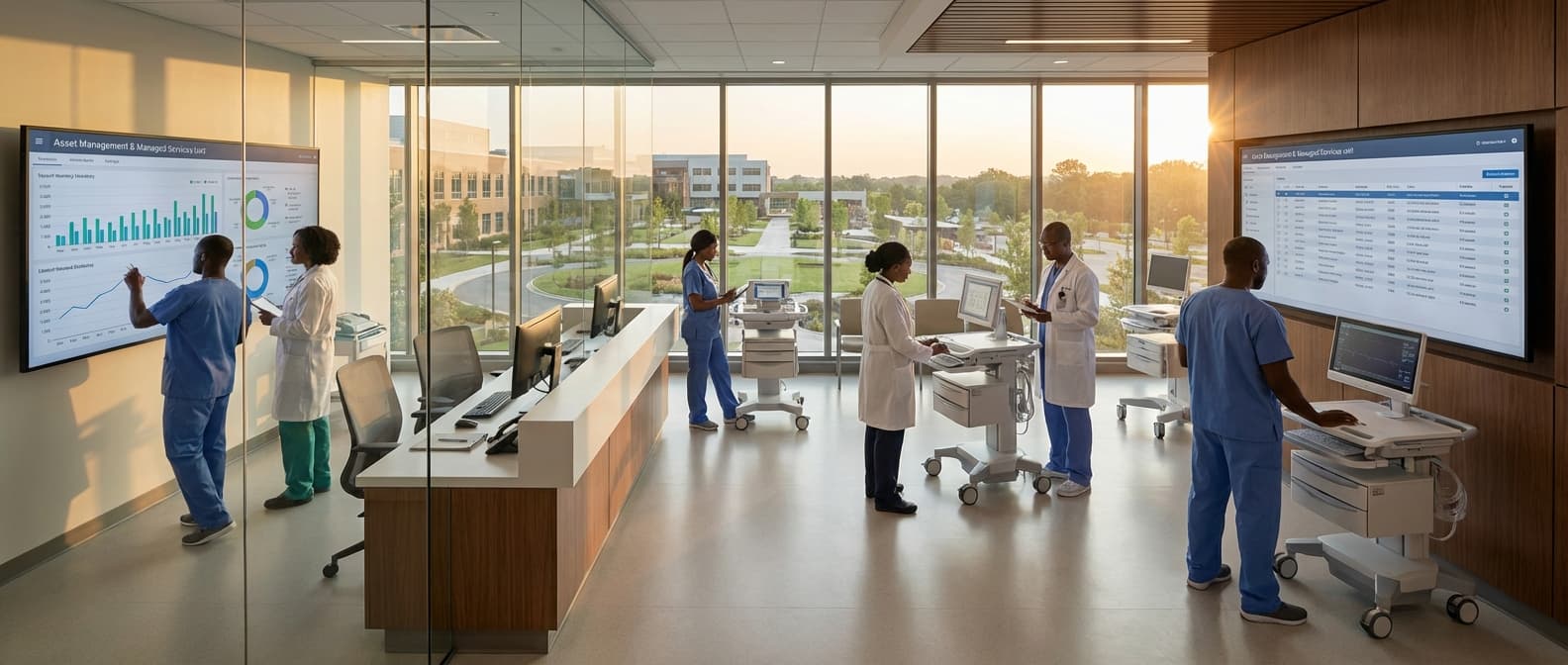
Maintenance KPI Reporting Service (Uptime/MTBF/MTTR) in Rwanda
Engineering Excellence & Technical Support
Maintenance KPI Reporting Service (Uptime/MTBF/MTTR) High-standard technical execution following OEM protocols and local regulatory frameworks.
Real-time Uptime Monitoring for Critical Assets
Our service provides live, dashboard-driven visibility into the operational status of your most critical machinery across Rwanda. Proactively identify and address potential downtime events before they impact your production, ensuring maximum asset utilization and revenue generation.
Data-Driven Mean Time Between Failures (MTBF) Optimization
Leveraging historical performance data, our platform analyzes failure patterns to predict and extend the Mean Time Between Failures (MTBF) for your equipment. This enables you to transition from reactive to proactive maintenance strategies, reducing unexpected breakdowns and associated costs.
Streamlined Mean Time To Repair (MTTR) Reduction
Gain actionable insights into repair processes to significantly decrease Mean Time To Repair (MTTR). Our reporting helps identify bottlenecks in your maintenance workflow, optimize spare parts management, and empower your technicians with the right information for faster, more efficient resolutions.
What Is Maintenance Kpi Reporting Service (Uptime/mtbf/mttr) In Rwanda?
In Rwanda, a Maintenance KPI Reporting Service (Uptime/MTBF/MTTR) refers to a specialized offering that focuses on the collection, analysis, and presentation of key performance indicators (KPIs) related to the operational availability and reliability of assets, systems, or infrastructure. This service is crucial for organizations seeking to optimize their maintenance strategies, reduce downtime, and enhance overall operational efficiency. The core KPIs typically include:
- Uptime: A measure of the percentage of time a system or asset is operational and available for use. It directly reflects the effectiveness of maintenance and reliability efforts.
- Mean Time Between Failures (MTBF): The average time elapsed between consecutive failures of a repairable system or component. A higher MTBF indicates greater reliability.
- Mean Time To Repair (MTTR): The average time required to repair a failed system or component and restore it to operational status. A lower MTTR signifies efficient maintenance and rapid recovery from failures.
The service typically involves a structured methodology for data acquisition (manual entry, sensor integration, SCADA systems, CMMS/EAM integration), data validation, statistical analysis, and the generation of comprehensive reports and dashboards. These outputs provide actionable insights for maintenance planning, resource allocation, failure root cause analysis, and predictive maintenance initiatives.
| Typical Use Cases | Associated KPIs | Benefits Derived |
|---|---|---|
| Optimizing Production Throughput in Manufacturing | Uptime of Production Lines, MTBF of Critical Machinery | Reduced production losses, increased output capacity, improved schedule adherence. |
| Ensuring Network Availability for Telecom Services | Uptime of Network Segments, MTTR for Base Station Rectification | Enhanced customer satisfaction, reduced service revenue loss, improved network quality of service (QoS). |
| Minimizing Power Outages in the Energy Sector | Uptime of Generation Units, MTBF of Transmission Components | Improved grid stability, reduced economic impact of blackouts, optimized maintenance scheduling. |
| Enhancing Fleet Operational Readiness for Logistics | Uptime of Vehicle Fleets, MTTR for Vehicle Repairs | Increased delivery efficiency, reduced operational costs, improved asset utilization. |
| Maximizing Medical Equipment Uptime in Healthcare | Uptime of Diagnostic Equipment, MTBF of Life-Support Systems | Improved patient care outcomes, reduced diagnostic delays, optimized medical resource allocation. |
| Ensuring Service Continuity for IT Infrastructure | Uptime of Servers and Network Devices, MTTR for System Failures | Minimized business disruption, enhanced data integrity, improved IT service level agreements (SLAs). |
Who Needs Maintenance KPI Reporting Service (Uptime/MTBF/MTTR) in Rwanda?
- Manufacturing Facilities: For production lines, machinery, and critical plant equipment.
- Telecommunications Providers: For network infrastructure, base stations, and data centers.
- Energy Utilities (Power Generation & Distribution): For turbines, transformers, substations, and transmission lines.
- Transportation & Logistics Companies: For fleets of vehicles, aircraft, or rail systems, and associated infrastructure.
- Healthcare Institutions: For medical equipment, building systems (HVAC, electrical), and IT infrastructure.
- Information Technology (IT) Service Providers: For servers, network devices, and cloud infrastructure.
- Construction & Mining Operations: For heavy machinery, equipment, and operational facilities.
- Public Infrastructure Management: For water treatment plants, waste management facilities, and road networks.
- Real Estate & Facilities Management: For commercial buildings, residential complexes, and their integrated systems.
Who Needs Maintenance Kpi Reporting Service (Uptime/mtbf/mttr) In Rwanda?
In Rwanda, industries and businesses that rely heavily on the continuous and efficient operation of their physical assets will significantly benefit from a Maintenance KPI Reporting Service focused on Uptime, Mean Time Between Failures (MTBF), and Mean Time To Repair (MTTR). These metrics are crucial for understanding asset reliability, predicting potential failures, and optimizing maintenance strategies to minimize costly downtime.
| Target Customer Segment | Key Departments Benefiting | Primary Pain Points Addressed |
|---|---|---|
| Manufacturing | Production, Maintenance, Operations, Quality Control | Unexpected equipment breakdowns halting production, high repair costs, missed delivery deadlines. |
| Telecommunications | Network Operations, Field Maintenance, IT Operations | Service outages impacting customer satisfaction and revenue, slow restoration of network services. |
| Energy & Utilities | Operations, Maintenance, Asset Management, Engineering | Power outages, water disruptions, inefficient asset lifespan, high operational costs. |
| Transportation & Logistics | Fleet Management, Operations, Maintenance | Vehicle breakdowns causing delivery delays, high maintenance expenditure, suboptimal fleet utilization. |
| Mining & Extractive | Mine Operations, Maintenance Engineering, Asset Management | Equipment failures in remote locations, significant production losses due to downtime, safety concerns. |
| Hospitality | Facilities Management, Engineering, Operations | Disruptions to guest experience (e.g., HVAC, elevators), high emergency repair costs, operational inefficiencies. |
| Healthcare | Biomedical Engineering, Facilities Management, IT | Critical equipment failures impacting patient care, lengthy repair times for medical devices, compliance issues. |
Target Customers in Rwanda
- Manufacturing Companies (e.g., food and beverage, textiles, construction materials, light manufacturing)
- Telecommunications Providers
- Energy and Utilities Companies (e.g., power generation, water treatment)
- Transportation and Logistics Companies (e.g., trucking fleets, aviation, railways)
- Mining and Extractive Industries
- Hospitality Sector (hotels, resorts)
- Healthcare Facilities (hospitals, clinics)
- Agricultural Processing Plants
- Construction Companies with heavy machinery
- Government Agencies managing public infrastructure
Maintenance Kpi Reporting Service (Uptime/mtbf/mttr) Process In Rwanda
This document outlines the workflow for the Maintenance KPI Reporting Service (Uptime/MTBF/MTTR) in Rwanda. This service provides critical insights into the reliability and maintainability of assets, enabling organizations to optimize their maintenance strategies and minimize downtime. The process begins with an initial inquiry from a client and culminates in the delivery of comprehensive KPI reports.
| Step | Description | Responsible Party | Output/Deliverable | Key Considerations |
|---|---|---|---|---|
| Prospective client expresses interest in the Maintenance KPI Reporting Service. An initial meeting is held to understand their specific needs, assets to be monitored, reporting requirements, and current data collection methods. | Service Provider (Sales/Consulting Team) | Understanding of client needs, scope of work proposal | Clarity on client's business objectives, existing IT infrastructure, and data availability. |
| Based on the initial consultation, the service provider develops a detailed proposal outlining the scope of services, KPIs to be tracked, data sources, reporting frequency, technology requirements, timelines, and pricing. | Service Provider (Technical & Sales Teams) | Formal proposal document | Alignment with client's budget and strategic goals, feasibility of data integration. |
| Upon client acceptance of the proposal, a formal contract or service agreement is drafted and signed. This legally binds the parties and specifies terms and conditions. | Service Provider & Client (Legal & Procurement Teams) | Signed Service Agreement | Clear understanding of contractual obligations, payment terms, and service level agreements (SLAs). |
| Identify all relevant data sources (e.g., CMMS, SCADA systems, sensor data, manual logs). Develop a plan for data extraction, transformation, and loading (ETL) to ensure data quality and consistency. | Service Provider (Technical Team) | Data Integration Plan, ETL scripts (if applicable) | Data security, privacy regulations in Rwanda, data standardization. |
| Install and configure necessary software, hardware (if any), and data connectors. Set up dashboards and reporting templates according to the agreed-upon KPIs and client preferences. | Service Provider (Technical Team) | Configured reporting platform, initial dashboards | Scalability of the platform, user access controls. |
| Begin collecting data from the identified sources. This may involve automated data feeds or scheduled manual data uploads. | Service Provider (Technical Team) & Client (Data Owners) | Raw data ingested into the reporting platform | Real-time vs. batch processing, data validation checks. |
| The collected data is processed, cleaned, and transformed to calculate the defined maintenance KPIs (Uptime, MTBF, MTTR). Algorithms and formulas are applied consistently. | Service Provider (Technical Team) | Calculated KPI values | Accuracy of calculations, adherence to industry standards. |
| Generate reports in the agreed-upon format (e.g., dashboards, PDFs, spreadsheets) on a scheduled basis. The reports will highlight trends, anomalies, and insights derived from the KPI data. | Service Provider (Analytics & Reporting Team) | Maintenance KPI Reports | Clarity of presentation, actionable insights, comparison against benchmarks. |
| Deliver the generated reports to the client through secure channels. A presentation or review meeting may be scheduled to discuss the findings, answer questions, and provide recommendations. | Service Provider (Account Manager & Analysts) | Delivered Reports, Presentation (optional) | Timeliness of delivery, clear communication of findings. |
| Gather feedback from the client on the reports and service. Use this feedback to refine reporting methodologies, improve data accuracy, and enhance the overall service offering. | Service Provider (Account Manager & Client) | Actionable feedback, revised processes | Ongoing client satisfaction, proactive identification of improvement areas. |
| Continuously monitor the data feeds and reporting system. Provide ongoing technical support to the client as needed. | Service Provider (Technical Support & Account Management) | Stable reporting service, resolved issues | Proactive issue detection, efficient troubleshooting. |
Key Maintenance KPIs Explained
- Uptime: The percentage of time a piece of equipment or system is operational and available for use.
- MTBF (Mean Time Between Failures): The average time a repairable system or component operates between consecutive failures.
- MTTR (Mean Time To Repair): The average time it takes to repair a failed component or system and return it to operational status.
Maintenance Kpi Reporting Service (Uptime/mtbf/mttr) Cost In Rwanda
The cost of Maintenance KPI Reporting Services, focusing on Uptime, Mean Time Between Failures (MTBF), and Mean Time To Repair (MTTR), in Rwanda can vary significantly. These services are crucial for businesses aiming to optimize their operational efficiency and minimize downtime. The pricing is influenced by several factors, making it difficult to provide a single definitive figure. However, we can outline the key drivers of cost and provide estimated ranges in Rwandan Francs (RWF).
| Service Level/Complexity | Estimated Monthly Cost Range (RWF) | Typical Inclusions |
|---|---|---|
| Basic Reporting (Manual Data Input, Standard KPIs) | 300,000 - 750,000 RWF | Monthly Uptime percentage, basic MTBF/MTTR calculations, standard report format. |
| Intermediate Reporting (Automated Data Capture, Standard KPIs, Basic Analysis) | 750,000 - 1,500,000 RWF | Automated data collection, detailed Uptime/MTBF/MTTR, trend analysis, basic insights, weekly/monthly reports. |
| Advanced Reporting (IoT Integration, Complex KPIs, In-depth Analysis & Recommendations) | 1,500,000 - 4,000,000+ RWF | Real-time data from IoT sensors/SCADA, predictive analytics, root cause analysis, proactive recommendations, customizable dashboards, dedicated support, integration with EAM systems. |
| One-Time Implementation/Setup Fees | 500,000 - 3,000,000 RWF (and higher for complex integrations) | System configuration, data integration, initial training. |
Key Pricing Factors for Maintenance KPI Reporting Services in Rwanda:
- Scope and Complexity of Reporting: The more detailed and comprehensive the reports, the higher the cost. This includes the number of assets being monitored, the granularity of data collected, and the specific KPIs required (Uptime, MTBF, MTTR are standard, but custom metrics will add cost).
- Data Collection Methods: The technology and methods used for data acquisition play a major role. This could range from manual data entry to sophisticated IoT sensors, SCADA systems, or integration with existing Enterprise Asset Management (EAM) software. Real-time data collection and advanced analytics will command higher prices.
- Software and Platform Costs: The reporting service may utilize specialized software. This could be a subscription-based Software-as-a-Service (SaaS) platform or a custom-built solution. The features, user licenses, and hosting arrangements of this software will impact the overall cost.
- Level of Analysis and Consulting: Basic reporting will be less expensive than services that include in-depth analysis, root cause identification for failures, predictive maintenance recommendations, and strategic consulting to improve KPI performance.
- Frequency of Reporting: Daily, weekly, monthly, or quarterly reports will have different associated costs due to the effort and resources required for data compilation and analysis.
- Implementation and Setup Fees: Initial setup, configuration of the reporting system, data integration, and training for personnel can incur one-time costs.
- Support and Maintenance: Ongoing technical support, software updates, and system maintenance are typically included in the service fee, but the level of support can affect the price.
- Vendor Experience and Reputation: Established service providers with a proven track record and a strong understanding of the Rwandan industrial landscape may charge a premium.
- Customization Requirements: Any specific customization needed for reports, dashboards, or data analysis tailored to a company's unique operational needs will likely increase the cost.
- Volume of Data: The sheer volume of data to be processed and analyzed can influence the computational resources and, consequently, the cost.
Affordable Maintenance Kpi Reporting Service (Uptime/mtbf/mttr) Options
Our affordable Maintenance KPI Reporting Service provides essential visibility into your asset performance, focusing on Uptime, Mean Time Between Failures (MTBF), and Mean Time To Repair (MTTR). Understanding these metrics is crucial for optimizing maintenance schedules, reducing operational costs, and minimizing costly downtime. We offer flexible value bundles designed to suit different operational needs and budgets, along with strategic cost-saving recommendations.
| Bundle Name | Key KPIs Covered | Reporting Frequency | Advanced Analytics | Customization Level | Estimated Monthly Cost Range (USD) |
|---|---|---|---|---|---|
| Essential Uptime Tracker | Uptime | Daily/Weekly | Basic Uptime trends | Standard Templates | $50 - $150 |
| Performance Optimizer | Uptime, MTBF | Weekly/Monthly | Failure root cause analysis, MTBF trends | Limited Customization | $150 - $350 |
| Total Reliability Suite | Uptime, MTBF, MTTR | Real-time/Daily/Weekly/Monthly | Predictive insights, trend forecasting, anomaly detection | High Customization | $350 - $700+ |
Value Bundles & Features
- {"title":"Essential Uptime Tracker","description":"Focuses on real-time Uptime monitoring and basic reporting. Ideal for organizations new to KPI tracking or with simpler asset portfolios."}
- {"title":"Performance Optimizer","description":"Includes Uptime tracking, MTBF analysis, and root cause identification for common failures. Supports proactive maintenance planning and issue resolution."}
- {"title":"Total Reliability Suite","description":"Comprehensive Uptime, MTBF, and MTTR reporting, including trend analysis, predictive maintenance insights, and customized reporting dashboards. Best for complex operations prioritizing maximum asset availability and efficiency."}
Verified Providers In Rwanda
In Rwanda's rapidly evolving healthcare landscape, identifying reliable and accredited healthcare providers is paramount for individuals seeking quality medical services. Verified providers, such as those credentialed by Franance Health, offer a crucial layer of assurance. This document outlines the significance of verified providers and details why Franance Health credentials represent the best choice for patients.
| Criterion | Franance Health Verification | Unverified Providers |
|---|---|---|
| Medical Staff Qualifications | Thoroughly vetted and certified for expertise and ongoing professional development. | May lack standardized or transparent qualification checks. |
| Facility Standards | Meets stringent requirements for infrastructure, equipment, and hygiene. | Varying standards, potentially lacking critical safety features. |
| Ethical Practices | Adheres to a strict code of conduct and patient rights charter. | No guaranteed ethical framework or patient protection mechanisms. |
| Quality Improvement | Actively participates in continuous quality improvement initiatives. | May not have structured or measurable quality improvement programs. |
| Patient Safety Protocols | Implements robust infection control and risk management strategies. | Protocols may be inconsistent or inadequate. |
Why Franance Health Credentials Matter
- Trust and Credibility: Franance Health's rigorous verification process ensures that providers meet high standards of medical expertise, ethical practice, and operational efficiency. This builds essential trust between patients and healthcare facilities.
- Quality Assurance: Their credentialing involves in-depth assessments of medical staff qualifications, facility infrastructure, equipment, and adherence to best practices, guaranteeing a higher quality of care.
- Patient Safety: Franance Health places a strong emphasis on patient safety protocols, infection control, and continuous quality improvement, minimizing risks and ensuring a secure healthcare experience.
- Access to Best-in-Class Services: By partnering with Franance Health, patients gain access to a network of providers who are committed to excellence, innovation, and patient-centered care.
- Streamlined Healthcare Navigation: The Franance Health verification mark simplifies the process of selecting a healthcare provider, saving patients time and reducing the stress associated with finding reliable medical services.
Scope Of Work For Maintenance Kpi Reporting Service (Uptime/mtbf/mttr)
This Scope of Work (SOW) outlines the services to be provided for the Maintenance KPI Reporting Service. The service focuses on collecting, analyzing, and reporting on key maintenance performance indicators, specifically Uptime, Mean Time Between Failures (MTBF), and Mean Time To Repair (MTTR). The objective is to provide actionable insights to improve maintenance efficiency, reduce downtime, and enhance overall equipment reliability.
| Deliverable | Description | Standard Specifications / Requirements |
|---|---|---|
| Maintenance Data Collection Framework | Design and implement a standardized process for collecting raw maintenance data from various sources (e.g., CMMS, SCADA, manual logs). | Data sources to be identified and integrated. Data validation rules to be established. Data privacy and security protocols to be adhered to. |
| KPI Calculation Engine | Develop and deploy a reliable engine for calculating Uptime, MTBF, and MTTR based on collected data. | Calculation methodologies to be clearly defined and documented. Calculations to be performed at defined frequencies (e.g., daily, weekly, monthly). Accuracy of calculations to be verified. |
| Uptime Reporting | Generate regular reports detailing the operational availability of critical assets and systems. | Reports to include: Overall Uptime percentage, Uptime by asset category/individual asset, Downtime events and their duration. Uptime targets to be established and tracked. |
| MTBF Reporting | Produce reports illustrating the average time between failures for equipment. | Reports to include: Overall MTBF, MTBF by asset category/individual asset, Trend analysis of MTBF over time. Benchmarking against industry standards where applicable. |
| MTTR Reporting | Deliver reports summarizing the average time taken to repair equipment after a failure. | Reports to include: Overall MTTR, MTTR by asset category/individual asset, Analysis of repair times by type of failure/repair team. Identification of bottlenecks in the repair process. |
| Performance Dashboards | Develop interactive dashboards for visualizing KPI trends and performance metrics. | Dashboards to be accessible via a web portal. Customizable views for different user roles. Real-time or near-real-time data updates. Drill-down capabilities for detailed analysis. |
| Root Cause Analysis (RCA) Support | Provide data and insights to facilitate root cause analysis of recurring failures. | Identification of contributing factors to downtime and failures based on reported data. Support for cross-functional teams in RCA investigations. |
| Recommendations for Improvement | Based on KPI analysis, provide actionable recommendations for improving maintenance strategies and asset reliability. | Suggestions for preventive maintenance schedules, spare parts management, technician training, and technology adoption. Prioritization of recommendations based on potential impact. |
| Data Integrity and Auditing | Ensure the accuracy, completeness, and consistency of all reported data. | Regular data audits and quality checks. Documentation of data lineage and transformation processes. Processes for addressing data discrepancies and errors. |
| Reporting Frequency and Format | Define and adhere to a schedule for delivering KPI reports. | Reports to be delivered weekly, monthly, and quarterly. Standardized report templates to be used. Reports to be provided in agreed-upon formats (e.g., PDF, Excel, direct dashboard access). |
Service Objectives
- Establish a robust system for collecting maintenance data.
- Accurately calculate and report on Uptime, MTBF, and MTTR.
- Identify trends and root causes of equipment failures.
- Provide recommendations for proactive maintenance strategies.
- Enhance visibility of maintenance performance to stakeholders.
- Support data-driven decision-making for asset management and operational improvements.
Service Level Agreement For Maintenance Kpi Reporting Service (Uptime/mtbf/mttr)
This Service Level Agreement (SLA) outlines the terms and conditions for the Maintenance KPI Reporting Service, specifically focusing on Uptime, Mean Time Between Failures (MTBF), and Mean Time To Repair (MTTR). It defines the expected response times and uptime guarantees provided by the service provider.
| Service Component | Availability Target | Response Time Target (Critical Incidents) | Resolution Time Target (Critical Incidents) |
|---|---|---|---|
| Maintenance KPI Reporting Platform | 99.9% | 15 Minutes | 4 Hours |
| Data Ingestion and Processing | 99.9% | 30 Minutes | 4 Hours |
| Reporting Dashboard Access | 99.9% | 30 Minutes | 4 Hours |
Service Level Objectives
- Uptime Guarantee: The service will be available and operational for a minimum of 99.9% of the time, excluding scheduled maintenance windows.
- MTBF Target: The target for Mean Time Between Failures for the reporting infrastructure will be a minimum of 500 hours.
- MTTR Target: The target for Mean Time To Repair in the event of a failure will be a maximum of 4 hours.
- Reporting Accuracy: All reported KPI data will be accurate and reflect the actual performance of the monitored systems.
- Data Availability: Historical KPI data will be retained and accessible for a period of 12 months.
Frequently Asked Questions

Ready when you are
Let's scope your Maintenance KPI Reporting Service (Uptime/MTBF/MTTR) in Rwanda project in Rwanda.

Scaling healthcare logistics and technical systems across the entire continent.