
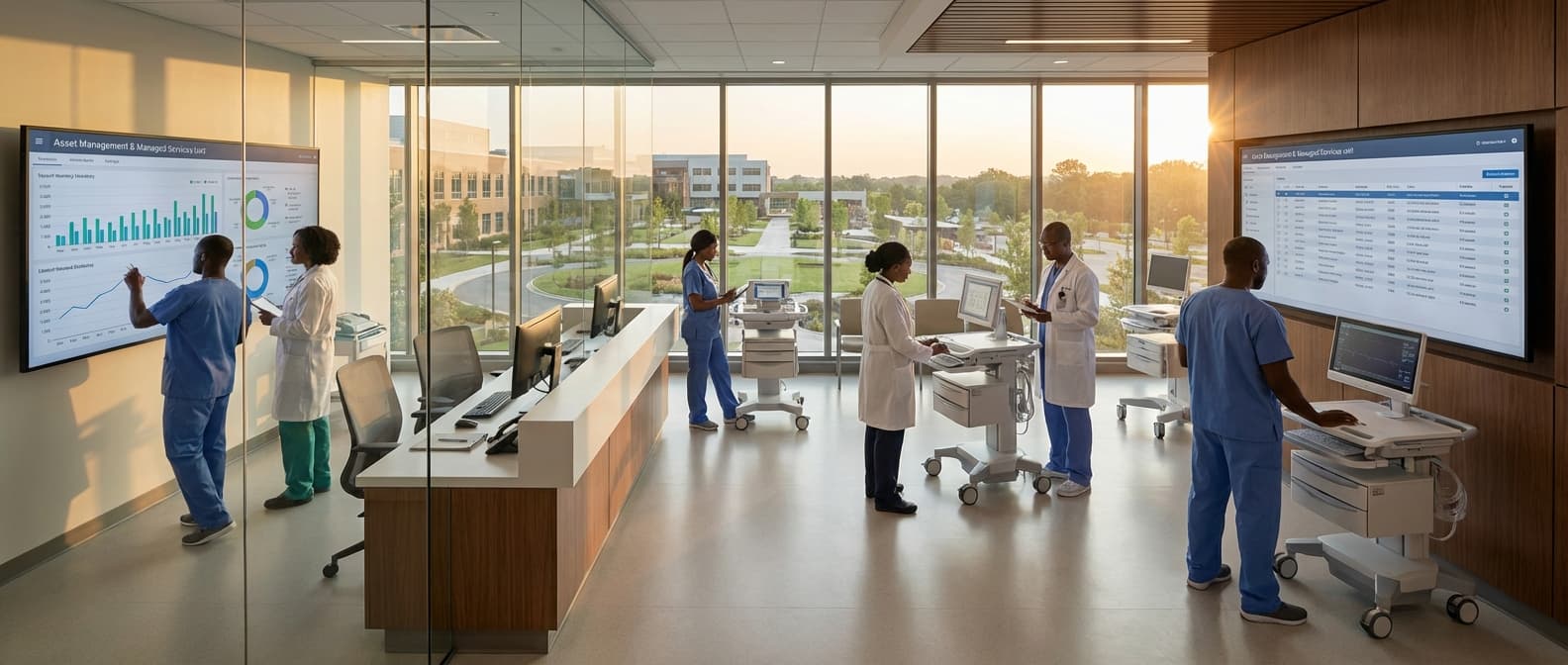
Equipment Condition Assessment Report Service in Rwanda
Engineering Excellence & Technical Support
Equipment Condition Assessment Report Service High-standard technical execution following OEM protocols and local regulatory frameworks.
Advanced Non-Destructive Testing (NDT)
Leveraging cutting-edge ultrasonic, radiographic, and magnetic particle testing to detect internal defects and surface flaws without causing damage. Our NDT methods provide precise and reliable data for early identification of potential equipment failures in Rwandan industries.
Predictive Maintenance Analytics
Employing sophisticated data analysis and machine learning algorithms on collected sensor data and historical performance metrics. This allows us to predict equipment degradation trends, optimize maintenance schedules, and minimize unexpected downtime for businesses across Rwanda.
Localized Regulatory Compliance
Ensuring all assessments adhere strictly to Rwandan industrial safety standards and international best practices relevant to the local operating environment. We provide comprehensive reports that facilitate compliance with national regulations and enhance operational safety.
What Is Equipment Condition Assessment Report Service In Rwanda?
Equipment Condition Assessment Report Service in Rwanda refers to a specialized technical service focused on systematically evaluating the current operational status, functionality, and remaining useful life of industrial, commercial, or infrastructure-related equipment. This service provides a comprehensive, objective, and data-driven report detailing the equipment's health, identifying potential failure modes, and recommending necessary maintenance, repair, or replacement actions. The assessment process typically involves visual inspections, non-destructive testing (NDT), performance monitoring, operational data analysis, and review of maintenance history.
| Who Needs It? | Typical Use Cases |
|---|---|
| Facility Managers and Owners: | To ensure the reliability and longevity of critical assets within buildings and industrial sites. |
| Operations and Maintenance Departments: | To optimize maintenance schedules, reduce unplanned downtime, and improve operational efficiency. |
| Asset Managers and Planners: | To inform long-term capital investment decisions, budget forecasting, and risk management strategies. |
| Financial Institutions and Investors: | During due diligence for mergers, acquisitions, or project financing to assess the value and risk associated with existing equipment. |
| Insurance Companies: | To evaluate the condition of insured assets for risk assessment and claims verification. |
| Government and Municipalities: | For assessing the condition of public infrastructure (e.g., bridges, water treatment plants, power generation equipment) and utilities. |
| Manufacturers and Distributors: | To offer post-sale support, warranty validation, and proactive maintenance services to their clients. |
| Companies undergoing Equipment Upgrades or Replacements: | To establish a baseline condition of existing equipment prior to modernization or decommissioning. |
| Businesses in Resource-Intensive Industries (Mining, Manufacturing, Energy): | Where equipment failure can lead to significant financial losses and safety hazards. |
| Companies adopting Reliability-Centered Maintenance (RCM) or Predictive Maintenance (PdM) strategies: | As a foundational step to understand equipment vulnerabilities and prioritize maintenance efforts. |
Key Components of an Equipment Condition Assessment Report Service:
- On-site Inspection and Observation: Thorough visual examination of equipment for signs of wear, corrosion, damage, leaks, and other physical anomalies.
- Non-Destructive Testing (NDT): Application of techniques such as ultrasonic testing (UT), magnetic particle testing (MT), liquid penetrant testing (PT), radiographic testing (RT), and eddy current testing (ECT) to detect internal and surface flaws without damaging the equipment.
- Performance Monitoring and Data Analysis: Collection and analysis of operational data (e.g., vibration levels, temperature, pressure, power consumption) to assess performance against baseline parameters and identify deviations indicative of impending issues.
- Lubricant Analysis: Examination of oil or grease samples to detect wear particles, contaminants, and degradation of lubricant properties.
- Thermographic Imaging: Use of infrared cameras to detect abnormal temperature distributions, which can indicate electrical faults, friction, or insulation breakdown.
- Review of Maintenance Records: Examination of historical maintenance logs, repair reports, and service intervals to understand the equipment's past performance and treatment.
- Root Cause Analysis: Identification of underlying reasons for observed defects or performance degradation.
- Remaining Useful Life (RUL) Estimation: Prediction of the future operational lifespan of the equipment based on current condition and degradation trends.
- Recommendations: Provision of actionable advice on maintenance strategies, repair procedures, component replacements, operational adjustments, and capital expenditure planning.
- Reporting: Compilation of findings into a detailed report, often including photographic evidence, data charts, and clear conclusions.
Who Needs Equipment Condition Assessment Report Service In Rwanda?
An Equipment Condition Assessment Report (ECAR) service is crucial for organizations in Rwanda seeking to optimize the performance, longevity, and safety of their valuable assets. This comprehensive evaluation identifies potential issues, predicts future failures, and recommends maintenance strategies, ultimately leading to reduced downtime, lower operational costs, and enhanced productivity. The service is particularly beneficial for entities that rely heavily on specialized machinery, infrastructure, or technology for their core operations.
| Customer Type | Key Departments/Personnel Involved | Rationale for ECAR Service |
|---|---|---|
| Manufacturing Companies | Production Management, Maintenance Department, Plant Engineering, Operations Management | Preventive maintenance planning, identifying wear and tear, optimizing production schedules, extending equipment lifespan. |
| Power Generation & Utilities | Operations & Maintenance (O&M) Department, Engineering Division, Asset Management | Ensuring reliability of critical infrastructure, predicting component failures, scheduling planned outages, compliance with safety regulations. |
| Mining and Quarrying Operations | Mine Operations, Maintenance Engineering, Fleet Management, Safety Officers | Minimizing equipment downtime, reducing repair costs, ensuring operational safety, optimizing extraction efficiency. |
| Aviation and Aerospace | Engineering and Maintenance Department, Fleet Management, Safety and Compliance Officers | Ensuring airworthiness of aircraft, predicting component fatigue, managing maintenance schedules, regulatory compliance. |
| Hospitals and Healthcare Providers | Biomedical Engineering Department, Facilities Management, IT Department (for networked equipment) | Ensuring accuracy and reliability of medical devices, preventing patient harm due to equipment failure, managing replacement cycles. |
| Transportation and Logistics Companies | Fleet Management, Maintenance Supervisors, Operations Managers | Reducing vehicle breakdowns, optimizing fuel efficiency, extending vehicle life, ensuring timely deliveries. |
| Government Agencies (e.g., Public Works, Transport) | Asset Management Division, Maintenance Units, Engineering Departments | Efficient management of public assets, cost-effective maintenance, ensuring public safety and service continuity. |
Target Customers and Departments for Equipment Condition Assessment Report Service in Rwanda
- {"title":"Industries with Heavy Machinery Reliance","description":"Businesses that operate and maintain large-scale industrial equipment, manufacturing lines, or heavy-duty vehicles."}
- {"title":"Infrastructure and Utilities Providers","description":"Organizations responsible for the upkeep and operation of critical infrastructure like power grids, water treatment plants, telecommunications networks, and transportation systems."}
- {"title":"Mining and Construction Sector","description":"Companies involved in resource extraction and building projects, which often utilize expensive and complex machinery requiring regular condition monitoring."}
- {"title":"Transportation and Logistics","description":"Airlines, shipping companies, and large fleet operators that need to ensure the airworthiness, seaworthiness, or roadworthiness of their assets."}
- {"title":"Healthcare Facilities","description":"Hospitals and clinics that depend on sophisticated medical equipment for patient care, where malfunctions can have critical consequences."}
- {"title":"Energy Sector (Renewable and Traditional)","description":"Operators of power generation plants (hydro, solar, thermal), including wind turbines and other renewable energy infrastructure."}
- {"title":"Government and Public Institutions","description":"Public bodies responsible for managing and maintaining government-owned assets, including vehicles, buildings, and specialized equipment."}
- {"title":"Agricultural Businesses","description":"Large-scale farms or agribusinesses utilizing mechanized farming equipment, processing machinery, and irrigation systems."}
Equipment Condition Assessment Report Service Process In Rwanda
This document outlines the service process for Equipment Condition Assessment Reports in Rwanda, detailing the workflow from initial inquiry to final report delivery. The process is designed to be transparent, efficient, and to provide clients with a comprehensive understanding of their equipment's state.
| Stage | Description | Key Activities | Responsible Party | Expected Outcome |
|---|---|---|---|---|
| The client contacts the service provider to express interest in an Equipment Condition Assessment Report. | Receive inquiry, understand client's needs, discuss general requirements and service scope, provide preliminary information. | Client, Service Provider (Sales/Consultation Team) | Client's initial understanding of the service and provider's capabilities. |
| Detailed understanding of the specific equipment, assessment objectives, and reporting requirements. | Conduct detailed needs assessment (may involve preliminary site visit if feasible), define scope of work (equipment list, assessment criteria, deliverables), develop a customized proposal with cost and timeline. | Service Provider (Technical Team, Sales Team) | Formal proposal outlining scope, methodology, timelines, and costs. |
| Formalization of the service agreement between the client and the service provider. | Client reviews and approves the proposal, negotiation of terms and conditions, signing of the contract/service agreement. | Client, Service Provider (Legal/Management Team) | Legally binding agreement for the service. |
| On-site assessment of the specified equipment to gather necessary data. | Physical inspection of equipment, operational testing (if applicable), review of maintenance records, interviews with operators/maintenance personnel, photographic documentation, measurement of key parameters. | Service Provider (Assessment Team) | Comprehensive raw data, observations, and measurements of equipment condition. |
| Processing of collected data and formulation of the assessment findings and recommendations. | Analyze collected data, compare against standards/manufacturer specifications, identify defects, assess degradation levels, determine remaining useful life (if applicable), draft the condition assessment report with findings, conclusions, and recommendations. | Service Provider (Technical Experts, Report Writers) | Draft version of the Equipment Condition Assessment Report. |
| Ensuring the accuracy, completeness, and professionalism of the drafted report. | Technical review of findings and recommendations by senior engineers, editorial review for clarity and grammar, quality assurance check against agreed scope and standards. | Service Provider (Senior Technical Staff, QA Department) | Finalized and quality-assured draft report. |
| Delivery of the final report to the client and explanation of its contents. | Submit the final report to the client (electronically and/or in hard copy), conduct a presentation to explain findings, recommendations, and answer client queries. | Service Provider (Report Author, Project Manager), Client | Client receives and understands the final Equipment Condition Assessment Report. |
| Addressing any post-report queries and offering further assistance. | Respond to any follow-up questions from the client, provide clarification on report findings, discuss potential implementation of recommendations (optional, may be a separate service). | Service Provider (Project Manager, Technical Team) | Client satisfaction and potential for future engagements. |
Equipment Condition Assessment Report Service Process in Rwanda
- Inquiry and Initial Consultation
- Scope Definition and Proposal Generation
- Agreement and Contract Signing
- Site Visit and Data Collection
- Analysis and Report Drafting
- Internal Review and Quality Assurance
- Report Submission and Presentation
- Follow-up and Support
Equipment Condition Assessment Report Service Cost In Rwanda
The cost of equipment condition assessment services in Rwanda is influenced by several key factors. These factors determine the scope of work, the expertise required, and the time commitment, all of which translate into the final service price. Understanding these elements is crucial for businesses seeking to budget for such assessments. The typical pricing ranges can vary significantly depending on the complexity and scale of the assessment.
| Assessment Type/Scope | Typical Price Range (RWF) | Notes |
|---|---|---|
| Basic Visual Inspection (Single Asset) | 50,000 - 150,000 | For simple tools or machinery, limited documentation. |
| Standard Condition Assessment (Single Asset) | 150,000 - 400,000 | Includes basic diagnostics, performance checks, and a standard report. |
| Comprehensive Condition Assessment (Single Asset) | 400,000 - 1,000,000+ | In-depth testing, lifespan analysis, detailed reporting, for complex industrial or specialized equipment. |
| Multiple Assets (Per Asset - Bulk Discount) | Negotiable (often 10-30% less than single asset pricing) | Depends on the number of assets and complexity. Project-based quotes are common. |
| Specialized Equipment (e.g., Medical, IT Servers) | 500,000 - 2,000,000+ | Requires highly specialized expertise and diagnostic tools, pricing is highly variable. |
| Travel & Logistics (Remote Locations) | Variable (added to base cost) | Depends on distance, mode of transport, and accommodation needs. |
Key Pricing Factors for Equipment Condition Assessment Services in Rwanda:
- {"title":"Type and Complexity of Equipment","description":"Assessing simple machinery will be less expensive than evaluating intricate industrial equipment, specialized medical devices, or complex IT infrastructure. The number of components, their interdependencies, and the technology involved directly impact the assessment's difficulty and cost."}
- {"title":"Scope and Depth of Assessment","description":"A basic visual inspection with limited testing will be cheaper than a comprehensive assessment involving detailed diagnostics, performance testing, material analysis, and lifespan projections. The client's specific requirements for the report's detail and the parameters to be evaluated are paramount."}
- {"title":"Number of Equipment Items","description":"Larger projects involving the assessment of numerous pieces of equipment will generally incur a higher overall cost. However, assessors may offer volume discounts for bulk assessments."}
- {"title":"Location of Equipment","description":"The geographical spread of the equipment across Rwanda can affect travel and logistical costs for the assessment team. Remote or difficult-to-access locations might lead to higher charges."}
- {"title":"Experience and Expertise of the Assessor","description":"Highly experienced and specialized assessors, particularly those with certifications or a proven track record in specific industries, will command higher fees. Their expertise ensures accuracy and reliability in the assessment findings."}
- {"title":"Time Sensitivity and Urgency","description":"If the assessment needs to be completed within a tight deadline, rush fees may apply. Standard turnaround times will generally be more cost-effective."}
- {"title":"Reporting Requirements","description":"The format and detail of the final report can influence cost. A basic report might suffice for some, while others require detailed technical documentation, photographic evidence, and specific recommendations, which can increase preparation time."}
- {"title":"Additional Services","description":"Services beyond the core assessment, such as recommendations for maintenance, repair estimates, or re-calibration, will add to the overall cost."}
Affordable Equipment Condition Assessment Report Service Options
This report outlines affordable equipment condition assessment service options, emphasizing value bundles and cost-saving strategies to help businesses optimize their maintenance investments and extend equipment lifespan. Understanding the current state of your assets is crucial for proactive maintenance, risk mitigation, and informed capital planning.
| Service Option | Description | Value Proposition | Cost-Saving Strategies |
|---|---|---|---|
| Basic Visual Inspection | On-site visual check for obvious signs of wear, damage, leaks, or loose components. Basic documentation of findings. | Low-cost initial assessment, good for routine checks and identifying glaring issues. | Integrate into existing preventative maintenance schedules, focus on high-visibility assets. |
| Standard Condition Monitoring | Includes visual inspection plus basic diagnostic tools like vibration analysis, thermography, and oil analysis for key components. Detailed reporting. | Proactive identification of developing faults, preventing minor issues from becoming major problems. | Bundle with regular maintenance, prioritize critical machinery, leverage recurring service discounts. |
| Comprehensive Asset Health Assessment | Advanced diagnostic techniques (ultrasonic testing, motor circuit analysis, advanced oil analysis), performance benchmarking, and root cause analysis. Includes detailed recommendations and risk assessment. | In-depth understanding of asset health, enabling precise maintenance planning and long-term strategy development. | Schedule during planned downtime, utilize data trending for predictive insights, negotiate long-term contracts for comprehensive coverage. |
| Remote Monitoring & Analysis | Installation of sensors for real-time data collection, transmitted to a central hub for analysis by experts. Alerts for deviations from normal parameters. | Continuous oversight without constant on-site presence, early detection of anomalies, and data-driven insights. | Leverage IoT capabilities, reduce travel costs for inspectors, focus on critical and remote assets. |
| Value Bundles (Example) | 'Preventative Power' Bundle: Standard Condition Monitoring + 6-month follow-up inspection. 'Asset Guardian' Bundle: Comprehensive Asset Health Assessment + 12-month remote monitoring subscription. | Holistic approach to asset management, discounted pricing for combined services, consistent monitoring and analysis. | Choose bundles tailored to your facility's needs, lock in pricing for extended periods, consider tiered bundles based on asset criticality. |
Understanding Equipment Condition Assessment
- What it is: A systematic evaluation of machinery and equipment to determine its current operational status, identify potential defects, and predict remaining useful life.
- Why it's important:
- Preventative Maintenance: Identify issues before they lead to costly breakdowns.
- Extended Lifespan: Optimize maintenance to maximize the operational life of assets.
- Reduced Downtime: Minimize unplanned outages, improving productivity and revenue.
- Cost Control: Avoid unnecessary repairs and replacements by addressing issues early.
- Safety Assurance: Ensure equipment operates safely, protecting personnel and property.
- Compliance: Meet regulatory and industry standards for equipment integrity.
- Informed Decision-Making: Provide data for budgeting, replacement planning, and investment strategies.
Verified Providers In Rwanda
In Rwanda's rapidly developing healthcare sector, identifying reliable and high-quality healthcare providers is paramount. 'Verified Providers' signifies a level of assurance that these entities have met stringent criteria, ensuring they offer safe, effective, and patient-centered care. Franance Health stands out as a prime example of such a verified provider, meticulously adhering to international standards and local regulations. Their commitment to excellence is reflected in their comprehensive services, state-of-the-art facilities, and highly skilled medical professionals. Choosing Franance Health means opting for a healthcare partner that prioritizes your well-being through transparency, quality assurance, and a dedication to patient outcomes.
| Service Area | Key Features | Franance Health Advantage |
|---|---|---|
| Diagnostics | State-of-the-art imaging (X-ray, Ultrasound, CT), comprehensive laboratory services. | Equipped with the latest diagnostic tools for precise and timely identification of health conditions. |
| Primary Care | General consultations, preventative health screenings, chronic disease management. | Experienced general practitioners offering holistic and accessible care for everyday health needs. |
| Specialty Care | Cardiology, Pediatrics, Gynecology, Orthopedics, Dermatology, etc. | Access to highly skilled specialists with advanced knowledge and treatment modalities. |
| Surgical Services | Minor and major surgical procedures, pre-operative and post-operative care. | Utilizing modern surgical techniques and a dedicated team for safe and effective surgical interventions. |
| Emergency Services | 24/7 emergency response, trauma care, critical care unit. | Prompt and efficient emergency care provided by a well-trained and equipped medical team. |
Why Franance Health is the Best Choice Among Verified Providers in Rwanda:
- Unwavering Commitment to Quality and Safety: Franance Health adheres to rigorous quality control measures and safety protocols, ensuring every patient receives the highest standard of care.
- Expert Medical Team: Boasting a team of highly qualified and experienced doctors, nurses, and specialists, Franance Health offers expertise across a wide range of medical disciplines.
- Advanced Medical Technology: The facility is equipped with modern diagnostic and treatment technologies, enabling accurate diagnoses and effective interventions.
- Patient-Centric Approach: Franance Health prioritizes patient comfort, clear communication, and personalized treatment plans, fostering a supportive and empowering healthcare experience.
- Comprehensive Service Offerings: From routine check-ups to specialized treatments and surgical procedures, Franance Health provides a holistic spectrum of healthcare services.
- Ethical Practices and Transparency: Upholding the highest ethical standards, Franance Health ensures transparency in all its dealings, building trust and reliability with its patients.
- Continuous Professional Development: The medical staff engages in ongoing training and education to stay abreast of the latest advancements in medical science and practice.
Scope Of Work For Equipment Condition Assessment Report Service
This Scope of Work (SOW) outlines the requirements for a comprehensive Equipment Condition Assessment Report service. The objective is to provide a detailed evaluation of the current operational state, remaining useful life (RUL), and potential risks associated with a defined set of industrial equipment. This assessment will enable proactive maintenance planning, informed capital expenditure decisions, and optimized asset management strategies. The service includes technical deliverables and adherence to standard specifications as detailed below.
| Deliverable | Description | Standard Specifications / Requirements |
|---|---|---|
| Equipment Identification and Inventory | A detailed list of all assessed equipment, including make, model, serial number, installation date, and location. | Accurate and complete identification of all assets within the defined scope. Cross-referencing with existing asset registers is preferred. |
| Visual Inspection Report | Documentation of the physical condition of each equipment component. This includes photographic evidence of wear, damage, corrosion, or other anomalies. | High-resolution photographs, clear descriptions of observed defects, and categorization of findings (e.g., minor, moderate, severe). |
| Operational Data Analysis | Review of historical performance data, including operating hours, load cycles, maintenance logs, failure history, and alarm data. | Analysis using statistical methods and trend analysis. Identification of performance degradation and deviations from expected behavior. |
| Non-Destructive Testing (NDT) Results (if applicable) | Summary of NDT methods employed (e.g., ultrasonic testing, magnetic particle testing, eddy current testing) and their findings. | Compliance with relevant ASTM, ISO, or ASNT standards for NDT methods. Qualified NDT technicians required. |
| Remaining Useful Life (RUL) Assessment | Estimation of the RUL for critical components and the overall equipment unit, based on collected data and failure analysis. | Methodologies for RUL estimation should be clearly stated (e.g., Weibull analysis, physics-of-failure models). Uncertainty analysis should be included. |
| Risk Assessment and Prioritization | Identification of potential failure modes, their likelihood, and the impact of failure on operations, safety, and environment. Prioritization of risks. | Use of a standardized risk matrix (e.g., likelihood x consequence). Qualitative and quantitative risk assessments where feasible. |
| Maintenance Recommendations | Specific, actionable recommendations for preventative, predictive, and corrective maintenance activities to mitigate identified risks and extend RUL. | Recommendations should be prioritized and linked to specific findings in the report. Include estimated costs and potential savings. |
| Capital Expenditure (CAPEX) Recommendations | Justification for any recommended equipment upgrades, replacements, or major overhauls. | Clear financial justification, including ROI analysis, payback period, and comparison of alternatives. |
| Equipment Condition Assessment Report (Final Document) | A comprehensive report consolidating all findings, analyses, RUL estimates, risk assessments, and recommendations. Executive summary included. | The report shall be well-structured, clearly written, and presented in a professional format. Compliance with industry standards for reporting (e.g., reliability engineering reports). |
| Presentation of Findings | A formal presentation of the report's key findings, conclusions, and recommendations to the client's technical and management teams. | Presentation to be delivered in a clear and concise manner, allowing for Q&A. |
| Data Backup and Archiving | Secure storage and provision of all collected raw data, analysis files, and reports. | Data to be provided in a mutually agreed-upon digital format. Data retention policy to be defined. |
Key Activities and Deliverables
- Detailed site survey and data collection for specified equipment.
- Analysis of collected data using industry-standard methodologies.
- Development of a comprehensive Equipment Condition Assessment Report.
- Presentation of findings and recommendations to stakeholders.
- Adherence to relevant industry standards and best practices.
Service Level Agreement For Equipment Condition Assessment Report Service
This Service Level Agreement (SLA) outlines the service levels and guarantees for the Equipment Condition Assessment Report Service. It defines the expected response times for service requests and the uptime guarantees for the platform facilitating the report generation and delivery.
| Service Component | Metric | Target | Measurement Period | Remedy for Failure |
|---|---|---|---|---|
| Report Generation Initiation | Response Time | Within 2 business hours of confirmed submission | Per report request | 10% service credit on the report fee for each instance exceeding the target |
| Report Delivery | Response Time | Within 48 business hours of confirmed submission (for standard assessments) | Per report request | 15% service credit on the report fee for each instance exceeding the target |
| Platform Availability | Uptime | 99.5% | Monthly | For each full 0.5% decrease in monthly uptime below 99.5%, a credit of 5% of the monthly service fee will be applied, up to a maximum of 20%. |
| Support Ticket Response | Response Time | Within 4 business hours for critical issues, 8 business hours for general inquiries | Per ticket submission | N/A (Service credits are not applicable to support response times, but will be factored into overall service quality reviews.) |
Key Service Level Objectives
- Response Times: Defines the maximum acceptable time from when a customer submits a request for an Equipment Condition Assessment Report until a preliminary acknowledgment is received or the report generation process is initiated.
- Uptime Guarantees: Specifies the minimum percentage of time the Equipment Condition Assessment Report Service platform will be available and operational.
Frequently Asked Questions

Ready when you are
Let's scope your Equipment Condition Assessment Report Service in Rwanda project in Rwanda.

Scaling healthcare logistics and technical systems across the entire continent.