
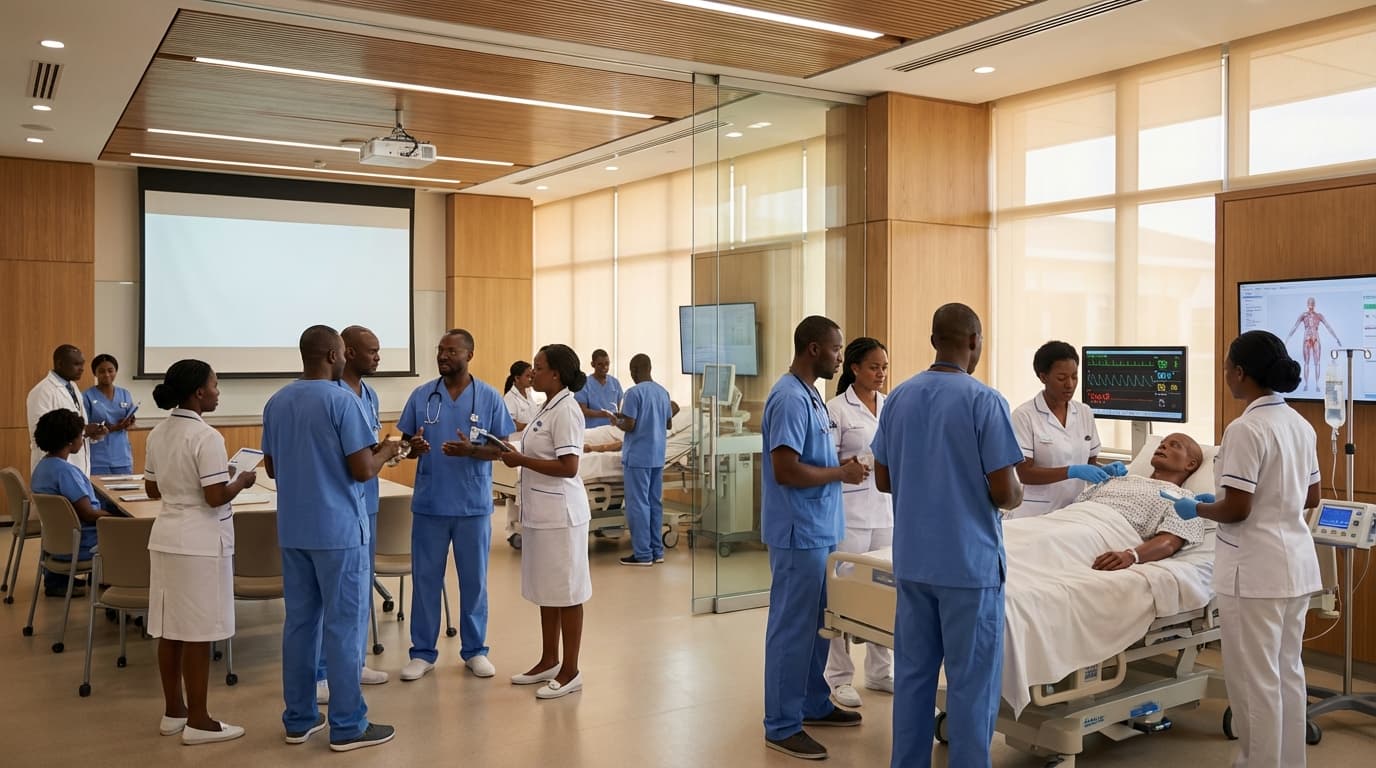
Equipment Training & Education in Nigeria
Engineering Excellence & Technical Support
Comprehensive equipment training and certification programs High-standard technical execution following OEM protocols and local regulatory frameworks.
Certified Equipment Operation Workshops
We offer hands-on, instructor-led training programs for various heavy machinery and industrial equipment, ensuring operators gain essential skills and safety certifications to meet Nigerian industry standards.
Predictive Maintenance & Troubleshooting for Technicians
Empower your maintenance teams with advanced training in predictive maintenance techniques and effective troubleshooting methodologies, reducing downtime and extending the lifespan of critical equipment in Nigerian businesses.
Virtual Reality (VR) Simulation Training Modules
Leveraging cutting-edge VR technology, we provide immersive and safe simulated training environments for complex equipment operation and emergency response, enhancing learning retention and reducing real-world training risks for Nigerian professionals.
What Is Equipment Training & Education In Nigeria?
Equipment training and education in Nigeria refers to the systematic process of imparting knowledge, skills, and competencies necessary for the safe, efficient, and effective operation, maintenance, and troubleshooting of specific industrial, commercial, or technological equipment. This service is crucial for maximizing asset lifecycle, ensuring operational integrity, and mitigating risks within various sectors of the Nigerian economy. It encompasses theoretical instruction, practical hands-on experience, and continuous professional development tailored to the unique demands of the Nigerian operational environment.
| Target Audience | Typical Use Cases | Benefits Derived |
|---|---|---|
| Industrial Operators & Technicians (Manufacturing, Oil & Gas, Power Generation, Mining) | Operation of heavy machinery (excavators, cranes), production line equipment, turbines, generators, pumps, drilling rigs, processing units. | Reduced downtime, improved product quality, enhanced operational efficiency, extended equipment lifespan, improved safety record. |
| IT & Telecommunications Professionals (Network Engineers, System Administrators, Field Technicians) | Installation, configuration, and maintenance of servers, networking devices (routers, switches), telecommunication towers, data center equipment. | Reliable network performance, reduced service interruptions, optimized infrastructure utilization, enhanced cybersecurity posture. |
| Healthcare Professionals & Biomedical Engineers (Doctors, Nurses, Technicians, Hospital Administrators) | Operation and maintenance of medical imaging equipment (MRI, CT scanners), diagnostic instruments, laboratory analyzers, life support systems, surgical robots. | Accurate diagnoses, patient safety, reduced equipment malfunction, compliance with medical device regulations, optimized healthcare delivery. |
| Construction & Civil Engineering Personnel (Site Supervisors, Equipment Operators, Maintenance Crews) | Operation of construction equipment (bulldozers, concrete mixers, scaffolding), survey equipment, safety monitoring systems. | Project completion within timelines and budgets, enhanced site safety, efficient resource utilization, compliance with building codes. |
| Agriculture Sector Professionals (Farm Managers, Technicians, Equipment Operators) | Operation and maintenance of tractors, harvesters, irrigation systems, processing machinery, drones for agricultural applications. | Increased crop yields, improved efficiency in farming operations, reduced post-harvest losses, optimized resource management. |
| Automotive Technicians & Mechanics | Diagnosis and repair of vehicle systems, operation of specialized diagnostic tools and lifts, maintenance of automotive assembly line equipment. | Accurate vehicle repair, improved customer satisfaction, enhanced workshop efficiency, adherence to automotive standards. |
Key Components of Equipment Training & Education
- Theoretical Foundations: Understanding equipment principles, design, functionality, and intended applications.
- Operational Procedures: Learning correct start-up, shutdown, routine operation, and parameter adjustment protocols.
- Preventive Maintenance: Acquiring skills for scheduled inspections, lubrication, cleaning, and component checks to prevent failures.
- Corrective Maintenance & Troubleshooting: Developing diagnostic techniques to identify and resolve equipment malfunctions and failures.
- Safety Protocols & Hazard Identification: Emphasizing safe operating practices, personal protective equipment (PPE) usage, and hazard awareness specific to the equipment and its environment.
- Regulatory Compliance: Understanding and adhering to relevant Nigerian safety, environmental, and industry-specific regulations pertaining to equipment operation and maintenance.
- Documentation & Record Keeping: Training on maintaining accurate logs, maintenance records, and performance data.
- Advanced Skills Development: Offering specialized modules for complex equipment, automation systems, and diagnostic tools.
Who Needs Equipment Training & Education In Nigeria?
In Nigeria's rapidly evolving industrial and economic landscape, comprehensive equipment training and education are no longer a luxury but a critical necessity. Across various sectors, a skilled workforce proficient in operating and maintaining diverse equipment is paramount for efficiency, safety, productivity, and innovation. Investing in such training ensures that individuals and organizations can leverage the full potential of their machinery, minimize downtime, reduce operational risks, and remain competitive in a globalized market. From heavy construction machinery to sophisticated laboratory instruments, proper understanding and handling are vital for sustained success and growth.
| Target Customer/Sector | Key Departments/Roles Requiring Training | Examples of Equipment |
|---|---|---|
| Industrial Manufacturing | Production Line Operators, Maintenance Technicians, Quality Control Personnel, Machine Supervisors | Assembly line machinery, CNC machines, Welding equipment, Packaging machines, Industrial robots, Forklifts |
| Oil & Gas Industry | Drilling Crews, Production Engineers, Refinery Operators, Maintenance Engineers, Safety Officers | Drilling rigs, Pumps, Compressors, Pipelines, Refinery equipment, Heavy lifting equipment |
| Construction & Infrastructure | Heavy Equipment Operators, Site Supervisors, Construction Engineers, Safety Managers, Mechanics | Excavators, Bulldozers, Cranes, Graders, Concrete mixers, Asphalt pavers, Surveying equipment |
| Healthcare & Pharmaceutical | Lab Technicians, Medical Equipment Technicians, Pharmacists, Nurses, Researchers | MRI scanners, CT scanners, X-ray machines, Laboratory centrifuges, Microscopes, Pharmaceutical production machinery |
| Agricultural Sector | Farm Operators, Agricultural Engineers, Technicians, Extension Officers | Tractors, Harvesters, Planting machinery, Irrigation systems, Processing equipment |
| Telecommunications & IT | Network Engineers, Technicians, Data Center Operators, Field Service Technicians | Network switches, Servers, Fiber optic splicing equipment, Mobile towers, Diagnostic tools |
| Mining & Natural Resources | Mining Machine Operators, Geologists, Metallurgists, Maintenance Personnel | Crushers, Conveyor belts, Drills, Excavators, Smelting equipment |
| Transportation & Logistics | Vehicle Technicians, Fleet Managers, Warehouse Operators, Logistics Coordinators | Heavy-duty trucks, Forklifts, Cranes, Warehouse automation systems, Diagnostic tools |
| Educational Institutions | Instructors, Technical Staff, Students in vocational/technical programs | Workshop machinery, Laboratory equipment, Simulation software, Automotive tools, Welding equipment |
Target Customers & Departments Requiring Equipment Training & Education in Nigeria
- Industrial Manufacturing Sector
- Oil & Gas Industry
- Construction & Infrastructure Development
- Healthcare & Pharmaceutical Sector
- Agricultural Sector
- Telecommunications & IT
- Mining & Natural Resources
- Transportation & Logistics
- Educational Institutions (Vocational & Technical Colleges, Universities)
Equipment Training & Education Process In Nigeria
The Equipment Training & Education Process in Nigeria outlines the systematic approach taken by training providers or equipment manufacturers to deliver comprehensive knowledge and practical skills to individuals or organizations operating specific equipment. This process ensures safe, efficient, and effective utilization of machinery, thereby maximizing productivity and minimizing operational risks. The workflow typically commences with an initial inquiry from a potential client and culminates in the successful execution of training sessions, followed by post-training support and evaluation.
| Stage | Description | Key Activities | Responsibility |
|---|---|---|---|
| Inquiry & Needs Assessment | The process begins when a client expresses interest in equipment training. This stage involves understanding the client's specific needs, the type of equipment involved, the skill level of the trainees, and any unique operational challenges. | Initial contact (phone, email, web form), detailed discussion, site visit (if necessary), identification of training objectives and desired outcomes. | Potential Client, Training Provider/Manufacturer Sales/Consultation Team |
| Proposal Development & Quotation | Based on the needs assessment, the training provider develops a tailored proposal outlining the training scope, methodology, duration, content, learning objectives, and associated costs. | Drafting training program outline, defining modules, specifying practical exercises, estimating resource requirements (trainers, equipment, venue), preparing cost breakdown, formal proposal submission. | Training Provider/Manufacturer Technical/Training Department |
| Contracting & Agreement | Once the proposal is accepted, a formal contract or agreement is established, detailing the terms and conditions of the training service, including payment schedules, liability, confidentiality, and service level agreements. | Review and negotiation of contract terms, signing of agreement, issuance of purchase order (if applicable). | Client (Procurement/Legal), Training Provider (Legal/Management) |
| Curriculum & Material Development/Customization | This stage involves either developing new training materials or customizing existing ones to align with the specific equipment and the client's operational environment. | Designing training modules, creating presentations, developing practical exercises, preparing manuals, user guides, case studies, and assessment tools. | Training Provider/Manufacturer Technical/Training Department |
| Scheduling & Logistics | The practicalities of conducting the training are finalized, including setting dates, times, and location, and arranging for necessary resources. | Coordinating training dates with the client, booking training venue (if off-site), arranging for equipment availability (training units or client's own), scheduling transportation and accommodation for trainers (if required). | Training Provider Logistics/Administration Team, Client Site Coordinator |
| Trainer Assignment & Preparation | Qualified and experienced trainers are assigned to the program, and they undertake thorough preparation to ensure effective delivery. | Selecting trainers with relevant expertise, briefing trainers on program objectives and client context, providing training materials, conducting pre-training reviews. | Training Provider/Manufacturer Training Management |
| Training Execution | This is the core stage where the training is delivered to the participants, incorporating theoretical knowledge and practical application. | Conducting classroom sessions, delivering practical demonstrations, facilitating hands-on exercises, answering questions, addressing participant concerns, ensuring safety protocols are followed. | Assigned Trainers, Participants |
| Assessment & Evaluation | The effectiveness of the training is measured by assessing the participants' understanding and retention of the material. | Administering written tests, practical skill assessments, observational evaluations, collecting participant feedback through surveys. | Assigned Trainers, Training Provider Quality Assurance Team |
| Certification & Documentation | Upon successful completion of the training and assessments, participants receive relevant certifications or certificates of attendance, and all training records are maintained. | Issuing certificates of competency or attendance, generating training completion reports, maintaining participant records. | Training Provider/Manufacturer Administration/Certification Department |
| Post-Training Support & Feedback | The relationship extends beyond the training delivery, offering continued support and gathering feedback for future improvement. | Providing follow-up support (e.g., answering queries), offering refresher courses, conducting performance reviews (if agreed), analyzing feedback for program enhancement, updating training materials. | Training Provider/Manufacturer Support Team, Client Management |
Key Stages in the Equipment Training & Education Workflow
- Inquiry & Needs Assessment
- Proposal Development & Quotation
- Contracting & Agreement
- Curriculum & Material Development/Customization
- Scheduling & Logistics
- Trainer Assignment & Preparation
- Training Execution
- Assessment & Evaluation
- Certification & Documentation
- Post-Training Support & Feedback
Equipment Training & Education Cost In Nigeria
The cost of equipment training and education in Nigeria can vary significantly depending on several factors. These factors influence the overall price, making it crucial for individuals and organizations to understand them when budgeting for such programs. Key determinants include the type of equipment, the complexity of the training, the provider's reputation, the duration of the course, the location of training, and the inclusion of practical sessions or certifications. Specialized equipment requiring advanced technical knowledge, such as industrial machinery, medical devices, or advanced IT infrastructure, generally commands higher training fees due to the expertise required from instructors and the specialized nature of the curriculum. Conversely, training on more common or simpler equipment may be more affordable.
The mode of training also plays a role; on-site training at a company's premises might incur additional costs for travel and accommodation for trainers, while off-site training at a training center has its own overheads. Online or virtual training, while potentially more cost-effective in terms of logistics, may still carry substantial fees depending on the interactivity and resources provided. The duration of the training program, from a few hours for introductory sessions to several days or weeks for comprehensive courses, directly impacts the overall cost. Furthermore, the accreditation and recognition of the training provider and any certifications obtained can influence pricing, with well-established and reputable institutions often charging a premium for their credibility and the perceived value of their qualifications. For businesses, the ROI is often considered, justifying higher costs for training that leads to improved efficiency, reduced downtime, and enhanced safety.
| Training Category | Typical Price Range (NGN) | Notes |
|---|---|---|
| Basic Software/Office Equipment Training (e.g., Microsoft Office, basic printer operation) | 5,000 - 25,000 | Often offered in short workshops or online modules. May be included with software purchase. |
| Intermediate Technical Equipment Training (e.g., POS systems, basic machinery, standard IT hardware) | 15,000 - 75,000 | Typically a few days to a week. May include practical exercises. |
| Advanced Technical/Industrial Equipment Training (e.g., heavy machinery, specialized manufacturing equipment, complex IT infrastructure) | 50,000 - 300,000+ | Can range from several days to weeks. Often requires specialized instructors and may include site visits or simulator time. Certifications are common. |
| Medical Equipment Training (e.g., diagnostic devices, patient monitoring systems) | 75,000 - 500,000+ | Highly specialized, requires certified trainers and often involves hands-on use with simulators or actual equipment. Compliance and safety are paramount. |
| Safety and Compliance Training (e.g., operating specific hazardous equipment, first aid with equipment) | 10,000 - 100,000 | Cost depends on the complexity of safety protocols and the specific equipment involved. Certification is usually a key component. |
| Customized Corporate Training Packages | Variable (negotiable) | Tailored to specific company needs, equipment, and employee skill gaps. Pricing is highly dependent on scope and duration. |
Factors Influencing Equipment Training & Education Costs in Nigeria
- Type and Complexity of Equipment
- Duration and Depth of Training
- Provider's Reputation and Accreditation
- Location of Training (On-site vs. Off-site)
- Inclusion of Practical Sessions and Hands-on Experience
- Certification and Assessment Fees
- Instructor Expertise and Qualifications
- Training Materials and Resources Provided
- Customization of Training Programs
- Target Audience (Individual vs. Corporate)
Affordable Equipment Training & Education Options
Investing in proper equipment training and education is crucial for safety, efficiency, and productivity. Fortunately, there are numerous affordable options available, from online courses and workshops to bundled packages. This guide explores cost-saving strategies and the benefits of value bundles to help you get the most out of your training budget.
| Cost-Saving Strategy | Description | Benefits |
|---|---|---|
| Value Bundles | Combining multiple training modules, certifications, or resources into a single package at a discounted price. | Lower overall cost per training item, comprehensive skill development, streamlined booking and administration. |
| Early Bird Discounts | Registering for training courses or programs well in advance of the start date. | Significant price reductions, guaranteed spots in popular courses. |
| Group Discounts | Enrolling multiple individuals from the same organization in a training program. | Reduced per-person cost, team cohesion and standardized knowledge. |
| Subscription Services | Access to a library of online courses or training materials for a recurring fee. | Unlimited learning opportunities, predictable budgeting, continuous skill updates. |
| Utilize Free Resources | Leveraging free webinars, articles, and introductory materials provided by manufacturers or industry experts. | Basic knowledge acquisition, pre-training preparation, identifying further training needs. |
| Partnerships & Alliances | Collaborating with other companies or organizations to share training costs and resources. | Access to specialized training, reduced individual investment, expanded network. |
| Government Grants & Subsidies | Investigating and applying for government funding programs aimed at workforce development and technical training. | Significant reduction or elimination of training costs, access to cutting-edge training. |
Affordable Equipment Training & Education Options
- Online Courses & Webinars: Accessible, self-paced, and often more budget-friendly than in-person sessions.
- Manufacturer-Provided Training: Many manufacturers offer introductory or specialized training, sometimes included with equipment purchase.
- Community Colleges & Vocational Schools: Offer certification programs and courses at competitive prices.
- Industry Associations: Often provide training resources, workshops, and networking opportunities for members.
- On-the-Job Training (OJT) with Mentorship: Leveraging experienced staff to train new hires can be highly cost-effective.
- Simulation-Based Training: Virtual reality and simulators can provide hands-on experience without the wear-and-tear on actual equipment.
- Train-the-Trainer Programs: Empowering internal staff to deliver training can reduce long-term costs.
Verified Providers In Nigeria
In Nigeria's rapidly growing healthcare sector, identifying reliable and qualified healthcare providers is paramount for individuals seeking quality care. Franance Health has emerged as a leading platform dedicated to showcasing and verifying healthcare professionals and facilities, ensuring patients have access to trustworthy medical services. Their rigorous credentialing process and commitment to transparency make them an indispensable resource for anyone navigating the Nigerian healthcare landscape. This document outlines Franance Health's credentials and explains why they represent the best choice for finding verified healthcare providers.
| Provider Type | Verification Focus | Why it Matters for Patients | Franance Health's Role |
|---|---|---|---|
| Doctors/Specialists | Medical Council Registration, Specialty Board Certification, Educational Degrees | Ensures they are legally qualified to practice and possess the necessary expertise for your condition. | Verifies licenses and qualifications against official records. |
| Nurses | Nursing Council Registration, Qualifications and Certifications | Confirms they are licensed and trained to provide safe and effective nursing care. | Authenticates registration and credentials with the Nursing Council. |
| Pharmacists | Pharmacy Council Registration, Pharmacy Degree | Guarantees they are qualified to dispense medication safely and provide pharmaceutical advice. | Validates registration and academic qualifications. |
| Hospitals/Clinics | Ministry of Health Accreditation, Operational Licenses, Safety Standards Compliance | Indicates the facility meets regulatory requirements for quality patient care, safety, and hygiene. | Checks for valid licenses and accreditation from relevant health authorities. |
| Diagnostic Centers | Laboratory Accreditation (where applicable), Equipment Calibration, Staff Qualifications | Ensures accurate diagnostic testing using properly maintained equipment and by qualified personnel. | Verifies operational licenses and staff credentials. |
Franance Health's Verification Process and Credentials
- Rigorous Professional Licensing Verification: Franance Health meticulously checks and verifies the professional licenses of all listed doctors, nurses, pharmacists, and allied health professionals with the relevant regulatory bodies in Nigeria (e.g., Medical and Dental Council of Nigeria, Nursing and Midwifery Council of Nigeria).
- Facility Accreditation and Compliance Checks: For hospitals, clinics, and diagnostic centers, Franance Health verifies their operational licenses and compliance with national health standards and regulations.
- Specialty and Qualification Endorsements: The platform confirms the specific specializations and post-graduate qualifications of healthcare practitioners through verifiable certificates and attestations.
- Background Checks and Reputation Monitoring: While not a primary focus, Franance Health incorporates elements of reputation monitoring and ethical conduct checks where possible through publicly available information and user feedback mechanisms.
- Continuing Professional Development (CPD) Monitoring (Emerging): As the platform evolves, Franance Health aims to incorporate mechanisms for verifying ongoing professional development, ensuring practitioners stay updated with the latest medical advancements.
- Transparent Provider Profiles: Each verified provider on Franance Health has a detailed profile showcasing their qualifications, experience, areas of expertise, accepted insurance, and location, allowing for informed decision-making.
Scope Of Work For Equipment Training & Education
This Scope of Work (SOW) outlines the training and education services to be provided for the newly acquired equipment. The objective is to ensure that all designated personnel achieve proficiency in the operation, maintenance, and troubleshooting of the specified equipment, thereby maximizing its utility and minimizing downtime. The training will cover both theoretical knowledge and practical application, adhering to industry best practices and the manufacturer's recommended procedures.
| Deliverable ID | Technical Deliverable | Description | Standard Specification/Acceptance Criteria | Format |
|---|---|---|---|---|
| TD-001 | Training Curriculum Development | Detailed outline of all training modules, learning objectives, and assessment methods. | Curriculum must align with equipment manufacturer specifications and industry standards. Minimum 90% knowledge retention measured by post-training assessments. | Digital Document (PDF) |
| TD-002 | Training Manuals | Comprehensive manuals for each training module, including theory, procedures, and illustrations. | Manuals must be clear, concise, and technically accurate. Content validated by subject matter experts and equipment manufacturer. | Digital Document (PDF), Printable Hardcopies (optional) |
| TD-003 | Participant Workbooks | Interactive workbooks for participants to engage with the material, including exercises and note-taking sections. | Workbooks should facilitate active learning and reinforce key concepts. Must be directly linked to training manual content. | Digital Document (PDF), Printable Hardcopies (optional) |
| TD-004 | Hands-on Training Sessions | Practical, instructor-led training sessions utilizing the actual equipment or simulated environments. | Minimum 80% of scheduled training time dedicated to hands-on practice. Successful completion of practical exercises as defined in participant workbooks. | In-person Instruction, Live Demonstration |
| TD-005 | Competency Assessment Reports | Reports detailing the assessment results for each participant, including theoretical and practical evaluations. | Each participant must achieve a minimum score of 85% on both theoretical and practical assessments to be deemed competent. | Digital Document (Excel/PDF) |
| TD-006 | Train-the-Trainer Program (if applicable) | Training for designated internal personnel who will then train future employees. | Trainees must demonstrate proficiency in delivering all training modules and assessing participant competency. | In-person Instruction, Facilitator Guides |
| TD-007 | Post-Training Support Plan | Outline of ongoing support mechanisms, including access to subject matter experts and refresher training opportunities. | Support plan should clearly define escalation paths for technical queries and availability of refresher sessions (e.g., quarterly). | |
| TD-008 | Training Feedback Forms | Structured feedback forms for participants to evaluate the training effectiveness and instructor performance. | Feedback forms to be collected and analyzed. Minimum 90% participant satisfaction rating for overall training quality. | Digital Form (Online Survey), Printable Form |
| TD-009 | As-Built Documentation Updates | Incorporation of any relevant operational or maintenance insights gained during training into existing as-built documentation. | Updates must be reviewed and approved by the project's engineering team and reflect changes mandated by training insights. | Digital Document (CAD/Revit/PDF) |
Key Training Modules
- Introduction to Equipment and Safety Procedures
- Equipment Operation and Control Systems
- Routine Maintenance and Inspection
- Basic Troubleshooting and Fault Diagnosis
- Advanced Maintenance and Repair (as applicable)
- Data Management and Reporting (as applicable)
- Emergency Procedures and Response
Service Level Agreement For Equipment Training & Education
This Service Level Agreement (SLA) outlines the commitment for Equipment Training & Education services, focusing on response times for support requests and uptime guarantees for access to training platforms and resources. This SLA is intended to ensure that users receive timely assistance and reliable access to educational materials.
| Service Component | Response Time Target | Uptime Guarantee | Escalation Procedure |
|---|---|---|---|
| Technical Support (Platform Access) | Within 4 business hours for non-critical issues; Within 1 business hour for critical issues (e.g., inability to access platform). | 99.5% availability of the training platform during scheduled access hours. | For critical issues not resolved within 2 business hours, escalation to Tier 2 support or a designated manager. |
| Content Inquiry (e.g., clarification on a training module) | Within 8 business hours. | N/A (dependent on scheduled content updates) | For complex content questions, referral to a subject matter expert. |
| Scheduled Live Training/Webinar Access | Technical assistance available 30 minutes prior to session start. | 99.9% availability of the webinar platform. | Immediate technical support during the session, with recording made available if technical issues prevent live participation. |
| Training Resource Availability (e.g., video streaming, document download) | N/A (availability is the primary metric) | 99.0% availability of all documented training resources. | For persistent unavailability of a critical resource, notification to the IT support team for investigation. |
Scope of Services
- Provision of access to online training modules and documentation for specified equipment.
- Technical support for accessing and navigating training platforms.
- Scheduled live training sessions and webinars (where applicable).
- Availability of training resources (videos, manuals, simulations) as per the defined schedule.
Frequently Asked Questions

Ready when you are
Let's scope your Equipment Training & Education in Nigeria project in Nigeria.

Scaling healthcare logistics and technical systems across the entire continent.