
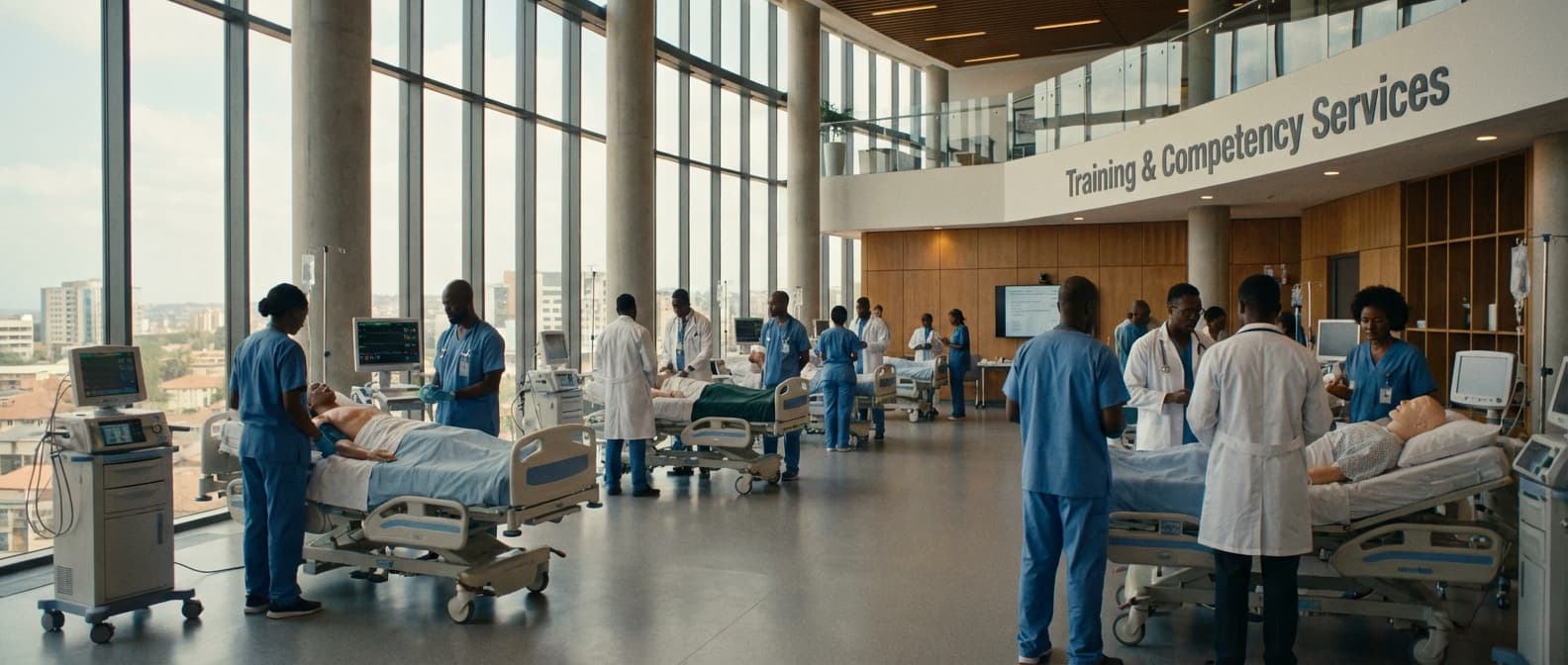
Ventilator User Training Service (Nurses) in Nigeria
Engineering Excellence & Technical Support
Ventilator User Training Service (Nurses) High-standard technical execution following OEM protocols and local regulatory frameworks.
Advanced Ventilator Settings Mastery
Gain expertise in navigating and configuring complex ventilator modes (e.g., BiPAP, PSV, APRV) crucial for managing diverse respiratory conditions in Nigerian healthcare settings. Understand the physiological principles behind each mode to optimize patient outcomes and minimize complications.
Accurate Ventilator Setup & Troubleshooting
Learn best practices for sterile ventilator circuit setup, patient connection, and essential pre-use checks. Develop critical skills in identifying common alarm triggers, performing rapid troubleshooting, and implementing effective interventions to ensure continuous patient support.
Patient Monitoring & Weaning Strategies
Master the interpretation of real-time ventilator data (e.g., tidal volume, PEEP, respiratory rate, FiO2) and vital signs to closely monitor patient response. Acquire systematic approaches to ventilator weaning, assessing readiness and implementing safe, gradual disengagement protocols.
What Is Ventilator User Training Service (Nurses) In Nigeria?
Ventilator User Training Service (Nurses) in Nigeria refers to specialized educational programs designed to equip registered nurses with the knowledge and practical skills required for the safe and effective operation of mechanical ventilators in a clinical setting. This service addresses the critical need for proficient healthcare professionals capable of managing patients requiring respiratory support, thereby improving patient outcomes and reducing adverse events associated with ventilator use. The training emphasizes a comprehensive understanding of ventilator principles, modes of ventilation, patient assessment, monitoring, troubleshooting, and emergency management, all tailored to the Nigerian healthcare context and available resources.
| Who Needs Ventilator User Training Service? | Typical Use Cases | ||||||||||||||
|---|---|---|---|---|---|---|---|---|---|---|---|---|---|---|---|
| Registered Nurses working in critical care units (ICUs, CCUs, HDUs). | Post-operative patients requiring mechanical ventilation. | Nurses in emergency departments managing critically ill patients. | Patients with acute respiratory failure (e.g., ARDS, pneumonia, COPD exacerbations). | Nurses in hospitals with established or developing critical care services. | Patients undergoing surgical procedures requiring prolonged mechanical ventilation. | Healthcare professionals in remote or underserved areas facing frequent respiratory emergencies. | Patients with neurological conditions affecting respiratory drive (e.g., stroke, spinal cord injury). | Nurses involved in the transport of critically ill patients requiring ventilation. | Patients with severe sepsis or septic shock leading to respiratory compromise. | Newly graduated nurses entering critical care roles. | Patients with drug overdose or poisoning affecting respiratory function. | Nurses seeking specialized professional development in respiratory care. | Patients with severe asthma or cystic fibrosis exacerbations. | Nurses transitioning from general wards to critical care settings. | Patients requiring mechanical ventilation for therapeutic hypothermia. |
Key Components of Ventilator User Training Service (Nurses) in Nigeria
- Fundamental Principles of Mechanical Ventilation: Understanding gas exchange, lung mechanics, and the physiological effects of positive-pressure ventilation.
- Ventilator Modes and Settings: In-depth training on various modes (e.g., Volume Control, Pressure Control, SIMV, CPAP) and the rationale for selecting appropriate settings based on patient condition.
- Patient Assessment and Monitoring: Techniques for assessing respiratory status, interpreting ventilator graphics and alarms, and recognizing signs of patient distress or intolerance.
- Initiation and Discontinuation of Mechanical Ventilation: Protocols for safely placing patients on and weaning them from mechanical ventilation.
- Troubleshooting and Alarm Management: Strategies for identifying and resolving common ventilator malfunctions and alarm conditions.
- Ventilator-Associated Pneumonia (VAP) Prevention: Education on evidence-based practices for minimizing the risk of VAP.
- Maintenance and Infection Control: Proper cleaning, disinfection, and maintenance procedures for ventilator circuits and equipment.
- Ethical and Legal Considerations: Understanding the ethical implications and legal responsibilities associated with ventilator management.
- Emergency Procedures: Protocols for managing critical events such as ventilator failure, airway emergencies, and patient decompensation.
- Practical Simulation and Hands-on Practice: Utilizing manikins or simulated ventilators for realistic skill development and application.
Who Needs Ventilator User Training Service (Nurses) In Nigeria?
Effective and comprehensive Ventilator User Training is crucial for healthcare professionals in Nigeria who are involved in the care of patients requiring mechanical ventilation. This training ensures patient safety, optimizes ventilator settings, and promotes better patient outcomes. The need for this specialized training extends across various departments and roles within Nigerian healthcare facilities.
| Department/Unit | Primary Need for Ventilator Training | Specific Roles Requiring Training |
|---|---|---|
| Intensive Care Unit (ICU) | High volume of critically ill patients requiring mechanical ventilation. Immediate and expert management of ventilators is essential. | ICU Nurses, Critical Care Physicians, Anesthesiologists, Respiratory Therapists (if applicable) |
| Emergency Department (ED) / Accident & Emergency (A&E) | Stabilization of patients with respiratory distress and transfer to higher care. Rapid assessment and initiation of ventilation are critical. | ED Nurses, Emergency Physicians, Doctors on duty |
| Anesthesia Department | Ventilation during surgical procedures. Ensuring optimal ventilation for patient safety during surgery. | Anesthesiologists, Nurse Anesthetists, Anesthetic Nurses |
| Medical Wards (for specific conditions) | Management of patients with conditions like severe pneumonia, COPD exacerbations, or other respiratory failures that may require non-invasive or invasive ventilation. | Medical Nurses, Physicians specializing in internal medicine or pulmonology |
| Pediatric/Neonatal Intensive Care Unit (PICU/NICU) | Specialized ventilation requirements for infants and children with respiratory challenges. | Pediatric/Neonatal Nurses, Pediatricians, Neonatologists |
| Operating Theatre (OT) | During surgical procedures requiring controlled ventilation. | Theatre Nurses, Surgeons, Anesthesiologists |
| Healthcare Facilities with limited resources or rural areas | Where nurses are often the primary caregivers and may need to manage ventilators with minimal physician oversight. | All available nursing staff, Community Health Workers with advanced training |
Target Customers and Departments for Ventilator User Training Service in Nigeria
- The primary recipients of this training are healthcare professionals directly involved in patient care and the operation of ventilators. This includes, but is not limited to, the following categories:
- Registered Nurses (RNs)
- Enrolled Community Health Nurses (ECHNs)
- Midwives
- Critical Care Nurses (especially those working in Intensive Care Units - ICUs)
- Anesthetic Nurses
- Respiratory Therapists (where available)
- Medical Doctors (especially those in critical care, emergency medicine, and anesthesiology)
- Nursing Assistants/Healthcare Support Workers (for basic monitoring and assistance under supervision)
Ventilator User Training Service (Nurses) Process In Nigeria
This document outlines the workflow for the Ventilator User Training Service specifically tailored for nurses in Nigeria, from the initial inquiry to the successful execution of the training. It aims to provide a clear, step-by-step process for healthcare facilities and individual nurses seeking this specialized training. The process emphasizes clear communication, resource allocation, and efficient delivery of high-quality education to ensure nurses are competent in operating and managing ventilators.
| Phase | Step | Description | Responsible Party | Key Outputs/Deliverables |
|---|---|---|---|---|
| Phase 1: Inquiry & Needs Assessment | 1.1 Initial Inquiry | Healthcare facility or individual nurse expresses interest in ventilator user training. | Inquiring Party (Hospital Admin/Nurse Manager/Individual Nurse) | Inquiry submission (email, phone call, online form) |
| 1.2 Information Gathering | Training provider gathers details about the facility's current ventilator inventory, nurse-to-patient ratios, existing training protocols, and specific training needs. | Training Provider | Needs assessment report/questionnaire responses | |
| 1.3 Consultation | A brief consultation to clarify needs, discuss potential training modules, and address initial questions. | Training Provider & Inquiring Party | Clarified training objectives and scope | |
| Phase 2: Proposal & Agreement | 2.1 Proposal Development | Training provider develops a detailed proposal outlining training modules, duration, venue requirements, trainer credentials, learning objectives, assessment methods, and cost. | Training Provider | Training Proposal |
| 2.2 Proposal Review & Negotiation | Inquiring party reviews the proposal. Negotiations on cost, schedule, and specific content may occur. | Inquiring Party & Training Provider | Feedback on proposal, agreed-upon modifications | |
| 2.3 Contract/Agreement Signing | Formal agreement signed by both parties, detailing terms, payment schedule, and responsibilities. | Inquiring Party & Training Provider | Signed Training Agreement/Contract | |
| Phase 3: Pre-Training Preparation | 3.1 Schedule Finalization | Agree on specific training dates, times, and duration. | Training Provider & Inquiring Party | Finalized Training Schedule |
| 3.2 Participant Identification & Registration | Inquiring party identifies and registers the nurses who will attend the training. | Inquiring Party | Participant list with contact details | |
| 3.3 Training Material Preparation | Training provider prepares training manuals, presentations, case studies, and assessment tools. | Training Provider | Training materials (digital/print) | |
| 3.4 Venue & Equipment Confirmation | Ensure the training venue is suitable (classroom, simulation lab) and required ventilators (or simulators) are available and functional. | Inquiring Party & Training Provider | Confirmed training venue and equipment availability | |
| Phase 4: Training Execution | 4.1 Welcome & Introduction | Opening session to introduce trainers, participants, and outline the training agenda and objectives. | Lead Trainer | Welcome address, agenda review |
| 4.2 Theoretical Sessions | Lectures, presentations, and discussions on ventilator principles, modes of ventilation, patient assessment, troubleshooting, and safety protocols. | Trainers | Knowledge acquisition, understanding of concepts | |
| 4.3 Practical/Hands-on Sessions | Demonstrations and supervised practice on actual ventilators or high-fidelity simulators, including setting up, adjusting parameters, and responding to alarms. | Trainers & Participants | Skill development, practical competency | |
| 4.4 Case Study Analysis | Group work and discussion of real-life clinical scenarios to apply theoretical knowledge and practical skills. | Trainers & Participants | Problem-solving skills, critical thinking | |
| 4.5 Assessment (Formative & Summative) | Ongoing formative assessments (quizzes, observation) and summative assessments (written exams, practical skills evaluation) to gauge learning. | Trainers | Learning progress tracking, competency validation | |
| 4.6 Q&A and Debriefing | Dedicated time for participants to ask questions and for trainers to debrief on key learnings and address any concerns. | Trainers & Participants | Clarification of doubts, reinforcement of learning | |
| Phase 5: Post-Training Evaluation & Support | 5.1 Feedback Collection | Participants provide feedback on the training content, delivery, trainers, and overall experience. | Participants | Training feedback forms/surveys |
| 5.2 Performance Review & Certification | Review of assessment results. Successful participants receive a certificate of completion. | Training Provider | Certificates of Completion | |
| 5.3 Post-Training Follow-up | Optional follow-up support, such as Q&A sessions, refresher courses, or on-site mentoring, to reinforce learning and address evolving needs. | Training Provider & Inquiring Party | Continued learning, sustained competency | |
| 5.4 Training Effectiveness Review | Training provider and facility review the overall effectiveness of the training in improving nursing practice and patient care. | Training Provider & Inquiring Party | Training effectiveness report, identification of future training needs |
Ventilator User Training Service (Nurses) Workflow in Nigeria
- Phase 1: Inquiry & Needs Assessment
- Phase 2: Proposal & Agreement
- Phase 3: Pre-Training Preparation
- Phase 4: Training Execution
- Phase 5: Post-Training Evaluation & Support
Ventilator User Training Service (Nurses) Cost In Nigeria
The cost of Ventilator User Training services for nurses in Nigeria can vary significantly based on several factors. These include the training provider's reputation and experience, the duration and depth of the training, the location where the training is conducted (e.g., major cities versus smaller towns), and whether the training is provided on-site at a healthcare facility or at a dedicated training center. The level of customization required for the training program also plays a role, with specialized modules or advanced ventilator types potentially incurring higher costs. Furthermore, the inclusion of practical assessment, certification, and ongoing support can influence the overall price. Negotiation and the volume of nurses being trained can also lead to different pricing structures.
| Training Type/Provider | Estimated Cost Range (NGN) | Notes |
|---|---|---|
| Basic Ventilator Operation (Introductory) | 50,000 - 150,000 | Covers fundamental principles, basic settings, and common alarms for essential ventilator types. Often delivered by individual trainers or smaller training outfits. |
| Comprehensive Ventilator Management (Advanced) | 120,000 - 300,000+ | Includes in-depth understanding of various modes, troubleshooting, patient monitoring, interpretation of data, and management of complex cases. Typically offered by established medical training institutions or specialized companies. |
| On-site Training (Group Rates) | Negotiable (depends on duration & participants) | Costs can be higher per nurse if fewer participants, but often more cost-effective for larger groups. Includes travel and accommodation for trainers if applicable. |
| Specialized Ventilator Training (e.g., Neonatal/Pediatric, specific brands) | 150,000 - 400,000+ | Focuses on particular patient populations or specific ventilator models, requiring specialized equipment and expertise. Prices can vary greatly. |
| Certification Courses | Included in comprehensive training or as a separate add-on | Certification adds value and can range from 20,000 - 50,000 NGN if not bundled. |
Key Pricing Factors for Ventilator User Training (Nurses) in Nigeria:
- Training Provider Reputation and Expertise
- Duration and Scope of Training Program
- Geographic Location of Training
- On-site vs. Off-site Training Facility
- Level of Customization and Specialization
- Inclusion of Practical Assessments and Certification
- Post-training Support and Follow-up
- Volume of Participants for Discounting
Affordable Ventilator User Training Service (Nurses) Options
This document outlines affordable ventilator user training service options for nurses. We aim to provide comprehensive and cost-effective training solutions that enhance clinical competency and patient safety in ventilator management. The following sections detail our value bundles and cost-saving strategies.
| Bundle Name | Key Features | Target Audience | Estimated Cost Range (per nurse) | Potential Cost Savings |
|---|---|---|---|---|
| Basic Competency Bundle | Online modules, interactive quizzes, simulated case studies. 4-6 hours of content. | New ICU/ER Nurses, General Med/Surg Nurses with occasional ventilator exposure. | $150 - $300 | Reduces need for extensive on-the-job shadowing, standardizes foundational knowledge, minimizes errors from lack of basic understanding. |
| Advanced Troubleshooting Bundle | Includes Basic Bundle plus in-depth lectures on waveform analysis, ABG interpretation for vent adjustments, common weaning failures, and simulation scenarios. | Experienced ICU Nurses, Respiratory Therapists (complementary training). | $300 - $600 | Improves timely identification and resolution of issues, reduces ventilator days, lowers risk of adverse events and associated costs. |
| Specialty Ventilator Bundle | Hands-on simulation with specific ventilator models, institutional protocol integration, advanced mode practical application. Flexible duration based on complexity. | Nurses working with specific ventilator brands or advanced modes. | $400 - $800+ | Reduces learning curve on new equipment, increases efficiency, ensures compliance with manufacturer recommendations and institutional policies. |
| Comprehensive Certification Bundle | All Basic and Advanced modules, dedicated simulation lab time, practical assessment, written exam. Typically 16-24 hours of training. | Nurses seeking advanced credentialing, institutions aiming for standardized high-level competency. | $800 - $1500 | Demonstrates a high standard of care, can reduce staff turnover due to skill development, supports quality improvement initiatives, potential for reimbursement for certified staff. |
Value Bundles
- {"title":"Basic Competency Bundle","description":"Covers foundational knowledge of mechanical ventilation, common modes, initial setup, and basic troubleshooting. Ideal for nurses new to critical care or requiring a refresher."}
- {"title":"Advanced Troubleshooting Bundle","description":"Expands on basic skills to include recognition and management of complex ventilatory complications, weaning strategies, and advanced ventilator settings. Suitable for experienced critical care nurses."}
- {"title":"Specialty Ventilator Bundle","description":"Focuses on specific ventilator platforms commonly used within your institution (e.g., Dräger, Hamilton Medical, Puritan Bennett) or specialized modes like NAVA or high-frequency ventilation. Customizable to institutional needs."}
- {"title":"Comprehensive Certification Bundle","description":"A complete training program leading to a recognized certification in ventilator management. Includes all modules from basic to advanced, plus practical simulation assessments."}
Verified Providers In Nigeria
In Nigeria's dynamic healthcare landscape, identifying trustworthy and competent medical professionals is paramount. This is where Verified Providers become essential. Verified Providers undergo a rigorous credentialing process, ensuring their qualifications, licenses, and ethical standing meet the highest standards. Among these, Franance Health stands out as a beacon of excellence, representing the best choice for your healthcare needs. Their commitment to thorough verification and patient well-being sets them apart.
| Credential Type | Franance Health Verification Focus | What it Means for You |
|---|---|---|
| Medical Licenses & Registrations | Up-to-date, valid, and unrestricted licenses with relevant medical boards in Nigeria. | Guaranteed to be legally practicing and qualified. |
| Educational Qualifications | Verification of degrees, diplomas, and certifications from accredited institutions. | Ensures a strong theoretical and practical foundation. |
| Professional Experience | Thorough review of work history, including specialist training and prior employment. | Confirms practical application of knowledge and skills. |
| Specialty Certifications | Validation of certifications in specific medical disciplines. | Access to highly specialized care and expertise. |
| Continuing Professional Development (CPD) | Confirmation of ongoing learning and participation in professional development activities. | Providers are up-to-date with the latest medical advancements and practices. |
| Background Checks & Disciplinary Records | Review for any past disciplinary actions or adverse findings. | Prioritizes your safety and confidence in the provider's integrity. |
Why Franance Health Verified Providers are the Best Choice:
- Unwavering Commitment to Quality: Franance Health implements a stringent verification process that goes beyond basic licensing. They meticulously assess educational backgrounds, specialized training, professional experience, and adherence to ethical guidelines.
- Patient Safety First: By partnering with Franance Health, you are assured of receiving care from practitioners who have demonstrated a consistent track record of patient safety and positive outcomes.
- Access to Top Talent: Franance Health actively recruits and partners with healthcare professionals who are leaders in their respective fields, offering access to specialized expertise and advanced medical knowledge.
- Streamlined Healthcare Journey: The verification process by Franance Health simplifies your decision-making. You can have confidence in the competence of the providers you choose, allowing you to focus on your recovery and well-being.
- Ethical Practice and Integrity: Franance Health places a strong emphasis on ethical conduct. Their verified providers are committed to transparent communication, patient advocacy, and maintaining the highest professional integrity.
Scope Of Work For Ventilator User Training Service (Nurses)
This Scope of Work (SOW) outlines the requirements for providing comprehensive ventilator user training services specifically tailored for registered nurses. The objective is to equip nurses with the knowledge and practical skills necessary to safely and effectively operate, monitor, and manage patients on mechanical ventilation. This training will cover theoretical concepts, hands-on practice with common ventilator models, and emergency troubleshooting procedures.
| Parameter | Standard Specification / Requirement | Details/Notes |
|---|---|---|
| Training Curriculum | Comprehensive and up-to-date, covering fundamental principles of mechanical ventilation, modes of ventilation, patient assessment, ventilator settings, waveform interpretation, alarms, weaning protocols, and infection control. | Content should align with current clinical guidelines and best practices. Must include specific training on common ventilator models used by the client. |
| Training Methodology | Blended learning approach including didactic presentations, interactive discussions, case studies, simulation exercises, and hands-on practice with actual or simulated ventilator equipment. | Emphasis on practical application and problem-solving. Adult learning principles should be applied. |
| Target Audience | Registered Nurses (RNs) with varying levels of experience in critical care or respiratory management. | Training content should be adaptable to different experience levels. |
| Duration of Training | Minimum of [Specify Hours/Days] per cohort, to be determined based on the scope of ventilator models and complexity of topics. | Exact duration to be agreed upon with the client. |
| Trainer Qualifications | Experienced and certified respiratory therapists or critical care nurses with demonstrated expertise in mechanical ventilation and adult education. | Trainers must possess excellent communication and teaching skills. |
| Ventilator Models Covered | Training to include hands-on practice with [List specific ventilator models, e.g., Puritan Bennett 840, Hamilton C1, GE Healthcare Engstrom] | Client to provide access to functional ventilator units and simulation equipment if available. |
| Assessment Strategy | A multi-faceted approach including a pre-training knowledge assessment, a post-training knowledge assessment, and a practical skills competency evaluation. | Pass/fail criteria for competency assessment to be defined and agreed upon. |
| Reporting | Provide detailed reports for each training session, including attendee list, assessment scores, competency evaluation results, and any identified learning gaps. | Aggregate reports can be provided at the conclusion of the training engagement. |
| Training Materials | High-quality, branded training materials (digital and/or printed) provided to each participant. Materials should serve as a reference post-training. | Materials should be accessible offline where possible. |
| Post-Training Support | Access to a designated point of contact or knowledge base for follow-up questions for a period of [Specify Timeframe, e.g., 30 days] post-training. | This ensures continued learning and reinforcement of skills. |
Technical Deliverables
- Training Modules (Digital and/or Printed)
- Competency Assessment Tools (Pre- and Post-Training)
- Practical Skill Checklists
- Case Study Scenarios
- Troubleshooting Guides (Ventilator-Specific)
- Certificate of Completion (per attendee)
- Training Attendance and Assessment Reports (Aggregate)
- Post-Training Support Documentation (FAQ, Contact Information)
Service Level Agreement For Ventilator User Training Service (Nurses)
This Service Level Agreement (SLA) outlines the response times and uptime guarantees for the Ventilator User Training Service specifically designed for nurses. This SLA aims to ensure timely and reliable access to training resources and support for all participating nursing staff.
| Service Component | Response Time (Business Hours) | Uptime Guarantee (Monthly) |
|---|---|---|
| Technical Support (for platform access issues) | 2 hours | 99.5% |
| Content Inquiry (questions about training material) | 4 business hours | 99.5% |
| New Training Module Availability | As per published schedule (e.g., weekly updates) | N/A (focus on availability of existing modules) |
| Live Training Session Access | 15 minutes prior to scheduled start | 99.5% (for platform stability) |
| On-Demand Training Module Access | Immediate (post-authentication) | 99.5% |
Key Performance Indicators (KPIs)
- Response Time: The maximum allowable time from a request being submitted by a nurse to initial engagement by the training support team.
- Uptime Guarantee: The percentage of time the Ventilator User Training Service is operational and accessible to users.
Frequently Asked Questions

Ready when you are
Let's scope your Ventilator User Training Service (Nurses) in Nigeria project in Nigeria.

Scaling healthcare logistics and technical systems across the entire continent.