
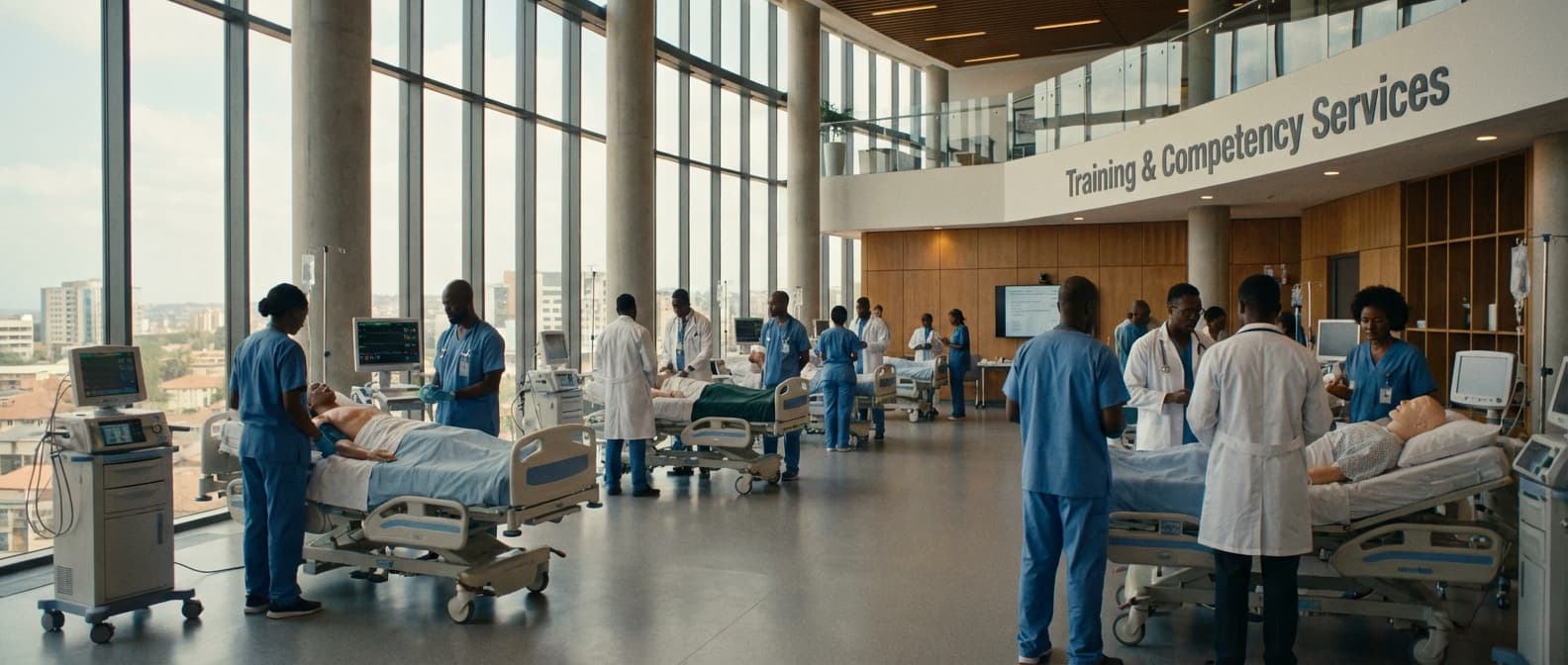
MRI Operator Training Service (Radiographers) in Nigeria
Engineering Excellence & Technical Support
MRI Operator Training Service (Radiographers) High-standard technical execution following OEM protocols and local regulatory frameworks.
Advanced MRI Physics & Pulse Sequences
Master the fundamental principles of MRI physics, including signal generation, relaxation mechanisms (T1, T2, T2*), and the intricacies of various pulse sequences (e.g., Spin Echo, Gradient Echo, EPI). Our training empowers radiographers to select optimal parameters for diverse clinical applications, ensuring superior image quality and diagnostic accuracy.
Patient Safety & MRI Contraindications
Prioritize patient well-being with comprehensive training on MRI safety protocols, including ferromagnetic detection, screening procedures, and managing potential risks associated with implants and external devices. Learn to identify and manage contraindications effectively, ensuring a secure MRI environment for all patients in Nigerian healthcare settings.
Image Acquisition & Optimization Techniques
Develop expert skills in MRI image acquisition, from precise patient positioning and coil selection to artifact identification and reduction. Our curriculum focuses on practical techniques for optimizing image resolution, signal-to-noise ratio, and contrast, enabling radiographers to deliver diagnostically valuable scans for a wide range of anatomical regions.
What Is Mri Operator Training Service (Radiographers) In Nigeria?
MRI Operator Training Service (Radiographers) in Nigeria refers to specialized educational and practical programs designed to equip certified radiographers with the knowledge, skills, and competency required to safely and effectively operate Magnetic Resonance Imaging (MRI) scanners. This service is crucial for ensuring the accurate acquisition of diagnostic MRI scans, adhering to stringent safety protocols, and maintaining optimal equipment performance within the Nigerian healthcare landscape. The training focuses on both theoretical underpinnings of MRI physics and practical application, including patient positioning, protocol selection, image optimization, and post-processing techniques.
| Who Needs MRI Operator Training? | Typical Use Cases | ||||
|---|---|---|---|---|---|
| Certified Radiographers: Individuals who have completed a recognized radiography program and are seeking to specialize in MRI operation. | New MRI Facilities: Healthcare institutions establishing new MRI departments require trained operators. | Existing MRI Facilities: Radiographers within established departments needing upskilling or retraining due to new equipment or evolving protocols. | Medical Imaging Technologists: Professionals seeking to expand their skill set to include MRI operation. | Research Personnel: Individuals involved in MRI-based research requiring operational expertise. | |
| Neurological Imaging: Diagnosis and monitoring of brain tumors, strokes, multiple sclerosis, and other neurological conditions. | Musculoskeletal Imaging: Evaluation of joint injuries, ligament tears, bone tumors, and spinal pathologies. | Abdominal and Pelvic Imaging: Assessment of organs such as the liver, kidneys, pancreas, and reproductive systems for various pathologies. | Cardiovascular Imaging: Non-invasive assessment of heart structure and function, and detection of vascular abnormalities. | Oncology Imaging: Staging and monitoring of cancer across various body systems. | Research and Development: Acquisition of high-quality data for clinical trials and scientific research. |
Key Components of MRI Operator Training Service:
- MRI Physics and Principles: In-depth understanding of nuclear magnetic resonance (NMR), magnetic fields, radiofrequency pulses, gradient coils, and signal generation.
- MRI Safety Protocols: Comprehensive training on contraindications, screening procedures, ferromagnetic object detection, cryogen safety (for superconducting magnets), and emergency response.
- Scanner Operation and Maintenance: Hands-on proficiency in operating various MRI scanner models, including console operation, software navigation, and basic troubleshooting.
- Patient Care and Management: Techniques for patient preparation, communication, comfort, and management of claustrophobia and anxiety during scans.
- Image Acquisition Techniques: Mastery of various pulse sequences (e.g., spin echo, gradient echo, FLAIR, DWI), parameter optimization, and artifact reduction strategies.
- Contrast Agent Administration: Understanding of contrast media properties, administration guidelines, and management of adverse reactions (under appropriate supervision).
- Image Interpretation Fundamentals: Basic principles of recognizing normal anatomy and common pathological findings, though definitive interpretation remains the purview of radiologists.
- Quality Assurance and Control: Implementing protocols to ensure consistent image quality and adherence to established standards.
- Legal and Ethical Considerations: Awareness of relevant regulations, patient consent, and data privacy in the context of MRI procedures.
Who Needs Mri Operator Training Service (Radiographers) In Nigeria?
MRI Operator Training Service in Nigeria is a critical need for professionals looking to enhance their skills and for facilities aiming to provide high-quality diagnostic imaging services. The demand for advanced medical imaging techniques like Magnetic Resonance Imaging (MRI) is growing, necessitating a skilled workforce to operate and interpret these complex machines. This training is crucial for ensuring patient safety, optimizing image acquisition, and maintaining the longevity of expensive MRI equipment.
| Customer Type | Department/Role | Specific Needs/Benefits of Training |
|---|---|---|
| Healthcare Facilities (Hospitals, Clinics, Diagnostic Centers) | Radiology Department, Imaging Department | Ensuring competent MRI operators, improving scan quality, reducing equipment downtime, adhering to safety protocols, meeting accreditation standards. |
| Individual Radiographers | MRI Technologist, Radiographer | Career advancement, skill acquisition, specialization in MRI, increased employability, professional development. |
| Educational Institutions | Faculty, Students (Radiography Programs) | Enhancing curriculum, providing practical exposure, producing industry-ready graduates, offering continuing professional development. |
| Government and Regulatory Bodies | Ministry of Health, Professional Councils | Workforce development, standardizing practice, ensuring quality of healthcare services, public health initiatives. |
| Private Investors and Companies | Management, Operations Team | Establishing new imaging services, ensuring operational efficiency, attracting skilled personnel, competitive advantage. |
Target Customers for MRI Operator Training Service in Nigeria
- Radiographers seeking to specialize or upskill in MRI operation.
- Newly qualified radiographers entering the workforce who require practical, hands-on training.
- Existing MRI technologists looking to refresh their knowledge or learn advanced techniques and protocols.
- Medical imaging departments within hospitals and diagnostic centers.
- Public and private healthcare institutions with MRI facilities.
- Educational institutions offering radiography and medical imaging programs.
- Government health agencies involved in healthcare capacity building.
- Private investors and entrepreneurs planning to establish diagnostic imaging centers.
Mri Operator Training Service (Radiographers) Process In Nigeria
The MRI Operator Training Service (Radiographers) process in Nigeria is designed to equip qualified radiographers with the specialized skills and knowledge required to operate Magnetic Resonance Imaging (MRI) equipment safely and effectively. This workflow typically begins with an inquiry and culminates in the successful completion of the training program. The process is structured to ensure that participants gain both theoretical understanding and practical proficiency in MRI procedures, patient care, image acquisition, and quality assurance.
| Stage | Description | Key Activities | Responsible Parties | Key Outcomes |
|---|---|---|---|---|
| Prospective radiographers or their institutions express interest in the MRI operator training program. | Contacting training providers (hospitals, universities, specialized training centers), requesting program details, brochures, and course schedules. | Radiographers, HR departments, Training Coordinators, Training Providers | Initial understanding of program offerings, eligibility criteria, and costs. |
| Candidates are assessed for basic qualifications and submit formal applications. | Verifying educational qualifications (e.g., Diploma or Degree in Radiography), professional registration (e.g., with Radiographers Registration Board of Nigeria - RRBN), and prior experience. Completing application forms, providing supporting documents (certificates, CV, references), and paying application fees. | Radiographers, Educational Institutions, RRBN, Training Providers | Identification of eligible candidates, submission of complete application packages. |
| Training providers review applications and select suitable candidates for the program. | Shortlisting candidates based on qualifications, experience, and potentially interviews or aptitude tests. Issuing admission letters and outlining enrollment procedures, including fee payment and registration deadlines. | Training Providers, Selection Committees | Confirmation of admission, enrollment of selected radiographers into the program. |
| The theoretical and foundational aspects of MRI are taught. | Lectures, seminars, and interactive sessions covering MRI physics, principles of image formation, patient safety (including contraindications and screening), contrast agents, and various MRI sequences. Use of simulators or virtual reality tools might be employed. | Lecturers, MRI Physicists, Experienced Radiographers, Training Providers | Comprehensive theoretical knowledge of MRI principles and safety protocols. |
| Hands-on experience is gained under supervision in a clinical setting. | Shadowing experienced MRI radiographers, operating MRI scanners (under direct supervision), performing patient positioning, protocol selection, image acquisition for various body parts, and understanding quality control procedures. Exposure to different patient demographics and pathological conditions. | Supervising Radiographers, Clinical Mentors, Trainee Radiographers, Hospital Departments | Development of practical skills in operating MRI equipment and managing patient flow. |
| Candidates' knowledge and practical skills are assessed throughout and at the end of the program. | Written examinations (multiple choice, essay), oral examinations, practical skill demonstrations, case study analysis, and image critique. Performance evaluations by supervisors during clinical rotations. | Examiners, Assessors, Training Providers, Supervising Radiographers | Measurement of learning outcomes, identification of areas for improvement. |
| Successful candidates receive certification, and ongoing support may be provided. | Issuing certificates upon successful completion of all assessment components. Providing guidance on continuing professional development, job placement assistance (if applicable), and access to updated information or refresher courses. | Training Providers, Professional Bodies (potentially RRBN for accreditation), Radiographers | Qualified MRI operators ready to contribute to healthcare, enhanced career prospects. |
MRI Operator Training Service (Radiographers) Workflow in Nigeria
- Inquiry and Initial Contact
- Eligibility Assessment and Application Submission
- Selection and Admission
- Curriculum and Training Delivery
- Practical Training and Clinical Exposure
- Assessment and Evaluation
- Certification and Post-Training Support
Mri Operator Training Service (Radiographers) Cost In Nigeria
The cost of MRI operator training for radiographers in Nigeria can vary significantly based on several factors. These include the reputation and accreditation of the training institution, the duration and depth of the course, the specific modules covered (e.g., basic operation, advanced techniques, specific MRI sequences, patient care in MRI environments), whether the training is theoretical, practical, or a combination, and the location of the training facility within Nigeria. Furthermore, the inclusion of certifications, assessment fees, and training materials can influence the overall price. It's also important to consider if the training is provided by a public institution, a private training center, or a hospital-based program, as these often have different pricing structures.
Generally, training programs for radiographers in Nigeria can range from intensive short courses (a few days to a week) to more comprehensive programs that might extend for several weeks or months. The cost is typically presented in Nigerian Naira (NGN). While specific figures are dynamic, expect to see a broad spectrum. Entry-level or introductory courses might be more affordable, while advanced or specialized MRI operator training, especially those leading to recognized certifications, will command higher fees. Consider also the possibility of specialized workshops or manufacturer-sponsored training, which can also impact pricing.
| Training Category | Estimated Cost Range (NGN) | Typical Duration |
|---|---|---|
| Introductory/Basic MRI Operation Workshop | 80,000 - 150,000 | 2-3 Days |
| Comprehensive MRI Operator Course (Theory & Practice) | 150,000 - 350,000 | 1-3 Weeks |
| Advanced MRI Techniques/Specialized Sequences Training | 250,000 - 500,000+ | 3-5 Days (per module) |
| Hospital-Based/On-the-Job Training (often part of employment) | Variable (may be subsidized or free with employment) | Ongoing/Variable |
| Certification-Focused Training | 200,000 - 450,000+ | Variable (depending on certification requirements) |
Key Pricing Factors for MRI Operator Training in Nigeria:
- Institution Reputation and Accreditation
- Course Duration and Intensity
- Scope of Training (Basic vs. Advanced/Specialized)
- Inclusion of Practical Sessions and Equipment Access
- Certification and Assessment Fees
- Training Materials and Resources
- Location of Training Facility
- Type of Training Provider (Public, Private, Hospital-based)
Affordable Mri Operator Training Service (Radiographers) Options
For radiographers seeking to acquire or enhance their MRI operational skills, a range of affordable training services are available. These services prioritize practical application, theoretical understanding, and cost-effectiveness. Many providers offer flexible learning formats, including online modules, in-person workshops, and blended approaches, catering to diverse learning preferences and schedules. The core value proposition of these services lies in equipping radiographers with the competence to safely and effectively operate MRI scanners, leading to improved patient care and expanded career opportunities. Value bundles and strategic cost-saving measures are key to making this essential training accessible.
| Cost-Saving Strategy | Description | Potential Benefit |
|---|---|---|
| Value Bundles | Combining core MRI operation training with modules on specific techniques (e.g., neuro, MSK) or safety protocols at a discounted package price. | Comprehensive skill development at a reduced overall cost. Access to advanced knowledge without paying for individual courses. |
| Early Bird Registration Discounts | Registering for training programs well in advance of the start date often unlocks lower tuition fees. | Significant financial savings on course fees. Secures a spot in popular programs. |
| Group Discounts | When multiple radiographers from the same institution register together, providers often offer reduced per-person fees. | Cost-effective for departments looking to upskill multiple staff members simultaneously. Fosters team learning. |
| Online vs. In-Person | Online courses generally have lower overhead for providers, translating to lower tuition for students. Eliminates travel and accommodation costs. | Reduced tuition fees and elimination of associated travel expenses. Greater flexibility for busy schedules. |
| Focus on Core Competencies | Prioritizing training that covers essential MRI operations and safety, rather than highly specialized, niche modules unless required. | Lower overall training investment by focusing on the most critical skills for general MRI operation. |
| Utilizing Manufacturer Resources | Leveraging free or low-cost training materials and introductory courses provided by MRI scanner manufacturers. | Significant cost reduction, especially for foundational knowledge and equipment-specific operation. |
| Membership Discounts | Being a member of relevant professional organizations may grant access to discounted training rates. | Financial savings on workshops, webinars, and online courses. Access to exclusive professional development opportunities. |
Affordable MRI Operator Training Service Options for Radiographers
- Online Certification Programs: Comprehensive courses delivered through virtual platforms, offering flexibility and often lower tuition fees.
- Workshop-Based Training: Intensive, short-term courses held at specific locations, providing hands-on experience and direct instructor interaction.
- Blended Learning Models: A combination of online theory and in-person practical sessions for a well-rounded educational experience.
- Manufacturer-Specific Training: Offered by MRI equipment manufacturers, often a cost-effective option if your institution uses their equipment.
- Continuing Education Units (CEUs) Focused Courses: Training designed to meet CEU requirements while imparting essential MRI skills.
- Hospital-Based Internal Training Programs: Some larger healthcare facilities may offer in-house training for their staff, significantly reducing external costs.
- Professional Association Workshops: Many radiologic technology professional organizations host affordable training events and webinars.
Verified Providers In Nigeria
In Nigeria's burgeoning healthcare sector, identifying truly qualified and reliable medical providers is paramount. Franance Health has emerged as a beacon of trust, meticulously vetting and credentialing healthcare professionals and facilities across the nation. This rigorous process ensures that when you choose a Franance Health verified provider, you are opting for a standard of care that prioritizes patient safety, ethical practice, and clinical excellence. Their commitment to transparency and quality makes them the best choice for navigating Nigeria's healthcare landscape.
| Franance Health Credential | What it Means for Patients | Example of Verified Provider Type |
|---|---|---|
| Certified Medical Practitioners | Guarantees that doctors have met all educational, licensing, and specialization requirements. | Specialist Surgeon |
| Accredited Healthcare Facilities | Confirms that hospitals and clinics meet stringent safety, hygiene, and equipment standards. | General Hospital |
| Licensed Allied Health Professionals | Verifies the qualifications and ethical standing of nurses, pharmacists, physiotherapists, etc. | Registered Nurse |
| Specialized Clinics | Ensures that clinics focusing on specific areas (e.g., cardiology, pediatrics) have the necessary expertise and equipment. | Maternity Clinic |
| Emergency Response Services | Confirms that ambulance and emergency medical teams are well-equipped and trained for critical situations. | Ambulance Service |
Why Franance Health Verification Matters
- Ensures adherence to strict medical and ethical standards.
- Provides access to a network of highly skilled and qualified professionals.
- Offers peace of mind and reduces the risk of encountering substandard care.
- Promotes transparency and accountability within the healthcare system.
- Facilitates easier access to trusted healthcare services for individuals and organizations.
Scope Of Work For Mri Operator Training Service (Radiographers)
This Scope of Work (SOW) outlines the requirements for providing comprehensive MRI Operator Training Services specifically for Radiographers. The objective is to equip radiographers with the necessary theoretical knowledge and practical skills to safely and effectively operate MRI scanners, perform various imaging protocols, and ensure optimal image quality and patient care. The training will cover fundamental MRI physics, safety protocols, scanner operation, pulse sequences, image acquisition, post-processing, and quality assurance. Successful completion will result in radiographers being proficient in independent MRI operation.
| Module/Topic | Learning Objectives | Content Outline | Training Methodology | Duration (Estimate) | Assessment Method |
|---|---|---|---|---|---|
| Introduction to MRI Physics | Understand basic principles of magnetism, RF pulses, signal generation, and relaxation processes. | Net Magnetization Vector (NMV), Precession, Larmor Frequency, RF Pulse Excitation, T1 and T2 Relaxation, Contrast Mechanisms. | Lectures, Demonstrations, Interactive Quizzes. | 4-6 hours | Written Exam, Quizzes |
| MRI Safety Principles and Protocols | Identify and mitigate all potential safety hazards associated with MRI. | Static Magnetic Field (B0), Gradient Magnetic Fields (Gx, Gy, Gz), Radiofrequency (RF) Fields, Acoustic Noise, Screening Procedures, Patient Screening (MR Safe, Conditional, Unsafe), Contraindications, Emergency Procedures. | Lectures, Videos, Case Studies of Incidents, Practical Site Assessment. | 6-8 hours | Written Exam, Practical Scenario Evaluation |
| MRI Scanner Operation and Hardware | Familiarize with the components and operation of the MRI scanner console and patient table. | Magnet System, Gradient Coils, RF Coils (Transmit/Receive), Spectrometer, Patient Table, Console Interface, Image Reconstruction Hardware. | Lectures, Hands-on Demonstrations on actual scanner, Console Familiarization. | 4-6 hours | Practical Operation Test, Console Navigation Quiz |
| Pulse Sequences and Image Weighting | Understand the role of pulse sequences in generating different image contrasts. | Spin Echo (SE), Gradient Echo (GRE), Fast Spin Echo (FSE), Inversion Recovery (IR), Echo Planar Imaging (EPI), T1-weighted, T2-weighted, PD-weighted, FLAIR, DWI/ADC. | Lectures, Visualizations of Signal Behavior, Image Comparison Exercises. | 8-10 hours | Written Exam, Image Identification and Contrast Analysis |
| Image Acquisition Techniques and Protocol Optimization | Develop skills in selecting and optimizing appropriate pulse sequences and parameters for various body regions. | Patient Positioning, Coil Selection, Slice Thickness, Field of View (FOV), Matrix Size, TR, TE, Flip Angle, NEX/NSA, Fat/Water Suppression Techniques, Artifact Identification and Reduction. | Lectures, Hands-on Protocol Setup and Execution on scanner, Case-based Protocol Design. | 12-16 hours | Practical Protocol Creation and Image Quality Assessment |
| Contrast Agents in MRI | Understand the administration, indications, contraindications, and safety of MRI contrast agents. | Gadolinium-based Contrast Agents (GBCAs), Administration Routes, Indications, Contraindications, Adverse Reactions, Renal Insufficiency, NSF. | Lectures, Case Studies, Discussion on Protocol Integration. | 2-3 hours | Written Quiz |
| Artifacts and Quality Assurance | Identify common MRI artifacts and implement quality assurance measures. | Motion Artifacts, Susceptibility Artifacts, RF Artifacts, Aliasing, Ghosting, Image Noise, QA/QC Procedures, Phantom Scans, Image Uniformity, Spatial Resolution Checks. | Lectures, Image Analysis of Artifacts, Hands-on QA Procedure Demonstration. | 4-6 hours | Image Analysis Practical, QA Procedure Demonstration |
| Advanced Imaging Techniques (Optional/Introductory) | Gain awareness of advanced MRI applications and their principles. | fMRI, MR Spectroscopy, MRA, Cardiac MRI, Neurological Applications. | Lectures, Video Demonstrations, Case Examples. | 4-6 hours | Conceptual Understanding Quiz |
| Patient Management and Communication | Develop effective communication and patient care skills within the MRI environment. | Pre-scan Communication, Patient Comfort, Anxiety Management, Claustrophobia, Pediatric Patients, Emergency Scenarios, Post-scan Care. | Role-playing Exercises, Case Discussions, Video Demonstrations. | 3-4 hours | Observational Assessment during practical sessions |
| Comprehensive Practical Application and Competency Assessment | Demonstrate proficiency in all aspects of MRI operation and patient management. | Performing routine and selected advanced scans under supervision, independently troubleshooting issues, adhering to safety protocols. | Supervised hands-on scanning, Simulated patient scenarios, Independent scanning with supervisor observation. | 16-24 hours | Final Competency Assessment Checklist, Practical Examination |
Technical Deliverables
- Comprehensive Training Manual (Digital and/or Print)
- Lecture Presentations (Slides/Videos)
- Practical Training Sessions Logbook/Record
- Case Study Library (Simulated or Real)
- Competency Assessment Checklist
- Certification of Completion for each successful radiographer
- Post-training Support Plan (e.g., access to online resources, Q&A sessions)
- Training Feedback Forms (for trainees and supervisors)
Service Level Agreement For Mri Operator Training Service (Radiographers)
This Service Level Agreement (SLA) outlines the performance standards and guarantees for the MRI Operator Training Service provided to registered radiographers. It defines the expected response times for support and inquiries, as well as uptime guarantees for the training platform.
| Service Component | Availability Guarantee | Response Time for Support Inquiries | Resolution Time for Critical Issues |
|---|---|---|---|
| Online Training Platform (Access & Functionality) | 99.5% Uptime (excluding scheduled maintenance) | Within 4 business hours | Within 24 business hours |
| Trainer Q&A Sessions (Scheduled) | Scheduled session will commence on time | N/A (Scheduled) | N/A (Scheduled) |
| Email/Ticket Support (General Inquiries) | N/A | Within 8 business hours | Within 3 business days |
| Content Updates | N/A | N/A | N/A (Content updates are communicated in advance) |
Service Scope
- Provision of comprehensive MRI operator training modules and resources.
- Access to experienced MRI trainers for guidance and Q&A sessions.
- Availability of the online training platform for self-paced learning.
- Technical support for platform access and functionality.
- Regular updates to training content based on industry best practices and technological advancements.
Frequently Asked Questions

Ready when you are
Let's scope your MRI Operator Training Service (Radiographers) in Nigeria project in Nigeria.

Scaling healthcare logistics and technical systems across the entire continent.