
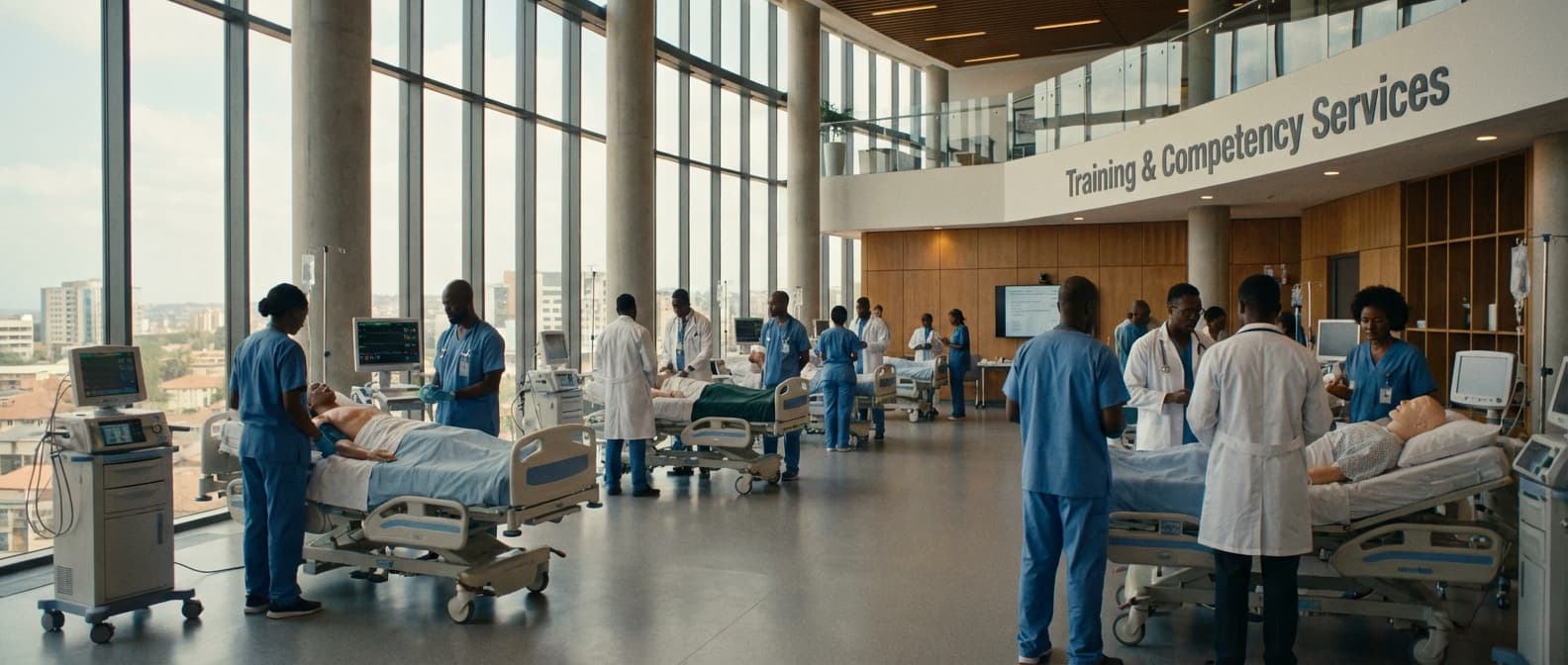
CT Operator Training Service (Radiographers) in Nigeria
Engineering Excellence & Technical Support
CT Operator Training Service (Radiographers) High-standard technical execution following OEM protocols and local regulatory frameworks.
Advanced Imaging Modalities
Master the operational nuances of cutting-edge CT scanners, including multi-detector CT (MDCT) and dual-energy CT (DECT), enhancing diagnostic accuracy for complex pathologies prevalent in Nigeria.
Radiation Safety Protocols
Receive comprehensive training on best practices for radiation protection, ALARA principles, and regulatory compliance specific to the Nigerian healthcare landscape, ensuring patient and staff safety.
Pathology-Specific Protocols
Develop expertise in optimized scanning protocols tailored to common and critical conditions encountered in Nigeria, such as stroke, malaria-related complications, and infectious diseases, leading to improved patient outcomes.
What Is Ct Operator Training Service (Radiographers) In Nigeria?
CT Operator Training Service (Radiographers) in Nigeria refers to specialized educational programs designed to equip qualified radiographers with the requisite knowledge and practical skills for the safe, effective, and optimal operation of Computed Tomography (CT) scanners. This service is critical for ensuring the competent deployment of advanced imaging technologies within the Nigerian healthcare sector, adhering to established diagnostic protocols and radiation safety standards.
| Who Needs CT Operator Training Service (Radiographers)? | Typical Use Cases | |||||||
|---|---|---|---|---|---|---|---|---|
| Registered Radiographers: Individuals holding a recognized degree or diploma in Radiography from accredited institutions in Nigeria or equivalent qualifications, seeking to specialize or enhance their skills in CT imaging. | New CT Scanner Deployments: Healthcare facilities acquiring new CT imaging equipment require trained radiographers to operate them safely and effectively. | Hospitals and Diagnostic Centers: Public and private healthcare institutions offering or planning to offer CT imaging services. | Upskilling and Specialization: Radiographers aiming to advance their careers and gain expertise in specific CT applications (e.g., cardiac CT, neuro-CT, interventional CT). | Compliance and Accreditation: Ensuring compliance with regulatory standards for medical imaging practice and pursuing accreditation for diagnostic services. | Research and Development: Radiographers involved in clinical research requiring advanced CT data acquisition and processing. | Radiology Departments: Personnel within established radiology departments responsible for the day-to-day operation of CT scanners. | Medical Imaging Training Institutions: Lecturers and instructors responsible for delivering radiography and medical imaging education. | Tertiary Healthcare Facilities: Teaching hospitals and specialized medical centers with a high volume and complexity of CT examinations. |
| Diagnostic Imaging: Acquisition of cross-sectional images for the diagnosis of a wide range of conditions, including trauma, stroke, cancer staging, infections, and vascular abnormalities. | Interventional Procedures: Guidance for minimally invasive procedures such as biopsies, drainages, and ablations. | Surgical Planning: Pre-operative imaging to delineate anatomical structures and pathological processes, aiding in surgical strategy. | Treatment Monitoring: Assessing the effectiveness of therapeutic interventions, such as chemotherapy or radiotherapy. | Emergency Medicine: Rapid imaging for acute conditions like head injuries, pulmonary embolism, and abdominal emergencies. | Screening Programs: Participation in population-based screening initiatives for diseases like lung cancer or cardiovascular disease (where applicable). | Quality Assurance: Performing routine quality control checks and participating in image quality assessments to ensure diagnostic accuracy. | Workflow Optimization: Implementing efficient scanning protocols and post-processing workflows to minimize patient scan times and improve throughput. |
Key Components of CT Operator Training Service (Radiographers) in Nigeria:
- Theoretical Foundations: Comprehensive understanding of CT physics, principles of image acquisition, X-ray beam attenuation, contrast mechanisms, and the biological effects of ionizing radiation.
- Equipment Operation and Maintenance: In-depth training on the specific functionalities of various CT scanner models, including gantry operation, table movement, X-ray tube and detector systems, and basic troubleshooting.
- Image Acquisition Protocols: Mastery of standardized and advanced scanning protocols for diverse anatomical regions and clinical indications, including protocol optimization for image quality and dose reduction.
- Image Reconstruction and Processing: Familiarity with reconstruction algorithms, post-processing techniques (e.g., multiplanar reformation, 3D rendering), and image manipulation for diagnostic interpretation.
- Patient Preparation and Management: Training on patient positioning, administration of contrast media (intravenous, oral), patient safety during scanning, and management of potential complications.
- Radiation Protection: Strict adherence to national and international radiation safety guidelines, dose monitoring, optimization techniques (e.g., ALARA principle), and quality assurance procedures.
- Image Archiving and Communication: Understanding of Picture Archiving and Communication Systems (PACS) and the Health Information Systems (HIS) for efficient image storage, retrieval, and reporting.
- Legal and Ethical Considerations: Awareness of regulatory requirements, ethical practices in medical imaging, and informed consent procedures.
Who Needs Ct Operator Training Service (Radiographers) In Nigeria?
CT Operator Training Service (Radiographers) in Nigeria is crucial for ensuring the safe, efficient, and accurate utilization of Computed Tomography (CT) technology across various healthcare settings. As CT scanners become increasingly sophisticated and their application broadens, the need for specialized training for radiographers is paramount. This training equips them with the essential knowledge and skills to operate CT equipment, optimize scan parameters, ensure patient safety, manage image quality, and understand the principles of radiation protection. The growing demand for diagnostic imaging services in Nigeria, coupled with the introduction of advanced CT technologies, necessitates a robust training infrastructure to maintain high standards of patient care and diagnostic accuracy.
| Target Customer Segment | Key Departments Requiring Training | Specific Needs Addressed |
|---|---|---|
| Hospitals (Public & Private) | Radiology/Medical Imaging Department, Emergency Department (for trauma imaging), Neurosurgery, Orthopedics, Oncology, Cardiology, Pulmonology | Basic and advanced CT operation, protocol optimization, emergency imaging protocols, cross-sectional anatomy interpretation, patient positioning, radiation dose reduction techniques. |
| Diagnostic Imaging Centers | Radiology Department | Efficient patient throughput, specialized CT protocols (e.g., cardiac CT, angiography), quality assurance, troubleshooting common equipment issues. |
| University Teaching Hospitals | Radiology Department, Various Clinical Departments (for research and advanced diagnostics) | Training for residents and fellows, research-specific CT protocols, advanced imaging techniques, integration of new technologies, continuous professional development. |
| Medical Research Institutes | Radiology/Imaging Core Facilities, Research Project Teams | Customized CT protocols for research studies, quantitative imaging techniques, data acquisition standards, ethical considerations in imaging research. |
| Tertiary Healthcare Facilities & Referral Hospitals | Radiology/Medical Imaging Department, Specialized Clinical Units (e.g., stroke centers, trauma centers) | Handling complex cases, advanced CT applications, multi-disciplinary team collaboration, management of high patient volumes. |
| Government Health Agencies | Public Health Departments, National Health Insurance Schemes (NHIS) oversight | Ensuring standardized quality of CT services across public facilities, training for radiologists in government hospitals, understanding regulatory requirements. |
Target Customers and Departments for CT Operator Training Service (Radiographers) in Nigeria
- Hospitals (Public and Private)
- Diagnostic Imaging Centers
- University Teaching Hospitals
- Medical Research Institutes
- Tertiary Healthcare Facilities
- Referral Hospitals
- Large Clinics with Imaging Capabilities
- Government Health Agencies
Ct Operator Training Service (Radiographers) Process In Nigeria
The CT Operator Training Service for Radiographers in Nigeria follows a structured workflow to ensure effective knowledge transfer and practical skill development. This process encompasses initial engagement, curriculum delivery, and post-training evaluation, aiming to equip radiographers with the necessary competencies to operate CT scanners safely and efficiently according to Nigerian healthcare standards.
| Stage | Key Activities | Deliverables/Outcomes |
|---|---|---|
| Inquiry & Needs Assessment | Initial contact, requirement gathering, understanding client context. | Defined training scope, identified participant needs. |
| Proposal & Agreement | Drafting and presenting training proposal, contract negotiation and signing. | Signed agreement, confirmed training scope and terms. |
| Curriculum Development/Customization | Tailoring content to specific CT models and clinical needs. | Finalized training modules and materials. |
| Logistics & Scheduling | Booking trainers, facilities, equipment; participant registration and communication. | Confirmed training schedule, ready training environment. |
| Pre-Training Preparation | Distribution of pre-reading materials, participant onboarding. | Informed and prepared participants. |
| Training Execution | Delivery of theoretical lectures and practical hands-on sessions. | Acquired knowledge and practical CT operating skills. |
| Assessment & Evaluation | Conducting theoretical tests and practical skill demonstrations; collecting feedback. | Measured learning outcomes, participant feedback report. |
| Certification & Reporting | Issuing certificates of completion, preparing training summary reports. | Certified radiographers, client training report. |
| Post-Training Support | Providing ongoing assistance and resources. | Continued skill enhancement and problem resolution. |
Workflow Stages
- {"title":"Inquiry and Needs Assessment","description":"Potential clients (hospitals, clinics, radiographers) express interest in CT operator training. This stage involves understanding their specific needs, current skill levels, the types of CT equipment they use, and desired training outcomes. This may involve initial calls, emails, or proposal requests."}
- {"title":"Proposal and Agreement","description":"Based on the needs assessment, a detailed training proposal is developed. This includes the training curriculum, duration, location (on-site or at a training facility), faculty, methodology, required resources, pricing, and payment terms. Once agreed upon, a formal contract or service agreement is signed."}
- {"title":"Curriculum Development/Customization","description":"The training program is either selected from a standard curriculum or customized to address the specific CT scanner models and clinical applications relevant to the client's practice. This ensures the training is highly practical and directly applicable."}
- {"title":"Logistics and Scheduling","description":"Coordination of all logistical aspects, including scheduling training dates, booking training facilities (if applicable), arranging for trainers, ensuring availability of CT scanners for practical sessions, and communicating the schedule to participants."}
- {"title":"Pre-Training Preparation","description":"Participants are provided with pre-reading materials, course outlines, and any necessary prerequisites. This helps them prepare for the training and maximize their learning experience."}
- {"title":"Training Execution (Theory and Practical)","description":"The core of the service. This stage involves: \n- Theoretical Sessions: Lectures, presentations, and discussions covering CT physics, imaging principles, patient safety, radiation protection, image acquisition protocols, image optimization, and quality assurance.\n- Practical Sessions: Hands-on training on actual CT scanners, covering patient positioning, scan parameter selection, image reconstruction, artifact identification and correction, and basic troubleshooting. This phase emphasizes safe and efficient operation."}
- {"title":"Assessment and Evaluation","description":"Participants are assessed through theoretical tests (quizzes, exams) and practical demonstrations of their skills on the CT scanner. Feedback is collected from participants to evaluate the effectiveness of the training and trainers."}
- {"title":"Certification and Reporting","description":"Upon successful completion of the training and passing assessments, participants receive a certificate of completion. A comprehensive report detailing the training conducted, participant performance, and any recommendations may be provided to the client organization."}
- {"title":"Post-Training Support (Optional)","description":"Some providers offer ongoing support, which may include refresher courses, Q&A sessions, or access to online resources to help radiographers reinforce their learning and address any emerging challenges."}
Ct Operator Training Service (Radiographers) Cost In Nigeria
The cost of CT Operator Training Services for radiographers in Nigeria can vary significantly based on several key factors. These include the duration and intensity of the training program, the reputation and accreditation of the training institution, the location of the training (major cities often have higher costs), and whether the training is offered in a group or individual setting. Furthermore, the specific modules covered, such as advanced CT techniques, contrast administration protocols, or specialized CT imaging (e.g., cardiac CT, neuro CT), will influence the overall price. The inclusion of practical, hands-on experience with CT scanners and simulation software also adds to the cost. Generally, expect pricing to be quoted in Nigerian Naira (NGN).
| Training Type/Duration | Estimated Cost Range (NGN) | Notes |
|---|---|---|
| Basic CT Operator Certification Course (e.g., 1-2 weeks) | 150,000 - 350,000 | Covers fundamental principles, basic protocols, and safety. |
| Intermediate CT Operator Training (e.g., 2-4 weeks) | 300,000 - 600,000 | Includes more advanced techniques, common pathologies, and introductory specialized areas. |
| Advanced/Specialized CT Training (e.g., 1-3 months, module-based) | 500,000 - 1,500,000+ | Focuses on specific modalities like cardiac CT, neuro CT, oncology CT, or advanced image post-processing. |
| On-the-Job Training/Mentorship (variable duration) | Negotiable, often hourly or daily rates | Typically arranged directly with hospitals or imaging centers; cost depends on the extent of supervision and training provided. |
| Refresher/Continuing Professional Development (CPD) Courses (short duration, e.g., 1-3 days) | 50,000 - 150,000 | Designed for experienced professionals to update skills or learn new protocols. |
Key Pricing Factors for CT Operator Training in Nigeria
- Training Duration and Intensity
- Institution Reputation and Accreditation
- Location of Training
- Group vs. Individual Training
- Specialized Modules and Content
- Inclusion of Practical/Hands-on Experience
- Certification and Assessment Fees
Affordable Ct Operator Training Service (Radiographers) Options
Securing high-quality and affordable CT operator training for radiographers is crucial for maintaining operational efficiency and patient safety in healthcare facilities. This service focuses on providing comprehensive training programs that meet industry standards, enabling radiographers to competently operate CT scanners, optimize image quality, and implement best practices for radiation protection. We offer flexible training solutions designed to cater to various institutional needs and budgets, with a strong emphasis on value bundles and cost-saving strategies.
| Training Module | Description | Typical Format | Potential Cost-Saving Strategy |
|---|---|---|---|
| Foundational CT Principles | Introduction to CT physics, gantry operation, basic scan acquisition. | Online modules, live webinars | Remote training, group discounts |
| Advanced Image Acquisition & Protocols | Optimizing parameters, contrast administration, specialized scans (e.g., cardiac, neuro). | On-site workshops, simulation-based training | Train-the-trainer programs for advanced users, multi-year contracts |
| Image Quality & Artifact Management | Identifying and reducing common artifacts, ensuring diagnostic image quality. | Case studies, hands-on lab sessions (simulated) | Bundled with advanced protocols |
| Radiation Safety & Dose Optimization | ALARA principles, dose monitoring, regulatory compliance. | Online modules, on-site lectures | Included in basic/intermediate packages, can be a standalone refresher |
| New Equipment/Software Training | Operation and optimization of specific CT scanner models and software versions. | On-site, vendor-supported training | Bundle deals with equipment purchase |
Value Bundles and Cost-Saving Strategies
- {"title":"Tiered Training Packages","description":"Our training is structured into tiered packages, allowing institutions to select the level of depth and customization that best suits their requirements. Basic packages cover foundational CT principles and operation, while advanced packages delve into specialized protocols, image optimization, and artifact reduction. This modular approach prevents overspending on unnecessary modules."}
- {"title":"On-Site vs. Remote Training","description":"We offer both on-site training, where instructors come to your facility, and remote/online training options. On-site training can be more cost-effective for larger groups or when hands-on, in-person guidance is paramount. Remote training offers significant cost savings through reduced travel expenses and greater scheduling flexibility."}
- {"title":"Group Discounts and Multi-Year Contracts","description":"Significant discounts are available for training multiple radiographers simultaneously. Furthermore, committing to multi-year training contracts can lock in lower rates and ensure continuous professional development for your staff at a predictable cost."}
- {"title":"Customized Curriculum Development","description":"While we offer standardized curricula, we can also develop customized training modules tailored to your specific CT equipment and clinical workflows. This ensures relevance and maximizes the return on investment, as training directly addresses your unique operational challenges."}
- {"title":"Train-the-Trainer Programs","description":"For larger departments, investing in a 'train-the-trainer' program can be a highly cost-effective long-term strategy. This empowers senior radiographers within your organization to deliver ongoing in-house training, reducing the need for external services for new staff onboarding or refresher courses."}
- {"title":"Integration with Existing Training Infrastructure","description":"We are adept at integrating our training content and delivery methods with your existing learning management systems (LMS) or training platforms, further streamlining the process and potentially reducing administrative overhead."}
- {"title":"Bundle Deals with Equipment Purchases/Upgrades","description":"Inquire about potential bundled training discounts when purchasing new CT equipment or undertaking significant upgrades from our partner manufacturers. This can offer substantial savings compared to standalone training."}
Verified Providers In Nigeria
In Nigeria's rapidly growing healthcare sector, discerning between legitimate and fraudulent service providers is paramount. Verified providers offer a crucial layer of assurance, ensuring patients receive safe, effective, and ethical care. Franance Health stands out as a premier example of such a verified entity, upholding the highest standards in healthcare delivery. Their rigorous credentialing process, commitment to patient well-being, and adherence to regulatory guidelines make them the definitive best choice for individuals seeking reliable medical services in Nigeria.
| Credential Type | Franance Health Verification Standard | Benefit to Patients |
|---|---|---|
| Medical Licenses | Mandatory verification of current, valid licenses from the Medical and Dental Council of Nigeria (MDCN) and relevant specialist boards. | Ensures practitioners are legally qualified and authorized to practice, guaranteeing a baseline of competence. |
| Facility Accreditation | Confirmation of accreditation by the Health Facility Monitoring and Accreditation Agency (HEFAMAA) or equivalent national/regional bodies. | Confirms that healthcare facilities meet established standards for safety, infrastructure, and operational procedures. |
| Professional Certifications | Verification of specialist certifications and ongoing professional development (CPD) for all affiliated doctors and nurses. | Guarantees that providers possess specialized knowledge and are up-to-date with the latest medical advancements. |
| Insurance and Liability | Requirement for adequate professional indemnity insurance for all healthcare providers. | Offers financial protection for patients in the unlikely event of medical negligence or malpractice. |
| Quality Audits | Regular internal and external audits of clinical processes, patient outcomes, and adherence to protocols. | Drives continuous improvement in the quality of care and patient safety. |
Why Franance Health Credentials Represent the Best Choice:
- Rigorous Accreditation and Licensing: Franance Health partners exclusively with healthcare facilities and professionals who possess valid and up-to-date licenses and accreditations from relevant Nigerian medical boards and regulatory bodies. This ensures they meet fundamental quality and safety benchmarks.
- Comprehensive Background Checks: Beyond basic licensing, Franance Health conducts thorough background checks on all affiliated practitioners, verifying their educational qualifications, professional history, and absence of disciplinary actions.
- Commitment to Ethical Practices: Franance Health actively screens for and promotes providers who adhere to strict ethical codes of conduct, prioritizing patient autonomy, confidentiality, and informed consent.
- Quality Assurance Protocols: The organization implements robust quality assurance measures, including regular audits and performance evaluations, to continuously monitor the standard of care delivered by their network.
- Patient-Centric Approach: Franance Health's verification process prioritizes providers who demonstrate a genuine commitment to patient satisfaction, effective communication, and personalized care plans.
- Access to Advanced Healthcare Solutions: By partnering with leading institutions and specialists, Franance Health grants access to cutting-edge medical technologies and treatments, ensuring patients receive comprehensive and contemporary healthcare.
- Transparency and Accountability: Franance Health fosters an environment of transparency, providing clear information about their verified providers and maintaining mechanisms for patient feedback and grievance redressal.
Scope Of Work For Ct Operator Training Service (Radiographers)
This Scope of Work (SOW) outlines the requirements for CT Operator Training Services for Radiographers. The training will cover theoretical knowledge, practical application, safety protocols, and quality assurance relevant to Computed Tomography (CT) operations. The objective is to ensure certified radiographers possess the necessary skills and knowledge to operate CT scanners proficiently and safely, producing high-quality diagnostic images.
| Module Title | Description | Technical Deliverables | Standard Specifications | ||
|---|---|---|---|---|---|
| CT Physics and Principles | Fundamentals of X-ray production, beam attenuation, image formation, and reconstruction algorithms. | Training manuals, lecture notes, interactive simulations. | Content aligned with current physics textbooks and professional guidelines (e.g., AAPM, ISRRT). | Minimum 8 hours of theoretical instruction. | |
| CT Scanner Operation and Safety | Detailed explanation of CT scanner components, user interface, patient positioning, and emergency procedures. | Hands-on practice on a functional CT scanner, user manuals, safety checklists. | Compliance with manufacturer's operational guidelines and local radiation safety regulations. | Minimum 16 hours of practical/hands-on training. | Successful completion of a practical skills assessment. |
| CT Protocols and Image Acquisition | Overview of common CT protocols (head, chest, abdomen, pelvis), patient preparation, contrast media administration, and scan parameter optimization. | Protocol library, case study examples, image acquisition checklists. | Protocols developed based on current clinical imaging practices and radiologist recommendations. | Demonstration of proficiency in setting up and executing at least 5 common CT protocols. | |
| Image Reconstruction and Artifact Management | Understanding of image reconstruction techniques, kernel selection, and identification/minimization of common CT artifacts. | Image review sessions, artifact library, troubleshooting guides. | Ability to identify and suggest corrective actions for at least 8 common CT artifacts. | Demonstration of appropriate kernel selection for various scan types. | |
| Radiation Safety and Patient Care | Principles of ALARA, dose monitoring, patient shielding, and managing patient anxiety and comfort. | Radiation dose reports, patient consent forms, infection control protocols. | Adherence to national and international radiation protection guidelines (e.g., ICRP, ACR). | Successful completion of a radiation safety quiz with a passing score of 90%. | |
| Quality Assurance and Control | Understanding of QA/QC procedures, phantom scans, system calibration, and documentation requirements. | QA/QC logs, performance evaluation reports, compliance documentation. | Implementation of daily, weekly, and monthly QA/QC checks as per established protocols. | Demonstration of ability to perform a standard CT phantom scan and interpret results. | |
| Final Assessment and Certification | Comprehensive evaluation of theoretical knowledge and practical skills. | Written examination, practical skills assessment, case study analysis. | Passing score of 80% on written exam and satisfactory performance in practical assessment. | Issuance of a training completion certificate. |
Training Objectives
- To provide a comprehensive understanding of CT physics and principles.
- To train operators on the safe and effective operation of CT scanners.
- To equip trainees with the skills to perform routine and specialized CT protocols.
- To ensure adherence to radiation safety regulations and patient care standards.
- To develop proficiency in image acquisition, reconstruction, and artifact identification.
- To foster an understanding of quality assurance and quality control procedures in CT.
- To enable operators to troubleshoot common scanner issues.
Service Level Agreement For Ct Operator Training Service (Radiographers)
This Service Level Agreement (SLA) outlines the guaranteed response times and uptime for the CT Operator Training Service (Radiographers) provided by [Your Company Name]. This SLA aims to ensure timely support and consistent availability of the training platform and its associated resources for all registered radiographers.
| Service Component | Uptime Guarantee | Response Time (Standard Support) | Response Time (Critical Support) |
|---|---|---|---|
| CT Operator Training Platform Access | 99.5% Uptime (excluding scheduled maintenance) | 4 Business Hours | 1 Business Hour |
| Technical Support (Incident Resolution) | N/A (Focus on response time) | 2 Business Hours for initial acknowledgement, Resolution Target: 24 Business Hours for Standard Incidents | 1 Business Hour for initial acknowledgement, Resolution Target: 4 Business Hours for Critical Incidents |
| Training Material Availability | 99.8% Availability (content accessible) | 6 Business Hours (for reported access issues) | 2 Business Hours (for reported access issues) |
Key Service Components
- CT Operator Training Platform Access
- Technical Support (Incident Resolution)
- Training Material Availability
Frequently Asked Questions

Ready when you are
Let's scope your CT Operator Training Service (Radiographers) in Nigeria project in Nigeria.

Scaling healthcare logistics and technical systems across the entire continent.