
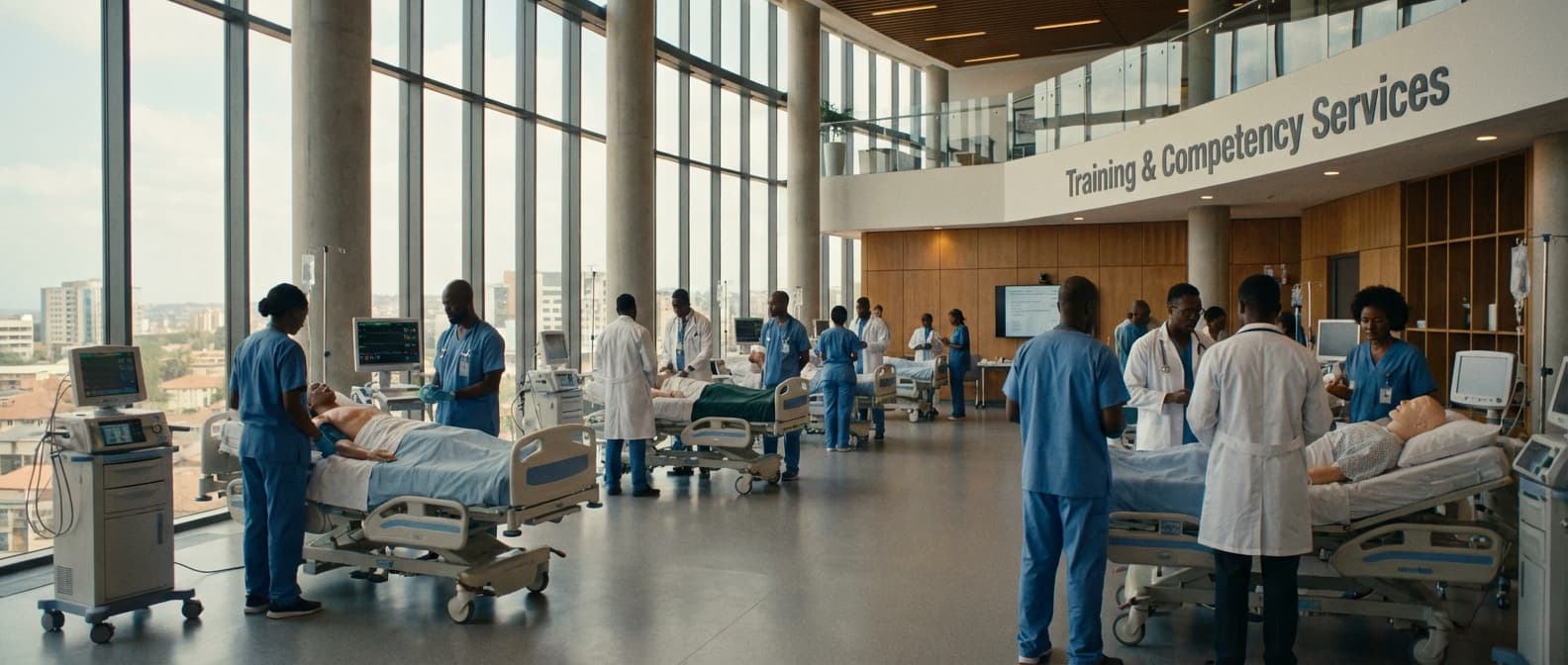
Biomedical Engineering First-Line Support Training Service in Nigeria
Engineering Excellence & Technical Support
Biomedical Engineering First-Line Support Training Service High-standard technical execution following OEM protocols and local regulatory frameworks.
Diagnostic Equipment Mastery
Our training provides hands-on experience with essential diagnostic devices, ensuring technicians can accurately calibrate, troubleshoot, and maintain equipment like ECG machines, X-ray units, and patient monitors, critical for accurate patient diagnosis in Nigerian healthcare facilities.
Medical Imaging Systems Proficiency
We equip first-line support personnel with the technical knowledge to handle and perform basic maintenance on common medical imaging systems, including ultrasound and basic CT scanner components. This empowers them to resolve immediate issues, reducing downtime and improving patient throughput.
Biocompatibility & Safety Standards
Our curriculum emphasizes critical safety protocols and understanding of biocompatibility for medical devices. Trainees learn to identify potential hazards, adhere to Nigerian regulatory requirements, and perform basic safety checks, ensuring patient and user well-being in diverse clinical environments.
What Is Biomedical Engineering First-line Support Training Service In Nigeria?
Biomedical Engineering First-Line Support Training Service in Nigeria refers to a structured educational program designed to equip individuals with the foundational knowledge and practical skills necessary to perform initial diagnostics, troubleshooting, and basic maintenance of biomedical equipment. This service is critical for ensuring the operational readiness and safety of medical devices within healthcare facilities, thereby contributing to uninterrupted patient care and efficient resource utilization. The training focuses on common issues encountered in day-to-day operations, enabling support personnel to address a significant portion of problems without immediate escalation to specialized biomedical engineers.
| Who Needs This Service? | Typical Use Cases | |||||
|---|---|---|---|---|---|---|
| Biomedical Technicians/Assistants: Individuals employed by hospitals, clinics, or third-party biomedical service providers responsible for the routine upkeep and immediate problem resolution of medical equipment. | Clinical Engineers (Junior Level): New entrants or those undergoing skill development in biomedical engineering departments. | Healthcare Facility Administrators: To understand the scope of in-house support capabilities and optimize resource allocation. | Medical Device Manufacturers/Distributors: To train their local technical representatives or customer support staff on first-line troubleshooting of their products. | Vocational and Technical Training Institutions: To integrate practical, job-ready skills into their biomedical engineering curricula. | Newly Graduated Biomedical Engineers: To gain practical, hands-on experience before specializing or taking on more complex responsibilities. | |
| Initial Troubleshooting of Diagnostic Equipment: Diagnosing and resolving common issues with vital signs monitors, ECG machines, or basic laboratory analysers. | Basic Maintenance of Therapeutic Devices: Performing routine cleaning, disinfection, and power source checks on infusion pumps, ventilators, or physiotherapy equipment. | Fault Identification and Initial Reporting: Recognizing when a device is malfunctioning, documenting the symptoms, and escalating the issue with clear diagnostic information. | Preventive Maintenance Execution: Performing scheduled checks, filter replacements, and battery management on a range of medical devices. | User Training and Guidance: Educating clinical staff on the correct operation and basic care of medical equipment to prevent common errors. | Minor Repair and Component Replacement: Swapping out user-replaceable parts like sensors, cables, or batteries. | Inventory Management of Consumables: Ensuring the availability of essential consumables for equipment operation and maintenance. |
Key Components of Biomedical Engineering First-Line Support Training:
- Fundamental principles of biomedical equipment operation (e.g., electrical safety, signal acquisition, basic mechanics).
- Identification and categorization of common equipment malfunctions.
- Standard operating procedures for initial troubleshooting and problem diagnosis.
- Basic maintenance tasks (e.g., cleaning, calibration checks, battery replacement, consumable replenishment).
- Safe handling and usage protocols for various medical devices.
- Documentation and reporting procedures for incidents and maintenance activities.
- Understanding of regulatory requirements pertaining to medical equipment management.
- Basic understanding of common medical imaging modalities and life support systems.
- Introduction to preventive maintenance schedules and their importance.
- Effective communication with end-users (clinicians) and escalation to higher-tier support.
Who Needs Biomedical Engineering First-line Support Training Service In Nigeria?
In Nigeria, the burgeoning healthcare sector and the increasing adoption of advanced medical technologies necessitate a robust and accessible first-line support infrastructure for biomedical equipment. This ensures the optimal functioning of critical medical devices, minimizes downtime, and ultimately enhances patient care and safety. Identifying who requires this specialized training is crucial for resource allocation and service delivery.
| Customer Type | Typical Facility Size/Type | Key Support Needs | Relevant Departments |
|---|---|---|---|
| Public Hospitals | Large to Medium-sized | Routine maintenance, troubleshooting, minor repairs, preventive maintenance, training on basic operational checks. | Biomedical Engineering, Maintenance, Clinical Departments |
| Private Hospitals | Medium to Large-sized | Advanced troubleshooting, specialized repairs, installation support, calibration, training on new technologies. | Biomedical Engineering, IT, Radiology, ICU, Surgical |
| Diagnostic Laboratories | Small to Large-sized | Calibration of analytical instruments, basic troubleshooting of diagnostic equipment, preventive maintenance schedules. | Laboratory Services, Biomedical Engineering |
| Specialized Clinics | Small to Medium-sized | Support for specific diagnostic and therapeutic devices, understanding of unique operational workflows. | Clinical Staff, Biomedical Engineering |
| Medical Equipment Vendors/Distributors | Varies | Training their in-house technical staff to provide first-line support to their clients, ensuring product lifecycle support. | Technical Support Teams, Field Service Engineers |
| Teaching Hospitals | Large | Comprehensive support including advanced repairs, training of junior biomedical engineers and technicians, equipment lifecycle management. | Biomedical Engineering, Clinical Departments, Research & Development |
| NGOs/Healthcare Initiatives | Varies | Cost-effective training for on-site personnel to manage and maintain donated or acquired medical equipment, often in remote areas. | Project Managers, Healthcare Facility Staff |
Target Customers and Departments for Biomedical Engineering First-Line Support Training Service in Nigeria
- {"items":["Hospitals (both public and private)","Diagnostic Laboratories","Specialized Clinics (e.g., cardiac, renal, oncology)","Medical Equipment Vendors and Distributors","Tertiary Healthcare Institutions (Teaching Hospitals)","Non-Governmental Organizations (NGOs) involved in healthcare delivery"],"title":"Primary Target Customers"}
- {"items":["Biomedical Engineering Department","Clinical Engineering Department","Maintenance Department","Information Technology (IT) Department (for networked medical devices)","Radiology/Imaging Department","Surgical/Operating Theatre Department","Intensive Care Unit (ICU)","Emergency Department","Laboratory Services","Pharmacy Department (for specific automated dispensing systems)"],"title":"Key Departments within Healthcare Facilities"}
Biomedical Engineering First-line Support Training Service Process In Nigeria
This document outlines the workflow for the Biomedical Engineering First-Line Support Training Service in Nigeria, detailing the process from initial inquiry to the successful execution of training.
| Stage | Key Activities | Responsible Party |
|---|---|---|
| Inquiry and Needs Assessment | Client contacts service provider, information gathering, initial consultation, needs assessment. | Client, Service Provider |
| Proposal Development and Submission | Develop training plan and curriculum, generate quotation, submit proposal. | Service Provider |
| Proposal Review and Negotiation | Client reviews proposal, seeks clarifications, negotiates terms, provides acceptance. | Client, Service Provider |
| Contract and Agreement | Draft and sign Service Level Agreement/Contract. | Client, Service Provider |
| Pre-Training Preparations | Logistics coordination, curriculum finalization, trainee communication, equipment setup. | Service Provider |
| Training Execution | Deliver modules, conduct practical sessions, monitor progress, administer assessments. | Service Provider (Trainers) |
| Post-Training Activities | Collect feedback, review assessments, issue certificates, conduct debriefing, offer follow-up support. | Service Provider |
| Invoicing and Payment | Generate invoices, process payments. | Service Provider, Client |
| Service Evaluation and Continuous Improvement | Internal review, client relationship management, curriculum updates. | Service Provider |
Biomedical Engineering First-Line Support Training Service Process in Nigeria
- 1. Inquiry and Needs Assessment:
- Client Contact: Potential clients (hospitals, clinics, medical device manufacturers, training institutions) initiate contact via phone, email, or website portal.
- Information Gathering: The service provider gathers essential information about the client's needs, including:
- Number of trainees.- Specific medical equipment types requiring support (e.g., imaging, patient monitoring, laboratory equipment).- Current skill level of existing personnel.- Desired training outcomes and objectives.- Preferred training location (on-site at client's facility or at a designated training center).- Desired training schedule and timelines.- Budgetary considerations.- Initial Consultation: A preliminary discussion is held to understand the scope and complexity of the training request.
- Needs Assessment Report (Optional but Recommended): A detailed assessment may be conducted to identify specific gaps in technical knowledge and practical skills.
- 2. Proposal Development and Submission:
- Customized Training Plan: Based on the needs assessment, a tailored training curriculum is developed. This includes:
- Module breakdown and learning objectives.- Training methodologies (lectures, practical demonstrations, hands-on exercises, simulations).- Required resources (equipment, training manuals, simulators, consumables).- Trainer profiles and qualifications.- Assessment methods (quizzes, practical assessments, competency checks).- Quotation Generation: A detailed quotation is prepared, outlining costs for training modules, materials, trainer fees, travel and accommodation (if applicable), and any other associated expenses.
- Proposal Submission: The comprehensive training proposal, including the curriculum and quotation, is formally submitted to the client for review.
- 3. Proposal Review and Negotiation:
- Client Evaluation: The client reviews the proposal, assessing its alignment with their requirements and budget.
- Clarifications and Q&A: The client may request clarifications or ask questions regarding the proposal content, methodology, or costs.
- Negotiation: Discussions may occur to adjust aspects of the proposal, such as scope, duration, or cost, to reach a mutually agreeable outcome.
- Formal Acceptance: Upon agreement, the client formally accepts the proposal.
- 4. Contract and Agreement:
- Service Level Agreement (SLA) / Contract Drafting: A formal contract or SLA is drafted, outlining the terms and conditions of the training service, including:
- Scope of work.- Deliverables and timelines.- Payment terms and schedule.- Confidentiality clauses.- Intellectual property rights (if applicable).- Termination clauses.- Responsibilities of both parties.- Contract Signing: Both the service provider and the client sign the agreement, formalizing the engagement.
- 5. Pre-Training Preparations:
- Logistics Coordination: Arrangements are made for:
- Booking training venues (if off-site).- Arranging travel and accommodation for trainers and potentially trainees.- Scheduling equipment for demonstration and hands-on practice.- Ensuring availability of training materials and consumables.- Curriculum Finalization: The training curriculum is finalized based on any agreed-upon adjustments.
- Communication with Trainees: Notification is sent to trainees with details of the training schedule, location, and any prerequisites.
- Equipment Setup and Testing: If training is on-site, the necessary medical equipment is set up and tested to ensure it is in working order for practical sessions.
- 6. Training Execution:
- Module Delivery: The training is conducted according to the agreed-upon curriculum, employing the specified methodologies.
- Interactive Learning: Trainers facilitate discussions, answer questions, and encourage active participation from trainees.
- Practical Sessions: Hands-on exercises and simulations are conducted using actual or simulated medical equipment.
- Progress Monitoring: Trainers monitor trainee progress and provide individual feedback as needed.
- Assessment Conducted: Quizzes, practical assessments, and competency checks are administered throughout the training.
- 7. Post-Training Activities:
- Feedback Collection: Trainees are asked to provide feedback on the training program, trainers, and materials through surveys or evaluation forms.
- Assessment Review and Reporting: Assessment results are compiled and analyzed. A training report is prepared, summarizing trainee performance and overall program effectiveness.
- Certification: Upon successful completion of the training and assessments, certificates of completion are issued to the trainees.
- Debriefing Session (Optional): A debriefing session may be held with the client to discuss the training outcomes, address any remaining concerns, and identify areas for future improvement.
- Follow-up Support: The service provider may offer limited follow-up support to address any immediate post-training queries.
- 8. Invoicing and Payment:
- Invoice Generation: Invoices are generated based on the agreed-upon payment schedule and milestones.
- Payment Processing: The client processes payments as per the contract terms.
- 9. Service Evaluation and Continuous Improvement:
- Internal Review: The service provider conducts an internal review of the training project, analyzing feedback, performance data, and financial outcomes.
- Client Relationship Management: Maintaining a positive client relationship for future engagements and potential referrals.
- Curriculum Updates: Incorporating feedback and industry advancements to update training materials and methodologies for future service offerings.
Biomedical Engineering First-line Support Training Service Cost In Nigeria
The cost of first-line biomedical engineering support training services in Nigeria can vary significantly based on several key factors. These factors influence the overall pricing structure and the range of costs observed in the local market. Understanding these elements is crucial for healthcare institutions and individuals seeking to invest in such training.
| Training Type/Scope | Estimated Price Range (NGN) | Notes |
|---|---|---|
| Basic First-Line Biomedical Equipment Maintenance (General) | 50,000 - 150,000 | Covers fundamental troubleshooting, preventive maintenance, and safety checks for common medical devices. |
| Specialized First-Line Support (e.g., Imaging, Anesthesia) | 100,000 - 250,000+ | Focuses on specific complex equipment categories, requiring more advanced knowledge and potentially specialized instructors. |
| Comprehensive Biomedical Equipment Management & Support | 150,000 - 400,000+ | Encompasses a broader scope, including inventory management, regulatory compliance, and advanced troubleshooting for a wider range of equipment. |
| On-Site/Customized Corporate Training | Variable (Negotiable) | Price depends on the number of participants, duration, specific equipment covered, and trainer travel/accommodation costs. |
Key Pricing Factors for Biomedical Engineering First-Line Support Training in Nigeria:
- Training Provider Reputation and Expertise: Established training institutions with experienced instructors and a proven track record often command higher fees.
- Curriculum Depth and Specialization: The breadth and depth of the training, including whether it covers general first-line support or specific equipment types (e.g., diagnostic imaging, patient monitoring), will impact cost.
- Duration of Training: Longer training programs, offering more comprehensive coverage and hands-on experience, will naturally be more expensive than shorter, introductory courses.
- Training Methodology: Hands-on practical sessions, simulations, and on-site training are generally more resource-intensive and thus pricier than purely theoretical or online courses.
- Location of Training: Training conducted in major cities with higher operational costs might be more expensive than those held in smaller towns.
- Inclusion of Practical Equipment and Materials: The cost of providing access to functional biomedical equipment for practical training and the inclusion of training manuals and other resources will affect the price.
- Certification and Accreditation: Training programs that offer recognized certifications or are accredited by relevant professional bodies may have higher fees due to the added value and assurance they provide.
- Group Size and Customization: Negotiated rates for large groups or customized training modules tailored to specific organizational needs can influence the per-participant cost.
Affordable Biomedical Engineering First-line Support Training Service Options
This document outlines affordable biomedical engineering first-line support training service options, focusing on value bundles and cost-saving strategies. Effective first-line support is crucial for maintaining the operational integrity of medical devices, reducing downtime, and ensuring patient safety. Investing in well-trained technical staff can lead to significant long-term savings by minimizing costly third-party interventions and improving device lifespan. We explore various approaches to deliver high-quality training without prohibitive costs.
| Value Bundle | Description | Cost-Saving Mechanism | Ideal For |
|---|---|---|---|
| Basic Device Familiarization Bundle | Covers fundamental operational principles, safety checks, and basic troubleshooting for a core set of common medical devices. | Reduces reliance on external technicians for simple issues, speeds up initial response times. | New hires, entry-level support staff, and general healthcare professionals who interact with devices. |
| Advanced Troubleshooting & Repair Bundle | Deeper dives into diagnostic procedures, component-level troubleshooting, and common repair techniques for specific device categories (e.g., imaging, patient monitoring). | Minimizes escalations to higher-level support or vendors, reduces repair turnaround time and associated costs. | Mid-level biomedical technicians and engineers requiring specialized skills. |
| Preventive Maintenance & Calibration Excellence Bundle | Focuses on scheduled maintenance protocols, calibration procedures, and best practices to extend device lifespan and ensure accuracy. | Proactively identifies and prevents issues, reducing unexpected breakdowns and costly emergency repairs. Ensures compliance. | All biomedical engineering staff involved in device maintenance and lifecycle management. |
| Customized On-Demand Skill Enhancement | Tailored training modules designed to address specific organizational needs, emerging technologies, or identified skill gaps. Delivered as needed. | Addresses immediate needs efficiently, preventing the cost of prolonged downtime or suboptimal performance. Highly targeted investment. | Organizations facing unique challenges, adopting new technologies, or needing to upskill staff rapidly. |
| Blended Learning Certification Pathway | A combination of online theoretical modules (self-paced) followed by intensive, hands-on practical workshops for key device certifications. | Reduces travel and accommodation costs associated with traditional classroom training. Efficient use of expert instructor time. | Organizations with geographically dispersed teams or a desire for flexible learning schedules. |
Key Cost-Saving Strategies for Biomedical Engineering Support Training
- Leverage existing internal expertise: Identify and utilize experienced biomedical engineers or technicians to deliver training sessions.
- Develop modular training content: Create flexible modules that can be combined and delivered based on specific device types or skill levels, reducing redundant training.
- Adopt blended learning approaches: Combine online self-paced modules with in-person practical sessions to optimize instructor time and participant engagement.
- Focus on high-impact devices: Prioritize training for the most frequently used, critical, or complex medical equipment to maximize return on investment.
- Negotiate bulk training discounts: Partner with training providers to secure lower rates for training multiple staff members or for ongoing training needs.
- Utilize manufacturer-provided resources: Many device manufacturers offer free or low-cost training materials, webinars, and certifications.
- Foster peer-to-peer learning: Implement mentorship programs and knowledge-sharing sessions where experienced staff mentor newer ones.
- Invest in simulation tools: Where applicable, use simulation software or hardware to reduce wear and tear on actual medical devices during training.
- Track training ROI: Implement metrics to measure the impact of training on device uptime, repair costs, and staff efficiency to justify future investments.
Verified Providers In Nigeria
In Nigeria's evolving healthcare landscape, identifying truly qualified and trustworthy medical practitioners is paramount. Verified Providers offers a crucial service by ensuring that healthcare professionals and facilities meet stringent standards. Franance Health, a prominent name in this sphere, stands out due to its comprehensive credentialing process, commitment to ethical practices, and dedication to patient well-being. Their rigorous verification methodology encompasses academic qualifications, professional licenses, practical experience, and adherence to regulatory requirements. Choosing Franance Health-credentialed providers means opting for assurance, expertise, and a superior healthcare experience.
| Credentialing Area | Franance Health's Scrutiny Level | Impact on Patient Care |
|---|---|---|
| Academic Qualifications | Thorough review of degrees, diplomas, and relevant certifications from accredited institutions. | Guarantees foundational knowledge and theoretical understanding. |
| Professional Licenses & Registrations | Confirmation of valid, current licenses issued by respective medical regulatory bodies in Nigeria. | Ensures legal and ethical practice rights. |
| Clinical Experience | Verification of past roles, responsibilities, and duration of practice in relevant specialities. | Demonstrates practical application of skills and experience. |
| Continuing Professional Development (CPD) | Assessment of ongoing training and participation in educational activities to stay current. | Indicates commitment to evolving medical knowledge and techniques. |
| Criminal Background Checks | Screening for any history of malpractice or professional misconduct. | Prioritizes patient safety and ethical conduct. |
Why Franance Health Credentials Matter:
- Ensured Competence: Verification confirms that practitioners possess the necessary knowledge and skills.
- Commitment to Ethical Standards: Adherence to a strict code of conduct is a prerequisite.
- Patient Safety First: Rigorous checks minimize risks and promote a secure environment.
- Access to Quality Care: Patients can confidently seek treatment from proven professionals.
- Transparency and Trust: The verification process builds trust between patients and providers.
Scope Of Work For Biomedical Engineering First-line Support Training Service
This Scope of Work (SOW) outlines the requirements for a comprehensive Biomedical Engineering First-Line Support Training Service. The service aims to equip frontline technical staff with the foundational knowledge and practical skills necessary to effectively troubleshoot, maintain, and support a defined range of biomedical equipment. This training will enhance equipment uptime, improve patient safety, and reduce reliance on specialized engineers for common issues.
| Category | Equipment Type | Key Functionality to Cover | Common Issues & Troubleshooting Steps | Preventive Maintenance (Basic) | Safety Precautions | Documentation & Reporting |
|---|---|---|---|---|---|---|
| Medical Devices | Infusion Pumps | Basic operation, alarm identification and clearing, battery management, occlusion detection | Occlusion alarms, air-in-line alarms, battery low warnings, flow rate inaccuracies | Cleaning, battery check, visual inspection of tubing connectors | Sterilization procedures, sharps handling, electrical safety | Logbook entries, alarm history review |
| Medical Devices | Patient Monitors (Basic ECG, SpO2, NIBP) | Setup and connection of sensors, parameter interpretation, alarm configuration, basic artifact reduction | ECG lead off, SpO2 signal quality issues, NIBP cuff placement errors, phantom alarms | Sensor cleaning, cable integrity check, battery status | Infection control, proper grounding, patient isolation considerations | Alarm log review, trend data interpretation |
| Medical Devices | Digital Thermometers (Non-invasive) | Operation, temperature reading interpretation, calibration verification (visual) | Erroneous readings, probe failure indicators | Probe tip cleaning, storage conditions | Probe disinfection, handling of consumables | Temperature log entries |
| Diagnostic Equipment | Electrocardiograph (ECG) Machines (Basic) | Lead placement, basic operation, paper feed, signal quality | ECG baseline wander, artifact, lead reversal | Paper roll replacement, lead cleanliness | Electrical safety testing (visual inspection of cords) | Printing ECG strips, annotation of patient data |
| Therapeutic Devices | Nebulizers (Basic) | Setup, operation, cleaning, medication loading | No mist output, intermittent mist, motor noise | Tubing and mask cleaning, filter replacement (if applicable) | Aerosol generation safety | Patient treatment record |
| Ancillary Equipment | Surgical Lights (Basic) | On/Off operation, brightness adjustment | Flickering lights, dimming issues | Cleaning of light heads | Electrical safety (visual inspection) | Report of malfunction |
Technical Deliverables
- Comprehensive Training Curriculum (digital and printable formats)
- Trainer's Guide with detailed lesson plans, activities, and assessment strategies
- Trainee Handouts and Reference Materials
- Hands-on Practical Training Modules and Scenarios
- Pre- and Post-Training Assessments (knowledge and practical skills)
- Training Completion Certificates for successful participants
- Training Report detailing attendance, assessment results, and feedback
- List of recommended tools and basic test equipment for first-line support
- Troubleshooting flowcharts and decision trees for common equipment failures
- Safety guidelines and protocols specific to biomedical equipment handling
Service Level Agreement For Biomedical Engineering First-line Support Training Service
This Service Level Agreement (SLA) outlines the guaranteed response times and uptime for the Biomedical Engineering First-Line Support Training Service provided by [Your Company Name/Department]. This SLA is effective from [Start Date] to [End Date].
| Service Component | Response Time Guarantee | Uptime Guarantee | Notes |
|---|---|---|---|
| Training Platform Availability | N/A (Continuous availability expected) | 99.5% (measured monthly) | Scheduled maintenance windows will be communicated at least 48 hours in advance and will occur outside of peak training hours whenever possible. |
| Trainer Response to Scheduled Training Session Requests | Within 4 business hours | N/A | Applies to confirmation of scheduling and initial setup assistance for a requested session. |
| Urgent Inquiries Regarding Training Content/Platform Issues | Within 2 business hours | N/A | Definition of 'urgent' includes critical impediments to completing mandatory training modules or accessing essential training resources. |
| Availability of Remote Support Sessions | Scheduled sessions will be conducted as agreed upon during the booking process. | N/A | The availability of specific trainers may vary. Booking in advance is recommended. |
Service Description
- The Biomedical Engineering First-Line Support Training Service provides essential training to newly hired or transitioning first-line support personnel responsible for basic troubleshooting and maintenance of biomedical equipment.
- Training modules cover common equipment types, diagnostic procedures, safety protocols, and escalation pathways.
- The service includes access to online training materials, simulated troubleshooting exercises, and scheduled remote support sessions with certified trainers.
- This SLA specifically addresses the availability and responsiveness of the training platform and the availability of support personnel for scheduled training sessions and urgent inquiries related to the training itself.
Frequently Asked Questions

Ready when you are
Let's scope your Biomedical Engineering First-Line Support Training Service in Nigeria project in Nigeria.

Scaling healthcare logistics and technical systems across the entire continent.