
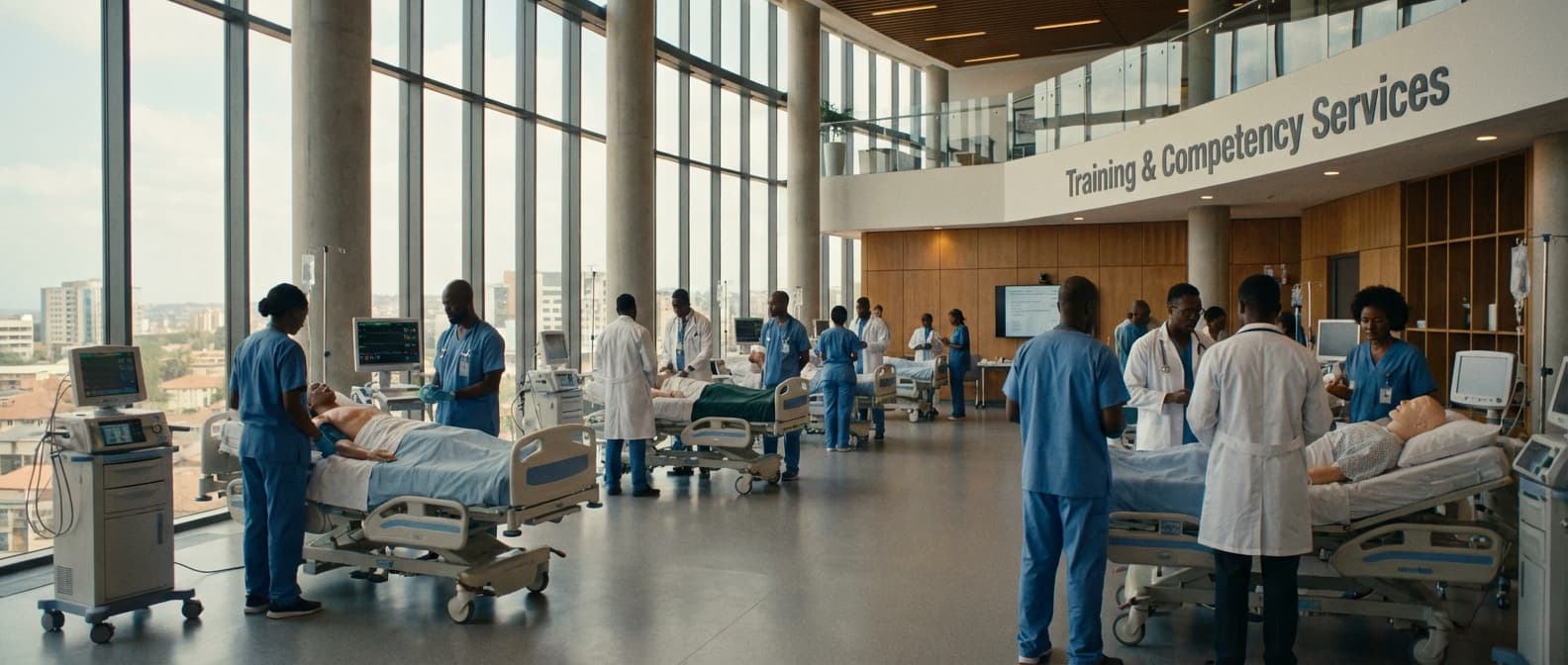
Anesthesia Workstation User Training Service in Nigeria
Engineering Excellence & Technical Support
Anesthesia Workstation User Training Service High-standard technical execution following OEM protocols and local regulatory frameworks.
Advanced Ventilation Modes Mastery
Master critical ventilation parameters and advanced modes (e.g., APV, PSV Pro, DuoVent) for precise patient respiratory support. Our training equips Nigerian anesthesiologists with the confidence to optimize ventilation strategies across diverse patient populations and clinical scenarios, ensuring patient safety and improved outcomes.
Real-time Data Interpretation & Trend Analysis
Unlock the power of real-time hemodynamic and respiratory data interpretation. Learn to effectively utilize trend analysis features on your anesthesia workstation to anticipate patient decompensation, make informed clinical decisions, and respond proactively to critical events in Nigerian healthcare settings.
System Safety & Anesthetic Delivery Integrity
Gain in-depth knowledge of workstation safety features, gas delivery system integrity checks, and emergency procedures. Our comprehensive training ensures Nigerian anesthesia professionals can confidently identify potential risks, perform pre-use checks, and maintain the highest standards of patient safety during anesthetic administration.
What Is Anesthesia Workstation User Training Service In Nigeria?
Anesthesia Workstation User Training Service in Nigeria refers to the specialized educational programs designed to equip healthcare professionals with the necessary knowledge and practical skills to safely and effectively operate anesthesia workstations. These workstations are complex medical devices used in surgical and critical care settings to deliver anesthetic gases, monitor vital signs, and manage mechanical ventilation. The training is crucial for optimizing patient safety, ensuring device longevity, and maintaining compliance with healthcare regulations. The service involves a comprehensive curriculum covering device principles, operational procedures, troubleshooting, and maintenance protocols, often delivered through a combination of theoretical instruction, hands-on simulations, and competency assessments.
| Target Audience | Rationale for Training | Typical Use Cases |
|---|---|---|
| Anesthesiologists | Essential for safe and effective anesthetic delivery, patient monitoring, and mechanical ventilation during surgical procedures. Ensures competency in utilizing advanced features and troubleshooting device issues. | General Surgery, Orthopedic Surgery, Cardiovascular Surgery, Neurosurgery, Obstetrics, Intensive Care Unit (ICU) settings for ventilated patients, Emergency Medicine. |
| Anesthesia Residents and Trainees | Foundational training to develop proficiency in operating anesthesia workstations under supervision, preparing them for independent practice. | Learning environment for various surgical specialties, simulation labs, introductory clinical rotations. |
| Certified Registered Nurse Anesthetists (CRNAs) and Nurse Anesthetists | Crucial for their role in administering anesthesia and monitoring patients. Ensures safe and efficient operation of the workstation in various clinical settings. | Similar to Anesthesiologists, across a broad spectrum of surgical and critical care environments. |
| Biomedical Engineers and Technicians | Training to understand the operational nuances of the workstation to facilitate effective maintenance, repair, and calibration. | Preventive maintenance, corrective maintenance, installation, and validation of anesthesia workstations. |
| Hospital Administrators and Procurement Officers | Understanding the capabilities and training requirements to inform purchasing decisions and ensure adequate staff competency for deployed equipment. | Evaluating new anesthesia workstation acquisitions, planning for staff training budgets, and ensuring operational readiness of departments. |
Key Components of Anesthesia Workstation User Training Service:
- Device Anatomy and Physiology: Understanding the various components of the anesthesia workstation, their functions, and their interaction with physiological systems.
- Gas Delivery and Management: Principles of anesthetic gas delivery, flow control, vaporizers, and scavenging systems.
- Ventilation Modes and Parameters: Operation of mechanical ventilators, understanding different ventilation modes (e.g., volume control, pressure control, SIMV), and setting appropriate parameters.
- Monitoring Systems Integration: Utilizing integrated patient monitoring capabilities, including waveform analysis and alarm management for vital signs (ECG, SpO2, EtCO2, NIBP, etc.).
- Pre-use Checks and Setup: Standardized protocols for conducting pre-anesthesia workstation checks and system setup.
- Emergency Procedures and Troubleshooting: Recognizing and responding to device malfunctions, system alarms, and common troubleshooting scenarios.
- Infection Control and Cleaning Protocols: Implementing proper cleaning, disinfection, and sterilization procedures for workstation components.
- Maintenance and Servicing Guidelines: Basic user-level maintenance and understanding of when to escalate for professional servicing.
- Regulatory Compliance: Familiarization with relevant Nigerian healthcare standards and guidelines pertaining to medical device usage.
Who Needs Anesthesia Workstation User Training Service In Nigeria?
The need for Anesthesia Workstation User Training Services in Nigeria is critical for ensuring patient safety, maximizing the efficiency of advanced medical equipment, and empowering healthcare professionals to deliver optimal anesthesia care. As the Nigerian healthcare sector continues to evolve and adopt sophisticated medical technology, the demand for specialized training on these complex devices grows exponentially. This training is not merely about basic operation but encompasses advanced features, troubleshooting, maintenance, and best practices, all vital for a high-functioning anesthesia department.
| Target Customer | Relevant Departments | Key Training Needs |
|---|---|---|
| Tertiary Hospitals & Teaching Hospitals | Anesthesia Department, Operating Theaters, Intensive Care Units (ICUs), Post-Anesthesia Care Units (PACUs) | Advanced ventilation modes, integrated monitoring systems, drug delivery management, emergency protocols, complex case management, multi-specialty OR integration. |
| General Hospitals & Private Hospitals | Anesthesia Department, Operating Rooms | Basic and intermediate ventilation modes, alarm management, patient monitoring fundamentals, routine maintenance, infection control protocols. |
| Specialty Clinics & Surgical Centers | Anesthesia Bay, Operating Rooms | Specific ventilation strategies for the specialty (e.g., cardiac, orthopedic), patient positioning considerations, pain management integration, rapid patient throughput workflows. |
| Medical Equipment Suppliers/Manufacturers (Local Representatives) | Sales, Technical Support, Biomedical Engineering Teams | In-depth product knowledge, installation and commissioning procedures, troubleshooting common issues, end-user training methodologies, maintenance best practices. |
| Medical Training Institutions | Anesthesiology Residency Programs, Nursing Anesthesia Programs, Biomedical Engineering Departments | Hands-on simulation training, curriculum development support, introduction to emerging technologies, foundational principles of anesthesia machine operation. |
Who Needs Anesthesia Workstation User Training Service in Nigeria?
- Hospitals and healthcare facilities acquiring or upgrading anesthesia workstations.
- Anesthesiologists and certified registered nurse anesthetists (CRNAs) who will be operating the workstations.
- Anesthesia technicians responsible for the setup, maintenance, and basic troubleshooting of the equipment.
- Medical equipment suppliers and manufacturers offering these workstations in Nigeria, as training is often a crucial part of their sales and support package.
- Medical training institutions and universities looking to equip their students with practical, up-to-date skills in anesthesia technology.
- Government health agencies and ministries seeking to standardize and improve the quality of anesthesia services nationwide.
Anesthesia Workstation User Training Service Process In Nigeria
This document outlines the typical workflow for an Anesthesia Workstation User Training Service Process in Nigeria, guiding a client from their initial inquiry to the successful execution of the training. The process is designed to be comprehensive, ensuring that trainees acquire the necessary skills and knowledge to operate anesthesia workstations safely and effectively. It emphasizes clear communication, tailored content, and logistical coordination.
| Phase | Stage | Key Activities | Responsible Party | Deliverables/Outcomes |
|---|---|---|---|---|
| 1: Inquiry & Needs Assessment | Initial Contact | Client expresses interest in Anesthesia Workstation User Training. Provider acknowledges inquiry and schedules initial discussion. | Client, Training Provider | Confirmation of interest, understanding of client's basic needs. |
| 1: Inquiry & Needs Assessment | Needs Identification | Detailed discussion to understand:
| Client, Training Provider | Comprehensive understanding of training requirements, scope, and client context. |
| 2: Proposal & Agreement | Proposal Development | Training provider develops a detailed proposal outlining:
| Training Provider | Formalized training proposal. |
| 2: Proposal & Agreement | Proposal Review & Negotiation | Client reviews the proposal, requests clarifications, and negotiates terms if necessary. | Client, Training Provider | Agreement on proposal details. |
| 2: Proposal & Agreement | Contract Signing | Both parties sign a formal training agreement or contract. | Client, Training Provider | Legally binding agreement to proceed with training. |
| 3: Pre-Training Preparations | Curriculum Customization | Tailoring the training curriculum based on the agreed-upon needs assessment and any specific hospital protocols. | Training Provider | Finalized and customized training manual and materials. |
| 3: Pre-Training Preparations | Logistics & Scheduling | Confirming training dates, venue, and ensuring availability of workstations and simulators. Arranging travel and accommodation for trainers if applicable. Coordinating participant registration and communication. | Training Provider, Client | Confirmed training schedule, venue, and participant list. |
| 3: Pre-Training Preparations | Material Preparation | Printing training manuals, handouts, and preparing presentations. Ensuring all necessary equipment (projectors, computers, simulation models) is functional and available. | Training Provider | Ready-to-use training materials and equipment. |
| 4: Training Execution | Onboarding & Introduction | Welcome participants, introduce trainers, and provide an overview of the training objectives and agenda. Discuss safety protocols and expectations. | Trainer | Participants are oriented to the training environment and objectives. |
| 4: Training Execution | Theoretical Sessions | Delivering lectures, presentations, and discussions on the principles, functionalities, and maintenance of the anesthesia workstation. | Trainer | Understanding of theoretical concepts. |
| 4: Training Execution | Practical Demonstrations & Hands-on Practice | Demonstrating workstation operation, troubleshooting, and emergency procedures. Allowing participants to practice on actual workstations or high-fidelity simulators under supervision. | Trainer, Participants | Proficiency in operating workstation features and performing critical tasks. |
| 4: Training Execution | Case Study Analysis & Simulation | Applying learned knowledge to realistic clinical scenarios through case studies and simulated patient cases. | Trainer, Participants | Ability to integrate workstation use into patient care decisions. |
| 4: Training Execution | Q&A and Feedback | Encouraging questions, addressing concerns, and providing continuous feedback to participants throughout the training. | Trainer, Participants | Clarification of doubts, improved learning. |
| 5: Post-Training Follow-up & Evaluation | Assessment | Conducting a formal assessment (written test, practical evaluation, or simulation assessment) to measure learning outcomes. | Trainer | Objective measure of participant competency. |
| 5: Post-Training Follow-up & Evaluation | Certification | Issuing certificates of completion to participants who meet the required competency standards. | Training Provider | Formal recognition of training completion. |
| 5: Post-Training Follow-up & Evaluation | Feedback Collection | Gathering feedback from participants and the client on the training content, delivery, and overall experience. | Client, Participants | Insights for continuous improvement of training services. |
| 5: Post-Training Follow-up & Evaluation | Post-Training Support | Offering a period of remote support for any immediate questions or minor issues that may arise after the training. | Training Provider | Assurance of ongoing support. |
| 5: Post-Training Follow-up & Evaluation | Reporting | Providing a post-training report to the client detailing participant performance, feedback summary, and any recommendations. | Training Provider | Comprehensive report on training outcomes. |
Anesthesia Workstation User Training Service Process in Nigeria
- Phase 1: Inquiry & Needs Assessment
- Phase 2: Proposal & Agreement
- Phase 3: Pre-Training Preparations
- Phase 4: Training Execution
- Phase 5: Post-Training Follow-up & Evaluation
Anesthesia Workstation User Training Service Cost In Nigeria
The cost of anesthesia workstation user training services in Nigeria is subject to a variety of factors, influencing the overall price range. These factors are crucial for training providers to consider when developing their service packages and for healthcare facilities to understand when budgeting for such essential training. Prices are typically quoted in Nigerian Naira (NGN).
| Training Scope/Level | Estimated Cost Range (NGN) | Typical Inclusions |
|---|---|---|
| Basic User Training (1-2 Days) | 50,000 - 150,000 per participant | Introduction to the workstation, core functions, basic operation, safety checks, common alarms. |
| Intermediate User Training (2-3 Days) | 100,000 - 250,000 per participant | Basic functions plus advanced ventilation modes, gas handling, drug delivery systems, troubleshooting common issues, basic maintenance. May include simulated scenarios. |
| Advanced User/Specialist Training (3-5 Days) | 180,000 - 400,000+ per participant | In-depth exploration of all features, complex ventilation strategies, advanced monitoring, emergency procedures, integration with other medical devices, extensive hands-on simulation and case studies. |
| On-site Group Training (Per Day - Variable) | 300,000 - 800,000+ per training day (for a group of 5-10 participants) | Includes instructor fees, training materials. Location-specific costs (travel, accommodation) are often additional and can significantly increase the total price. |
| Customized Training Module (Project-based) | Quoted individually based on scope | Tailored content, specific workstation model focus, unique clinical scenarios. Typically involves a consultation and proposal. |
Key Pricing Factors for Anesthesia Workstation User Training in Nigeria
- Training Duration and Intensity: Longer and more intensive training programs, covering advanced features or a wider range of functionalities, will naturally incur higher costs due to increased instructor time and resource utilization.
- Number of Participants: Training sessions often have a per-participant fee, or a tiered pricing structure based on group size. Larger groups may benefit from economies of scale, but significantly large groups might require additional instructors or resources, impacting the overall cost.
- Trainer Expertise and Qualifications: Highly experienced and certified trainers with specialized knowledge of specific anesthesia workstation models and a proven track record command higher fees. Their expertise ensures a higher quality of training and better retention for participants.
- Anesthesia Workstation Model Complexity: Training on more sophisticated and feature-rich anesthesia workstations, especially those with advanced monitoring and ventilation capabilities, will generally be more expensive than training on simpler models. The complexity dictates the depth and breadth of the curriculum.
- Training Location and Logistics: Whether the training is conducted at the client's facility or at a dedicated training center impacts costs. On-site training may involve travel and accommodation expenses for trainers, while off-site training might include venue rental and catering costs.
- Customization of Training Content: Tailoring the training curriculum to the specific needs and existing knowledge base of the healthcare team, or focusing on particular procedures, often requires additional development effort and therefore increases the cost.
- Inclusion of Practical Sessions and Simulations: Training that incorporates hands-on practice with actual or simulated anesthesia workstations, along with case studies and scenario-based learning, is more valuable but also more resource-intensive, leading to higher prices.
- Post-Training Support and Assessment: Services that include follow-up support, competency assessments, or certification can add to the overall cost. This demonstrates a commitment to ensuring long-term proficiency.
- Training Provider Reputation and Accreditation: Established and reputable training providers, especially those with accreditations from relevant professional bodies, may charge a premium for their quality assurance and recognized certification.
Affordable Anesthesia Workstation User Training Service Options
This document outlines affordable anesthesia workstation user training service options, emphasizing value bundles and cost-saving strategies. Our goal is to provide comprehensive, high-quality training that maximizes user proficiency while minimizing financial outlay for healthcare institutions. We understand the critical role of well-trained personnel in ensuring patient safety and operational efficiency within the anesthesia department.
| Value Bundle Name | Description | Includes | Cost-Saving Benefit |
|---|---|---|---|
| 'Foundation' Bundle | Essential training for all new users. | Core Competency Training (online module + 2-hour virtual Q&A) | Reduces instructor travel costs; efficient for large groups. |
| 'Proficiency Plus' Bundle | Builds on foundational knowledge with advanced capabilities. | Core Competency Training + Advanced Feature Training (4-hour virtual) | Combines essential and specialized skills in one package; reduces per-session cost. |
| 'Institutional Excellence' Bundle | Empowers internal training capacity and continuous improvement. | Core Competency Training + Train-the-Trainer Program + Annual Refresher Module (virtual) | Significant long-term savings by developing internal expertise; reduces reliance on external trainers. |
| 'Rapid Response' Bundle (On-Demand) | For urgent needs or new equipment rollouts. | Customized On-Site Training (1-2 days) or intensive Virtual Training | Addresses immediate needs efficiently; minimizes downtime. |
Key Training Service Options
- Core Competency Training: Focuses on fundamental operation, safety checks, alarm management, and basic troubleshooting for the anesthesia workstation.
- Advanced Feature Training: Delves into specialized functionalities, advanced ventilation modes, drug delivery systems, and data integration.
- Refresher & Update Training: Designed for experienced users to reinforce knowledge, introduce new software updates, or address specific areas of concern.
- Train-the-Trainer Programs: Equips designated staff members with the skills and knowledge to train new users internally, creating a sustainable training model.
- Customized On-Site Training: Tailored training sessions delivered at your facility to address specific equipment configurations and institutional protocols.
- Remote/Virtual Training: Offers flexible and cost-effective training options through webinars, online modules, and virtual simulations.
- Competency Assessment & Verification: Formal evaluation of user understanding and practical skills to ensure readiness.
- Simulation-Based Training: Utilizes realistic simulators to provide hands-on experience in a safe, controlled environment.
Verified Providers In Nigeria
In the dynamic landscape of healthcare in Nigeria, identifying trustworthy and competent healthcare providers is paramount. "Verified Providers" signifies a commitment to excellence, patient safety, and ethical practices. Franance Health stands out as a leader in this domain, offering a robust network of healthcare professionals and facilities that have undergone rigorous credentialing. This ensures that patients receive not only accessible but also high-quality medical care. Franance Health's credentialing process meticulously evaluates providers on various fronts, including educational qualifications, professional licenses, experience, and adherence to established medical standards. This dedication to verification provides peace of mind to individuals seeking reliable healthcare services, making Franance Health a distinguished and often the best choice for their medical needs.
| Credentialing Area | Franance Health's Evaluation Criteria | Why it Matters for Patients |
|---|---|---|
| Educational Qualifications | Verification of degrees, diplomas, and certifications from accredited institutions. | Ensures providers have a solid foundation of medical knowledge. |
| Professional Licenses | Confirmation of valid and current medical licenses with regulatory bodies (e.g., MDCN). | Guarantees providers are legally authorized to practice medicine. |
| Clinical Experience | Assessment of years of practice, specializations, and areas of expertise. | Indicates practical skills and proven ability to handle various medical conditions. |
| Professional References & Peer Review | Soliciting feedback from other healthcare professionals and, where applicable, peer reviews. | Provides an objective assessment of a provider's competence and reputation. |
| Continuing Medical Education (CME) | Ensuring providers actively participate in ongoing learning to stay updated with medical advancements. | Guarantees patients receive care informed by the latest medical knowledge and techniques. |
| Adherence to Protocols & Standards | Verification of compliance with national and international healthcare guidelines and best practices. | Promotes consistent, safe, and effective patient care. |
Key Aspects of Franance Health's Verified Provider Program
- Rigorous Credentialing Process: Comprehensive evaluation of qualifications, licenses, and experience.
- Commitment to Quality: Ensuring adherence to high medical standards and best practices.
- Patient Safety Focus: Prioritizing the well-being and security of all patients.
- Ethical Practice Standards: Upholding the highest ethical conduct in healthcare delivery.
- Extensive Network: Access to a wide range of specialists and facilities across Nigeria.
- Trust and Reliability: Building confidence through transparent and thorough verification.
Scope Of Work For Anesthesia Workstation User Training Service
This Scope of Work (SOW) outlines the services to be provided for Anesthesia Workstation User Training. The training will equip healthcare professionals with the necessary knowledge and skills to safely and effectively operate the specified anesthesia workstation. The primary goal is to ensure users can perform routine operations, troubleshoot common issues, and understand advanced functionalities, adhering to manufacturer guidelines and best practices.
| Deliverable | Description | Technical Specifications | Format/Medium |
|---|---|---|---|
| Anesthesia Workstation User Training Manual | Comprehensive guide covering all aspects of workstation operation, maintenance, and safety. | Must align with the specific anesthesia workstation model's technical documentation. Content includes system architecture, user interface navigation, operational procedures, troubleshooting charts, maintenance schedules, and safety warnings. Language: English (or specified language). | Print and Digital (PDF/eBook) |
| Instructor-Led Training Sessions | Hands-on and theoretical training delivered by certified instructors. | Curriculum designed to cover all training objectives. Sessions will include lectures, demonstrations, practical exercises on a functional workstation (or simulator), and Q&A. Duration: [Specify Duration, e.g., 2-3 days] per group. Group size: [Specify Max Group Size, e.g., 8-10 participants]. | In-person or Virtual Live Sessions |
| Participant Training Materials | Supporting documents for participants to follow along during training. | Includes presentation slides, quick reference guides, case studies, and practical exercise worksheets. Materials should be clear, concise, and visually engaging. | Digital (PDF) and/or Print |
| Competency Assessment Tools | Methods to evaluate participant understanding and skill acquisition. | Includes written quizzes, practical skill demonstrations, and scenario-based assessments. Passing score: [Specify Passing Score, e.g., 80%]. | Digital (Online platform) and/or Paper-based |
| Training Certificate | Official documentation for participants who successfully complete the training. | Includes participant name, training course title, date of completion, and issuing organization's details. Certified instructors must deliver the training. | Digital (PDF) and/or Print |
| Post-Training Support | Ongoing support for users after the initial training. | Includes access to online FAQs, a dedicated support email/phone line, and potentially refresher training modules. Support availability: [Specify Hours/Days, e.g., Monday-Friday, 9 AM - 5 PM Local Time]. | Email, Phone, Online Portal |
| Training Report | Summary report of the training conducted. | Includes participant attendance, assessment results, feedback, and any identified areas for improvement in the training program. Report submission timeline: [Specify Timeline, e.g., within 5 business days of training completion]. | Digital (PDF) |
Key Training Objectives
- Understand the fundamental principles and components of the anesthesia workstation.
- Demonstrate proficiency in setting up, performing pre-use checks, and calibrating the workstation.
- Operate the workstation for various anesthetic delivery techniques and patient populations.
- Identify and respond to common alarms and system warnings.
- Perform basic troubleshooting and maintenance procedures.
- Understand safety features and emergency protocols related to the workstation.
- Familiarize with advanced features and optional modules relevant to clinical practice.
- Understand data logging, reporting, and connectivity features.
Service Level Agreement For Anesthesia Workstation User Training Service
This Service Level Agreement (SLA) outlines the performance standards and guarantees for the Anesthesia Workstation User Training Service provided by [Provider Name] to [Client Name]. This SLA defines critical metrics such as response times for support requests and uptime guarantees for the training platform.
| Service Component | Severity Level | Response Time Guarantee | Uptime Guarantee | Target Resolution Time |
|---|---|---|---|---|
| Anesthesia Workstation Training Platform Access | Critical (System Outage) | 15 Minutes | 99.9% | 4 Hours |
| Anesthesia Workstation Training Platform Access | High (Major Functionality Impaired) | 1 Hour | 99.5% | 8 Business Hours |
| Anesthesia Workstation Training Platform Access | Medium (Minor Functionality Impaired/Bug) | 4 Business Hours | 99.0% | 2 Business Days |
| Anesthesia Workstation Training Platform Access | Low (General Inquiry/Feature Request) | 8 Business Hours | N/A (Focus on Availability) | N/A (Best Effort) |
| On-Demand Training Module Access | All | N/A (Self-Service) | 99.9% | N/A (Self-Service) |
| Scheduled Live Training Session Access | All | 24 Hours prior to session | N/A (Dependent on live environment) | N/A (Scheduled Event) |
Key Performance Indicators (KPIs)
- Response Time: The maximum time allowed for [Provider Name] to acknowledge and begin addressing a reported issue.
- Uptime Guarantee: The minimum percentage of time the Anesthesia Workstation User Training Service platform will be available and operational.
- Resolution Time (Target): The target timeframe for resolving reported issues, categorized by severity.
- Training Module Availability: The guaranteed availability of all scheduled and on-demand training modules.
Frequently Asked Questions

Ready when you are
Let's scope your Anesthesia Workstation User Training Service in Nigeria project in Nigeria.

Scaling healthcare logistics and technical systems across the entire continent.