
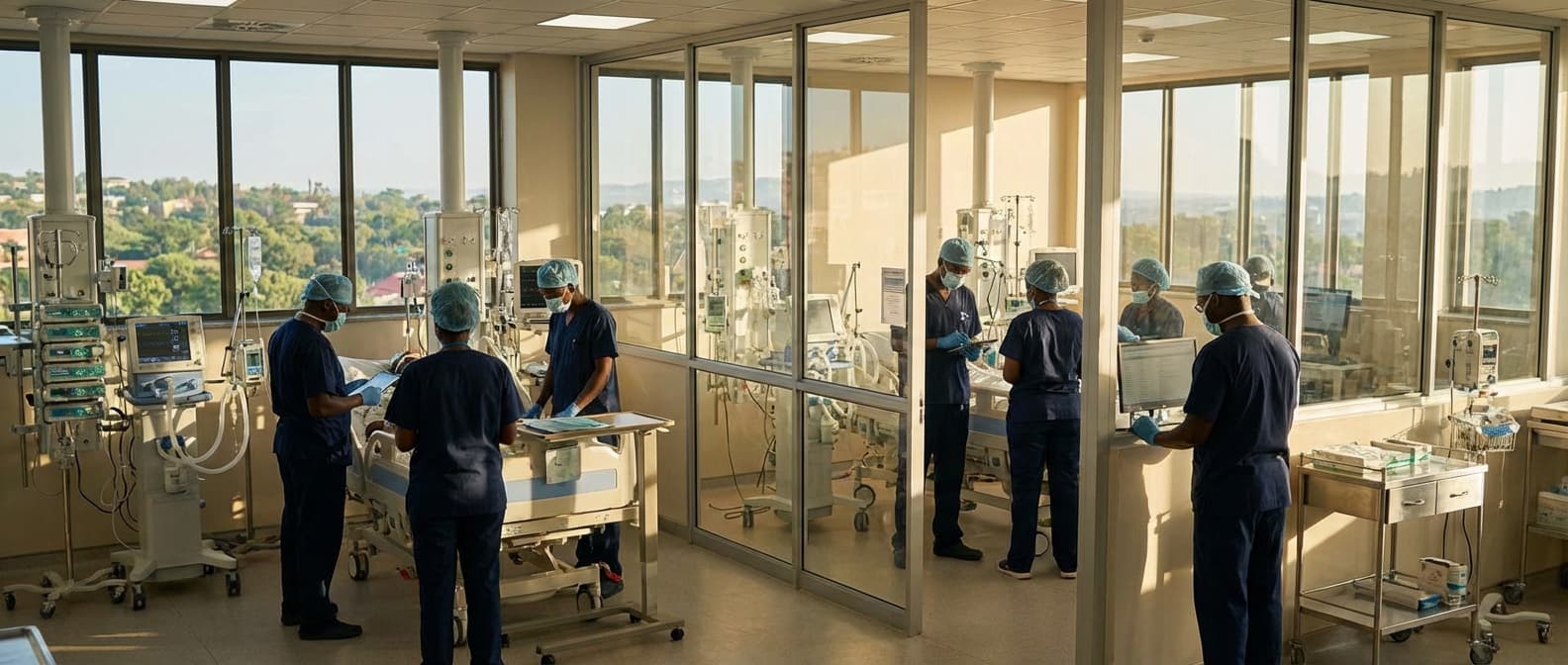
Ventilator Fleet Management & PM in Nigeria
Engineering Excellence & Technical Support
Preventive maintenance and fleet management for ICU ventilators High-standard technical execution following OEM protocols and local regulatory frameworks.
Real-Time Fleet Visibility & Predictive Maintenance
Leverage IoT sensors and cloud-based platforms to achieve real-time monitoring of all ventilators across Nigeria. Our system predicts potential equipment failures and schedules preventative maintenance proactively, minimizing downtime and ensuring critical care availability.
Remote Diagnostics & Expert Support
Enable remote troubleshooting and diagnostics for ventilators in underserved or hard-to-reach areas. Our platform facilitates secure video consultations and data sharing, allowing remote specialists to guide local technicians, drastically reducing response times and travel costs.
Data-Driven Optimization & Resource Allocation
Utilize comprehensive historical data on ventilator usage, maintenance records, and performance metrics to optimize fleet deployment, predict demand fluctuations, and inform strategic procurement decisions. This ensures efficient allocation of resources and improved patient outcomes across the nation.
What Is Ventilator Fleet Management & Pm In Nigeria?
Ventilator Fleet Management & Preventative Maintenance (PM) in Nigeria refers to the comprehensive oversight, maintenance, and operational readiness of a collection of mechanical ventilators within healthcare facilities. This service is critical for ensuring that these life-support devices are consistently available, functioning optimally, and meet stringent safety and efficacy standards throughout their lifecycle. It encompasses a range of activities from initial acquisition and installation to routine servicing, repair, calibration, and eventual decommissioning. The objective is to maximize device uptime, minimize unscheduled downtime, reduce total cost of ownership, and ultimately, safeguard patient outcomes.
| Who Needs Ventilator Fleet Management & PM? | Typical Use Cases | |||
|---|---|---|---|---|
| Tertiary and Secondary Hospitals: Facilities with intensive care units (ICUs), high dependency units (HDUs), operating rooms, and emergency departments. | Management of ICU Ventilator Cohorts: Ensuring constant availability of ventilators for critically ill patients requiring mechanical ventilation due to respiratory failure (e.g., ARDS, pneumonia, COPD exacerbations). | Routine Servicing of Operating Room Ventilators: Guaranteeing reliable performance during surgical procedures. | Emergency Preparedness: Maintaining a ready fleet for mass casualty incidents or public health emergencies (e.g., pandemics). | Pediatric and Neonatal Units: Managing specialized ventilators for vulnerable patient populations, requiring precise calibration and monitoring. |
| Government and Public Health Institutions: Ministry of Health, teaching hospitals, and general hospitals funded by the state. | Response to Epidemics and Pandemics: Rapid deployment and maintenance of ventilators during outbreaks of infectious diseases requiring respiratory support. | Resource Allocation and Optimization: Ensuring equitable distribution and efficient utilization of limited ventilator resources across public health facilities. | Standardization of Care: Implementing consistent maintenance protocols across all public healthcare providers. | |
| Private Healthcare Providers: Corporate hospitals, specialized clinics, and diagnostic centers with critical care capabilities. | Maintaining High Standards of Patient Care: Ensuring the reliability of equipment to support their premium service offerings. | Compliance with Accreditation Standards: Meeting requirements for accreditation bodies that mandate robust equipment maintenance programs. | Minimizing Financial Risk: Preventing costly downtime and potential litigation due to equipment failure. | |
| Medical Device Distributors and Service Providers: Companies offering biomedical engineering services and equipment maintenance contracts. | Providing Outsourced Maintenance Solutions: Offering specialized expertise and resources to healthcare facilities that lack in-house capabilities. | Managing Ventilator Fleets for Multiple Clients: Centralized management and maintenance of ventilators across various healthcare organizations. | Ensuring Compliance with Manufacturer Warranties: Performing maintenance in accordance with warranty terms to preserve coverage. |
Key Components of Ventilator Fleet Management & PM in Nigeria:
- Inventory Management: Tracking all ventilator units, including serial numbers, acquisition dates, location, warranty status, and maintenance history.
- Preventative Maintenance (PM) Scheduling and Execution: Adhering to manufacturer-recommended PM schedules, including inspections, cleaning, lubrication, and replacement of consumable parts.
- Corrective Maintenance and Repair: Prompt diagnosis and repair of malfunctions or breakdowns, utilizing qualified biomedical engineers and authorized parts.
- Calibration and Performance Verification: Ensuring ventilators are calibrated to deliver precise tidal volumes, pressures, and respiratory rates as prescribed, with regular performance testing.
- Software Updates and Firmware Management: Applying necessary software and firmware updates to maintain functionality, security, and incorporate new features or improvements.
- Asset Lifecycle Management: Planning for device replacement based on age, obsolescence, and evolving technological standards.
- Regulatory Compliance: Ensuring all maintenance activities and records comply with relevant Nigerian healthcare regulations and international standards (e.g., ISO 13485 principles).
- Training and Competency Assurance: Providing ongoing training for clinical staff on the proper use of ventilators and for biomedical engineering teams on maintenance procedures.
- Documentation and Record Keeping: Maintaining detailed and accurate records of all maintenance, repairs, calibration, and incident reports for auditability and trend analysis.
- Risk Management: Identifying and mitigating risks associated with ventilator failure, including the development of contingency plans and backup strategies.
Who Needs Ventilator Fleet Management & Pm In Nigeria?
Ventilator fleet management and preventive maintenance (PM) are crucial for ensuring the reliable operation of critical medical equipment in Nigeria. These services are essential to minimize downtime, extend equipment lifespan, and ultimately safeguard patient lives. Without proper management and maintenance, ventilators can fail unexpectedly during critical care situations, leading to severe consequences.
| Target Customer | Key Departments Involved | Primary Needs & Benefits |
|---|---|---|
| Public Hospitals | Biomedical Engineering Department, Critical Care Units (ICU, NICU, PICU), Procurement Department, Hospital Administration | Ensuring consistent availability of functional ventilators for a large patient population, optimizing budget for maintenance and replacement, compliance with health standards, reducing emergency repair costs. |
| Private Hospitals | Biomedical Engineering Department, Critical Care Units, Operations Management, Finance Department | Maintaining high-quality patient care standards, enhancing reputation and patient trust, maximizing equipment ROI, proactive identification of potential failures to avoid disruptions to services. |
| Tertiary Healthcare Institutions | Biomedical Engineering Department, Intensive Care Units, Specialized Treatment Centers, Research & Development Departments, Training Departments | Supporting complex patient needs, ensuring equipment readiness for advanced procedures, facilitating research requiring reliable equipment, training medical staff on properly maintained ventilators. |
| Emergency Medical Services (EMS) | Logistics Department, Paramedic Units, Medical Director's Office | Ensuring ventilators are ready and functional for transport and pre-hospital care, minimizing equipment failures in critical situations, timely servicing and calibration of mobile units. |
| Military Hospitals and Clinics | Medical Logistics, Biomedical Engineering, Combat Support Medical Units | Maintaining operational readiness for medical personnel, ensuring equipment reliability in diverse and potentially challenging environments, supporting military readiness. |
| NGOs & Healthcare Outreach Programs | Program Managers, Medical Coordinators, Logistics Officers, Field Technicians | Extending the lifespan of donated or procured equipment, ensuring functionality in resource-limited settings, providing essential life-saving equipment to vulnerable populations, training local staff for basic maintenance. |
| Remote & Underserved Facilities | Clinic Managers, Local Healthcare Providers, Ministry of Health Representatives | Access to essential life support, overcoming logistical challenges for maintenance, ensuring equipment reliability in areas with limited technical expertise, preventing preventable equipment failures. |
Who Needs Ventilator Fleet Management & PM in Nigeria?
- Hospitals (Public and Private)
- Tertiary Healthcare Institutions
- Emergency Medical Services (EMS) Organizations
- Military Hospitals and Clinics
- Non-Governmental Organizations (NGOs) involved in healthcare delivery
- Remote and underserved healthcare facilities
Ventilator Fleet Management & Pm Process In Nigeria
Managing a ventilator fleet in Nigeria involves a systematic workflow to ensure optimal availability, functionality, and cost-effectiveness. This process typically begins with an inquiry, which can stem from various sources, and culminates in the successful execution of maintenance or deployment tasks. The workflow is designed to be robust, transparent, and adaptable to the unique challenges of the Nigerian healthcare landscape, including logistics, infrastructure, and skilled personnel availability.
| Stage | Description | Key Activities | Responsible Parties | Potential Challenges in Nigeria |
|---|---|---|---|---|
| Inquiry & Needs Assessment | Initial request for ventilator services, whether for new acquisition, repair, preventive maintenance, or deployment. | Receiving and logging the inquiry, understanding the specific need (e.g., type of ventilator, location, urgency), gathering initial details. | Healthcare facilities, Ministry of Health, NGOs, Biomedical Engineering Departments. | Lack of standardized inquiry channels, unclear needs descriptions, communication barriers across different regions. |
| Triage & Prioritization | Evaluating the urgency and impact of the inquiry to determine the order of processing. | Assessing criticality of the need (e.g., emergency deployment vs. routine PM), categorizing by urgency, assigning a priority level. | Fleet Manager, Biomedical Engineering Lead, Clinical Staff. | Difficulty in real-time assessment of patient need, potential for political influence in prioritization. |
| Work Order Generation & Assignment | Formalizing the approved request into a actionable task with clear instructions. | Creating a detailed work order (digital or paper), specifying tasks, required parts/tools, timelines, and assigning it to the appropriate technician or team. | Fleet Management System (FMS) or designated administrator, Biomedical Engineering Department. | Manual or outdated work order systems, difficulty in tracking and assigning based on technician availability and expertise, poor connectivity for digital systems. |
| Procurement & Logistics | Acquiring necessary parts, consumables, or entire ventilators, and arranging for their transport. | Identifying required parts/equipment, sourcing from approved vendors, managing inventory, coordinating shipping and customs clearance, planning transport to remote locations. | Procurement Department, Logistics Team, Biomedical Technicians. | Importation delays and high customs duties, limited local availability of specialized parts, poor road infrastructure and security for transportation, currency fluctuations affecting procurement costs. |
| Execution (Installation, Repair, Maintenance) | Performing the actual technical work on the ventilator. | On-site or in-workshop repair, routine preventive maintenance checks, calibration, installation of new equipment, troubleshooting. | Certified Biomedical Technicians, Field Service Engineers. | Shortage of skilled and certified technicians, lack of specialized tools and diagnostic equipment, unreliable power supply at facilities, limited access to remote areas, need for spare parts inventory at local hubs. |
| Verification & Quality Assurance | Ensuring the work performed meets quality standards and the ventilator is fully functional. | Testing the ventilator post-service, performing diagnostic checks, user acceptance testing with clinical staff, validating performance against specifications. | Biomedical Technicians, Quality Assurance Officer, Clinical End-Users. | Inconsistent quality control processes, lack of standardized testing protocols, resistance to post-service validation by some facilities. |
| Documentation & Reporting | Recording all activities, findings, and outcomes for historical reference and analysis. | Updating work order status, logging service history, recording parts used, documenting test results, generating performance reports. | Biomedical Technicians, Fleet Manager, FMS Administrator. | Manual data entry leading to errors, lack of real-time data capture, inadequate reporting structures, difficulty in consolidating data from disparate sources. |
| Closure & Follow-up | Formally closing the work order and potentially scheduling future service or monitoring. | Confirming completion and satisfaction, archiving records, scheduling next preventive maintenance, gathering feedback for continuous improvement. | Fleet Manager, Biomedical Engineering Department, Clinical End-Users. | Lack of systematic follow-up procedures, limited feedback mechanisms, challenges in proactive scheduling for remote or hard-to-reach facilities. |
Ventilator Fleet Management & PM Process in Nigeria: Workflow Stages
- Inquiry & Needs Assessment
- Triage & Prioritization
- Work Order Generation & Assignment
- Procurement & Logistics
- Execution (Installation, Repair, Maintenance)
- Verification & Quality Assurance
- Documentation & Reporting
- Closure & Follow-up
Ventilator Fleet Management & Pm Cost In Nigeria
Managing ventilator fleets in Nigeria involves a complex interplay of acquisition costs, maintenance, and operational expenses. Effective fleet management ensures optimal utilization, minimizes downtime, and ultimately impacts patient care and healthcare system efficiency. Pricing factors are diverse, ranging from the initial purchase price of the ventilators themselves to the ongoing costs of preventive maintenance (PM), repairs, spare parts, and specialized technician training. Economic conditions, import duties, currency fluctuations, and the specific vendor or supplier also play a significant role in determining the final cost in Nigerian Naira (NGN).
| Service/Component Category | Estimated Price Range (NGN) | Notes |
|---|---|---|
| Basic Ventilator (e.g., Transport/ICU, non-high-end) | 5,000,000 - 20,000,000+ | Highly variable based on features, brand, and new vs. refurbished. |
| Advanced/High-End Ventilator (e.g., Critical Care, specialized modes) | 20,000,000 - 80,000,000+ | Includes advanced monitoring, ventilation strategies, and connectivity. |
| Annual PM Contract (per ventilator, basic) | 500,000 - 2,000,000+ | Covers routine checks, basic servicing. Varies by vendor and contract scope. |
| Annual PM Contract (per ventilator, comprehensive) | 1,500,000 - 5,000,000+ | May include scheduled part replacements and extended service support. |
| Basic Repair Call-out Fee (Labor only) | 100,000 - 500,000 | Excludes parts. Response time can affect cost. |
| Major Component Replacement (e.g., turbine, compressor) | 500,000 - 5,000,000+ | Depends on the specific part and ventilator model. Genuine parts are more expensive. |
| Routine Calibration/Performance Verification (if not under PM) | 150,000 - 750,000 | Ensures accuracy and safety. |
| Technician Training (per technician, basic) | 300,000 - 1,500,000+ | Covers basic maintenance and troubleshooting. Can be a one-time or recurring cost. |
| Spare Parts (e.g., filters, sensors, tubing) | 10,000 - 500,000+ | Per item or a kit. Essential for routine replacement. |
| Software Update/Licensing (if applicable) | 200,000 - 2,000,000+ | For advanced functionalities or security updates. |
Key Pricing Factors for Ventilator Fleet Management & PM in Nigeria
- Ventilator Acquisition Cost: The most significant upfront expense, varying by brand, model, technological sophistication (e.g., invasive vs. non-invasive, advanced monitoring capabilities), and quantity purchased.
- Preventive Maintenance (PM) Contracts: Annual or bi-annual service agreements with manufacturers or authorized service providers. These typically cover routine inspections, calibration, cleaning, and replacement of wear-and-tear parts.
- Spare Parts Availability and Cost: The cost and accessibility of genuine and compatible spare parts are critical. High demand and limited local stock can drive up prices.
- Technician Training and Certification: Training healthcare professionals or biomedical engineers to perform basic maintenance and troubleshooting reduces reliance on external technicians and can lower overall costs.
- Repair Costs: Unscheduled repairs due to equipment failure. This includes labor, parts, and potential shipping costs if external repair services are required.
- Calibration and Performance Verification: Regular checks to ensure the ventilator is functioning within manufacturer specifications. This is crucial for patient safety and can be part of PM contracts or require separate service calls.
- Software Updates and Licensing: Some advanced ventilators require periodic software updates or have licensing fees for specific functionalities.
- Logistics and Transportation: Costs associated with moving ventilators for servicing or relocation within a healthcare facility or across different locations.
- Import Duties and Taxes: Applicable tariffs and taxes on imported medical equipment significantly impact the final purchase price.
- Currency Exchange Rates: Fluctuations in the Nigerian Naira against major international currencies (USD, EUR) directly affect the cost of imported ventilators and parts.
- Vendor Margins and Service Level Agreements (SLAs): Different suppliers will have varying pricing structures and profit margins. SLAs define the level of service and response times, which can influence cost.
- Warranty Period and Expiry: While initial warranties reduce immediate repair costs, post-warranty maintenance can be substantial.
Affordable Ventilator Fleet Management & Pm Options
Managing a fleet of medical ventilators is a critical but often costly endeavor for healthcare facilities. This document outlines affordable fleet management and preventive maintenance (PM) options, focusing on value bundles and cost-saving strategies. The goal is to maximize equipment uptime, ensure patient safety, and optimize resource allocation without breaking the budget. We explore how bundled services and strategic approaches can lead to significant financial and operational benefits.
| Cost-Saving Strategy | Description | Potential Benefits |
|---|---|---|
| Proactive PM Scheduling | Implementing a rigorous and timely preventive maintenance schedule based on manufacturer recommendations and usage data. This minimizes unexpected breakdowns. | Reduced emergency repair costs, extended equipment lifespan, improved patient safety, minimized downtime. |
| Negotiating Multi-Year Contracts | Securing long-term service agreements can often lead to lower per-unit costs due to commitment and volume. | Predictable budgeting, potential for volume discounts, stable service pricing over time. |
| Third-Party Service Providers | Engaging specialized third-party biomedical service companies can offer competitive pricing for PM and repairs, especially for older or out-of-warranty equipment. | Often more cost-effective than OEM service, flexible service options, expertise across multiple brands. |
| In-House Technician Training | Investing in training your own biomedical technicians to perform routine PM and minor repairs can reduce reliance on external services. | Lower per-incident costs, faster response times, increased control over maintenance schedule. |
| Equipment Standardization | Limiting the number of ventilator models in the fleet simplifies training, parts inventory, and service procedures. | Reduced training costs, streamlined parts management, simplified service and repair processes. |
| Leasing vs. Purchasing Analysis | Evaluating the total cost of ownership for leasing options versus outright purchase, considering maintenance and upgrade cycles. | Lower upfront capital expenditure, predictable operating costs, access to newer technology through upgrades. |
| Strategic Parts Inventory Management | Maintaining a lean, strategic inventory of critical spare parts based on usage and lead times to avoid overstocking while ensuring availability. | Reduced inventory holding costs, faster repair times, minimized risk of obsolescence. |
Key Value Bundles for Ventilator Fleet Management & PM
- Comprehensive Maintenance Contracts: Bundling routine PM, unscheduled repairs, and parts into a single contract often provides predictable costs and can include priority service. Many manufacturers and third-party service providers offer tiered plans.
- On-Site Technical Support & Training: Combining regular on-site technician presence with staff training on basic troubleshooting and operation can reduce the need for emergency call-outs and improve staff proficiency, leading to fewer user-related issues.
- Parts & Consumables Packages: Negotiating bulk discounts on essential replacement parts and disposables through a managed program can significantly lower material costs compared to ad-hoc purchasing.
- Refurbishment & Upgrade Programs: Bundling the cost of planned refurbishment or upgrade cycles for aging ventilators with ongoing service agreements can be more cost-effective than purchasing entirely new equipment.
- Data Management & Analytics Services: Integrating fleet management software with PM services can provide valuable insights into equipment performance, usage patterns, and repair history, enabling proactive decision-making and preventing costly failures.
Verified Providers In Nigeria
Navigating the healthcare landscape in Nigeria can be challenging, with many providers offering services. However, when it comes to reliable and high-quality care, Verified Providers in Nigeria stand out. Franance Health has established itself as a leader in this domain, meticulously credentialing healthcare providers to ensure they meet stringent standards. This verification process is crucial for patients seeking assurance of competence, ethical practice, and adherence to medical best practices. Franance Health's commitment to this rigorous vetting means that when you choose a Franance Health-verified provider, you are choosing excellence, safety, and peace of mind.
| Provider Type | Verification Criteria | Benefits for Patients |
|---|---|---|
| Hospitals | Accreditation, Staff Qualifications, Equipment Standards, Hygiene Protocols | Access to advanced diagnostics, surgical procedures, and comprehensive inpatient care. |
| Clinics | Doctor's Licenses, Nurse Qualifications, Patient Record Management, Cleanliness | Reliable outpatient services, general consultations, and basic medical treatments. |
| Specialist Practices (e.g., Cardiology, Pediatrics) | Board Certifications, Years of Experience, Continuing Medical Education, Patient Outcomes | Expert diagnosis and treatment for specific health conditions. |
| Diagnostic Centers (e.g., Radiology, Pathology) | Technician Certifications, Equipment Calibration, Quality Control Measures, Turnaround Time | Accurate and timely diagnostic results to inform treatment decisions. |
| Pharmacies | Pharmacist Licenses, Drug Sourcing and Storage Protocols, Prescription Accuracy | Safe and reliable access to prescribed medications and expert pharmaceutical advice. |
Why Franance Health Verified Providers are the Best Choice:
- Unwavering Commitment to Quality: Franance Health implements a multi-faceted verification process that goes beyond basic licensing. They assess clinical expertise, patient care protocols, facility standards, and ongoing professional development.
- Enhanced Patient Safety: The rigorous screening significantly reduces the risk of encountering substandard care. Verified providers have demonstrated a strong track record and a commitment to safe medical practices.
- Trust and Transparency: Franance Health provides a transparent credentialing process, empowering patients with the knowledge that their chosen provider has met established benchmarks for quality and reliability.
- Access to Specialized Care: Through their network, Franance Health connects patients with a diverse range of verified specialists, ensuring that complex medical needs can be met with expert care.
- Continuous Improvement: Franance Health actively monitors and encourages its verified providers to maintain and enhance their skills and services, fostering a culture of continuous improvement within the Nigerian healthcare sector.
- Ethical Practice Assurance: The verification process includes an assessment of ethical conduct and patient rights, ensuring that verified providers operate with integrity and professionalism.
Scope Of Work For Ventilator Fleet Management & Pm
This Scope of Work (SOW) outlines the requirements for the comprehensive management and preventative maintenance (PM) of the organization's ventilator fleet. The objective is to ensure the optimal performance, reliability, and longevity of all medical ventilators, thereby supporting patient care and operational efficiency. This document details the technical deliverables and standard specifications expected from the service provider.
| Section | Description | Technical Deliverables | Standard Specifications / Requirements |
|---|---|---|---|
| 1.0 Fleet Inventory & Management | Establish and maintain a comprehensive digital inventory of all ventilators. This includes tracking serial numbers, manufacturer, model, acquisition date, location, current status, and maintenance history. | Digital asset registry (database or software), Regular inventory audits, Asset lifecycle tracking reports. | HIPAA compliant data storage, Secure access controls, Real-time update capabilities, Standardized data fields for all assets. |
| 2.0 Preventative Maintenance (PM) | Develop and execute a rigorous PM program based on manufacturer recommendations and best practices. This includes scheduled inspections, calibration, cleaning, and functional testing. | Detailed PM schedules per ventilator model, PM completion reports (including test results), Calibration certificates, Corrective action recommendations. | PM frequency aligned with manufacturer guidelines (e.g., semi-annually, annually), Use of manufacturer-approved calibration gases and equipment, PM checklists with clear pass/fail criteria, Traceability to calibration standards. |
| 3.0 Corrective Maintenance & Repair | Provide prompt and efficient repair services for ventilators that are malfunctioning or have failed. This includes troubleshooting, parts replacement, and post-repair testing. | 24/7 emergency response availability, Diagnostic reports, Repair logs detailing work performed and parts used, Post-repair functional test reports, Turnaround time metrics. | Response time SLAs (e.g., within X hours for critical issues), Use of genuine OEM or equivalent parts, Full functional testing and calibration post-repair, Documentation of root cause analysis for recurring issues. |
| 4.0 Quality Assurance & Compliance | Ensure all maintenance activities adhere to organizational policies, regulatory requirements (e.g., FDA, local health authorities), and manufacturer specifications. | Compliance audit reports, Documentation of adherence to SOPs, Records of staff training and certifications. | Adherence to ISO 13485 or equivalent quality management systems, Regular internal and external audits, Proof of technician certifications and ongoing training on specific ventilator models. |
| 5.0 Reporting & Documentation | Provide regular and ad-hoc reports on fleet status, PM completion, repair history, costs, and recommendations for asset management. | Monthly fleet status reports, Quarterly PM compliance reports, Annual asset utilization and cost analysis reports, Ad-hoc incident reports. | Reports to be provided in a standardized format (e.g., PDF, Excel), Clear and concise presentation of data, Actionable insights and recommendations included in reports, Secure electronic report delivery. |
| 6.0 Parts & Inventory Management | Maintain an adequate stock of critical spare parts for common repairs and PM procedures. | Minimum/maximum stock level recommendations, Parts inventory reports, Tracking of parts used in repairs. | Managed inventory levels to ensure timely repairs without excessive holding costs, Regular review of parts usage to optimize stocking, Use of approved suppliers for spare parts. |
| 7.0 Service Level Agreements (SLAs) | Define specific performance metrics and response times for various service levels. | Agreed-upon SLAs for response times, repair times, and PM completion. | Clearly defined metrics for planned maintenance, emergency repairs, and equipment uptime. Penalties or incentives tied to SLA adherence. |
Key Objectives
- Ensure consistent availability and operational readiness of all ventilators.
- Minimize equipment downtime through proactive and reactive maintenance.
- Maintain compliance with all relevant regulatory standards and manufacturer guidelines.
- Optimize the lifespan of ventilator assets through effective PM.
- Provide accurate and timely reporting on fleet status, maintenance activities, and cost.
- Facilitate efficient inventory management and lifecycle tracking of ventilators.
Service Level Agreement For Ventilator Fleet Management & Pm
This Service Level Agreement (SLA) outlines the performance standards and guarantees for Ventilator Fleet Management and Preventive Maintenance (PM) services. It establishes clear expectations for response times to incidents and uptime for the managed ventilator fleet.
| Service Component | Service Level Objective (SLO) | Measurement Method | Remedy for Failure |
|---|---|---|---|
| Corrective Maintenance - Critical Failure (Life-Sustaining Equipment) | Response Time: < 1 hour for initial acknowledgement and technician dispatch. On-site repair completion target: < 4 hours. | Time of notification to dispatch confirmation. Time of technician arrival to equipment operational status. | Service credits equivalent to [Percentage]% of monthly management fee for each incident exceeding the target response/repair time. For repeat failures within a [Number]-month period, a root cause analysis and corrective action plan will be provided and may trigger further service credits. |
| Corrective Maintenance - Non-Critical Failure | Response Time: < 4 hours for initial acknowledgement and technician dispatch. On-site repair completion target: < 24 business hours. | Time of notification to dispatch confirmation. Time of technician arrival to equipment operational status. | Service credits equivalent to [Percentage]% of monthly management fee for each incident exceeding the target response/repair time. |
| Preventive Maintenance (PM) Completion | 100% of scheduled PMs to be completed within [Number] days of the scheduled date. | Date of scheduled PM vs. Date of actual completion. | For each PM completed more than [Number] days late, a service credit of $[Amount] will be applied. |
| Fleet Uptime Guarantee | 98% uptime for the entire managed ventilator fleet, measured monthly. | Total operational hours of all ventilators / Total scheduled operational hours of all ventilators. | If the fleet uptime falls below 98% for a given month, a service credit of [Percentage]% of the monthly management fee will be applied. If uptime falls below [Lower Percentage]% for two consecutive months, the customer may have the option to terminate the agreement without penalty. |
Key Service Commitments
- Preventive Maintenance (PM) Scheduling: PM shall be scheduled and completed according to the manufacturer's recommendations and regulatory requirements. Notification for scheduled PM will be provided a minimum of [Number] days in advance.
- Corrective Maintenance Response: Upon notification of a malfunctioning or inoperable ventilator, the service provider will initiate a response within the defined timeframes.
- Uptime Guarantee: The service provider guarantees a minimum uptime percentage for the managed ventilator fleet over a defined period.
- Reporting: Regular reports on PM completion, incident response times, and fleet uptime will be provided.
- Escalation Procedures: Clear escalation paths for critical issues will be defined.
Frequently Asked Questions

Ready when you are
Let's scope your Ventilator Fleet Management & PM in Nigeria project in Nigeria.

Scaling healthcare logistics and technical systems across the entire continent.