
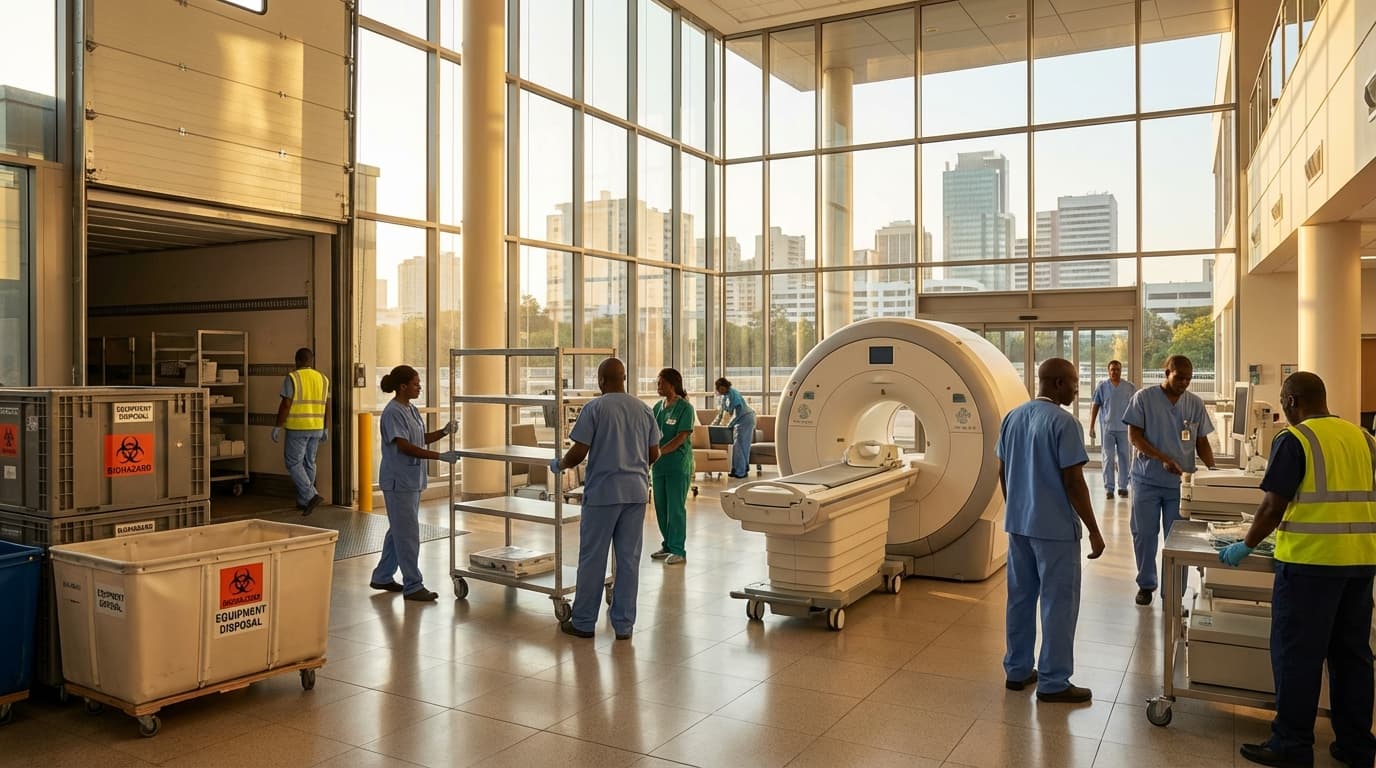
Heavy Medical Equipment De-Installation Service (MRI/CT/Cath Lab) in Nigeria
Engineering Excellence & Technical Support
Heavy Medical Equipment De-Installation Service (MRI/CT/Cath Lab) High-standard technical execution following OEM protocols and local regulatory frameworks.
Expert Electrical Isolation & Disconnection
Our certified technicians meticulously manage the de-energization and safe disconnection of complex electrical systems within MRI, CT, and Cath Lab equipment, ensuring adherence to international safety standards and preventing power surges or damage during the removal process.
Containment & Shielding Integrity Assurance
We specialize in the careful handling and removal of lead shielding and RF enclosures in MRI and CT suites. Our process ensures the integrity of these critical components is maintained, preventing environmental contamination and preserving valuable materials for potential resale or disposal.
Specialized Component De-coupling & Rigging
Leveraging advanced rigging techniques and specialized tools, we expertly de-couple and secure heavy, sensitive components like superconducting magnets (MRI) and X-ray tubes (CT/Cath Lab). Our approach minimizes stress on the equipment and ensures safe, controlled extraction from confined medical spaces.
What Is Heavy Medical Equipment De-installation Service (Mri/ct/cath Lab) In Nigeria?
Heavy Medical Equipment De-Installation Service (MRI/CT/Cath Lab) in Nigeria refers to the specialized process of safely and systematically dismantling, disconnecting, and preparing large-scale, complex medical imaging and diagnostic equipment for relocation, decommissioning, or disposal. This service is crucial for maintaining operational integrity, ensuring safety during handling, and complying with regulatory and environmental standards. The scope encompasses a comprehensive workflow from initial assessment and planning through to the physical disassembly and packaging of components. Due to the intricate nature and significant weight of these systems, specialized expertise, tools, and rigorous protocols are essential to prevent damage to the equipment, surrounding infrastructure, and personnel.
| Who Needs This Service? | Typical Use Cases |
|---|---|
| Hospitals and Healthcare Facilities: Upgrading to newer imaging technology, relocating departments, or closing down units. | Radiology and Imaging Centers: Replacing outdated MRI, CT, or Cath Lab equipment to enhance diagnostic capabilities and patient throughput. |
| Medical Equipment Manufacturers and Resellers: Preparing equipment for resale, refurbishment, or as part of a new installation project. | Government and Military Healthcare Institutions: Modernizing or decommissioning medical facilities, often with complex logistical requirements. |
| Research Institutions and Universities: Relocating specialized imaging equipment for research purposes or updating laboratory infrastructure. | Asset Recovery and Disposal Companies: Facilitating the efficient and compliant removal of heavy medical equipment for resale or responsible recycling. |
| Construction and Renovation Companies: Managing the removal of existing large-scale medical equipment to clear space for new installations or building modifications. | Insurance and Claims Adjusters: Assessing and facilitating the removal of damaged or end-of-life medical equipment following an incident. |
Key Components of Heavy Medical Equipment De-Installation:
- Site Assessment and Survey: Comprehensive evaluation of the existing installation, including structural integrity, access routes, power requirements, and environmental controls.
- Decommissioning Planning: Development of a detailed project plan outlining the sequence of operations, resource allocation, safety procedures, and timelines.
- System Shutdown and Disconnection: Controlled power-down sequences, disconnection of all power, data, cooling, and ancillary systems according to manufacturer specifications.
- Component Disassembly: Expert dismantling of the equipment into manageable components, often requiring specialized lifting equipment, precision tools, and trained technicians.
- Shielding Removal: Safe and compliant removal of radiation shielding (e.g., lead lining) associated with MRI, CT, and X-ray systems.
- Cooling System Management: Draining, flushing, and capping of coolant lines for systems like MRI (e.g., helium cryogens) and CT scanners.
- Packaging and Preservation: Secure packaging of individual components using appropriate materials to prevent damage during transit and storage.
- Logistics and Transportation Planning: Coordination of specialized transportation, including heavy haulage vehicles and permits, for oversized and overweight components.
- Environmental Compliance and Waste Management: Adherence to regulations regarding the handling and disposal of potentially hazardous materials (e.g., refrigerants, electronic waste).
- Documentation and Certification: Provision of detailed de-installation reports, asset inventories, and any necessary certifications for regulatory purposes.
Who Needs Heavy Medical Equipment De-installation Service (Mri/ct/cath Lab) In Nigeria?
Heavy medical equipment de-installation services, particularly for complex machinery like MRI, CT scanners, and Cath Labs, are essential for a range of healthcare facilities and organizations in Nigeria. These services are required during upgrades, relocations, decommissioning of old equipment, or when acquiring new, advanced systems that necessitate the removal of existing bulky machinery. The need spans both public and private sectors, driven by the constant evolution of medical technology and the demand for efficient healthcare delivery.
| Customer Type | Key Departments Involved | Reasons for De-Installation |
|---|---|---|
| Hospitals (Public & Private) | Radiology, Cardiology, Biomedical Engineering, Facilities Management, Procurement | Equipment Upgrade, Relocation within Facility, Facility Renovation, Decommissioning of Old Equipment, New Technology Integration |
| Diagnostic Imaging Centers | Radiology, Operations Management, Technical Support | Equipment Replacement, Technology Obsolescence, Capacity Expansion, Relocation of Center |
| Cardiology & Interventional Radiology Clinics | Interventional Cardiology, Interventional Radiology, Biomedical Engineering | Cath Lab Upgrade, Relocation of Suite, Replacement of Older Cath Lab Models |
| Government Health Ministries & Agencies | Procurement, Planning & Strategy, Asset Management, Public Health Infrastructure | Fleet Replacement, Standardization of Equipment, Infrastructure Upgrades, Closure of Underperforming Facilities |
| Medical Equipment Manufacturers & Suppliers | Installation & Commissioning Teams, Service & Support Departments | Product Lifecycle Management, Trade-in Programs, Demonstrator Unit Removal, Installation of New Models |
| Third-Party Maintenance & Service Providers | Field Service Engineers, Project Managers, Technical Operations | Major Overhauls Requiring Removal, Equipment Transfers Between Sites, Decommissioning for Disposal |
| Research Institutions & Universities | Research Departments (e.g., Radiology, Cardiology), Biomedical Engineering, Estates Management | Upgrade to Newer Research Models, Relocation of Labs, Equipment Retirement for New Procurement |
Target Customers and Departments for Heavy Medical Equipment De-Installation Services in Nigeria
- Hospitals (Public & Private): The primary users of these services. This includes teaching hospitals, general hospitals, tertiary care centers, and specialized private hospitals.
- Diagnostic Imaging Centers: Facilities dedicated to providing advanced imaging services, often housing multiple MRI, CT, and other high-end equipment.
- Cardiology and Interventional Radiology Clinics: Specialized centers that heavily rely on Cath Lab equipment for diagnostic and therapeutic procedures.
- Government Health Ministries & Agencies: Responsible for managing public healthcare infrastructure, including the procurement, installation, and eventual decommissioning of medical equipment in government-owned facilities.
- Medical Equipment Manufacturers & Suppliers: Companies that sell, install, and often provide de-installation services as part of their lifecycle management for their equipment.
- Third-Party Maintenance & Service Providers: Companies specializing in the maintenance and repair of complex medical equipment, who may require de-installation services for major repairs, upgrades, or replacements.
- Research Institutions & Universities with Medical Faculties: Facilities that require specialized equipment for research and training purposes, which may need to be relocated or upgraded.
- Insurance Companies: In cases where equipment is being replaced due to damage or obsolescence, insurance companies might be involved and could mandate professional de-installation.
- Healthcare Consultants & Project Managers: Individuals or firms overseeing hospital construction, renovation, or equipment procurement projects.
- Asset Disposal & Recycling Companies: Companies specializing in the responsible disposal or recycling of old medical equipment, requiring professional de-installation.
Heavy Medical Equipment De-installation Service (Mri/ct/cath Lab) Process In Nigeria
The de-installation of heavy medical equipment like MRI, CT scanners, and Cath Labs is a complex and critical process. In Nigeria, this service requires meticulous planning, specialized expertise, and adherence to stringent safety protocols. This workflow outlines the typical stages involved, from the initial inquiry to the successful completion of the de-installation, ensuring minimal disruption and maximum safety.
| Stage | Description | Key Activities | Considerations in Nigeria |
|---|---|---|---|
| Inquiry & Initial Consultation | The client (hospital, clinic, or equipment owner) contacts the de-installation service provider with a request for de-installation. | Discussing project scope, equipment type, location, timeline, and any specific requirements. Understanding the reason for de-installation (relocation, upgrade, disposal). | Clear communication of service capabilities, understanding local regulations regarding medical waste disposal and equipment decommissioning. Availability of local, English-speaking technical teams. |
| Site Assessment & Survey | A qualified technical team visits the site to thoroughly assess the equipment and its surroundings. | Detailed inspection of the equipment, power supply, cooling systems, structural integrity of the building, access routes (doorways, corridors, elevators), and any potential hazards. Taking measurements and photographs. | Navigating logistics for site access, security clearances, potential traffic management for large equipment movement, and ensuring the safety of hospital staff and patients during the survey. |
| Proposal & Quotation | Based on the site assessment, a detailed proposal and cost estimate are prepared and submitted to the client. | Outlining the scope of work, methodology, timeline, required personnel, specialized tools, safety measures, insurance, and the total cost. Breaking down costs for labor, equipment rental, transportation, and potential disposal. | Accurate pricing for import duties or taxes on specialized tools if not locally available. Understanding local market rates and competitor pricing. |
| Contract & Agreement | Upon acceptance of the proposal, a formal contract is signed between the client and the service provider. | Specifying terms and conditions, payment schedule, responsibilities of each party, liability clauses, confidentiality agreements, and insurance coverage. | Ensuring contract terms are legally compliant with Nigerian contract law. Clarity on currency of payment and exchange rate fluctuations. |
| Planning & Preparation | Detailed planning and preparation are crucial for a smooth and safe de-installation. | Developing a step-by-step de-installation plan, scheduling personnel, procuring specialized tools and equipment, arranging for transport and logistics, obtaining necessary permits or approvals, and scheduling downtime with the facility. | Securing local transportation for personnel and equipment, identifying and engaging local logistical partners, understanding any specific permit requirements for medical equipment handling from relevant government bodies (e.g., Ministry of Health, NAFDAC if applicable for disposal). |
| Equipment Preparation & Isolation | The equipment is prepared for de-installation by trained technicians. | Safely shutting down the equipment according to manufacturer guidelines, disconnecting power, cooling, and other essential services. Purging of refrigerants or hazardous substances where applicable. Securing components and marking them for reassembly. | Availability of manufacturer-specific shutdown procedures. Ensuring qualified personnel are present for handling any specific gases or fluids. |
| De-installation Execution | The core de-installation process is carried out by a skilled team. | Dismantling the equipment in a controlled and systematic manner, using specialized lifting equipment, tools, and techniques. Ensuring safe handling and packaging of components. Adhering strictly to the de-installation plan and safety protocols. | Managing site-specific challenges like limited space for maneuvering heavy components, navigating power outages, and ensuring clear communication amongst the team in potentially noisy environments. Compliance with local labor laws for on-site workers. |
| Documentation & Handover | Comprehensive documentation of the de-installation process is maintained. | Recording all steps taken, including photographs and videos. Creating a detailed inventory of removed components. Preparing a final report for the client. Safe handover of components to the client or designated transport. | Ensuring documentation is clear and understandable for local stakeholders, potentially including translation services if required. Formal sign-off from the client acknowledging completion and handover. |
| Post-De-installation Support | The service provider offers support after the de-installation is complete. | Assisting with the transportation of equipment to a new location or disposal site. Providing advice on storage, reinstallation, or environmental disposal procedures. Addressing any immediate client queries or concerns. | Coordinating with local disposal or recycling facilities that meet environmental standards. Providing guidance on import/export documentation if the equipment is being moved internationally. Understanding local customs and clearance procedures for returned or exported equipment. |
Heavy Medical Equipment De-Installation Service Workflow (Nigeria)
- Inquiry & Initial Consultation
- Site Assessment & Survey
- Proposal & Quotation
- Contract & Agreement
- Planning & Preparation
- Equipment Preparation & Isolation
- De-installation Execution
- Documentation & Handover
- Post-De-installation Support
Heavy Medical Equipment De-installation Service (Mri/ct/cath Lab) Cost In Nigeria
De-installing heavy medical equipment like MRI, CT scanners, and Cath Labs in Nigeria is a specialized and complex process. It requires skilled technicians, specialized tools, adherence to safety protocols, and often coordination with logistics providers for transportation. The cost can vary significantly based on several factors. Understanding these factors is crucial for accurate budgeting and planning.
| Equipment Type | Estimated Cost Range (NGN) | Notes |
|---|---|---|
| CT Scanner | ₦500,000 - ₦2,000,000+ | Varies based on model size, weight, and complexity. Includes skilled technicians, basic lifting equipment, and safety measures. |
| MRI Scanner (excluding magnet removal) | ₦1,000,000 - ₦4,000,000+ | Higher end due to specialized knowledge, shielding, and potential need for helium recovery. More complex dismantling and careful handling. |
| Cath Lab | ₦750,000 - ₦3,000,000+ | Involves complex cabling, heavy components (imaging systems, tables), and specialized hydraulic/mechanical systems. Requires experienced engineers. |
| Full MRI De-installation (including magnet removal/disposal) | ₦3,000,000 - ₦10,000,000+ | This is a significantly more complex and costly undertaking. Requires specialized cryogen management, heavy lifting, environmental safety protocols, and potentially specialized transportation for the magnet. |
Key Pricing Factors for Heavy Medical Equipment De-installation in Nigeria:
- {"title":"Type of Equipment","description":"Different modalities have varying complexities. MRI machines, with their large superconducting magnets and cryogen systems, are generally the most expensive to de-install due to safety and specialized handling requirements. CT scanners and Cath Labs also present their own unique challenges in terms of size, weight, and interconnected systems."}
- {"title":"Size and Weight of Equipment","description":"Larger and heavier units require more robust lifting equipment (cranes, specialized dollies), more personnel, and extended time for de-installation. This directly impacts labor and equipment rental costs."}
- {"title":"Accessibility and Site Conditions","description":"The ease of access to the de-installation site plays a major role. Narrow doorways, confined spaces, multiple floors, or challenging terrain will increase the complexity and cost. The condition of the room itself (e.g., need for minor structural modifications to remove equipment) can also add to the expense."}
- {"title":"Dismantling Complexity","description":"Some equipment requires extensive dismantling into smaller components for removal, while others may be able to be moved in larger sections. The number of components, the need for specialized tools to disconnect intricate parts (e.g., RF coils, gantry components), and the expertise required for safe disassembly contribute to the cost."}
- {"title":"Technical Expertise and Personnel","description":"The de-installation must be performed by certified and experienced technicians familiar with the specific modality. The number of technicians, their skill levels, and the duration of their involvement are primary cost drivers. Specialized engineers for cryogen management (MRI) or complex imaging systems will command higher rates."}
- {"title":"Safety and Regulatory Compliance","description":"Adherence to strict safety protocols is paramount. This includes proper grounding, handling of hazardous materials (e.g., refrigerants in CT systems), and ensuring the safety of personnel and the surrounding environment. Costs associated with safety equipment, permits, and potential environmental disposal considerations are factored in."}
- {"title":"Transportation and Logistics","description":"While de-installation focuses on removal from the site, the cost often includes making the equipment ready for transport and loading onto specialized vehicles. This can involve crating, specialized packaging, and coordination with logistics companies. The distance to the next location or storage facility will also influence the overall project cost if transportation is included."}
- {"title":"Downtime and Scheduling","description":"Hospitals may require de-installation to occur during off-peak hours or with minimal disruption to ongoing patient care. This can lead to overtime pay for technicians and potentially higher overall project costs."}
- {"title":"Geographic Location within Nigeria","description":"Costs can vary between major cities (Lagos, Abuja) and smaller towns due to differences in labor rates, availability of specialized services, and transportation expenses."}
- {"title":"Ancillary Services","description":"This can include services like site preparation, minor structural modifications, environmental remediation if necessary, or temporary power solutions required during the de-installation process."}
Affordable Heavy Medical Equipment De-installation Service (Mri/ct/cath Lab) Options
Relocating or decommissioning large-scale medical equipment like MRI, CT scanners, or Cath Labs is a complex and costly undertaking. Our affordable de-installation services specialize in the safe, efficient, and compliant dismantling of these high-value assets. We understand the financial pressures faced by healthcare facilities and offer flexible solutions designed to minimize your expenditure without compromising on safety or regulatory adherence. Explore our value bundles and cost-saving strategies to make your next equipment transition a financially sound one.
| Service Component | Description | Cost-Saving Strategy |
|---|---|---|
| Initial Site Assessment & Planning | Thorough evaluation of the equipment, facility layout, and access routes to create a detailed de-installation plan. | Early identification of potential challenges and optimization of the de-installation sequence minimizes on-site time and unforeseen expenses. |
| Equipment Disassembly | Careful and methodical dismantling of MRI, CT, or Cath Lab systems by certified technicians. | Bundling multiple services for the same facility or a common project allows for economies of scale and reduced mobilization costs. |
| Component Labeling & Packaging | Meticulous labeling of all removed components and secure packaging for protection during transit and storage. | Pre-planning packaging requirements and utilizing reusable packing materials (where appropriate) can reduce material costs. |
| Specialized Transport Coordination (Optional) | Assistance in arranging for specialized transport for heavy and sensitive medical equipment. | Leveraging pre-negotiated rates with trusted logistics partners can secure competitive transport pricing. |
| Environmental Disposal/Recycling (Optional) | Responsible disposal or recycling of non-reusable components in compliance with environmental regulations. | Exploring options for refurbishment or resale of certain components can offset de-installation costs. |
| Post-De-installation Site Restoration | Basic site cleanup and removal of debris post-de-installation. | Defining the scope of site restoration clearly upfront avoids scope creep and associated costs. |
Key Benefits of Our Affordable De-Installation Services:
- Experienced and Certified Technicians: Our team possesses extensive expertise in handling intricate medical imaging and interventional cardiology equipment.
- Comprehensive Safety Protocols: Adherence to all industry safety standards and best practices for equipment handling and de-installation.
- Regulatory Compliance: Ensuring all de-installation processes meet relevant local, national, and international regulations.
- Minimizing Downtime: Efficient planning and execution to reduce disruption to your facility's operations.
- Specialized Tools and Equipment: Utilizing state-of-the-art tools for precise and safe dismantling.
- Documentation and Reporting: Providing detailed records of the de-installation process for your facility's needs.
Verified Providers In Nigeria
In Nigeria's rapidly evolving healthcare landscape, identifying reliable and high-quality healthcare providers is paramount. Franance Health has emerged as a trusted name, consistently delivering exceptional care and setting a benchmark for excellence. This document outlines Franance Health's credentials and explains why they represent the best choice for your healthcare needs in Nigeria.
| Category | Franance Health's Commitment | Why this Matters for Patients |
|---|---|---|
| Quality of Care | Adherence to international and national healthcare standards, continuous training for staff. | Ensures accurate diagnoses, effective treatments, and safe medical procedures. |
| Medical Expertise | Recruitment of highly qualified and experienced doctors, nurses, and specialists. | Access to specialized knowledge and skills for complex health issues. |
| Technological Advancement | Investment in modern medical equipment and diagnostic tools. | Improved diagnostic accuracy, less invasive procedures, and faster recovery times. |
| Patient Experience | Emphasis on compassionate care, clear communication, and personalized attention. | A more comfortable, reassuring, and positive healthcare journey. |
| Accessibility | Comprehensive range of services and often strategically located facilities. | Convenient access to a broad spectrum of medical needs without extensive travel. |
Franance Health's Key Credentials and Strengths:
- Accreditation and Affiliation: Franance Health adheres to stringent national and international healthcare standards, holding accreditations from relevant regulatory bodies. Their affiliations with reputable medical associations and institutions further underscore their commitment to quality and ethical practice.
- Highly Qualified Medical Professionals: The core of Franance Health's strength lies in its team of experienced and board-certified doctors, nurses, specialists, and allied health professionals. They are dedicated to continuous professional development and staying abreast of the latest medical advancements.
- State-of-the-Art Facilities and Technology: Franance Health invests in modern medical equipment and diagnostic tools, ensuring accurate diagnoses and effective treatment. Their facilities are designed to provide a comfortable and safe environment for patients.
- Comprehensive Service Offerings: From primary care and general medicine to specialized services in areas like cardiology, pediatrics, obstetrics & gynecology, and diagnostics, Franance Health offers a wide spectrum of healthcare solutions under one roof.
- Patient-Centric Approach: A cornerstone of Franance Health's philosophy is their unwavering commitment to patient well-being. This is reflected in their compassionate care, clear communication, and personalized treatment plans designed to meet individual needs.
- Commitment to Public Health Initiatives: Franance Health actively participates in community health programs, awareness campaigns, and preventive care initiatives, demonstrating their dedication to improving the overall health of the Nigerian population.
- Strong Reputation and Patient Testimonials: Over time, Franance Health has built a strong reputation through positive patient experiences and consistent delivery of high-quality care. Numerous testimonials highlight their professionalism, effectiveness, and patient satisfaction.
- Adherence to Ethical Practices and Data Privacy: Franance Health upholds the highest ethical standards in healthcare delivery and is committed to protecting patient confidentiality and data privacy in accordance with Nigerian regulations.
Scope Of Work For Heavy Medical Equipment De-installation Service (Mri/ct/cath Lab)
This Scope of Work outlines the requirements for the de-installation of heavy medical imaging and interventional equipment, specifically Magnetic Resonance Imaging (MRI) scanners, Computed Tomography (CT) scanners, and Cardiac Catheterization (Cath Lab) systems. The service includes the safe and efficient disconnection, dismantling, and preparation of these complex systems for transportation. This document details the technical deliverables and standard specifications to ensure a successful and compliant de-installation process.
| Stage | Technical Deliverables | Standard Specifications/Requirements |
|---|---|---|
| Site Assessment and Planning | Detailed site survey report; De-installation plan; Risk assessment report; Material handling plan. | Assessment of site access, structural integrity, power supply, cooling systems, RF shielding (for MRI), and existing infrastructure. Development of a detailed step-by-step de-installation procedure tailored to each specific equipment model. Identification and mitigation of all potential safety hazards. Plan for transportation equipment (cranes, forklifts, dollies) and personnel. Compliance with all local safety regulations and manufacturer guidelines. |
| Equipment Isolation and Power Down | Confirmation of complete power isolation; Verification of safety interlocks. | Strict adherence to manufacturer's recommended shutdown procedures. Verification of all power sources (AC/DC, emergency power) being safely disconnected and locked out. Confirmation that all residual energy (e.g., capacitor banks in CT) has been safely discharged. Verification of pneumatic and hydraulic systems being depressurized. |
| Component Disconnection and Labeling | All cables, conduits, and connections precisely labeled; Photographic and/or video documentation of connections before disconnection. | Systematic disconnection of all electrical, data, coolant, pneumatic, and structural connections. Each component and connection point must be clearly and durably labeled with a unique identifier corresponding to its original position and function. Comprehensive photographic and/or video record of the system's configuration prior to and during disconnection. |
| System Dismantling and Packaging | All components safely dismantled; Components packaged according to transport requirements; Protective packaging materials used. | Dismantling of the equipment into manageable sections as per manufacturer specifications or approved de-installation plan. Each component must be thoroughly cleaned, inspected for damage, and individually packaged using appropriate materials (e.g., anti-static wrapping, custom crates, foam padding) to prevent damage during transit. Heavier components may require specialized lifting and rigging. |
| Ancillary Equipment Removal | Removal of all associated support equipment; Proper disposal/storage of consumables. | De-installation and packaging of all ancillary equipment, including patient tables, operator consoles, power supplies, chillers, RF amplifiers, X-ray tubes, detectors, and any other related systems. Proper handling and storage/disposal of any hazardous materials or consumables (e.g., refrigerants) in accordance with environmental regulations. |
| Site Restoration and Decontamination | Removal of all de-installation debris; Cleaning of the installation area; Decontamination certificates (if applicable). | Thorough removal of all debris, packaging materials, and waste generated during the de-installation process. The installation area must be cleaned to its original condition or as agreed upon. For specific equipment (e.g., MRI), decontamination procedures to remove any residual magnetic fields or hazardous substances may be required. A certificate of decontamination may be required. |
| Documentation and Handover | Final de-installation report; Inventory of de-installed components; Handover documentation signed by authorized personnel. | A comprehensive report detailing the de-installation process, including dates, times, personnel involved, any encountered issues and their resolutions, and confirmation of compliance with the scope of work. A detailed inventory list of all de-installed components, including serial numbers and quantities. Sign-off on the completion of services by the client's authorized representative. |
Key De-Installation Stages
- Site Assessment and Planning
- Equipment Isolation and Power Down
- Component Disconnection and Labeling
- System Dismantling and Packaging
- Ancillary Equipment Removal
- Site Restoration and Decontamination
- Documentation and Handover
Service Level Agreement For Heavy Medical Equipment De-installation Service (Mri/ct/cath Lab)
This Service Level Agreement (SLA) outlines the response times and uptime guarantees for the de-installation of heavy medical equipment, specifically MRI, CT, and Cath Lab systems. This SLA is between [Your Company Name] (the Service Provider) and [Client Company Name] (the Client).
| Service Component | Response Time (Business Hours) | Uptime Guarantee (N/A for De-installation, Focus on Completion Time) |
|---|---|---|
| Initial Site Assessment & Planning | Within 48 Business Hours of Request | N/A |
| Scheduling of De-installation | Within 5 Business Days of Site Assessment Approval | N/A |
| Commencement of De-installation Work | On Scheduled Date (as per agreement) | N/A |
| Completion of De-installation (Standard System) | Target: Within 3-5 Business Days from Commencement (dependent on system complexity and site conditions) | N/A |
| Completion of De-installation (Complex System - e.g., large bore MRI, multi-room Cath Lab) | Target: Within 5-10 Business Days from Commencement (dependent on system complexity and site conditions) | N/A |
| Post-De-installation Site Clearance | Within 24 Business Hours of De-installation Completion | N/A |
| Escalation of Issues During De-installation | Immediate acknowledgement, resolution within 8 Business Hours | N/A |
Scope of Service
- De-installation of MRI systems
- De-installation of CT systems
- De-installation of Cath Lab systems
- Site preparation for removal (as agreed)
- Safe disconnection and disassembly of components
- Labeling and packaging of components for transport
- Waste disposal of non-reusable components (as per agreement)
Frequently Asked Questions

Ready when you are
Let's scope your Heavy Medical Equipment De-Installation Service (MRI/CT/Cath Lab) in Nigeria project in Nigeria.

Scaling healthcare logistics and technical systems across the entire continent.