
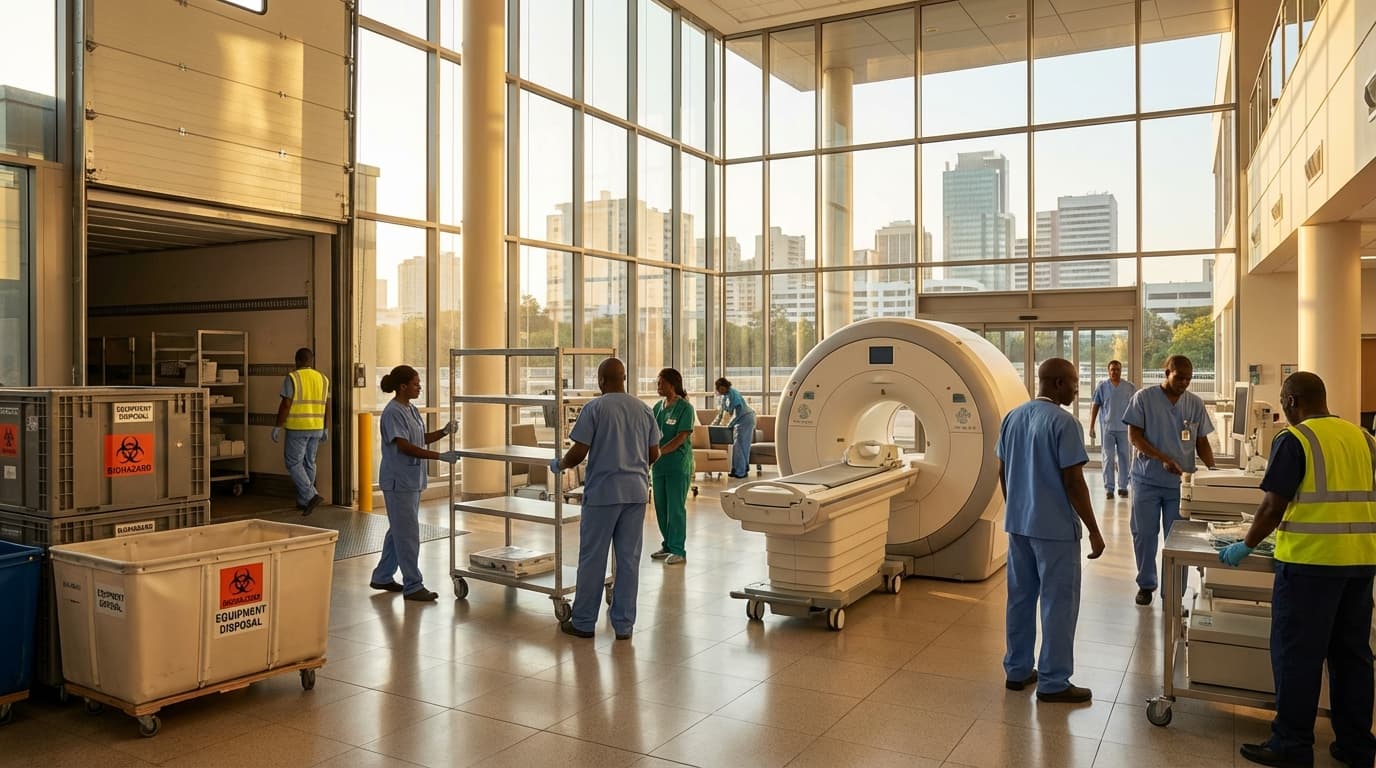
Decommissioning Service for Medical Devices in Nigeria
Engineering Excellence & Technical Support
Decommissioning Service for Medical Devices High-standard technical execution following OEM protocols and local regulatory frameworks.
Regulatory Compliance Expertise
Navigate Nigeria's complex medical device regulations with our specialized decommissioning services. We ensure secure, compliant, and environmentally responsible disposal of obsolete, broken, or expired medical equipment, protecting your facility from legal penalties and reputational damage.
Secure Data Sanitization & Destruction
Safeguard sensitive patient data. Our decommissioning process includes certified data sanitization and physical destruction of storage media within medical devices, adhering to global privacy standards and preventing any risk of data breaches.
Environmentally Conscious Disposal & Asset Recovery
Minimize environmental impact. We prioritize responsible disposal methods, including recycling and material recovery, diverting hazardous waste from landfills. We also identify opportunities for asset resale or donation of non-critical equipment, maximizing value recovery.
What Is Decommissioning Service For Medical Devices In Nigeria?
Decommissioning Service for Medical Devices in Nigeria refers to the comprehensive process of safely and systematically retiring a medical device from clinical use. This encompasses a range of activities designed to ensure regulatory compliance, environmental protection, and data security. It is a critical lifecycle management phase for medical equipment, addressing both the physical and informational aspects of a device's end-of-life. The service ensures that the device is no longer operational for its intended medical purpose and is managed in a manner that mitigates risks to human health and the environment, adhering to Nigerian regulatory frameworks and international best practices.
| Who Needs Decommissioning Services? | Typical Use Cases | |||||||
|---|---|---|---|---|---|---|---|---|
| Hospitals and Healthcare Facilities: All healthcare institutions utilizing medical devices. | End of Serviceable Life: Devices reaching their manufacturer-specified lifespan or becoming obsolete. | Technological Obsolescence: Replacement of older devices with newer, more advanced models. | Malfunction and Irreparable Damage: Devices that are beyond economic or technical repair. | Changes in Clinical Protocols: Devices no longer relevant to current medical practices or treatment modalities. | Facility Closure or Relocation: Decommissioning of all active medical equipment when a facility ceases operations or moves. | Regulatory Mandates: Compliance with specific regulations that require device retirement or disposal. | Consolidation of Services: When overlapping medical services are consolidated, leading to redundant equipment. | Lease Expiration: Devices under lease agreements reaching the end of their contractual term. |
Key Components of Medical Device Decommissioning in Nigeria:
- Discontinuation of Use: Formal authorization and documentation to cease the device's deployment in patient care.
- Data Eradication/Sanitization: Secure removal or destruction of Protected Health Information (PHI) and other sensitive data stored on the device, complying with Nigerian data protection regulations (e.g., Nigeria Data Protection Regulation - NDPR).
- Electrical and Mechanical Deactivation: Rendering the device permanently inoperable and incapable of reactivation.
- Decontamination and Cleaning: Thorough cleaning and disinfection to remove biohazards and chemical residues, preventing environmental contamination and ensuring safe handling.
- Environmental Impact Assessment: Evaluating potential environmental risks associated with the device's disposal or recycling.
- Regulatory Compliance Documentation: Maintaining detailed records of all decommissioning activities for audit and traceability purposes, aligning with standards set by relevant Nigerian health authorities (e.g., Medical Laboratory Science Council of Nigeria - MLSCN, Radiographers Registration Board of Nigeria - RRBN, etc., depending on device classification).
- Asset Disposal/Transfer: Managing the disposal, recycling, or transfer of the device in accordance with applicable waste management and environmental laws.
- Training and Personnel Competency: Ensuring that personnel involved in decommissioning are adequately trained and possess the necessary technical and safety certifications.
Who Needs Decommissioning Service For Medical Devices In Nigeria?
Decommissioning medical devices in Nigeria is a crucial service for ensuring patient safety, environmental protection, and regulatory compliance. As medical technology advances, older or faulty equipment must be safely retired and disposed of. This process prevents the misuse of outdated devices, the leakage of sensitive patient data, and the environmental hazards associated with improper disposal of medical waste. Various entities in Nigeria require professional decommissioning services for their medical devices.
| Target Customer Group | Key Departments Involved in Decommissioning | Reasons for Decommissioning | Specific Device Examples |
|---|---|---|---|
| Hospitals (Government and Private) | Biomedical Engineering Department, IT Department, Procurement Department, Administration, Radiology, Pathology, Cardiology, Surgical Wards | Equipment Obsolescence, Upgrade to newer technology, Malfunctioning devices, End-of-life, Data security concerns, Space optimization | MRI Machines, CT Scanners, X-ray Machines, Ultrasound Machines, Dialysis Machines, Anesthesia Machines, Defibrillators, Patient Monitors, Laboratory Analyzers, Surgical Lasers |
| Clinics and Diagnostic Centers | Clinic Management, Laboratory Technicians, Radiographers, IT Personnel | Outdated diagnostic equipment, Transition to digital systems, Limited functionality, Cost of maintenance | ECG Machines, Blood Analyzers, Endoscopes, Digital X-ray Viewers, Portable Ultrasound Devices |
| Medical Research Institutions and Universities | Research Departments (various), Laboratory Management, IT Services, Procurement | End of research projects, Upgrade for advanced research, Non-compliance with safety standards, Obsolescence | Electron Microscopes, Spectrophotometers, DNA Sequencers, Specialized imaging equipment, Bioreactors |
| Government Health Agencies and Ministries | Procurement Units, Public Health Departments, Facilities Management | Fleet upgrades, Public health program changes, Compliance with national standards, Disposal of unserviceable assets | Ambulances (medical equipment), Mobile clinics (equipment), Public health surveillance devices, Disinfectant sprayers (industrial medical) |
| Medical Equipment Manufacturers and Distributors | Service and Support Department, Logistics, Compliance Department | Product recalls, End-of-life buyback programs, Environmental stewardship, Responsible disposal of demonstration or old stock units | Any device from their product portfolio that requires end-of-life management |
Target Customers for Medical Device Decommissioning in Nigeria
- Hospitals (Government and Private)
- Clinics and Diagnostic Centers
- Pharmaceutical Companies (for R&D equipment)
- Medical Research Institutions and Universities
- Government Health Agencies and Ministries
- Medical Equipment Manufacturers and Distributors (for end-of-life management)
- Insurance Companies (involved in asset disposal)
- Non-Governmental Organizations (NGOs) involved in healthcare delivery
Decommissioning Service For Medical Devices Process In Nigeria
Decommissioning medical devices in Nigeria is a critical process that ensures the safe and responsible removal of equipment from service. This involves several stages, from the initial inquiry by the healthcare facility to the final execution of the decommissioning activities and proper disposal. The workflow aims to comply with Nigerian regulations and environmental standards, safeguarding patient data and preventing the proliferation of hazardous materials. This document outlines the typical process, from initial contact to completion.
| Stage | Key Activities | Responsible Parties | Documentation/Deliverables |
|---|---|---|---|
| Healthcare facility contacts a licensed decommissioning service provider. Discussion of device inventory, reasons for decommissioning, and desired timeline. Preliminary consultation on regulatory requirements. | Healthcare Facility (Client), Decommissioning Service Provider (Vendor) | Initial communication logs, preliminary device list |
| Vendor conducts a site visit to assess the physical environment, access routes, device locations, and potential hazards. Development of a detailed decommissioning plan, including safety protocols, logistics, and disposal strategies. | Decommissioning Service Provider (Vendor), Healthcare Facility (Client) for access | Site assessment report, detailed decommissioning plan, risk assessment |
| Vendor submits a formal proposal outlining services, timelines, costs, and terms. Negotiation and finalization of a service agreement/contract. | Decommissioning Service Provider (Vendor), Healthcare Facility (Client) | Service proposal, signed service agreement/contract |
| For devices with data storage capabilities (e.g., imaging systems, electronic health record terminals), secure erasure or destruction of all sensitive patient and operational data according to industry best practices and relevant regulations. | Decommissioning Service Provider (Vendor) | Data sanitization report, data destruction certificate (if applicable) |
| Careful physical dismantling of medical devices by trained technicians. Safe removal of components from the healthcare facility, adhering to safety and logistical plans. | Decommissioning Service Provider (Vendor) | On-site work logs, incident reports (if any) |
| Transport of decommissioned devices to authorized recycling or disposal facilities. Sorting of components for appropriate recycling (metals, plastics, hazardous materials) or environmentally sound disposal, complying with Nigerian environmental laws. | Decommissioning Service Provider (Vendor), Licensed Waste Management/Recycling Partners | Waste transfer notes, recycling certificates, hazardous waste disposal manifests |
| Issuance of a decommissioning certificate by the service provider, confirming completion of services. Provision of all relevant documentation, including disposal manifests and recycling certificates, to the client for their records. | Decommissioning Service Provider (Vendor), Healthcare Facility (Client) for record-keeping | Decommissioning certificate, final project report, copies of all disposal/recycling documentation |
| Optional follow-up to ensure client satisfaction and address any outstanding queries. Review of the decommissioning process for continuous improvement. | Decommissioning Service Provider (Vendor), Healthcare Facility (Client) | Client feedback forms (optional), internal process review notes |
Decommissioning Service Workflow for Medical Devices in Nigeria
- Initial Inquiry and Consultation
- Site Assessment and Planning
- Proposal and Agreement
- Data Sanitization and Security
- Physical Disassembly and Removal
- Environmental Disposal and Recycling
- Certification and Documentation
- Post-Decommissioning Follow-up
Decommissioning Service For Medical Devices Cost In Nigeria
Decommissioning of medical devices in Nigeria is a critical service that ensures safe disposal, compliance with environmental regulations, and protection of patient data. The cost of this service is influenced by several factors, leading to a range of pricing in Nigerian Naira (NGN). Understanding these factors is crucial for healthcare facilities planning for device retirement.
| Device Category | Typical Cost Range (NGN) | Notes on Cost Drivers |
|---|---|---|
| Small Diagnostic Equipment (e.g., ECG Machines, Pulse Oximeters) | 25,000 - 75,000 | Relatively simple disassembly, minimal hazardous materials, data destruction might be the primary cost driver. |
| Imaging Equipment (e.g., X-ray Machines, Ultrasound Machines) | 100,000 - 500,000+ | Involves specialized handling, potential for hazardous materials (e.g., lead shielding, refrigerants), requires careful data removal. |
| Large Capital Equipment (e.g., MRI, CT Scanners, Dialysis Machines) | 300,000 - 1,500,000+ | Highly complex, often involves significant dismantling, transportation challenges, and specialized waste disposal. Data destruction is critical. |
| Surgical & Anesthesia Equipment (e.g., Ventilators, Anesthesia Machines) | 75,000 - 300,000 | May involve hazardous gases or fluids, requires thorough cleaning and sterilization procedures before disposal, data security is paramount. |
| General Medical Furniture & Fixtures (e.g., Exam Beds, Wheelchairs) | 10,000 - 40,000 | Generally lower cost, focus is on logistics and basic material recycling/disposal. |
Key Pricing Factors for Medical Device Decommissioning in Nigeria:
- Type and Complexity of the Medical Device: Devices like MRI machines, CT scanners, or complex surgical equipment involve more intricate dismantling, specialized handling, and potentially hazardous material disposal, thus incurring higher costs than simpler devices like examination tables or basic monitors.
- Condition and Age of the Device: Older or heavily damaged devices may require more effort to disassemble and transport, potentially increasing labor and logistical costs.
- Volume of Devices: Decommissioning a large batch of devices can sometimes lead to economies of scale, potentially lowering the per-unit cost. However, it also necessitates greater logistical planning and manpower.
- Data Destruction Requirements: Medical devices often store sensitive patient data. Thorough data sanitization or physical destruction adds to the cost, requiring specialized equipment and processes to meet privacy regulations (e.g., HIPAA compliance, though Nigeria has its own data protection laws).
- Hazardous Material Content: Devices containing refrigerants (like older X-ray machines), mercury, or other hazardous components require specialized handling and disposal procedures, significantly impacting the cost.
- Location of the Healthcare Facility: The geographic location within Nigeria plays a role. Services in major urban centers like Lagos or Abuja might have different pricing structures compared to more remote areas due to transportation and accessibility costs.
- Service Provider's Expertise and Certifications: Reputable and certified decommissioning service providers often command higher prices due to their experience, adherence to standards, and robust safety protocols.
- Regulatory Compliance and Documentation: Ensuring full compliance with Nigerian environmental and health regulations, and providing comprehensive documentation of the decommissioning process, can add to the service provider's overhead and therefore the cost.
- Resale or Recycling Value: In some cases, if the device has components with resale or significant recycling value, the decommissioning cost might be offset. However, this is less common for complex or very old equipment.
Affordable Decommissioning Service For Medical Devices Options
Decommissioning medical devices involves safely and responsibly removing them from service. This includes data sanitization, physical dismantling, and proper disposal or recycling. Finding affordable services is crucial for healthcare facilities managing budgets. Value bundles and strategic cost-saving measures can significantly reduce the overall expense.
| Decommissioning Service Component | Typical Cost Factors | Cost-Saving Strategies / Value Bundle Options |
|---|---|---|
| Data Sanitization | Type of data, number of devices, sanitization method (software vs. physical destruction) | Software wiping for bulk devices, physical destruction for highly sensitive data, included in comprehensive bundles |
| Physical Dismantling | Complexity of device, presence of hazardous materials, labor costs | Batch processing, specialized tools, bundled with disposal |
| Disposal & Recycling | Weight of device, type of materials, regulatory compliance, landfill fees vs. recycling rebates | Recycling partnerships, eco-friendly disposal options, bundled pricing |
| Certification & Documentation | Level of detail required, proof of chain of custody | Standardized reports, integrated into service packages |
| Transportation | Distance, volume of devices, specialized handling needs | Consolidated pickups, scheduled routes, included in service bundles |
Understanding Value Bundles and Cost-Saving Strategies
- Value Bundles: These packages combine multiple decommissioning services into a single, often discounted, offering. They streamline the process and can lead to better pricing than procuring individual services.
- Cost-Saving Strategies: Proactive planning and smart choices can minimize expenses throughout the decommissioning lifecycle.
- Data Sanitization: Ensuring all sensitive patient data is irretrievably removed is paramount. Options range from software-based wiping to physical destruction.
- Physical Dismantling: Breaking down devices into constituent parts for disposal or recycling. Expertise is needed to handle hazardous materials safely.
- Disposal & Recycling: Adhering to environmental regulations for electronic waste (e-waste) and hazardous materials.
- Certification & Documentation: Receiving proof of proper decommissioning for compliance and audit purposes.
- Scheduled Decommissioning: Grouping devices for decommissioning in batches rather than on an ad-hoc basis can often secure volume discounts.
- Early Planning: Incorporating decommissioning costs into the initial purchase price of new equipment or capital budget planning.
- Negotiating Contracts: Seeking competitive bids and negotiating terms for long-term service agreements.
- Considering Resale Value: Identifying devices that may have residual value and exploring options for resale or donation after proper sanitization.
- DIY vs. Professional Services: While some basic sanitization might be feasible in-house, complex devices or those with significant data security risks warrant professional expertise to avoid costly mistakes or compliance issues.
Verified Providers In Nigeria
In Nigeria's rapidly evolving healthcare landscape, identifying trustworthy and competent medical providers is paramount for ensuring quality care. 'Verified Providers' signifies a stamp of approval, assuring patients that they are engaging with professionals who meet stringent standards. Franance Health has emerged as a leading platform in this regard, meticulously vetting healthcare practitioners and facilities to offer a curated selection of the best. Their rigorous credentialing process goes beyond basic licensing, encompassing a holistic evaluation of expertise, ethical conduct, patient outcomes, and adherence to modern healthcare practices. This commitment to verification makes Franance Health a compelling choice for anyone seeking reliable and superior medical services in Nigeria.
| Aspect of Verification | Franance Health's Standard | Benefit for Patients |
|---|---|---|
| Medical Licensing and Registration | Ensures all providers hold valid and current licenses from relevant Nigerian medical bodies. | Guarantees adherence to legal and professional requirements. |
| Specialization and Expertise | Confirms specific training, certifications, and proven experience in particular medical fields. | Ensures access to highly skilled professionals for specialized treatments. |
| Professional Experience & Track Record | Evaluates years in practice, hospital affiliations, and peer reviews. | Provides confidence in the provider's practical knowledge and success rates. |
| Adherence to Ethical Guidelines | Assesses commitment to patient confidentiality, informed consent, and professional integrity. | Promotes trust and ensures ethical treatment. |
| Patient Feedback and Outcomes | Incorporates a system for collecting and reviewing patient testimonials and satisfaction levels. | Highlights providers known for positive patient experiences and successful outcomes. |
| Continuing Medical Education (CME) | Verifies participation in ongoing training to stay abreast of the latest medical advancements. | Ensures providers are up-to-date with modern diagnostic and treatment methodologies. |
Why Franance Health Verified Providers are the Best Choice:
- Unwavering Commitment to Quality: Franance Health's verification process prioritizes demonstrated excellence in patient care and medical outcomes.
- Rigorous Credentialing: Beyond basic qualifications, they assess experience, specializations, ongoing professional development, and ethical standing.
- Patient-Centric Approach: Verified providers are selected for their dedication to patient well-being, clear communication, and respectful treatment.
- Access to Specialized Expertise: Franance Health connects you with specialists across various medical fields, ensuring you find the right care for your specific needs.
- Peace of Mind: Knowing you are choosing a Franance Health verified provider eliminates the uncertainty often associated with finding quality healthcare.
Scope Of Work For Decommissioning Service For Medical Devices
This Scope of Work (SOW) outlines the requirements for the decommissioning of medical devices. The service includes the safe removal, data sanitization, and environmentally responsible disposal or transfer of specified medical equipment. This document details the technical deliverables and standard specifications to ensure compliance with regulatory requirements and best practices.
| Phase/Activity | Description | Technical Deliverables | Standard Specifications / Compliance | |
|---|---|---|---|---|
| Site Assessment and Planning | On-site evaluation of equipment, facility access, and potential hazards. Development of a detailed decommissioning plan. | Decommissioning Plan Document, Risk Assessment Report, Site Survey Report. | Compliance with OSHA, HIPAA, local environmental regulations. Adherence to manufacturer's guidelines for safe handling. | |
| Asset Identification and Verification | Cataloging all devices to be decommissioned. Verification against asset inventory and removal of any non-specified equipment. | Detailed Asset Register (including serial numbers, model numbers, location), Chain of Custody Forms. | Accuracy of asset tagging and documentation. Verification of ownership and authorization. | |
| Data Sanitization and Security | Secure and irreversible erasure or destruction of all sensitive patient and operational data stored on the devices. | Data Sanitization Certificate (per device or batch), Secure Data Destruction Log. | NIST SP 800-88 guidelines for media sanitization, HIPAA compliance (45 CFR Part 164), relevant data privacy laws. | |
| Physical Decommissioning and Removal | Safe disconnection, disassembly (if required), and removal of medical devices from their installed locations. | Decommissioned Device Report, Photos/Videos of removal process (upon request). | Manufacturer's service manuals, qualified technicians for specialized equipment (e.g., imaging, anesthesia), proper handling of hazardous materials (e.g., refrigerants, mercury). | Adherence to building codes and safety protocols during removal. |
| Transportation and Logistics | Secure and compliant transportation of decommissioned devices from the site to the designated disposal or transfer facility. | Bill of Lading, Manifests, Transportation Logs. | DOT regulations for hazardous materials transport, appropriate packaging and labeling, insurance coverage for transit. | |
| Disposal or Transfer | Environmentally responsible disposal of devices or transfer to a new owner as per agreement. | Certificate of Disposal (for hazardous waste), Certificate of Transfer (for reusable equipment). | EPA regulations for e-waste and hazardous waste disposal, R2 or e-Stewards certification for recyclers, relevant state and local environmental laws. | |
| Documentation and Reporting | Comprehensive reporting of all decommissioning activities, including asset tracking, data sanitization, and disposal/transfer details. | Final Decommissioning Report, Asset Disposition Summary, Invoices and Payment Records. | Completeness and accuracy of all documentation. Traceability of each device from initial identification to final disposition. |
Key Phases and Activities
- Site Assessment and Planning
- Asset Identification and Verification
- Data Sanitization and Security
- Physical Decommissioning and Removal
- Transportation and Logistics
- Disposal or Transfer
- Documentation and Reporting
Service Level Agreement For Decommissioning Service For Medical Devices
This Service Level Agreement (SLA) outlines the guaranteed response times and uptime for the Decommissioning Service for Medical Devices provided by [Your Company Name]. This SLA is an addendum to the Master Service Agreement (MSA) between [Your Company Name] and [Client Name].
| Service Component | Response Time Target (Business Hours) | Uptime Guarantee (for Remote Access/Reporting Features) | Downtime Notification Period | Service Credits for Failure |
|---|---|---|---|---|
| Initiation of Decommissioning Request (Confirmation) | 4 Business Hours | N/A | N/A | 10% of monthly service fee |
| On-site Technician Arrival (for Scheduled Decommissioning) | Within 24 Business Hours of scheduled appointment | N/A | N/A | 15% of monthly service fee |
| Remote Access to Decommissioning Dashboard/Reporting Portal | N/A | 99.5% | 1 hour | 5% of monthly service fee for every hour of unplanned downtime exceeding 0.5% |
| Issuance of Certificate of Destruction/Sanitization | 5 Business Days after physical decommissioning | N/A | N/A | 10% of monthly service fee |
| Urgent Support Request (e.g., emergency data breach concern) | 1 Business Hour | N/A | N/A | 20% of monthly service fee |
Scope of Decommissioning Service
- Secure data wiping of medical devices in accordance with industry best practices and relevant regulations (e.g., HIPAA, GDPR).
- Physical destruction of sensitive components (e.g., hard drives, storage media) where data wiping is insufficient or requested.
- Asset tracking and inventory management throughout the decommissioning process.
- Issuance of Certificates of Destruction/Sanitization upon completion.
- Compliance with environmental regulations for disposal of electronic waste.
Frequently Asked Questions

Ready when you are
Let's scope your Decommissioning Service for Medical Devices in Nigeria project in Nigeria.

Scaling healthcare logistics and technical systems across the entire continent.