
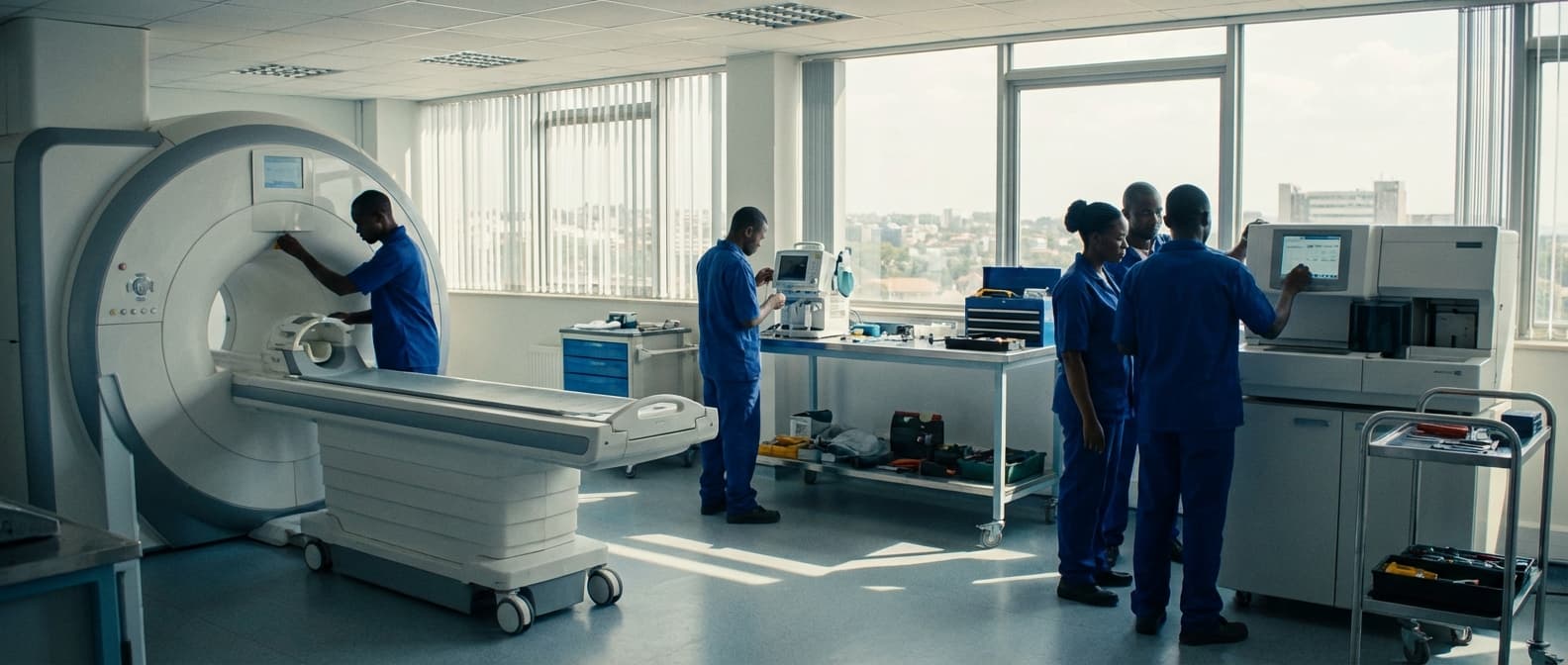
Planned Shutdown Coordination Service for Critical Equipment in Nigeria
Engineering Excellence & Technical Support
Planned Shutdown Coordination Service for Critical Equipment High-standard technical execution following OEM protocols and local regulatory frameworks.
Proactive Shutdown Planning & Optimization
Leverage advanced predictive analytics and historical data to meticulously plan and optimize critical equipment shutdown windows. Our service minimizes operational downtime and production losses by identifying the most efficient maintenance intervals, coordinating across departments, and ensuring all necessary resources are pre-positioned.
Mitigated Risk & Enhanced Safety
Our comprehensive risk assessment framework identifies potential hazards and operational challenges associated with shutdowns. We implement robust safety protocols, develop detailed contingency plans, and ensure strict adherence to regulatory compliance, safeguarding personnel and assets throughout the entire process.
Integrated Stakeholder Coordination
Facilitate seamless communication and collaboration among all stakeholders, including operations, maintenance, engineering, and external vendors. Our service provides a centralized platform for real-time updates, progress tracking, and decision-making, ensuring a synchronized and efficient shutdown execution in the Nigerian operational context.
What Is Planned Shutdown Coordination Service For Critical Equipment In Nigeria?
Planned Shutdown Coordination Service for Critical Equipment in Nigeria refers to the comprehensive management and orchestration of scheduled downtime for essential operational assets. This service is designed to minimize disruption, optimize resource allocation, and ensure the safe and efficient execution of maintenance, repair, upgrade, or decommissioning activities for high-value and mission-critical equipment within Nigerian industries. It encompasses the entire lifecycle of a planned shutdown, from initial planning and scheduling to execution, monitoring, and post-event analysis. The primary objective is to mitigate the negative impacts of unplanned outages, which can lead to significant financial losses, safety hazards, environmental risks, and reputational damage.
| Who Needs This Service? | Typical Use Cases |
|---|---|
| Industries with extensive critical infrastructure, including but not limited to: Oil and Gas (Upstream, Midstream, Downstream), Power Generation and Distribution, Manufacturing (especially process industries), Telecommunications, Water Treatment and Distribution, Mining, and Large-scale Logistics. | Major Overhauls of Turbines, Generators, Pumps, Compressors, Refineries, and Chemical Reactors. Routine maintenance and inspection of pipelines, transmission lines, and sub-stations. Installation of new equipment or upgrades to existing systems. Decommissioning and dismantling of obsolete or end-of-life assets. Software and firmware upgrades requiring extended system unavailability. Integrity management programs necessitating planned interruptions for inspections and repairs. |
Key Components of Planned Shutdown Coordination Service
- Scope Definition and Planning
- Risk Assessment and Mitigation
- Resource Mobilization and Management
- Permitting and Regulatory Compliance
- Execution Management and Monitoring
- Quality Assurance and Control
- Health, Safety, Security, and Environment (HSSE) Management
- Post-Shutdown Analysis and Reporting
- Communication and Stakeholder Engagement
Who Needs Planned Shutdown Coordination Service For Critical Equipment In Nigeria?
Planned shutdown coordination services are essential for any organization in Nigeria that relies heavily on critical equipment to maintain operations and prevent costly downtime. These services ensure that scheduled maintenance, upgrades, or repairs are executed seamlessly, minimizing disruption to production, service delivery, and overall business continuity. Without expert coordination, planned shutdowns can become chaotic, leading to extended outages, safety risks, and significant financial losses.
| Industry Sector | Target Departments/Roles |
|---|---|
| Oil and Gas | Operations, Maintenance, Project Management, Safety & Environment, Asset Integrity |
| Manufacturing & Industrial | Production, Engineering, Maintenance, Operations Management, Health & Safety |
| Power Generation & Distribution | Plant Operations, Grid Operations, Maintenance Engineering, System Planning, Safety Management |
| Telecommunications | Network Operations, Infrastructure Management, Engineering, Field Operations, IT Management |
| Water Treatment & Utilities | Operations, Maintenance, Engineering, Water Resource Management, Health & Safety |
| Mining & Quarrying | Mine Operations, Maintenance, Engineering, Health & Safety, Environmental Management |
| Agriculture (Processing) | Production Management, Plant Operations, Maintenance, Quality Control, Supply Chain |
| Transportation (Airports/Seaports) | Operations, Facility Management, Maintenance, Safety & Security, Logistics |
| Healthcare | Biomedical Engineering, Facilities Management, Operations, IT Department (for critical systems) |
| Financial Institutions | IT Operations, Infrastructure Management, Data Center Management, Facilities Management |
Target Customers in Nigeria
- Oil and Gas Sector (Upstream, Midstream, and Downstream)
- Manufacturing and Industrial Plants
- Power Generation and Distribution Companies
- Telecommunications Providers
- Water Treatment and Utilities
- Mining and Quarrying Operations
- Large-Scale Agricultural Processing Facilities
- Commercial Airports and Seaports
- Hospitals and Healthcare Facilities (for critical medical equipment)
- Financial Institutions (for data centers and critical IT infrastructure)
Planned Shutdown Coordination Service For Critical Equipment Process In Nigeria
The Planned Shutdown Coordination Service for Critical Equipment ensures a seamless and efficient process for scheduled maintenance, repairs, or upgrades of vital industrial equipment in Nigeria. This service minimizes downtime, optimizes resource allocation, and enhances safety by meticulously planning and managing every stage of the shutdown. The workflow is designed to be comprehensive, transparent, and collaborative, involving all relevant stakeholders from initial inquiry to post-execution review.
| Stage | Description | Key Activities | Deliverables/Outcomes | Responsible Parties | Timeline (Indicative) |
|---|---|---|---|---|---|
| Initial contact and understanding of the client's needs for a planned shutdown. | Client submits inquiry, Service Provider conducts initial consultation, assesses preliminary needs, discusses high-level objectives. | Initial understanding of shutdown requirements, preliminary feasibility assessment. | Client (Requester), Service Provider (Coordination Team) | 1-3 Days |
| Detailed definition of the shutdown scope, objectives, and critical success factors. | Joint development of detailed shutdown scope, identification of critical equipment, definition of objectives (e.g., maintenance, upgrade, inspection), risk assessment, development of preliminary schedule, budget estimation. | Approved Shutdown Scope Document, Preliminary Risk Register, Draft Shutdown Plan, Initial Budget Estimate. | Service Provider (Planning Team), Client (Operations, Maintenance, Safety) | 1-2 Weeks |
| Detailed planning for personnel, materials, equipment, and timeline. | Identification and mobilization of internal and external resources (skilled technicians, specialized equipment, spare parts), detailed work sequencing, creation of a master shutdown schedule (Gantt chart), establishment of communication protocols. | Detailed Resource Plan, Master Shutdown Schedule, Communication Plan, Emergency Response Plan. | Service Provider (Logistics, Scheduling Team), Client (Procurement, HR) | 2-4 Weeks |
| Execution of all necessary tasks before the shutdown begins. | Procurement of materials and spare parts, pre-assembly of components, site preparation, safety inductions, final permit acquisition, equipment isolation and lockout/tagout (LOTO) procedures initiation. | Materials & Equipment Ready, Site Prepared, Personnel Briefed, Permits Obtained, LOTO Procedures in Place. | Service Provider (Execution Team), Client (Safety, Operations) | 1-2 Weeks (Leading up to shutdown) |
| The actual shutdown and performance of planned work. | Controlled shutdown of equipment, execution of maintenance/repair/upgrade tasks as per the schedule, continuous monitoring of progress and safety, real-time issue resolution, daily progress meetings. | Completed maintenance/repair/upgrade tasks, ongoing status updates. | Service Provider (Execution Team), Client (Supervisors, Quality Control) | Duration of Shutdown (Varies widely) |
| Verification of work, system testing, and official handover. | Functional testing of equipment, performance validation, quality checks, documentation of completed work, formal handover to client operations, site demobilization. | Test Reports, As-Built Documentation, Signed Handover Certificate, Cleared Site. | Service Provider (Testing Team, Project Management), Client (Operations, Engineering) | 2-5 Days |
| Documentation of the shutdown and evaluation of performance against objectives. | Preparation of a comprehensive shutdown report (including lessons learned), financial reconciliation, post-shutdown review meeting with client, identification of areas for improvement in future shutdowns. | Final Shutdown Report, Lessons Learned Document, Performance Evaluation. | Service Provider (Project Management, Management), Client (Management) | 1-2 Weeks (Post-handover) |
Workflow Stages
- Inquiry & Requirement Gathering
- Scope Definition & Planning
- Resource Allocation & Scheduling
- Pre-Shutdown Preparations
- Execution of Shutdown Activities
- Post-Shutdown Testing & Handover
- Reporting & Performance Review
Planned Shutdown Coordination Service For Critical Equipment Cost In Nigeria
The cost of a Planned Shutdown Coordination Service for Critical Equipment in Nigeria is influenced by a multitude of factors, ranging from the complexity of the shutdown to the expertise of the service provider. These services are crucial for minimizing downtime, ensuring safety, and optimizing maintenance efficiency in industries reliant on critical machinery. The pricing is typically presented in Nigerian Naira (NGN).
| Service Component / Project Size | Estimated Cost Range (NGN) | Notes |
|---|---|---|
| **Basic Coordination (Small, Single Equipment) | ₦200,000 - ₦750,000 | For simpler shutdowns with limited scope and duration. May include basic planning and on-site oversight. |
| **Standard Coordination (Medium Complexity, Multiple Equipment) | ₦750,000 - ₦3,000,000 | Covers more intricate shutdowns with several interconnected equipment. Includes detailed planning, risk assessment, and dedicated project management. |
| **Comprehensive Coordination (Large Scale, Critical Systems) | ₦3,000,000 - ₦15,000,000+ | For major industrial shutdowns involving extensive critical systems, long durations, and high-risk operations. Includes all-encompassing planning, specialized teams, advanced technology, and extensive safety management. |
| **Specialized Equipment Expertise (e.g., Turbines, Generators) | Additional 15% - 30% on top of base coordination cost | Applicable when highly specialized technical knowledge and certifications are required for specific equipment. |
| **Emergency Shutdown Coordination (Urgent) | Premium of 25% - 50% on top of standard rates | For unplanned, urgent shutdowns where rapid deployment and immediate response are critical. Higher cost reflects the increased pressure and resource mobilization. |
| **Daily Project Management/Supervision Fee | ₦50,000 - ₦250,000 per day | Can be a component of larger contracts or an add-on service for extended on-site presence. |
Key Pricing Factors:
- Scope and Complexity of Shutdown: The number of equipment units involved, the criticality of each unit, and the interconnectedness of systems significantly impact costs. A shutdown involving a single, isolated piece of equipment will be less expensive than a complex, multi-system coordinated shutdown.
- Duration of the Shutdown: Longer planned shutdowns naturally incur higher costs due to extended personnel engagement, resource allocation, and potential for extended standby time.
- Type of Critical Equipment: Different equipment requires specialized knowledge and handling. The complexity of maintenance or repair procedures for turbines, generators, pumps, heavy manufacturing machinery, or IT infrastructure will affect labor and equipment costs.
- Provider's Expertise and Reputation: Established service providers with a proven track record, highly skilled technicians, and advanced coordination tools often command higher fees. Their experience in managing similar shutdowns can lead to more efficient execution and reduced risk.
- Geographical Location within Nigeria: While the core service cost might be standardized, logistical challenges and associated travel/accommodation expenses for personnel can vary depending on the project's location, especially for remote or less accessible industrial sites.
- Level of Support Required: This includes the extent of planning, scheduling, risk assessment, on-site supervision, safety management, post-shutdown reporting, and emergency response capabilities offered by the service provider.
- Required Personnel and Skill Sets: The number of engineers, technicians, safety officers, project managers, and specialized craftspeople needed will directly influence labor costs. Specialized skill sets, such as certified welders or specific machinery experts, can increase rates.
- Tools, Equipment, and Technology: The provider's investment in specialized tools, lifting equipment, diagnostic instruments, and project management software will be factored into the overall cost.
- Safety and Environmental Compliance: Implementing and managing stringent safety protocols, obtaining permits, and ensuring environmental compliance add to the service cost.
- Contingency Planning and Risk Management: The thoroughness of the provider's contingency plans for unexpected issues and their robust risk management strategies contribute to the value and, consequently, the price.
- Reporting and Documentation: The level of detail and format of post-shutdown reports, including performance analysis and recommendations, can impact the service fee.
Affordable Planned Shutdown Coordination Service For Critical Equipment Options
This document outlines affordable planned shutdown coordination services for critical equipment, emphasizing value bundles and cost-saving strategies. Effective coordination of planned equipment shutdowns is crucial to minimize downtime, prevent costly emergency repairs, and ensure operational efficiency. Our services are designed to be cost-effective, delivering maximum value through optimized planning, resource allocation, and risk mitigation.
| Value Bundle | Description | Key Benefits | Cost-Saving Strategies Incorporated |
|---|---|---|---|
| Essential Shutdown Coordination | Core planning and on-site coordination for single or small-scale equipment shutdowns. | Reduced downtime, improved safety, efficient execution of planned tasks. | Standardized checklists, optimized scheduling of core team, bulk purchasing of common consumables. |
| Integrated Maintenance Support | Includes essential coordination plus proactive spare parts management and vendor pre-qualification. | Minimized waiting time for parts, reduced vendor selection overhead, faster repair times. | Just-in-time inventory for critical spares, leveraging pre-negotiated vendor rates, consolidated vendor management. |
| Comprehensive Operational Continuity | Full-spectrum service covering planning, coordination, risk assessment, and post-shutdown performance analysis. | Maximized equipment reliability, minimized unforeseen costs, data-driven continuous improvement. | Predictive maintenance integration, risk-based prioritization of tasks, lean shutdown methodologies, shared knowledge base for future planning. |
Key Components of Our Affordable Planned Shutdown Coordination Service
- Pre-Shutdown Planning & Assessment: Detailed analysis of equipment criticality, maintenance history, and required scope of work.
- Resource Optimization: Strategic scheduling of internal and external resources (personnel, parts, tools) to avoid conflicts and delays.
- Risk Management & Contingency Planning: Identification of potential risks and development of mitigation strategies and backup plans.
- Communication & Stakeholder Management: Clear and consistent communication channels with all relevant departments and external vendors.
- On-Site Coordination & Supervision: Ensuring adherence to the plan, troubleshooting on-the-fly, and managing progress.
- Post-Shutdown Review & Reporting: Documenting lessons learned, performance analysis, and recommendations for future shutdowns.
Verified Providers In Nigeria
In Nigeria's rapidly evolving healthcare landscape, ensuring access to reliable and qualified medical professionals is paramount. Verified providers offer a crucial layer of trust and safety for patients seeking quality care. This is where Franance Health stands out. By meticulously vetting its network of healthcare professionals, Franance Health provides a curated selection of doctors, specialists, and clinics that meet stringent standards of expertise, licensing, and patient care.
Franance Health's credentialing process goes beyond simple verification. It involves a comprehensive evaluation of each provider's qualifications, experience, and commitment to ethical medical practice. This rigorous approach guarantees that when you choose a provider through Franance Health, you are opting for medical excellence and patient-centered services. Their dedication to transparency and quality assurance makes them the best choice for individuals and families prioritizing their health and well-being in Nigeria.
| Credential Type | Verification Standard | Franance Health Assurance |
|---|---|---|
| Medical Licenses | Up-to-date and valid Nigerian Medical Council (NMC) registration | Actively checked and maintained. |
| Specialty Certifications | Recognized board certifications in respective fields | Validated against awarding bodies. |
| Professional Experience | Minimum years of practice and proven track record | Assessed through reference checks and practice history. |
| Continuing Medical Education (CME) | Adherence to mandatory CME requirements | Confirmed through submission of relevant certificates. |
| Ethical Conduct | Absence of disciplinary actions or malpractice claims | Background checks and peer reviews conducted. |
| Facility Standards | Appropriate infrastructure, equipment, and hygiene protocols (for clinics/hospitals) | On-site or documentary assessments conducted. |
Why Franance Health Providers are the Best Choice:
- Rigorous Vetting Process: Franance Health employs a multi-faceted approach to verify credentials, ensuring all listed providers are licensed, qualified, and experienced.
- Commitment to Quality Care: Providers are assessed not only on their technical skills but also on their dedication to patient well-being and ethical medical practices.
- Access to Expert Specialists: Franance Health connects you with a wide range of medical specialists, ensuring you receive the right care for your specific needs.
- Enhanced Patient Trust and Safety: The verification process instills confidence, allowing patients to make informed decisions about their healthcare with peace of mind.
- Streamlined Access to Healthcare: Franance Health simplifies the process of finding and booking appointments with trusted healthcare professionals.
Scope Of Work For Planned Shutdown Coordination Service For Critical Equipment
This Scope of Work (SOW) outlines the services required for the effective coordination and execution of planned shutdowns for critical equipment. The objective is to minimize downtime, ensure safety, and maintain the integrity of operations during scheduled maintenance and upgrade activities. This SOW details the technical deliverables and standard specifications expected from the service provider.
| Technical Deliverable | Description | Standard Specifications / Requirements | Acceptance Criteria |
|---|---|---|---|
| Detailed Shutdown Plan | A comprehensive document outlining all activities, timelines, responsibilities, dependencies, and resource requirements for the planned shutdown. | Includes Gantt charts, critical path analysis, safety procedures, isolation plans, and contingency measures. Must be reviewed and approved by the client's operations and maintenance teams. | Approved by client, clear and unambiguous, covers all specified equipment and activities. |
| Resource Allocation Matrix | A detailed breakdown of all personnel, equipment, and materials required for the shutdown, including their roles and availability. | Includes vendor qualifications, certifications, and availability confirmation. Must be integrated with the Shutdown Plan. | Verified availability of all listed resources, appropriate qualifications documented. |
| Risk Assessment and Mitigation Plan | Identification of potential hazards and risks associated with the shutdown activities, along with detailed mitigation strategies. | Utilizes standard risk assessment methodologies (e.g., HAZOP, FMEA). Includes emergency response plans and communication protocols. | Comprehensive identification of risks, practical and effective mitigation strategies, clear emergency procedures. |
| On-Site Coordination Log | Daily logs documenting progress, issues encountered, resolutions, and deviations from the plan. | Includes timestamps, personnel involved, and decision-making processes. Must be signed off by the site supervisor. | Accurate and timely recording of all site activities, clear documentation of problem-solving. |
| Progress Reports | Regular (daily/weekly) reports summarizing the status of shutdown activities, highlighting achievements, challenges, and upcoming tasks. | Standardized reporting format agreed upon by both parties. Includes visual aids (e.g., progress charts) where applicable. | Timely submission, accurate representation of progress, clarity of information. |
| Post-Shutdown Report | A final report detailing the overall success of the shutdown, including lessons learned, cost analysis, and recommendations for future shutdowns. | Includes comparison of planned vs. actual timelines and costs, root cause analysis of any significant deviations, and recommendations for process improvement. | Comprehensive and objective analysis, actionable recommendations, supported by data. |
| Safety Compliance Documentation | Evidence of adherence to all site-specific and statutory safety regulations and procedures. | Includes permits to work, safety briefings, incident reports, and audit findings. Must meet the client's safety standards. | All required safety documentation in place and up-to-date, no safety incidents attributed to poor coordination. |
| Equipment Handover Documentation | Formal documentation confirming the successful completion of maintenance/repair and the readiness of equipment for return to service. | Includes test results, calibration certificates, and sign-off from authorized personnel. Must be integrated with client's asset management system. | All necessary test results and certifications provided, clear sign-off for equipment return to service. |
Key Service Areas
- Shutdown Planning and Scheduling
- Resource Management and Mobilization
- On-Site Coordination and Supervision
- Risk Assessment and Management
- Communication and Reporting
- Post-Shutdown Analysis and Recommendations
Service Level Agreement For Planned Shutdown Coordination Service For Critical Equipment
This Service Level Agreement (SLA) outlines the terms and conditions governing the Planned Shutdown Coordination Service for Critical Equipment. It defines response times for service requests, escalation procedures, and uptime guarantees for the coordination platform and associated support.
| Service Component | Uptime Guarantee | Response Time for Critical Incidents | Response Time for Standard Requests |
|---|---|---|---|
| Planned Shutdown Coordination Platform | 99.9% Monthly Availability | 15 minutes (acknowledgement, resolution targets vary) | 2 Business Hours |
| Dedicated Coordination Support (During Scheduled Shutdowns) | N/A (service is event-driven) | Immediate (for active coordination sessions) | N/A |
| Dedicated Coordination Support (Outside Scheduled Shutdowns - for planning/inquiries) | N/A | 4 Business Hours | 8 Business Hours |
Key Service Components
- Planned Shutdown Coordination Platform Access
- Dedicated Coordination Support
- Incident Management & Escalation
- Reporting & Analytics
Frequently Asked Questions

Ready when you are
Let's scope your Planned Shutdown Coordination Service for Critical Equipment in Nigeria project in Nigeria.

Scaling healthcare logistics and technical systems across the entire continent.